




Choi Byung-So
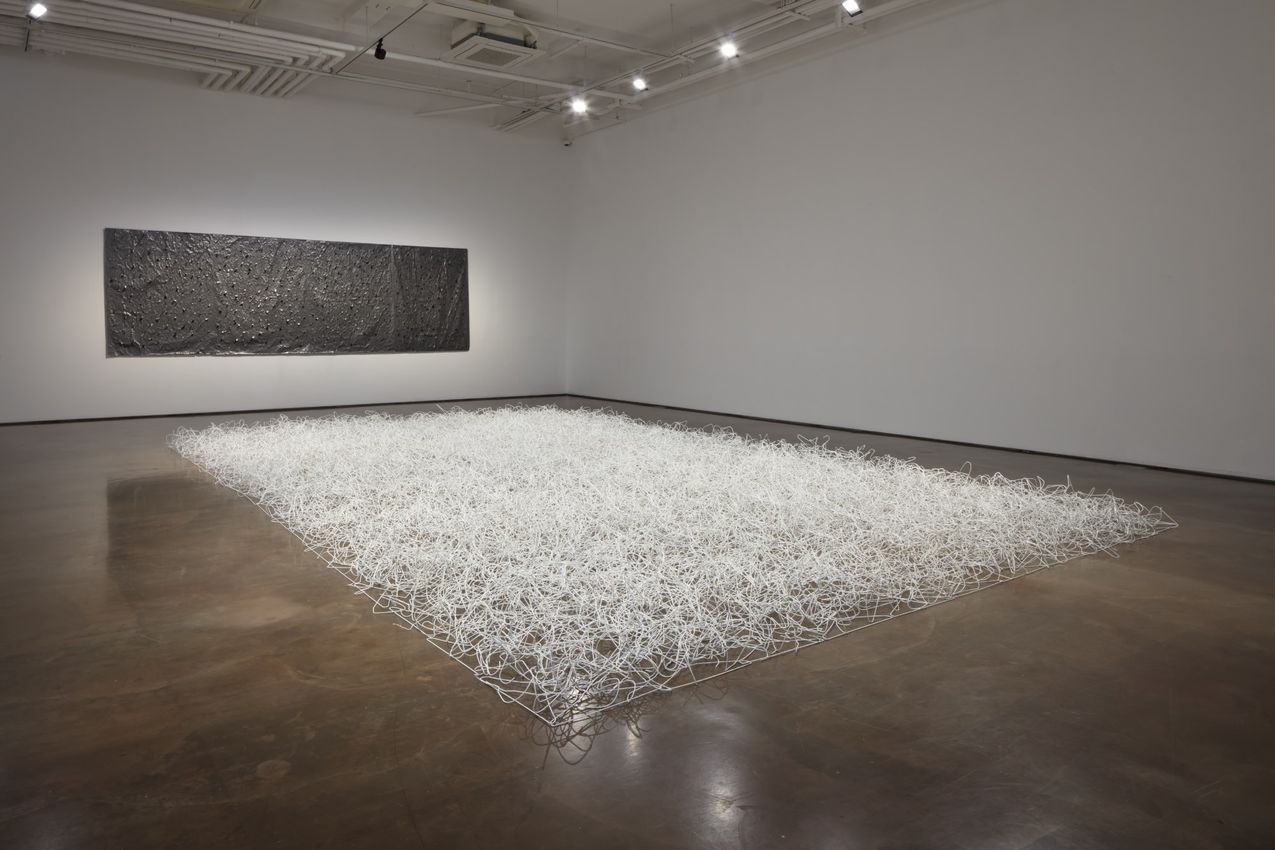
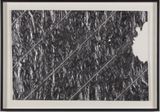
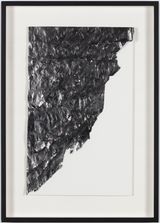
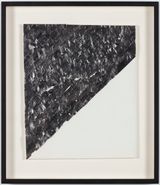
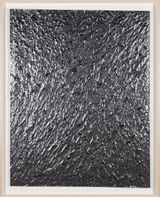
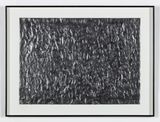
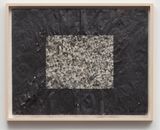
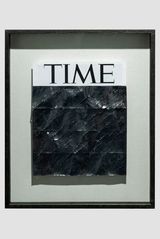
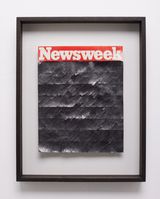
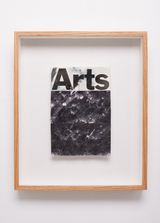
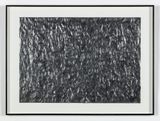
b. 1943, South KoreaChoi Byung-So’s works on paper are the result of relentless repetition: drawing over a sheet of newspaper with pencil or black ballpoint pen until the paper’s surface becomes rough and disfigured. He has been employing this method of erasure since the 1970s in order to contemplate the passage of time and reality.
Choi Byung-So was born into a period of political turmoil and rapid social change in Korea. The Korean War broke out when he was a child, and, while studying at Seoul‘s Chung-Ang University in 1972, he witnessed the establishment of Park Chung-hee’s dictatorial regime. Against this backdrop, the artist began developing his idiosyncratic practice.
Choi Byung-So selected newspaper as his primary surface for its role as a media that was highly accessible. Many have also interpreted it as a political act, since it was strictly regulated by the government during his early career. Once the artist covered the newspaper in graphite or ink, it became illegible and a completely new entity. Although many of his early works of the 1970s and 1980s were lost during a flood, later works retain the gritty surface characteristic of this method.
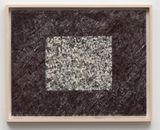
In Untitled (2012), Choi Byung-So’s paper is marked with tears in some places, along with an overall diagonal pencil stroke direction. The neat, gridded sections and diagonal lines in Untitled, 2015(0150728) (2015), on the other hand, are contrasted by a vertical texture that evokes a reptilian skin or the bark of a tree.
Choi Byung-So was a leading figure in the 1970s avantgarde art scene in his home city of Daegu. In 1974, with Lee Kang-So, he helped found the Daegu Contemporary Art Festival—the first of its kind in Korea to be established by artists. Choi’s use of repetitive gestures and mass-produced, inexpensive materials also aligned him with the Dansaekhwa, or Korean monochrome, painting movement.
Referring to a group of loosely affiliated artists, including Park Seo-Bo, Ha Chong-Hyun, and Lee Ufan, Dansaekhwa emphasised the physicality of materials. However, Choi told Ocula Magazine in 2016 that he does not identify solely with the movement, saying that he wanted to ‘open up a new horizon of painting, rejecting existing traditions’ through his method of erasure.
While newspapers continue to be Choi’s primary medium, he has also worked on empty broadsheets to consider the changing roles of newspapers in a society increasingly dominated by online platforms.
In 2020, Arario Gallery, Seoul, presented 意味와 無意味 SENS ET NON-SENS: Works from 1974–2020: a retrospective exhibition of Choi Byung-So’s oeuvre that included two rare works from the 1970s.
Choi Byung-So Solo Exhibitions include:
Choi Byung-so, Wooson Gallery, Daegu (2018); Clear and Empty, Arts Center KUH, Daejeon (2017); Choi Byung-So, Galerie Maria Lund, Paris (2016); Weight of Cigarettes, Arario Museum Tapdong Bike Shop, Jeju (2016); Choi Byung-so, Musée d’art moderne et contemporain de Saint-Étienne Métropole, France (2016); Choi Byung-So, Gallery Date, Busan (2014).
Choi Byung-So Group Exhibitions include:
Tracing the Past and Shaping the Future, Powerlong Art Museum, Shanghai (2017); Renegades in Resistance and Challenge, Daegu Art Museum (2018); Traces of time, Kim Tschang-Yeul Museum of Art, Jeju (2017); As the Moon Waxes and Wanes, National Museum of Modern and Contemporary Art, Korea, Seoul (2016); Dansaekhwa, Domaine de Kerguéhennec, Bignan, France (2016); Between the Lines, ARARIO GALLERY | Cheonan (2014).
Sherry Paik | Ocula | 2020


















Explore and Follow Artists Shaping Contemporary Art
A respected voice in contemporary art discourse.
Focusing on ambitious storytelling and insightful art-world commentary. Ocula Magazine publishes in-depth interviews, critical essays and timely analysis on the artists, exhibitions and ideas driving the global art world.
Learn more about Ocula Magazine
Showcasing the best of the art world.
Ocula partners with galleries from around the world to highlight their artists, artworks and exhibitions. Gallery membership is by application and invitation, with each member vetted by an independent panel.
Learn more about Ocula Membership
Specialises in the sale of major artworks.
Led by a team with deep ties to the world’s leading auction houses, galleries and collectors. Ocula’s advisory team offers bespoke services to high-net-worth clients from around the world who are looking to acquire the best of contemporary and modern art.
Learn more about our team and services