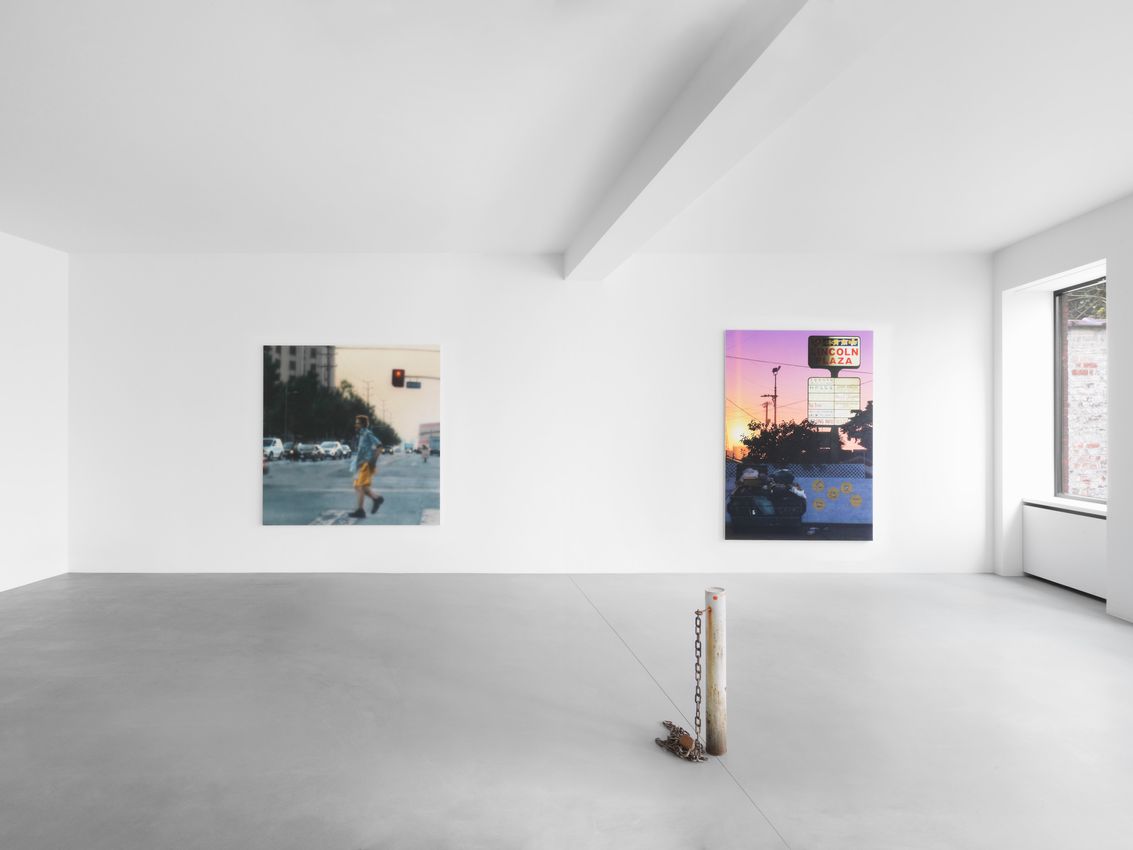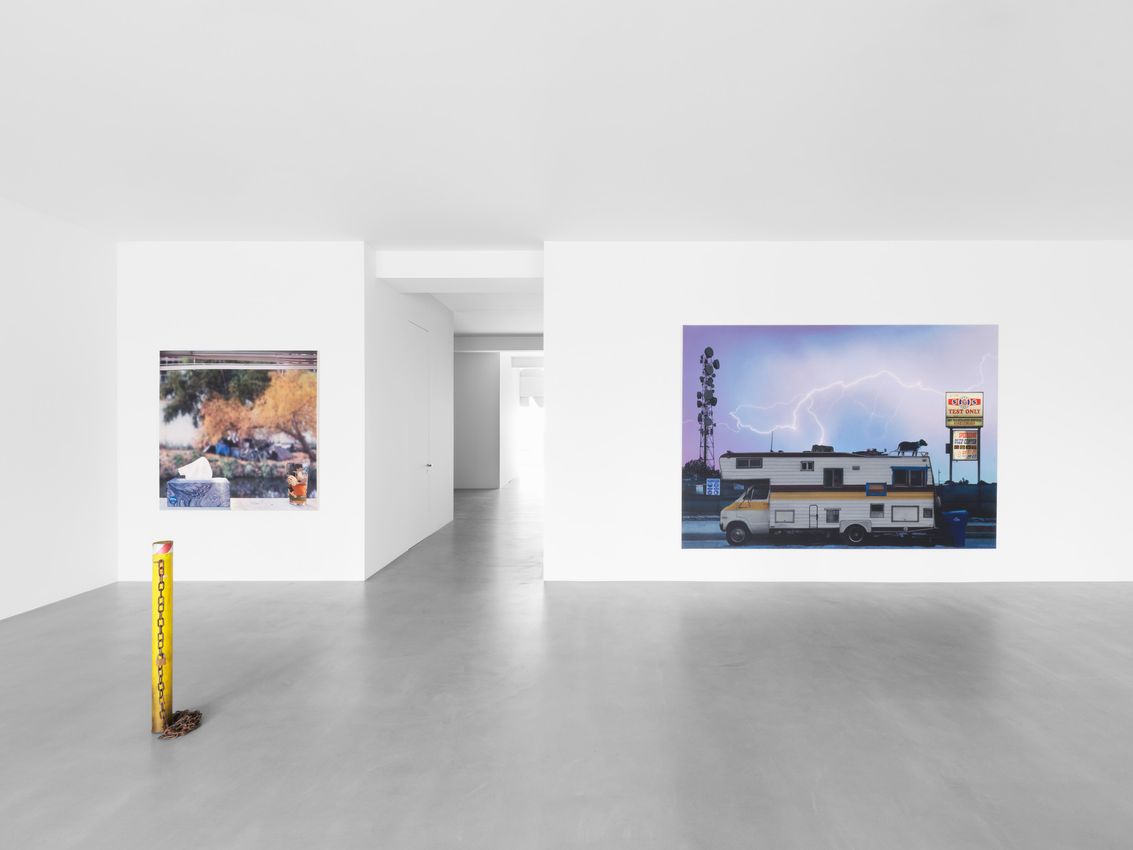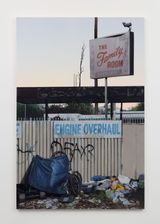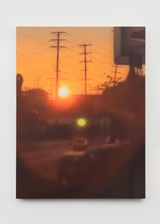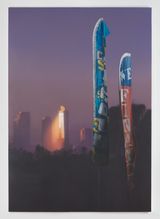
Xavier Hufkens is pleased to present American artist Sayre Gomez’s first exhibition with the gallery. Comprising a new series of large-format urban landscape paintings and three-dimensional works, the artist takes Los Angeles as the starting point for an expansive exploration of contemporary metropolitan life and the psychology of place.
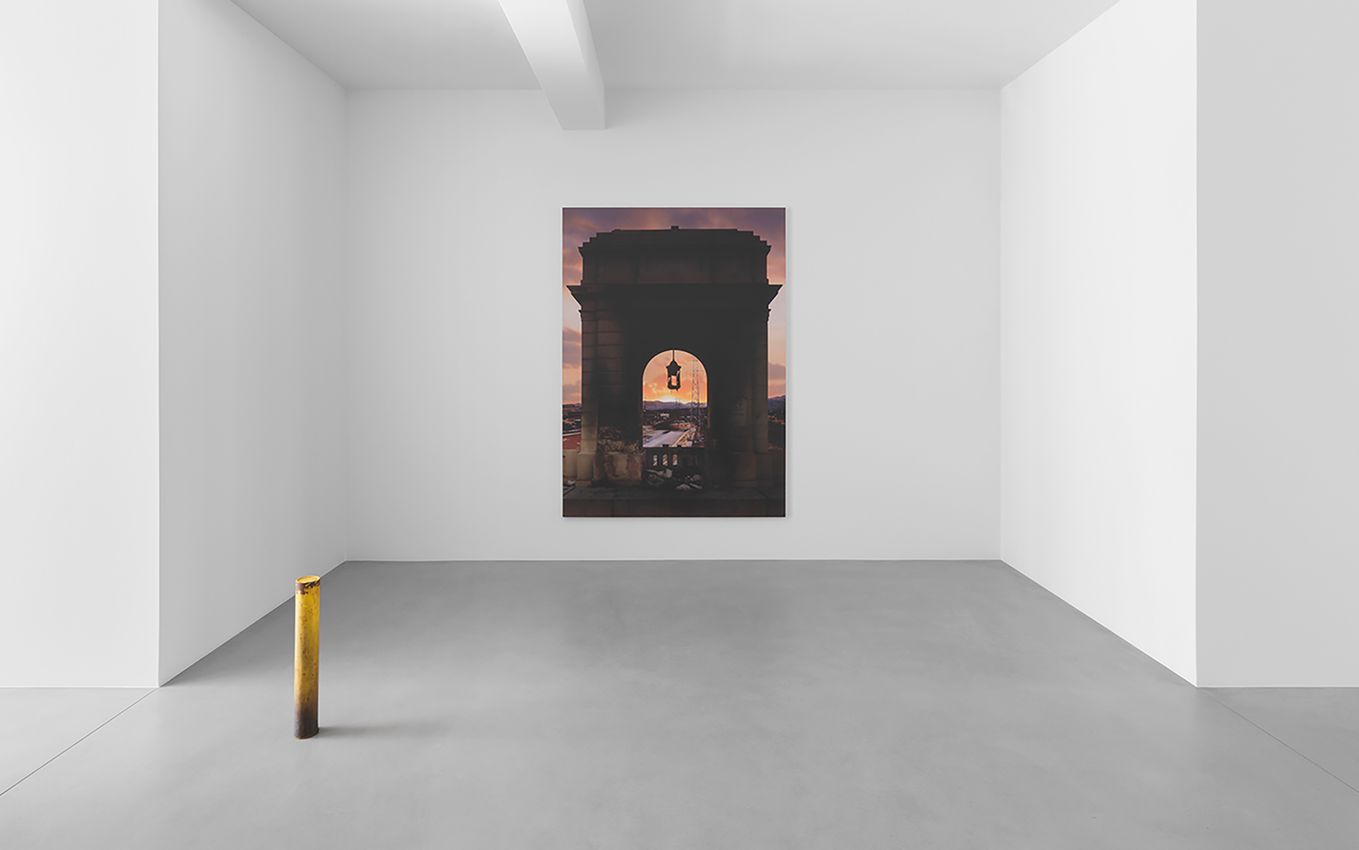
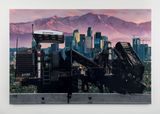
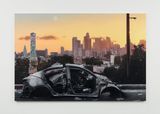
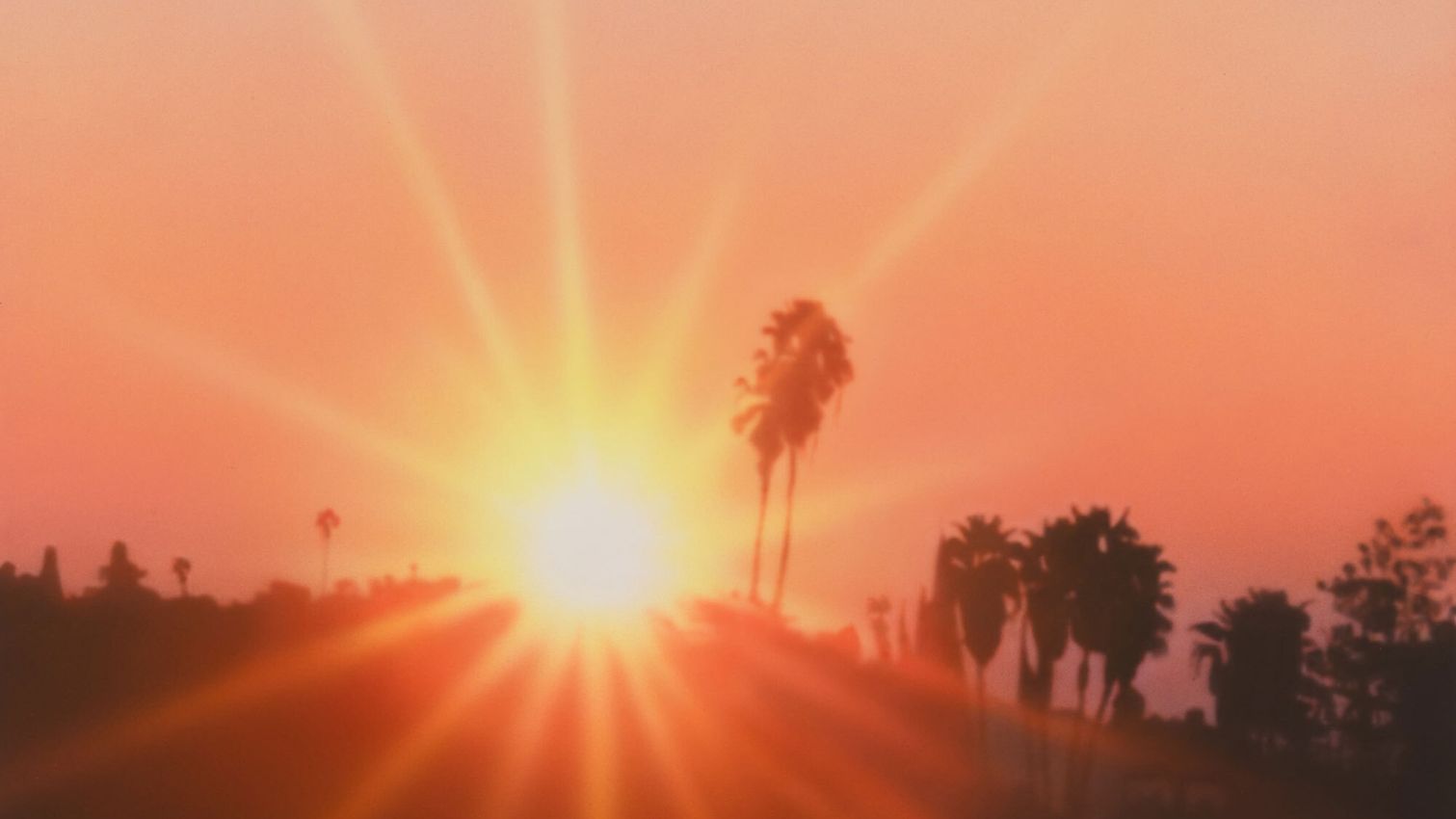
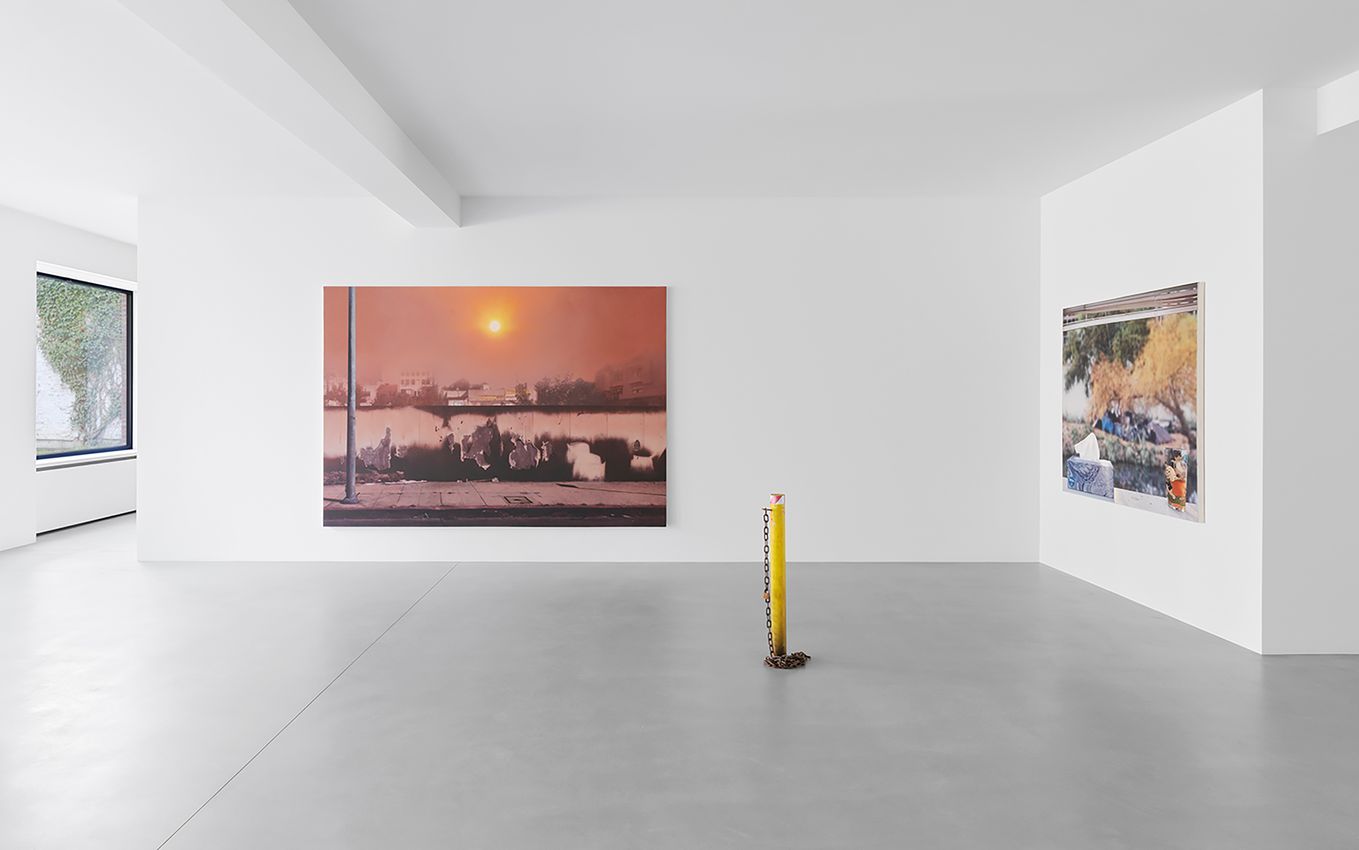
The title of the exhibition, True Crime, reflects one of the leitmotivs of the exhibition and a recurring theme in Gomez’s oeuvre, namely the gap between fact and fiction and the notion of constructed realities. It references an immensely popular genre of literature, film and television that appears to be rooted in reality but tends to be meticulously scripted. The phenomenon is aptly summarised by the UCLA media scholar, Mark Seltzer: ‘true crime is crime fact that looks like crime fiction, it marks, or irritates, the distinction between real and fictional reality, holding steadily visible that uncertain region between truth and falsity where belief resides.’ It is precisely this indeterminate zone that is writ large in Gomez’s paintings. His photorealistic, even hyperreal images, seem like true-to-life depictions of urban Los Angeles but are far more likely to be carefully constructed montages, an amalgam of appropriated images and the artist’s own photographs. The works are propelled by the polarities of America’s second most populous city, whereby the eternal splendour of the natural world (sunsets, palm trees, lightning) stands in stark contrast to the dereliction of the built environment (dated signs, unhoused encampments, graffiti). This is especially evident in the painting entitled Tuesday Evening, which depicts the neo-classical First Street Bridge that was constructed as part of Los Angeles’ ‘City Beautiful’ plans of the early 1900s. Inspired by the civic architecture of Paris and Rome, the schemes sought to beautify the United States through impressive public works. Here, we see the majestic architecture through a fresh urban lens: as an abandoned unhoused shelter, covered in graffiti and blackened by fire. The backdrop is a vivid sunset that, for all its apparent artificiality, is an authentic and frequent sight in the ‘city of angels’. For Gomez, the city is a barometer of changing cultural and economic conditions, a deeply layered structure that is ripe for semiotic analysis, whereby it is not so much the structures themselves that are of interest but what they signify and are capable of evoking. In this respect, his paintings not only belong to the rich traditions of urban landscape painting that exist on both sides of the Atlantic, but also pushes the boundaries of the genre by challenging the viewer’s ability to differentiate between authenticity and simulation in a digital, image-saturated and screen-based world.
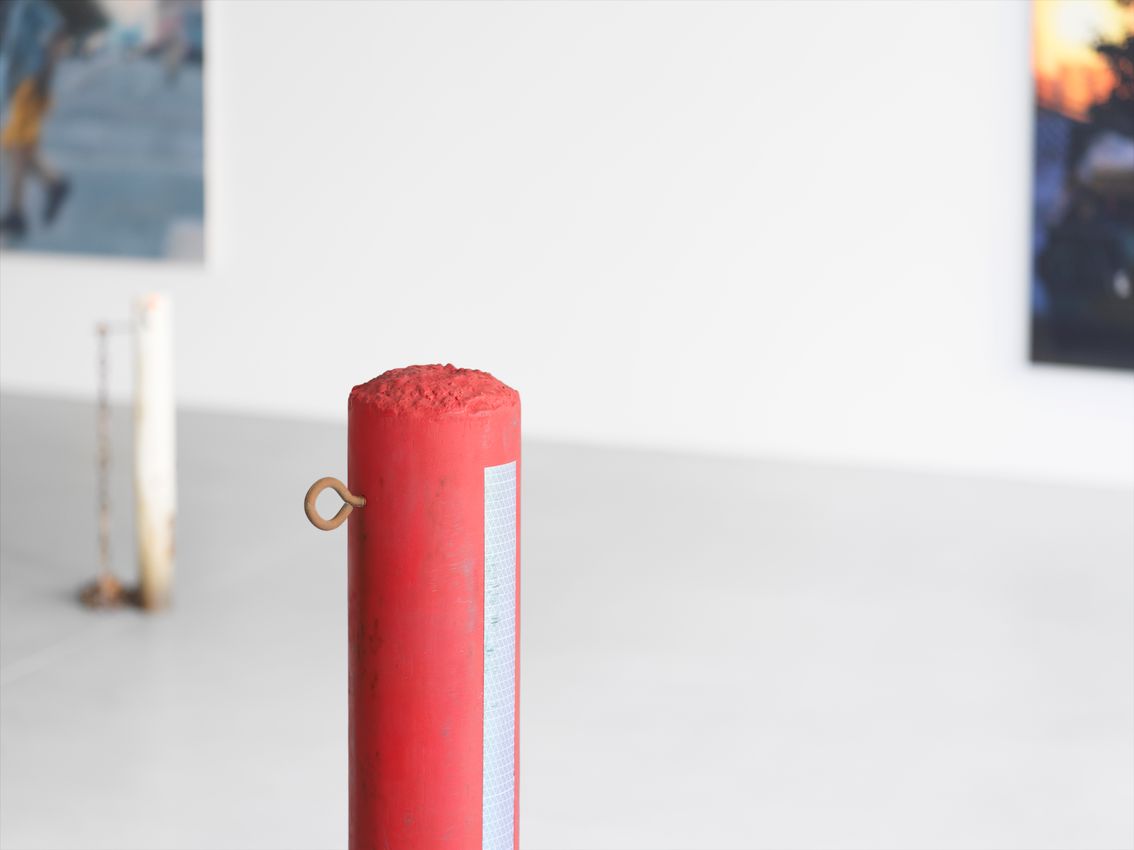
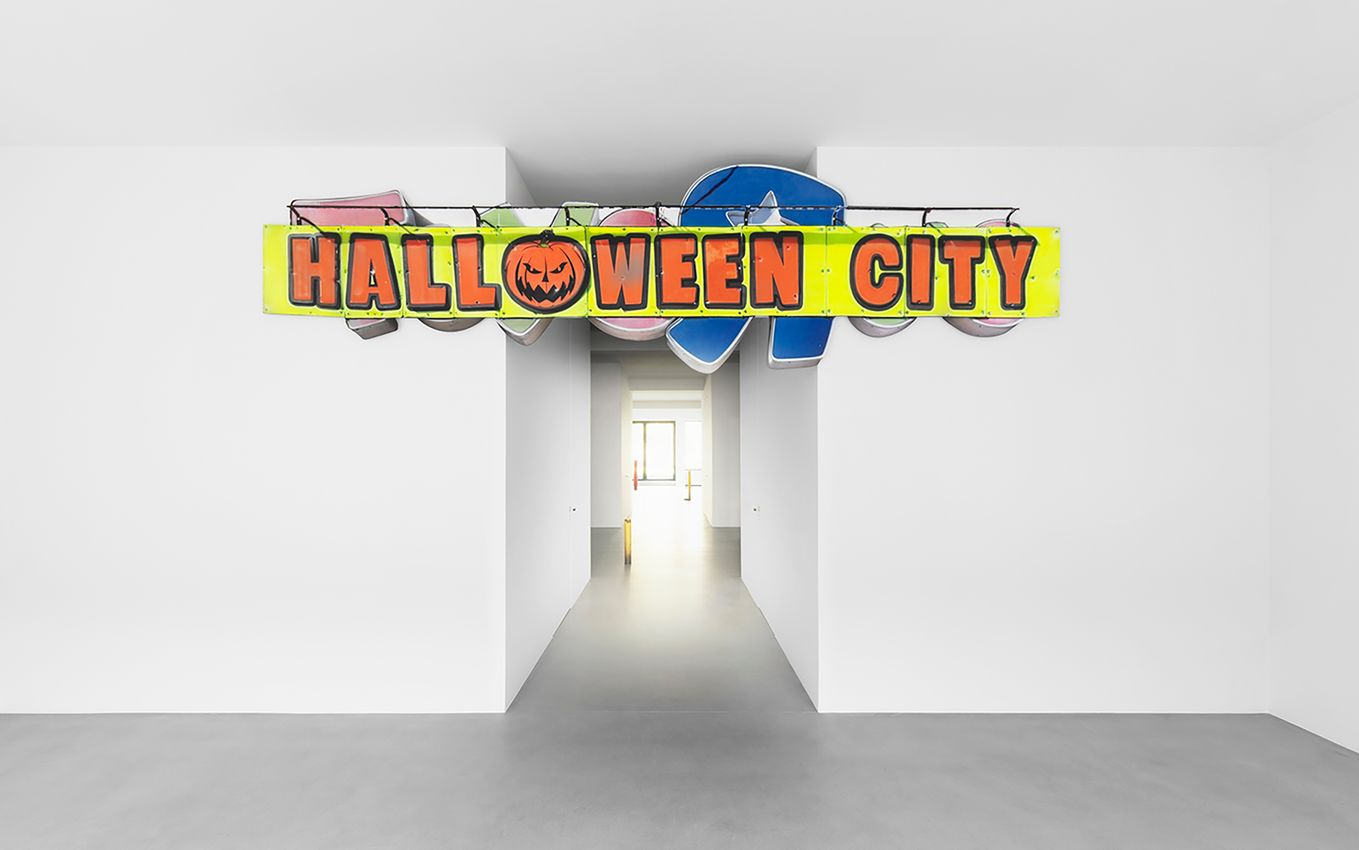
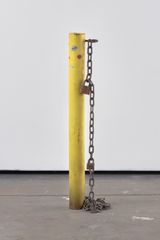
The duality evoked in the paintings is given further expression in a monumental painted aluminium sign that superimposes ‘Halloween City’ over the brand name ‘Toys R Us’, the latter being a chain of American toyshops that at its peak boasted 1,600 outlets in the US and abroad (and was a fixture of the artist’s childhood). Founded in 1948, this iconic brand finally closed its last physical stores in 2021. ‘Halloween City’, on the other hand, is the name of a seasonal ‘pop-up’ retailer, of the kind that briefly occupies vacant premises before packing up and moving on. Signage and graffiti have long fascinated Gomez and are a recurrent motif in his work. In this layered typographical study, they are symbolic of changing commercial models, with the new and itinerant pop-up model replacing the traditional bricks-and-mortar economy. It is both visual palimpsest and metaphor, a graphic and nostalgic comment on market forces and their wider social implications. The exhibition also includes painted sculptures that mimic abraded yellow parking-lot stanchions with heavy chains, part of an on-going series, which extends Gomez’s exploration of Los Angeles’s streets into the physical gallery space. Designed to bring order and control to the public realm, these industrial forms are covered in faded, discarded price stickers: the tiny, ephemeral and scarcely noticed traces of commercial transactions.
Sayre Gomez (b. 1982, Chicago, USA) studied at the California Institute of the Arts and at the School of the Art Institute of Chicago. His work is held in the following permanent collections: LACMA, Los Angeles; The Hammer Museum, Los Angeles; Foundazione Sandretto Re Rebaudengo, Turin, Italy; Arsenal Contemporary, Montreal; and the Rubell Family Collection, Miami. The artist lives and works in Los Angeles, California. Recent group shows include The Extreme Present, The Moore Building, Miami, FL, USA (2019); In Production: Art and the Studio System, Yuz Museum, Shanghai, China (2019); Alternate Realities: Selection of Works from the Collection, Arsenal Contemporary, Montreal, Canada (2019); The Artist is Present, Yuz Museum, Shanghai, China (2018) and Unobstructed Views, Museum of Contemporary Art Detroit, Detroit, MI, USA (2017).
Sayre Gomez has risen to prominence in recent years with his semi-fictionalised and photorealistic paintings known as X-scapes. Executed in a wide range of techniques, including trompe l’oeil, airbrushing, stencilling and those used to paint Hollywood sets, his work is inspired by the urban landscape of Los Angeles. Many of his paintings feature the housing, road signs, billboards and landmarks that form the backdrop to long car rides around the city. Gomez will often combine sumptuous natural phenomena with industrial and commercial elements that reflect an altogether grittier side of life, thereby lending his work a temporal aspect. His paintings can simultaneously touch on the beauty of nature (vivid sunsets, sumptuous palms), the passage of time, urban decay and commercial nostalgia (signs, colours and lettering often evoke bygone days) and contemporary life (graffiti, cell phone masts). Gomez synthesises his observations into hyperreal images that challenge our ability to differentiate between authenticity and simulation: a cityscape that feels true-to-life might just as easily be an artificial construction. In this way, he explores the increasingly tenuous link between our everyday surroundings and a digital culture that is relentlessly driven by enhanced and manipulated images. The flawless execution and even luminescence of Gomez’ canvases, as well as the shifts between hard and sharp focus, can be seen as painterly reflections on the digital flattening and blurring of life and culture through screen-based technology. Openings and barriers, such as windows, doors, gates, shutters, walls and fences, are recurrent metaphors in his oeuvre that suggest Los Angeles is a city of promise and freedom, but also one of broken dreams and destitution. Gomez also explores these themes through other mediums, including sculpture, installation and video.

A respected voice in contemporary art discourse.
Focusing on ambitious storytelling and insightful art-world commentary. Ocula Magazine publishes in-depth interviews, critical essays and timely analysis on the artists, exhibitions and ideas driving the global art world.
Learn more about Ocula Magazine
Showcasing the best of the art world.
Ocula partners with galleries from around the world to highlight their artists, artworks and exhibitions. Gallery membership is by application and invitation, with each member vetted by an independent panel.
Learn more about Ocula Membership

Specialises in the sale of major artworks.
Led by a team with deep ties to the world’s leading auction houses, galleries and collectors. Ocula’s advisory team offers bespoke services to high-net-worth clients from around the world who are looking to acquire the best of contemporary and modern art.
Learn more about our team and services