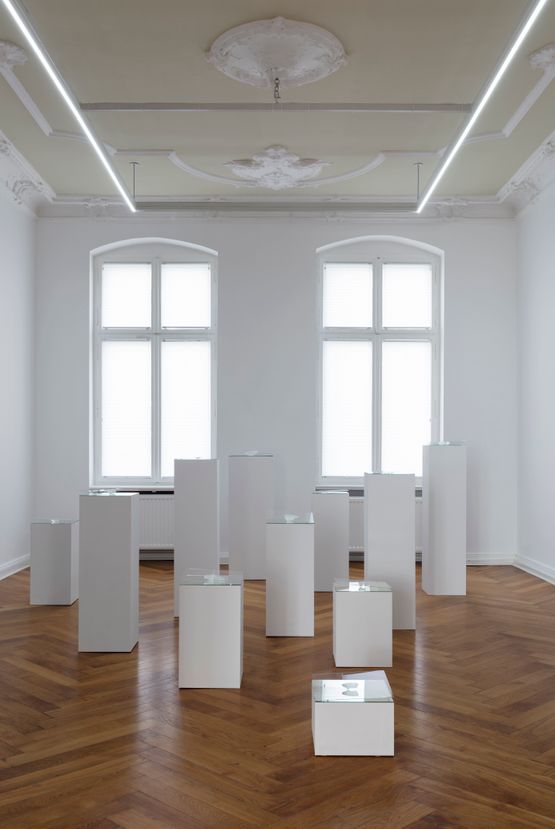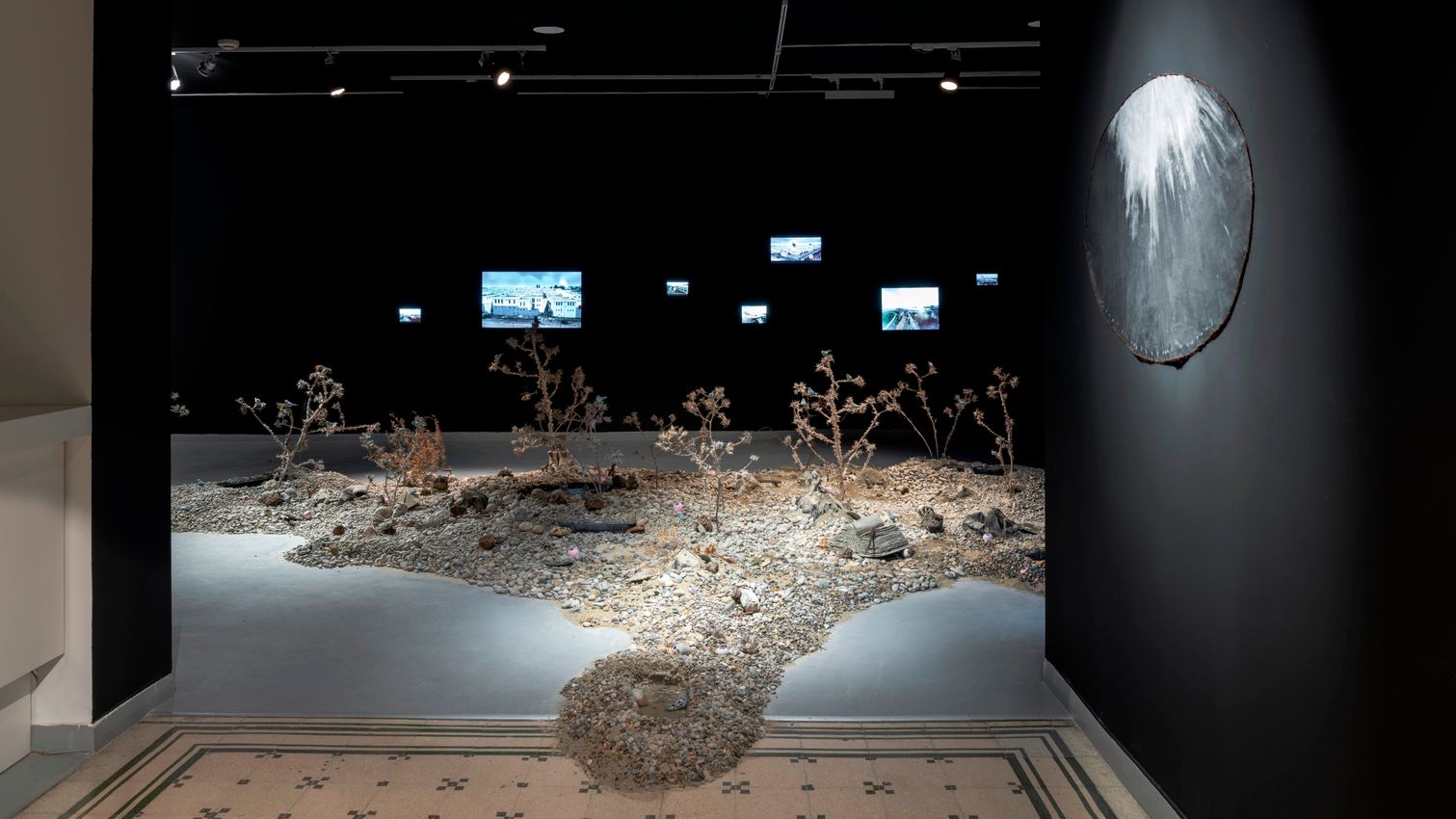




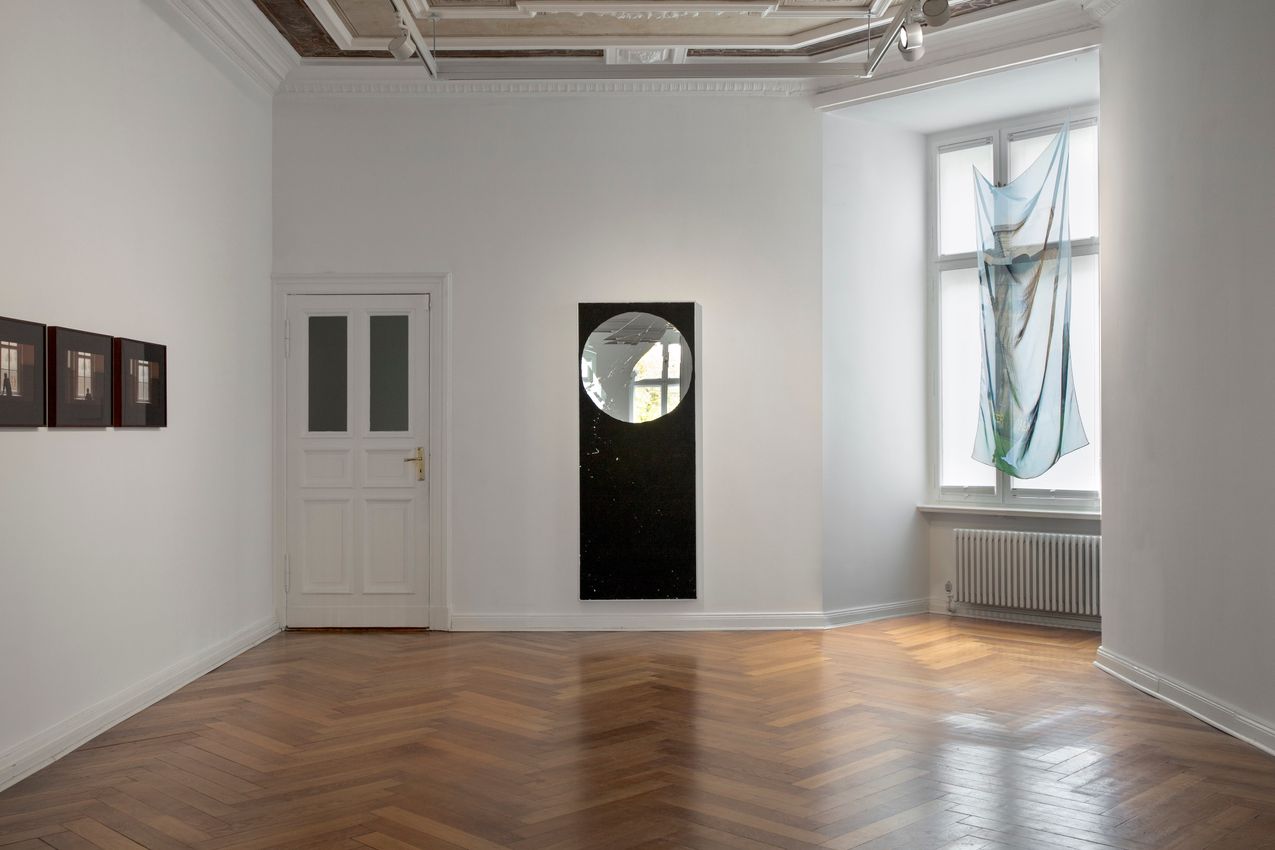
Zilberman Gallery, Berlin is pleased to announce the exhibition What is the future in the past? And what is the past in the future? by Berlin and Hong Kong based artist, Isaac Chong Wai, marking the artist’s first solo show in Berlin. The opening will take place on September 5 at 6 p.m. and the performance pietas (2019) at 7:30 p.m. on the same day.
Contemplating imaginary pasts and looking at possible futures from the point of the present, the drawings, sculptures, site-specific installations and performances of the artist deal with the concealed perils of the public, the hidden available to our gaze. While normative narratives claim a certain rhetoric, Chong’s works beckon us through dilemmas; turning assumed truths on their heads and inviting us to participate in dialogues of vulnerability and resilience. His pieces often play with time, memory and propose performance as a commemorative tool for the future. In Chong’s work violence and poetry intermingle, while the artist visits the history of Germany. Taking historical sites as the spaces of memory, Chong addresses complex research on how the body transforms in public space and uses alternating mediums to reflect on layers of historical memory.
In most of the pieces of the show, we see the artist performing—using his breath to cover the window, painting on mirror to create a moon, dating a guy, covering and casting the bullet holes—except the opening performance pietas (2019). Different from how normally we perceive the image of Pieta in the Christian world, in Chong’s version the person who is holding the dead body is the one who is crying and two bodies shift this role repetitively. When the dead is crying instead of the alive, what does it tell about our world, about its history and rhythms?
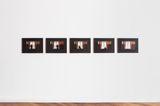
In the video-stills Neue Wache (2015), we see Isaac Chong Wai from the back, covering the image of the Neue Wache—exhibiting the renowned sculpture Mutter mit totem Sohn (1937—1938) by Käthe Kollwitz—from the building of Berlin’s Maxim Gorki Theatre. Slowly, the breath of the artist covers the back facade of the Neue Wache, a certain past. The breath leaves its traces on the window; what we see is only an after effect of the breath. People are gone and we still desire to preserve the past—as our breath floats away and we only see its traces on the window, hiding vague memories.
The video The Silent Wall (2014), depicts Chong trying to cover the bullet holes on a wall with his hands in the city of Sarajevo, recalling the quota of bullets that the soldiers had to shoot daily. As a result, some shot the same wall, instead of people. Which bullet hole belongs to the soldier endeavouring not to murder and which one ended up in the wall after piercing a body? After this experience, Chong discovered remaining bullet holes also on the walls of Berlin, which led to the video exhibited in the show, The Silent Wall—Berlin (2019). Chong’s fragile amorph glass sculptures Missing Space (2019)—with GPS numbers mounted on to find the locations—are the casts of these holes, dragging a hidden past into now. The display recalls the idea of temporality, randomness, illusion of instability, danger and susceptibleness, because of their material, because of the way they are still but unstable.
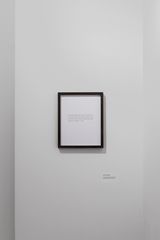
Magical daily moments find their place in Isaac Chong Wai’s work, without the control of the artist to create such moments. For instance, the piece I Dated a Guy in Buchenwald (2013), depicts the words of Chong’s date, a framed text on paper, written after the time they spent in the concentration camp in Buchenwald as tourists. The act of two men kissing commemorates the persecuted and executed gays during WWII. ‘Then I knew there was hope for I had just experienced human warmth where I least expected to.’ writes François—the artist’s date, remembering how people suffered and how time allows desires to exist in new ways in privileged parts of the world.
The exhibition is accompanied by a catalogue with contributions by Pauline Doutreluingne, Caroline Ha Thuc, and Lotte Laub.
Isaac Chong Wai (b. 1990, China) works and lives in Berlin and Hong Kong. Chong graduated from Academy of Visual Arts at Hong Kong Baptist University with a BA in Visual Arts and Bauhaus-Universität in Weimar, Germany, with a MFA in Public Art and New Artistic Strategies. His most recent solo exhibitions include: Is the World Your Friend? (Blindspot Gallery, Hong Kong, 2019), An Artistic Archive of Borders (Kunstraum München, Munich, Germany, 2018), Future of the Past-Past of the Future (Goethe Institut Hong Kong, Hong Kong, 2018), What is the future in the past? And what is the past in the future? (Bauhaus Museum, Weimar, Germany, 2016). His selected group exhibitions include: Living Sound—Expanding the extramusical (Museum of Contemporary Art (MOCA), Taipei, Taiwan, 2019), The Racing Will Continue, The Dancing Will Stay (Guangdong Times Museum, Guangzhou, China, 2019), Imaginary Bauhaus Museum (Schiller Museum, Weimar, Germany, 2019), M+ Live Art Audience As Performer (M+ Museum, Hong Kong, 2018), The D-Tale: Video Art from the Pearl River Delta (Times Art Center, Berlin, Germany, 2018), KOTODAMA (Para Site, Hong Kong, 2018), Forecast Forum (Haus der Kulturen der Welt, Berlin, Germany, 2017), Moscow International Biennale for Young Art, A Time for Dreams (National Centre for Contemporary Arts (NCCA), Moscow Museum of Modern Art (MMOMA) and Museum of Moscow, Moscow, Russia, 2014).

Isaac Chong Wai’s (b.1990; works in Berlin and Hong Kong) artistic practice integrates conceptual, political, and performative elements through an interdisciplinary approach, engaging with the urgency of societal changes and global phenomena. Chong transforms the emotions, tensions, and memories from human interactions into performative materiality and immersive experiences.
Zilberman Gallery, founded in Istanbul in 2008, stages 10–12 exhibitions every year at its main gallery spaces in Istanbul and Berlin and at the project space. The gallery occupies two separate floors of Mısır Apartment, one of the most famous examples of art nouveau architecture in Istanbul.

A respected voice in contemporary art discourse.
Focusing on ambitious storytelling and insightful art-world commentary. Ocula Magazine publishes in-depth interviews, critical essays and timely analysis on the artists, exhibitions and ideas driving the global art world.
Learn more about Ocula Magazine
Showcasing the best of the art world.
Ocula partners with galleries from around the world to highlight their artists, artworks and exhibitions. Gallery membership is by application and invitation, with each member vetted by an independent panel.
Learn more about Ocula Membership

Specialises in the sale of major artworks.
Led by a team with deep ties to the world’s leading auction houses, galleries and collectors. Ocula’s advisory team offers bespoke services to high-net-worth clients from around the world who are looking to acquire the best of contemporary and modern art.
Learn more about our team and services