





ALEXANDER CALDER
1898-1976, United StatesAlexander Calder was born in 1898, the second child of artist parents—his father was a sculptor and his mother a painter. In his mid-twenties, Calder moved to New York City, where he studied at the Art Students League and worked at the National Police Gazette, illustrating sporting events and the Ringling Bros. and Barnum & Bailey Circus. Shortly after his move to Paris in 1926, Calder created his ‘Cirque Calder’ (1926–31), a complex and unique body of art. It wasn’t long before his performances of the ‘Cirque’ captured the attention of the Parisian avant-garde.
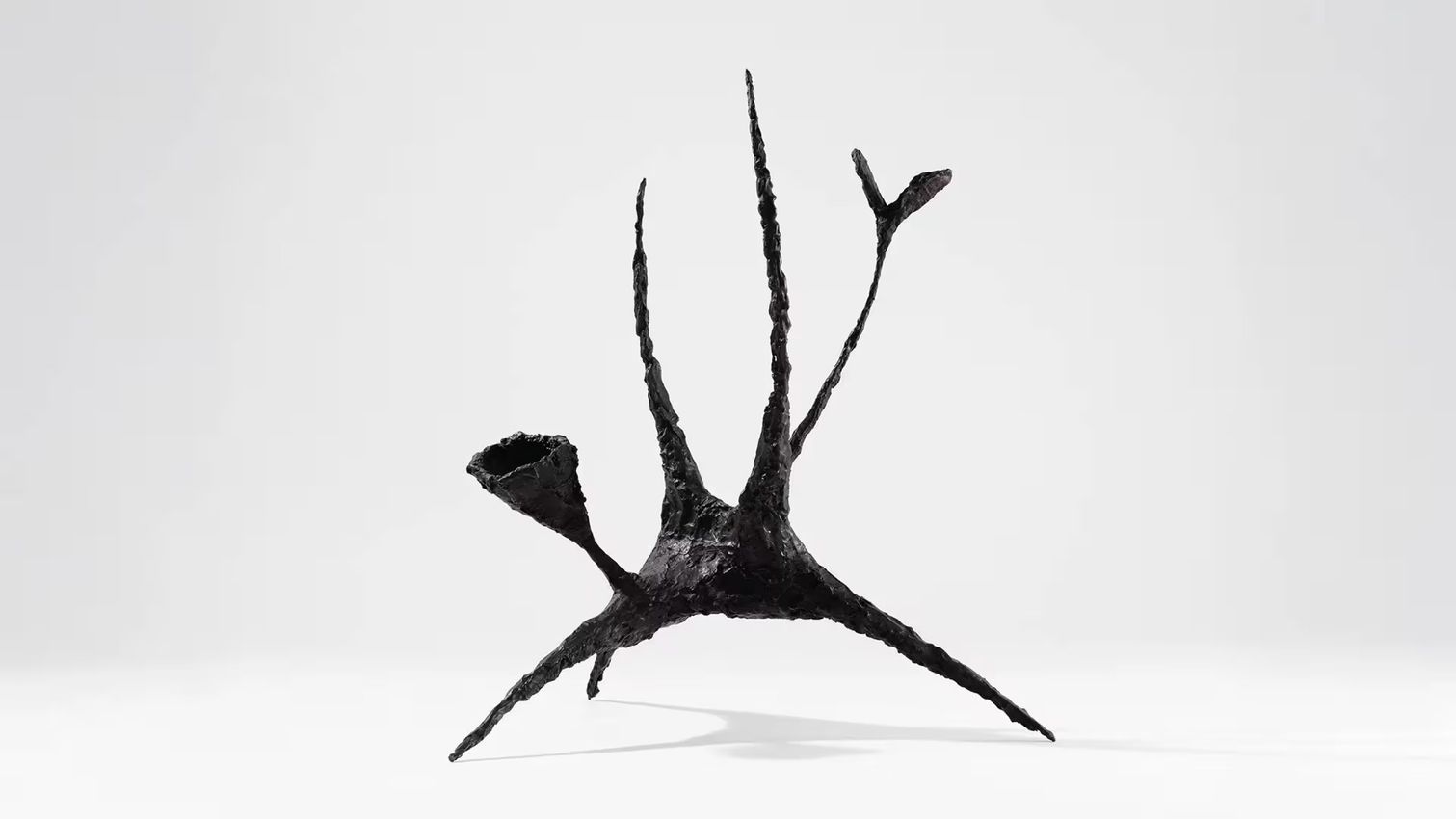
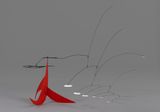
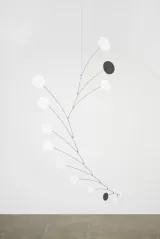
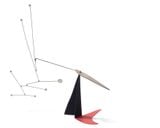
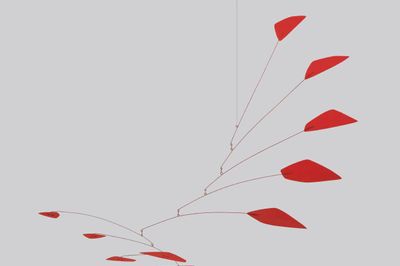
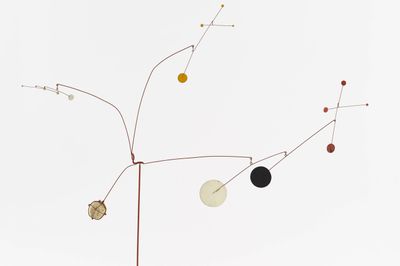
In 1931, a significant turning point in Calder’s artistic career occurred when he created his first kinetic nonobjective sculpture and gave form to an entirely new type of art. Some of the earliest of these objects moved by motors and were dubbed ‘mobiles’ by Marcel Duchamp—in French, mobile refers to both ‘motion’ and ‘motive.’ Calder soon abandoned the mechanical aspects of these works and developed suspended mobiles that would undulate on their own with the air’s currents. In response to Duchamp, Jean Arp named Calder’s stationary objects ‘stabiles’ as a means of differentiating them.
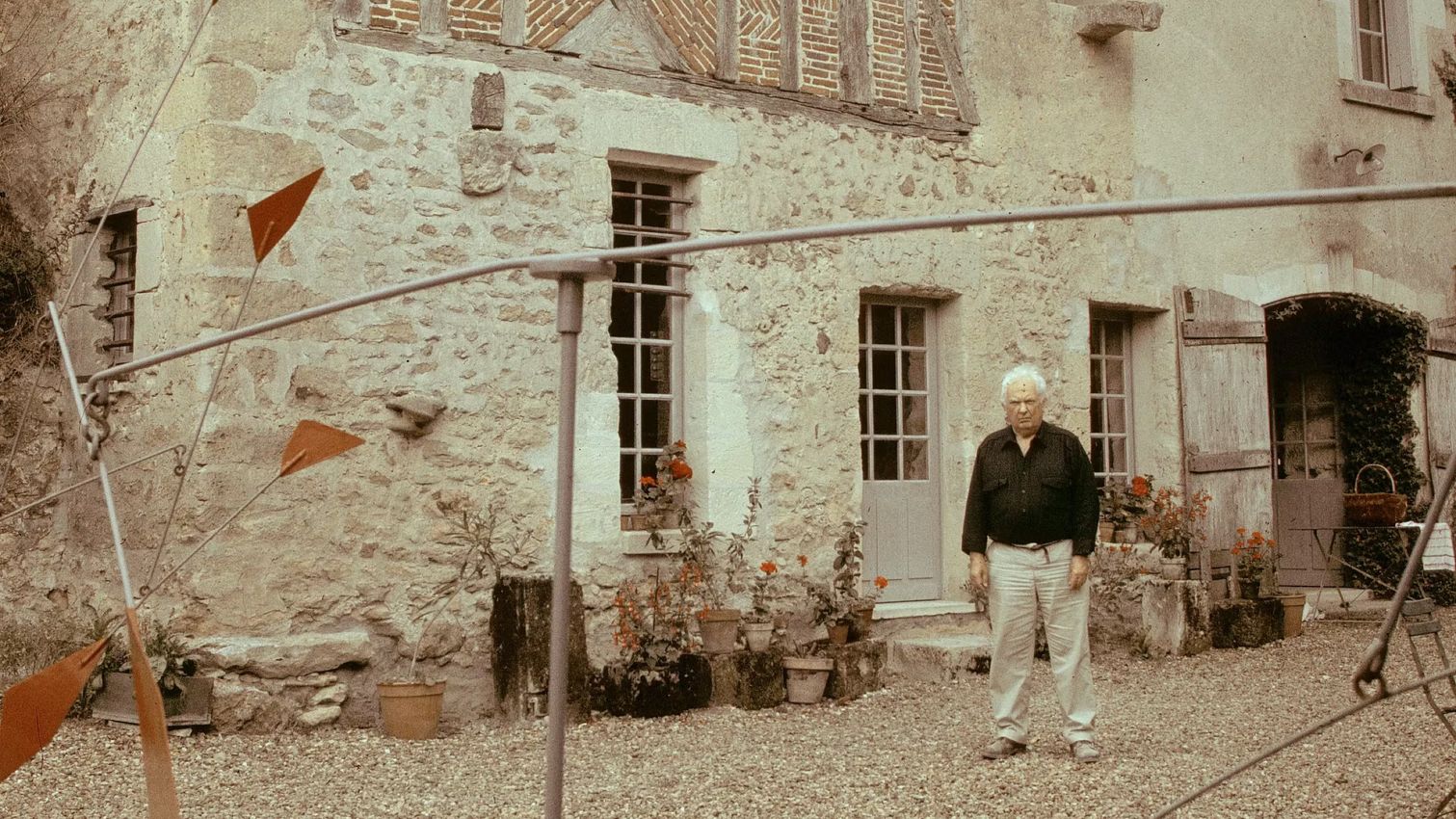
Calder returned to live in the United States with his wife, Louisa, in 1933, purchasing a dilapidated farmhouse in the rural town of Roxbury, Connecticut. It was there that he made his first sculptures for the outdoors, installing large-scale standing mobiles among the rolling hills of his property. In 1943, James Johnson Sweeney and Duchamp organised a major retrospective exhibition at the Museum of Modern Art, New York, which catapulted Calder to the forefront of the New York art world and cemented his status as one of the premier American contemporary artists.
In 1953, Calder and Louisa moved back to France, ultimately settling in the small town of Saché in the Indre-et-Loire. Calder shifted his focus to large-scale commissioned works, which would dominate his practice in the last decades of his life. These included such works as Spirale (1958) for the UNESCO headquarters in Paris and Flamingo (1973) for Chicago’s Federal Center Plaza. Calder died at the age of seventy-eight in 1976, a few weeks after his major retrospective, Calder’s Universe, opened at the Whitney Museum of American Art, New York.
Courtesy Hauser & Wirth

Current Exhibitions at Hauser & Wirth


Works at Hauser & Wirth


Works Elsewhere














Alexander Calder in Ocula Magazine






Explore and Follow Artists Shaping Contemporary Art
A respected voice in contemporary art discourse.
Focusing on ambitious storytelling and insightful art-world commentary. Ocula Magazine publishes in-depth interviews, critical essays and timely analysis on the artists, exhibitions and ideas driving the global art world.
Learn more about Ocula Magazine
Showcasing the best of the art world.
Ocula partners with galleries from around the world to highlight their artists, artworks and exhibitions. Gallery membership is by application and invitation, with each member vetted by an independent panel.
Learn more about Ocula Membership
Specialises in the sale of major artworks.
Led by a team with deep ties to the world’s leading auction houses, galleries and collectors. Ocula’s advisory team offers bespoke services to high-net-worth clients from around the world who are looking to acquire the best of contemporary and modern art.
Learn more about our team and services