





MARISA ADESMAN
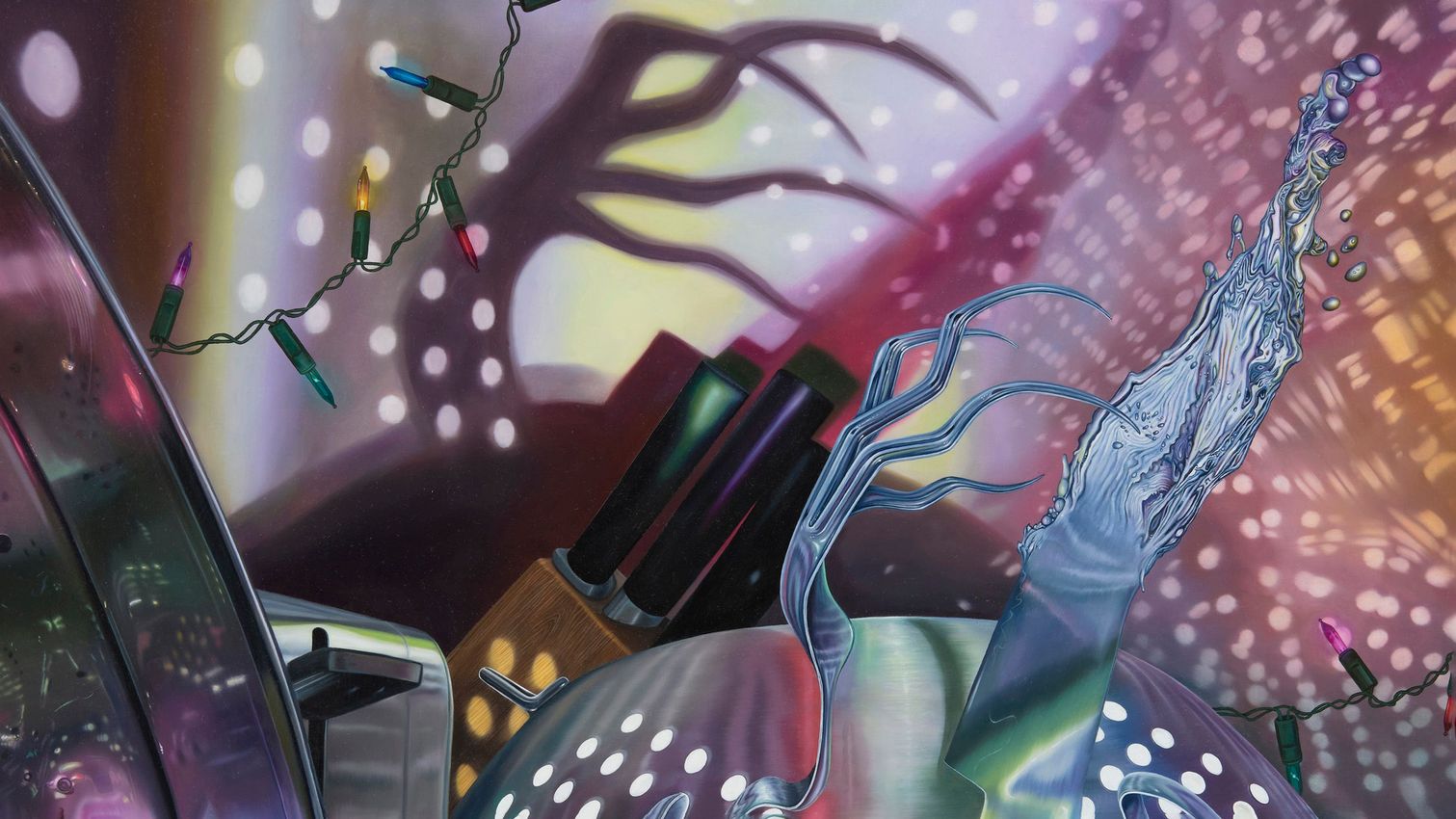
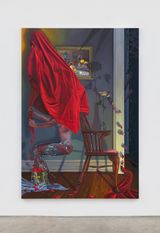
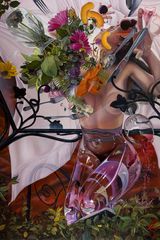
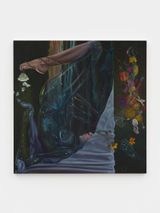
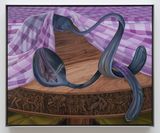
b. 1991, United StatesDespite their surreal compositions, Marisa Adesman’s paintings are occupied by ordinary characters—the fork, household utensils, plants and animals, and serene seascapes—that transmute and merge with one another. Through her oneiric photorealistic painted universe, Adesman challenges the fixed notions of femininity and gendered space.
Education and Early Work
Marisa Adesman studied Painting and Psychology at Washington University in St. Louis, Missouri, and graduated with a BFA in 2013. It was during her graduate studies at the Rhode Island School of Design (RISD) that the artist began to explore other mediums, including performance, video, and printmaking. Adesman received her MFA in 2018.
While at RISD, Adesman also explored the dining room and kitchen, and their traditional associations with domesticity and femininity. Carefully arranged dining tables are seen from below in paintings such as Hortus Inconclusus (2018), offering an unusual view of an otherwise mundane part of daily life.
Forks
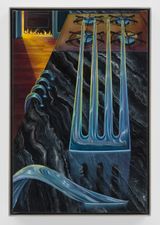
The fork is the main protagonist of Marisa Adesman’s photorealistic paintings, where it appears in bizarre transformations or configurations evocative of Surrealist painting. Divinorum (life finds a way) shows a contorting fork with a fish tail, while its tines turn into a small fire and tree roots; the fork becomes one with a dewy spider web in All the Trappings (both 2020).
In her 2020 interview with Eve Leibe Gallery, Adesman said that her preoccupation with the fork began with her earlier paintings of the dining room and the kitchen. When seen through glasses and glass plates, the fork would take on a myriad of appearances. For Adesman, the mutability of the fork enables it to be ‘a fluid, time-travelling, genre-bending character’ that subverts established social norms and expectations.
Film
Marisa Adesman’s experimentation with various mediums led to The Ballad of Yesterday, Today, and Tomorrow (2019), a 63-minute film made in collaboration with artist Christian Ruiz Bernan. Combining satire, magical realism, and poetry, The Ballad follows the daily routine of three women at ‘Bluebeard Farms’ where they purport to be living fully self-realised lives out of their own volition. Slowly, however, the women realise the trappings of such ideal lifestyles and begin to plot an escape.
Exhibitions
Marisa Adesman’s solo exhibitions include Forklore, Anat Ebgi, Lost Angeles (2021) and Desiderio Pacens, Eve Leibe Gallery, London (2020).
Selected group exhibitions include Good Company: The Remix, Anat Ebgi, Los Angeles (2021); Gest, Nino Mier Gallery, Los Angeles (2020); Unveiled, The Beehive, Boston (2019); Counter Narratives: Geographies of the Unfamiliar, Asya Geisberg Gallery, New York (2018); {RE}HAPPENING, Black Mountain College Museum + Art Center, Ashville, North Carolina (2018); and Face It: The Face in Contemporary Art, OnSite: Brooklyn, New York (2015).
Website
Marisa Adesman’s website can be found here and her Instagram can be found here.
Sherry Paik | Ocula | 2021















Explore Marisa Adesman's Exhibitions




Explore and Follow Artists Shaping Contemporary Art
A respected voice in contemporary art discourse.
Focusing on ambitious storytelling and insightful art-world commentary. Ocula Magazine publishes in-depth interviews, critical essays and timely analysis on the artists, exhibitions and ideas driving the global art world.
Learn more about Ocula Magazine
Showcasing the best of the art world.
Ocula partners with galleries from around the world to highlight their artists, artworks and exhibitions. Gallery membership is by application and invitation, with each member vetted by an independent panel.
Learn more about Ocula Membership
Specialises in the sale of major artworks.
Led by a team with deep ties to the world’s leading auction houses, galleries and collectors. Ocula’s advisory team offers bespoke services to high-net-worth clients from around the world who are looking to acquire the best of contemporary and modern art.
Learn more about our team and services