





MARY KELLY
b. 1941, United StatesMary Kelly is a pioneering feminist and conceptual artist whose project-based practice has been central to debates around subjectivity, feminism, and postmodernism since the 1970s. Working primarily through large-scale narrative installations, she investigates how sexuality, gender, and historical memory are mediated by language and institutions, often using archival and documentary methods to frame the entanglement of the personal and the political.
Early life and Formation
Kelly studied art and music at the College of Saint Teresa in Minnesota before moving to Florence in the 1960s to study painting, a period that grounded her in classical training even as she moved toward more critical, conceptual strategies. She subsequently taught in Beirut during the city’s so-called ‘golden age’, before relocating in 1968 to London‘s St Martin’s School of Art, where exposure to European student movements and emerging feminist theory catalysed her long-term critique of orthodox conceptualism.
In London she became a founding member of the Artists’ Union and worked with the Berwick Street Film Collective, collaborating on Nightcleaners (1970–75) and the installation Women & Work: A Document on the Division of Labour in Industry (1975), both touchstones in feminist documentary and expanded cinema. These projects established Kelly’s commitment to working collectively and to embedding artistic form within labour politics, reproductive work, and union organising.
Landmark projects
Kelly’s best-known early work, Post-Partum Document (1973–79), is a six-part installation comprising 135 elements that analyse the mother–child relationship through everything from soiled nappy liners to psychoanalytic diagrams and linguistic charts. First shown at London’s ICA in 1976, the work provoked tabloid outrage for its frank treatment of maternal labour yet has since been canonised as one of the most important works of 20th-century conceptual art for its reconfiguration of care as a site of political and theoretical inquiry.
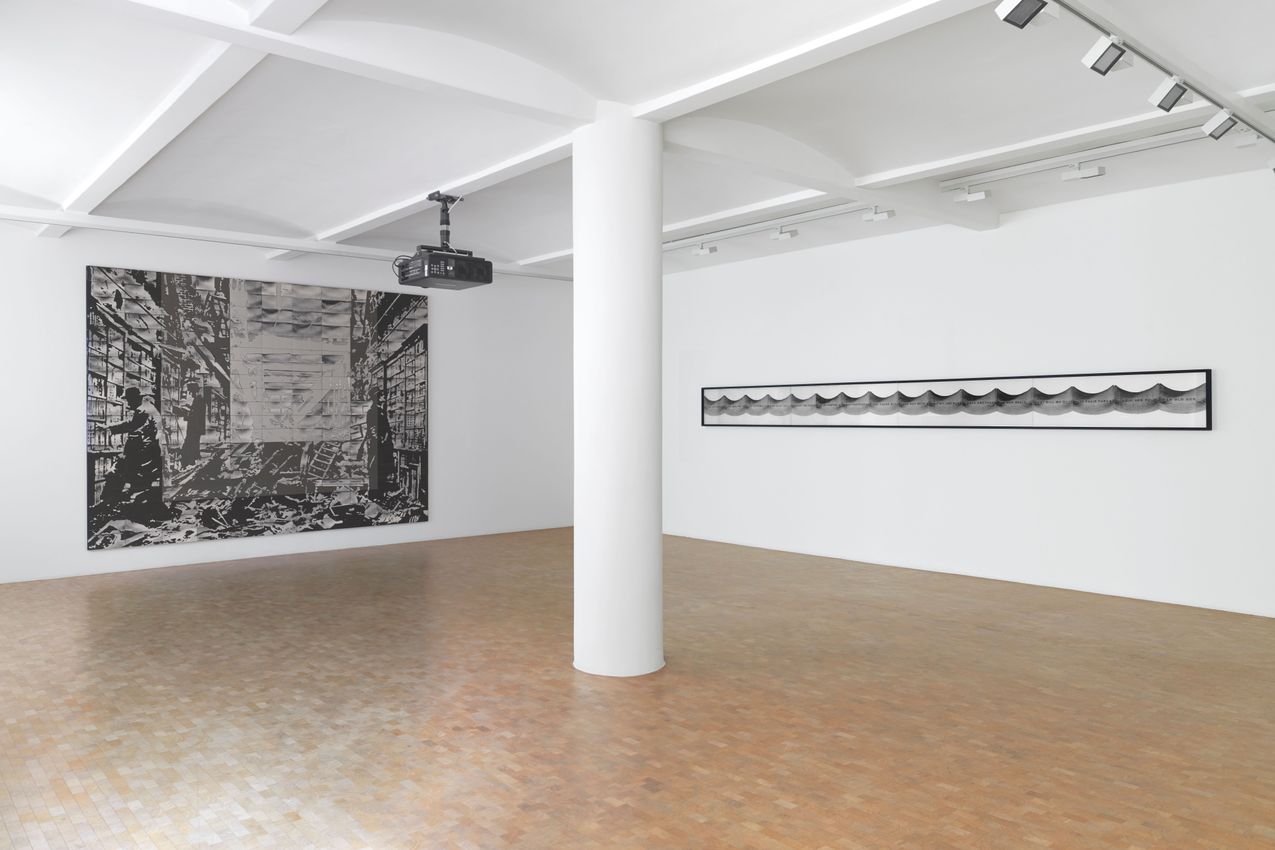
Her subsequent project ‘Interim’ (1984–89) examines women’s collective memories and the ways clothing, language, and institutional discourse construct feminine identities, while works such as Gloria Patri (1992) and Mea Culpa (1999) extend her analysis to the spectacle and trauma of war using materials like polished aluminium and compressed dryer lint. The Ballad of Kastriot Rexhepi (2001), a 200-foot lint relief accompanied by a commissioned score by Michael Nyman, probes the psychic after-effects of conflict and displacement, underscoring her shift from intimate domestic narratives to geopolitical histories.
Collective memory and Later practice
From the mid-2000s, Kelly has returned explicitly to questions of feminist history and intergenerational transmission. Circa 1968 (2004), first exhibited at the Whitney Biennial, reworks an iconic image from the Paris uprisings into lint and projected light noise, while Love Songs (2005–07) restages protest photographs from her archive in collaboration with younger women, producing a dialogic portrait of feminist activism across generations.
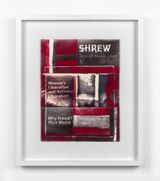
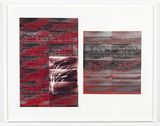
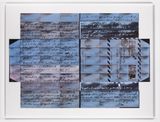
For Documenta 12, Kelly realised Multi-Story House (2007), a walk-in structure whose translucent panels layer testimonies from women of different ages, articulating feminism as a lived, multi-vocal history rather than a closed chapter. More recently, she has developed large-scale lint works and the ongoing project Addendum (including Lacunae, 2023, and Calculus, 2024), which use personal and professional calendars in collage and ash drawings to address late life, continuity, and gaps in memory, with sections acquired by institutions such as the Whitney Museum of American Art and Walker Art Center.
Key themes and significance
Across five decades, Kelly has insisted that everyday experiences—especially those of women—are inseparable from larger political and historical structures, using forms of archive, transcription, and serialisation to make visible how power operates through language and domestic life. By merging rigorous conceptual strategies with feminist theory, she has reshaped understandings of authorship, maternity, labour, and memory in contemporary art, securing her status as one of the central figures in both feminist art history and the ongoing critique of conceptualism.
Exhibitions, Collections, and Teaching
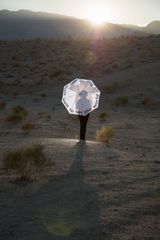
Kelly has been widely exhibited in major museums and biennials, including several Whitney Biennials (1991, 2004, 2024), Documenta 12 (2007), the Biennale of Sydney (1982, 2008), Desert X (2019), and surveys at Moderna Museet, Stockholm (2010), CCA Warsaw (2008), and Whitworth Art Gallery, Manchester (retrospective, 2011). Her work is held in public collections such as Tate, London; MoMA and the Whitney in New York; Centre Pompidou, Paris; MOCA and the Hammer Museum in Los Angeles; Moderna Museet, Stockholm; and the Walker Art Center, among others, while her archive is housed at the Getty Research Institute in Los Angeles.
A key educator as well as artist, Kelly taught in the Whitney Museum’s Independent Study Program from 1989 before joining UCLA in 1996, where she served as Distinguished Professor of Art and founded the Interdisciplinary Studio Area. She has been recognised with a Guggenheim Fellowship (2015) and honorary doctorates from universities in Wolverhampton, Lund, Helsinki, and London, and currently holds the role of Judge Widney Professor at the Roski School of Art and Design, University of Southern California.
Selected Institutional Exhibitions
- Institute of Contemporary Arts, London – first solo exhibition featuring parts of Post-Partum Document (1976); later survey at ICA, London (1993).
- Museum of Modern Art, Oxford, UK – solo exhibition (1977).
- Kettle’s Yard, Cambridge, UK – solo exhibition (1986).
- New Museum of Contemporary Art, New York – Interim shown as a complete work and solo exhibition (1990).
- Vancouver Art Gallery, Vancouver – solo exhibition (1991).
- Generali Foundation, Vienna – major solo exhibition (1998).
- Santa Monica Museum of Art (now ICA LA), Los Angeles – solo exhibition (2001).
- Center for Contemporary Art, Ujazdowski Castle, Warsaw – survey Mary Kelly: Projects, 1973–2010 (2008).
- Moderna Museet, Stockholm – retrospective exhibition (2010).
- Whitworth Art Gallery, Manchester – major survey/retrospective (2011).
- Desert X, Coachella Valley – large-scale outdoor installation as part of the inaugural edition (2017; project developed from 2019 plans).
- Participation in landmark group exhibitions including documenta 12, Kassel (2007); Whitney Biennial, New York (multiple editions including 1991 and 2004); and Biennale of Sydney (1982, 2008).
Mary Kelly FAQs
Who is Mary Kelly?
Mary Kelly (born 1941, Fort Dodge, Iowa) is a feminist and conceptual artist known for project-based, often serial installations that examine the politics of gender, sexuality, labour, and historical memory through archival and linguistic strategies.
Why is Mary Kelly important in contemporary art?
Mary Kelly is widely regarded as a foundational figure in feminist art and post-conceptual practice, credited with bringing the intimate experiences of motherhood, domestic labour, and activism into the centre of rigorous, theory-driven conceptual art.
What is Mary Kelly’s artwork series Post-Partum Document about?
Post-Partum Document (1973–79) by Mary Kelly is a multi-part installation that tracks the early years of the relationship between a mother and child through objects, charts, and texts, using psychoanalysis and linguistics to frame maternal labour and childcare as sites of political and cultural meaning.
What materials and methods does she use?
Mary Kelly employs text, photography, diagrams, found objects, and more recently compressed dryer lint, combining research-driven archival methods with large-scale installations that read as both documents and memorial structures.
Is Mary Kelly a feminist artist?
Yes; feminism is central to Mary Kelly’s practice, from early involvement in the Women’s Workshop and Artists’ Union to later works that stage intergenerational dialogues about feminist histories and ongoing struggles.
Where has Mary Kelly’s work been shown?
Maryt Kelly’s work has been presented in major museums such as ICA London, the New Museum in New York, Generali Foundation in Vienna, Moderna Museet in Stockholm, Whitworth Art Gallery in Manchester, and in large-scale exhibitions like documenta and the Whitney Biennial.
Which museums hold Mary Kelly’s work?
Mary Kelly’s works are in the collections of Tate, London; The Museum of Modern Art and the Whitney Museum of American Art, New York; Centre Pompidou, Paris; MOCA and the Hammer Museum, Los Angeles; Moderna Museet, Stockholm; the Walker Art Center, Minneapolis; and others.
What is Mary Kelly’s connection to archives?
Archival thinking structures both Mary Kelly’s artworks and her legacy: she uses archival display strategies within the work itself, and her papers and project documentation have been acquired by the Getty Research Institute, where they are catalogued as a major research resource.
Where does Mary Kelly teach or what has she taught?
Mary Kelly has held influential teaching positions including the Whitney Museum Independent Study Program and the University of California, Los Angeles, and more recently a named professorship at the University of Southern California, shaping generations of artists and theorists.
How can collectors acquire Mary Kelly’s work?
Mary Kelly is represented by leading contemporary galleries, including those that list her exhibitions and available works on Ocula, and acquisitions are typically handled through these galleries or via institutional and private commissions.
Ocula | 2025

















Explore and Follow Artists Shaping Contemporary Art
A respected voice in contemporary art discourse.
Focusing on ambitious storytelling and insightful art-world commentary. Ocula Magazine publishes in-depth interviews, critical essays and timely analysis on the artists, exhibitions and ideas driving the global art world.
Learn more about Ocula Magazine
Showcasing the best of the art world.
Ocula partners with galleries from around the world to highlight their artists, artworks and exhibitions. Gallery membership is by application and invitation, with each member vetted by an independent panel.
Learn more about Ocula Membership
Specialises in the sale of major artworks.
Led by a team with deep ties to the world’s leading auction houses, galleries and collectors. Ocula’s advisory team offers bespoke services to high-net-worth clients from around the world who are looking to acquire the best of contemporary and modern art.
Learn more about our team and services