






PACITA ABAD
1946-2004, PhilippinesBorn to a family of politicians and activists in Batanes, the furthermost-north island state in the Philippines, Pacita Abad (1946–2004) was sent to the US to finish her graduate studies after political violence initiated by Ferdinand Marcos put her life in danger. Abad settled in San Francisco in 1970, drawn in by the Summer of Love, and met Jack Garrity a few years later, the two embarking upon a yearlong odyssey across Asia in 1973. While this trip and its myriad multicultural interactions convinced Abad to devote herself to art, it also foreshadowed the itinerant, global lifestyle that would characterise her artistic practice.
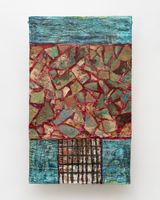
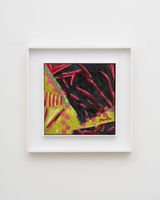
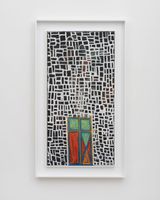
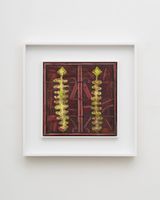
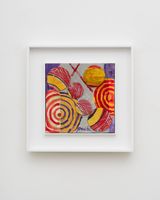
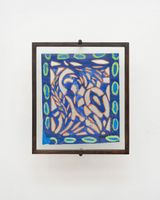
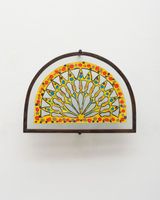
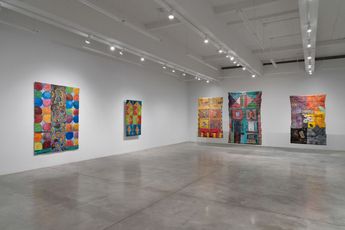
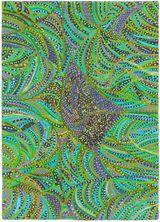
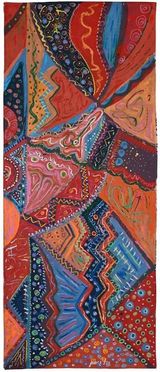
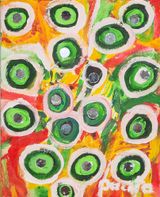
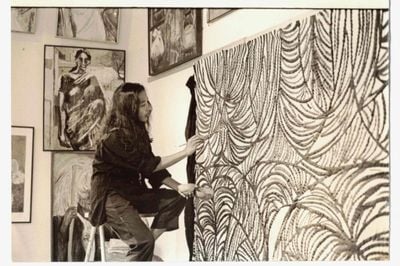
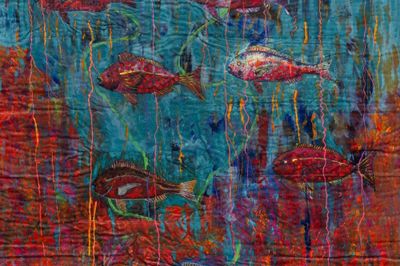
Widely defined by her use of colour, something she remained adamant about from her early studies, Abad pioneered new forms of materiality in her work, illustrated in one instance by her widely celebrated trapunto paintings, a form of quilted painting the artist originated by stitching and stuffing her painted canvases instead of stretching them over a frame. Her oeuvre featured an immense array of subject matter, from tribal masks and social realist tableaus to lush and intricately rendered underwater scenes and abstractions. Accumulating materials, techniques, and subjects from her vast travels, oftentimes within the same composition, Abad was uniquely positioned to explore modernity’s uneven development with the greatest care, as a figure born outside of the metropole. Her work predates contemporary discourses around postcolonial feminisms, globalisation and transnationalism, offering an intuitive understanding of the mutability and heritability of traditions in the places she lived.
Abad studied painting at the Corcoran School of Art in Washington, D.C. and the Arts Student League in New York. Abad is the subject of a major travelling retrospective, opening at the Walker Arts Center in 2023. She has also received solo exhibitions at the Jameel Arts Center, Dubai (2021); Spike Island, Bristol (2020); the Museum of Contemporary Art and Design, Manila (2018); National Museum, Jakarta (1998); The National Museum for Women in the Arts, Washington, D.C (1994); Hong Kong Arts Centre (1986); Cultural Center of the Philippines, Manila (1985); and the Bhirasri Museum of Modern Art, Bangkok (1980), among others.
Her work has been featured at notable exhibitions, including the 11th Berlin Biennale; 13th Gwangju Biennale; 4th Kathmandu Triennale; Asia/America: Identities in Contemporary Asian American Art, a travelling exhibition organized by the Asia Society, New York; Beyond the Border: Art by Recent Immigrants, Bronx Museum of the Arts, New York; La Segunda Bienal de la Habana, Cuba; and Second Contemporary Asian Art Show, Fukuoka Art Museum, Japan. She has also participated in group exhibitions at institutions including: Haus Der Kunst, Germany; Tate Liverpool; Para Site, Hong Kong; and the National Gallery, Singapore. Her work can be found in the collections of Tate Modern, London; The National Museum of Women in the Arts, Washington D.C., M+ Museum, Hong Kong and the National Gallery of Singapore. She died in Singapore in 2004.
Courtesy Tina Kim Gallery

Works at Tina Kim Gallery








Recently Exhibited



Works Elsewhere







Pacita Abad in Ocula Magazine









Explore and Follow Artists Shaping Contemporary Art
A respected voice in contemporary art discourse.
Focusing on ambitious storytelling and insightful art-world commentary. Ocula Magazine publishes in-depth interviews, critical essays and timely analysis on the artists, exhibitions and ideas driving the global art world.
Learn more about Ocula Magazine
Showcasing the best of the art world.
Ocula partners with galleries from around the world to highlight their artists, artworks and exhibitions. Gallery membership is by application and invitation, with each member vetted by an independent panel.
Learn more about Ocula Membership
Specialises in the sale of major artworks.
Led by a team with deep ties to the world’s leading auction houses, galleries and collectors. Ocula’s advisory team offers bespoke services to high-net-worth clients from around the world who are looking to acquire the best of contemporary and modern art.
Learn more about our team and services