






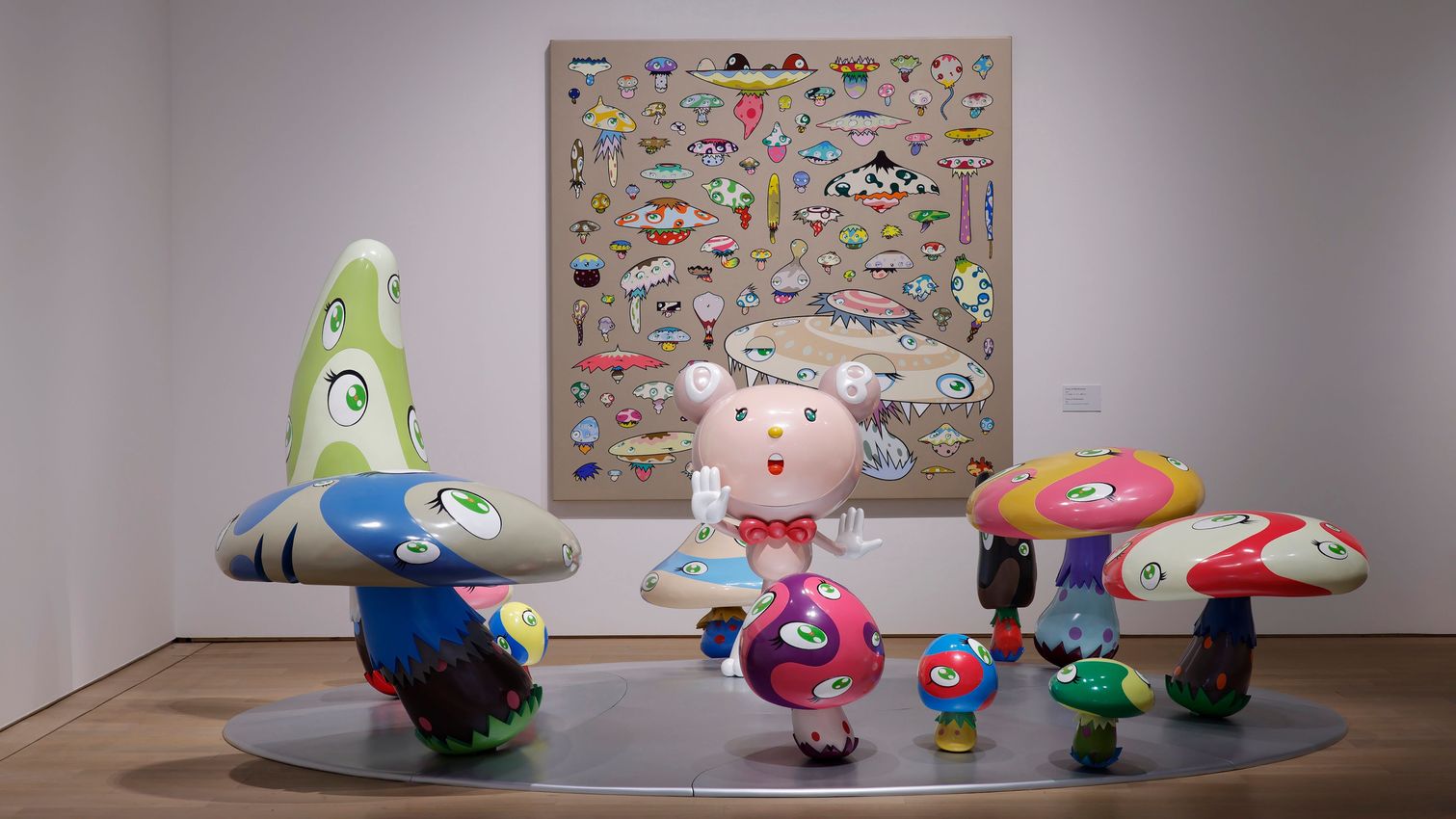
TAKASHI MURAKAMI
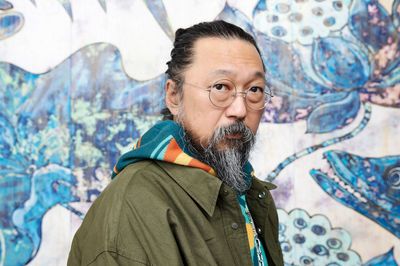
b. 1962, JapanTakashi Murakami is a pioneering contemporary artist known for his vibrant fusion of traditional Japanese painting, anime aesthetics, and pop art, whose playful yet deeply conceptual works have achieved global acclaim across galleries, auctions, fashion collaborations, and museum exhibitions.
Murakami’s artworks span painting, sculpture, installation, fashion, digital media, and animation. Famed for coining the term “Superflat”, his practice collapses traditional hierarchies between high art and commercial culture while interrogating themes of consumerism, trauma, spiritual symbolism, and Japanese identity. His contemporary art merges anime aesthetics with classical techniques, creating artworks that resonate across art galleries, fashion collaborations, and global exhibitions.
Early Years
Born in Tokyo in 1962, Takashi Murakami studied at Tokyo University of the Arts, where he initially pursued a degree in Nihonga, a traditional style of Japanese painting. Disenchanted with what he saw as the insularity of the Japanese art scene, Murakami turned to contemporary art, drawing influence from Western pop culture and Japanese subcultures, especially otaku and manga. After completing his PhD in Nihonga in 1993, he participated in the PS1 International Studio Program in New York, which marked a turning point in his exposure to international contemporary art.
Murakami currently lives and works in Tokyo and New York. He founded Kaikai Kiki Co., Ltd., his own art production and management company, which supports emerging artists and produces large-scale exhibitions.
Mr. DOB and the Birth of Superflat
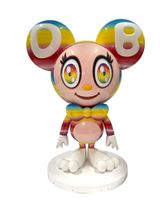
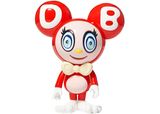
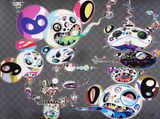
In the early 1990s, Murakami introduced Mr. DOB, a cartoon-like character whose wide grin and morphing features reflect the influence of Japanese mascots and Western pop icons. This figure became the nucleus of Murakami’s “Superflat” movement, a theory and style combining flat pictorial space with socio-cultural commentary. Works such as And Then, And Then And Then And Then And Then (1996–1997) showcase Mr. DOB’s transformation from cute mascot to monstrous avatar, embodying both the seduction and disintegration of identity in consumer-driven society.
Flowers, Colour, and Commercial Iconography
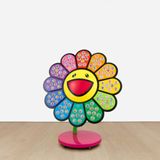
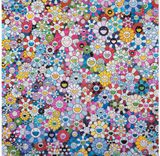
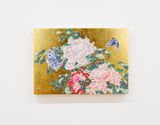
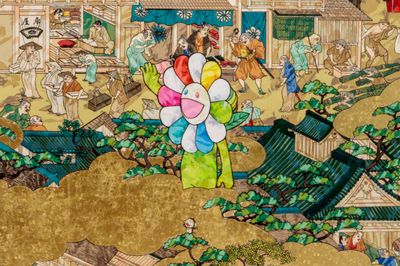
Murakami’s vibrant flower motif, with its circular face and exuberant smile, is among his most recognisable images. Works like Flowers in Heaven (2010) and Kaikai Kiki Lots of Fun (2009) present arrays of blossoms in psychedelic colours, combining innocence with repetition, saturation, and anxiety. While often interpreted as joyful, Murakami himself has described the flowers as masking darker psychological undercurrents, reflecting the performative happiness of modern life and postwar Japan’s enforced cheerfulness.
Skulls and Mortality
Juxtaposing his more playful imagery, Murakami has frequently explored mortality through baroque compositions of skulls, including Skulls and Flowers Red (2010) and Tan Tan Bo Puking – a.k.a. Gero Tan (2002). These paintings, rendered with exceptional detail and layered acrylics, reference both Buddhist vanitas traditions and the hyper-saturated visual culture of manga. The tension between exuberance and decay reinforces Murakami’s commentary on impermanence and the dualities of existence.
Buddhist Iconography and Catastrophe
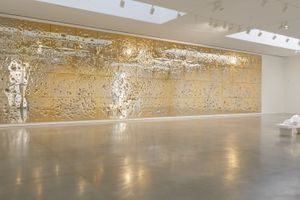
Murakami’s deeper philosophical explorations are evident in works inspired by Buddhist cosmology. His monumental The 500 Arhats (2012), created in response to the 2011 Great East Japan Earthquake, spans over 100 metres and depicts enlightened beings meant to comfort and protect suffering souls. The use of intricate linework, gold leaf, and vibrant pigments reinterprets Edo-period painting with a postmodern twist, connecting spiritual resilience to national trauma.
Public Commissions
- Oval Buddha (2007–2013), Roppongi Hills, Tokyo
- The 500 Arhats (2012), Qatar Museums Authority
- Flower Matango (2001), Palm Springs Art Museum
Exhibitions
Takashi Murakami has been the subject of both solo and group exhibitions at important institutions. A selection of important exhibitions are provided below.
Solo Exhibitions
- Takashi Murakami, Gagosian, Burlington Arcade, London (10 December 2024–29 March 2025).
- Japanese Art History à la Takashi Murakami, Gagosian, Grosvenor Hill, London (10 December 2024–8 March 2025).
- Takashi Murakami: Stepping on the Tail of a Rainbow, Cleveland Museum of Art, Cleveland (16 May–7 September 2025) — expanded version of the Broad presentation, with a reconstructed Yumedono ‘Dream Hall’ and new paintings.
- Takashi Murakami Mononoke Kyoto, Kyoto City KYOCERA Museum of Art, Japan (2024)
- Takashi Murakami: Stepping on the Tail of a Rainbow. The Broad, Los Angeles (2022)
- Takashi Murakami: The Octopus Eats Its Own Leg, Museum of Contemporary Art Chicago. Travelled to: Vancouver Art Gallery, Canada; Modern Art Museum of Fort Worth, TX. (2017)
- Murakami Versailles, Château de Versailles, France (2010)
- Murakami, Brooklyn Museum, New York (2008)
- ©MURAKAMI, Museum of Contemporary Art, Los Angeles. Travelled to: Brooklyn Museum of Art, NY; Museum für Moderne Kunst, Frankfurt, Germany; Guggenhiem, Bilbao (2017).
Group Exhibitions
- The Omnipotence of Dreams, Gagosian, Gstaad, group exhibition (19 December 2025–25 January 2026).
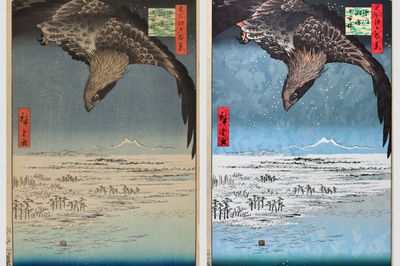
- Hiroshige’s 100 Famous Views of Edo (feat. Takashi Murakami), Brooklyn Museum, New York (2024)
- Stars: Six Contemporary Artists from Japan to the World, Mori Art Museum, Tokyo (2020)
- Japan Supernatural, Art Gallery of New South Wales, Sydney (2019)
- Japanorama: New Vision on Art since 1970, Centre Pompidou-Metz, France (2017)
- Bye Bye Kitty!!!, Japan Society, New York (2011)
- Guggenheim Collection: 1940s to Now,National Art Center Tokyo (2007)
- Uncertain States of America, Astrup Fearnley Museet, Oslo (2005)
In 2026, exhibitions dedicated to Murakami continues to foreground his dialogue with Japanese art history and the legacy of ukiyo-e. Hark Back to Ukiyo-e: Tracing Superflat to Japonisme’s Genesis at Perrotin Los Angeles (14 February–14 March 2026) focuses on his Superflat vocabulary in relation to 19th century woodblock prints and the Western fascination with Japonisme.
Website and Instagram
Takashi Murakami’s website can be found here, and Takashi Murakami’s Instagram can be found here.
Critical Reception
Murakami’s practice has been featured in leading publications including ArtReview, The Financial Times, and The New York Times.
Takashi Murakami FAQs
Who is Takashi Murakami?
Takashi Murakami is a Japanese contemporary artist known for his colourful ‘Superflat’ style that merges manga and anime aesthetics with fine art, fashion, and global pop culture.
Why is Takashi Murakami famous?
Takashi Murakami is famous for pioneering the Superflat movement, which fuses traditional Japanese painting with anime, manga, and consumer culture in a bold, two-dimensional style. Takashi Murakami is also widely known for high-profile collaborations with Louis Vuitton, Kanye West, and major brands, which brought contemporary art into mainstream fashion and music.
How old is Takashi Murakami?
Takashi Murakami was born on 1 February 1962, which makes Takashi Murakami 63 years old in 2025–2026.
Where is Takashi Murakami from?
Takashi Murakami is from Tokyo, Japan, where Takashi Murakami was born and raised.
Is Takashi Murakami still alive?
Takashi Murakami is still alive; Takashi Murakami continues to work as an artist and cultural entrepreneur.
What is Takashi Murakami’s art style?
Takashi Murakami’s art style is called Superflat, characterised by saturated colour, flat planes, and imagery drawn from anime, manga, and kawaii culture combined with references to Japanese art history. Takashi Murakami’s Superflat style deliberately collapses boundaries between high art and low culture, fine art and commercial design.
Where does Takashi Murakami live?
Takashi Murakami lives and works primarily in the Tokyo area, where Takashi Murakami runs the Kaikai Kiki studio and company, and also spends time in New York.
Did Takashi Murakami make the Graduation album cover?
Yes, Takashi Murakami designed the cover art and associated imagery for Kanye West’s album Graduation, featuring Takashi Murakami’s anime-style ‘Kanye Bear’ character.
Is Takashi Murakami married?
Public sources do not clearly confirm a spouse for Takashi Murakami, and Takashi Murakami keeps personal relationships private; most biographies do not list a current marriage.
What materials does Takashi Murakami use?
Takashi Murakami uses a wide range of materials including acrylic paint on canvas, sculptures in fiberglass and other industrial materials, prints, and merchandise objects. He also employs digital design, fabrication, and large studio production methods through his Kaikai Kiki company.
What type of art does Takashi Murakami make?
Takashi Murakami makes contemporary art that spans painting, sculpture, installations, film, animation, and commercial collaborations rooted in Japanese pop culture and art history. Takashi Murakami’s work often features recurring characters, smiling flowers, and fantastical worlds that move between fine art and pop merchandise.
What medium does Takashi Murakami use?
Takashi Murakami primarily uses acrylic on canvas for paintings and various synthetic materials for sculpture, alongside digital media and printmaking. His practice also extends to animated films, merchandising, and fashion design, blurring traditional notions of artistic medium.
Where can I see Takashi Murakami’s art?
Takashi Murakami’s art can be seen in major museums and galleries worldwide, including leading institutions in Japan, the United States, and Europe. Takashi Murakami’s work is also visible in commercial collaborations and special exhibitions organised through his Kaikai Kiki network and partner museums.You can follow the artist on Ocula for further information.
How much is Takashi Murakami worth?
Takashi Murakami’s personal net worth has been estimated at around 100 million US dollars, reflecting Takashi Murakami’s success in both fine art and commercial ventures.
Why does Takashi Murakami make art?
Takashi Murakami makes art to investigate postwar Japanese culture, consumerism, and the overlap between otaku subcultures and high art traditions. He uses art to critique and celebrate the visual language of anime, manga, and global branding.
What inspired Takashi Murakami?
Takashi Murakami was inspired by anime, manga, and otaku culture, as well as traditional nihonga painting studied at Tokyo University of the Arts. The artist’s Superflat theory was shaped by Japanese postwar history, pop culture, and the flattened aesthetics of both ukiyo-e prints and modern media.
Why is Takashi Murakami important?
Takashi Murakami is important for redefining the relationship between fine art, fashion, and pop culture through the Superflat movement and global collaborations. He has influenced a generation of artists and demonstrated how an artist can operate simultaneously in museums, luxury brands, and mass-market products.
When did Takashi Murakami become famous?
Takashi Murakami became internationally famous in the late 1990s and early 2000s, as Takashi Murakami’s Superflat shows and character Mr. DOB gained attention and collaborations grew. The artist’s early 2000s partnership with Louis Vuitton significantly expanded his global profile.
Why is Takashi Murakami so expensive?
Takashi Murakami’s works are expensive because Takashi Murakami is internationally collected, produces complex large-scale pieces, and has strong demand across both art and luxury markets. The artist’s top works have sold for over 15 million US dollars at auction, reinforcing high primary and secondary market values.
What does the Takashi Murakami flower mean?
The Takashi Murakami flower, with its smiling face and bright petals, symbolises a mix of childlike joy and underlying tension in postwar Japanese culture. Murakami has described the flower motif as tied to kawaii aesthetics and to hope emerging after the trauma of events like the atomic bombings.
Who has Takashi Murakami worked with?
Takashi Murakami has worked with Louis Vuitton, Kanye West, Pharrell Williams, Drake, Billie Eilish, and many other musicians and brands. Murakami collaborates through his Kaikai Kiki studio, integrating art with fashion, music, and merchandise.
What type of paint does Takashi Murakami use?
Takashi Murakami typically uses high-quality acrylic paint for Takashi Murakami’s canvases, allowing very flat, precise, and vivid colour surfaces.
Did Takashi Murakami make Doraemon?
Takashi Murakami did not create the original Doraemon character, which was made by Fujiko F. Fujio, but Takashi Murakami has produced artworks officially featuring Doraemon in collaboration with the franchise.
Does Takashi Murakami have a website?
Yes, Takashi Murakami has an online presence through the Kaikai Kiki website, which presents Takashi Murakami’s projects, exhibitions, and related artists.
Is Takashi Murakami related to Haruki Murakami?
Takashi Murakami is not related to the novelist Haruki Murakami; they simply share a common Japanese surname.
Is Takashi Murakami Japanese?
Yes, Takashi Murakami is Japanese; Takashi Murakami was born in Tokyo and is a key figure in postwar Japanese contemporary art.
Did Takashi Murakami make the Kanye Bear?
Takashi Murakami designed the animated ‘Kanye Bear’ character and visual world for Kanye West’s Graduation era, so Takashi Murakami is responsible for that version of the Kanye Bear imagery.
Why does Kanye like Takashi Murakami?
Kanye West has praised Takashi Murakami for Takashi Murakami’s visionary fusion of high art and pop culture, which aligns with Kanye’s own interest in fashion, design, and bold visual identities.
Ocula | 2026

Current Exhibitions at Baldwin Contemporary


Works at Baldwin Contemporary









Works Elsewhere











Takashi Murakami in Ocula Magazine










Explore and Follow Artists Shaping Contemporary Art
A respected voice in contemporary art discourse.
Focusing on ambitious storytelling and insightful art-world commentary. Ocula Magazine publishes in-depth interviews, critical essays and timely analysis on the artists, exhibitions and ideas driving the global art world.
Learn more about Ocula Magazine
Showcasing the best of the art world.
Ocula partners with galleries from around the world to highlight their artists, artworks and exhibitions. Gallery membership is by application and invitation, with each member vetted by an independent panel.
Learn more about Ocula Membership
Specialises in the sale of major artworks.
Led by a team with deep ties to the world’s leading auction houses, galleries and collectors. Ocula’s advisory team offers bespoke services to high-net-worth clients from around the world who are looking to acquire the best of contemporary and modern art.
Learn more about our team and services