





YIN XIUZHEN
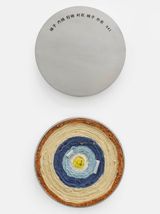
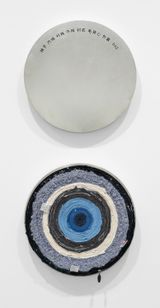
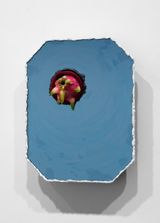
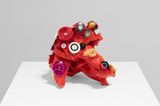
b. 1963, ChinaYin Xiuzhen is a highly acclaimed figure of the second wave in Chinese contemporary art. She is best known for her sculptures and installations that use everyday materials such as used clothing, porcelain, furniture, and concrete to evoke the accumulated histories of China’s urban and social landscapes.
Born in 1963 in Beijing, Yin Xiuzhen grew up against the backdrop of China’s Cultural Revolution. She entered Beijing Normal Academy in 1985, studying in the oil painting department. In the same year, the ‘85 Art New Wave Movement began in earnest, and Robert Rauschenberg‘s exhibition, ROCI CHINA, opened at the National Art Museum of China, encouraging Yin and her fellow students to experiment with unorthodox materials.
Feeling constrained by the visual language of painting, Yin began making installations and performance works that could better reflect the rapidly changing society she was witness to. For Dress Box (1995) the artist took her old clothing from childhood through to adulthood and cast it in cement. Signifying a bride’s removal from her father’s home to her husband’s, the work acted as a vessel for the inaccessible past, enshrining the individual and collective memories embedded within objects.
Yin Xiuzhen later explored similar themes in her ‘Suitcases’ (2000–2002) and ‘Portable Cities’ (2001–ongoing) series. In the latter series, suitcases unfold to reveal miniature cities sewn together using clothing worn by that city’s inhabitants. Her seminal work Ruined City (1996) is comprised of discarded furniture and tiles collected from demolished buildings.
Together, the materials of Ruined City conjure the latent memories of Beijing’s waning communal lifestyle, which came to an end in the late 1990s with the rise of urban developments and the migration of impoverished communities to the city’s periphery. Critical of the capitalist impulse towards modernisation, Yin covered the installation in cement, preserving the time-worn scene in what she called ‘the raw material of this era.’
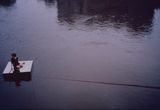
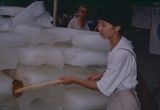
Yin is also notable for her early environmental interventions, such as Washing River (1995). Washing River saw the artist take ten cubic metres of highly polluted water from the Funan River in Chengdu, freeze it into blocks and ask passers-by to help clean the sediment from the ice. Underlying these works is the artist’s distress at China’s social and environmental degradation.
Of her work, Yin once commented, ‘Amidst the great changes taking place in the external appearance of our lives, our memories are being slowly whittled away, as is our culture. ... We had no power to preserve these precious things and experiences, and so we could only use artistic methods to describe this sadness and indignation, to shout it out.’
Yin Xiuzhen Solo Exhibitions include:
Made in China 007: Action and Reflection, Yinchuan Museum of Contemporary Art (2018); Slow Release, Garage Museum of Contemporary Art, Moscow (2016); Washing River, Tasmania Museum and Art Gallery, Hobart (2014); Yin Xiuzhen, Groninger Museum, Netherlands (2012); Projects 92: Yin Xiuzhen, The Museum of Modern Art, New York (2010); China in Four Seasons, Govett-Brewster Art Gallery, New Plymouth, New Zealand (2010).

























Explore and Follow Artists Shaping Contemporary Art
A respected voice in contemporary art discourse.
Focusing on ambitious storytelling and insightful art-world commentary. Ocula Magazine publishes in-depth interviews, critical essays and timely analysis on the artists, exhibitions and ideas driving the global art world.
Learn more about Ocula Magazine
Showcasing the best of the art world.
Ocula partners with galleries from around the world to highlight their artists, artworks and exhibitions. Gallery membership is by application and invitation, with each member vetted by an independent panel.
Learn more about Ocula Membership
Specialises in the sale of major artworks.
Led by a team with deep ties to the world’s leading auction houses, galleries and collectors. Ocula’s advisory team offers bespoke services to high-net-worth clients from around the world who are looking to acquire the best of contemporary and modern art.
Learn more about our team and services