


The art world in focus
Subscribe to our newsletter for news and insights on artists, galleries and exhibitions.

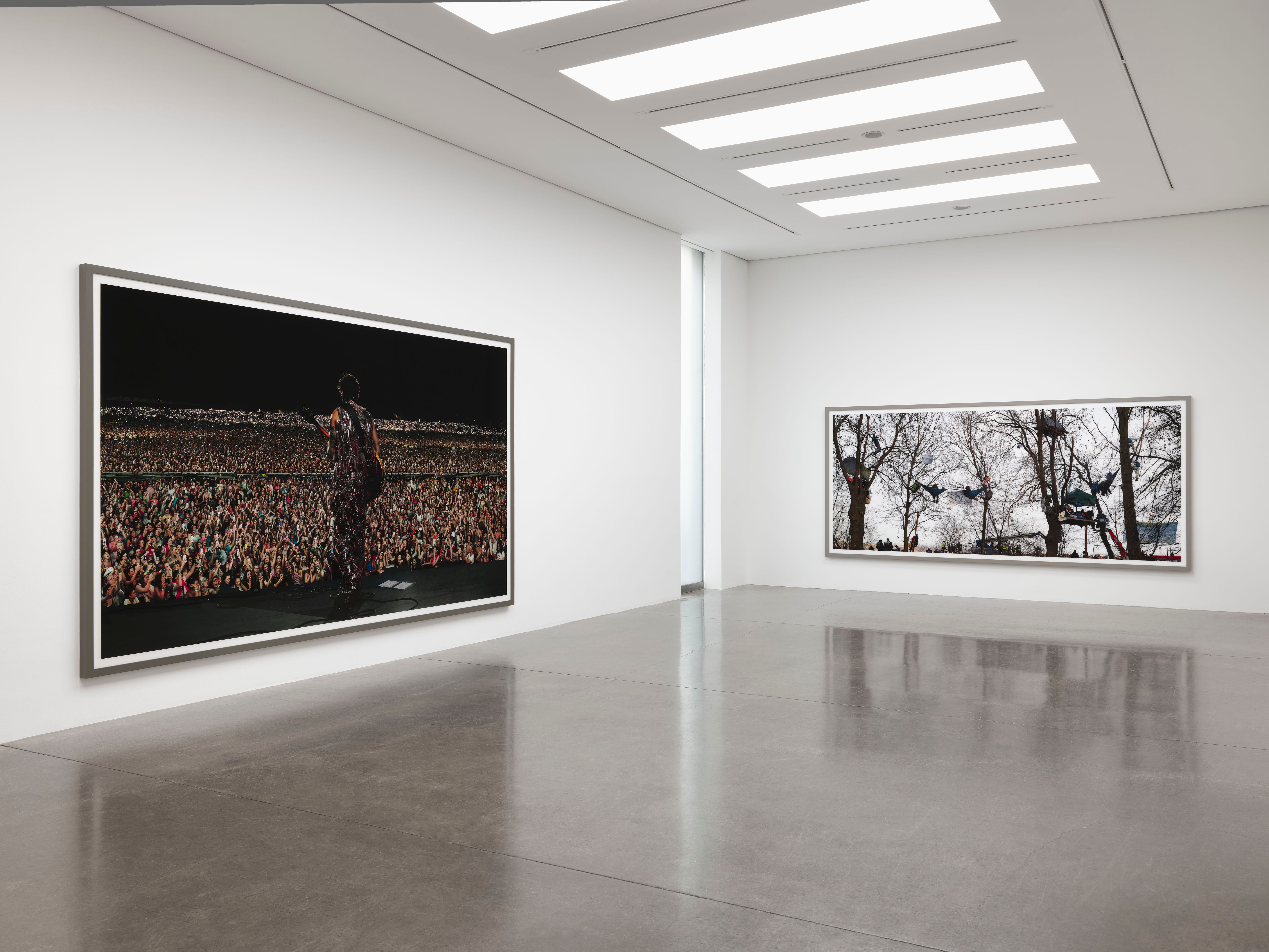
The best conversations of Frieze week happen indiscreetly in the pub. So the week began with a gaggle of writers, PRs, and gallerists who had decamped from White Cube Bermondsey, where thick sprigs of rosemary tickled guests’ noses as they swigged from glass tumblers of gin and tonic among large-scale photographs by German photographer Andreas Gursky (including a remarkable four-metre-wide image of English musician Harry Styles stood before the naked adulation of a stadium crowd).
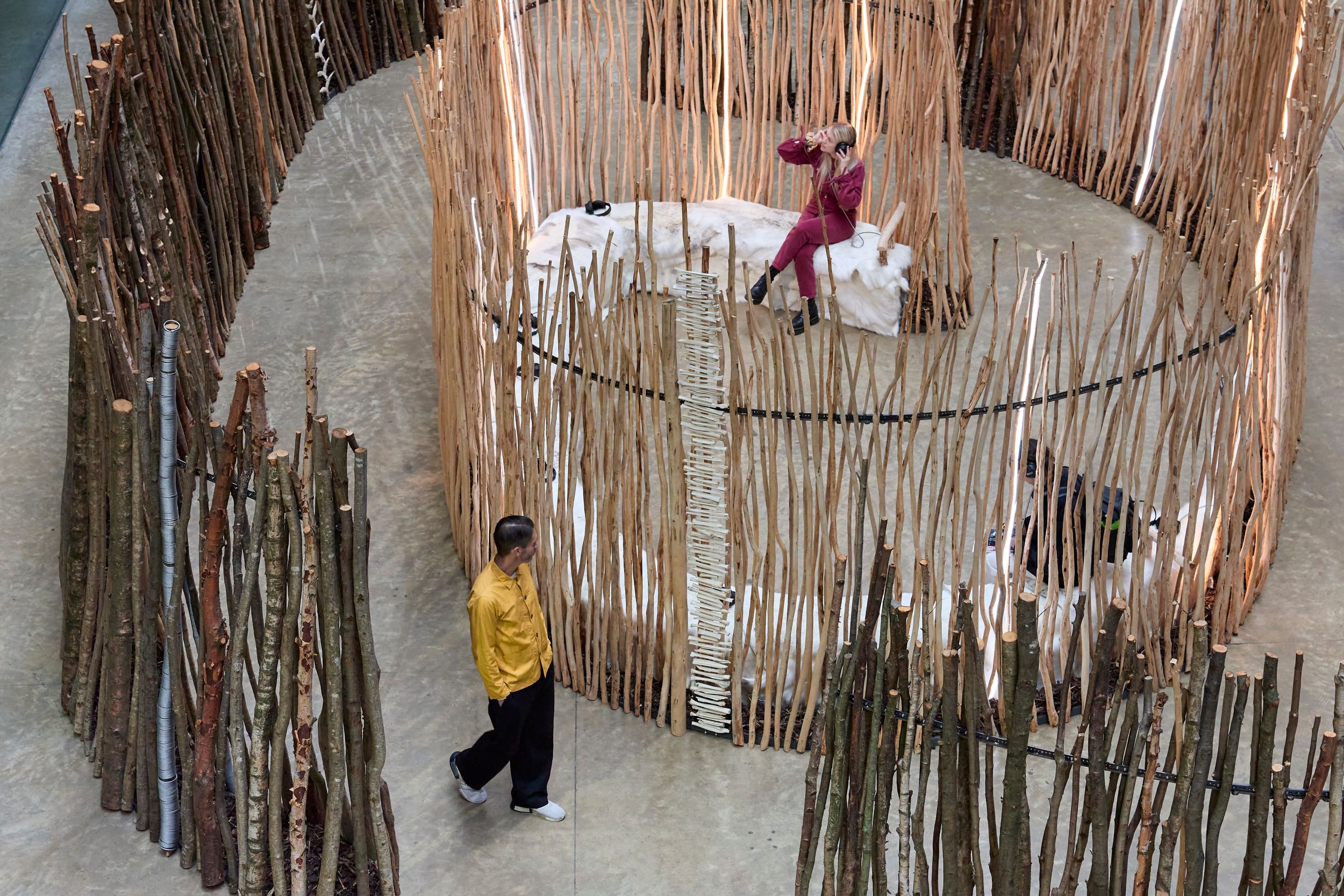
We squeezed into a single wooden booth at the Woolpack as a debate broke out over whether one-star reviews do a disservice to contemporary art. Sámi artist Máret Ánne Sara’s Turbine Hall commission at Tate Modern—composed of reindeer bones, hides, and wooden sticks—had not been reviewed favourably by the papers. ‘Critics are there to help people understand and appreciate art,’ a PR spat over a second silver cooler of warm white wine. ‘Aren’t they?’
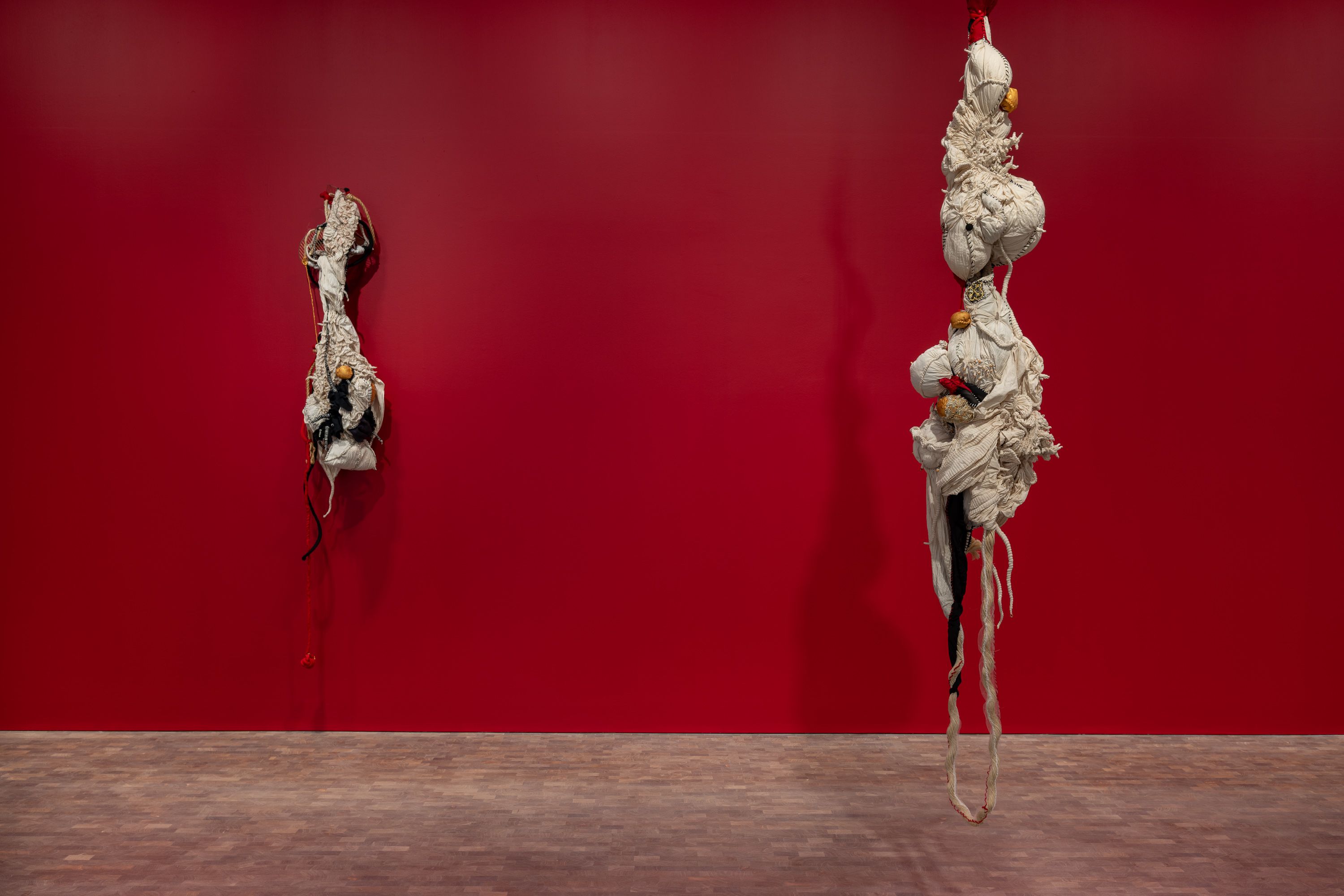
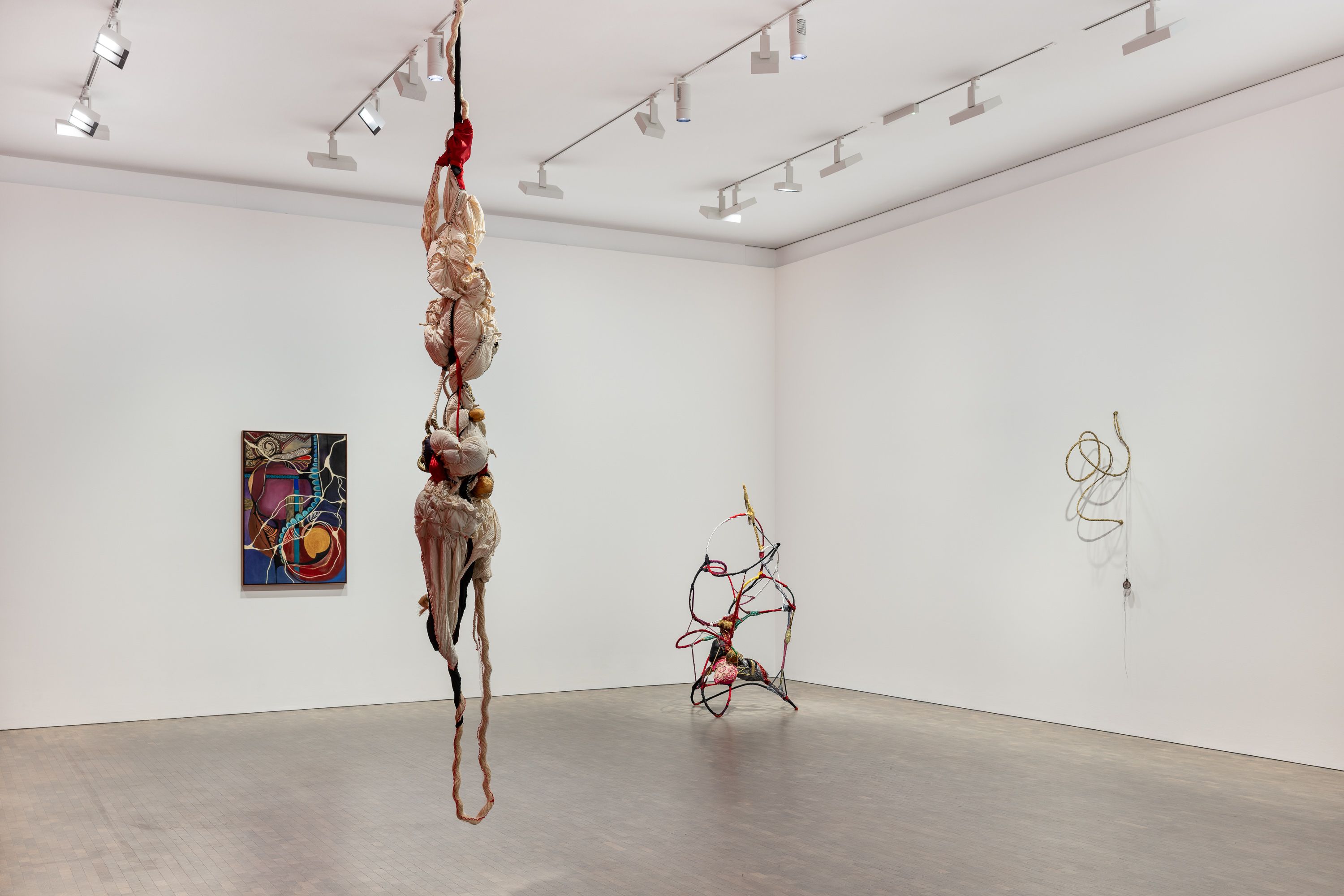
On my way home from south London, I cycled back through Mayfair in the west of town, where I had earlier darted between rival openings. At Pace, bottles of Chin Chin, the Portuguese vinho verde dubbed ‘the Casillero del Diablo of Gen Z’, were being liberally poured for Brazilian artist Sonia Gomes as I admired a series of striking stitched and unravelled works made from shibori-dyed raw cotton found by the artist at nearby Portobello Market, suggestive of the twin forces of rupture and repair.
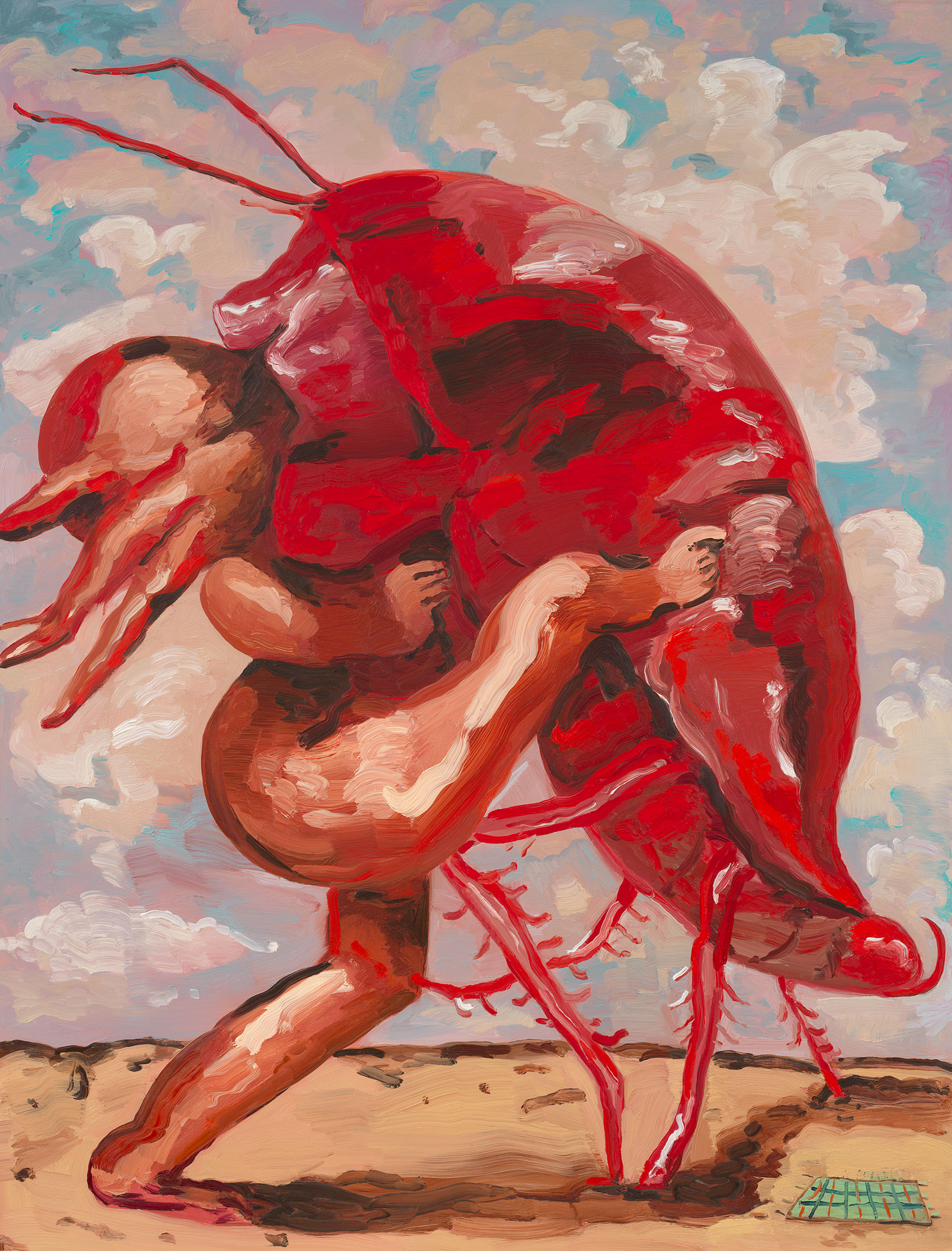
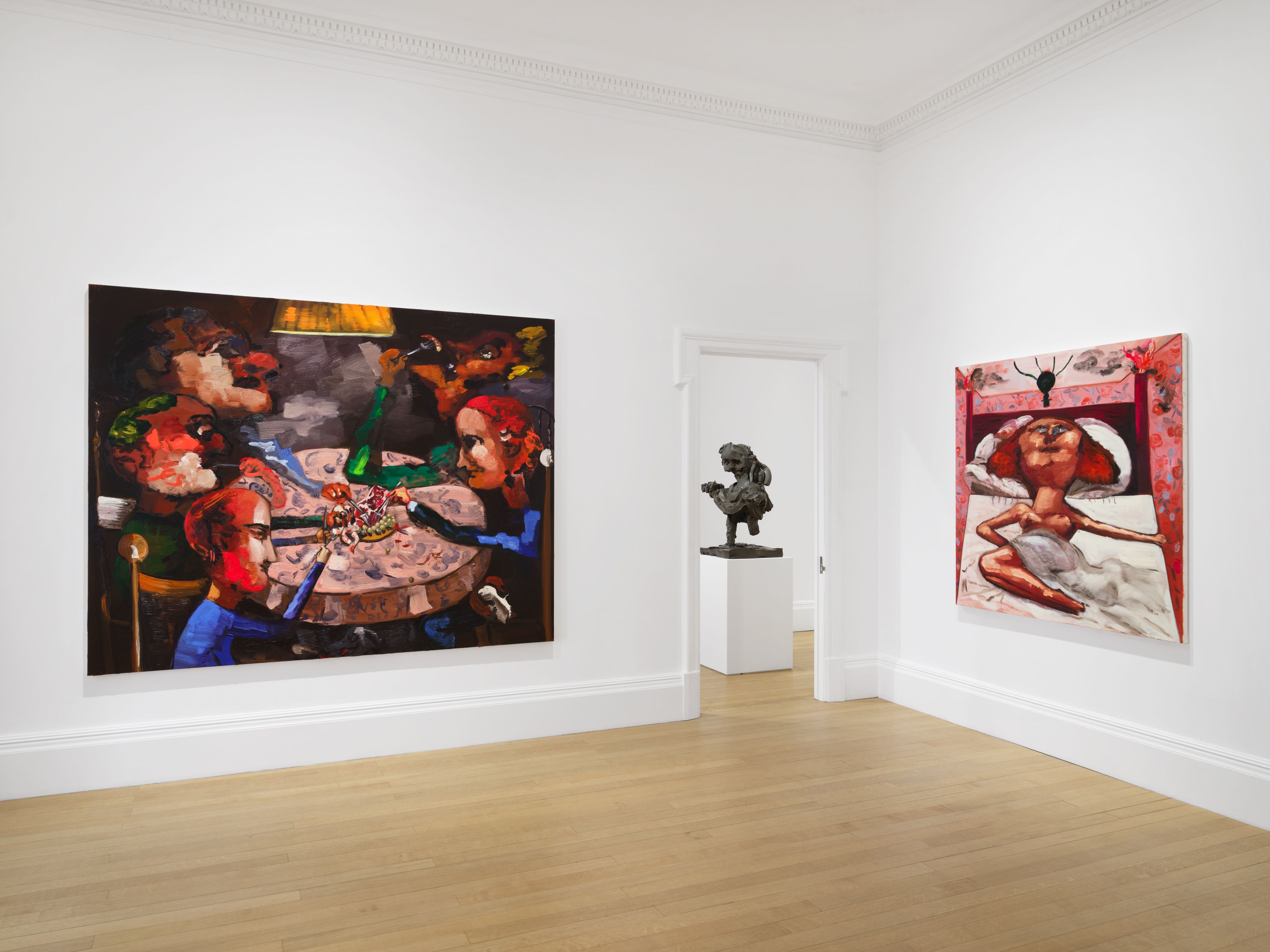
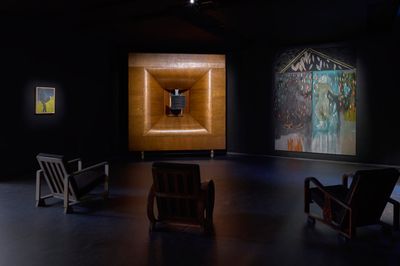
An exhibition of Dana Schutz paintings, secreted up a flight of stairs at the wood-panelled second gallery of Thomas Dane on Duke Street, floored me with their thick impasto horror. The Kiss shows a lobster in erotic embrace with a nude female figure, blurring the line between consent and power, while elsewhere Schutz shows her talent for painting a perfect bunch of grapes. Yet the space was almost deserted when I visited around 30 minutes before closing time (perhaps a die-hard consequence of the controversy surrounding the inclusion of the artist’s Open Casket painting in the 2017 Whitney Biennial), an emptiness amplified tonight by the rowdy crowd assembled opposite at the newly expanded Ben Hunter gallery.
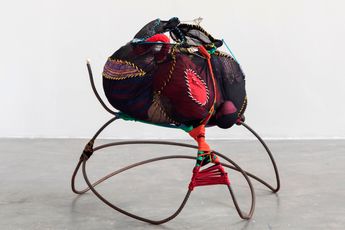
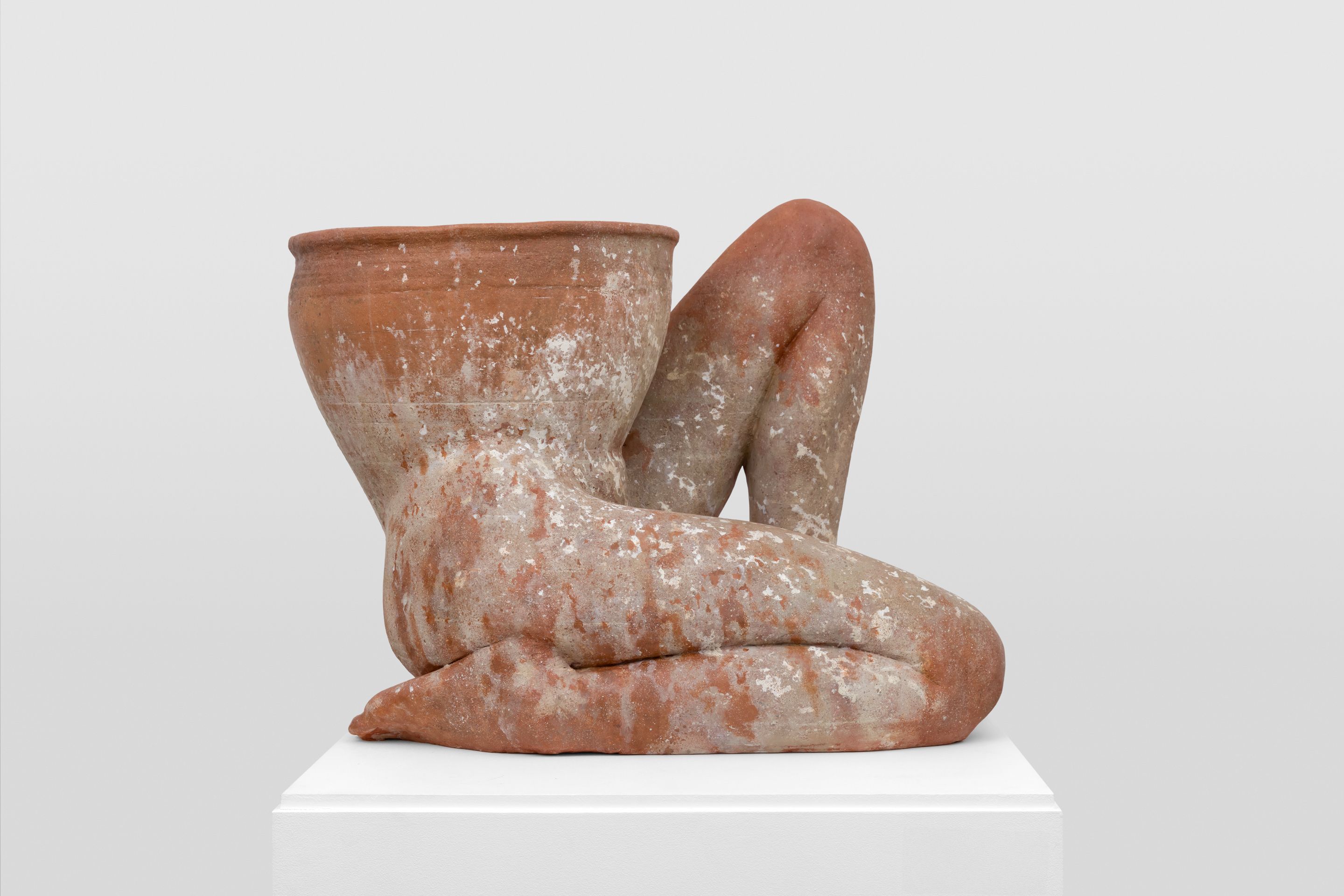
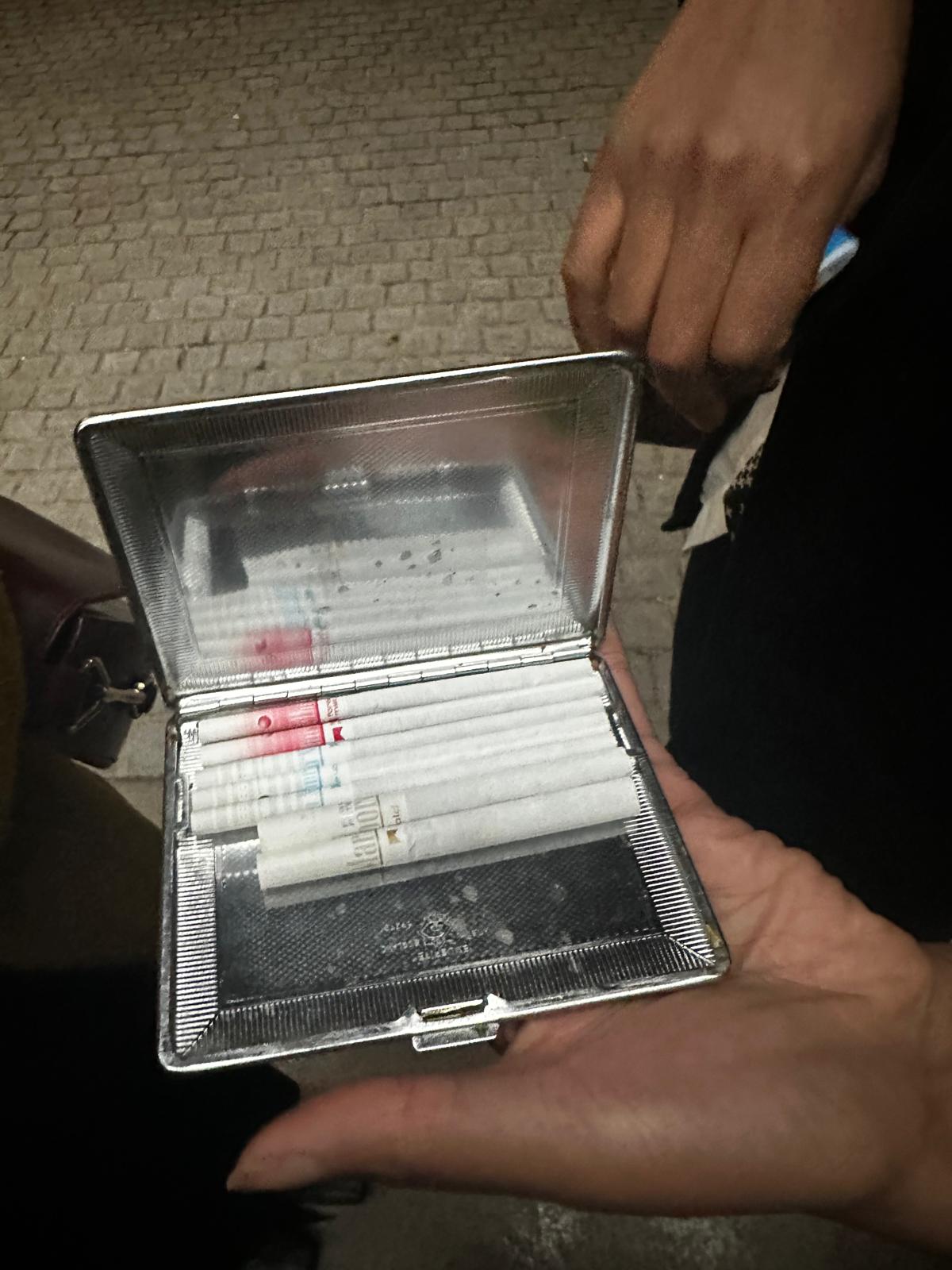
‘Naked women,’ artist Clementine Keith-Roach drawled over a cigarette, ‘are all over London. You just need to look up.’ She had recently rewatched Agnes Varda’s 1984 The So-called Caryatids, a documentary on the nude female statues adorning the buildings of Paris, and had taken to pointing out similarly louche representations around town. Her work at Ben Hunter, a large vessel with a severed female arm protruding from it, was on display in the gallery’s front window.
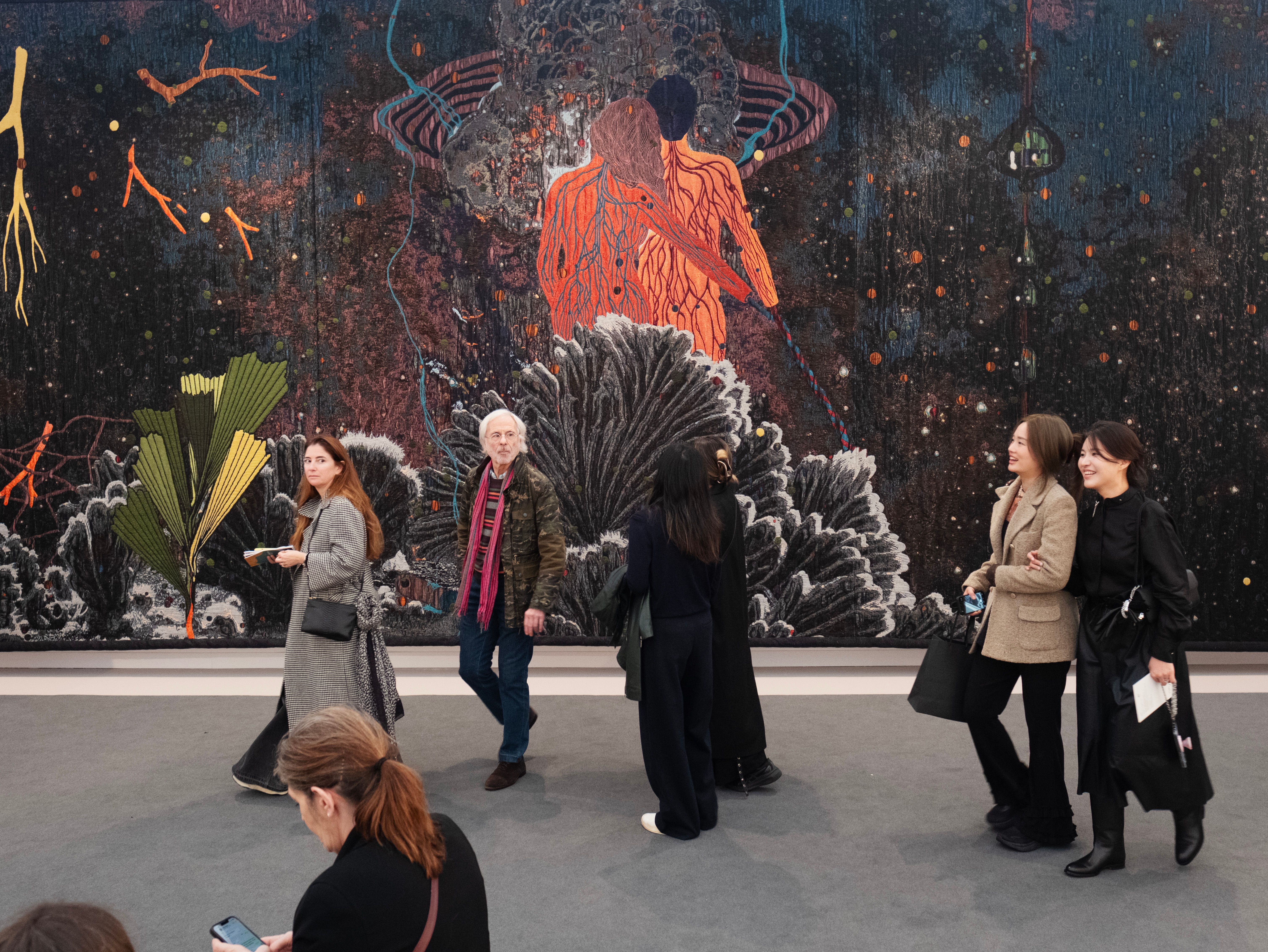
By Tuesday night, Lisson director and former editor Ossian Ward was telling me and World of Interiors arts editor Holly Black about the indelicate origins of ArtReview’s Power 100, as we reflected on how personal and professional biases can solidify into something resembling objectivity. Never underestimate the power of a grudge.
We were on the top floor of Maison Estelle on Dover Street for Lisson’s annual Frieze party (moved from Chiltern Firehouse this year following its closure due to an actual fire). Miniature bowls of steak and chips circulated, alongside cream buns that burst rudely out of the choux pastry with each bite, among guests including artist Ryan Gander, whose latest exhibition had just opened at Camden Arts Projects.
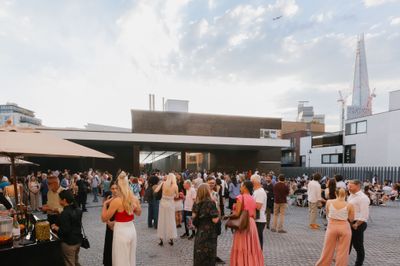
One street away, in the basement of Bar des Prés, I found artists Sofia Mitsola and Paolo Salvador chatting about the best place to find Chinese food in the city (Royal China), at a party organised by gallerist Pilar Corrias, who welcomed each guest herself upon arrival. Later, at White Cube’s party in Soho, Andreas Gursky danced to throbbing techno on a stage in front of the assembled crowd at Below Stone Nest, a bar and club venue whose sound system permitted limited conversation.
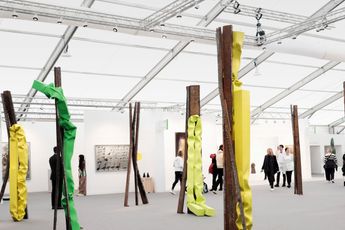
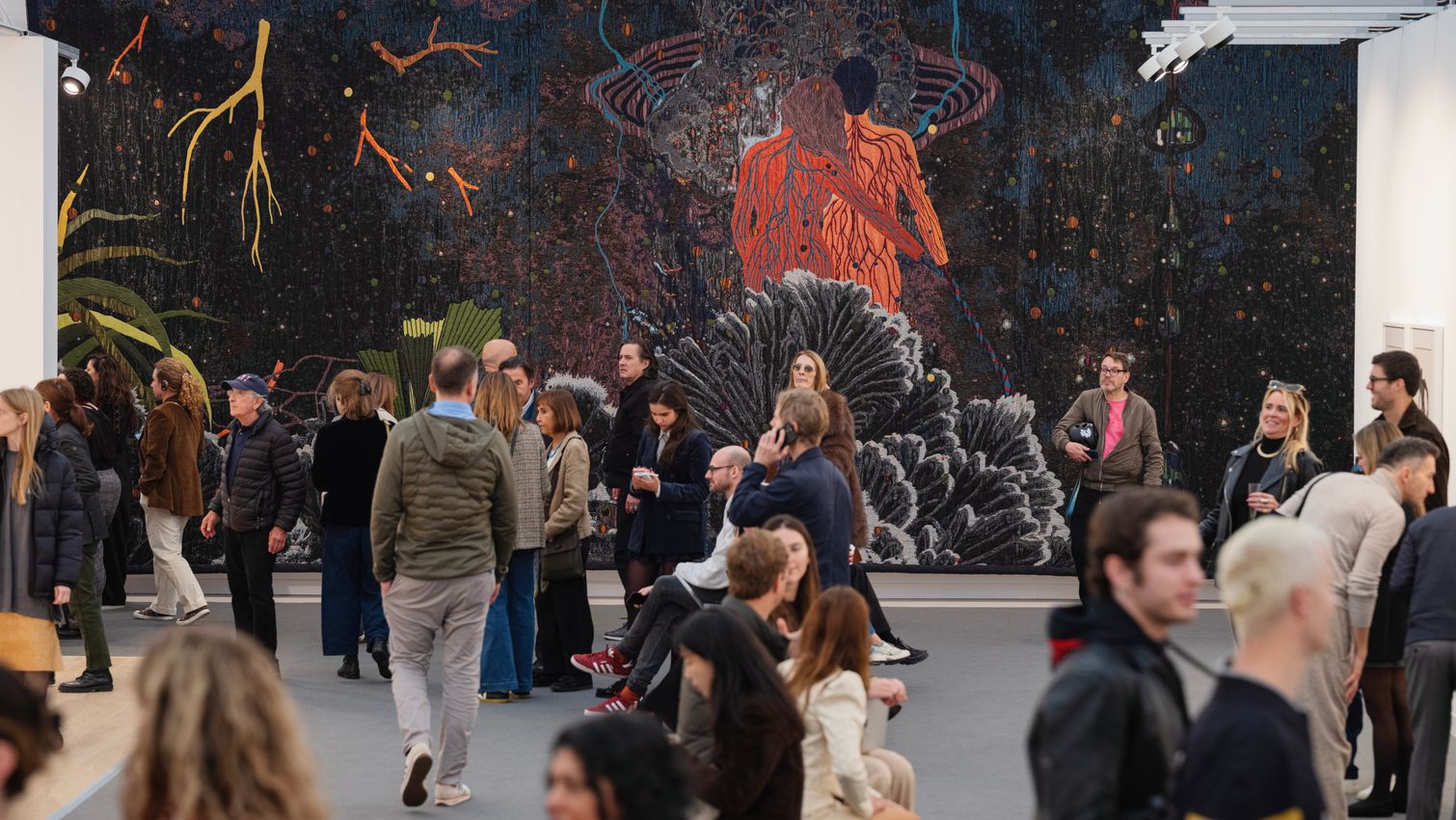
Wednesday morning: the main event, arriving midweek like a bride whose guests have already drunk the bar dry. A steady stream of VIP guests processed through Regent’s Park towards the fair, forcing joggers to dodge and divert with open glares. A reorganisation of Frieze London’s layout (now permanently implemented following its trial last year) has reduced the walking time to its Focus section of younger galleries, although this remains marooned at one end of the tent. Here I encountered a succession of duos—the artist behind each solo booth hovering skittishly beside their gallerist—as collectors sporting Prada heels and Birkin bags circled.
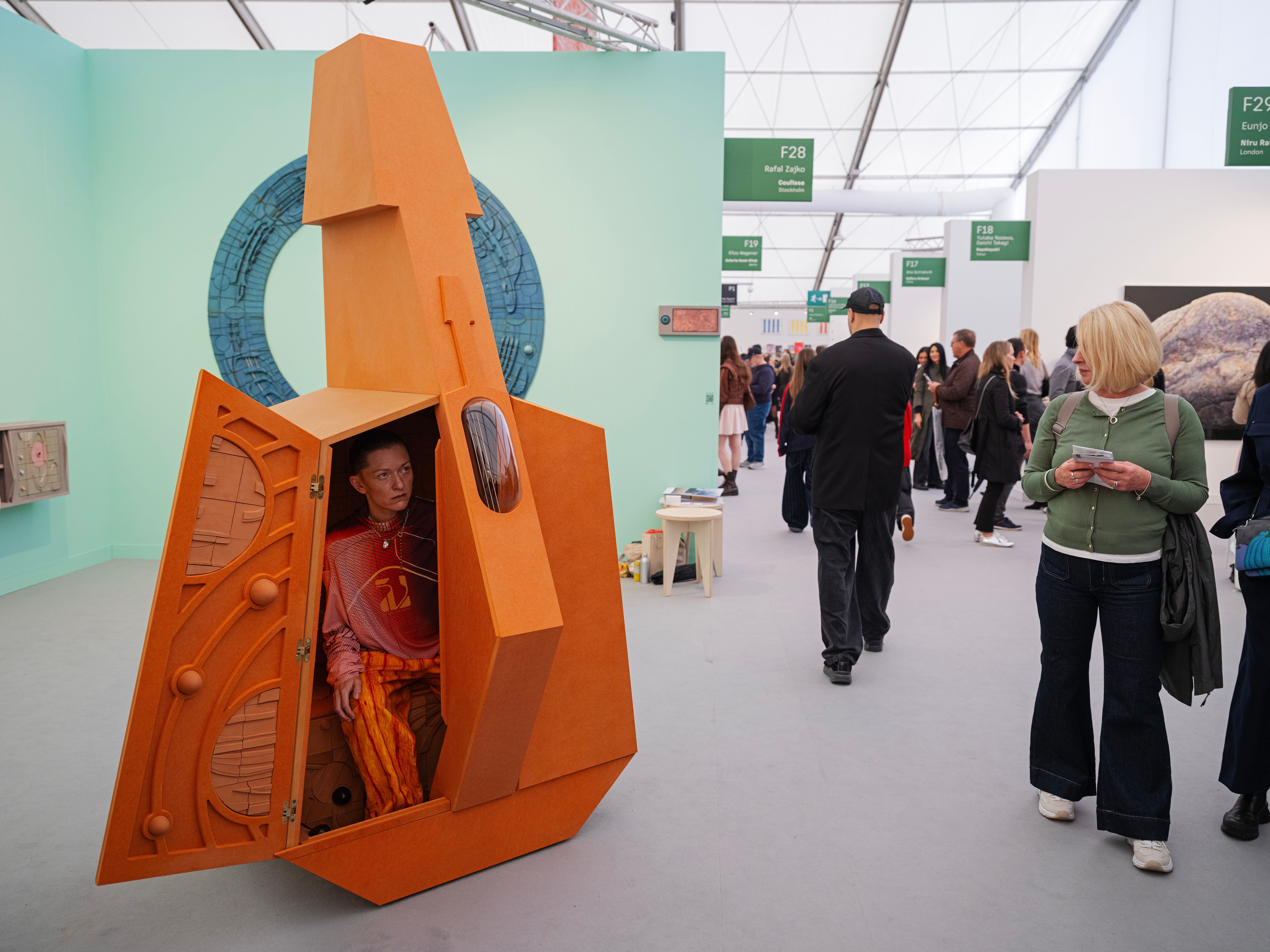
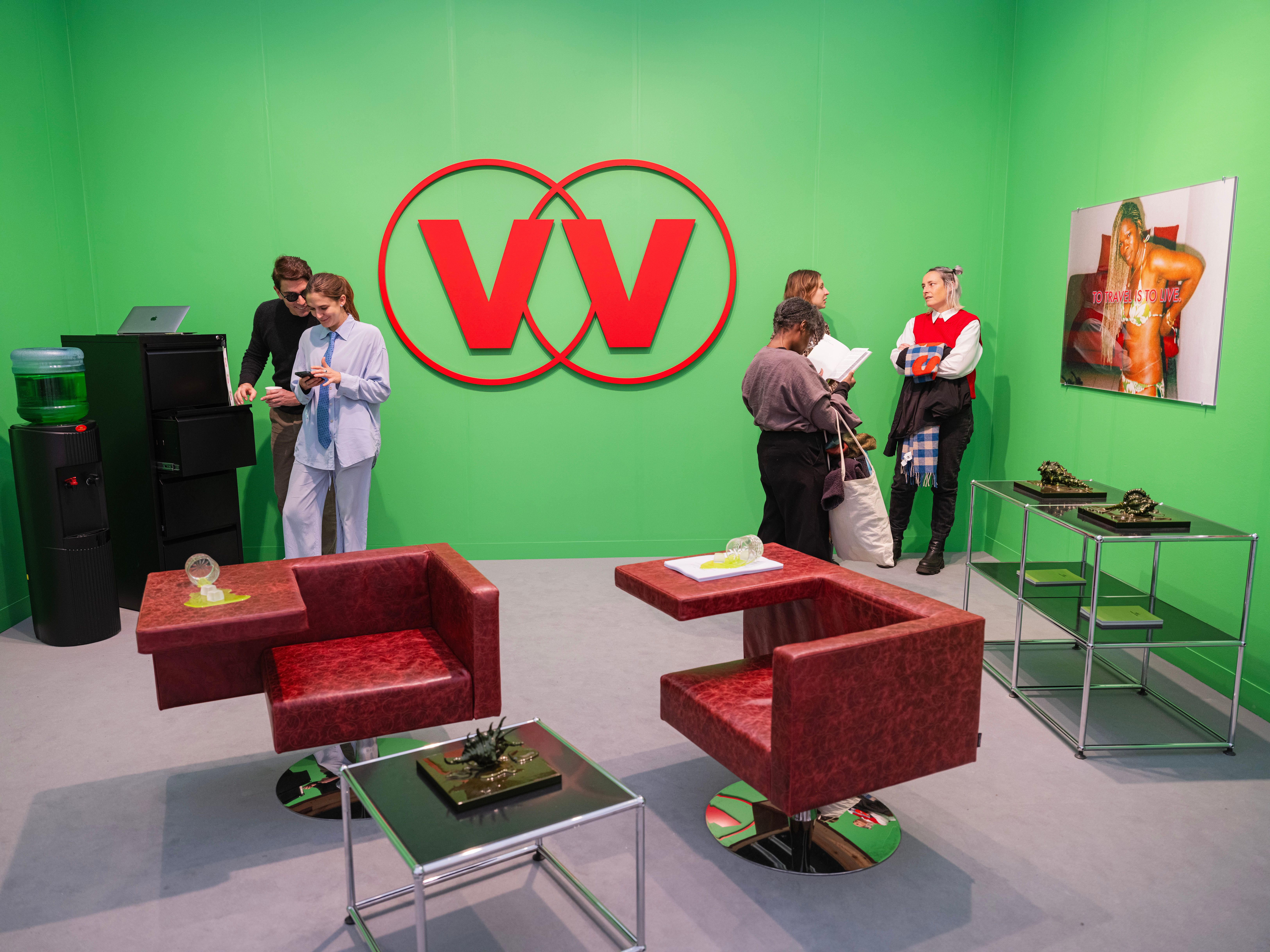
At Coulisse, Polish artist Rafał Zajko presented pickled cucumbers in jars, bright orange cryogenic preservation chambers floating adrift in the brine. A lone figure gazed solemnly from the rounded window of a sealed, pastel-coloured pod from a distant sci-fi future, giving visitors a jump scare upon realising that she was, in fact, not a mannequin but the real thing.
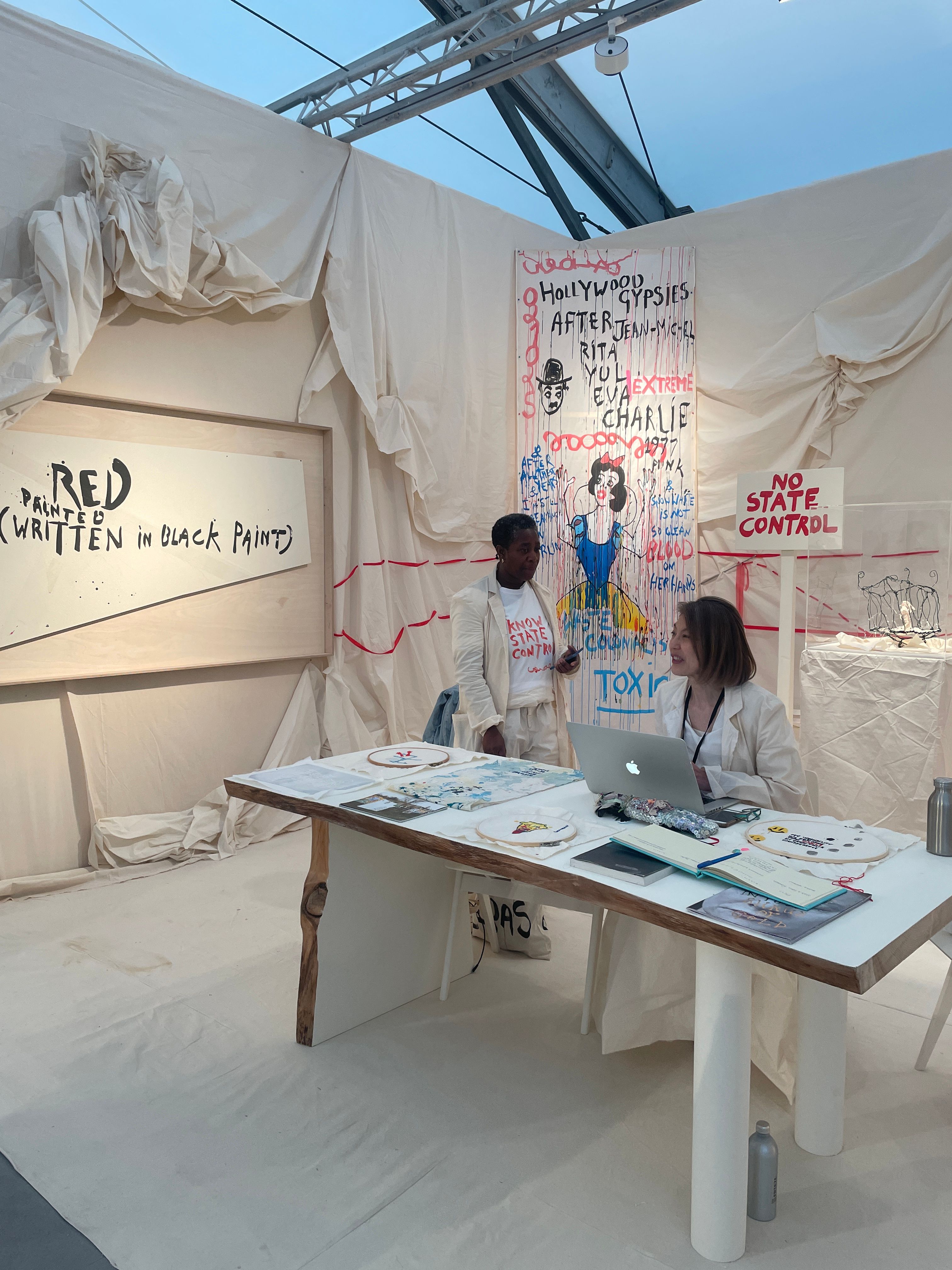
Delaine Le Bas (nominated for last year’s Turner Prize) had taken things one step further at Yamamoto Keiko Rochaix and was dressed in a long, white lab coat and gathered skirt made from raw calico, an extension of the same fabric that swathed the booth. The effect was a heightened sense of the presentation as a stage upon which Le Bas served as both an actor and a prop—an appropriate mirror, perhaps, to the theatricality of the fair and the expectation for artists to constantly perform.
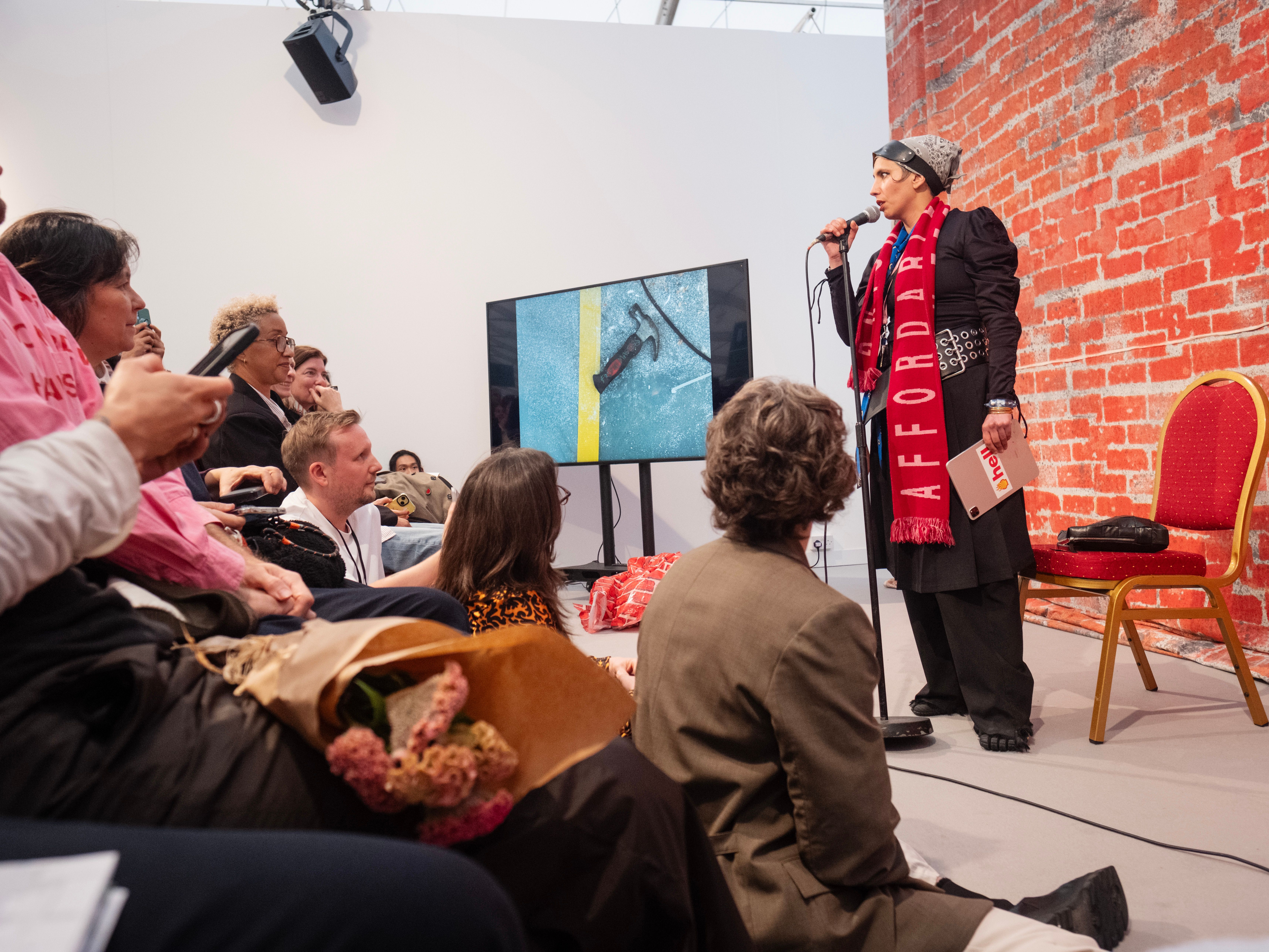
These stakes were echoed by this year’s Frieze Artist Award recipient Sophia Al Maria, whose raucous stand-up comedy performance veered from a karaoke rendition of a song about menstruation to toe-curling jokes on the pitfalls of overwrought artist statements, leaving the crowd unsure as to whether their awkward reception was all just part of the joke.
Over champagne at Jikoni, super-curator Hans Ulrich Obrist (wearing a khaki linen suit) and a gaggle of writers and artists (sporting a variety of crumpled tote bags) assembled to digest the fair and to slyly compare evening plans.
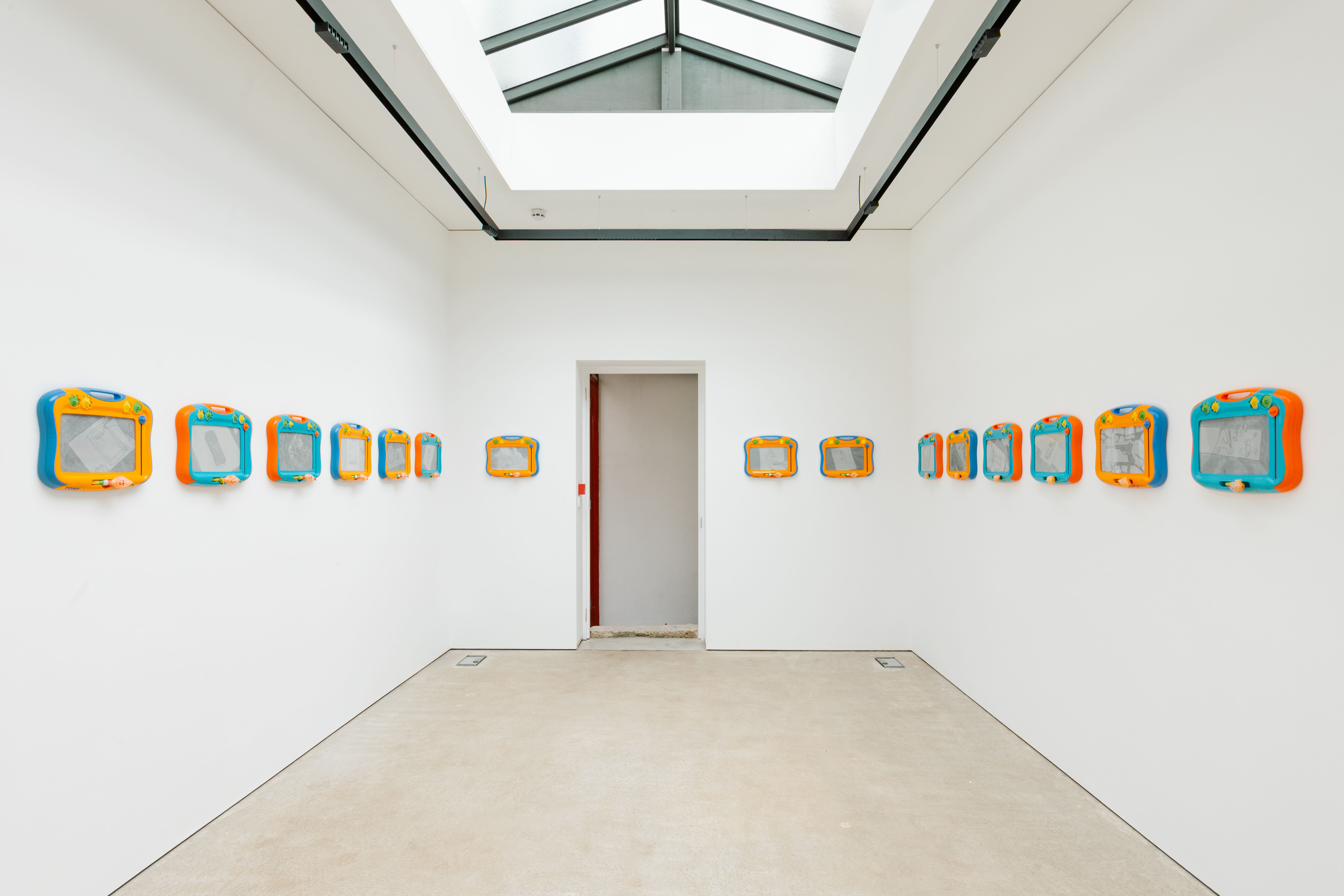
As evening fell, curators Olamiju Fajemisin and Ben Broome sipped espresso martinis in Mayfair at Hauser’s Farm Shop with artist Nihaal Faizal, whose playful drawings upon reclaimed TOMY® Megasketcher Classics (modified so they can no longer be erased) are on show at Cafe Babka, one of several ambitious off-spaces bringing new energy to the capital. Musician and performance artist Mykki Blanco (straight off the plane from New York and fresh from an afternoon nap) joined us with a buffet plate piled high with perfectly pink radishes and a glass of red wine filled unashamedly to the very brim. Frieze, Blanco said, is for people watching. ‘And does a screenshotted QR code work for entry?’
By the time I made it back to the fair the following day, it was about to close early for a private dinner. As I wandered the aisles, I thought of the fair fatigue described to me earlier by Wysing Arts Centre director Rosie Cooper as ‘the glaze’, a pointed riff on the loaded politics of the gaze.
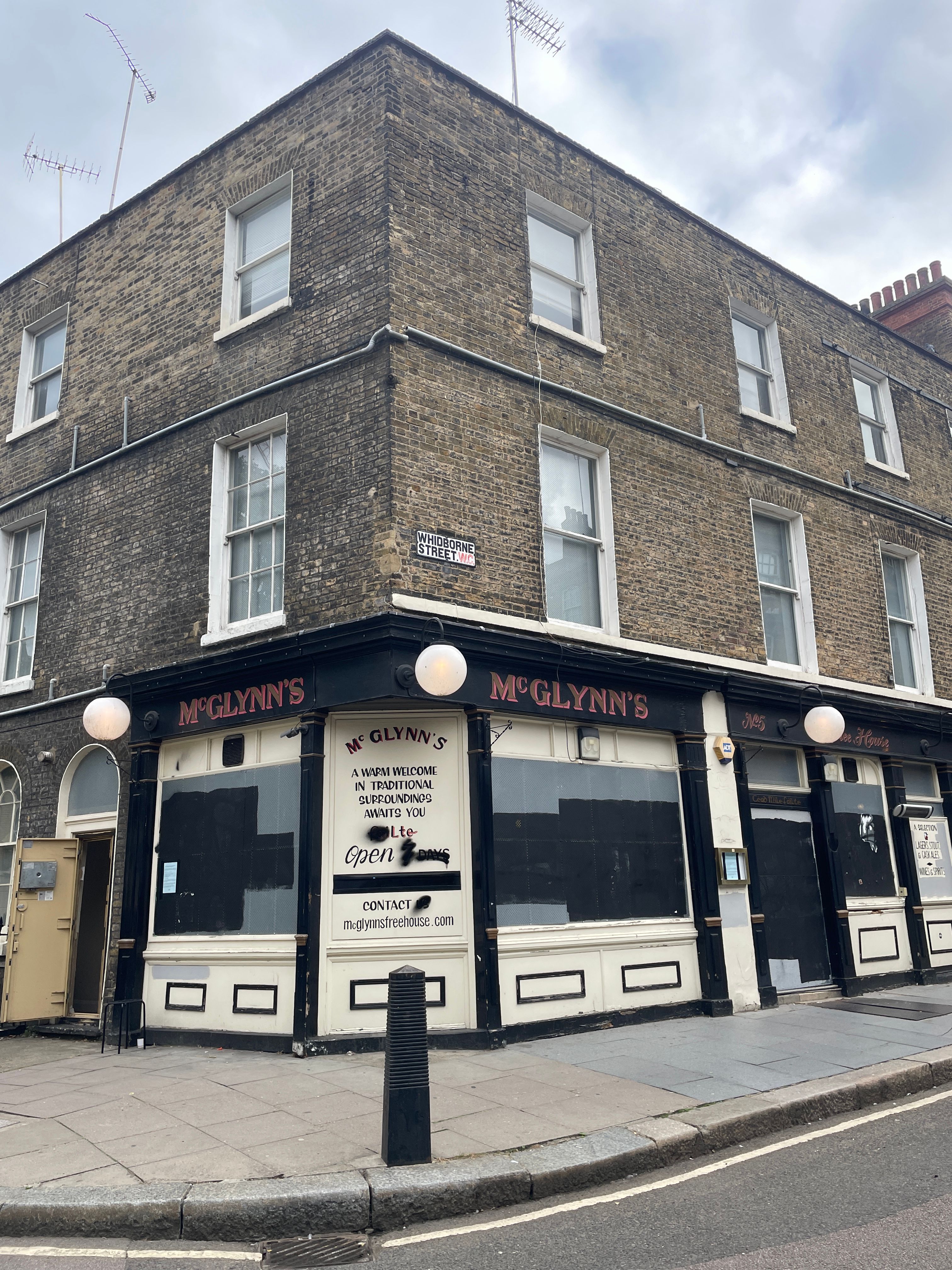
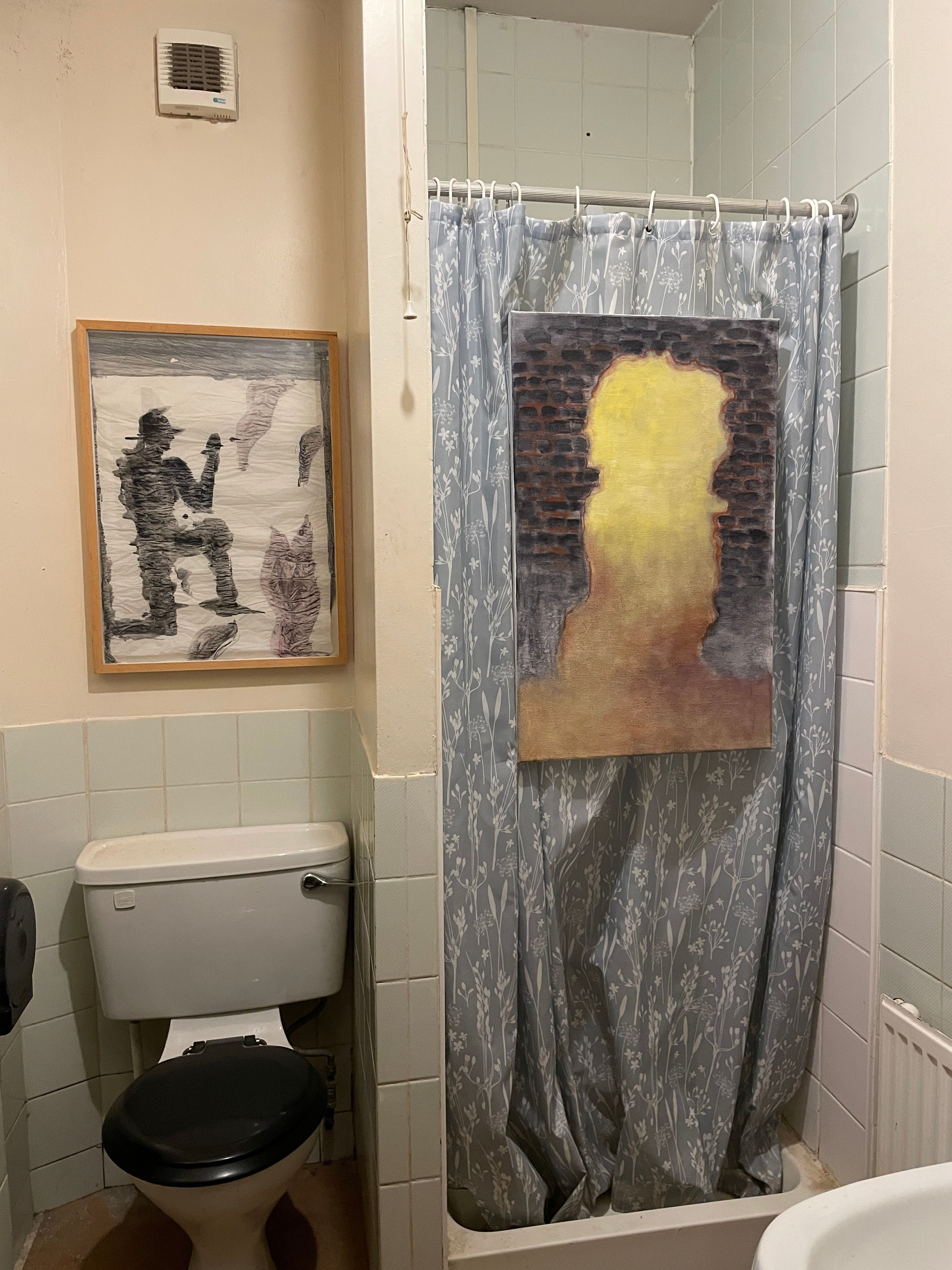
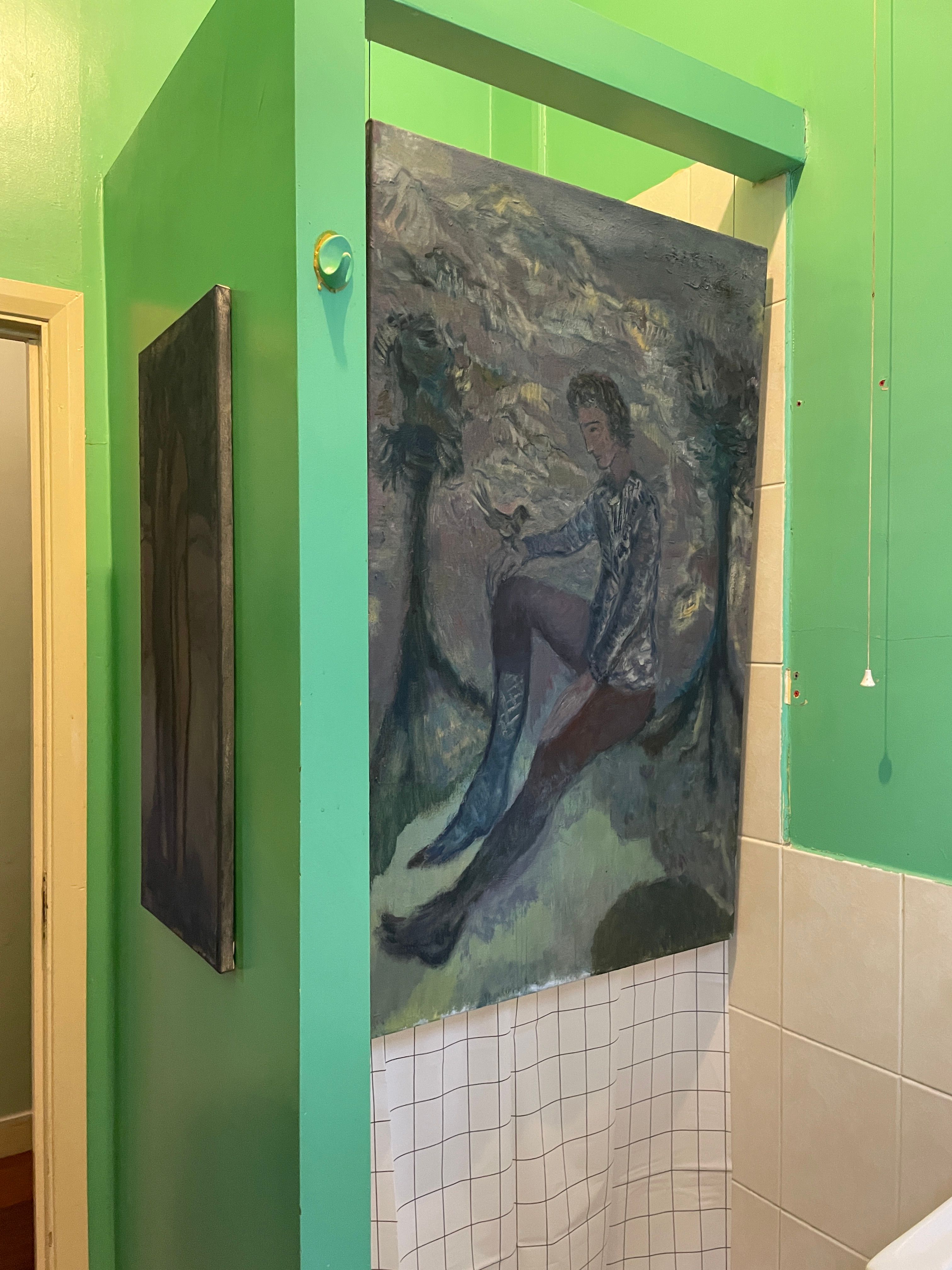
My week ended as it had begun: in the pub. This time in the newly repurposed McGlynn’s, nestled on the corner of a Kings Cross backstreet, a venue bought by painter Peter Doig and curator Parinaz Mogadassi for £3.15 million this April. With their licence to pull pints still pending, the two upper floors were unveiled as a sleazy backdrop to two equally salacious exhibitions set within the former guest rooms of the pub. Sticky carpet and peeling walls framed the canvases of Iranian painter Behrang Karimi, in which moodily indistinct figures frolic, embrace, and recline. ‘He’s a very erotic person,’ said gallery manager Violet Handforth.
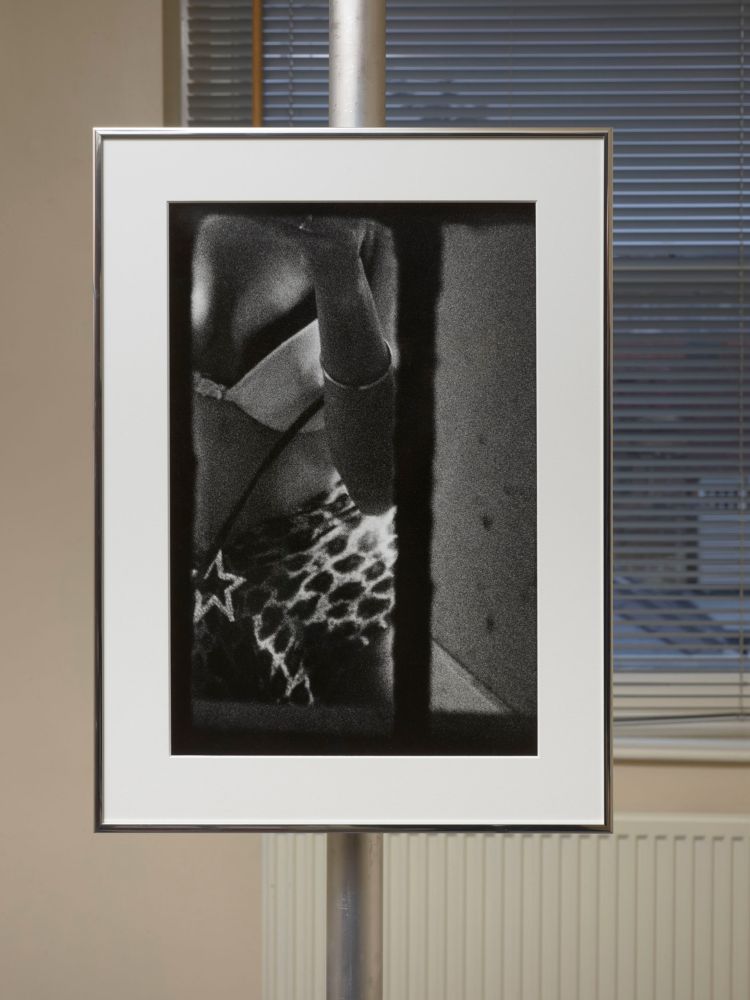
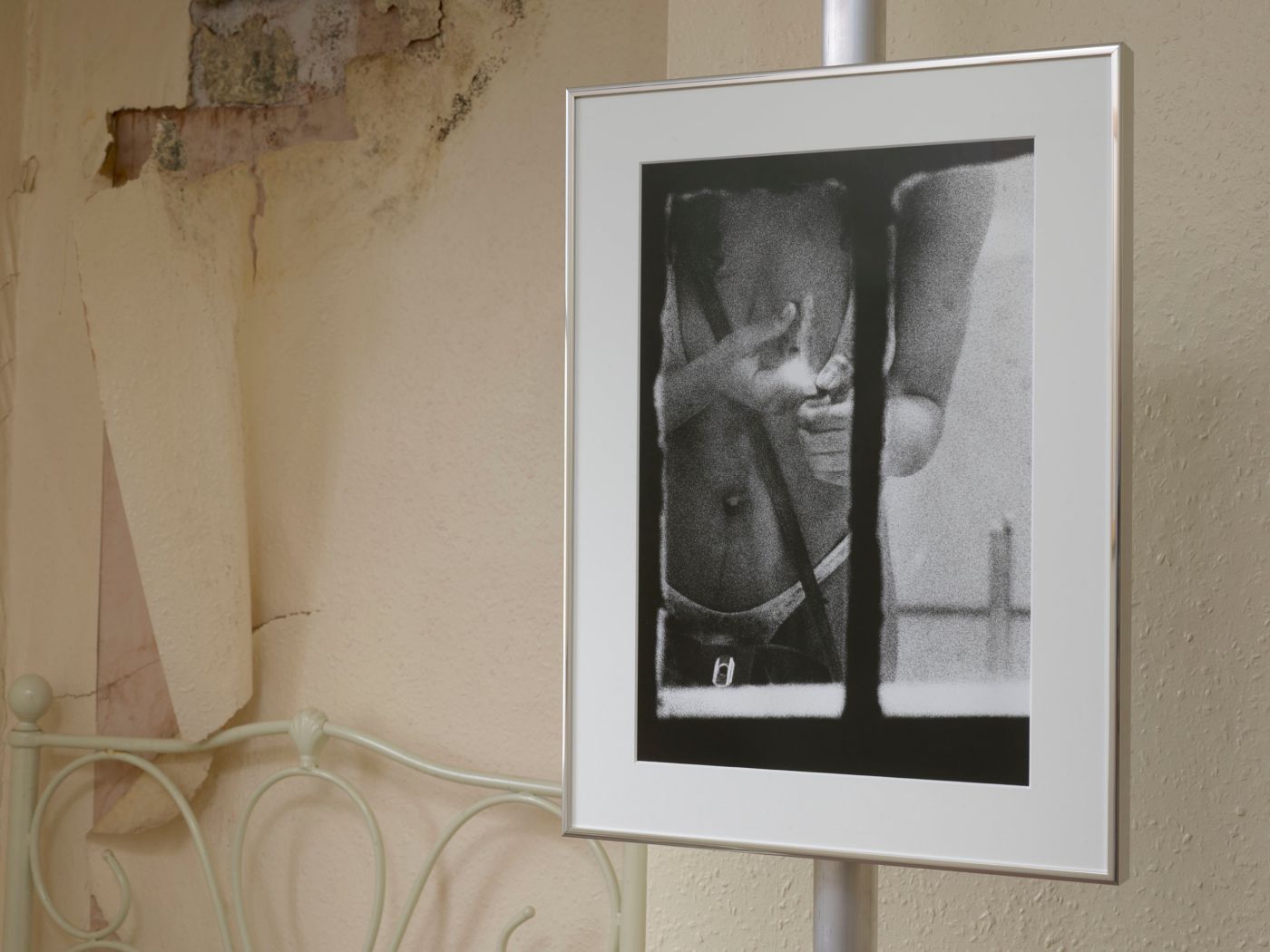
On the top floor was Dirty Windows by photographer Merry Alpern, a series of stunning, ethically dubious, grainy black-and-white images shot in the winter of 1993–94 through the bathroom window of a New York brothel. Sex workers in sequinned harnesses bend over or unzip clients’ trousers as the camera captures their staged intimacies; in one shot a man’s face contorts as he snorts cocaine.
As I stepped out into the darkening afternoon, a line by the artist on the illicit images rang in my ears: ‘I had watched, for so many days, the pastimes of perfect strangers.’ —[O]
A respected voice in contemporary art discourse.
Focusing on ambitious storytelling and insightful art-world commentary. Ocula Magazine publishes in-depth interviews, critical essays and timely analysis on the artists, exhibitions and ideas driving the global art world.
Learn more about Ocula Magazine
Showcasing the best of the art world.
Ocula partners with galleries from around the world to highlight their artists, artworks and exhibitions. Gallery membership is by application and invitation, with each member vetted by an independent panel.
Learn more about Ocula Membership
Specialises in the sale of major artworks.
Led by a team with deep ties to the world’s leading auction houses, galleries and collectors. Ocula’s advisory team offers bespoke services to high-net-worth clients from around the world who are looking to acquire the best of contemporary and modern art.
Learn more about our team and services