





What Does a Painting Sound Like?
Artists including Peter Doig, Zadie Xa and Tai Shani, alongside their musical collaborators, reflect on why a growing number of exhibitions are engaging the senses far beyond the visual. Save to My OculaIt has been said that writing about music is like dancing about architecture, a maxim variously attributed to Elvis Costello, Thelonius Monk, and Laurie Anderson, among others. So what does it mean to sing a song about a painting, or compose a score for a sculpture? Several recent and current exhibitions pose this question, as artists working with image and sound create gallery environments that engage the senses far beyond the visual alone.
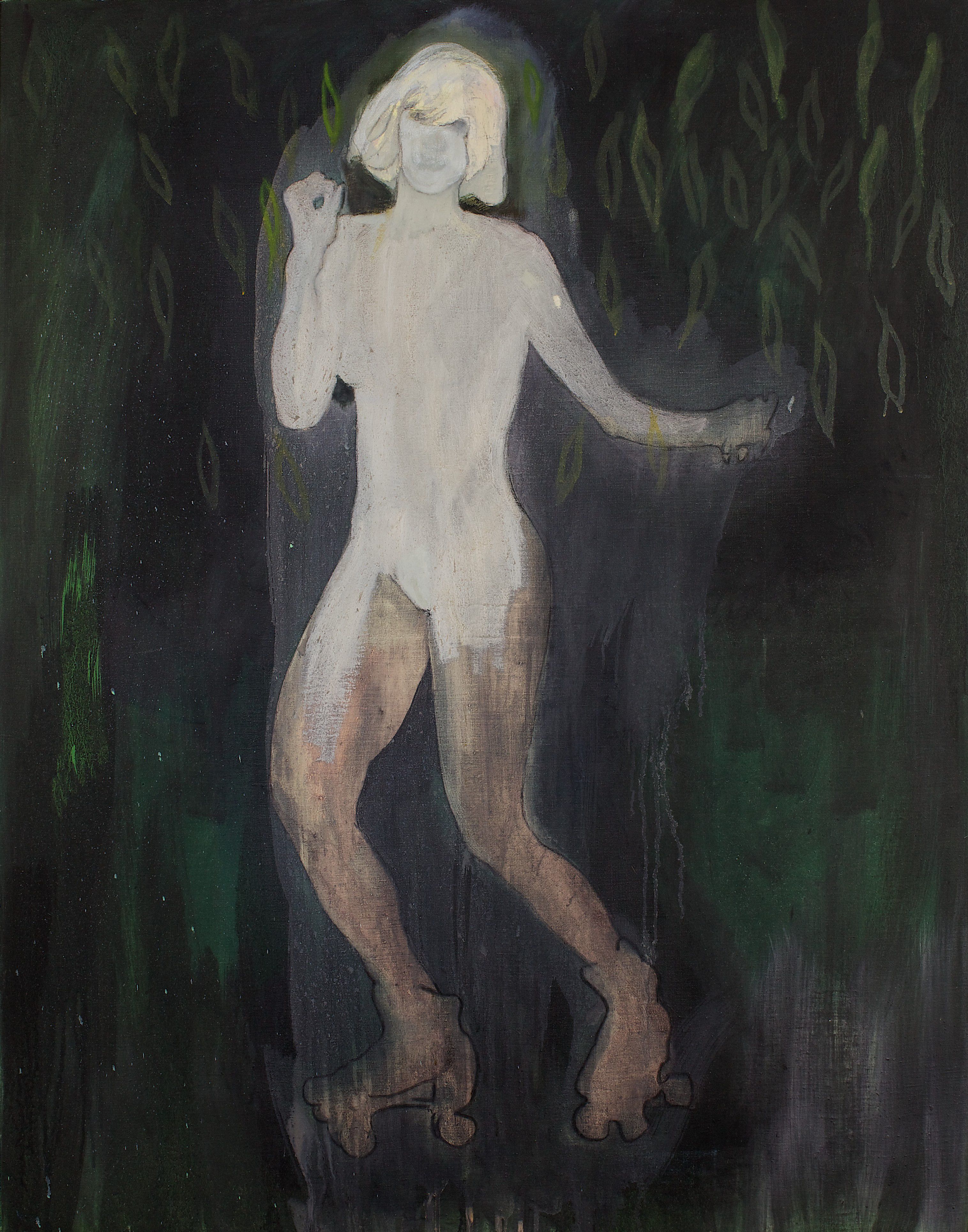
Among them is House of Music, British painter Peter Doig’s latest exhibition at the Serpentine South, in which he explores the subject of music and the atmospheres it can conjure through hazy, evocative paintings in which people dance or strum a guitar, many created during his time living in Trinidad. Steel band players rehearse in Port of Spain in one scene, while nearby hangs a portrait of calypso artist Shadow, whose lyrics lend the exhibition its name. These works are set within a space that echoes a domestic environment, complete with curtains and comfy chairs, inviting visitors to settle in.

A melodious soundscape of tracks chosen by Doig, including those he listens to while painting, emanates from an enormous sound system of stacked speakers. The warm, welcoming effect is a far cry from the usual hushed tones adopted in most art galleries when a pervasive silence fills the room. On any given morning spent in the exhibition, visitors might hear anything from Joe Harriott and John Mayer’s Indo-Jazz Suite (1967) to Aretha Franklin and Bobbie Gentry. Meanwhile, Doig has invited artists including Ed Ruscha, Cat Power, Brian Eno, and Arthur Jafa, as well as local venues such as experimental music space Café Oto, to share tracks from their own collections on Sundays throughout the exhibition run. ‘London,’ he points out, ‘is full of people who make incredible music.’
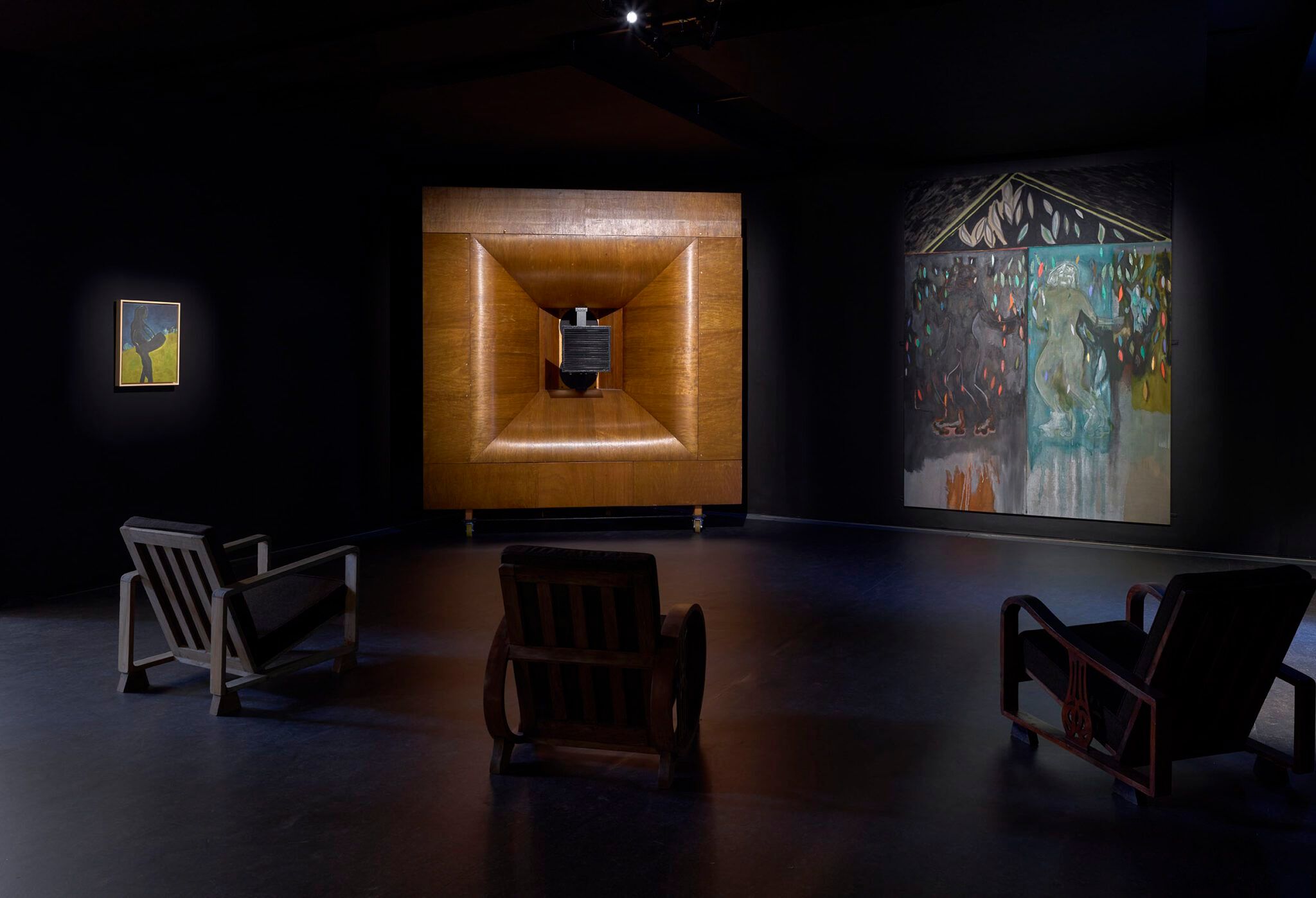
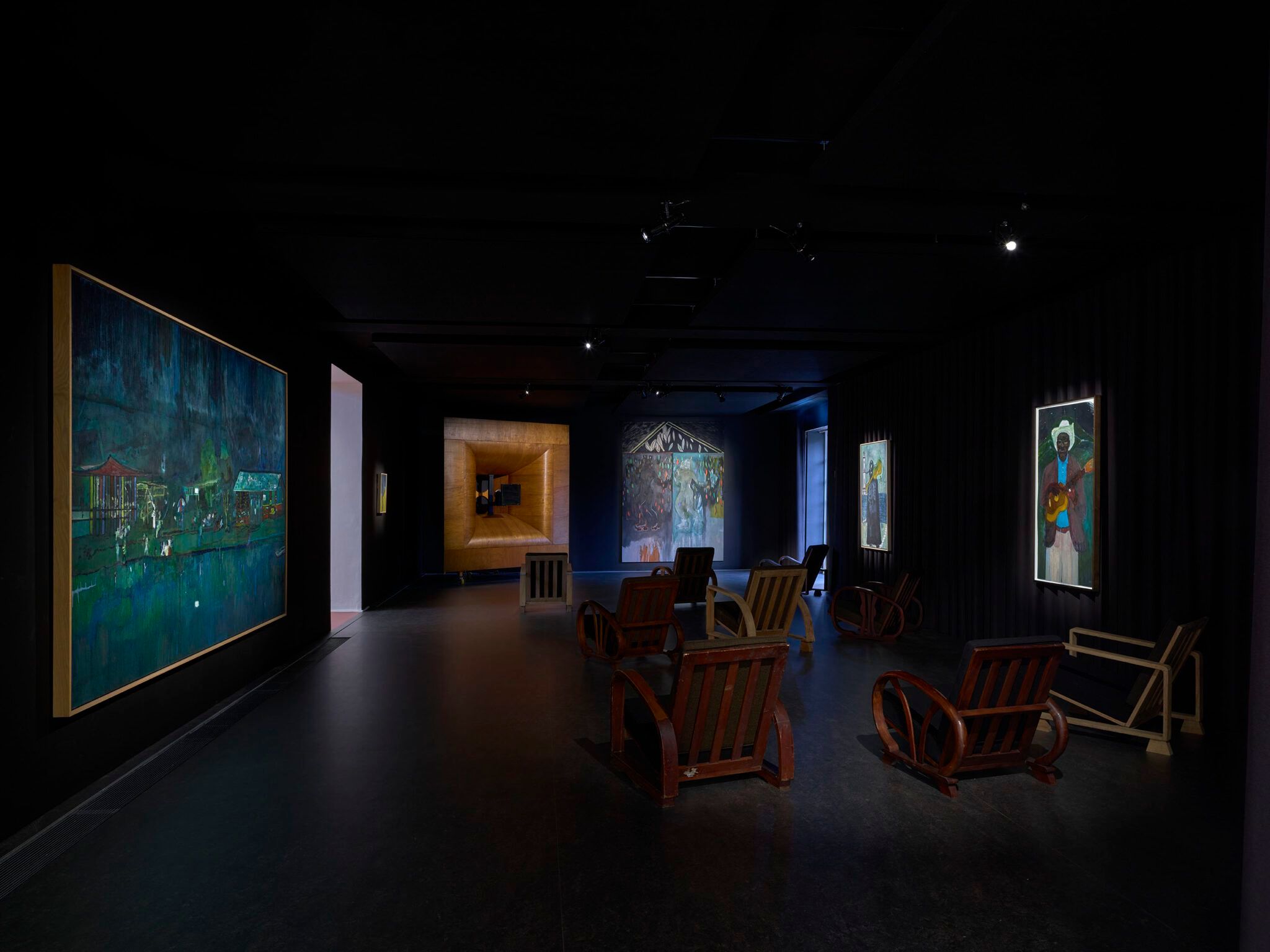
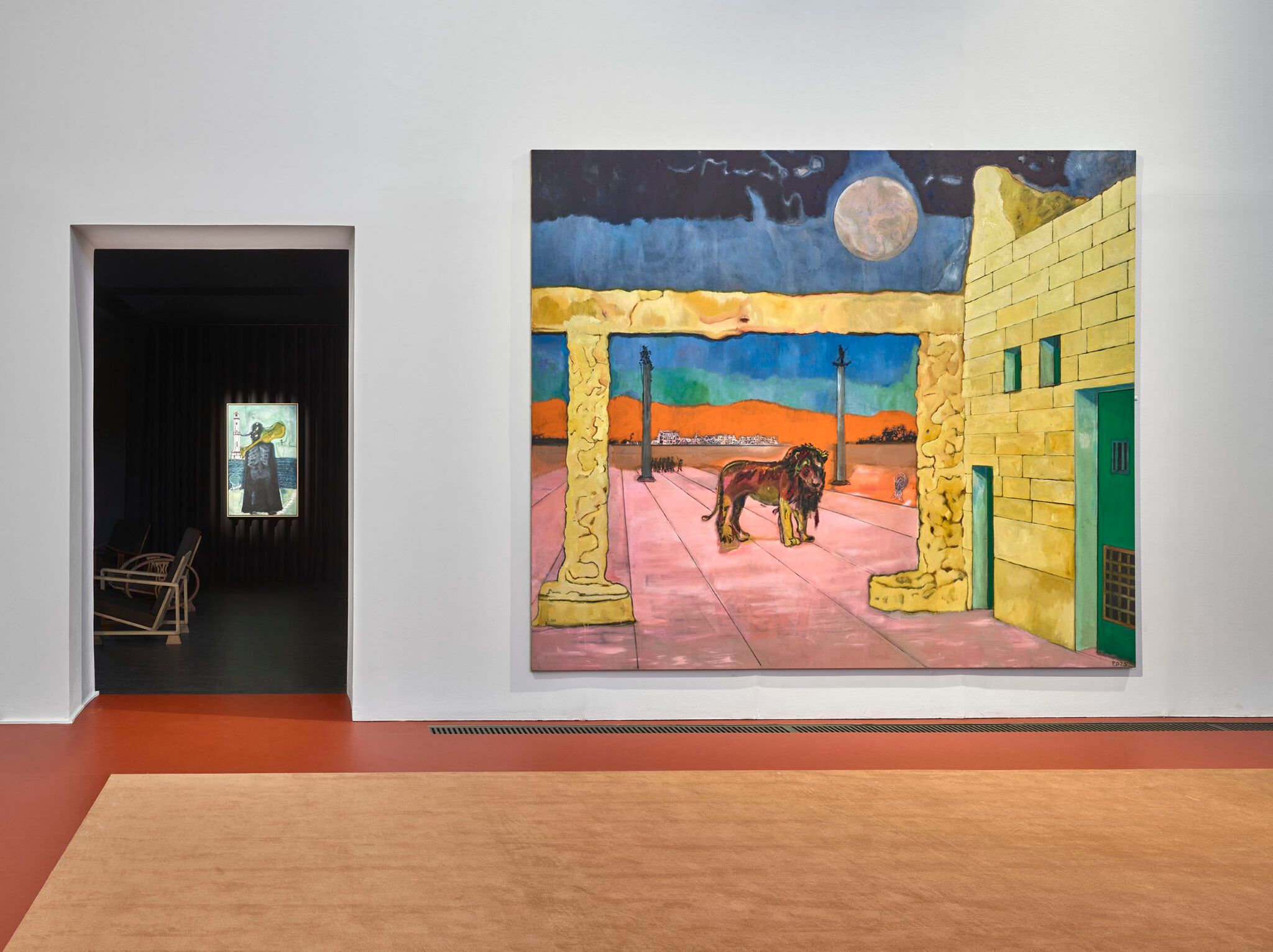
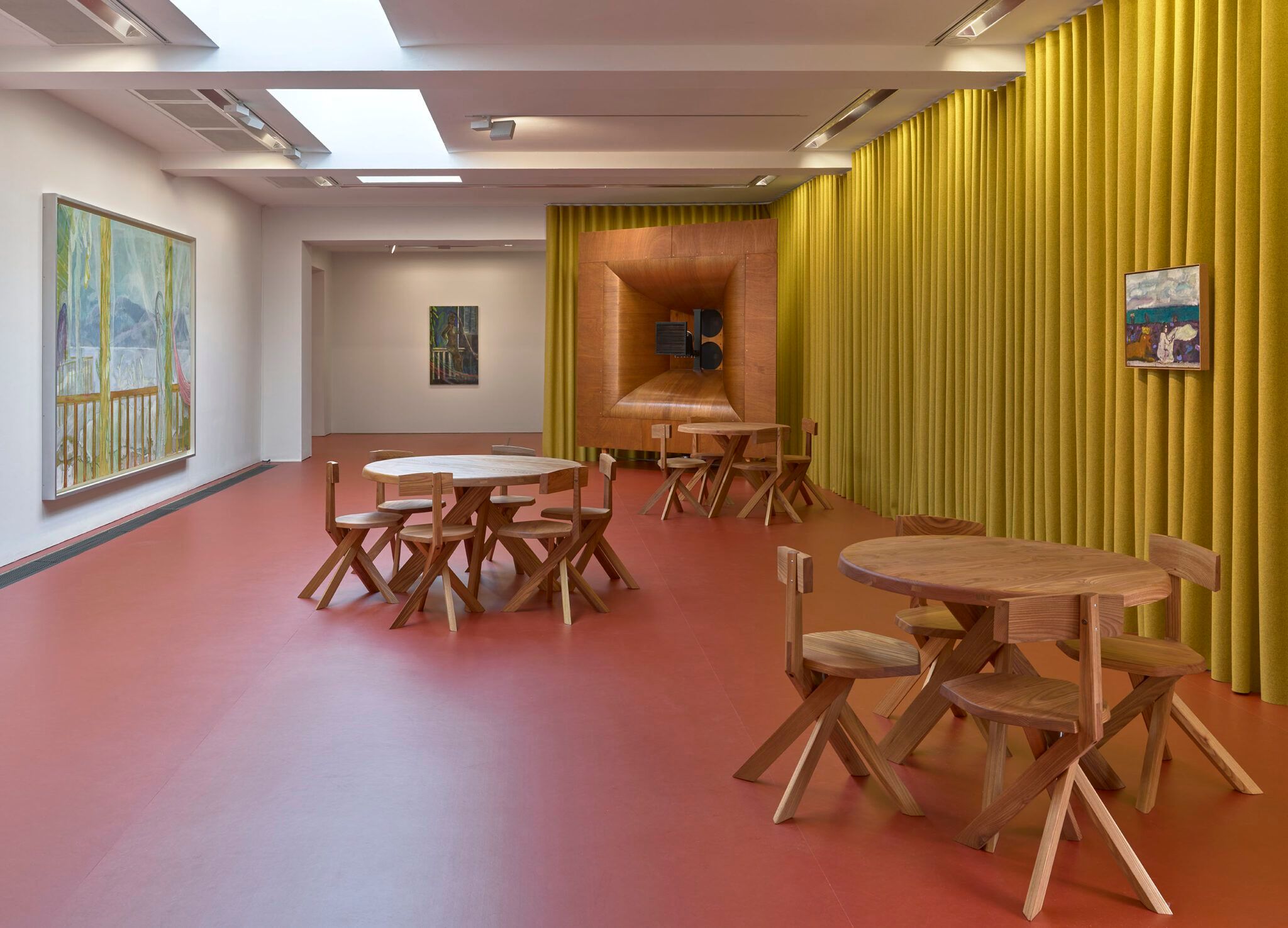
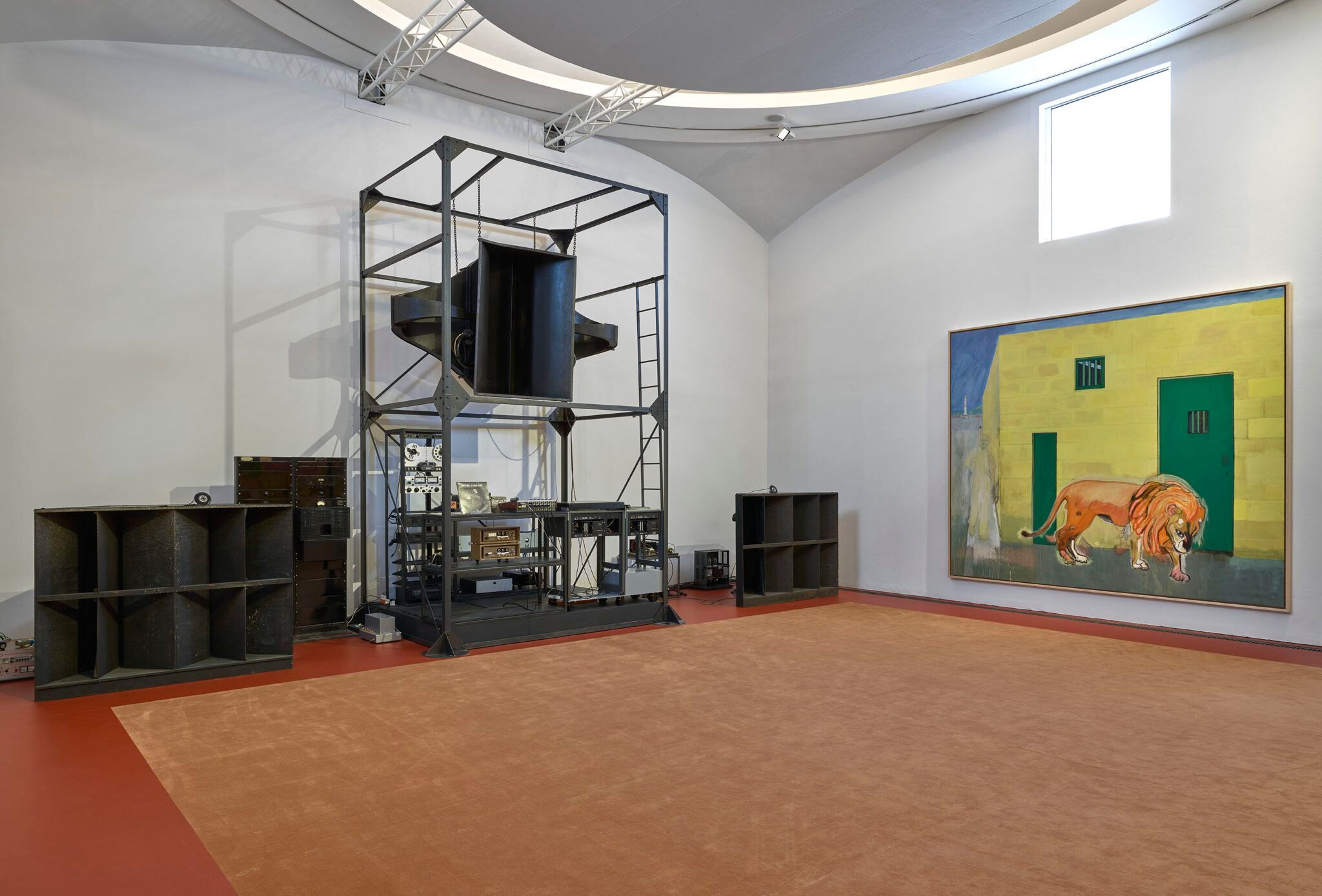
The speakers, salvaged by Doig’s collaborator Laurence Passera from derelict 1920s and 1950s cinemas, have been restored to pristine form, their polished wooden casing and components unexpectedly beautiful for objects originally not intended to be seen by spectators. The analogue technology provides a listening experience unlike any digital system, Passera argues. ‘If you close your eyes, it’s like the people creating the music are there,’ he says. ‘You listen and it takes you somewhere. You have an emotional connection.’ It is a sentiment echoed by Serpentine Galleries artistic director Hans Ulrich Obrist, for whom the presence of the sound system within the exhibition represents welcome respite from the mediation of contemporary life through screens: ‘We live in a very distracting environment, and one of the roles of art is to create a situation for paying attention.’
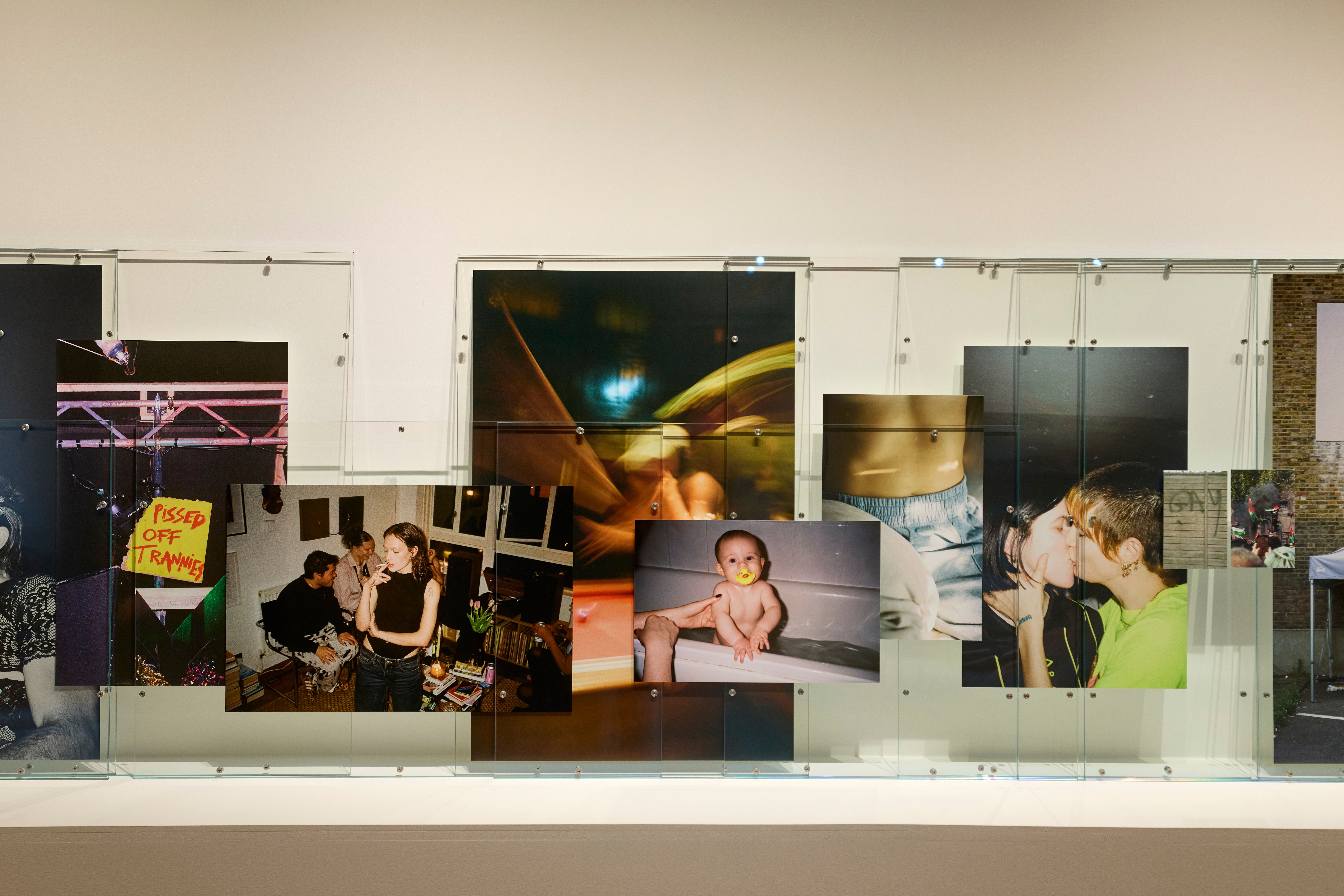
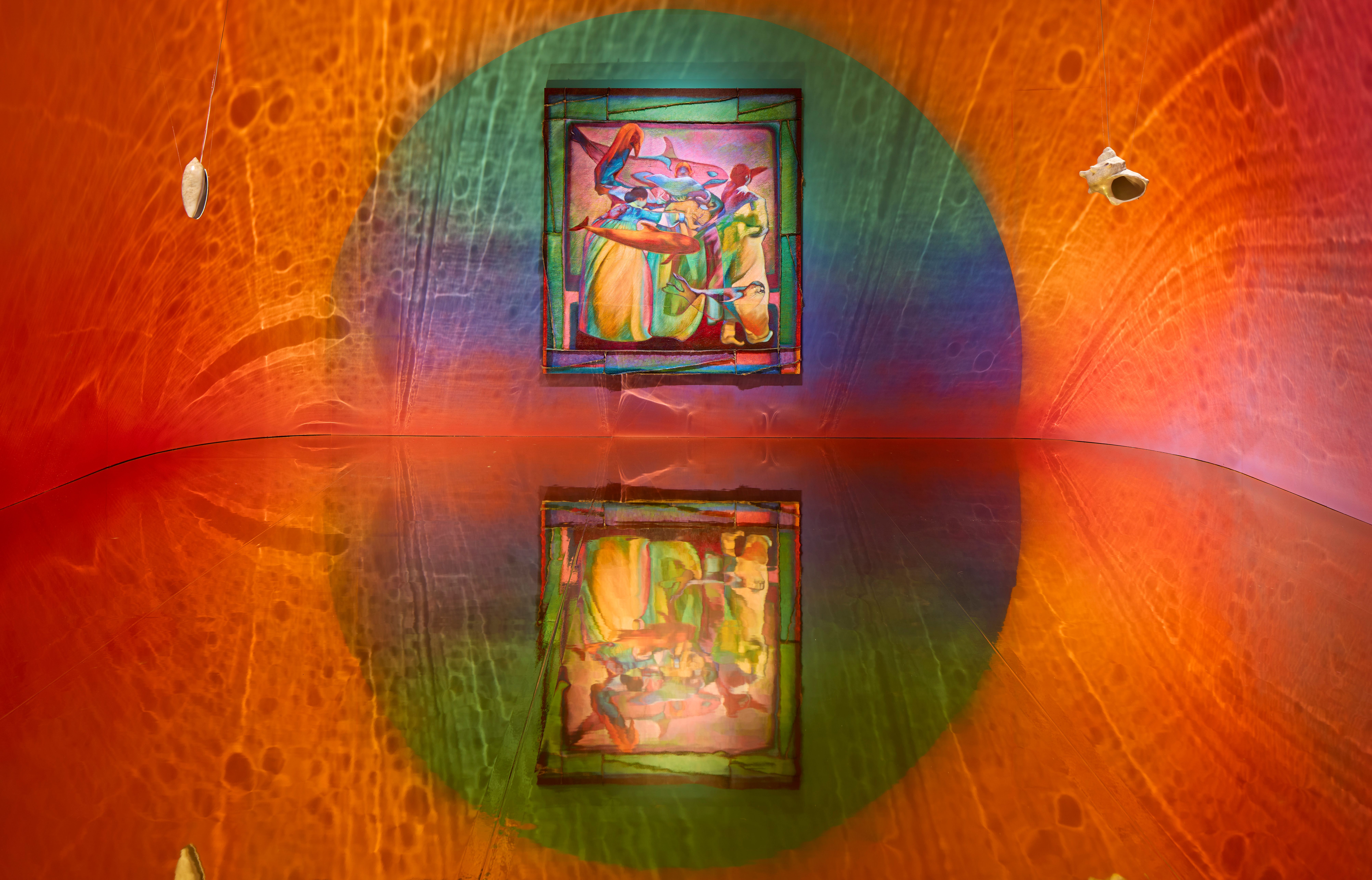
Many artists today are increasingly leaning into similar collaborations with musicians as an extension of their practice. Two of this year’s Turner Prize nominees have chosen to incorporate music into their prize presentations at Cartwright Hall Art Gallery in Bradford. A lively soundtrack of indistinct voices and snippets of Northern Soul, Ska, and 2 Tone tracks accompanies the photographs and sculptural installation of Rene Matić, while Zadie Xa’s fantastical paintings are animated by instrumental music inspired by Korean shamanic rhythms. ‘I use sound and music to create intimate, inward spaces that operate as explorations into my dreams or inner monologues that I can’t translate through other mediums,’ says Xa. ‘Sound also allows me to weave in historical references and connect my practice to other artists and folk movements.’
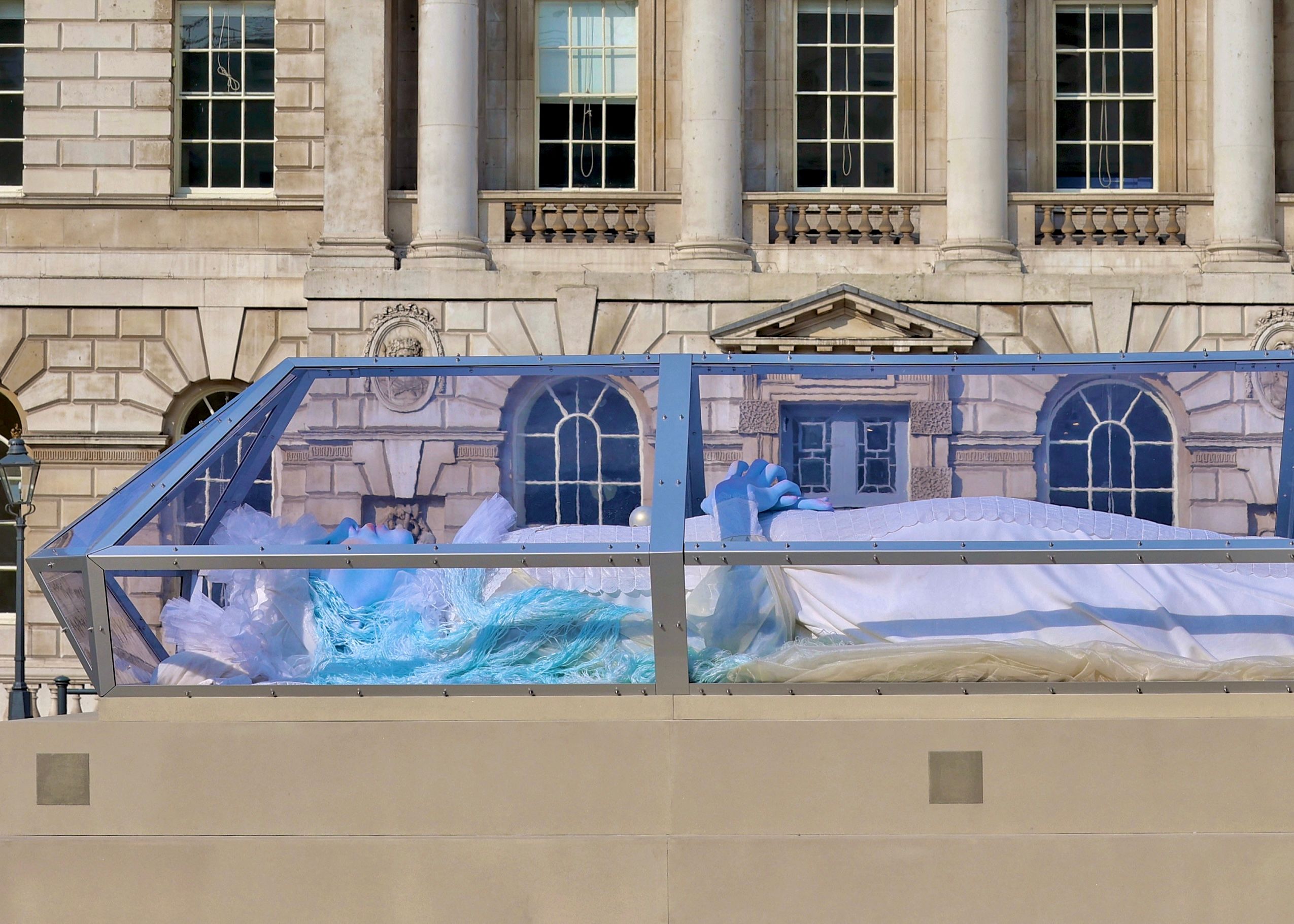
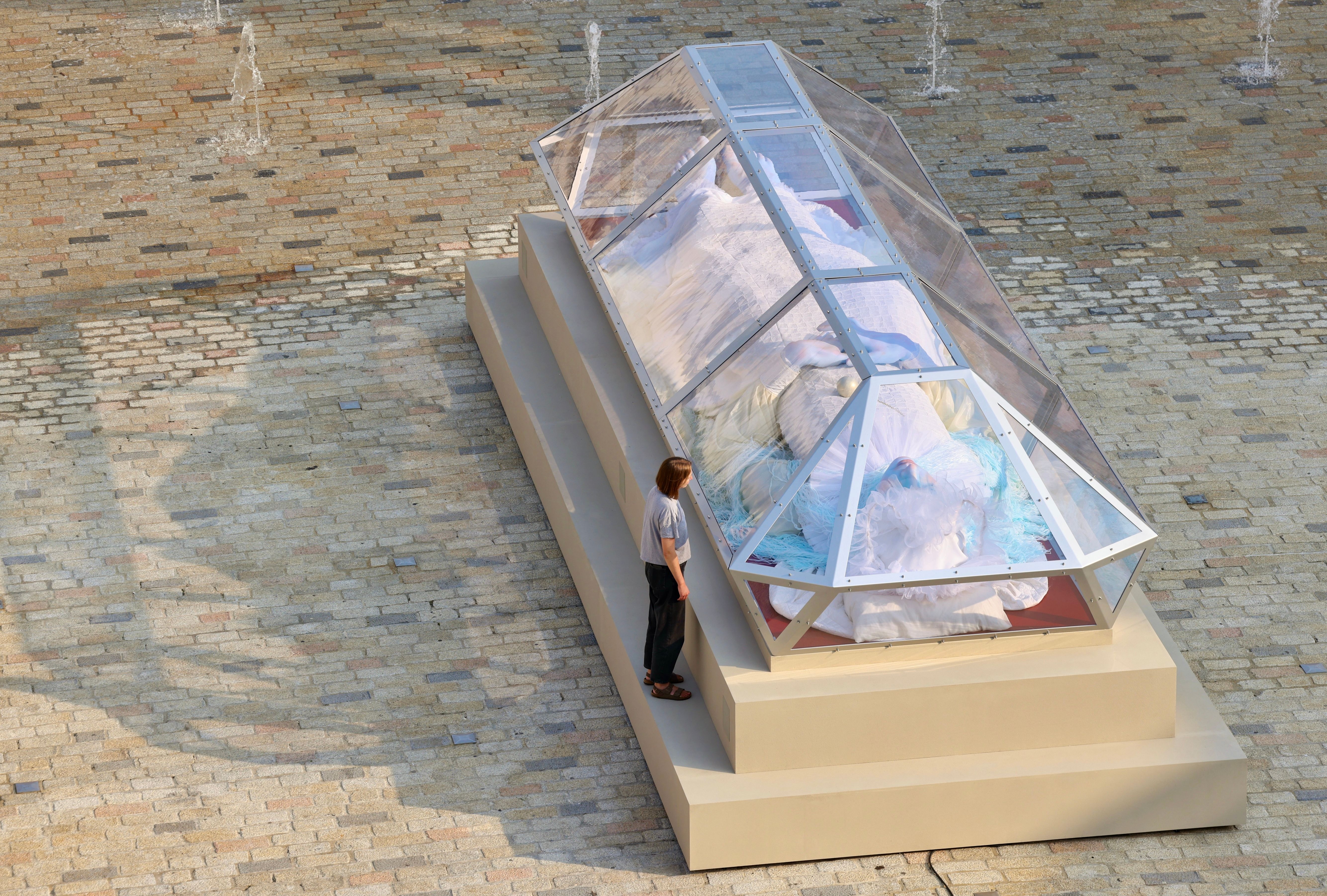
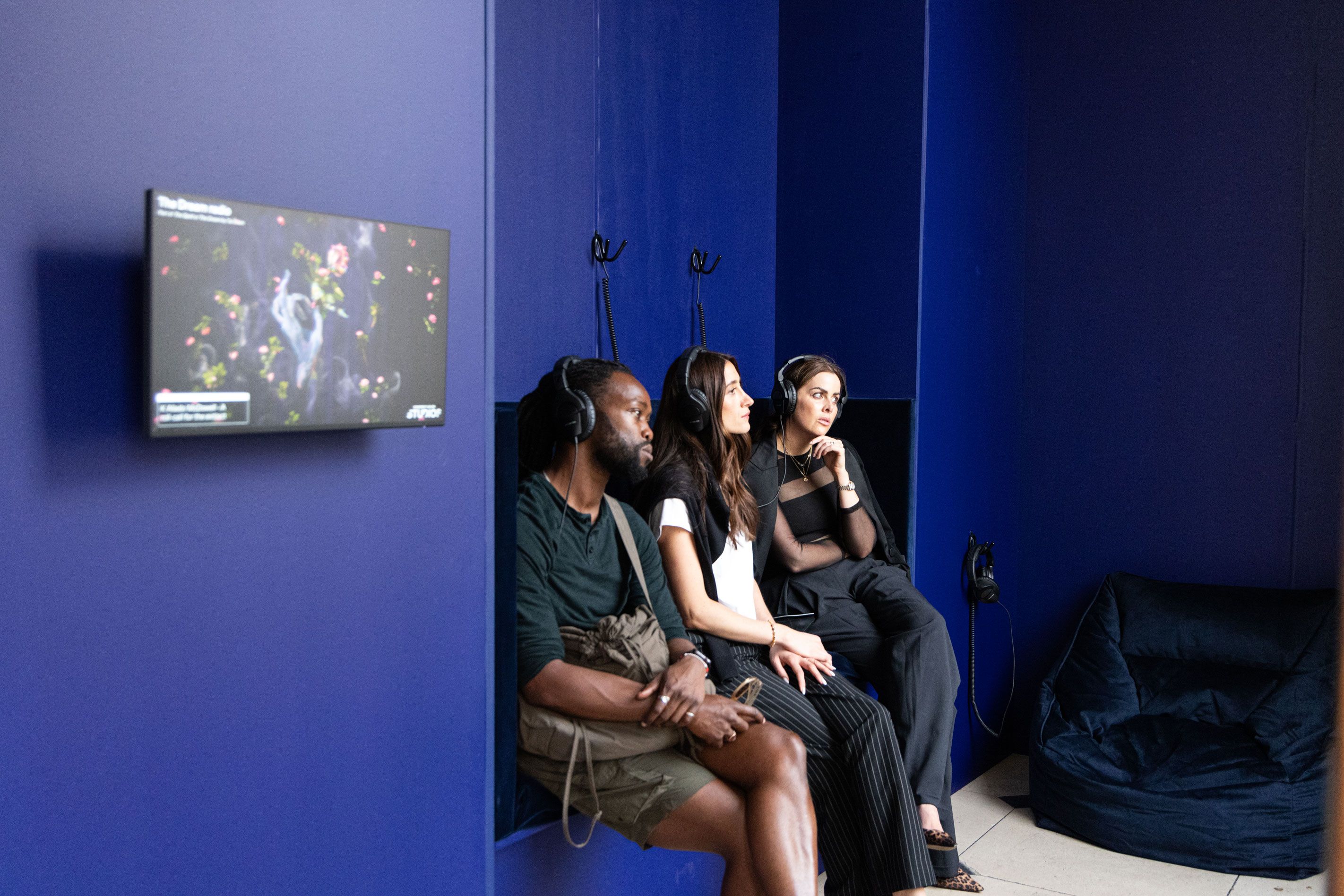
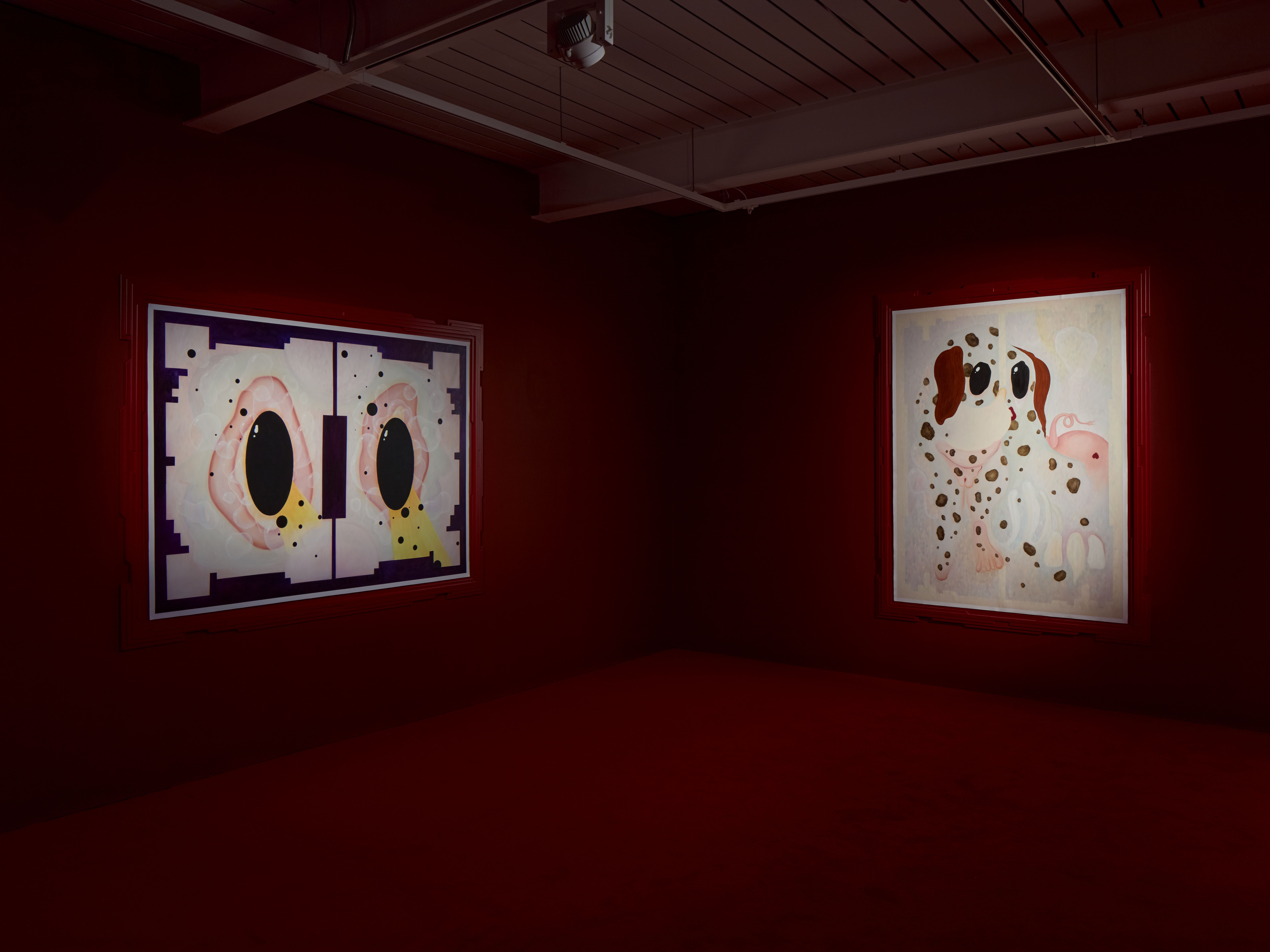
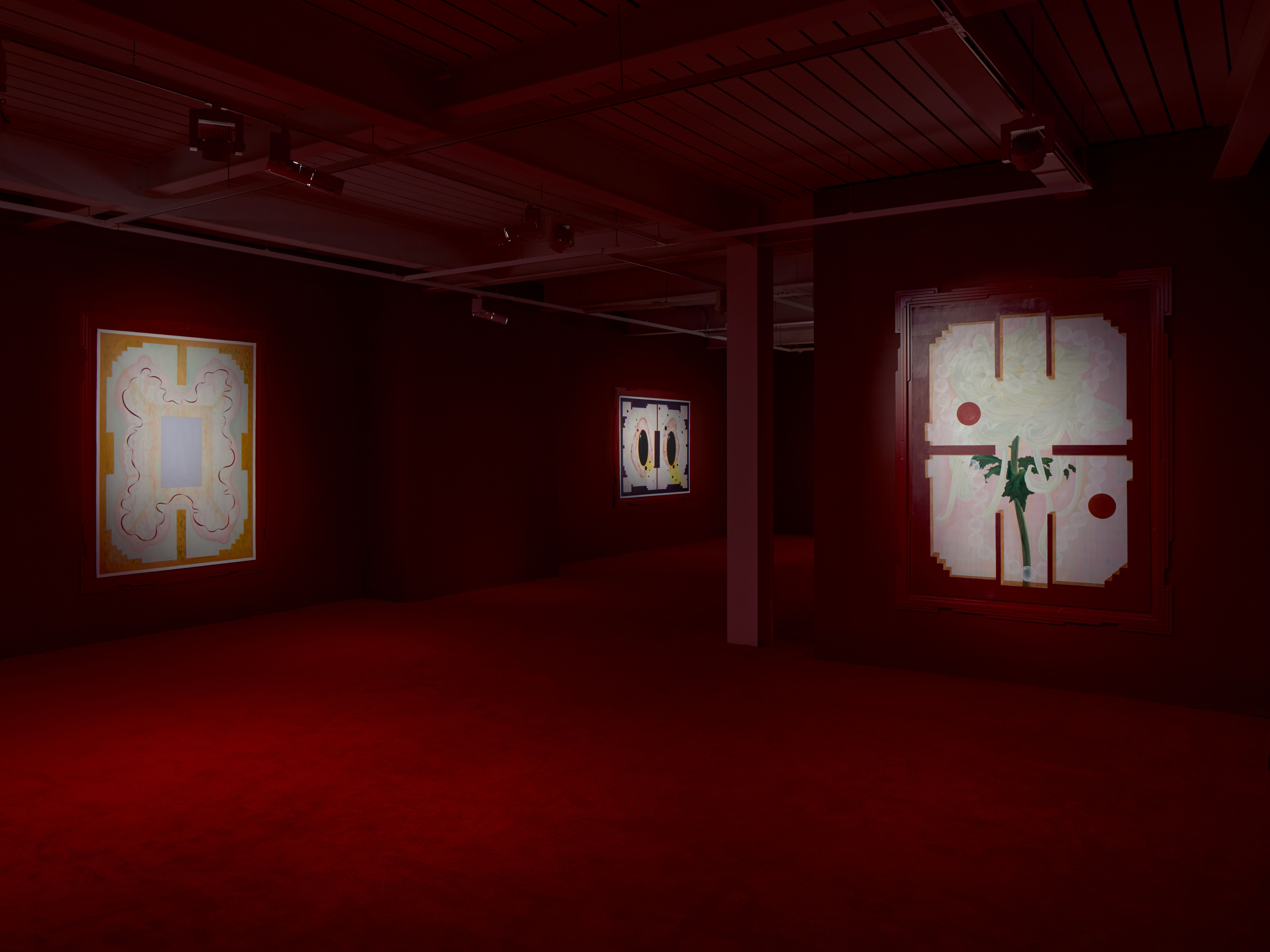
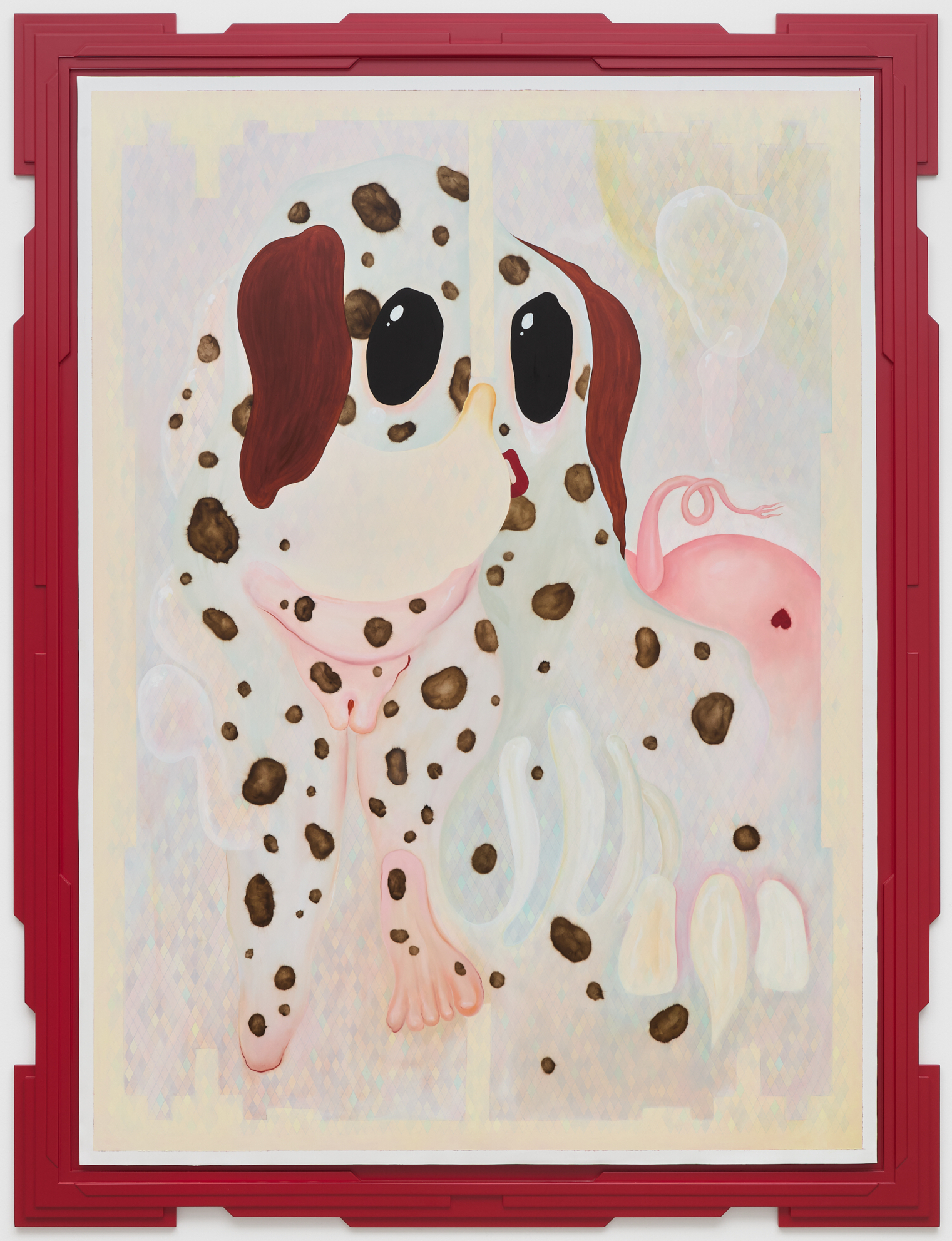
Tai Shani is another artist for whom sound is integral. Her recent installation at Somerset House, The Spell and the Dream—a large-scale sleeping figure encased in a glass box—was accompanied by a soundscape by double bassist and composer Maxwell Sterling, and a radio programme featuring guest contributors. ‘The sculpture breathed, but the music gave it a sense of being something from a different reality that had landed in ours,’ Shani says. For Cardinal, her latest exhibition at Gathering in London, she again worked with Sterling to create a deeply personal piece marking the end of her mother’s life. ‘I saw it as a kind of requiem and gave Maxwell a sample of her favourite song. I didn’t need to say much for him to understand.’ For Shani, using music feels natural. ‘A silent space in a world that is so cacophonous can feel very dominating,’ she says. ‘I want there to be as much thought to sound as to any other aspects of the encounter.’
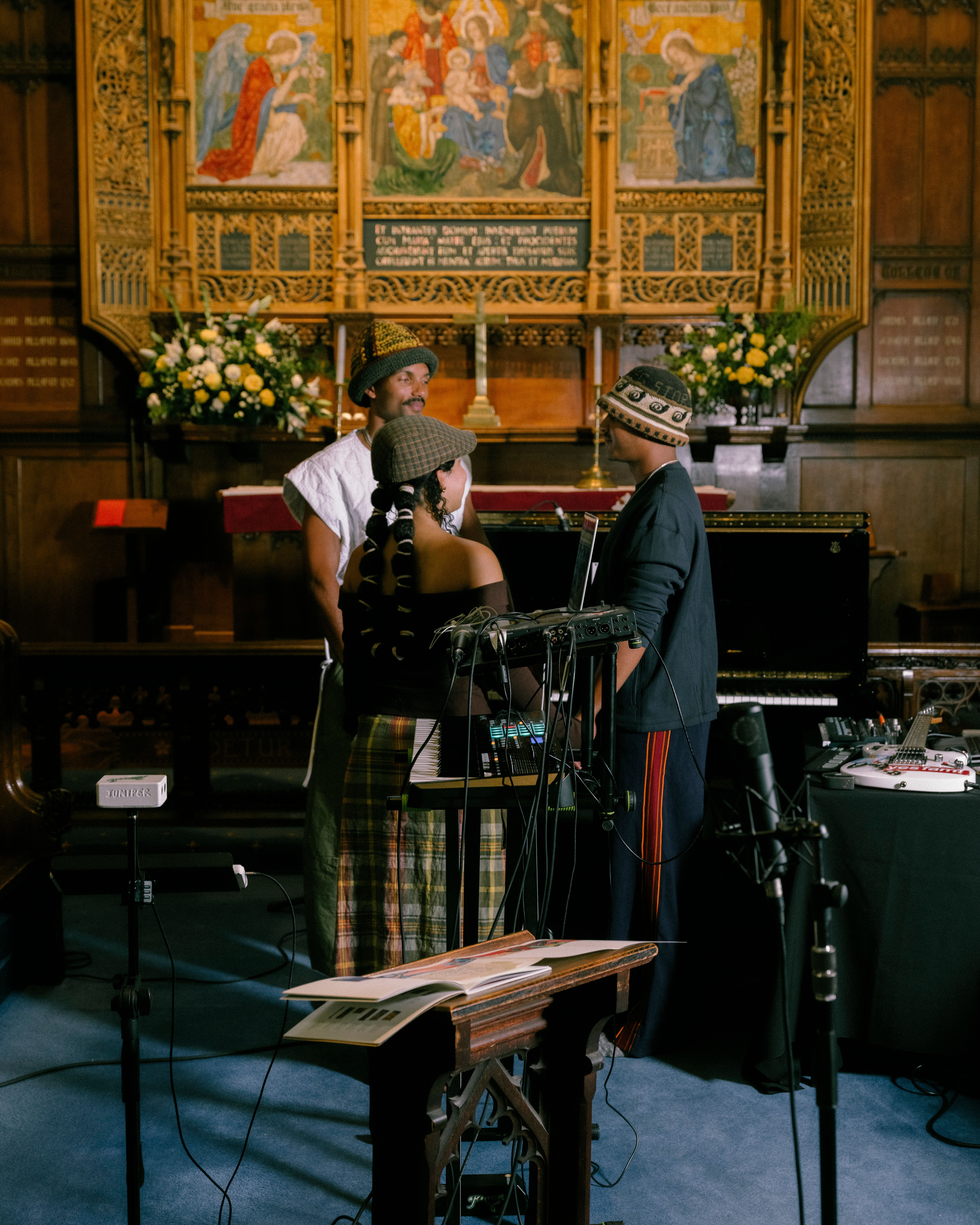
Sound artist Cecilia Morgan, who performs as afromerm, echoes this: ‘We’ve lived for so long in a visual-centric society, but I think we’re moving away from placing sound far below sight in the hierarchy of senses.’ Morgan was invited to create an audio response to Gated Canyons, artist Rachel Jones’ current exhibition at Dulwich Picture Gallery, alongside fellow musicians Rohan Ayinde and felix taylor. Choosing to focus on Tender Crags, a long, horizontal painting that ‘felt cinematic’, Morgan wrote the score as she moved her eyes across the abstracted landscape, sitting with the work and singing ‘to see what melodies came through’. A live performance in the gallery’s chapel was recorded and subsequently released on vinyl to accompany the exhibition.
For Morgan, the growing interest of the art world in alternative means of connection and engagement with the work on display reflects a broader cultural shift. ‘The wellness movement and the messaging around slowing down and caring for the self and community have seeped into many facets of living,’ she says. ‘With nightlife waning, we’re also renegotiating how we wind down in cities.’ It is also an opportunity for visual artists and cultural institutions to reconsider how they might welcome visitors who typically don’t feel these exhibitions are for them.
South London-based record label Touching Bass is invited with increasing regularity to collaborate with galleries and institutions around the capital (including Dulwich Picture Gallery for Jones’ exhibition and Kerry James Marshall at the Royal Academy this autumn) to curate live musical experiences in response to their shows. ‘There tends to be this “don’t touch”, fragile mentality around art spaces,’ Touching Bass co-founder Errol Anderson says. ‘Part of our work is to create an accessible entry point for people who may have felt a distance to them previously.’
This shift is part of a wider consciousness about the diverse ways in which people engage with art and culture, including the historic neglect of neurodivergent people and those with disabilities when it comes to experiencing exhibitions. ‘Accessibility is often treated as a tick-box exercise,’ argues Clare O’Dowd, research curator at the Henry Moore Institute in Leeds. Instead, there needs to be a more holistic approach beyond the visual aspect of exhibitions alone. ‘The question should be: how can we help more people understand contemporary art?’ Alongside researchers Ken Wilder (University of the Arts London) and Aaron McPeake (Chelsea College of Arts), O’Dowd has co-curated the exhibition Beyond the Visual, exploring how blind and partially sighted artists experience and produce sculpture.
The exhibition, which will open at the Henry Moore Institute this November, includes a rocking, stringed plywood structure by artists Sam Metz and Jay Moy that can be played like an instrument by visitors. A new commission by McPeake comprises bronze rings that can be struck with hammers to produce sound. ‘Even if you can’t see these artworks, you can still experience them,’ O’Dowd reflects. It’s an invitation to think about art itself differently. ‘The idea that an artwork can be a description or a sound—that’s powerful and challenging.’ —[O]
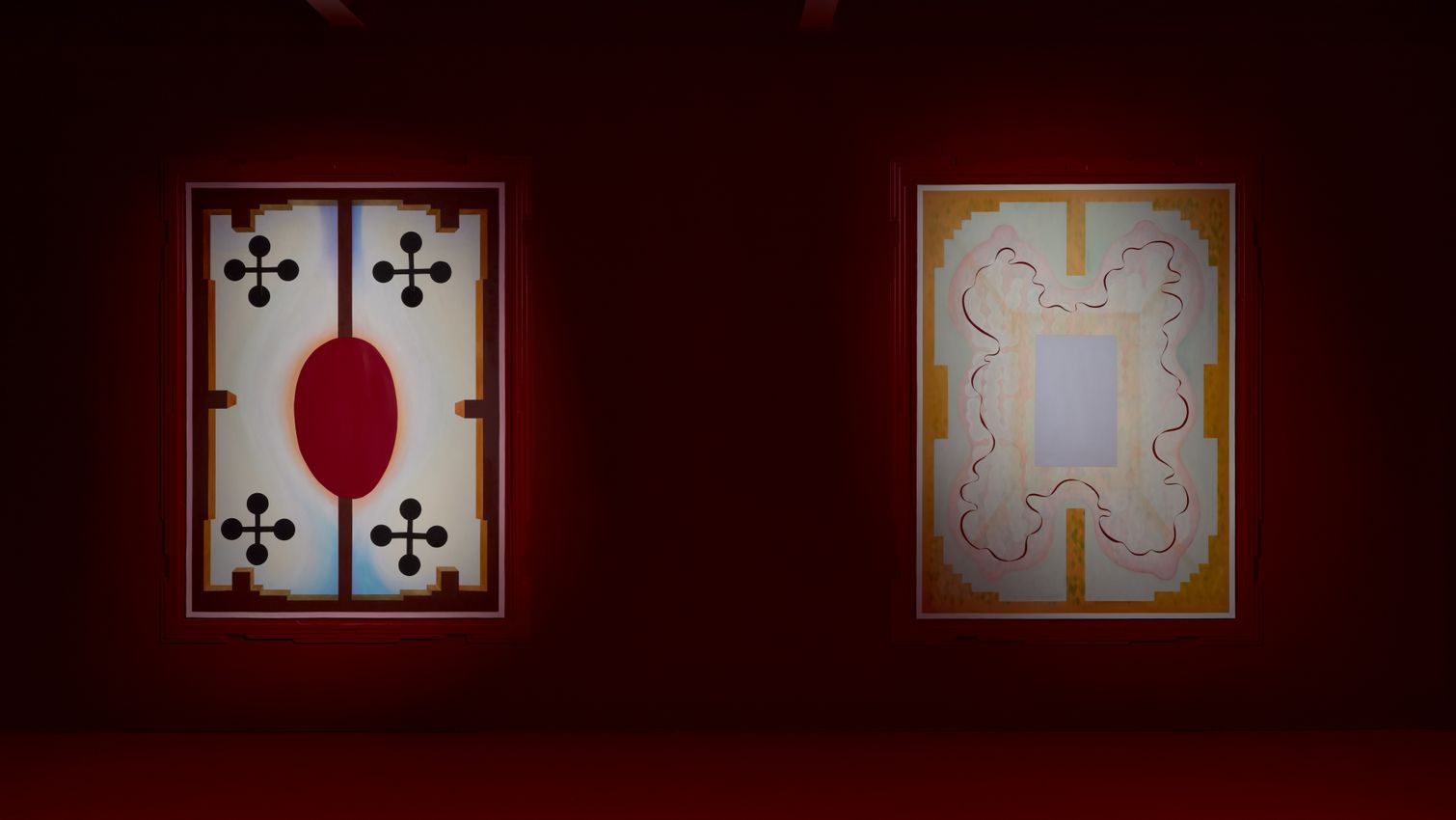
Main image: Exhibition view: Tai Shani, Cardinal, Gathering, London (26 September– 8 November 2025). Courtesy the artist and Gathering. Photo: Ollie Hammick.





A respected voice in contemporary art discourse.
Focusing on ambitious storytelling and insightful art-world commentary. Ocula Magazine publishes in-depth interviews, critical essays and timely analysis on the artists, exhibitions and ideas driving the global art world.
Learn more about Ocula Magazine
Showcasing the best of the art world.
Ocula partners with galleries from around the world to highlight their artists, artworks and exhibitions. Gallery membership is by application and invitation, with each member vetted by an independent panel.
Learn more about Ocula Membership
Specialises in the sale of major artworks.
Led by a team with deep ties to the world’s leading auction houses, galleries and collectors. Ocula’s advisory team offers bespoke services to high-net-worth clients from around the world who are looking to acquire the best of contemporary and modern art.
Learn more about our team and services