





Come Together
Away from the headlines and demonstrations, the European Cultural Centre Italy’s exhibition at the 61st Venice Biennale offers a glimpse of the intersectionality of global artistic practice. Save to My OculaAt the historic Palazzo Bembo, a 14th-century Venetian Gothic-Byzantine-style palace, a high-up room overlooking the Grand Canal houses a series of dolls in different outfits. Your Ark—Celebration and Emergency, by master Japanese dollmaker Hiromine Nakamura, consists of 18 animal and human dolls on a tiered hinadan (a specialised stand). All of them wear pleasant expressions.
Nakamura is a fourth-generation dollmaker who creates ningyō, contemporary versions of a very old practice of figurative dollmaking, with perfectly symmetrical faces and hand-painted flourishes. Here, the humans include a baseball player, a fireman and a surfer, while among the animals are a gorilla, a panda and a musk ox. Behind the dolls, golden paintings on a wooden panel depict extinct animals: a woolly mammoth, a great auk, an Irish elk, a giant tortoise. Before them all, leading the way, there’s an ornate version of the Venetian luxury speedboats that transport the elite around the city: this is our Ark. All the dolls face the same way: the direction in which the boat’s prow is pointing, beyond the window to the Grand Canal. Yet, as its name suggests, the work has a simultaneously celebratory and ominous nature, with the extinct animals reminding us, as the wall text notes, that any act of salvation means leaving others behind. The Ark, then, is “the site of choice itself”. If Venice is slipping under the water, who—or what—do we choose to save?
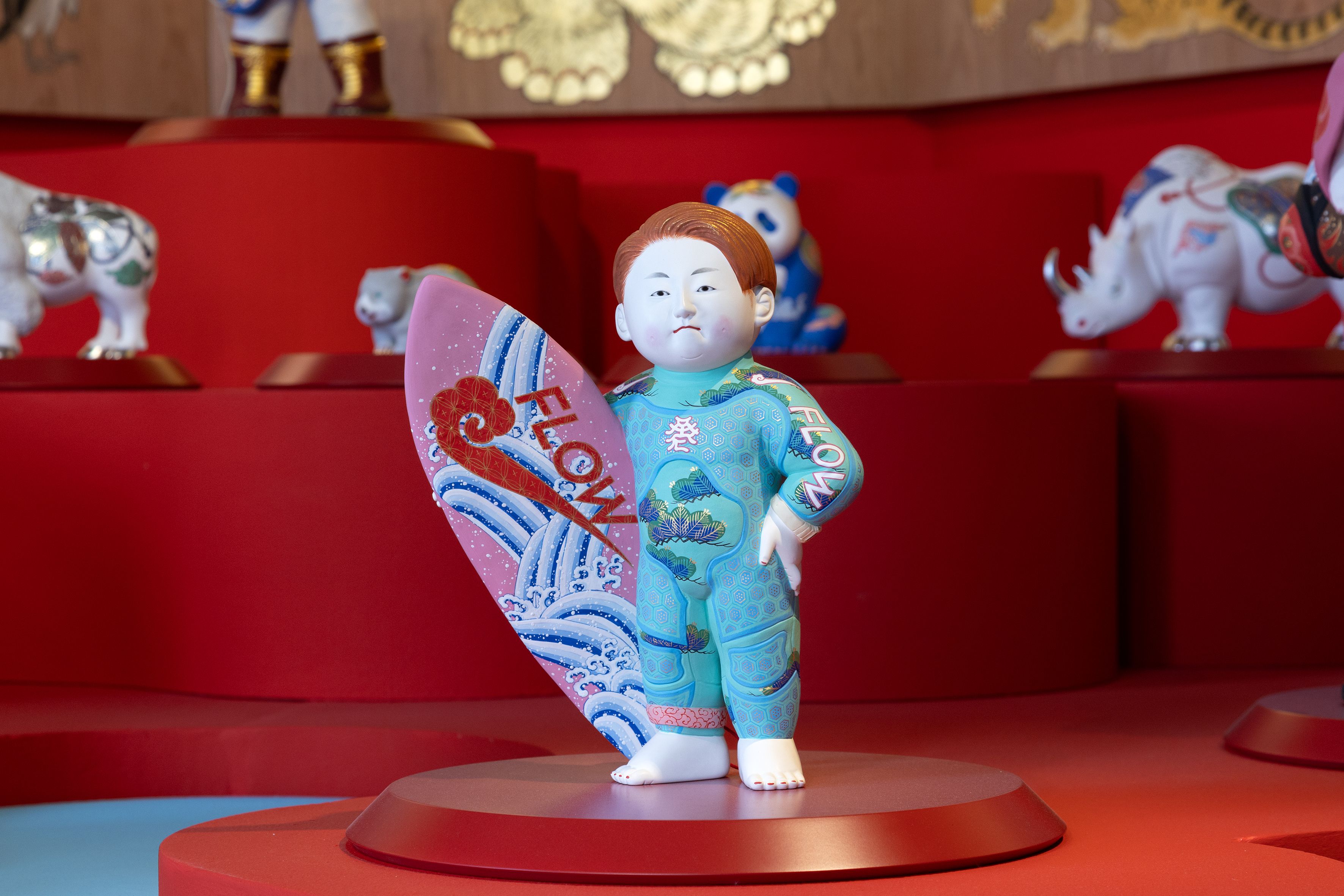
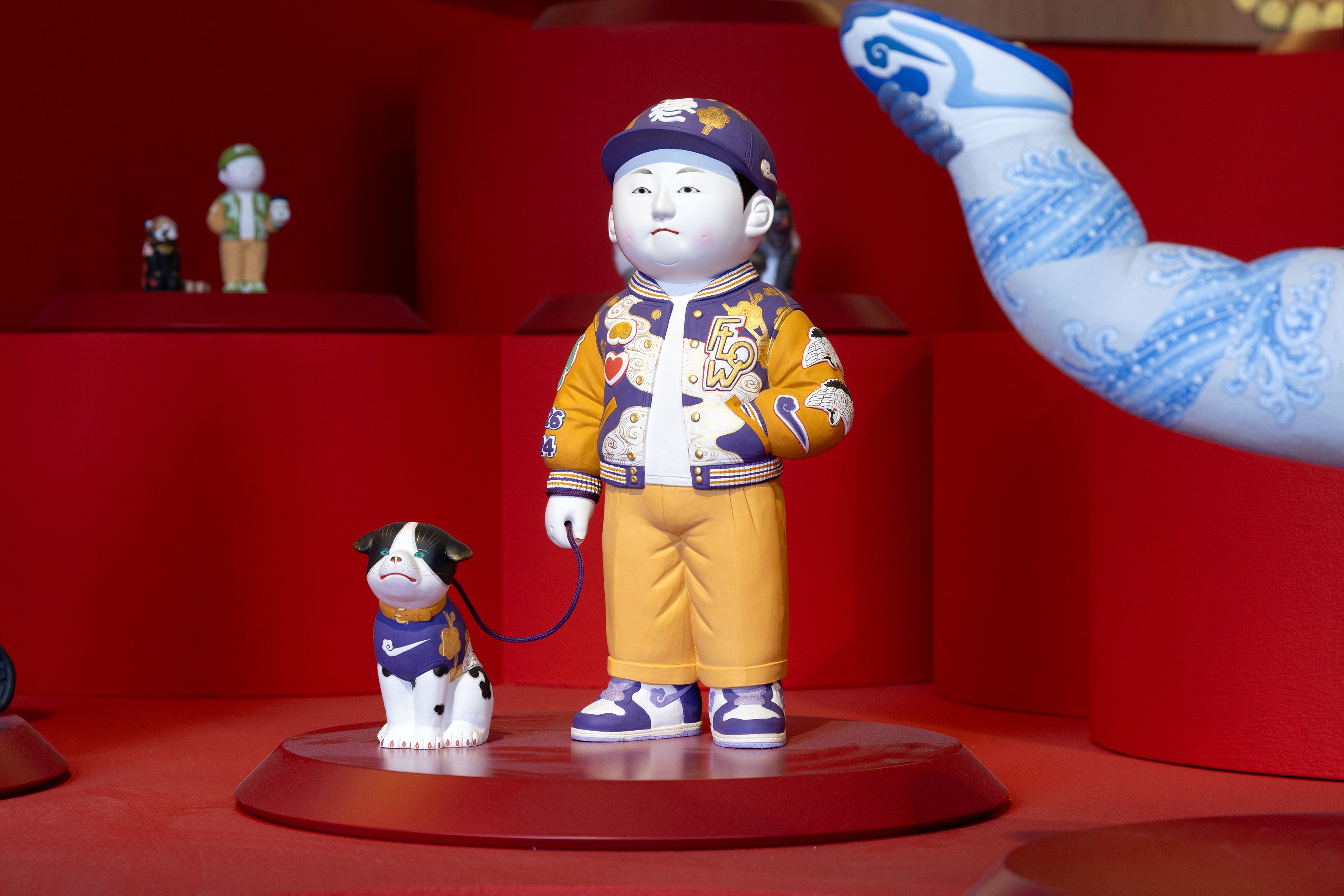
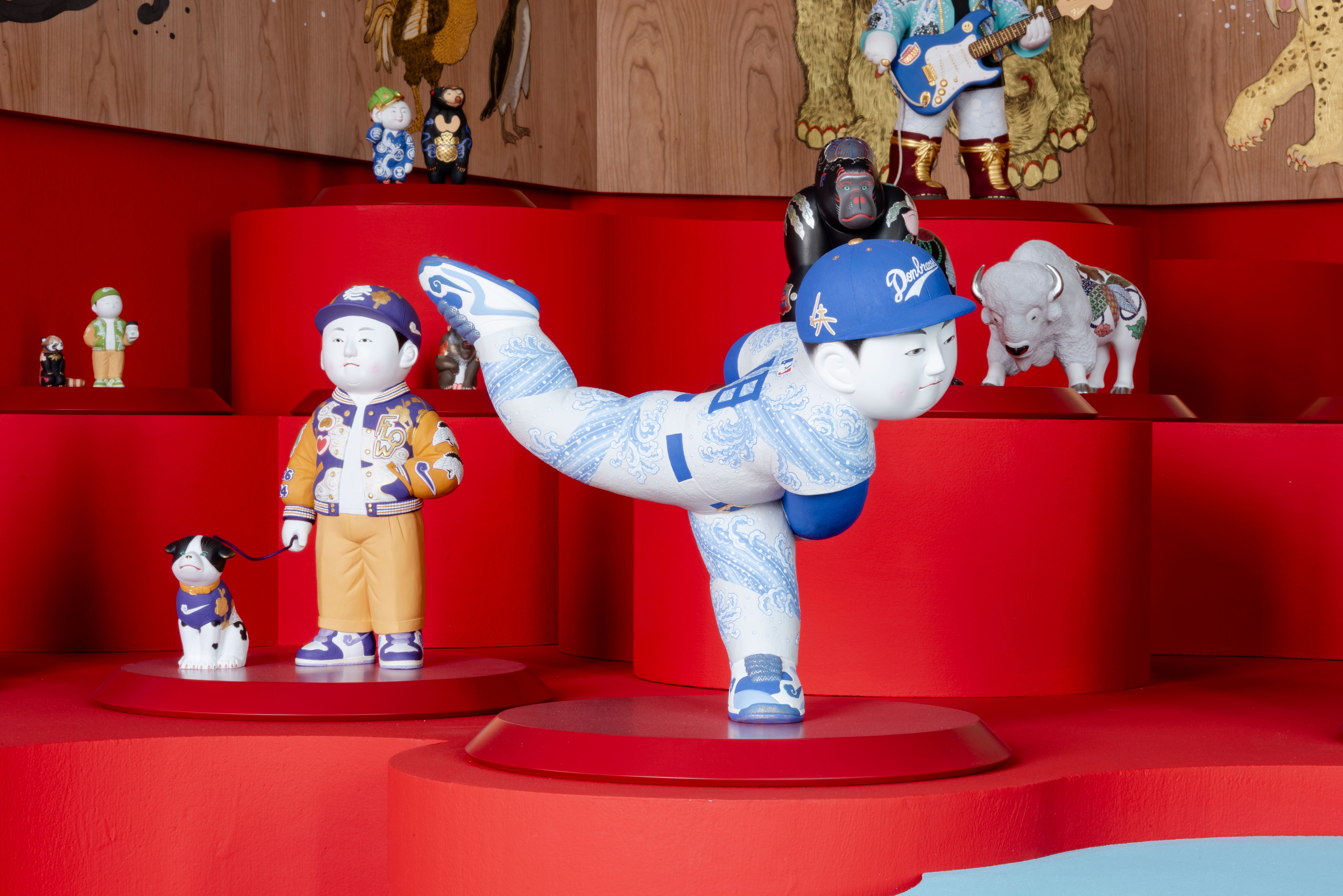
The Ark—Celebration and Emergency (2026), with its blending of Japanese artistic heritage and Venetian detailing, encapsulates the theme of this year’s exhibition by the European Cultural Centre (ECC) Italy. Confluences, the eighth edition of its vast, ambitious biannual presentation, Personal Structures, emphasises the nature of encounter, and the opportunities for artmaking disciplines and practices to “intersect, contaminate one another, and generate new possibilities for co-existence”. Over 175 artists from more than 40 countries showcase work across three historic venues: Palazzo Bembo, Palazzo Mora, and the Marinaressa Gardens, forming almost a mini-biennale within the larger one.
Nakamura’s presentation is part of a larger exhibition presented by the Japanese curatorial platform and gallery B-OWND. Relational Logic—Beyond Dualism, a World Reconnected shows that these confluences occur at every level—within one collection’s artists and artworks, as well as between each collection and its new Venetian context. Here is a mish-mash of eras and energies, from the solemnity of a tea ceremony to a manga created to tell the story of Pietro Bembo, the Palazzo’s namesake, a Venetian scholar (the Palazzo was the birthplace and home of the Venetian scholar, poet, literary theorist, and cardinal who codified Tuscan dialect into a grammatical structure.
“The wood and the water of Venice seem in perfect dialogue with the wooden, watery world of Japan”
In one room, a vast structure made from lengths of flat bamboo forms a series of tunnels through which the visitor steps. Passing through, I stand briefly at the window and watch a boat from the Venetian Consiglio Comunale, fitted with a large mechanical arm, replacing the wooden poles that serve as navigation markers and mooring posts throughout “The Floating City”. The wood and the water of Venice seem in perfect dialogue with the wooden, watery world of Japan. In his exhibition notes, Shinya Maezaki, professor of art and design at Ritsumeikan University, writes that Japan, as an island, is a fundamentally relational nation: “almost all of Japan’s culture began as something that washed ashore”. A sense of this washing, of flow, accidental encounter, and cultural transformation, animates much of the work on display at Confluences, with its insistence on the value of conscious intermingling.
Until recently, the Marinaressa Gardens, the ECC Italy’s outdoor venue, was home to a lot of weeds and a rusty washing machine. Originally built in the 1930s to replace crumbling shipyards, the gardens had fallen into disrepair until they were taken over by the ECC Italy to provide a home for a concentrated collection of sculptural offerings. The ECC Italy describes this, playfully, as its “adoption” of the gardens, as part of a sustained effort to add value to the neighbourhood itself. As ECC Italy curator Sara Danieli says: “What comes from outside, and what exists here already?”
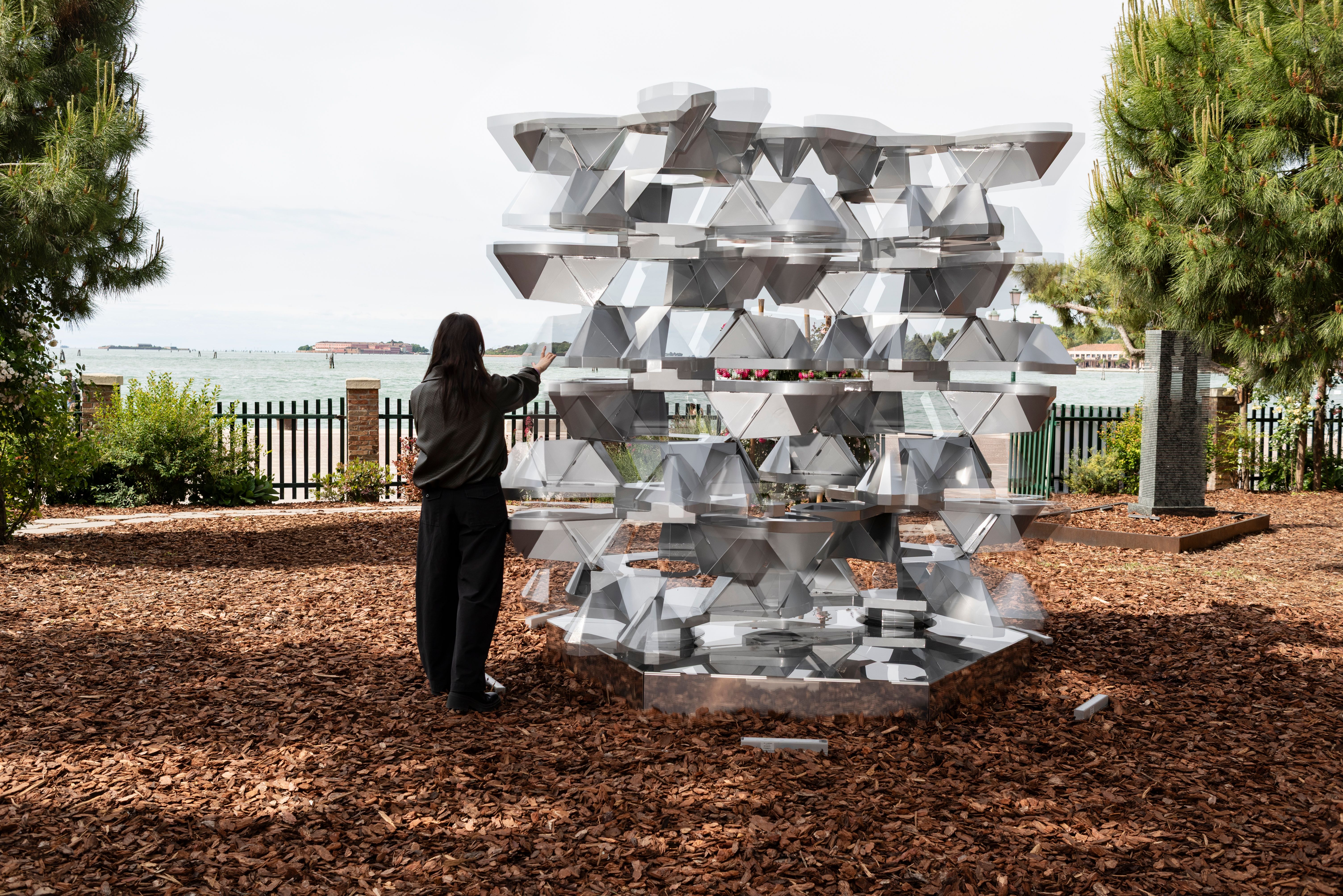
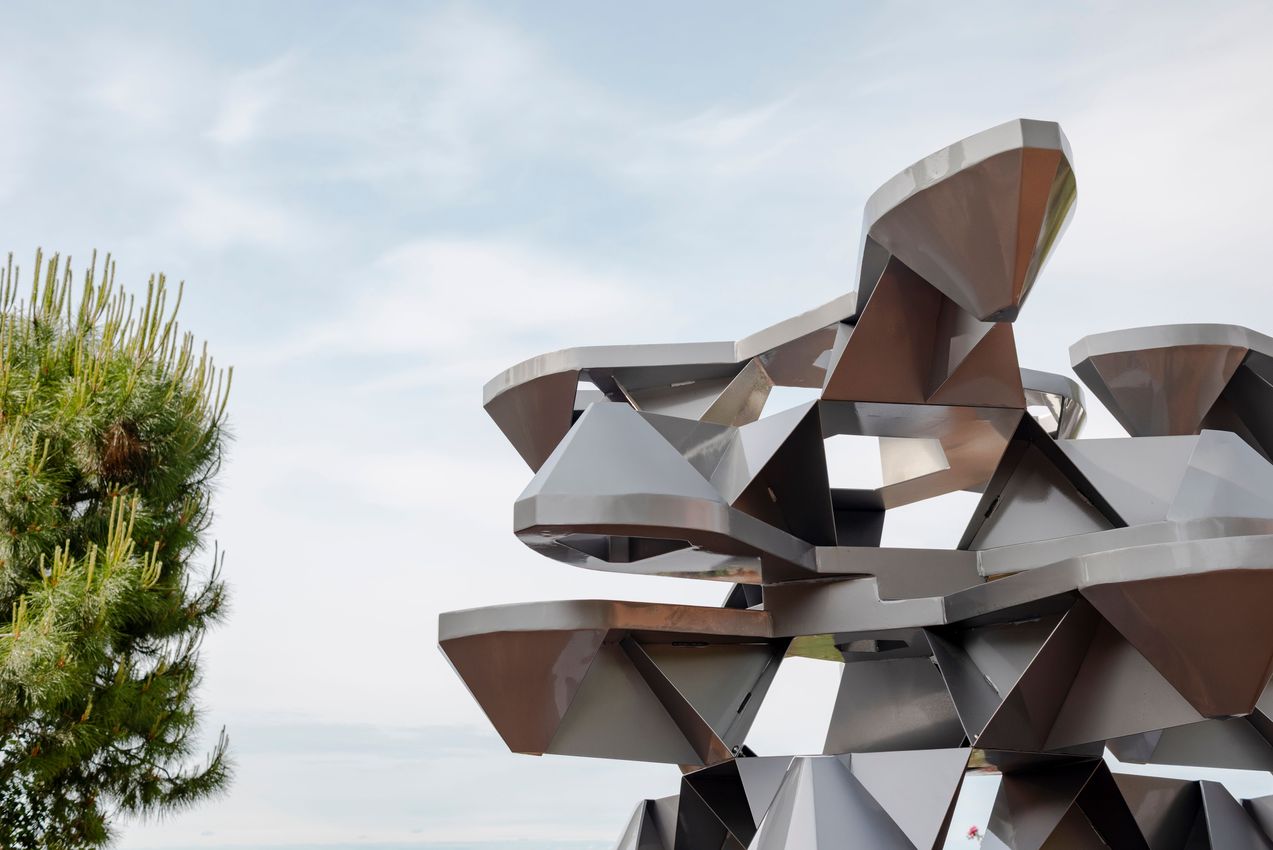
Pollinator I (2026) by American artist Jakob Bokulich, who, across the weekend, was never unaccompanied by his bob-tailed Australian Shepherd, is a kinetic work that was first spotted, in a different form, by some of the ECC Italy curators at Burning Man festival. Here, a beehive-inspired, powder-coated metal work spins gently on two stands, helped along with a push. Influenced partly by Bokulich’s father (a car mechanic), the work is partly a response to the idea that machinery has its own intelligence. It’s also a porous system that, as its name suggests, fits into a broader artistic and urban ecology.
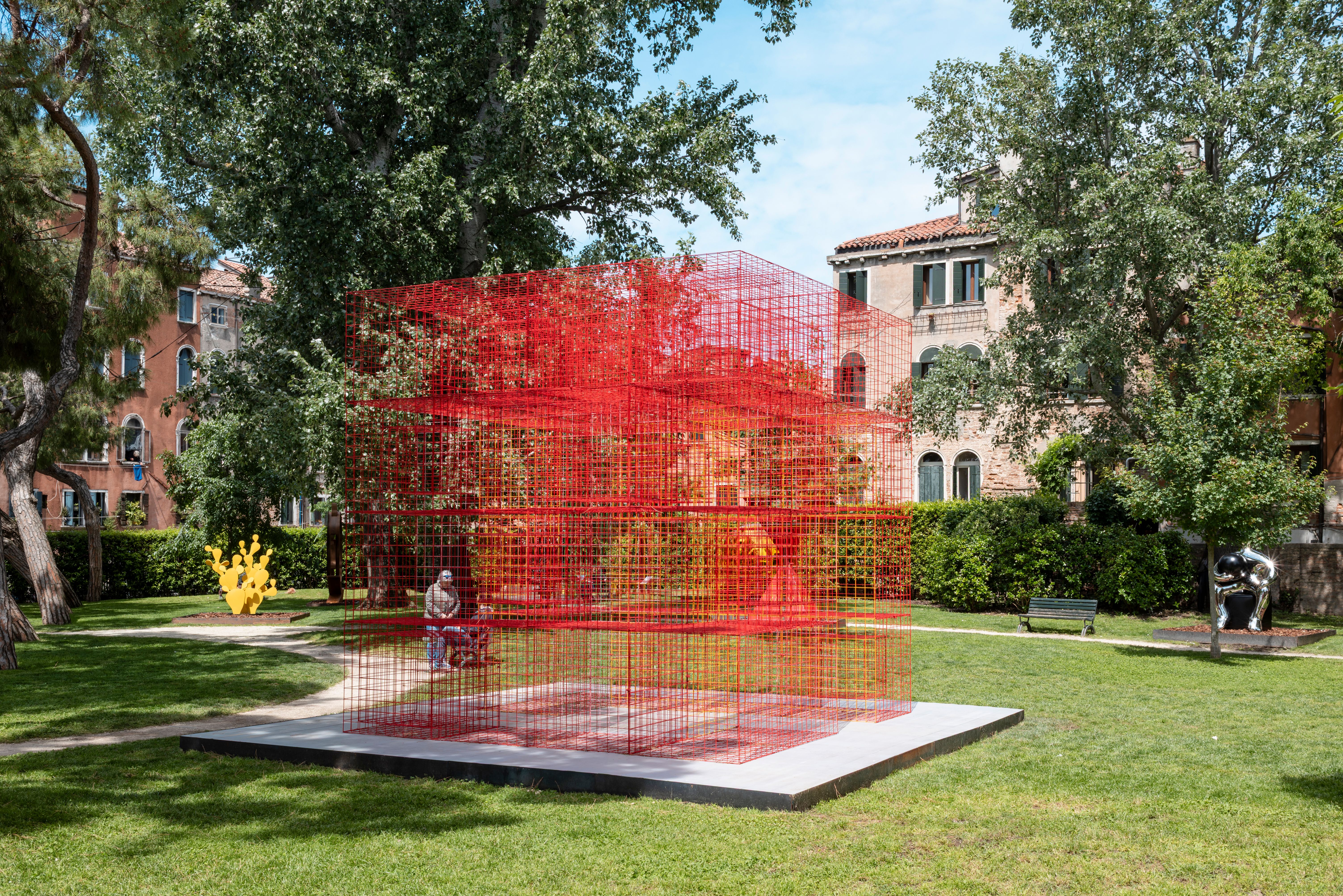
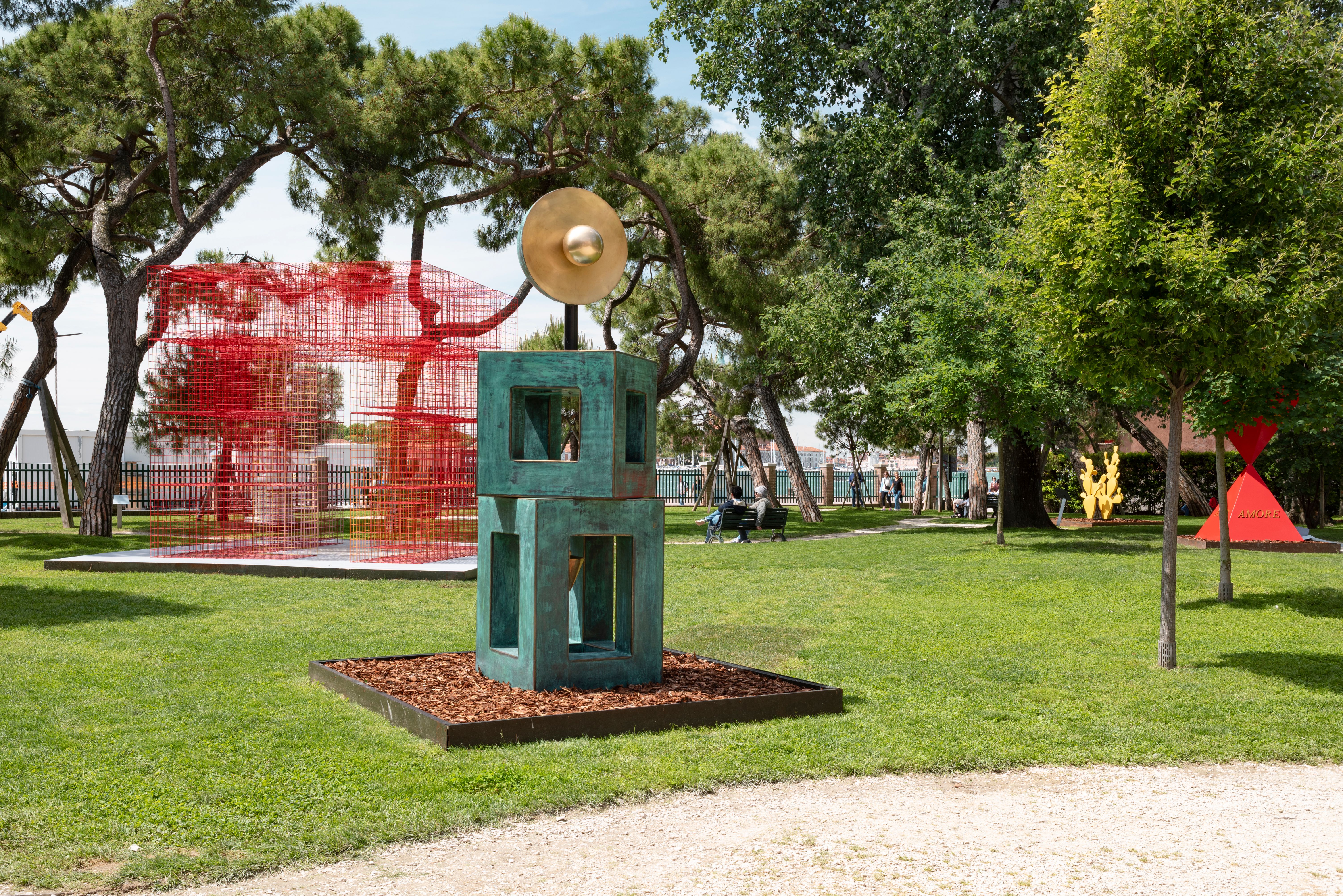
In fact, many of the works in the gardens are in dialogue with the surrounding environment. Rashid Al Khalifa’s Inhabited Crate (2026) is a large, red mesh in the shape of a house; a structure that, as Danieli tells us, relates to the way that while every day we pass through buildings without seeing them, each person may perceive volume and shape differently. Like Pollinator I, the sculpture communes with its environment via the form of the gap. Behind it, and through the mesh, ships sail towards the Giardini. Elsewhere in the gardens sits a large chrome figure, perfectly framed from behind by a line of washing hanging from a window. In such a way, all the works in the gardens reframe the city as much as they impose their own presence. “Art must be public,” as artist Paresh Maity says, beside his monumental blue-green sculpture Equilibrium (2026); “It is the heritage of the whole world.”
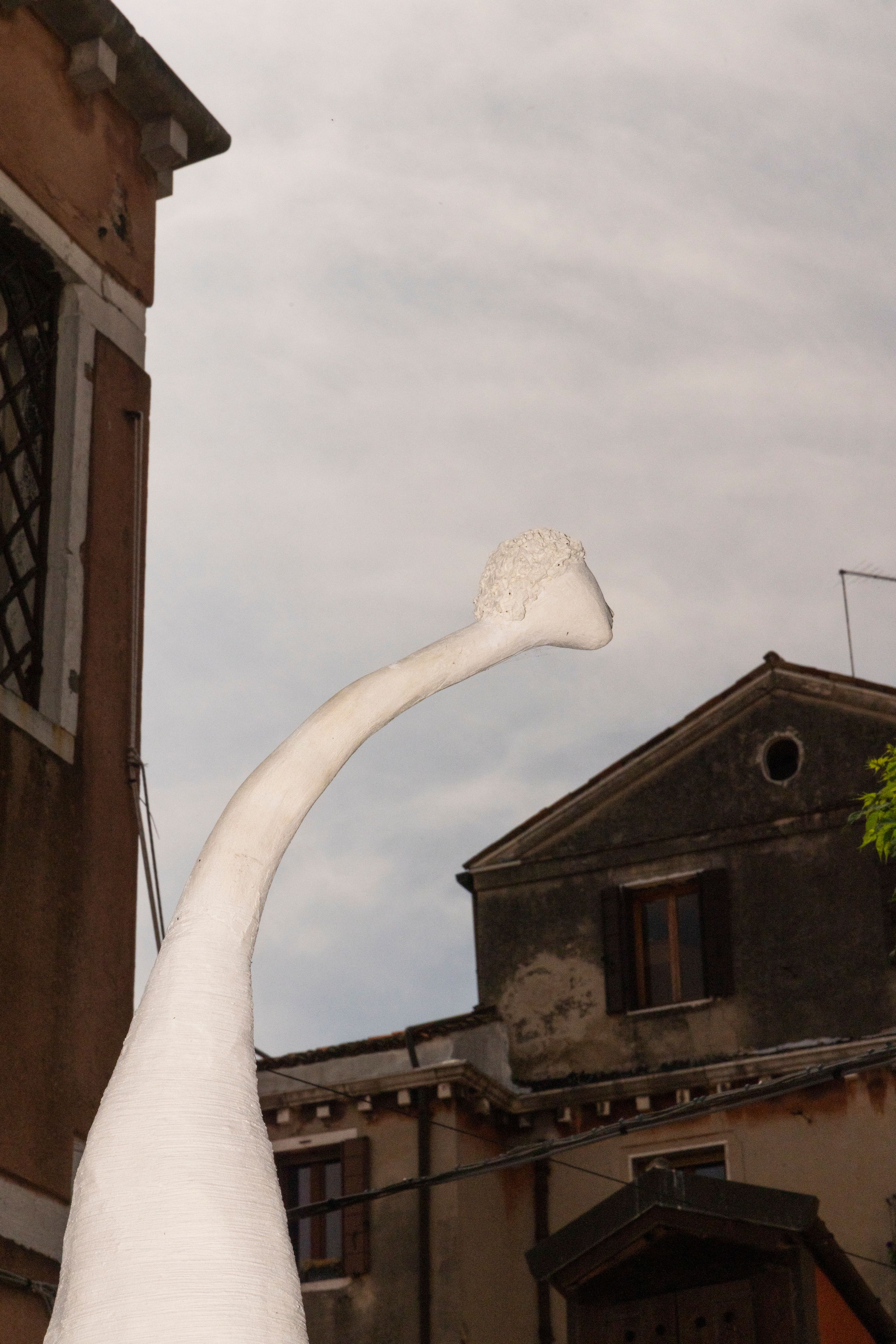
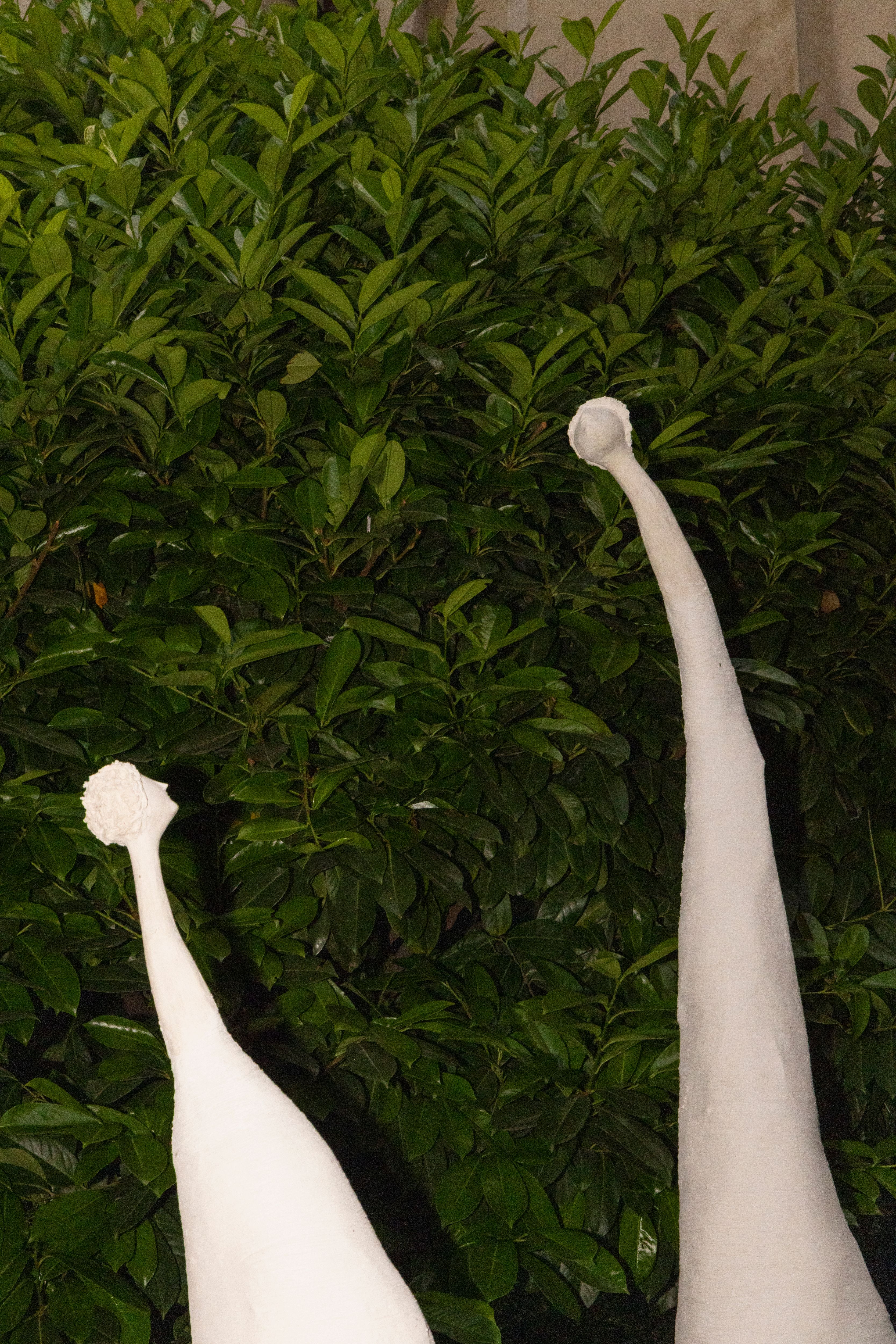
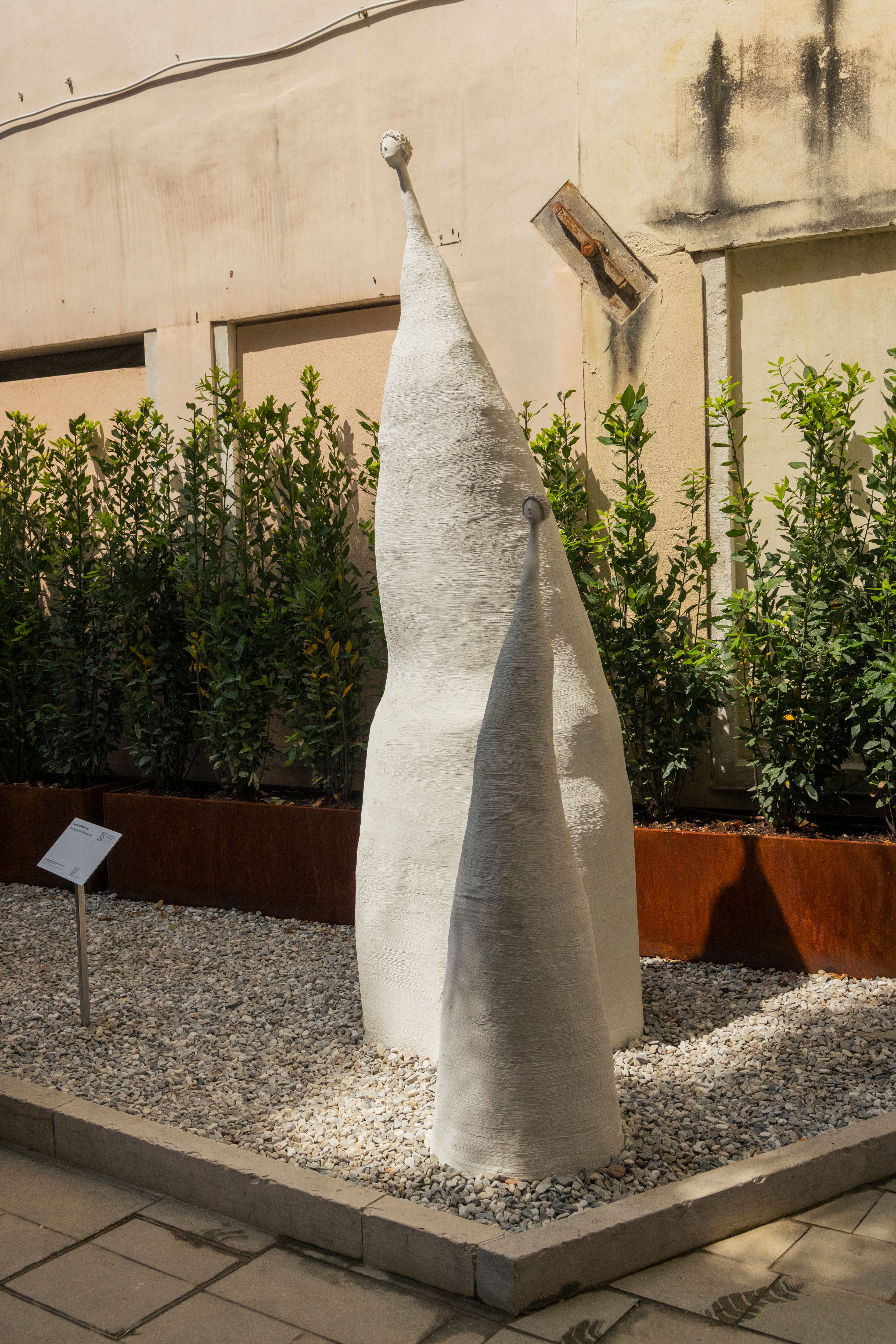
At Palazzo Mora, a grand building bought by the wealthy Mora family in 1716, the exhibition space extends over four floors. First, and outside, the visitor is greeted by a collection of white, rough-textured mounds—reminiscent of structures made by termites—each topped with a winding neck and a small, inquisitive face. This is Children of the World (2019–), part of Cartographies of the Displaced by J Oscar Molina, presented as El Salvador’s first-ever national pavilion. Molina, who fled El Salvador with his family as a child, proposes that a national border is nothing but a concept. The position of these searching, small faces atop large cone-shaped bodies also reflects his idea that “displacement is a sustained condition” that, long after the individual has settled, continues to shape their perspective and self-perception.
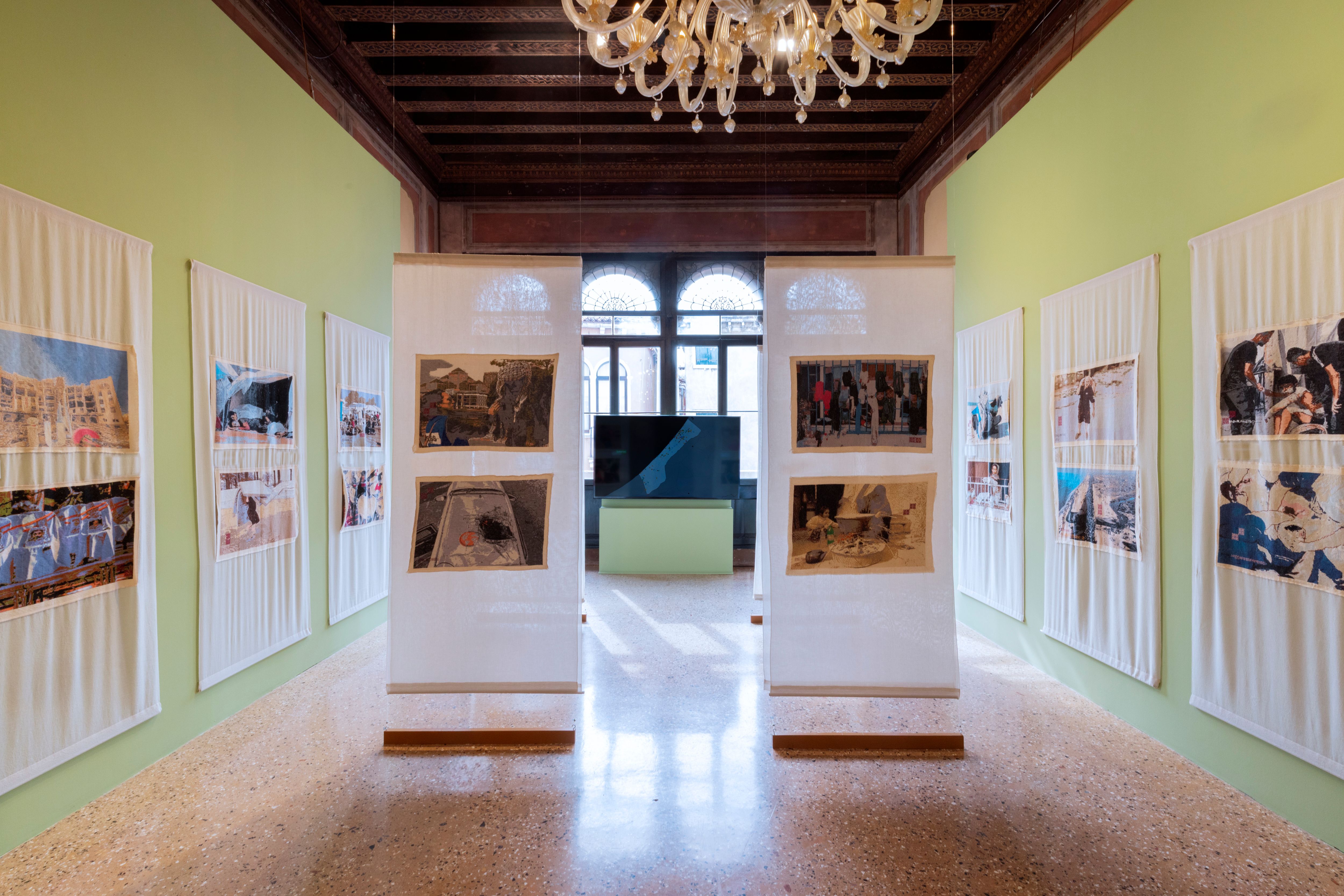
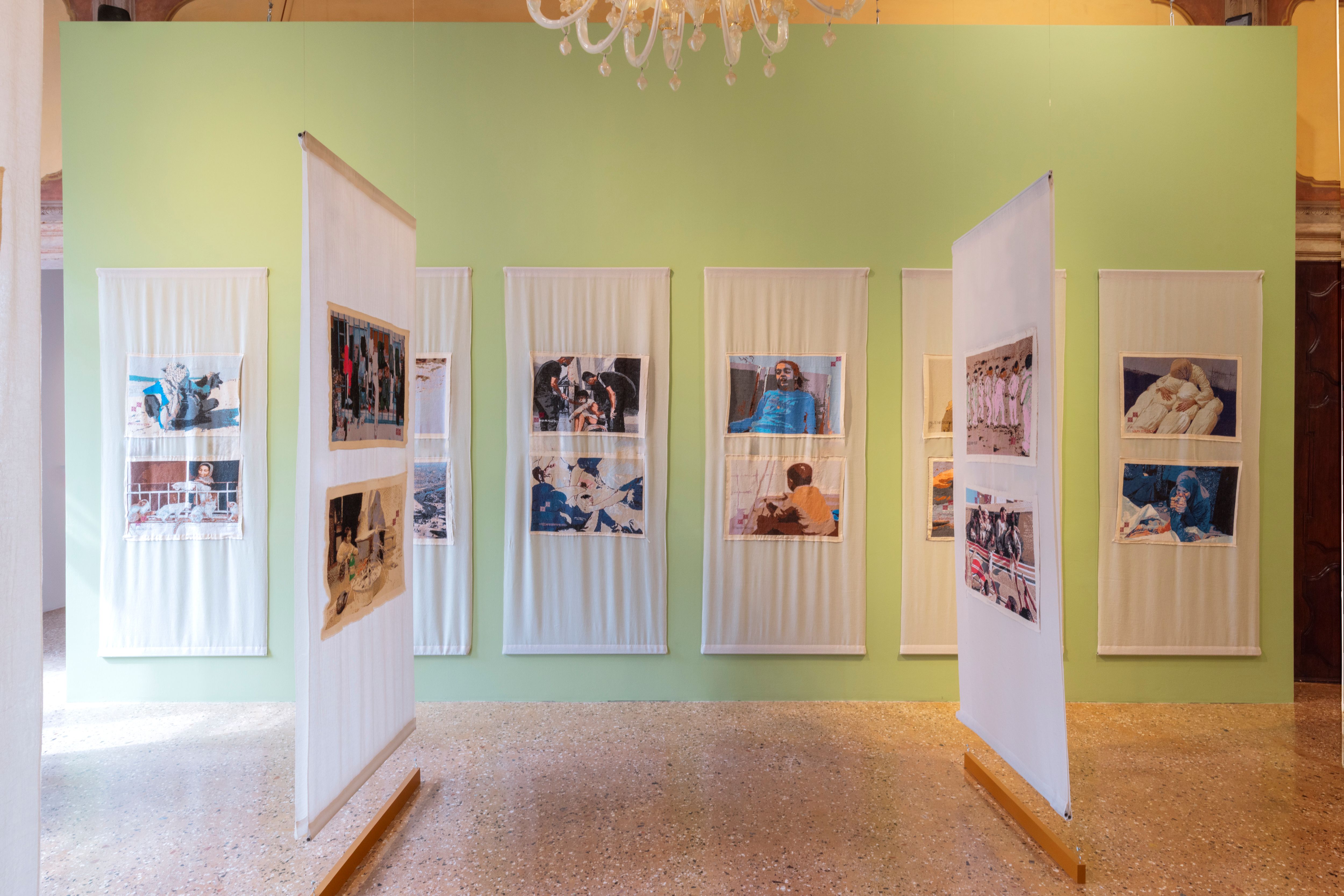
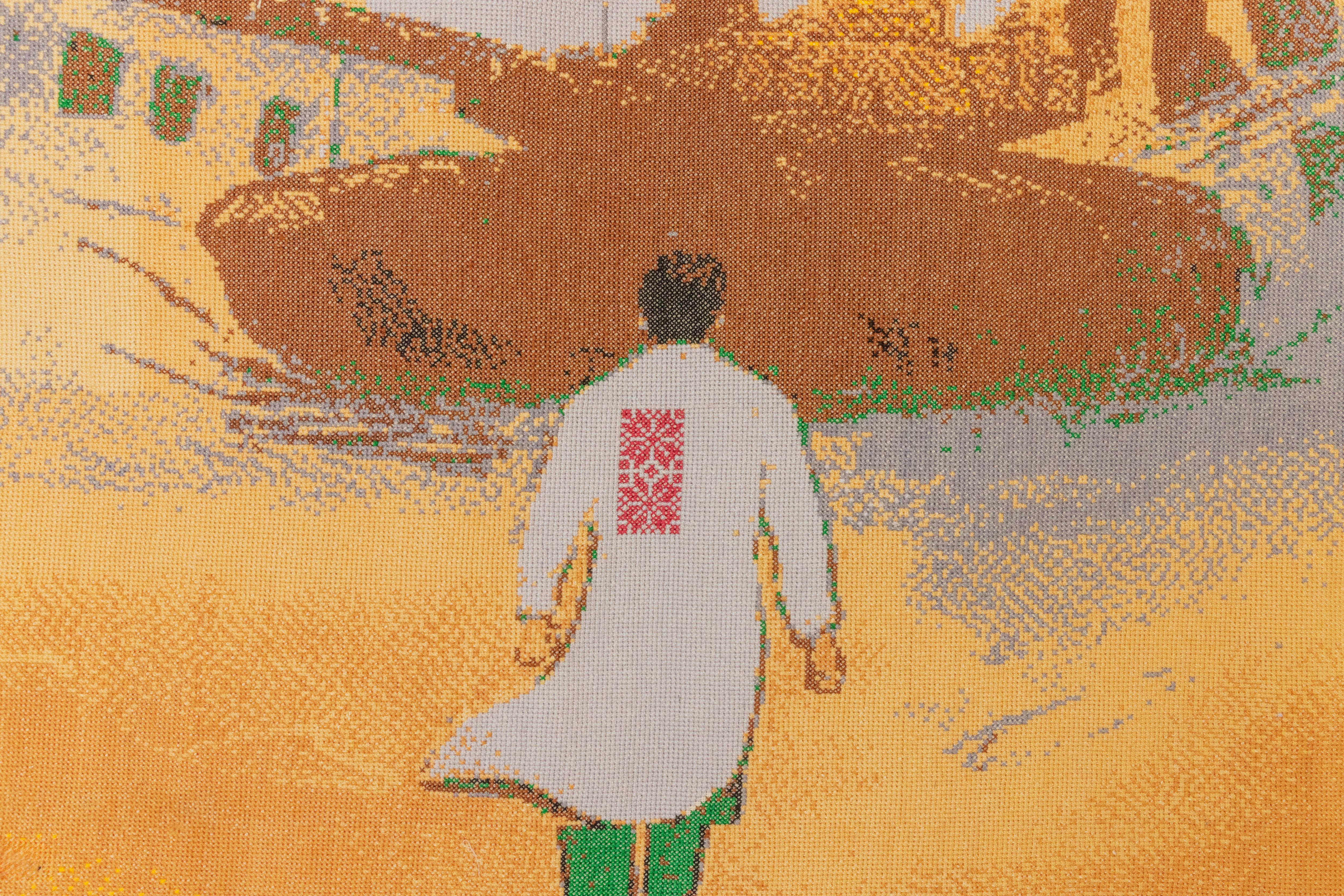
The works at Palazzo Mora are Confluences’ most political, and arguably the most powerful. One such installation, on the fourth floor, is ”________”** Gaza – No Words – See the Exhibit” (2026), presented by the Palestine Museum US, which takes the form of a series of 100 panels of tatreez painstakingly made by Palestinian women in refugee camps from Jordan to Egypt. Tatreez—an embroidery technique added to UNESCO’s Representative List of the Intangible Cultural Heritage of Humanity in 2021—is a form of Palestinian cross-stitch traditionally used to decorate wedding garments. Here, it is used to create uniform rectangular panels which show virally circulated images from what the UN Commission has termed Israel’s genocide in the Gaza Strip. Like Goya’s The Disasters of War series (1810–1820), the combination of an image and an awful, matter-of-fact title pushes the limits of the graphic. A panel showing a small girl, blank-faced, is titled “I knew her by her hair”—a placard informs us that the image is taken from a video in which a young girl identifies her mother among the victims of an Israeli airstrike. Another is titled “Boy buries his own leg.” Tatreez creates naturally pixelated images, making it an appropriate textile rendering of pictures which have circulated digitally for the past two-and-a-half years. The strange irony of the beauty, the unbearable awfulness of the image, formed over two-and-a-half months of close labour from blue and red thread, tells a story of the forcefulness of the care taken in its being rendered seeable; an absolute rejection of the position of pure subjecthood, and a refusal to allow these scenes to fade into the amnesia of the internet.
“Confluences marks a flowing-together that, significantly, also indicates a shared direction”
At each of the ECC Italy’s venues, there is on display a cooler, calmer version of the biennale’s intensive crashing-together of nationalities, practices, heritages and disciplines. Confluences marks a flowing-together that, significantly, also indicates a shared direction. At the opening of the exhibition in the gardens, we’re also reminded that each of these journeys is personal: curator Sara Danieli tells us that she wrote her undergraduate thesis on the French artist Orlan, who is now, 11 years later, participating in Confluences. After Danieli, Orlan took to the stage, where she told the crowd: “Art cannot now be complacent, or decorative, or purely commercial.” At Confluences, micro-histories—whether national, institutional and personal—form a rich social fabric. The ECC Italy describes the result as a “laboratory”—a test site for a still-unfolding artistic future. —[O]
Main image: Jakob Bokulich, Pollinator I (2026). Courtesy ECC Italy © Matteo Losurdo.





A respected voice in contemporary art discourse.
Focusing on ambitious storytelling and insightful art-world commentary. Ocula Magazine publishes in-depth interviews, critical essays and timely analysis on the artists, exhibitions and ideas driving the global art world.
Learn more about Ocula Magazine
Showcasing the best of the art world.
Ocula partners with galleries from around the world to highlight their artists, artworks and exhibitions. Gallery membership is by application and invitation, with each member vetted by an independent panel.
Learn more about Ocula Membership
Specialises in the sale of major artworks.
Led by a team with deep ties to the world’s leading auction houses, galleries and collectors. Ocula’s advisory team offers bespoke services to high-net-worth clients from around the world who are looking to acquire the best of contemporary and modern art.
Learn more about our team and services