






Six Shows to See in Beijing This Month
The coincidence of two major art fairs—Beijing Dangdai and ART021 Beijing (both 22–25 May 2025)—joining the calendar alongside Gallery Weekend Beijing promises a vibrant energy in the capital. Save to My OculaWhile Shanghai remains China’s economic hub and the preferred entry point for international galleries, Beijing continues to assert its deep-rooted local identity as more idealistic, rebellious, and less constrained by market forces. And with that distinct cultural allure, there are the longstanding players like White Space, Beijing Commune, Magician Space, and SPURS Gallery, all of whom have garnered both domestic and international recognition while remaining firmly anchored in the capital.
Launched in 2017 by the state-owned art complex 798 Art Zone, Gallery Weekend Beijing was part of a broader push to elevate the city’s global art profile. This year’s edition (23 May–1 June 2025) sees the removal of the Visiting Sector—which had previously welcomed galleries like Chantal Crousel, Gladstone, and Sprüth Magers. While this change may reduce international visibility, it will also give Chinese galleries and artists a more prominent platform.
Ocula’s China team has selected six must-see exhibitions during Gallery Weekend and beyond, highlighting emerging to mid-career Chinese artists—from Shanghai-based Tant Yunshu Zhong to Europe-based diasporic artists Xinyi Cheng and Evelyn Taocheng Wang.
1. Liao Fei: Seeing All Forms
UCCA Center for Contemporary Art, 798 Art Zone, No. 4 Jiuxianqiao Road
17 May–7 September 2025
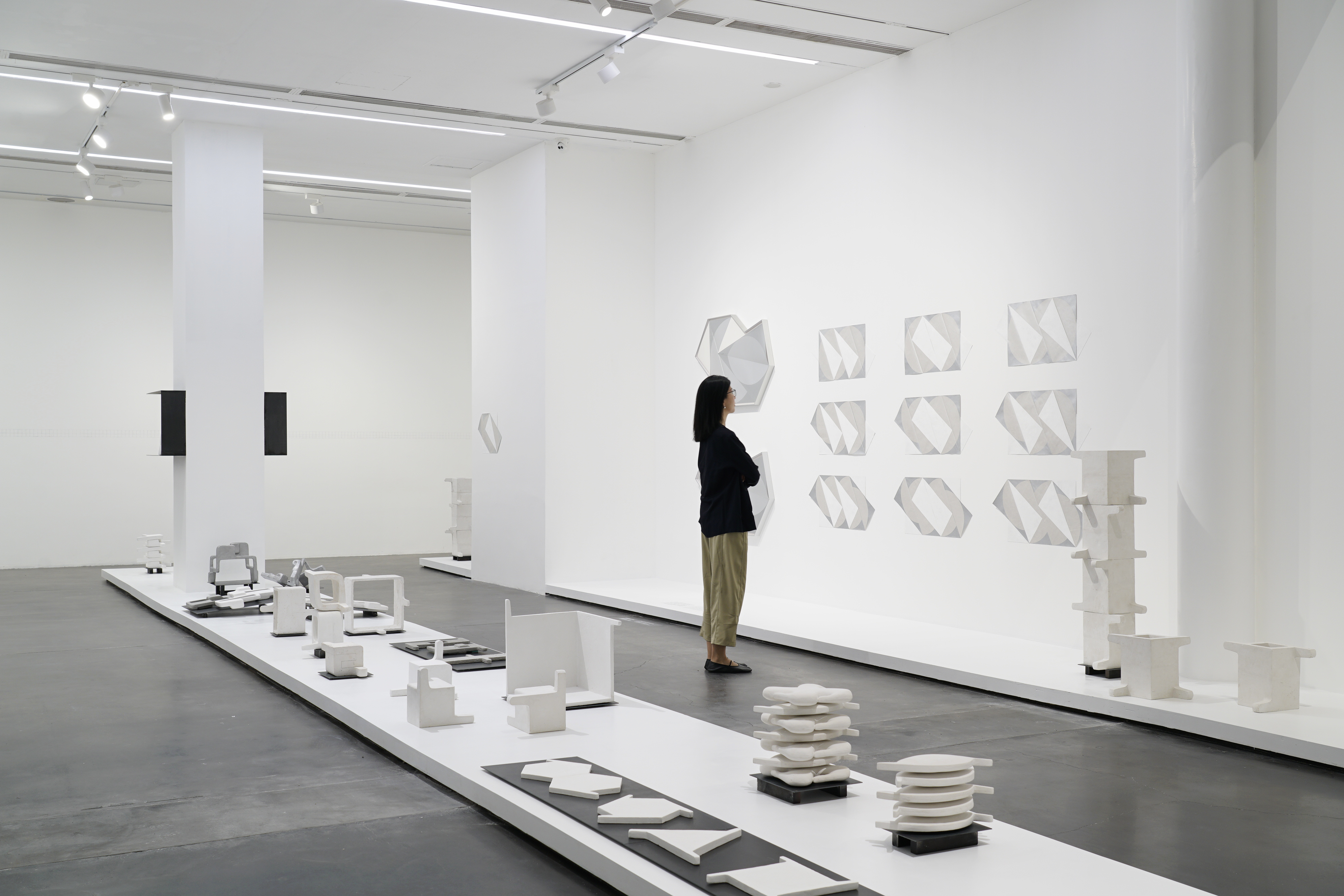
This solo exhibition traces the Shanghai-based artist’s evolution from poetic instability to formal exactitude, beginning with Move No. 1 (2013)—a pair of chairs balanced on melting blocks of ice. This renders entropy legible, time into sculpture, and reveals gravity as a slow choreography of collapse.
In contrast, the two ongoing series anchoring the show—Partially Obscured Circles and Chiral Extent—explore the inverse: how structure emerges from repetition and constraint. Both begin with simple gestures: the first sees a series of silver-printed circles on square sheets of paper folded into increasingly intricate tessellations, while Chiral Extent charts the evolution of modest plaster casts of hand gestures into a progressively complex sculptural vocabulary.
Evoking mosaic patterns and Buddhist mudras, these works trace their roots to basic hand gestures while also dealing with a fascinating scientific idea: handedness, that property found even at the molecular level where certain structures exist as left- or right-handed forms, quietly bridging spiritual and scientific worlds. Grasping the works may be less a matter of seeing than doing—a better comprehension lies not on nothing but mimicking them with your own hands.
2. Tant Yunshu Zhong: Unbelievably Soft Process
Tabula Rasa Gallery, 706 North 3rd Street, 798 Art Zone, No. 2 Jiuxianqiao Road
10 May–21 June 2025
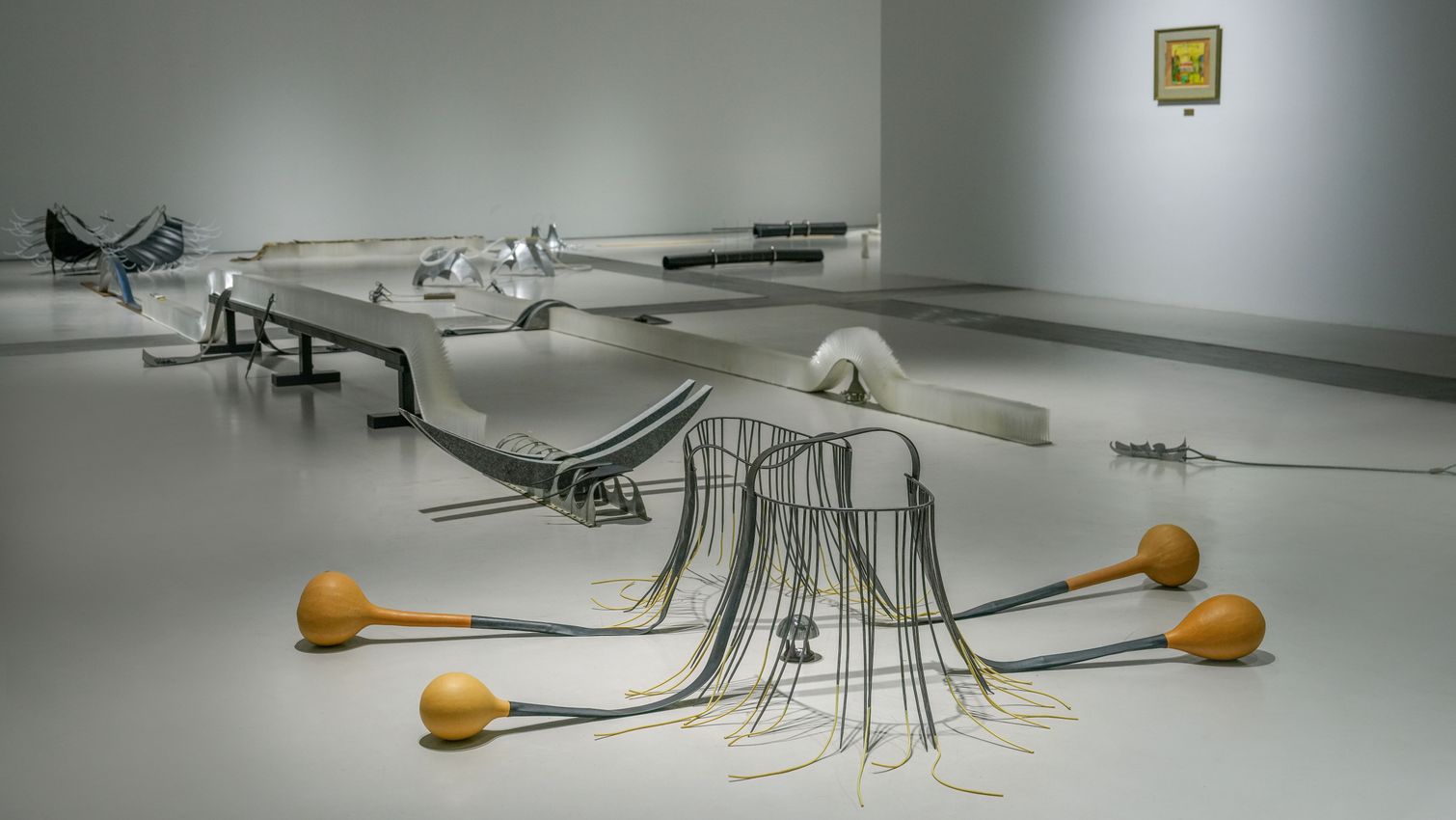
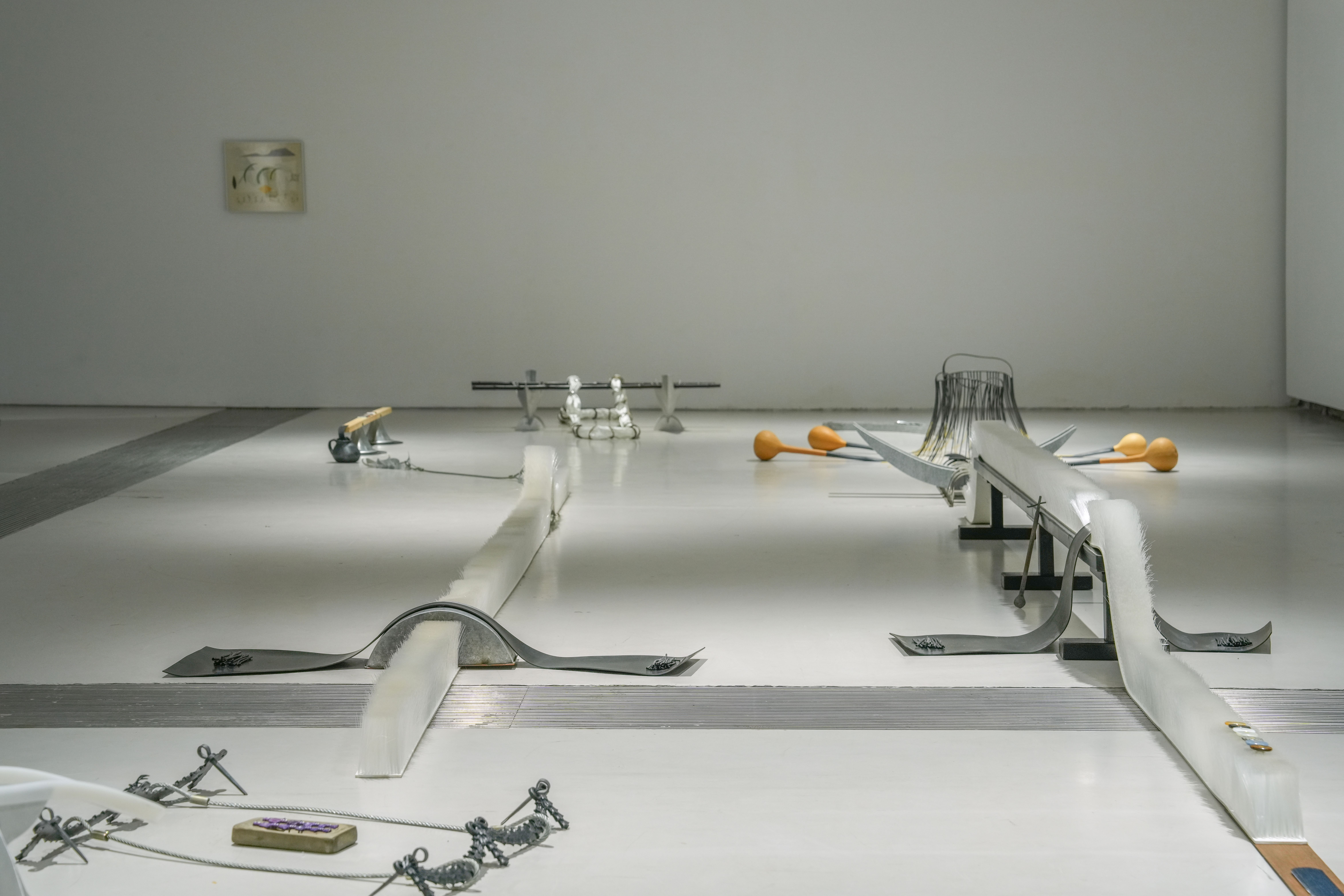
Tant Zhong has always surprised me with her approach of freeing materials from their original context and giving them a second life under her seemingly arbitrary reassembling.
At Tabula Rasa Gallery, the artist has placed ambivalent forms that share similarly balanced structures orderly across the floor, where they vaguely evoke an arch, a bench, a drooping eyelash, or an omega sign yielding to gravity. By incorporating car-washing tools including vehicle brushes, a squeegee, and dangling rubber tubes, the equilibrium is invaded by dynamic movements, connecting the space in between.
The exhibition probes human interest in seeking depth and stereoscope on surfaces, and the artist plays with what she calls the ‘critical state between two and three dimensions’.
3. Li Shurui: Something Comes From Nothing
White Space, F1, BLDG D7, Yard No. 3, Jinhang East Road
17 May–12 July 2025
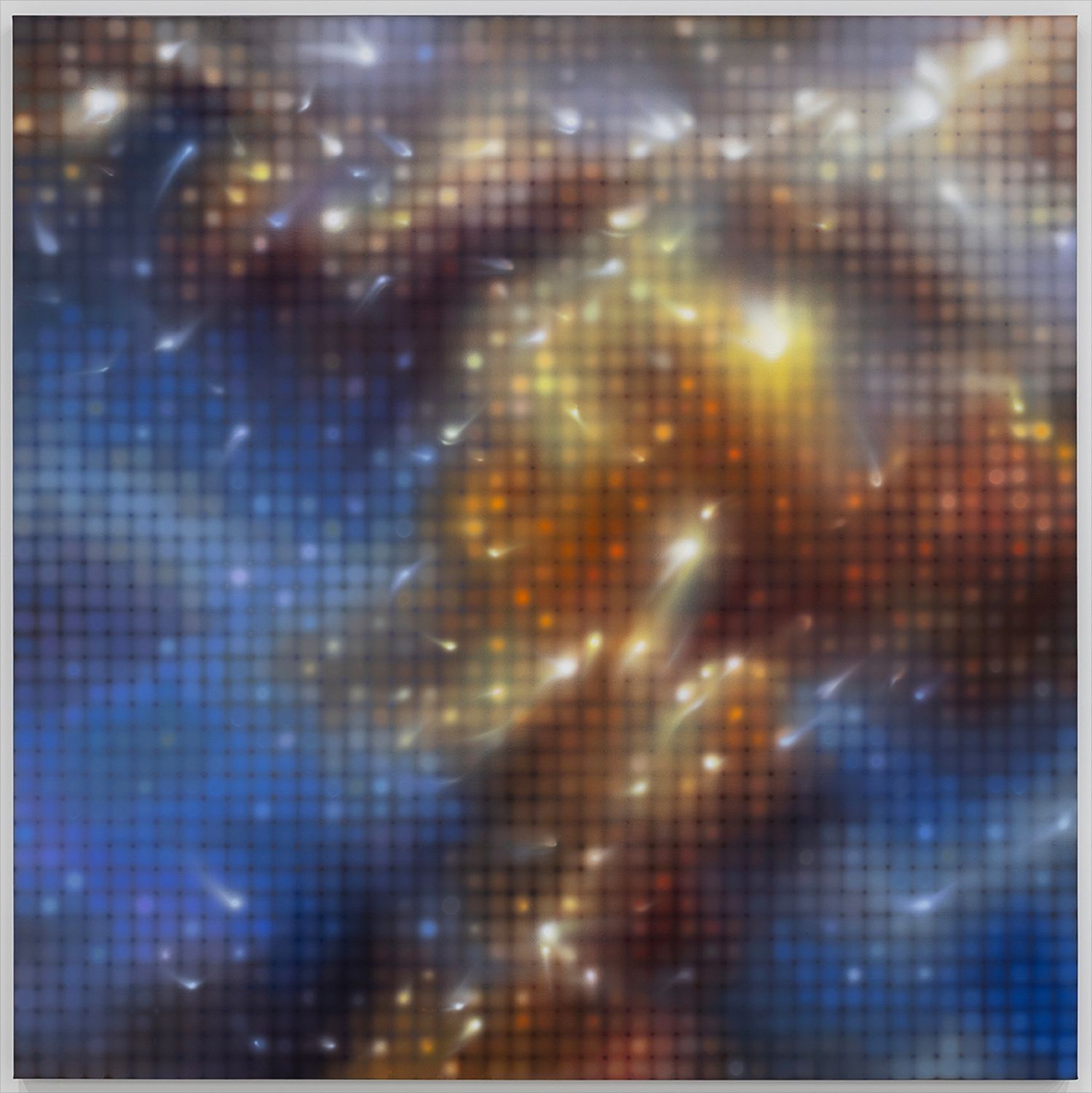
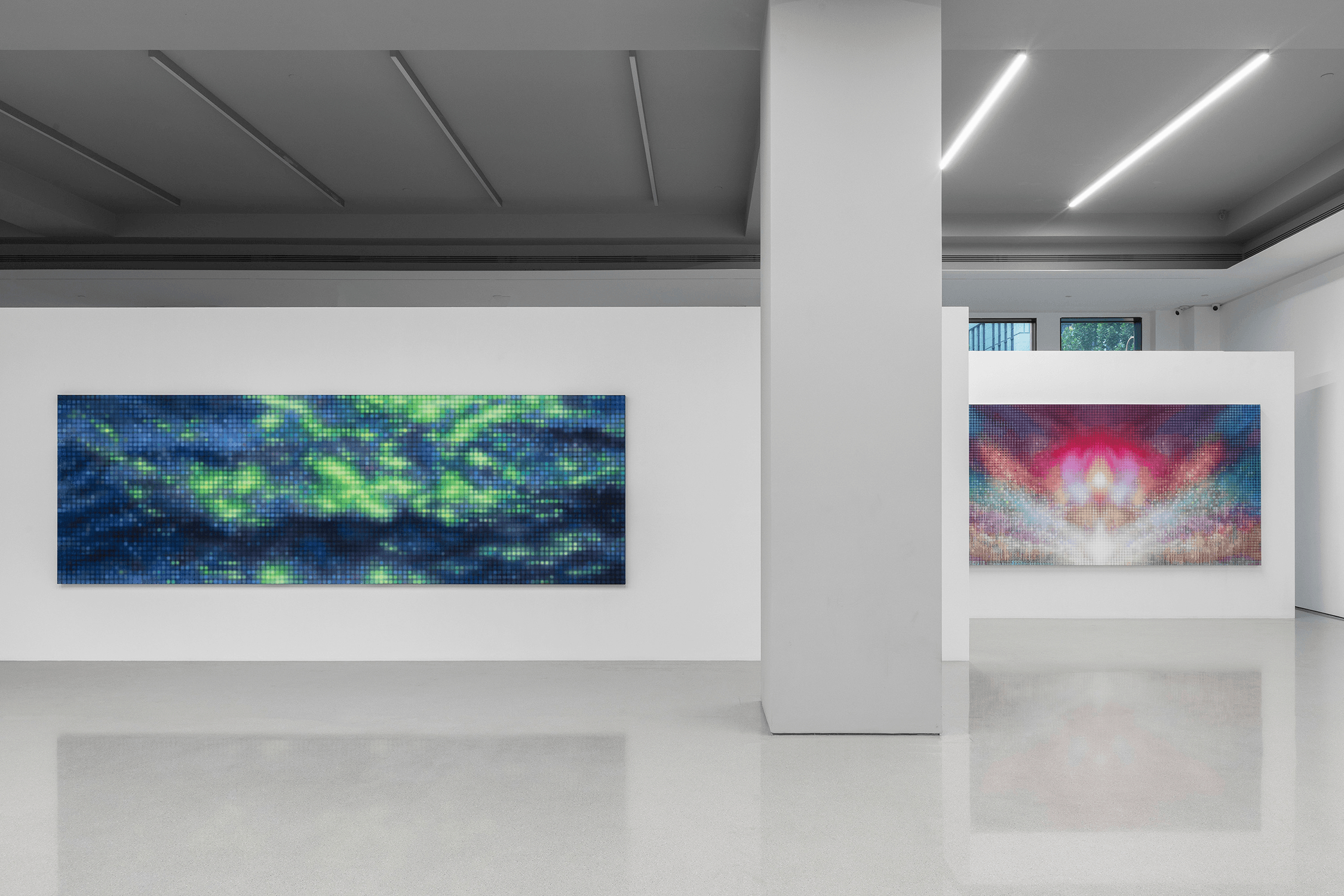
Li Shurui is widely regarded as one of the most important Chinese painters of her generation, known for her illusory Op art works and explorations of light’s gradience and impermanence. Now, Li turns her attention to water in a new series of paintings at White Space.
This shift in subject matter began after Li relocated to the Erhai Lake region in southwest China three years ago. Living beside the lake, she came to view water not merely as a physical substance but as a divine presence. She refers to it using “祂” (Ta), the Chinese character typically reserved for deities, intentionally lifting it beyond gender and symbolism.
This exhibition features wide-format canvases mounted on freestanding walls, rendering water’s formidable force and cyclical motion—shimmering uncannily by night, refracting light, and dissolving into sunset hues. Informed by Li’s interdisciplinary interests in physics and Buddhist philosophy, the works push against traditional Chinese portrayals of water as soft and yielding, instead revealing it as a powerful, dynamic entity.
4. Guo Cheng: Bug
Magician Space, 798 East Street, 798 Art Zone, No. 2 Jiuxianqiao Road
1 May–21 June 2025
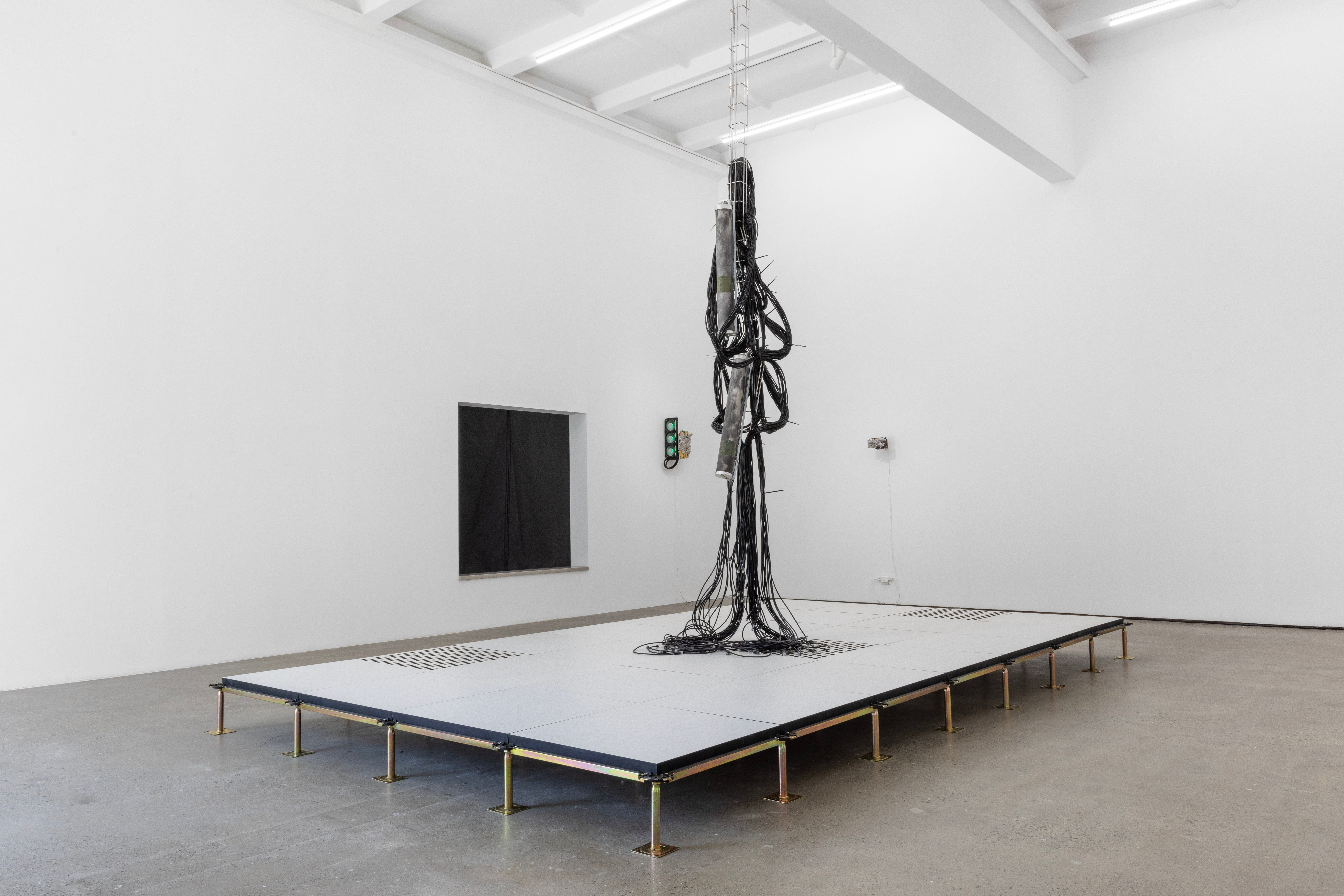
Guo’s customised software and hardware systems serve geeky humour in all its forms: cosmic, conceptual, and sly, all threaded through speculative riffs on post-Anthropocene themes.
In a dimly lit, pseudo-nocturnal field, a soft glow shaped like a humanoid insect beckons (The Moon, 2024). Made from a folded tent—an echo of Guo’s research trip to a Tibetan rainforest—the piece transforms viewers into phototropic bugs, drawing them towards the light.
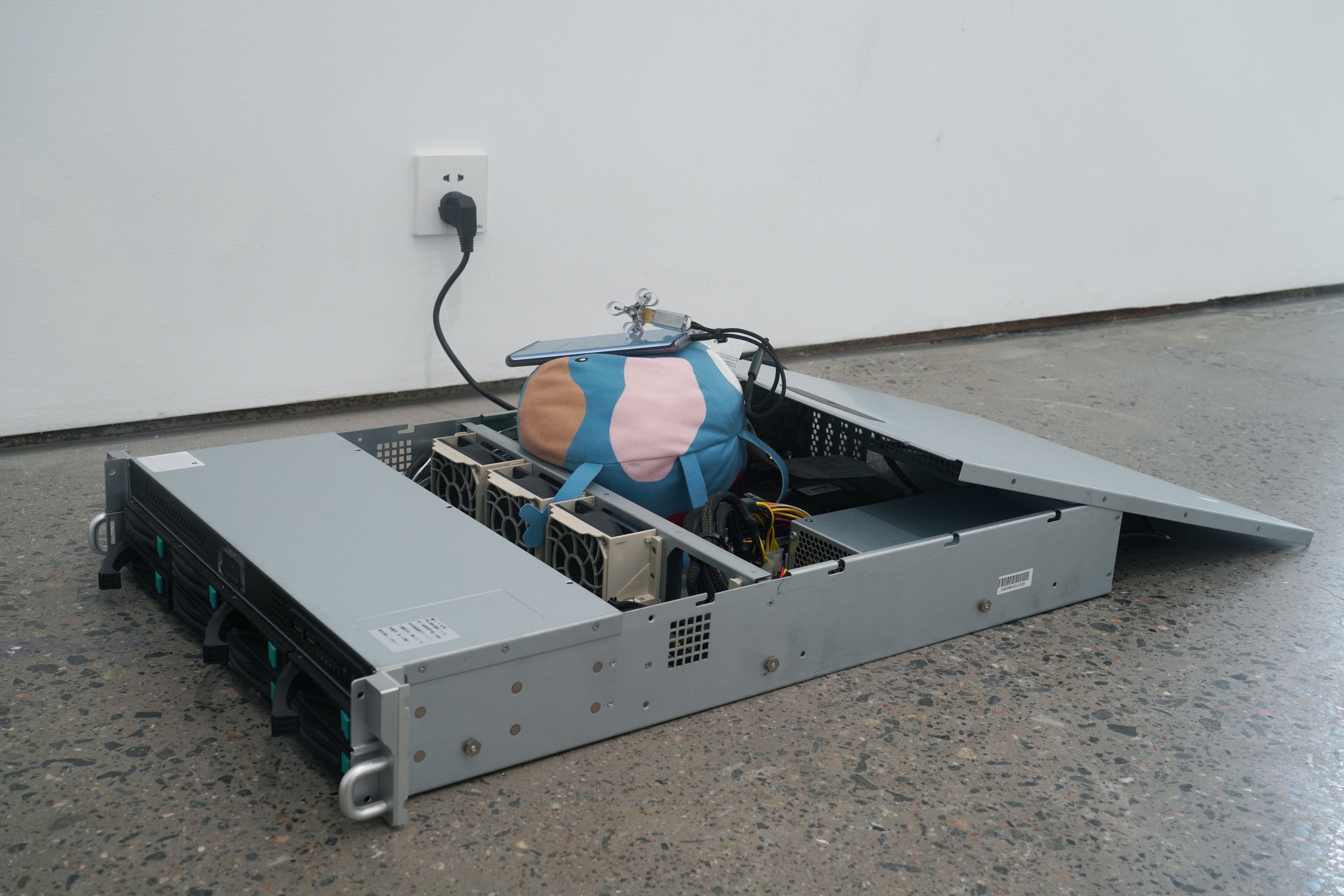
Step into the adjacent, brightly lit room styled like a data centre, where a screen-swiping machine glides over a smartphone resting atop a plush Earth-shaped doll and a server. Titled Y29B Bug (2025), the work riffs absurdly on the Y2K bug’s timeline—set to count down 29 billion years, nearly seven times the Earth’s age—with a toy planet that offers both scale and solace.
5. Cheng Xinyi and Evelyn Taocheng Wang: Between the shadow and the highlight
Antenna Space, B02, No.4 Jiuxianqiao Road
10 May–20 June 2025
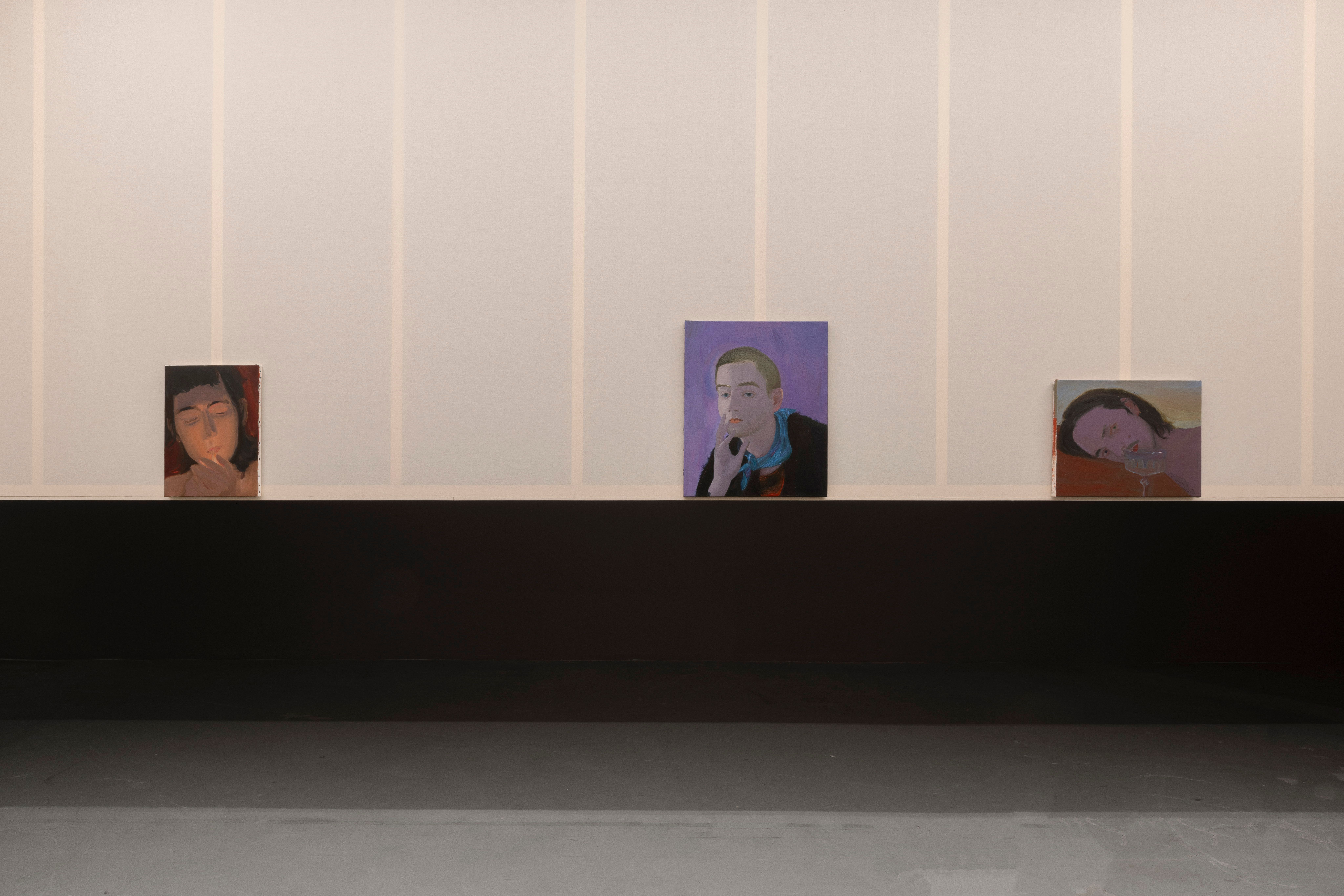
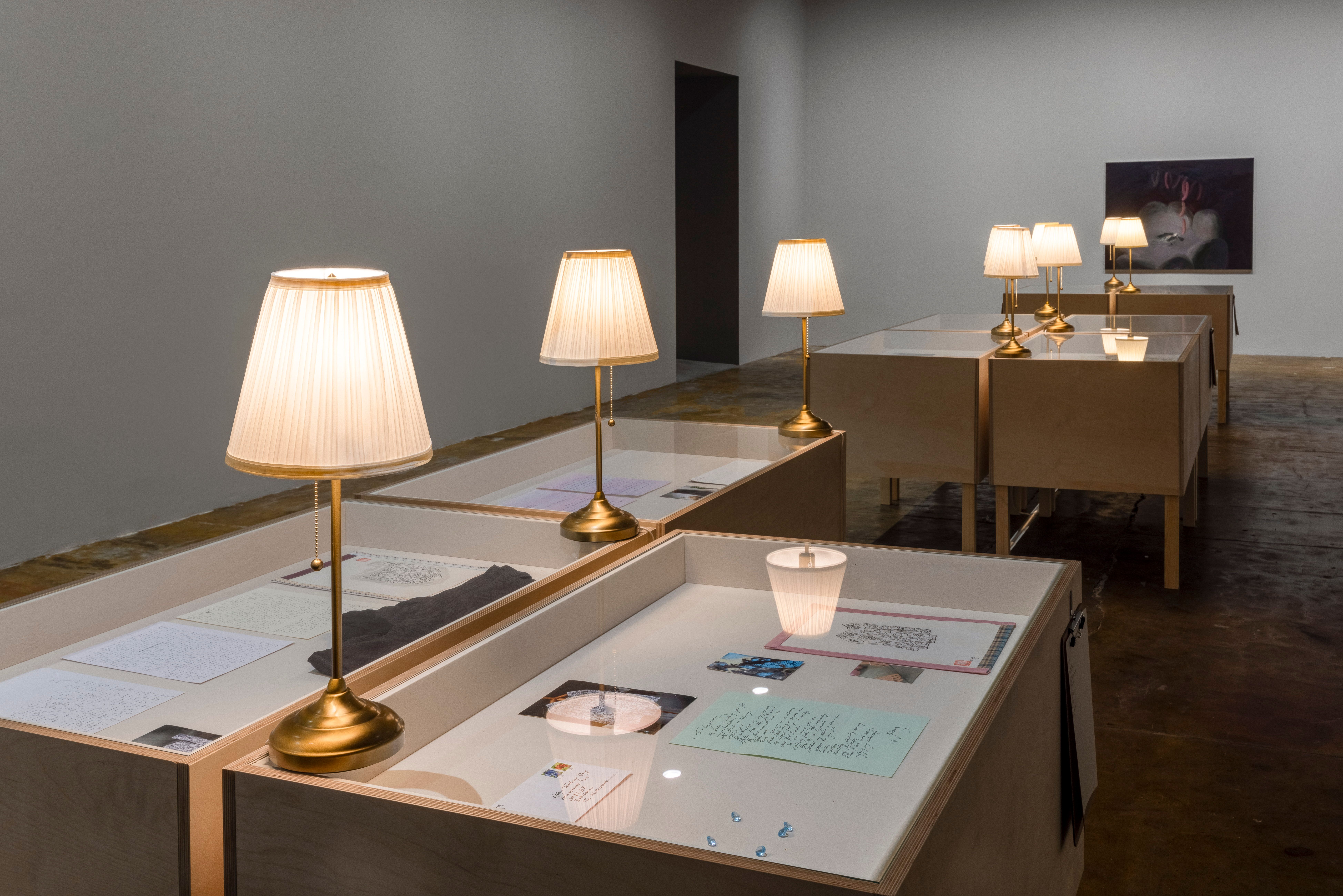
Antenna Space presents a poetic dialogue between Evelyn Taocheng Wang and Xinyi Cheng, two Chinese artists who relocated to Europe over a decade ago.
Set in a former factory partitioned into intimate spaces—where table lamps, wooden furniture, and a wardrobe subtly evoke domesticity—the exhibition reflects an undercurrent of restrained emotion and quiet intellectual deliberation as the two distinct pieces operate in dialogue.
Spanning traditional formats like fans, scrolls, and garments, Wang’s pieces combine abstract backdrops with calligraphy and still life to create layered cultural references, connecting Western abstraction with Zen-inflected thought. In Spreading Elegance (2019), letters from friends who received pieces from her Agnès b. collection are paired with drawings of the garments, each vignette lit by a small lamp.
Paris-based Cheng was trained in figurative sculpture within China’s academic tradition and now brings emotional precision to everyday scenes. In Young Painter (2025), the subject’s expression is suspended between indifference and curiosity—an outsider’s quiet observation of human connection.
6. Cao Shu, Yao Qingmei, and Yin Yunya: Lie Between
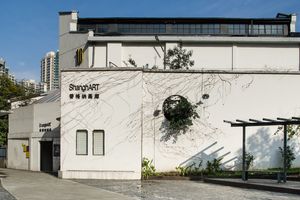
ShanghART Beijing, 261 Caochangdi, Airport Side Road
20 May–29 June 2025
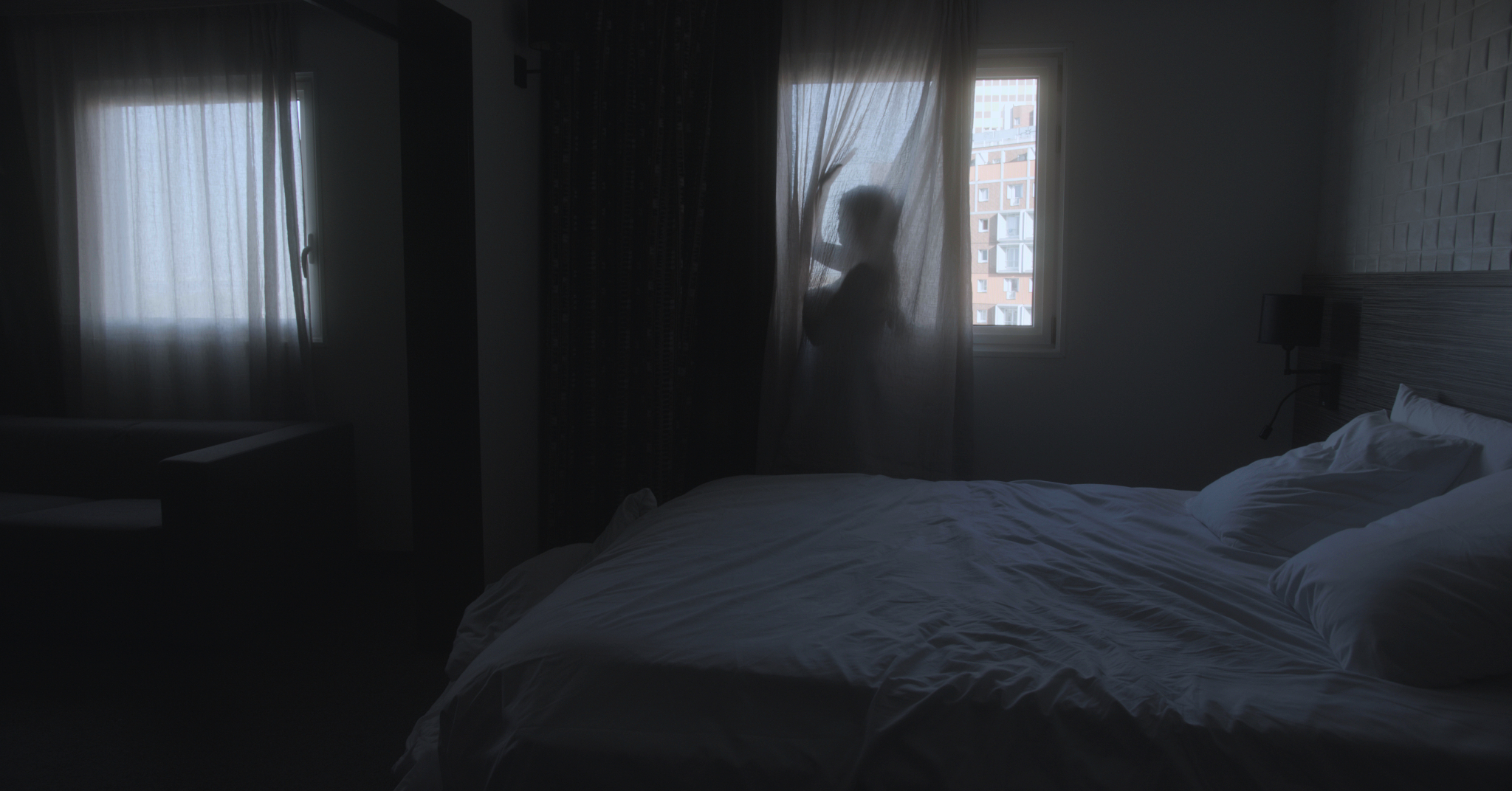
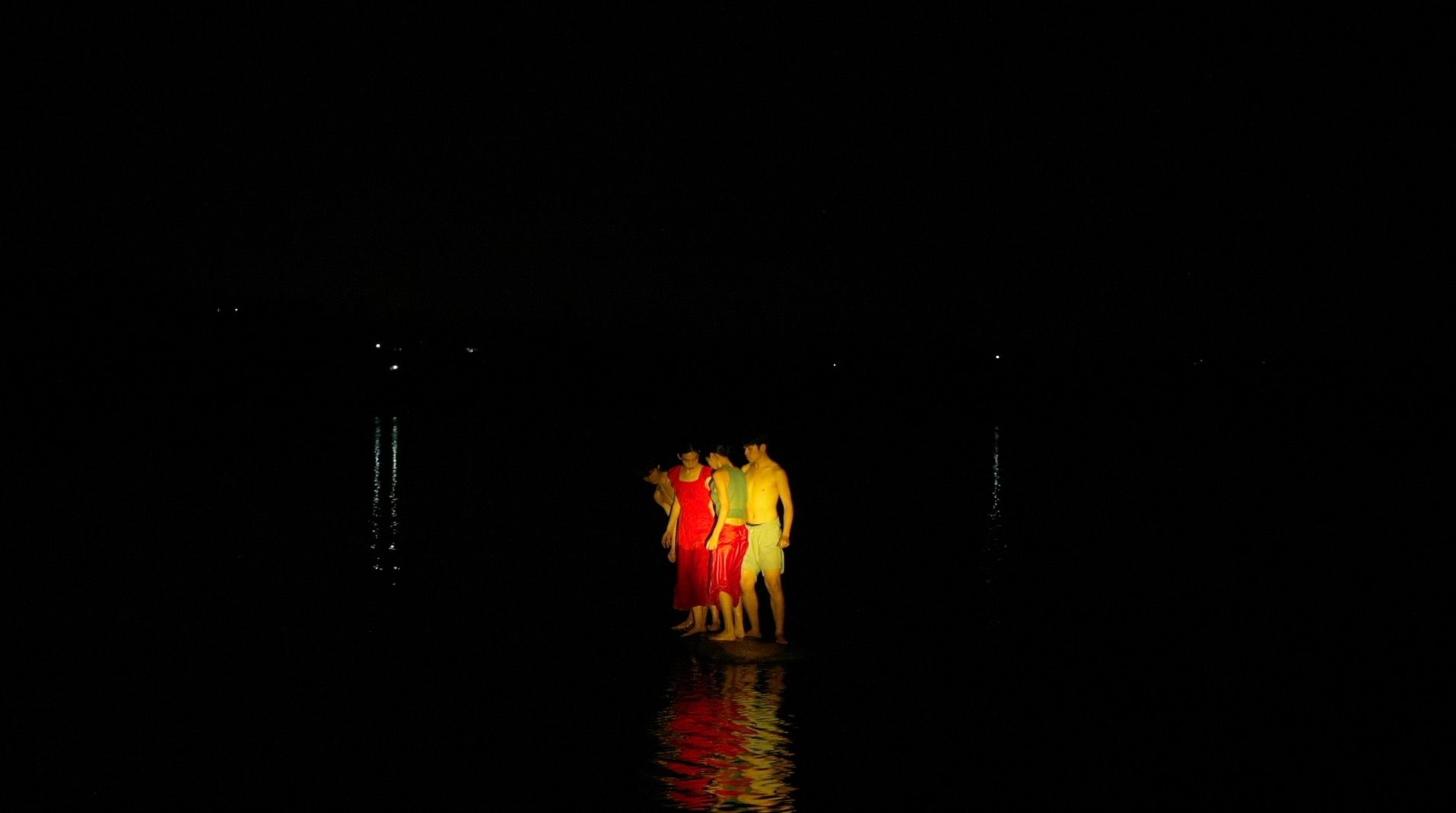
With immersive video and installations by three emerging Chinese artists who recently received institutional solos, this exhibition reflects a new generation of video artists, no longer centred in Beijing but working across diverse locales—Cao Shu and Yin Yunya in southern China, Yao Qingmei in France. Selected highlights include Cao Shu’s Tired Sunset (2022), which trades the artist’s iconic game engine melancholy for a film set aesthetic, where flickering lights and a slumped gorilla costume evoke the humorous burnout of an absent protagonist.
After Cao Shu, the show shifts to a more subdued tone. Yao Qingmei offers a counterpoint of her diasporic experience in France with Room (1) Wrap (2022–2023), enveloping a veiled body as a dancer performs traditional Khaleegy gestures. Similarly, Yin Yunya’s Untied Boat (2024) confines dancers on a precarious reef—a metaphor for survival and the artist’s southwest China identity—rendered through choreography on the mighty Yangtze River. —[O]
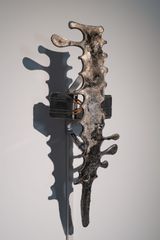
Main image: Exhibition view: Tant Yunshu Zhong, Unbelievably Soft Process, Tabula Rasa Gallery, Beijing (10 May–21 June 2025). Courtesy the artist and Tabula Rasa Gallery.






A respected voice in contemporary art discourse.
Focusing on ambitious storytelling and insightful art-world commentary. Ocula Magazine publishes in-depth interviews, critical essays and timely analysis on the artists, exhibitions and ideas driving the global art world.
Learn more about Ocula Magazine
Showcasing the best of the art world.
Ocula partners with galleries from around the world to highlight their artists, artworks and exhibitions. Gallery membership is by application and invitation, with each member vetted by an independent panel.
Learn more about Ocula Membership
Specialises in the sale of major artworks.
Led by a team with deep ties to the world’s leading auction houses, galleries and collectors. Ocula’s advisory team offers bespoke services to high-net-worth clients from around the world who are looking to acquire the best of contemporary and modern art.
Learn more about our team and services