





In the Studio with James Prapaithong
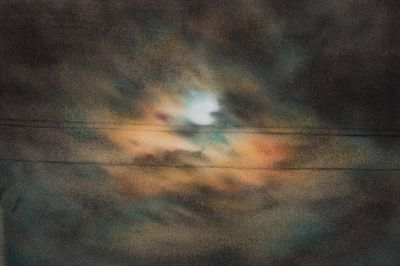
James Prapaithong, Afterglow (2021) (detail). Oil on canvas. 30 x 40 cm. Courtesy the artist and WORKPLACE.

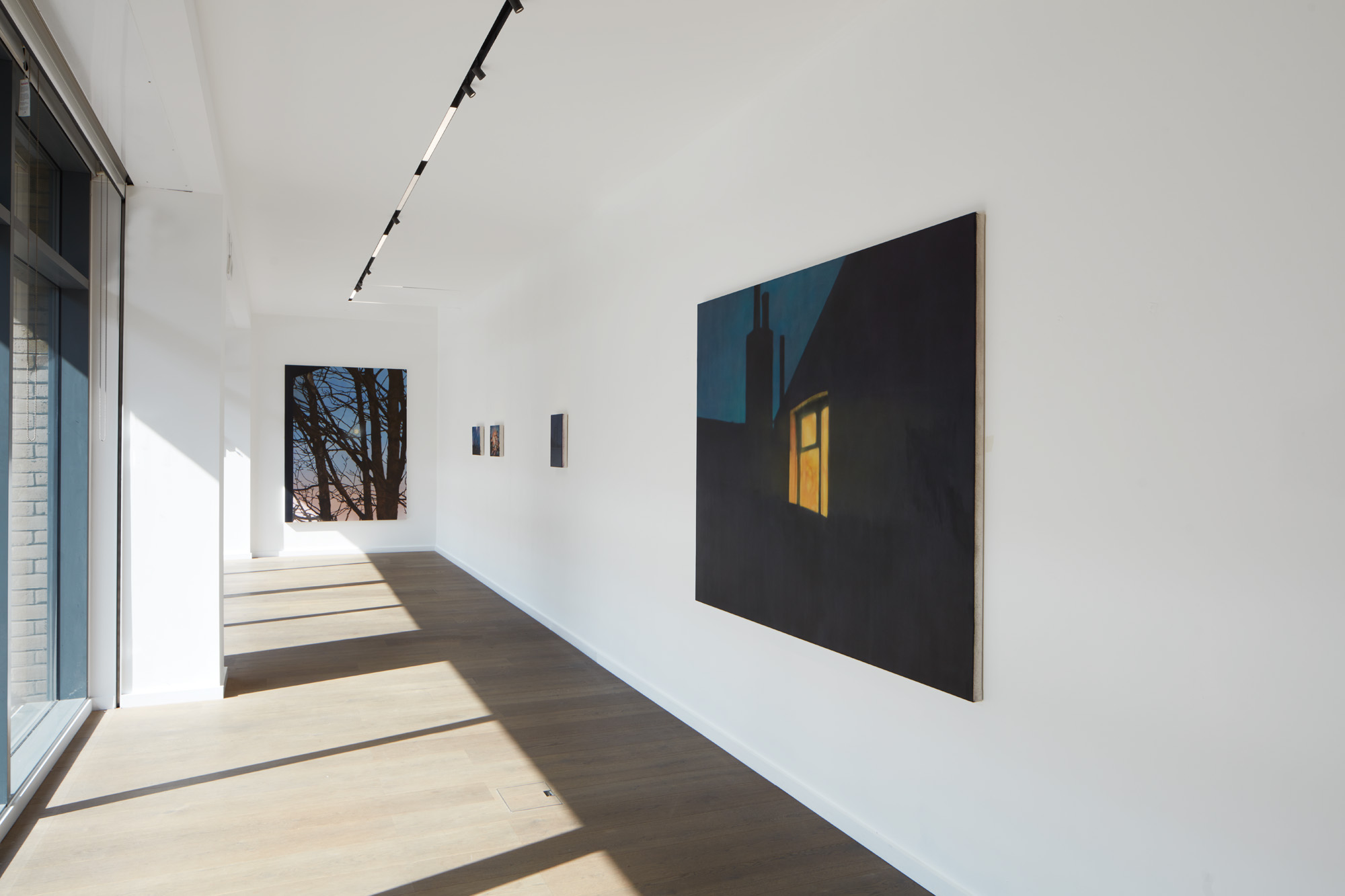
A soft glow emanates from each of James Prapaithong‘s paintings. The artist, who is currently finishing his MA at the Royal College of Art in London, has established a distinct style defined by off-kilter landscapes bathed in light from the moon, afternoon sun, or ambiguous sources.
The moon and water are common motifs in his latest body of work, currently exhibited at WORKPLACE in London, used as tools to generate feelings of longing and stillness. Prapaithong introduces the themes and techniques behind this enigmatic series.
You are currently completing your MA at the Royal College of Art, though you have been stuck in Bangkok as a result of the pandemic. Is this latest series of paintings a natural progression to what you have been working on throughout your studies?
It’s definitely a natural progression. Being back in Thailand doesn’t really affect the way I work, since most of my images are drawn from photographs of different places or that people have sent me. It does force me to be a bit more resourceful in finding what to paint, because travelling is a big part of my process, but being stuck here, it’s a bit hard to do that.


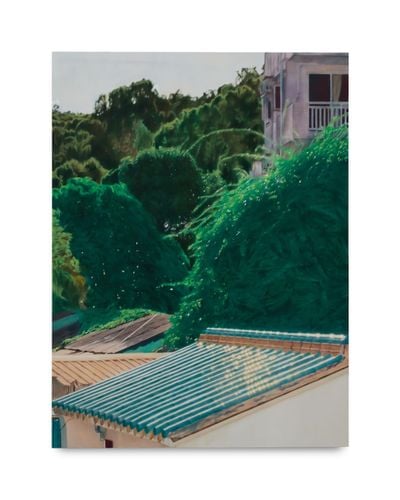
How does it work with the images that your friends send you? Do they know what you’re looking for thematically?
No, I usually stumble upon the images on their Instagram stories, then I ask if I can paint them.
When you go out to take photographs, do you go out specifically to find materials, or is it more accidental?
Since my subjects are quite easy to find—windows, light, the moon—I don’t have to go out of my way to find pictures. They come naturally.
The moon is a major motif throughout this exhibition. What does it represent in your work?
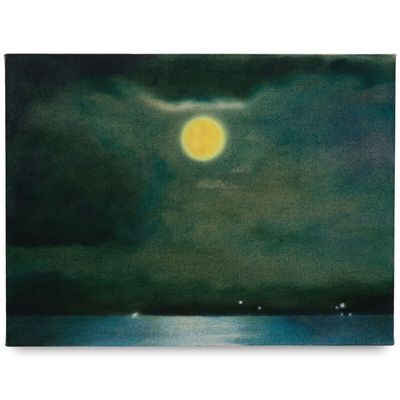
For me, the moon is an object of inner peace. Sometimes I look up at it and it takes my mind off things. In my paintings, I try to render a feeling of yearning by using this motif.
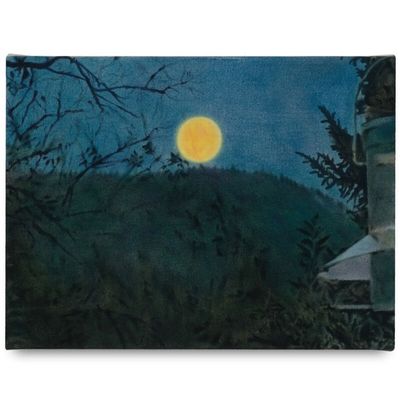
The moon is a symbol of connection in the work—it’s the idea that when you look up, there will always be someone looking at it at the same time. That’s what I explore in the two paintings, Across the Mountain and Across the Sea. The moon is on the same spot in each painting.
Are they meant to be purchased together?
They can be, but in a way they’re meant to be separate. They’re meant to be looked at by two different people at the same time.
Across the Mountain is from a photograph by an artist that I found, and the other one is by myself, and funnily enough, when I checked the day they were taken, I found out they were at the same time.
The moon is a constant, yet you don’t give any details about the location of your paintings. Why’s that?
I think it’s really important that the viewers can access their memory through the paintings. When the locations are specified, some people might lose their access to them. Some images are from Thailand, and some are from the U.K., but they kind of blend into one another. You can’t really tell where they are.
There’s a cinematic quality to these works. What film techniques inform your paintings?
I use the screen’s aspect ratio to determine their size, such as 3 by 4 or 2 by 3. It’s the idea that the paintings are like freeze-frames.
In cinema, you’ve got a story; a beginning and an end. But when it comes to painting, there’s no beginning or end.
Are there any films or directors that influence your paintings?
The Japanese director Yasujirō Ozu does. He introduced the ‘pillow shot’—still life frames that would intercept scenes. His films cut to an image of a vase for a few seconds while two people are talking to each other, for example.
I think it’s similar to how the moon paintings work. The way people experience the moon, for instance, is that they might just be walking about, and then all of a sudden look up and observe it for a few seconds, before continuing. It’s like a small break.
Are there any other motifs like that that you use to draw viewers into a certain frame of mind?
Yes, I also use the motif of water, as seen in the painting Swim.
Your signature style has a blurred feel. How do you achieve that?
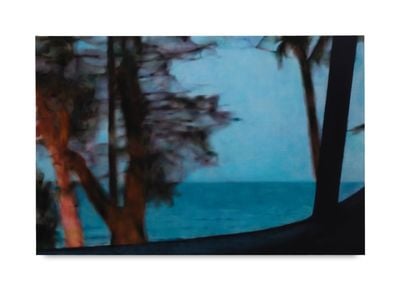
I do that because I just can’t wait for the oil to dry, it’s too long. So I prime my canvas with rabbit skin glue, which is really absorbent.
I then scrub the paint into the canvas really hard. My paintings are quite soft, but the way that I do it is quite aggressive. I do that to embed the paint into the canvas, which makes the painting quite flat. Then, when I apply white to create light, I apply it really thickly, so that it glows upon the paint. —[O]
Main image: James Prapaithong, Afterglow (2021) (detail). Oil on canvas. 30 x 40 cm. Courtesy the artist and WORKPLACE.


A respected voice in contemporary art discourse.
Focusing on ambitious storytelling and insightful art-world commentary. Ocula Magazine publishes in-depth interviews, critical essays and timely analysis on the artists, exhibitions and ideas driving the global art world.
Learn more about Ocula Magazine
Showcasing the best of the art world.
Ocula partners with galleries from around the world to highlight their artists, artworks and exhibitions. Gallery membership is by application and invitation, with each member vetted by an independent panel.
Learn more about Ocula Membership
Specialises in the sale of major artworks.
Led by a team with deep ties to the world’s leading auction houses, galleries and collectors. Ocula’s advisory team offers bespoke services to high-net-worth clients from around the world who are looking to acquire the best of contemporary and modern art.
Learn more about our team and services