





In the Studio With Janaina Tschäpe
Painter Janaina Tschäpe reflects on her formative years, and the influences she has absorbed along the way. Save to My Ocula

With her paintings recently presented at Sarasota Art Museum in Florida and the Musée de l’Orangerie in Paris, Janaina Tschäpe reflects on her formative years, and the influences she has absorbed along the way.
Nature and memory are interlaced in your paintings. Could you talk about some of the early experiences that influence your practice?
Shortly after I was born in Germany, my family moved back to Brazil, where I grew up in São Paulo and Rio. What really informed my childhood were the weekends and vacations spent in our family farm in the countryside of Minas Gerais, near the town of Bocaina.
I passed my days in the mountains, surrounded by forests, waterfalls, and dirt roads. The experience of being engulfed by nature, dark nights illuminated by candlelight, and only the sounds of the forest and animals to breech my thoughts is indescribable.
As an adult, I bought the land around Bocaina that belonged to my ancestors. I wanted to maintain my family ties to the Brazilian countryside and continue this dialogue with nature that has so informed my work.
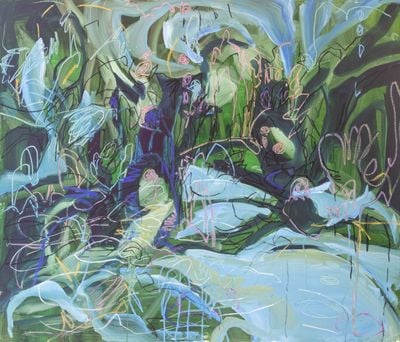
You were born in Munich, brought up in Brazil, and now live and work in New York. How have these different locations influenced the direction of your practice?
By the time I started my undergraduate degree at the Hochschule für bildende Künste Hamburg in 1992, the work of Joseph Beuys had gained a monumental presence in my life, and I began experimenting with a huge breadth of materials.
Having only male professors at the time, I was forced to confront the vast inequalities pervading the art world, and I grew restless amidst such a male-centred industry. As a result, when I was 21, I flew back to Brazil, but this time to Salvador.
From there, I relocated to Rio, where I was exposed to the centre of the Brazilian art scene. I discovered that female artists had a much greater presence in Brazil than what I had experienced in Germany, from Tarsila do Amaral to Lygia Clark and contemporary artists like Adriana Varejão, Beatriz Milhazes, and Rivane Neuenschwander.
How has your approach to materials developed over the years?
I returned to Hamburg to finish art school, at which time I discovered latex. Latex became my primary material for many years, both a travel companion and a second skin.
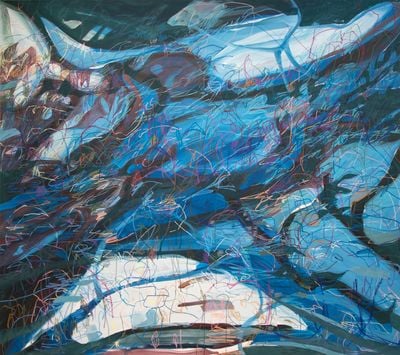
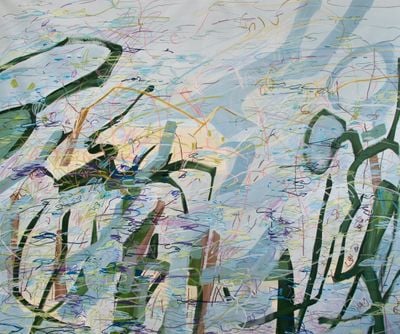
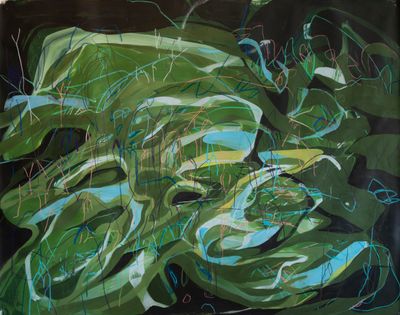
All my travelling between Germany and Brazil, experiencing the countries’ respective cultures, and finding a place for my art through performance led me to photography.
At 24, with photography and performance at the forefront of my practice, I moved to New York City on exchange at the School of Visual Arts for my MFA programme and immediately felt at home. I have lived here ever since.
How did you transition from performance to painting?
When I used my own body in my work, it was not to express female subjectivity but to express my subjectivity as an artist. My body is a female one, but my mind is that of an artist. My canvases speak to memories, landscapes, abstraction, and colour, but not through my gender.
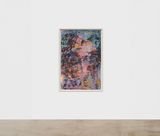
When I paint a large canvas, I have to be very precise and quick with the brushstrokes to keep up with the liquid paint running down the surfaces. Painting is a life-long endeavour; each canvas is a continuation of an intimate dialogue.
The challenge to master self-imposed complications with patterns, colour, transparency, and brushstrokes is endless and wonderful. When I enter my studio or my artistic headspace, the space I am entering is a free one.
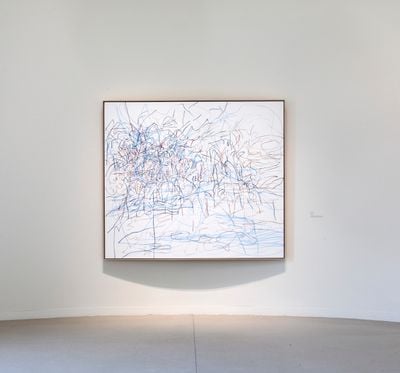
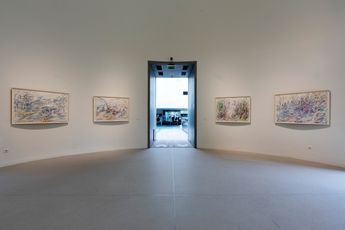
Your exhibition at the Musée de l’Orangerie in Paris placed your work alongside Monet’s. What aspects of Monet’s work did you focus on?
I did a lot of research into Monet’s drawings—a part of his practice that is not widely known. I found a parallel between how he composed his drawings and the raw marks that are present in my own work.
Even in terms of Monet’s paintings, I was always drawn to the abstract gestures that underlie the figures. He had such a distinct and expressive way of depicting landscapes.
My own works are in constant flux with my emotions and internal state—factors that are out of any conscious control. I related my own process and paintings to the intense energy that defines Monet’s ‘Water Lilies’.—[O]
Main image: Janaina Tschäpe, Home (2020) (detail). Casein and watercolour crayon on canvas. 155 x 206 cm. Courtesy the artist.








A respected voice in contemporary art discourse.
Focusing on ambitious storytelling and insightful art-world commentary. Ocula Magazine publishes in-depth interviews, critical essays and timely analysis on the artists, exhibitions and ideas driving the global art world.
Learn more about Ocula Magazine
Showcasing the best of the art world.
Ocula partners with galleries from around the world to highlight their artists, artworks and exhibitions. Gallery membership is by application and invitation, with each member vetted by an independent panel.
Learn more about Ocula Membership
Specialises in the sale of major artworks.
Led by a team with deep ties to the world’s leading auction houses, galleries and collectors. Ocula’s advisory team offers bespoke services to high-net-worth clients from around the world who are looking to acquire the best of contemporary and modern art.
Learn more about our team and services