The art world in focus
Subscribe to our newsletter for news and insights on artists, galleries and exhibitions.


‘From 7am to 9am, I am very intelligent,’ Isabella Ducrot tells me. ‘I’m more free perhaps. I’m still in a dreaming world. I dare to think of incredible things. Then I have a coffee and wake up.’
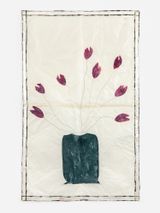
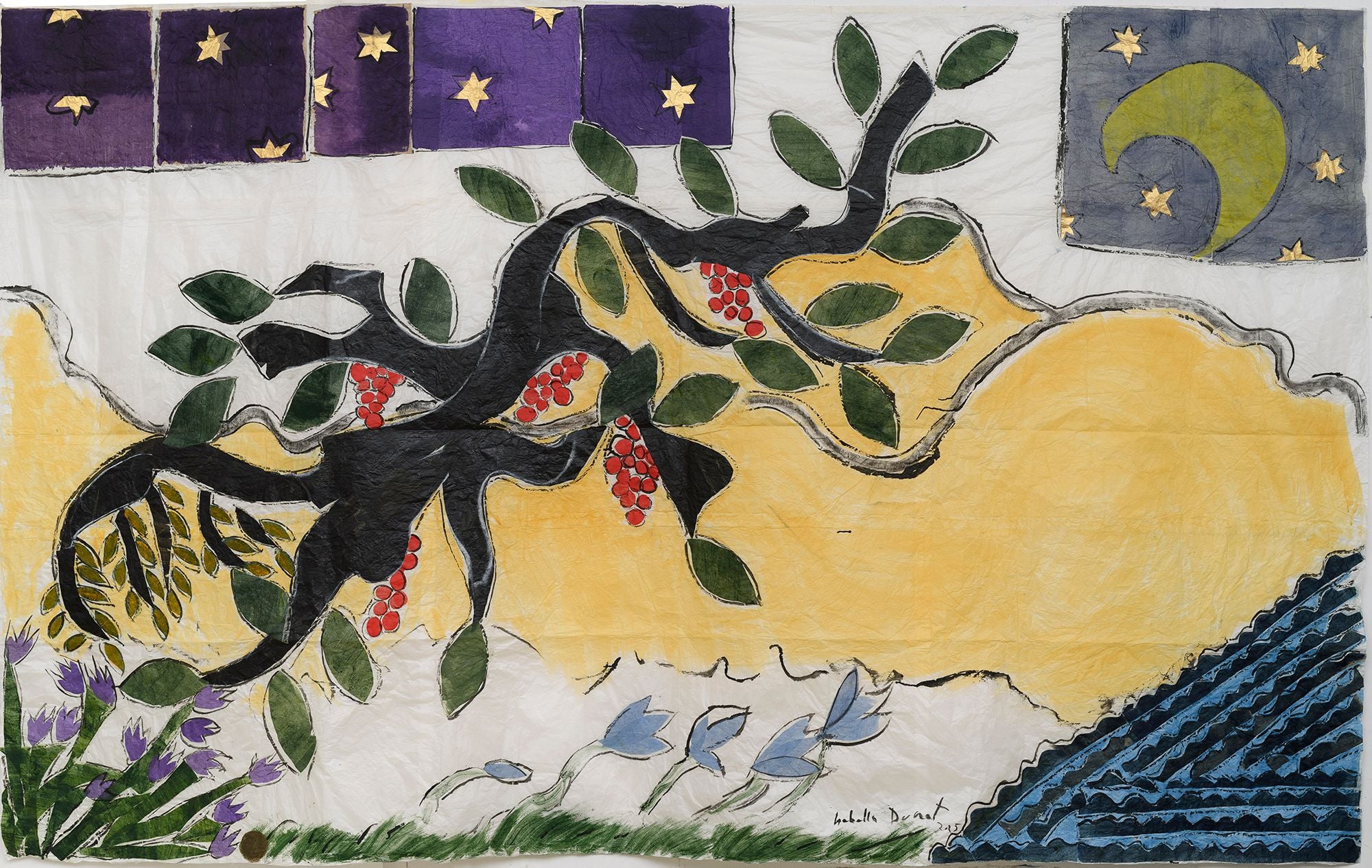
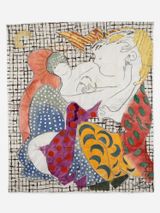
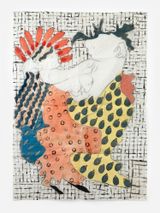
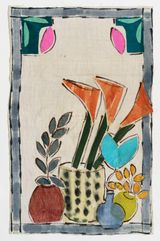
We’re sitting in Ducrot’s studio on the ground floor of the Piazza del Collegio Romano, in the centre of Rome. The high-ceilinged room is just about shaded from the heatwave melting Europe, with the morning light shining in from the courtyard. Paintbrushes collected over a lifetime of travels line the windowsills—some the length of your arm, and one which could be mistaken for a doorstop. On the adjacent wall, the early stages of a large-scale ‘Bella Terra’ work is underway. Her wooden stool is positioned before a stretch of Japanese gampi paper, where a sea of wave-like blue cut-outs have been carefully pinned in place—the beginning of a sweeping landscape.
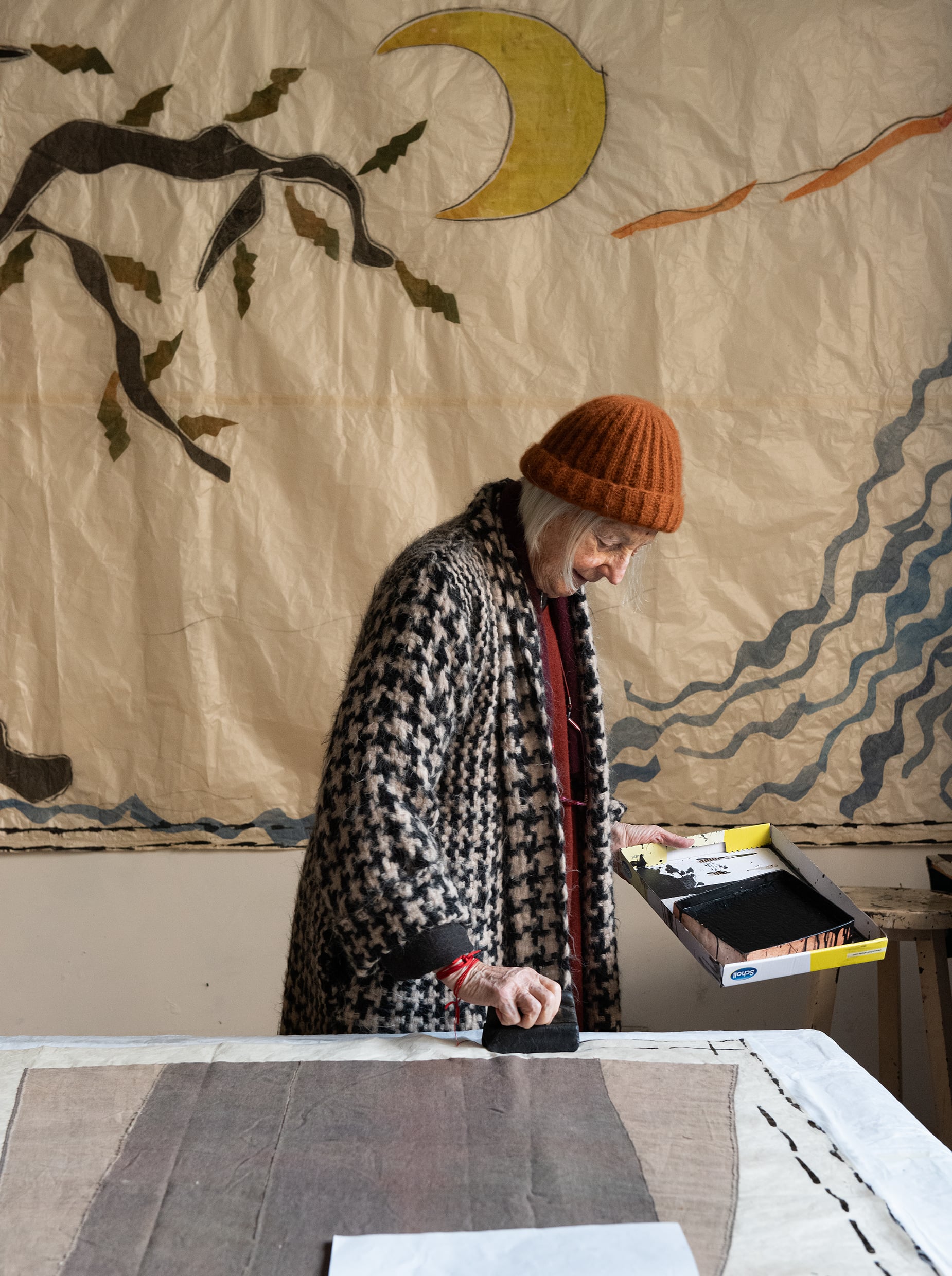
At 95, Ducrot is luminous. She wears a white embroidered kaftan she bought in Delhi—‘40 years ago!’ she beams, encouraging my hands to feel the still-intact stitches. For Ducrot, everything begins with touch. ‘I came from a tradition where we did everything with our hands,’ she says. ‘Sewing, knitting, cooking. I was, and still am, a casalinga, a housewife.’
That intimacy with materials has shaped not only her visual work, but also the writing she has practiced quietly and instinctively for most of her life.
‘When you’re 85, you’re an old person,’ she says. ‘But at 95, you enter into a metaphysical time which gives you a new way of thinking. You don’t need to be logical. I can tell you things that soon won’t be in human history. That’s why I think I’m an interesting animal.’ But, she adds, ‘I am no longer the same animal I used to be.’
Born in Naples in 1931, Ducrot witnessed the height and collapse of Mussolini’s fascist regime; the eruption of Mount Vesuvius in 1944; the end of the Second World War, and the birth of the Italian Republic. In the postwar years, American consumerism replaced Mussolini’s autarky. Ducrot was eight when a neighbour returned from New York with a roll of Scotch tape. She was instantly mesmerised; it was unlike anything she had seen before.
In her thirties, she left Naples for Rome—a move away from the religious conservatism of her childhood and toward a freer, more independent life. There, she found work as a secretary for the American firm IBM, a job she held for 55 years. Did she enjoy it? ‘No, not at all,’ she says. But it was there she met her husband of 58 years, Vittorio “Vicky” Ducrot. Painting came later—properly, at least—in her fifties.
‘My story is about what I have not done,’ Ducrot continues. ‘No university. No academies. No travelling. I began all that later.’ But throughout that, she always wrote. ‘In the 1950s in Italy, you didn’t need to be a cultivated person to write. Everyone wrote—the peasants, the soldiers. Today, if you write, it’s assumed that you are a sophisticated person.’
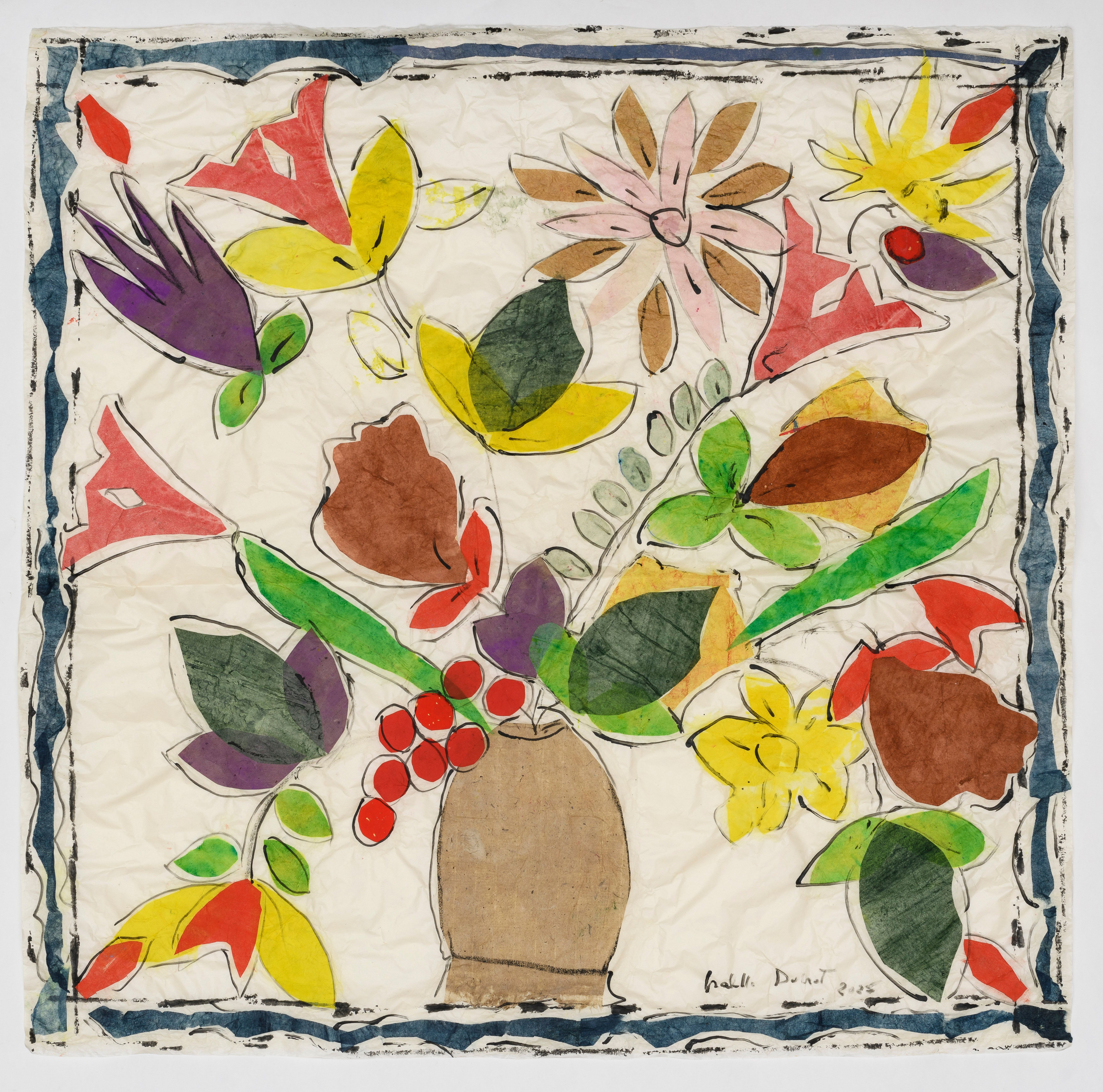

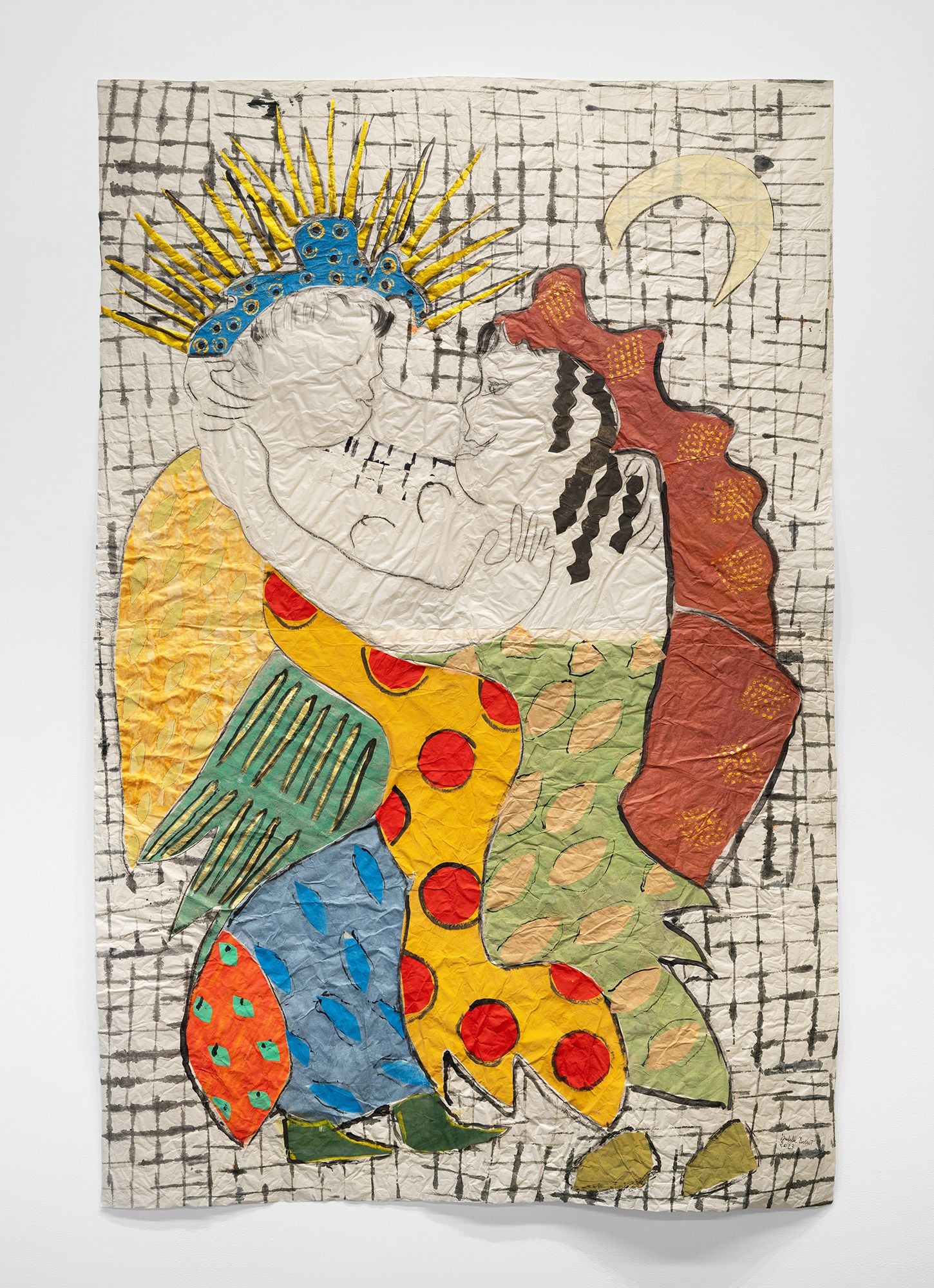
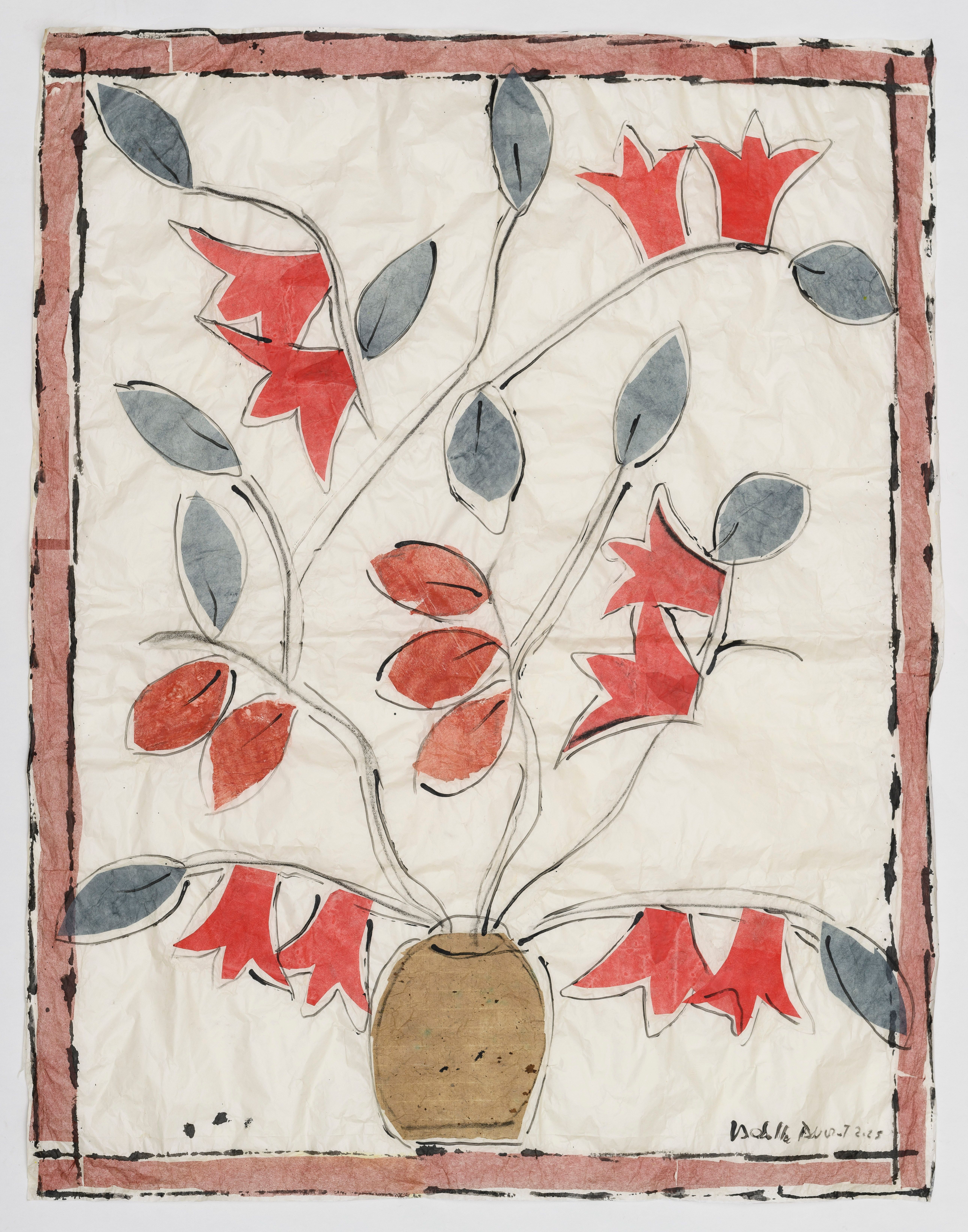
Though writing has been part of her life for decades, it’s only in the past few years that her words have reached the public. Ducrot rarely keeps what she writes. The act itself is enough. ‘When I write,’ she tells me, ‘it’s a kind of liberation. Not all the pieces are a reasonable story.’
The nonagenarian has published four books in the past six years: The Checkered Cloth (2019), Women’s Life (2021), Twenty-Two Places of the Soul (2022), and Recent Animals (2025). Each takes a different form—short stories, essays, recollections—and together they trace her found awareness of the ability to observe and understand the world, often through the means of textiles.
Ducrot’s latest book, Recent Animals (2025), sees her turn her gaze backwards: to the life she has lived, and the shifting world she has observed. In one passage titled ‘Male Walls’, she reflects on the gendered nature of public space, recalling the lewd graffiti once scrawled across the Vomero funicular station in Naples. ‘I couldn’t imagine a woman,’ she writes. ‘... babe in arms, shopping bag slung over one shoulder, stopping to draw or write their opinion on a staircase, ramp or elevator wall.’ The markings, she concludes, belonged to men: ‘I supposed that, much like animals, at such moments will and consciousness were conspicuously absent; those crude phrases were simply elementary, non-verbal manifestations of an unfulfilled life.’
Elsewhere, her observations soften; in one passage she takes the aquarium as an invitation to contemplate our own existence: ‘Creatures of water and air seem to take their element for granted. That said, we sometimes hear the expression, “happy as a fish in water”, but never “happy as a man in the air”. All rather curious.’ For a reader, it feels as though Ducrot lets us in on a fleeting thought—one that’s drifted in from the courtyard and settled, indelibly, in her notebook during those early hours when her mind grants her the freedom to think differently. Although, the artist notes, she’s grown rather fond of her laptop lately.
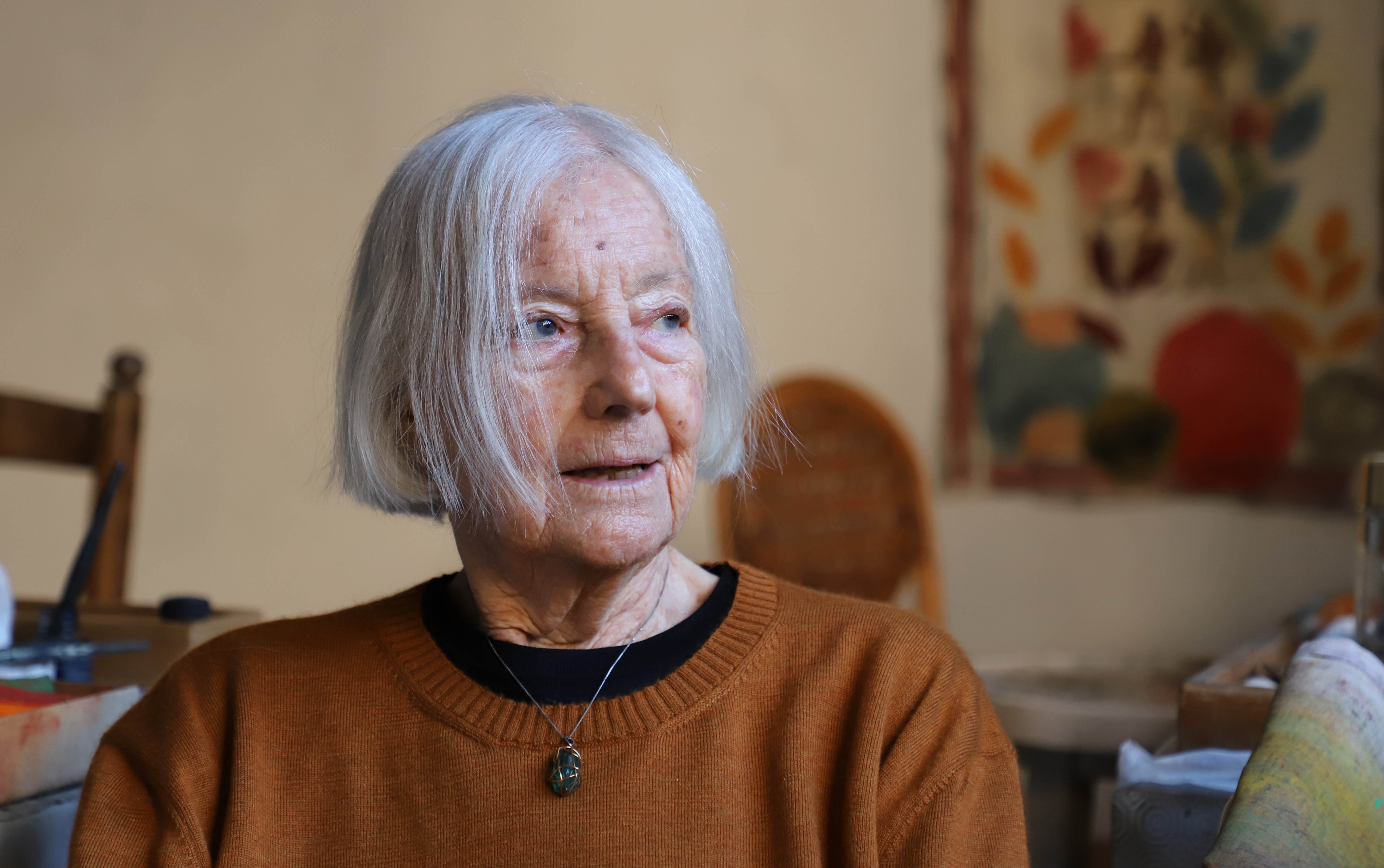
What strikes most about these writings is Ducrot’s proclivity not just to reflect, but to remain inquisitive. She doesn’t position herself as a nostalgic elder, nor as someone hardened by experience. Instead, she remains open to newness. In the titular essay, she recounts asking an art dealer friend: ‘What’s new in the art world today?’ His recounting of the industry’s trials and tribulations—relayed by Ducrot in admirable detail—is hardly revelatory. And yet, Ducrot writes how his response ‘opened up a gulf in my mind. Brand new, dizzying thoughts rushed in. The new! We must seek it elsewhere! But where?’
I was bound for Naples that afternoon. On hearing this, Ducrot rang her sister—also in her nineties—who still lives in the city and reads tarot cards. The artist herself will return next year, when Museo Madre presents a major retrospective of her work, curated by former Whitney Museum director Adam Weinberg.
‘You’ll love Naples. It’s mad,’ Ducrot tells me. ‘Neapolitans live in the moment. When I was a young girl, I was the same. I didn’t have a project or a long-term plan. I was destined to have a family; to pass from my father’s authority to my husband’s. Never could I have imagined that people would be interested in what I am, or what I’m doing.’ —[O]



A respected voice in contemporary art discourse.
Focusing on ambitious storytelling and insightful art-world commentary. Ocula Magazine publishes in-depth interviews, critical essays and timely analysis on the artists, exhibitions and ideas driving the global art world.
Learn more about Ocula Magazine
Showcasing the best of the art world.
Ocula partners with galleries from around the world to highlight their artists, artworks and exhibitions. Gallery membership is by application and invitation, with each member vetted by an independent panel.
Learn more about Ocula Membership
Specialises in the sale of major artworks.
Led by a team with deep ties to the world’s leading auction houses, galleries and collectors. Ocula’s advisory team offers bespoke services to high-net-worth clients from around the world who are looking to acquire the best of contemporary and modern art.
Learn more about our team and services