





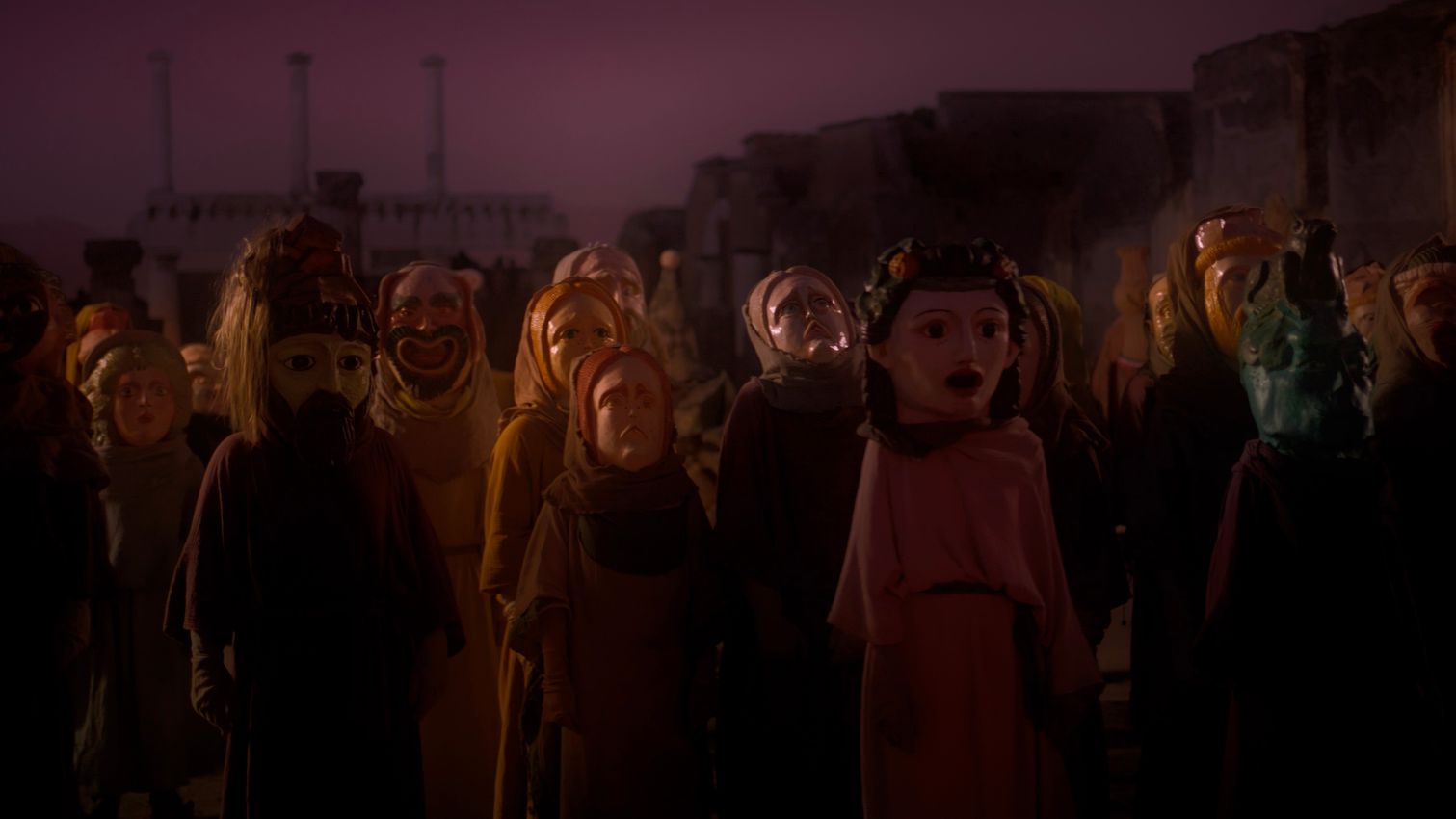
The Strings and Strife of Wael Shawky’s Choreographed Histories
With simultaneous exhibitions now open at Edinburgh’s Talbot Rice Gallery and Luma Arles in southern France, Wael Shawky talks to Ocula about the life and process behind his stirring scenographies. Save to My Ocula
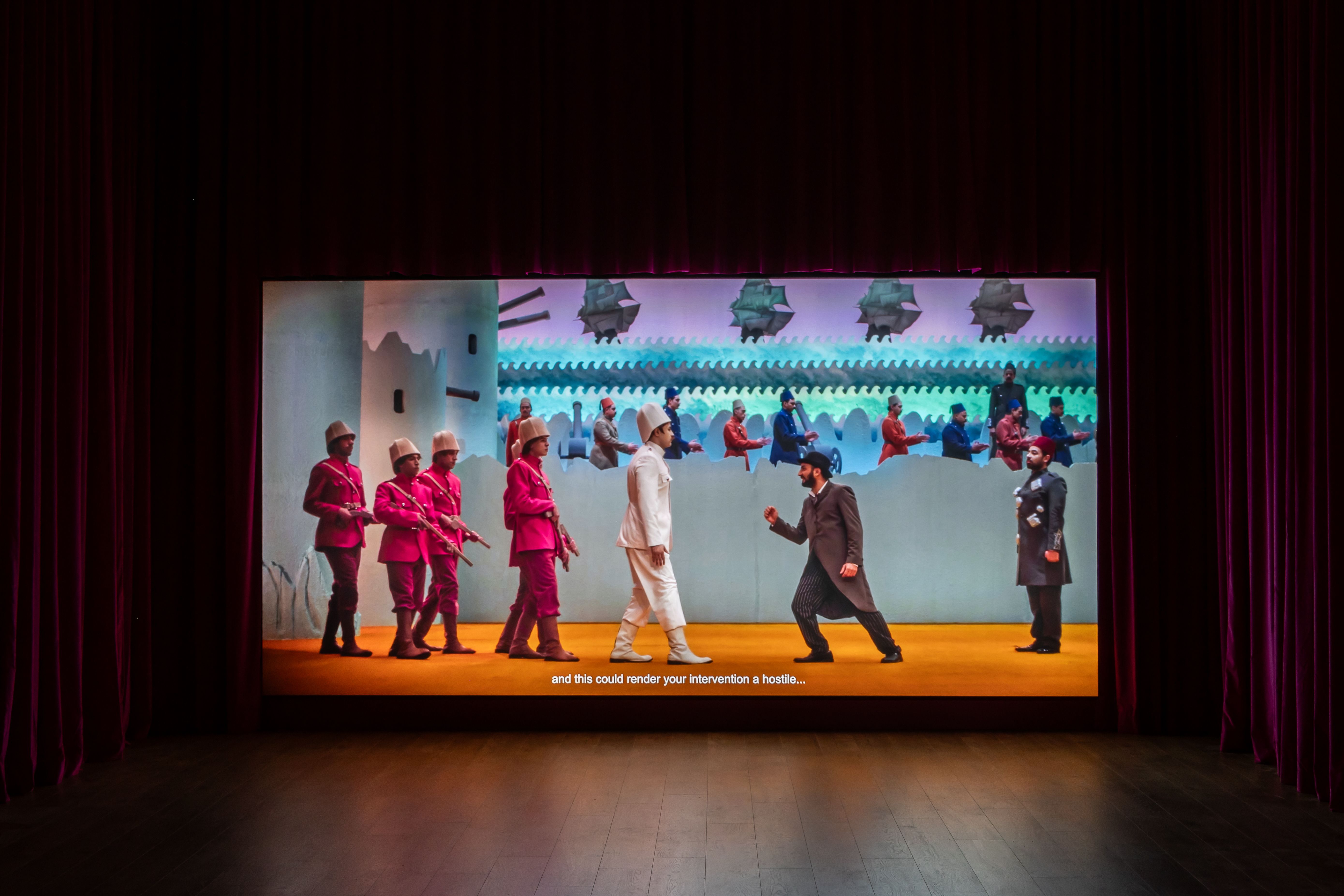
Wael Shawky’s works are feats of imagination and craftsmanship. Taking on monumental historical events that have redrawn national borders and violently displaced vast swathes of people, his expansive films and installations weave together ancient texts and narrative storytelling through puppetry and painting. At last year’s Venice Biennale, his filmed musical play Drama 1882 (2024) showed at the Egyptian Pavilion, delving into the country’s nationalist ʿUrabi Revolution, with a hypnotic rhythm driving his performers’ speech and movements. The trilogy ‘Cabaret Crusades’ (2010–2015) recounts the history of the Crusades from an Arab perspective.
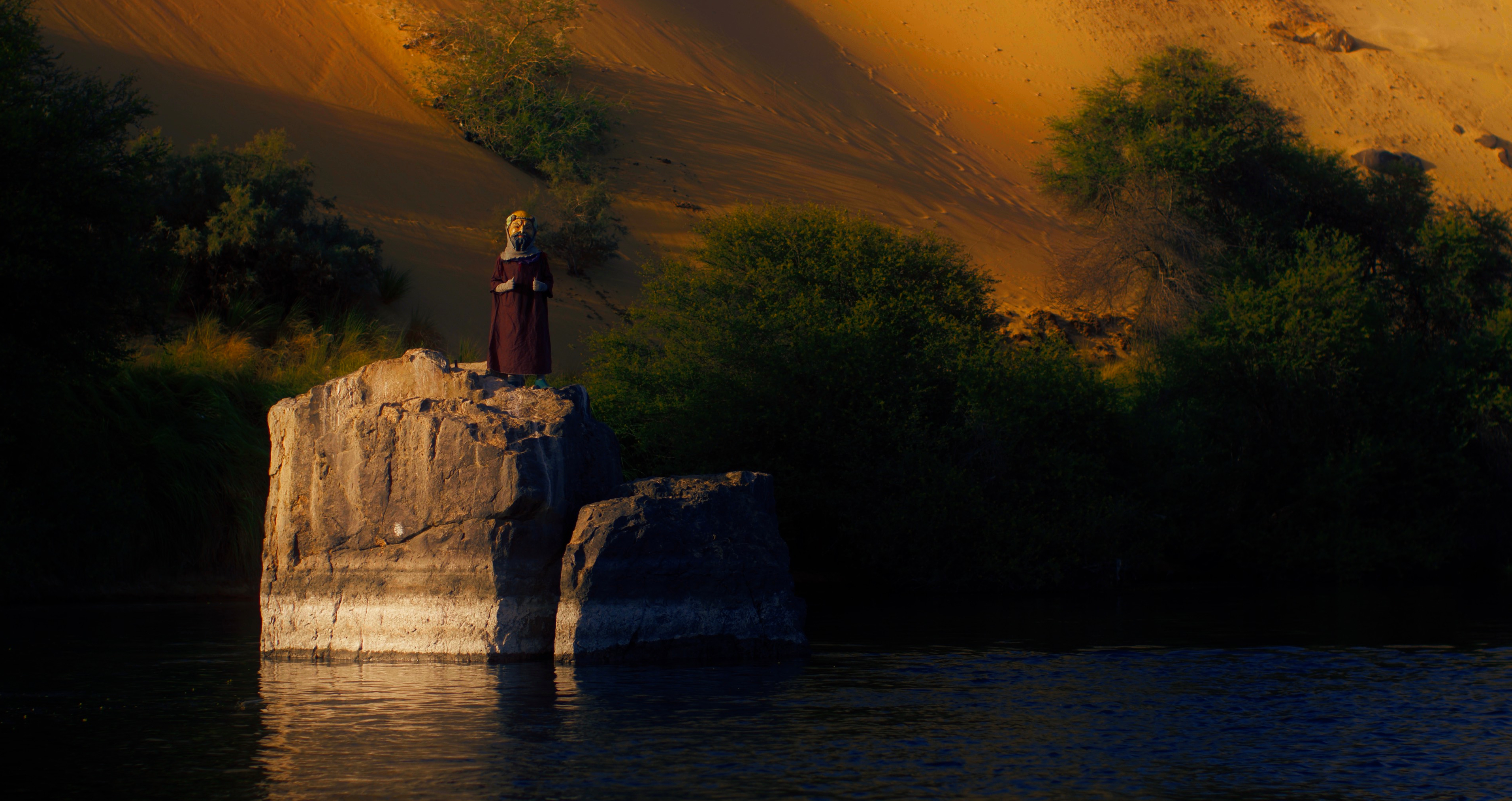
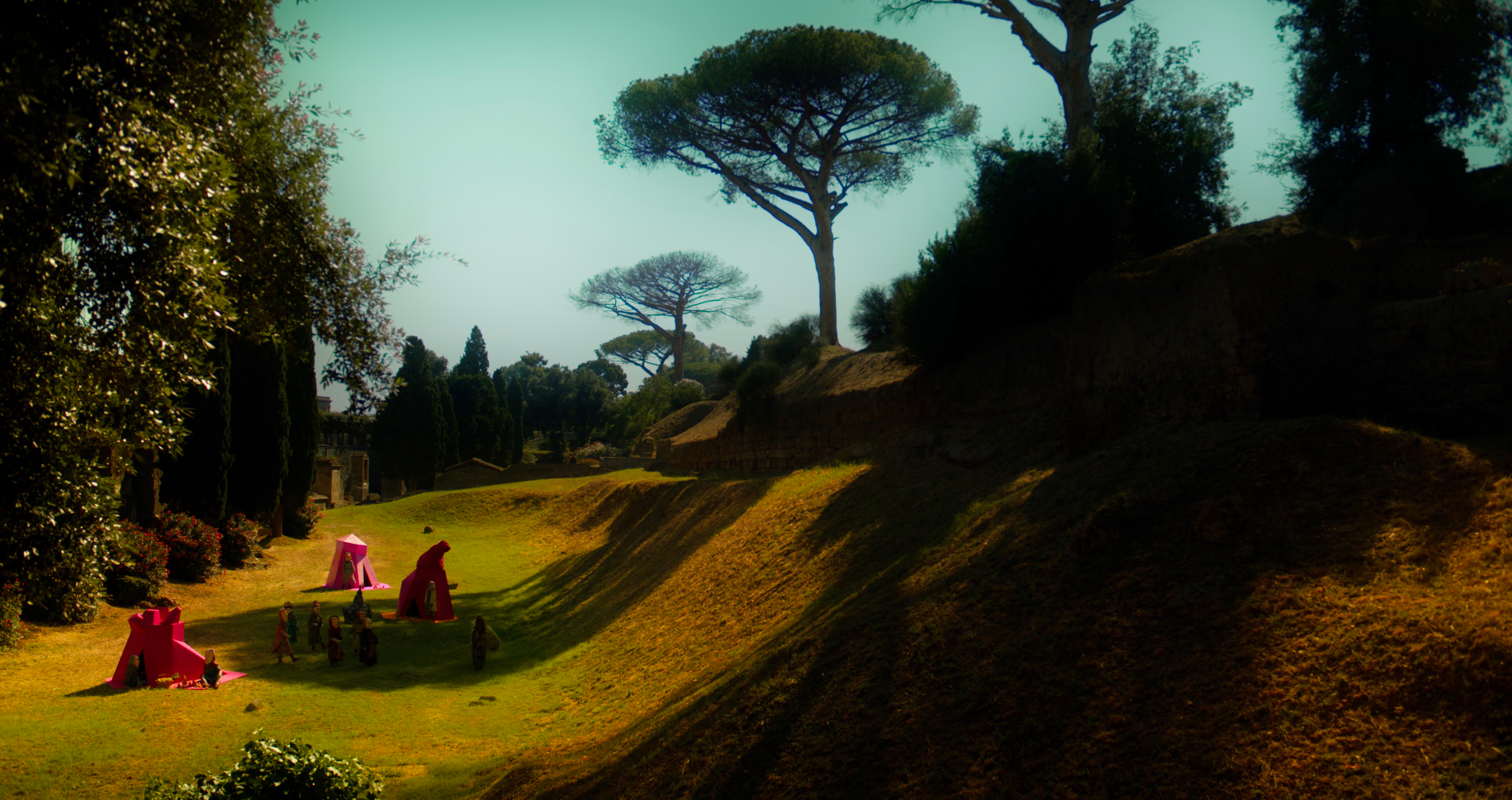
Viewers of his work will undoubtedly recognise history repeating itself. ‘Cabaret Crusades’ was released the same year as the Arab Spring in 2010, a movement that he notes has already become warped in its retelling. The Western brutality in Drama 1882 echoed Israel’s genocidal onslaught of Gaza when the work premiered in early 2024. While Shawky recognises that many of his pieces are searingly relevant to the times in which they are made, he intentionally avoids drawing specific contemporary comparisons. He focuses on the broader idea that the past becomes warped, erased, forgotten, and repeated—that his pieces would likely feel relevant whenever they happened to be released because the same patterns keep playing out. His research veers into fable at times, entangled with history, as in I Am Hymns of the New Temples (2023), an exploration of Greek mythology filmed amongst Pompeii’s archaeological remains.
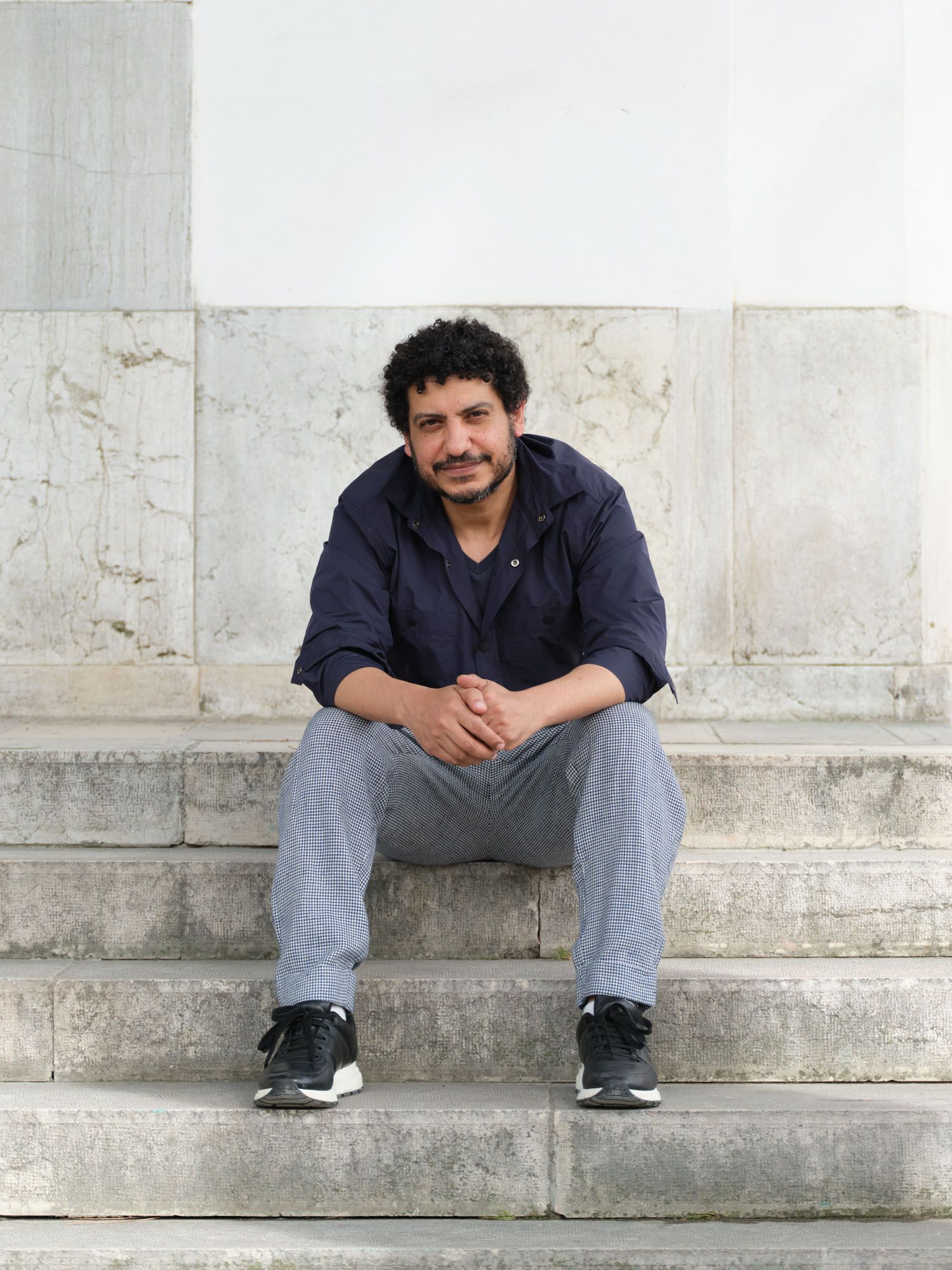
ES: Looking back on your childhood, what do you think were your first influences?
WS: I am from Alexandria, which is Mediterranean, within the wider agricultural society of Egypt. When I was four years old, I travelled to Makkah in Saudi Arabia with my family, and studied there for almost six years. That is a big shift. Makkah is one of the most cosmopolitan cities in the world because of the pilgrimage. In the mid-1970s, many immigrants from Africa came and never left. It was also the beginning of this look of American modernity. To see this hybridity happening between Bedouin tribalism and all these new cars at the time, the Cadillacs … this weird mix between different systems that have nothing to do with each other. I’m very affected by this time, and the idea of society in transition. I am interested in societies that have this dream of evolving.
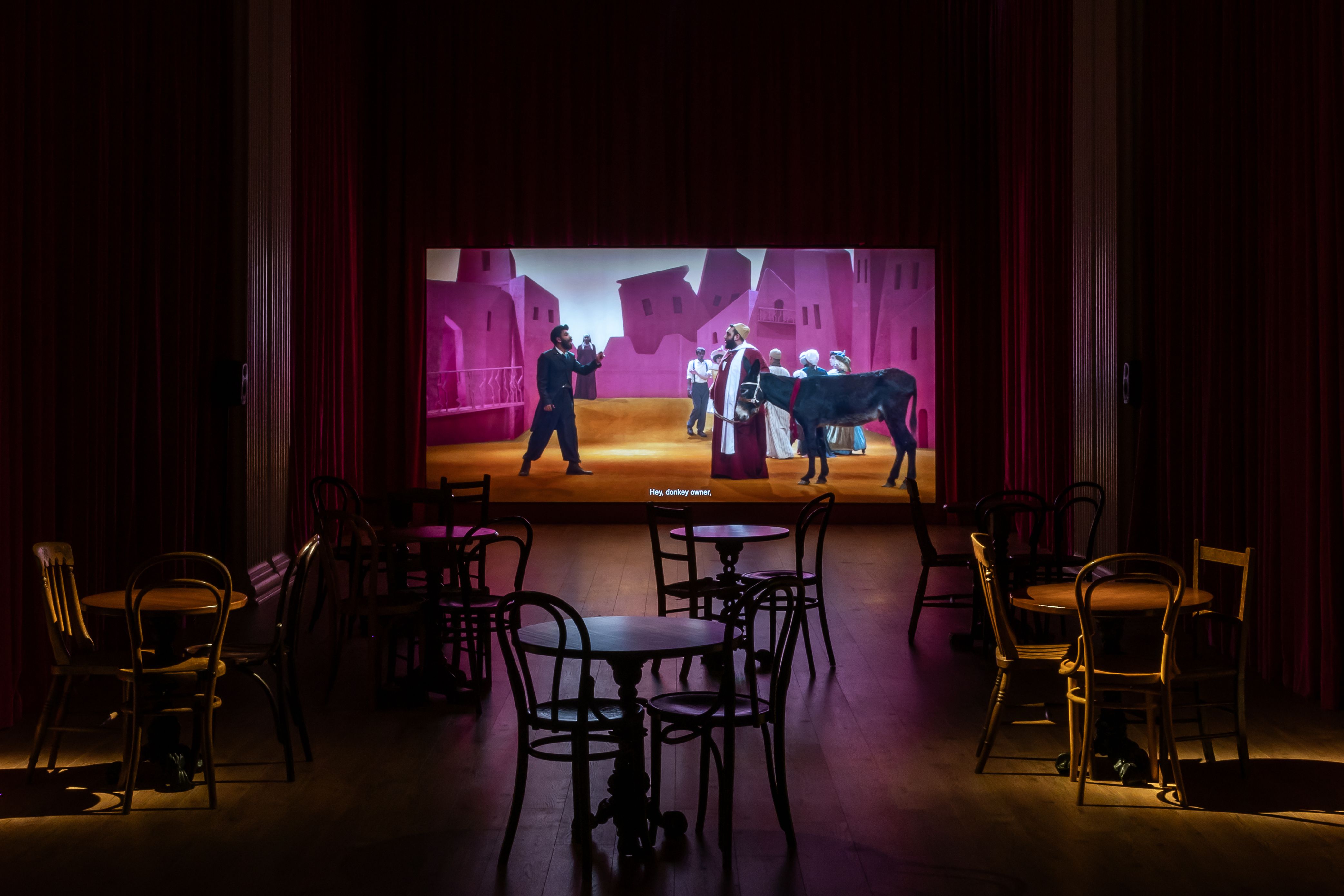
ES: The manipulation of power bleeds into the very fabric of your work. In Drama 1882 there is a palpable sense of deviance in the actors’ movements and the cadence of their words. This rhythmic flow feels as though they are putting the viewer under a spell.
WS: I love the idea of transforming a human creation form, like history, into a new readable format. In my work, history might become poetic or musical. I like to present history in the form of a show. In ‘Cabaret Crusades’ and Drama 1882, even the titles reflect this. Each piece I create with scenography, costume, music; it’s like a painting that’s moving.
In Drama 1882, I was really thinking of this rhythmic movement. When you read the letters between the leaders of the Ottoman Empire and France and Russia and the British, you feel this back and forth of dominance. I was trying to translate this into the choreography. At the same time, it gives you the feeling they are hypnotised. Sometimes we create three or four layers within a scene and they each have different speeds. The main characters might be moving at normal speed while everyone else is in slow motion. Or the scenography sometimes moves at the same speed as the people.
ES: I first saw your work in 2016 in Turin (‘Cabaret Crusades’) and I’d never seen anything like it in an art space. It made me think of how affecting and immersive the theatre can be. How do you decide how each body of work will be realised?
WS: It depends. I made The Cave in 2005, where I was just walking in a supermarket reciting the Quran from memory. That was like a self-portrait, but also I wanted to see how I could work with this religious text and analyse all these stories and connect it to my own contemporary situation. I have several types of research. Sometimes it’s about historical texts, as we see in ‘Cabaret Crusades’ and Drama 1882; sometimes it’s about literature, or mythology, like in I Am Hymns of the New Temples.
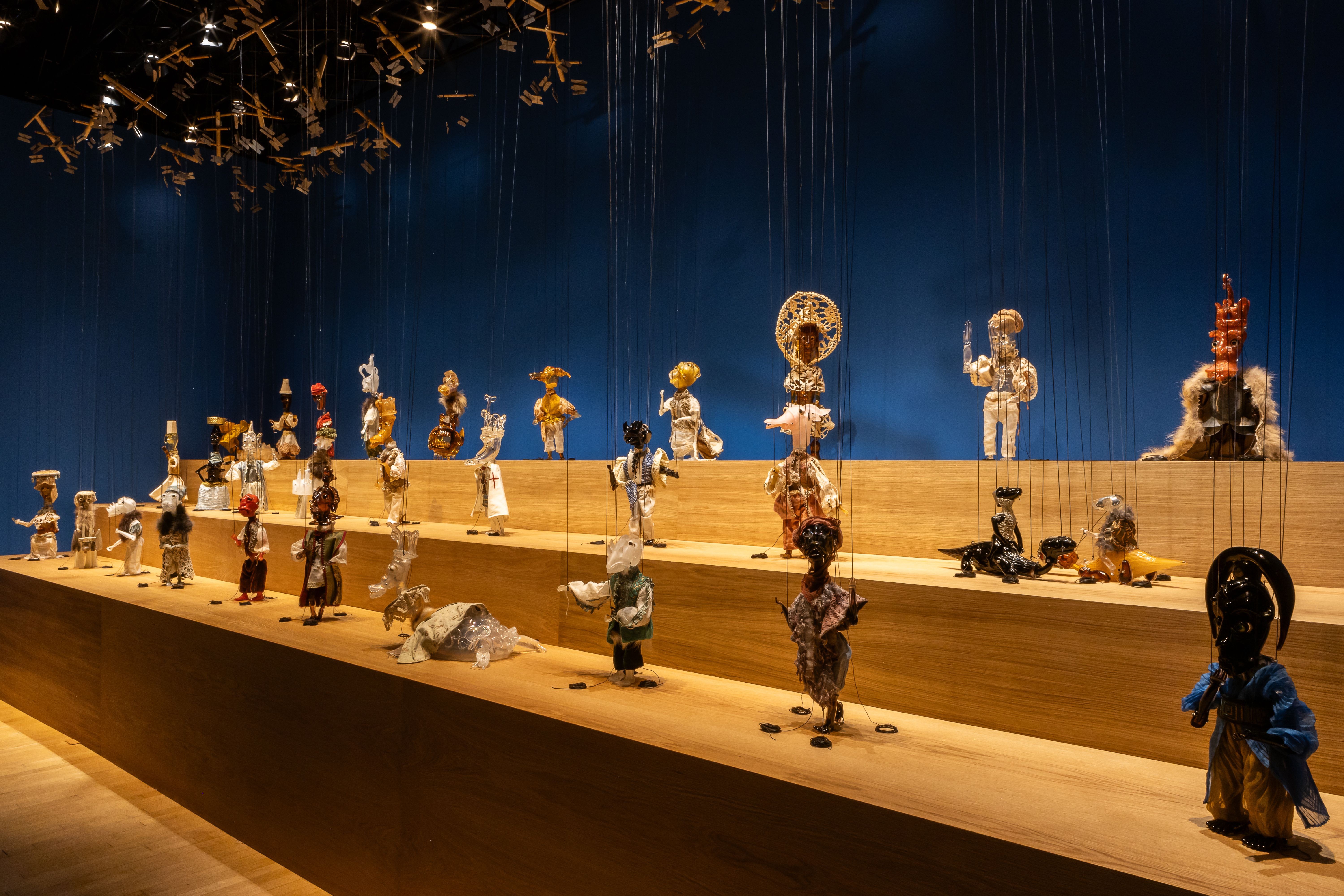
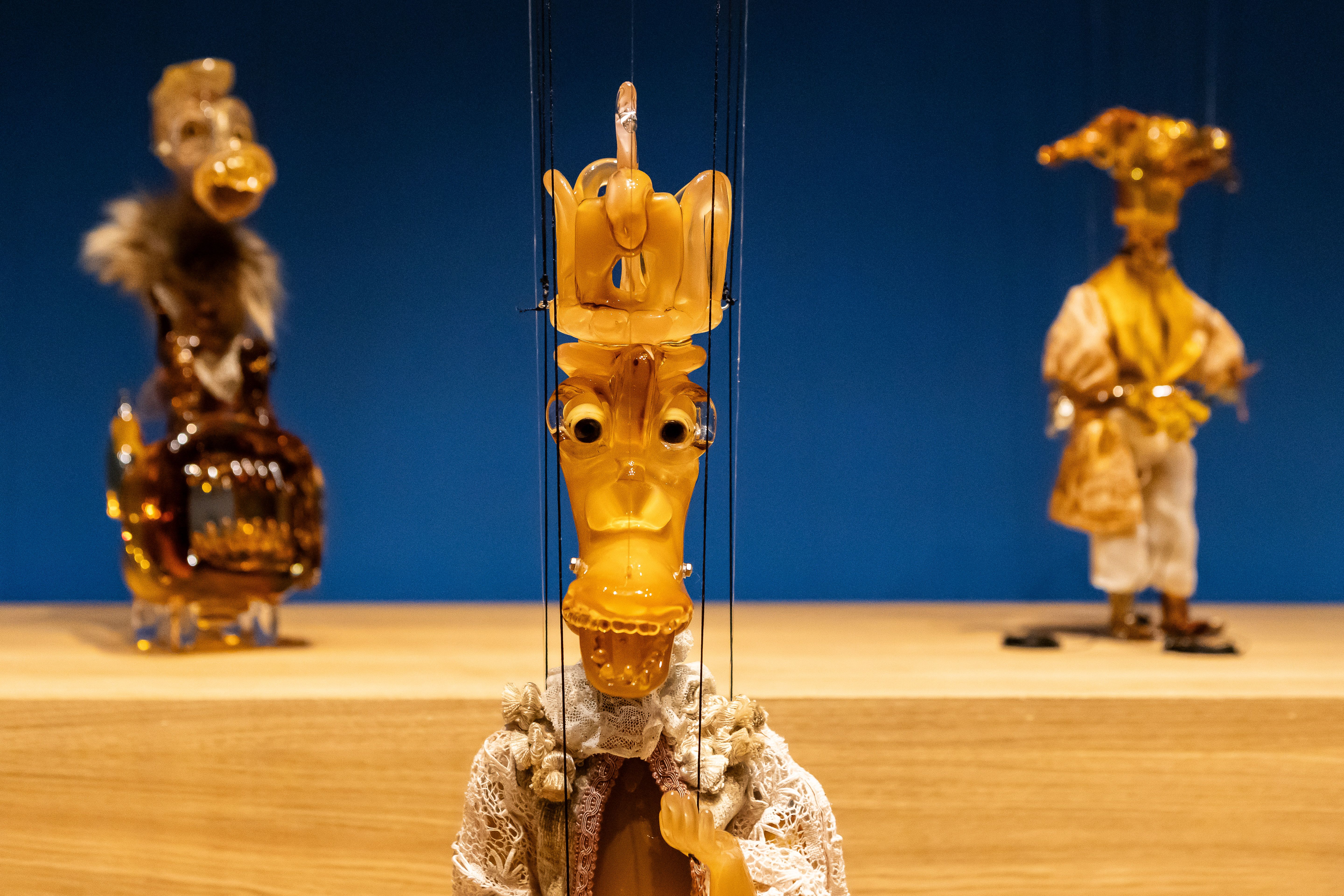
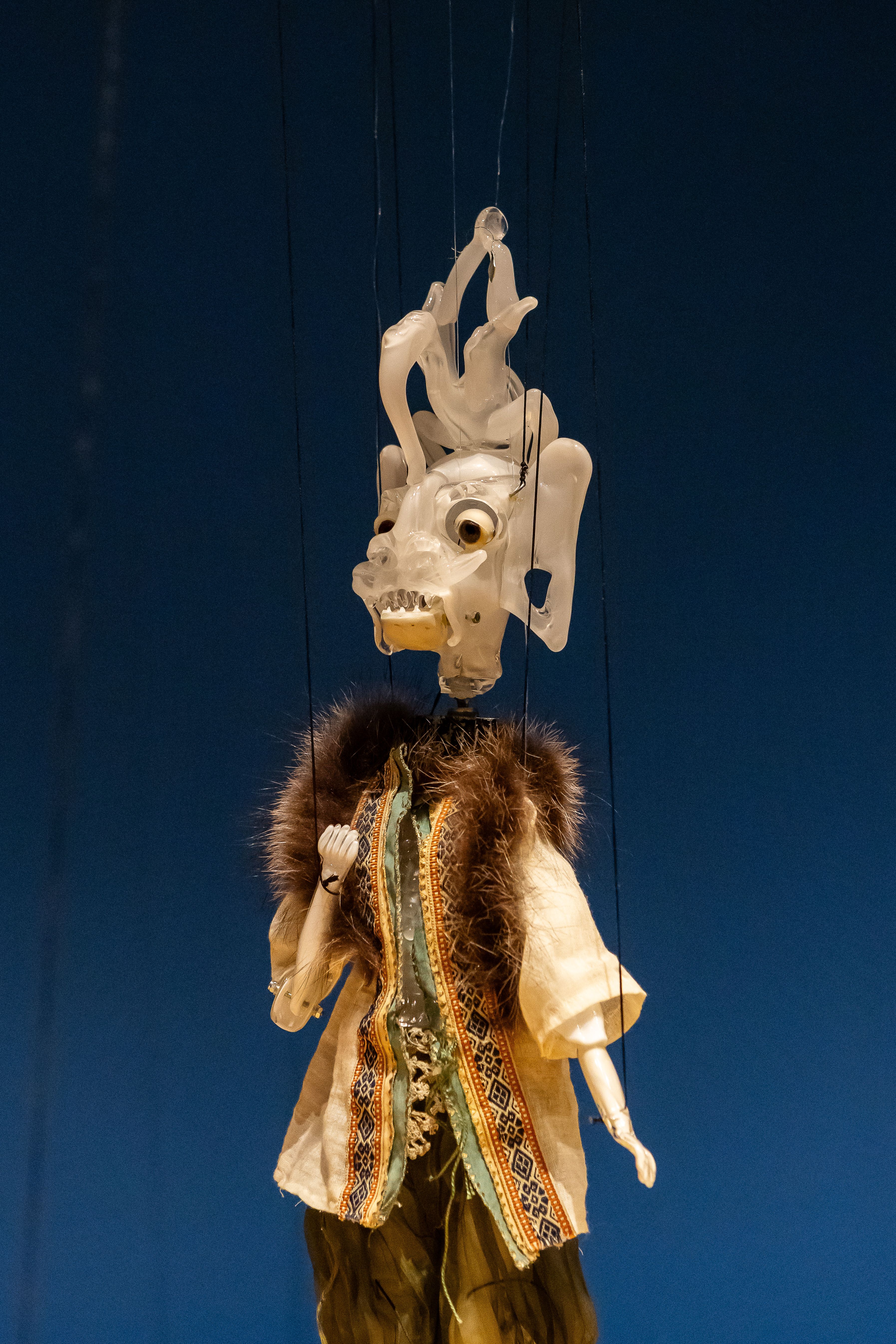
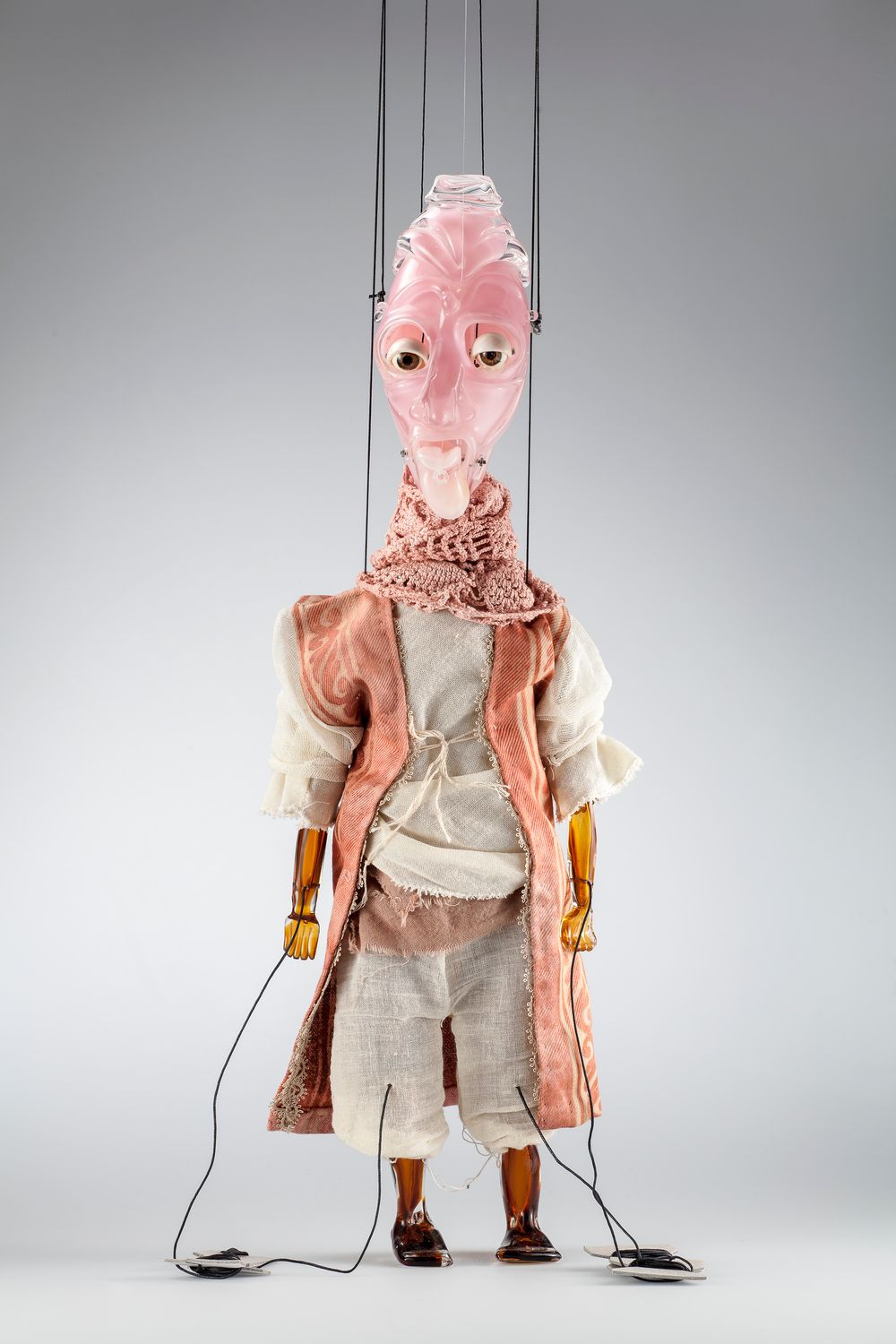
I find the research amazing, because depending on the stories that I find, everything else develops. The marionettes in ‘Cabaret Crusades’, for example, came to me because I was reading about a speech by Pope Urban II in 1094. I suddenly saw everyone as a marionette because [that moment in history is] really about manipulation.
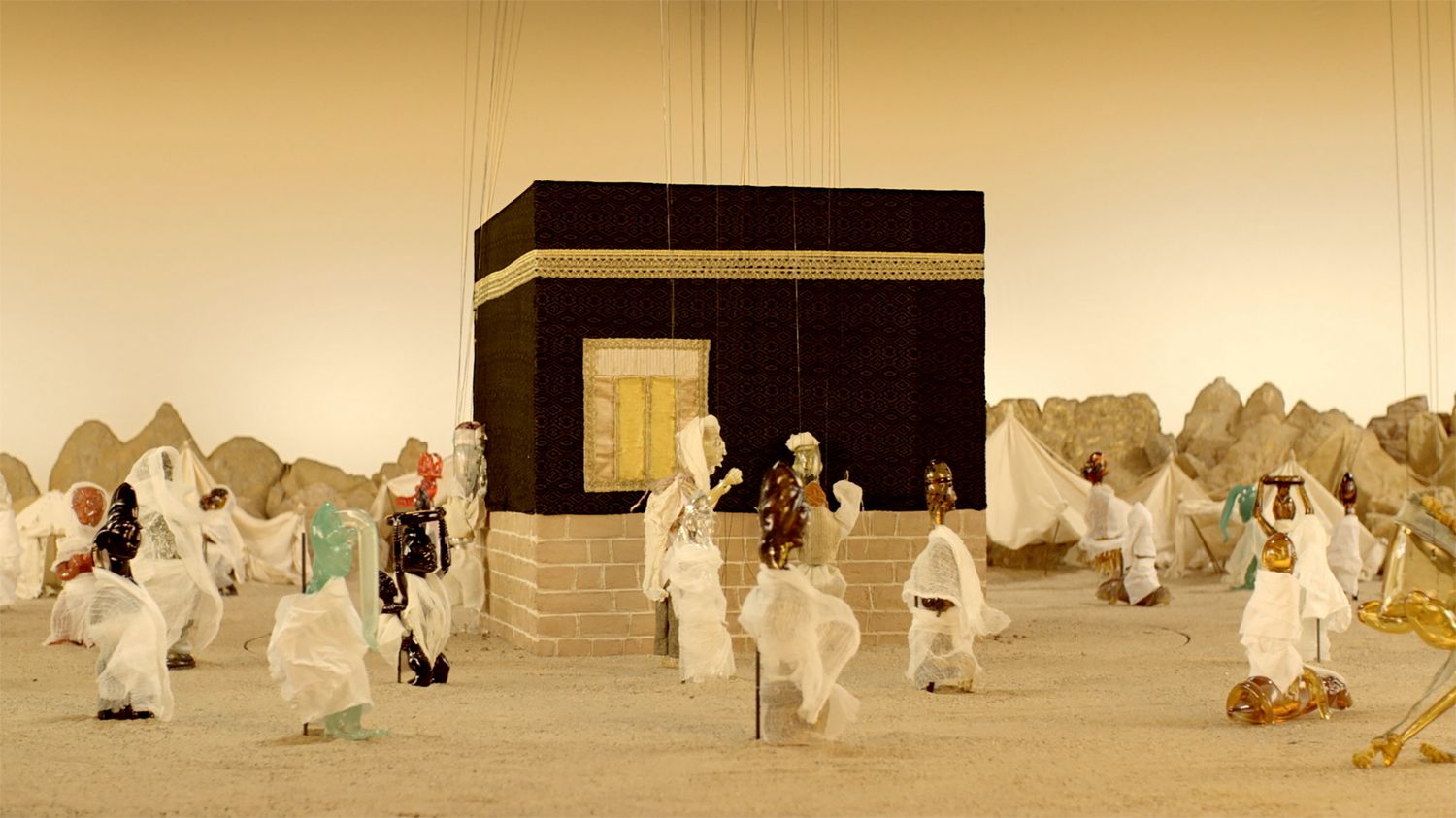
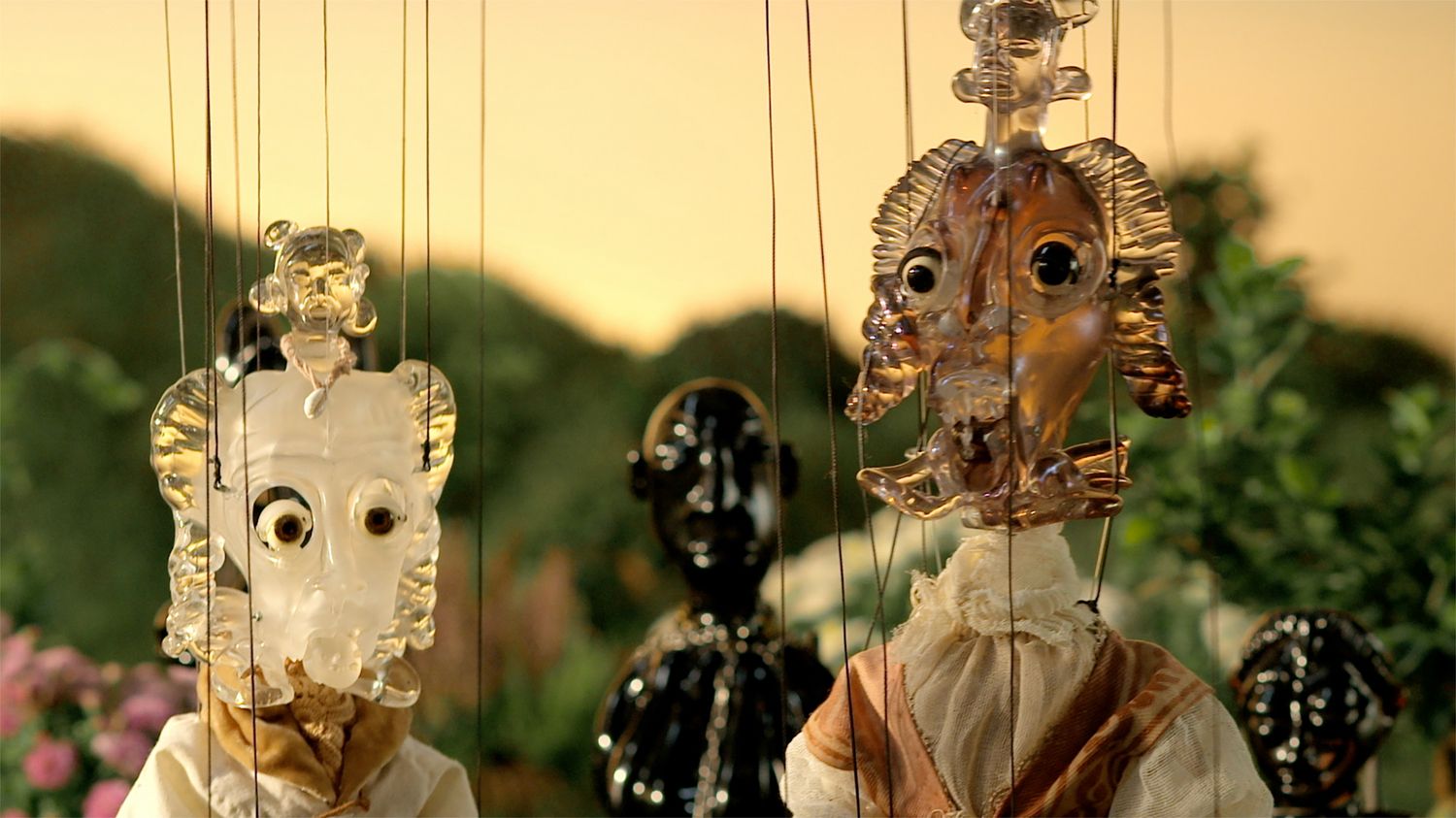
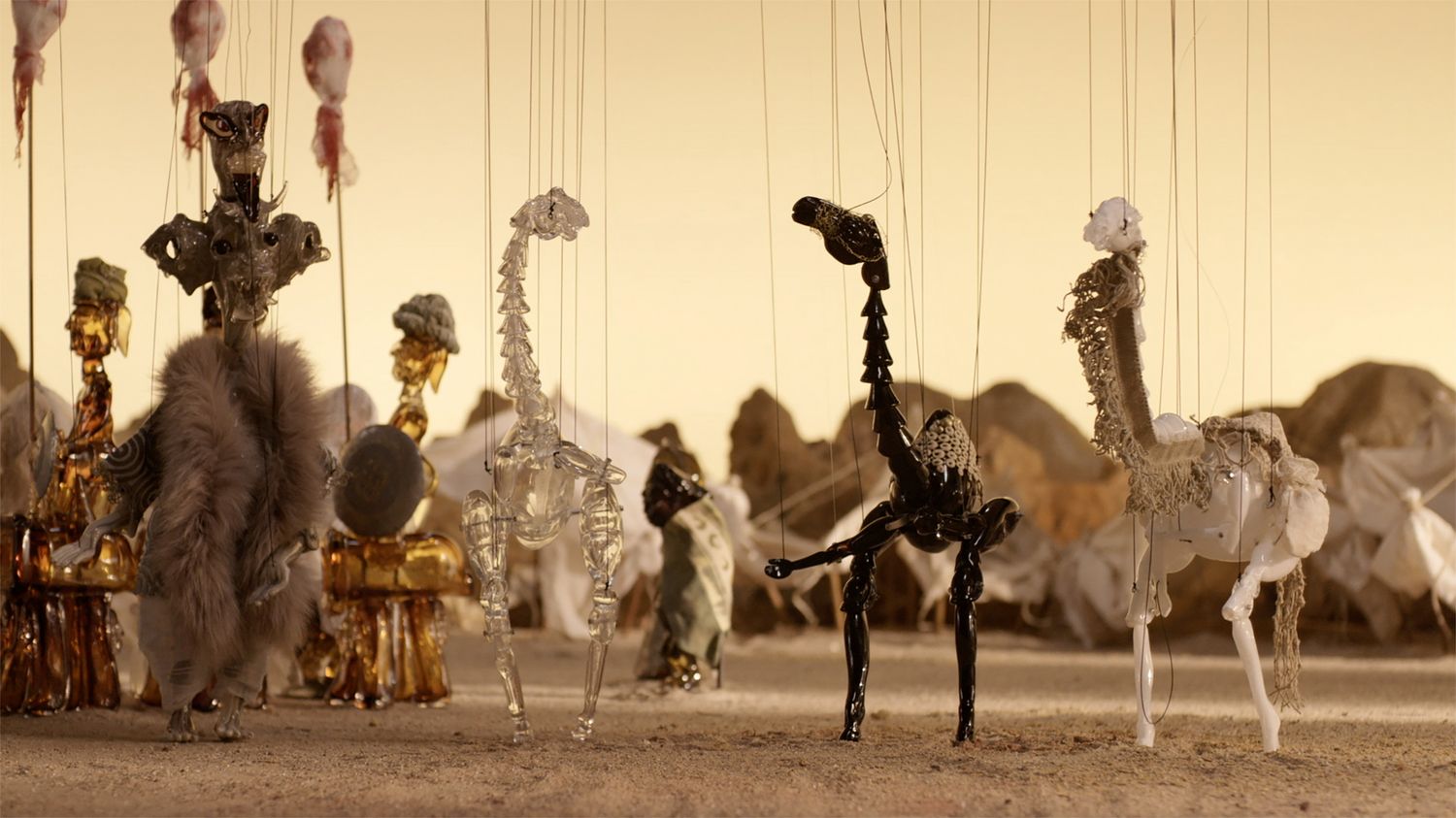
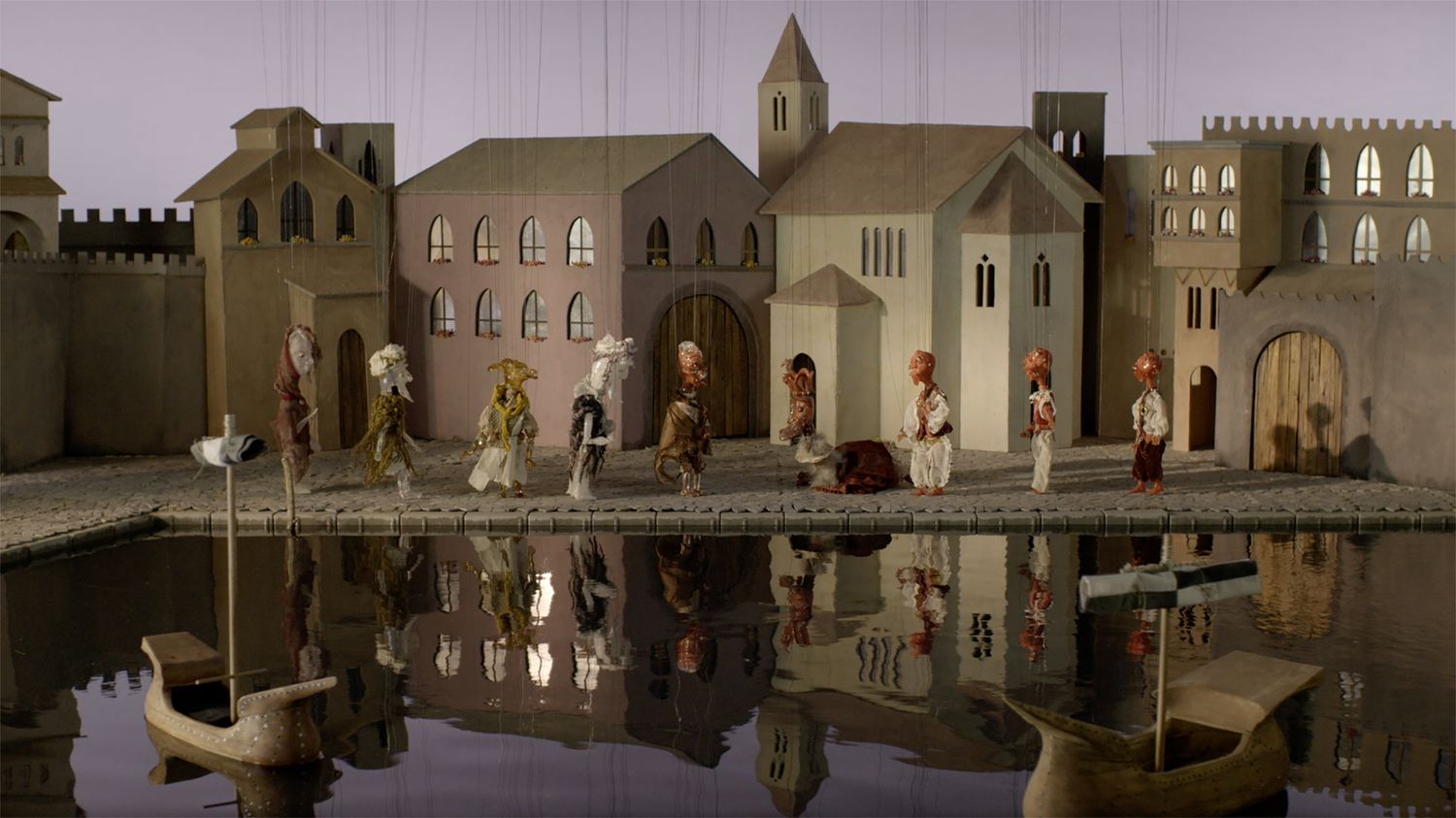
ES: You also weave political history into the materials. You used Murano marionettes to reference the Venetian influence on the Fourth Crusade, for example.
WS: It takes a lot of time to find the right components. The scenography for the third part of ‘Cabaret Crusades’ was built with remote-controlled moving rings with statues and marionettes on them. Some moved against each other, with different speeds. The idea came from looking at medieval maps and seeing how human beings are always at the centre of the universe. The main characters in ‘Cabaret Crusades’ are often standing in the middle while the entire world moves around them.
ES: Your work can be funny as well. When you are working with histories that are full of trauma, do you think humour can connect the viewer in an unexpected way?
WS: I love humour and I think it’s extremely important. Humour will never reduce seriousness, but it will erase this drama we see in movies or on TV when you depend on the skills of the actor to give you the tears or emotions. That doesn’t last; you need to have another source of emotion. I like to remove the facial expressions; having masks or marionettes does this and adds humour. I also hate the idea that I would make a film with a battle, and add [clichéd] war music, or sad music. I am concerned about the world from an educational point of view, and my real problem with art is when it has to have a certain look or feel.
ES: Do you find yourself looking to work beyond tropes or expected and familiar techniques or processes?
WS: Yes. Every project I start, I really feel like it could be a disaster. I remember a project at the Sharjah Biennial in 2013. They asked me to give a talk about the Biennial that happened in 2011. I preferred to make an art piece about it, and it started very simple but got bigger and bigger. Collaborating with all the Pakistani and Indian artists working for the Biennial, we translated the press conference into Urdu and then made a poem where we didn’t change any words, we just cut and moved things like a puzzle. After that I travelled to Karachi and made a song with Qawwali musicians. At the 2013 Biennial opening, we had a big performance with the workers and people from Karachi. It was mixed with many political ideas. Pieces like this don’t have a shape; you shape it with the time and research.
ES: I have heard you refer to yourself as a translator. Translating is such a specific art form, and it makes me wonder, from all the sources you work with, confronting so many entrenched perspectives on history, how do you find your final viewpoint?
WS: Unfortunately, I cannot use everything. I try to be fair as much as possible. The Secrets of Karbala, the first half of ‘Cabaret Crusades’, focuses on the big battle that led to this division in the Muslim world between Shia and Sunni. I tried to take all the sources that both parties agreed on and removed myself a bit as a Muslim. I’m not the one who is making it; these ideas exist. How can I make them readable? —[O]
Wael Shawky is on view at Talbot Rice Gallery in Edinburgh from 28 June through 28 September 2025. Wael Shawky: I Am Hymns of the New Temples is on view at LUMA Arles from 5 July to 2 November 2025.
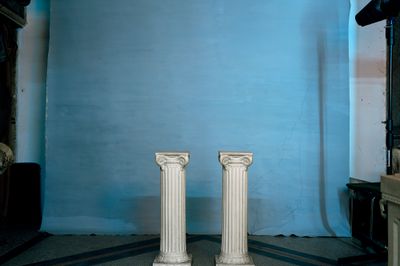
Main image: Wael Shawky, I Am Hymns of the New Temples (2023) (video still). 4K video with sound, colour, VFX; Arabic. 57 min. Commissioned by Pompeii Archeological Park. © Wael Shawky, 2023. Courtesy the artist and the Ministry of Culture—Archaeological Park of Pompeii.








A respected voice in contemporary art discourse.
Focusing on ambitious storytelling and insightful art-world commentary. Ocula Magazine publishes in-depth interviews, critical essays and timely analysis on the artists, exhibitions and ideas driving the global art world.
Learn more about Ocula Magazine
Showcasing the best of the art world.
Ocula partners with galleries from around the world to highlight their artists, artworks and exhibitions. Gallery membership is by application and invitation, with each member vetted by an independent panel.
Learn more about Ocula Membership
Specialises in the sale of major artworks.
Led by a team with deep ties to the world’s leading auction houses, galleries and collectors. Ocula’s advisory team offers bespoke services to high-net-worth clients from around the world who are looking to acquire the best of contemporary and modern art.
Learn more about our team and services