




LAURA LIMA
b. 1971, BrazilLaura Lima (Minas Gerais, Brazil, 1971) is a Brazilian contemporary artist who has developed a radical, hard-to-classify practice that treats living bodies—human, animal and vegetal—alongside objects and architecture as her primary material. A key figure in contemporary art from Brazil, she has presented major projects at institutions including Museu d’Art Contemporani de Barcelona (MACBA), Fondazione Prada in Milan, and the Institute of Contemporary Art, Miami, and lives and works in Rio de Janeiro.
Early life and education of Laura Lima
Laura Lima was born in 1971 in Governador Valadares, Minas Gerais, Brazil, and moved to Rio de Janeiro in the early 1990s, where she studied philosophy and visual arts. In 2003 she co-founded the artist-run gallery A Gentil Carioca with fellow artists Ernesto Neto and Márcio Botner, developing a practice grounded in long-duration performances and constructed situations that unfold within everyday spaces.
Lima continues to live and work in Rio de Janeiro, developing projects that often emerge from the social and architectural textures of the city while touring to museums and contemporary art galleries in Europe, North and South America.
Laura Lima artworks and style
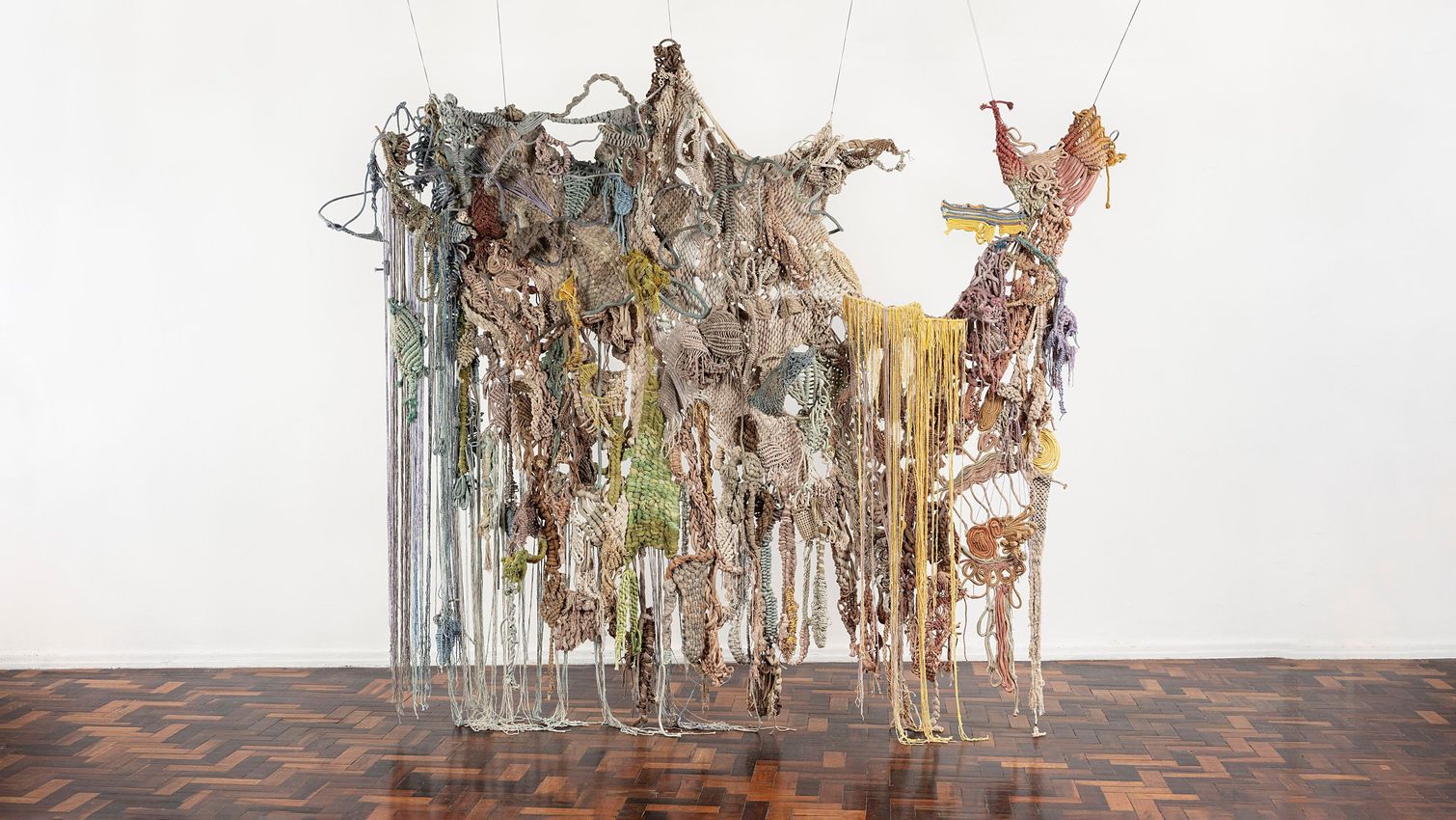
Laura Lima’s artworks often take the form of choreographed environments in which bodies, objects and mechanisms are bound together in ongoing actions rather than fixed compositions. Over more than three decades, she has developed a visual language of ropes, props, garments, architectural interventions and ‘scores’ for performers that transform exhibition spaces into unstable, living arrangements.
Early works and developments, 1990s–2000s
In the 1990s and 2000s, Lima created works that used simple instructions to stage ambiguous relationships between costumed performers and their surroundings, often extending performances over many hours or days. Series such as Man=Flesh/Woman=Flesh–Flat and related projects placed reclining or tethered bodies within carefully staged interiors, treating furniture, clothing and human presence as equal sculptural elements. In one widely shown iteration, first conceived in 1997 and later presented in the large-scale exhibition 13 Rooms organised by Kaldor Public Art Projects in Sydney and in the live-art exhibition 14 Rooms during Art Basel in Basel, visitors approached a purpose-built room whose ceiling hovered a mere 45 centimetres above the floor; to glimpse the work, they had to crouch or lie down and peer in at a single performer with a lamp, their body compressed beneath the low roof so that architecture, light and ‘flesh’ formed a single, unsettling image.
These early artworks established Lima’s interest in duration, vulnerability and the ethics of looking, as viewers encountered living ‘sculptures’ whose status as art object, worker or participant remained unresolved.
Mature practice and key series, 2010s
From the 2010s, Lima expanded her practice into larger architectural interventions and installation-based performances that use tools, trades and everyday labour as material. Works such as The Inverse (Institute of Contemporary Art, Miami, 2016) employed enormous, braided nylon rope connected to performers’ bodies, turning the museum into a tensioned apparatus where architecture, sculpture and live presence are literally pulled together.
In Cavalo come Rei for Fondazione Prada’s Slight Agitation 4/4 (Milan, 2017–2018), Lima created a trio of dark, cavernous installations combining monumental devices, sound and shifting light, transforming cistern-like spaces into disorienting environments that play with power, risk and sensory perception. Other projects, such as Taylor Shop (Pinacoteca do Estado, São Paulo, 2014), took the form of functioning workshops in which garments, tools and workers become part of a live, sculptural setting.
Recent projects and ongoing themes, 2019–
In 2019, Lima presented the original version of Balé Literal at the crossroads outside A Gentil Carioca gallery in Rio de Janeiro, where a large installation of objects, machinery, paintings and assorted artefacts was suspended in public space and set into choreographed motion by a rudimentary mechanism operated by several participants under her direction. The ensemble of moving things and people appeared as a living organism, a peripatetic dance of the absurd that offered a vivid image of social, material and energetic flows in contemporary urban life.
Four years later, Balé Literal was reimagined for the galleries of MACBA in Barcelona as a large, walkable installation operating almost non-stop, its specially produced objects and paintings hanging from threads and circulating through space like components of a mechanical ballet, while also echoing motifs from earlier works in a choreographed retrospective in continuous motion. Across these and other projects, Lima’s practice remains grounded in simple technologies and everyday materials, yet produces complex, open-ended situations where viewers are invited to navigate fragile ecologies of bodies, machines and images.
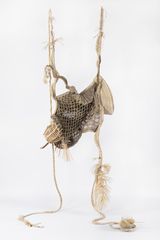
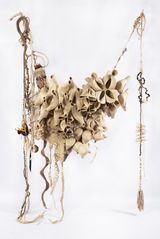
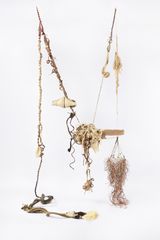
At Goodman Gallery in London in 2026, Lima extended these concerns in Communal Nests for Windows, Balconies, Verandas, Gardens, and Forests (Goodman Gallery, London, 29 January–4 April 2026), a project centred on delicate, nest-like structures conceived for thresholds between private interiors and shared outdoor spaces. Combining sculptural habitats, plant matter and participatory actions, the exhibition imagines provisional shelters for humans and other species, inviting visitors to inhabit, observe and gently disturb these communal environments.
Awards and honours of Laura Lima
- 2014 – Bonnefanten Award for Contemporary Art (BACA), Maastricht, Netherlands
- 2010 – Galinha (permanent installation), Praça Tiradentes, Rio de Janeiro, Brazil
- 2006 – Marcantonio Vilaça Award, Brazil
Exhibitions of Laura Lima
Laura Lima has exhibited widely in museums and contemporary art galleries across South America, Europe and North America, with major projects that foreground her performative installations and long-duration situations.
Select solo exhibitions
- 2025 – Balé Literal, Museu d’Art Contemporani de Barcelona (MACBA), Barcelona, Spain
- 2020 – The Trip of Those Who Never Went, Luisa Strina, São Paulo, Brazil
- 2018 – Cavalo come Rei (Slight Agitation 4/4), Fondazione Prada, Milan, Italy
- 2016 – The Inverse, Institute of Contemporary Art, Miami, USA
- 2015 – El Mago Desnudo, Museo de Arte Moderno de Buenos Aires (MAMBA), Argentina
Select group exhibitions
- 2024 – The NAS Triennial, Sydney, Australia
- 2018 – We Don’t Need Another Hero, 10th Berlin Biennale for Contemporary Art, Berlin, Germany
- 2016 – 32nd Bienal de São Paulo, São Paulo, Brazil
- 2011 – Sharjah Biennial 10, Sharjah, United Arab Emirates
About this profile
This profile of Laura Lima was prepared using verified sources including museum and gallery publications, biennial catalogues and the artist’s representing galleries. It was edited in line with Ocula editorial standards by contributing editor Anna Dickie.
Laura Lima FAQs
Who is Laura Lima?
Laura Lima is a Brazilian contemporary artist born in 1971 in Governador Valadares, Minas Gerais, who has developed a radical, hard-to-classify practice that uses living bodies—human, animal and vegetal—alongside objects and architecture as artistic material. Working from Rio de Janeiro, she creates long-duration installations and choreographed situations in museums, galleries and public spaces, where audiences, time and space function as active components of the work. Her practice has been widely exhibited across Brazil, Europe, North America and beyond, with major projects at institutions such as MACBA in Barcelona, Fondazione Prada in Milan and the Institute of Contemporary Art, Miami.
What type of art does Laura Lima make?
Laura Lima makes installation and performance-based artworks that often function like working machines or environments, using performers, animals, furniture, tools and architecture as interconnected elements in open-ended situations. Many of her works unfold over long durations, inviting viewers to move through them rather than observe from a distance.
Where does Laura Lima live and work?
Laura Lima lives and works in Rio de Janeiro, Brazil, developing projects that respond to the city’s social and architectural conditions while touring internationally to museums and contemporary art galleries. She frequently collaborates with the Rio-based gallery A Gentil Carioca and São Paulo’s Galeria Luisa Strina.
What is Laura Lima’s artwork ‘Balé Literal’?
Laura Lima’s artwork Balé Literal is a large-scale installation first staged in 2019 outside A Gentil Carioca in Rio de Janeiro, where paintings, objects and machinery were set into choreographed motion by a simple mechanism powered by participants in public space. Recreated in 2023–2025 for MACBA in Barcelona, it became a continuous, walkable installation of suspended works moving through the galleries like a mechanical ballet.
What themes are important in Laura Lima’s art?
Key themes in Laura Lima’s art include the relationship between bodies and objects, the staging of everyday labour and tasks, and the transformation of exhibition spaces into living, unstable environments. Her works often explore vulnerability, collaboration and the blurred line between spectators, performers and sculptural elements.
Where can I see work by Laura Lima?
You can see work by Laura Lima in collections and exhibitions at institutions such as MACBA in Barcelona, Fondazione Prada in Milan, and the Institute of Contemporary Art, Miami, as well as at galleries including Luisa Strina, Tanya Bonakdar Gallery and Goodman Gallery. Exhibitions featuring Laura Lima are also listed on Ocula, alongside artworks and related articles.
Ocula | 2026

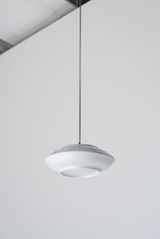
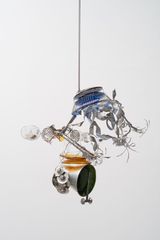
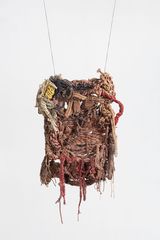
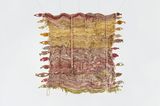
View Laura Lima's Artworks















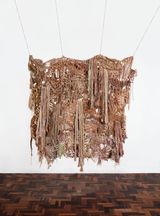




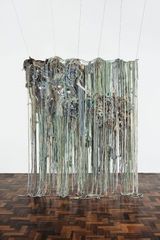
Explore Laura Lima's Exhibitions


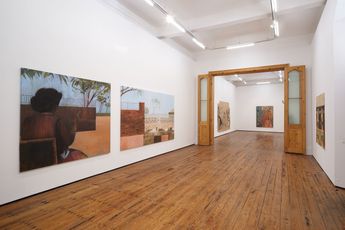


Explore and Follow Artists Shaping Contemporary Art
A respected voice in contemporary art discourse.
Focusing on ambitious storytelling and insightful art-world commentary. Ocula Magazine publishes in-depth interviews, critical essays and timely analysis on the artists, exhibitions and ideas driving the global art world.
Learn more about Ocula Magazine
Showcasing the best of the art world.
Ocula partners with galleries from around the world to highlight their artists, artworks and exhibitions. Gallery membership is by application and invitation, with each member vetted by an independent panel.
Learn more about Ocula Membership
Specialises in the sale of major artworks.
Led by a team with deep ties to the world’s leading auction houses, galleries and collectors. Ocula’s advisory team offers bespoke services to high-net-worth clients from around the world who are looking to acquire the best of contemporary and modern art.
Learn more about our team and services