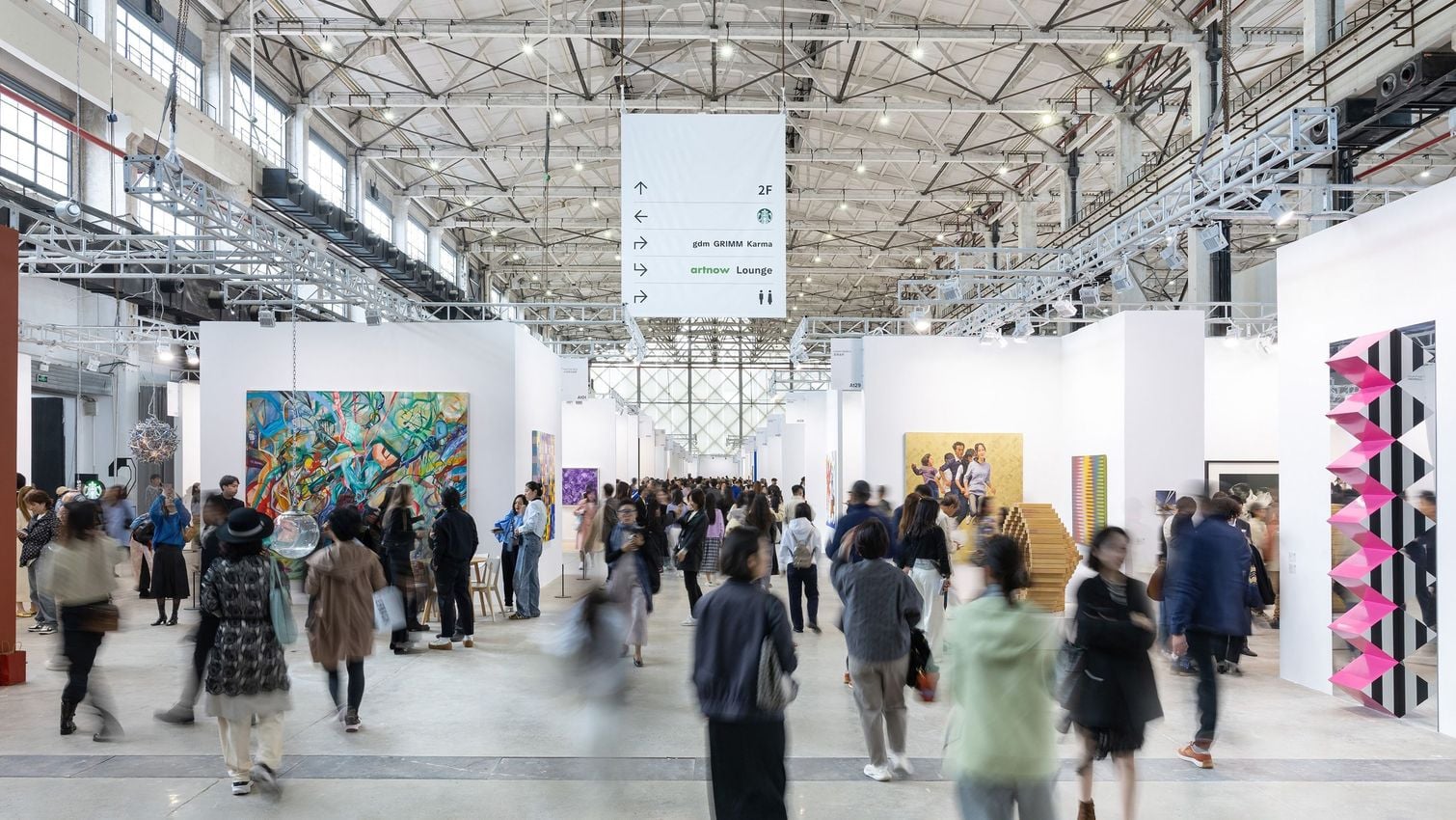
In our debut year at West Bund Art & Design, Alisan Fine Arts is showcasing the internationally influenced works of seven important Chinese diaspora artists, several of whom have an exhibition history in Shanghai. Chao Chung-hsiang, Walasse Ting, John Way, Yang Jiechang, Yang Qi and Liu Jian are Chinese-born artists who immigrated outside of China to find their styles influenced by the Western practices and movements in Europe and America. Conscious of the power of cross-cultural exchange, our gallery likewise represents Western artists working within China. French-born painter Fabienne Verdier had the unique experience of leaving her homeland to spend several years in Sichuan, China learning the traditional art of calligraphy, which now serves as the creative catalyst for her famous “calligraphic paintings.” When it comes to a particular piece of art, we tend to analytically assign a category such as “Chinese” or “American,” yet, like the artists who create them, the reality of nationality and categories is quite complex and resistant to rigid classification. This space reminds us that art is not bound by classifications, and that enjoyment requires us to relax and enjoy the art that exists between geographical borders.The First Generation of Chinese Artists Living Abroad in 1950s
Chao Chung-hsiang (1910-1991)
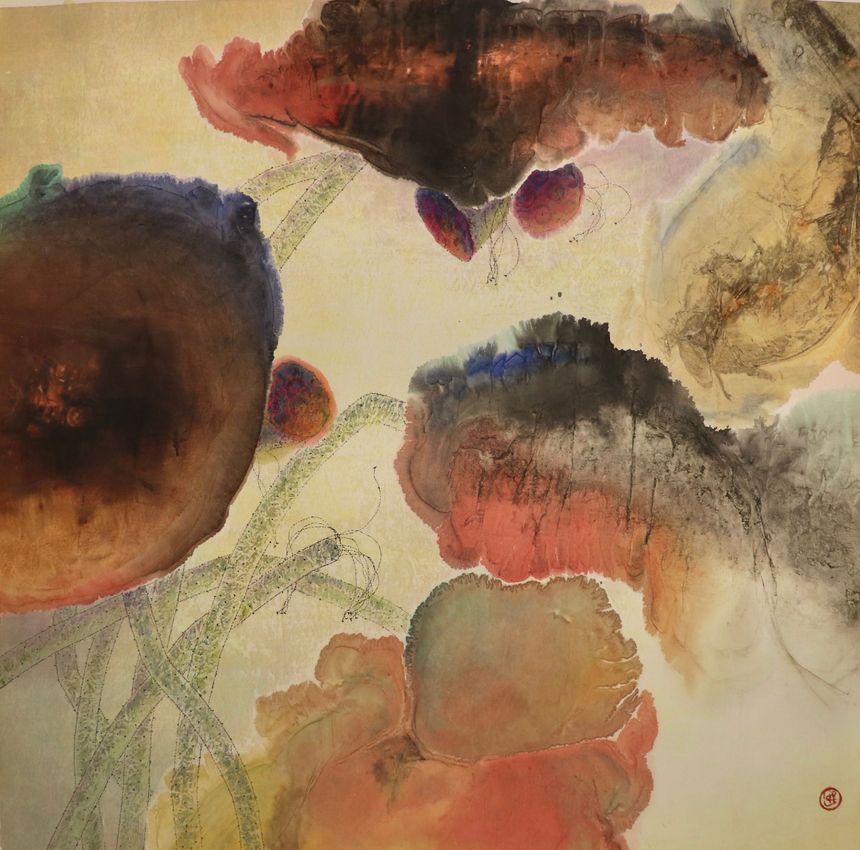
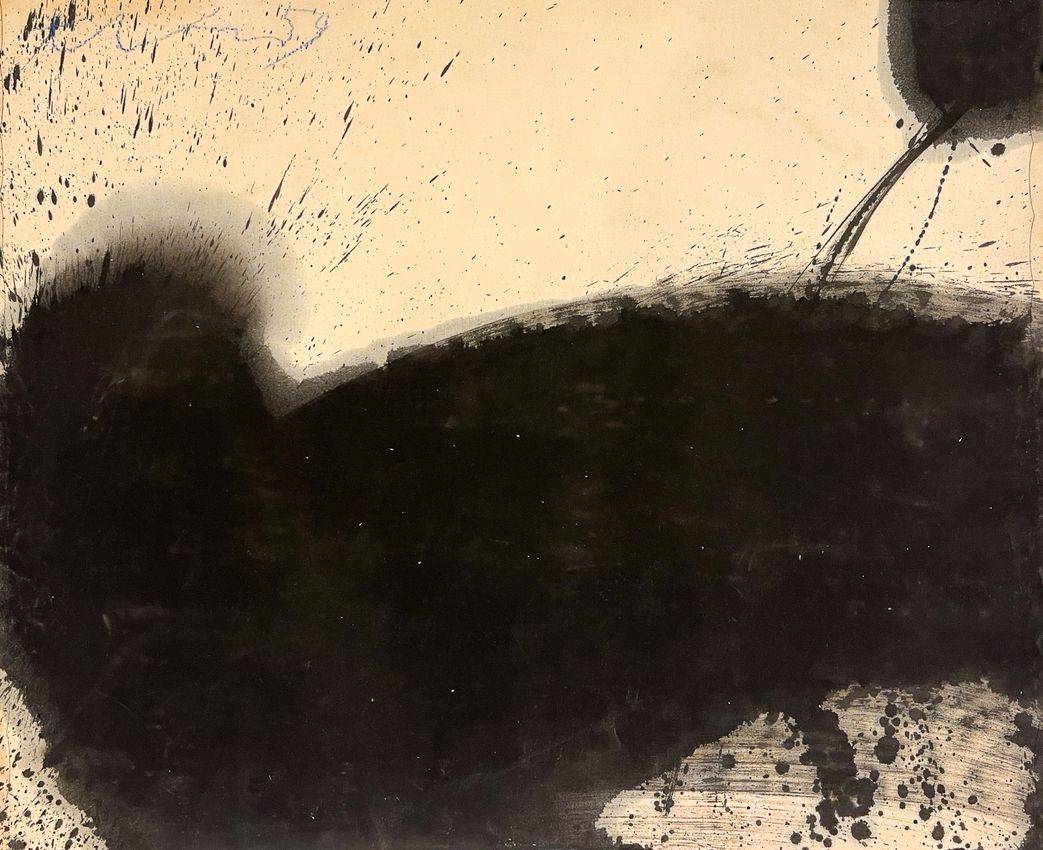
Chao-Chung-hsiang studied under the master Lin Fungmian at the National Institute of Art, Hangzhou (currently the China Academy of Art) before immigrating to New York in 1958 at the height of the American Abstract Expressionist movement. His paintings of birds and flowers mixed with bold splashes and drippings of bright colours successfully combine his Eastern philosophy referencing Buddhism, Taoism and Confucianism, and background in traditional ink with the action painting of Western Abstraction. After more than thirty years in New York, he moved to Hong Kong in 1989, then to Chengdu, and finally to Taiwan, where he passed away at the age of 81.
Representing the artist’s estate, Alisan included Chao in a landmark group exhibition at the Shanghai Art Museum in 1997, and has since organised several large-scale travelling solo exhibitions, including viewings at the West Lake Art Museum, Zhejiang (2000) and in 2004 at the Taipei Museum of History, National Art Museum of China, Beijing; Shanghai Museum of Art; and Galerie Adler, Paris. Selected museum collections include: Metropolitan Museum of Art, New York; Art Institute of Chicago; National Art Museum of China, Beijing; Shanghai Art Museum; Zhejiang Westlake Art Museum, Hangzhou; Taipei Fine Arts Museum; Hong Kong Museum of Art, and M+, Hong Kong.
Walasse Ting (1928-2010)
Self-named the “Flower Thief,” Walasse Ting is celebrated for his signature, splashy and colourful depictions of sultry women. He was born in Wuxi, left for Paris at the young age of 19, and eventually settled in New York to develop his artistic career. There, Ting befriended experimental artists Karel Appel, Pierre Alechensky, Sam Francis, Andy Warhol, Roy Lichtenstein, and Joan Mitchell. Strongly influenced by the avant-garde movements in New York, particularly Abstract Expressionism and Pop Art, Walasse Ting experimented with brush and ink, developing the distinctive style that we are so familiar with today.
Alisan organised Ting’s first solo exhibition in Hong Kong in 1986 and has been representing his works for over thirty years. We have held eleven solo shows for him, including at the Shanghai Art Musuem (1996) and Hong Kong Arts Centre (2010). In 2017, Musée Cernuschi in Paris held his first large scale exhibition and Taipei Fine Arts Museum held a retrospective in 2010. Selected museum collections include: Metropolitan Museum of Art, New York; Museum of Modern Art, New York; Guggenheim Museum, New York; Museum of Fine Arts, Boston; Chicago Institute of Art; Tate Gallery, London; Musée Cernuschi, Paris; Shanghai Art Museum; Taipei Fine Arts Museum; and Hong Kong Museum of Art.
John Way (1921-2012)
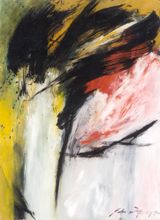
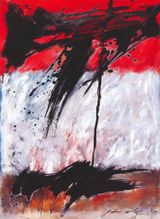
John Way (Chinese name Wei Letang) was known for his bold paintings that combine layers of colours inspired by Chinese calligraphy and Abstract Expressionist painting. He studied art and calligraphy in China before immigrating to Boston in 1956, where he furthered his arts education with instruction in design at MIT. His late work is characterised by brushy, bold black strokes set against drippy background textures of two or three colors, similar to the large gestural works of painters like Robert Motherwell and Franz Kline.
A major catalogue was published for his retrospective in 2001 at the Shanghai Art Museum. In 2006, an exhibition of his calligraphy and oil paintings were on show at the Honolulu Academy of Arts in Hawaii, and a 90-Year Retrospective in Beijing 2010. Alisan Fine Arts has organised three John Way solo exhibitions (2001, 2003 and 2006) and exhibited his work at Fine Art Asia in 2015. His works have been exhibited in over forty solo and group shows around the world, including in the United States, France, Switzerland, Germany, China, Taiwan and Hong Kong. Selected museum collections include: Fine Arts Museum of San Francisco; Pacific Asia Museum, Pasadena; Hong Kong Museum of Art.
God Created the World, the Rest is Made in China
Yang Jiechang (b. 1956 Foshan)
Yang Jiechang counts among the most outstanding and controversial contemporary Chinese artists. In the 1970s and early 80s he studied calligraphy and traditional Chinese painting at the Foshan Folk Art Institute in Guangdong and the Fine Arts Academy of Guangzhou, before moving to Paris in 1989 where he expanded into various media, including photography, video, installation and sculpture. Yang often manipulates traditional East Asian formats to bring them into contemporary context, fearless in his head-on confrontation with disassociations between religious, philosophical and societal norms across the East-West divide.
Yang marked artistic career with the exhibition Les Magiciens de la Terre at the Centre Pompidou, Paris in 1989 and Ink Art: Past as Present in Contemporary China held at the Metropolitan Museum of Art in New York in 2014. He has participated in the Venice Biennale, Lyon Biennale, and Shanghai Biennale, amongst others. Important collections include the Metropolitan Museum of Art, New York; Rockefeller Foundation, United States; Contemporary Art Foundation of the French Cultural Centre, Centre Pompidou, Paris; Hong Kong Museum of Art; and M+, Hong Kong. AFA guest-curated his solo exhibition at the Museum and Art Gallery, the University of Hong Kong in 2001, and in 2015 hosted his exhibition at the Hong Kong Central Library. In 2017, we had his solo exhibition at Alisan Central and included his works in Art Basel Hong Kong and Art021 Shanghai.
Zen with German Expressionism
Yang Qi (b. 1952, Wuhan)
A multi-media artist working living in Germany, Yang Qi is notable for his concept of “Zen with German Expressionism.” He received a Bachelor of Arts at Normal University Anhui, China before immigrating to Germany in 1987, where he obtained a Doctorate of Art Philosophy at the University of Heidelberg in 1996. He intertwines the artistic traditions of his cultural Chinese past with the modernist Western style he encountered in Europe, with emphasis on the emotions of lines, colours, composition and technique. His ink paintings and ceramic works are generally composed of a few simple brushstrokes and colours but are full of philosophical thinking.
Yang has had more than fifty solo exhibitions in China, Germany, Switzerland, England, and the Netherlands, with his first solo exhibition within China at National Art Museum of China, Beijing (2005). Earlier this year, his paintings and ceramics were displayed at Wutong Art Museum in Shanghai, and in 2012 his acclaimed solo show Homeland was held at Shanghai’s Duolun Museum of Modern Art. Alisan has been representing Yang since 2010 and held his first solo exhibition in Hong Kong in 2017, as well as included him in Art Basel Hong Kong 2015 with much success. Selected museum collections: British Museum; Linden Museum, Stuttgart; International Collection of Art SAP, Walldorf; Art Collection of Cial Bank, Zurich; Art Foundation La Roche, Basel; China Academy of Fine Arts, Hangzhou; Zhu Qizhan Art Museum, Duolun Museum of Modern Art, Shanghai.
Contemporary Abstract Landscape
Liu Jian (b. 1961 Shanghai)
At the age of twenty-four, artist Liu Jian was already established as a lifetime resident of the Traditional Chinese Painting Academy, Shanghai. After several major shows across France, Germany, and Italy, the artist eventually settled in Canada in 1990. Liu’s early works incorporated broad swathes of colour and texture, and were undoubtedly influenced by Western abstract artists such as Willem de Kooning, Robert Motherwell, Mark Rothko and Joseph Beuys. His current paintings are dream-like and almost monochrome, full of expressive brush strokes dissolved in the abstract landscape.
Alisan Fine Arts first showed his works in 1987 as part of the landmark exhibition A State of Transition: Contemporary Paintings from Shanghai. Since then Alisan has held four solo exhibitions for the artist. Over the years he has had numerous solo exhibitions in Europe, North America and Hong Kong. In 2016 we had a joint exhibition for him and Zhang Yu, raising a question “Is it Ink Art,” a topic heavily debated in recent years. Selected collections: Royal Bank of Canada, Toronto; Prince Haik, Austria; Grand Hyatt Taipei; Hong Kong Museum of Art; American Club; Bank of China; Exxon Energy Ltd., Hong Kong.
Pioneer Foreign Calligrapher in China
Fabienne Verdier (b. 1962 Paris)
The acclaimed French female painter Fabienne Verdier is an abstract artist notable in contemporary Europe for her calligraphic brush creations. She graduated from the École des Beaux-Arts de Toulouse in 1983, and in the following year, became one of the first foreign women to attend the Sichuan Fine Arts Institute in Chongqing, where she determindly convinced the calligraphy master Huang Yuan to instruct her in the ancient craft. In 1989, in recognition of her accomplishments in calligraphy she was made a member of the National Calligraphers’ Association, the only foreign member, and invited the following year to take part in an international calligraphy exhibition at the National Art Museum of China in Beijing. After returning to France in 1992, she merged the aesthetics of Chinese calligraphy with Western abstract expression techniques, using a self-made Chinese brush hanging from the studio ceiling to create her energetic “Calligraphic-paintings.”
Alisan Fine Arts has represented Fabienne since 2014 and held her solo exhibition of Le French May in the same year. She was also included in the gallery’s group show at Art Basel Hong Kong 2014 and at Ink Asia in 2015. Selected museum collections include: Musée National d’Art Moderne Centre Pompidou; Musée Cernuschi; Palais de l’Assemblée Nationale; Ministère des Affaires Étrangères, Paris; Chinese Ministry of Culture, Beijing; Honda Group, Tokyo, Japan. West Bund is the first time Verdier has exhibited in China since her return to France in 1992.


A respected voice in contemporary art discourse.
Focusing on ambitious storytelling and insightful art-world commentary. Ocula Magazine publishes in-depth interviews, critical essays and timely analysis on the artists, exhibitions and ideas driving the global art world.
Learn more about Ocula Magazine
Showcasing the best of the art world.
Ocula partners with galleries from around the world to highlight their artists, artworks and exhibitions. Gallery membership is by application and invitation, with each member vetted by an independent panel.
Learn more about Ocula Membership

Specialises in the sale of major artworks.
Led by a team with deep ties to the world’s leading auction houses, galleries and collectors. Ocula’s advisory team offers bespoke services to high-net-worth clients from around the world who are looking to acquire the best of contemporary and modern art.
Learn more about our team and services