Press Release

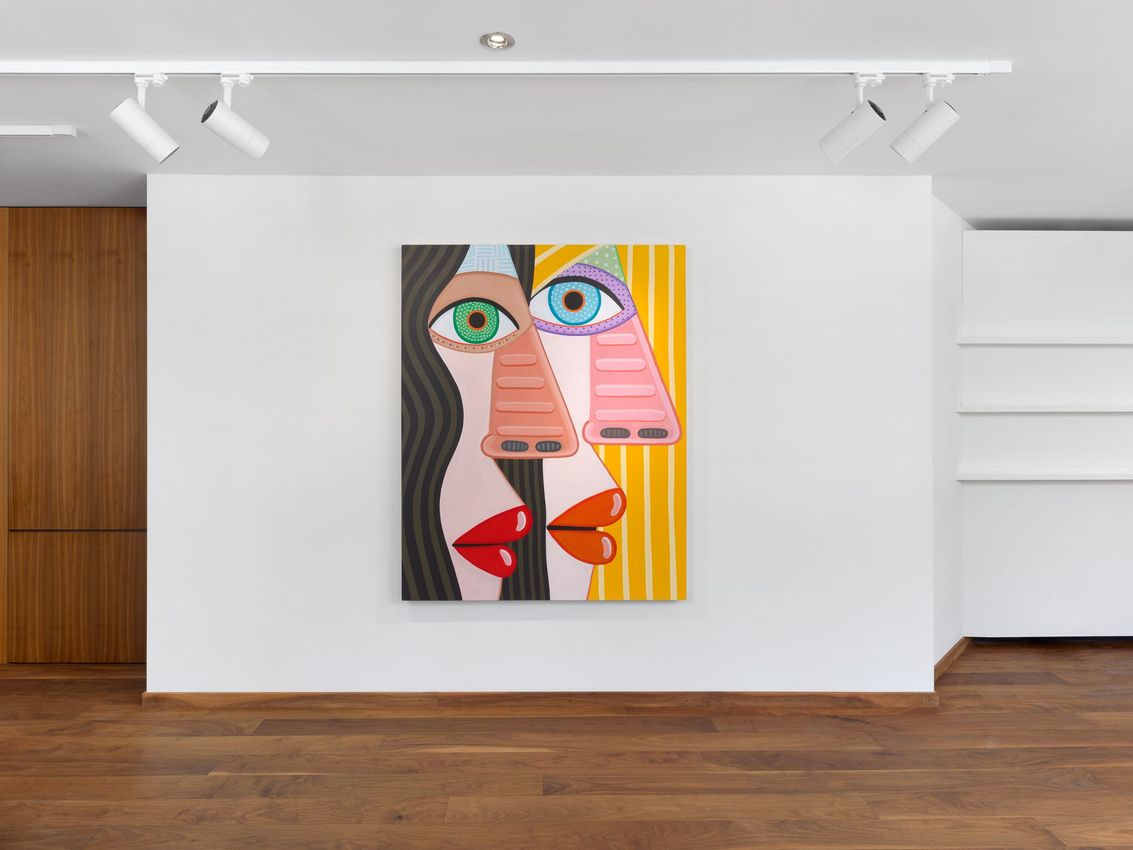
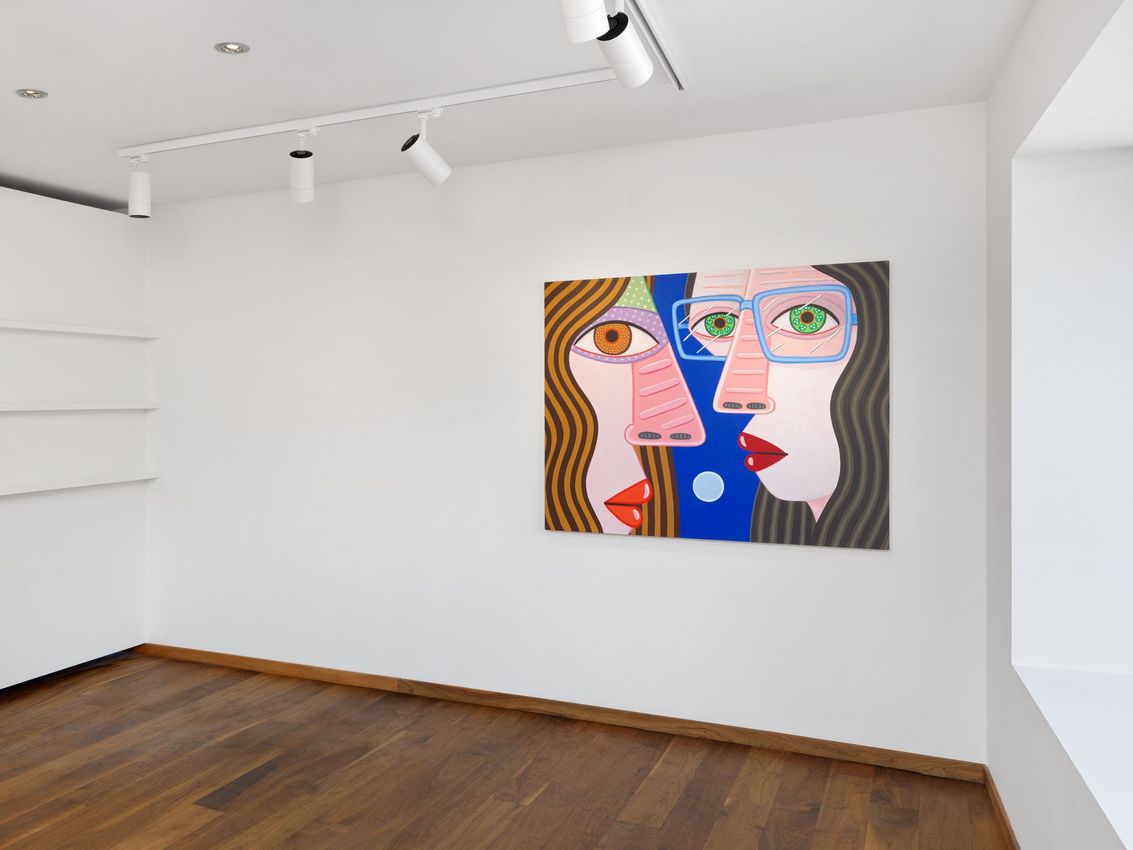
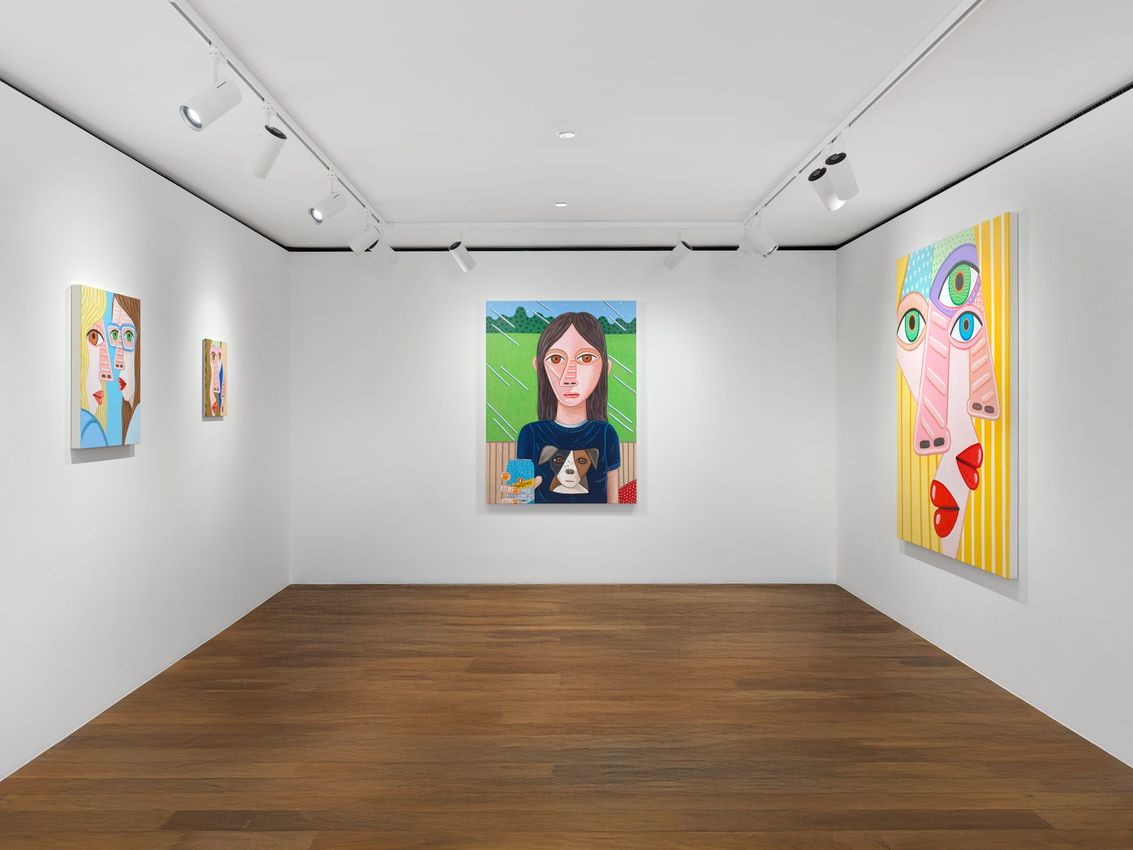
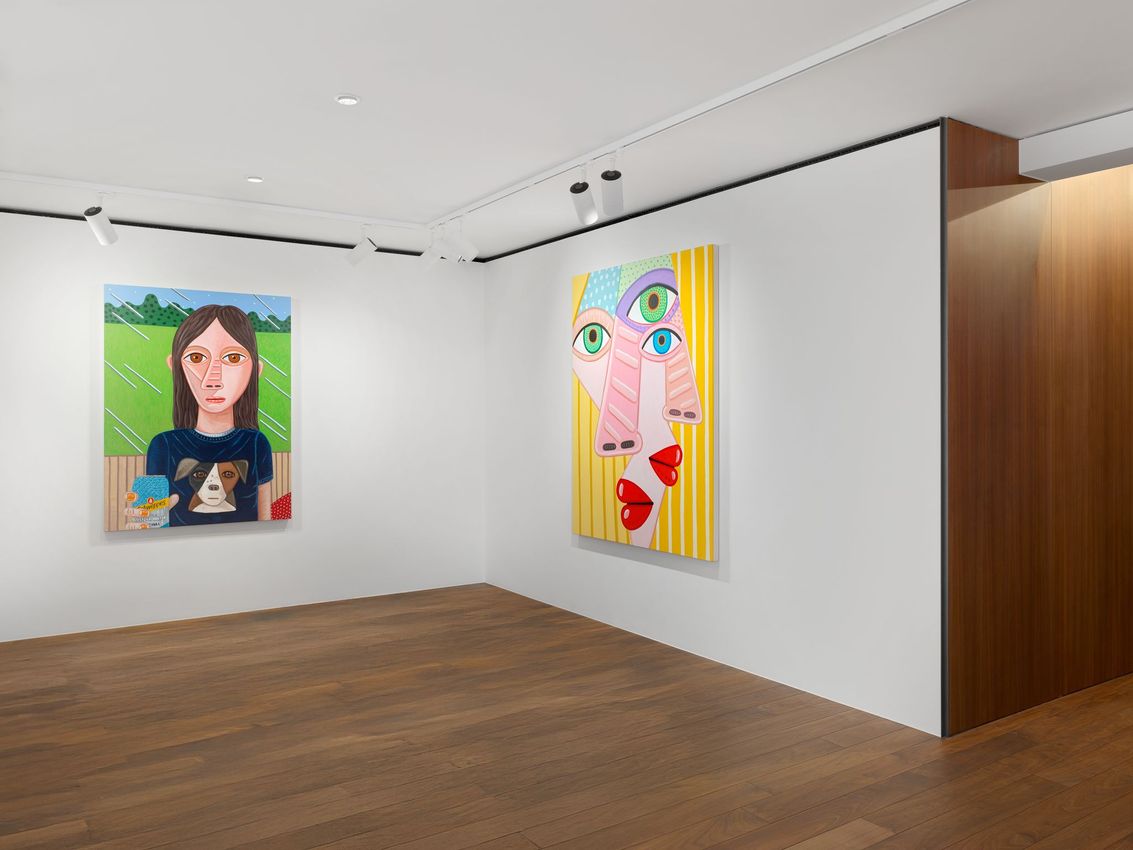
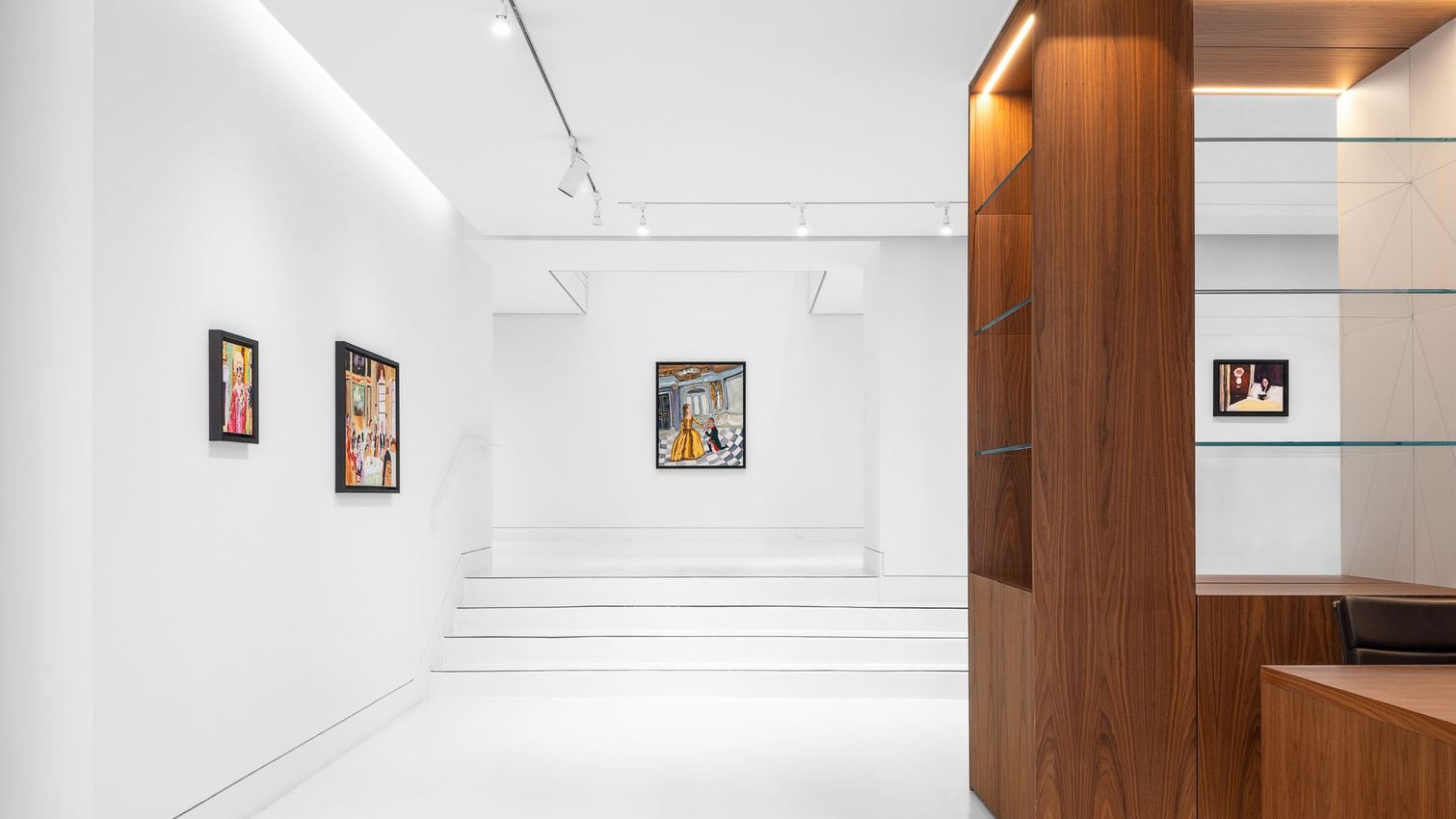
Almine Rech Gstaad is pleased to present ‘Loitering’, Brian Calvin’s ninth solo exhibition with the gallery, on view from July 12 to August 30, 2025.

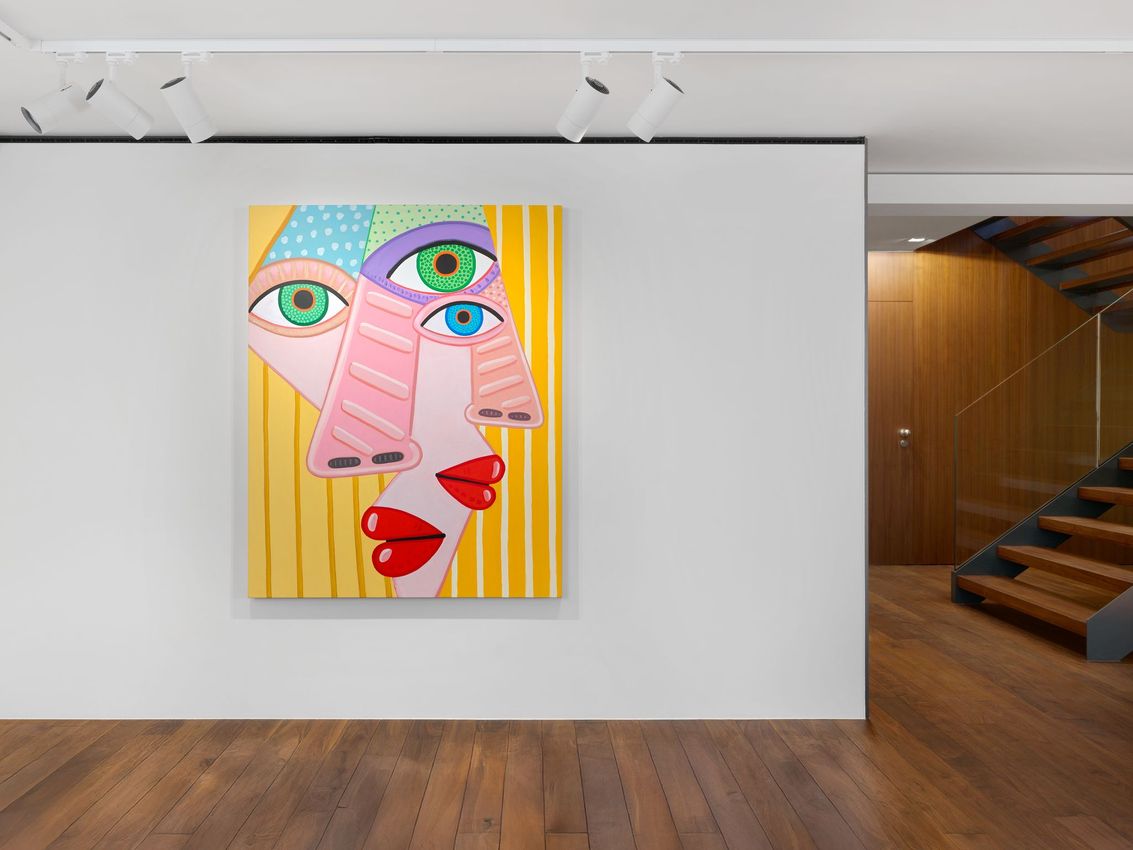
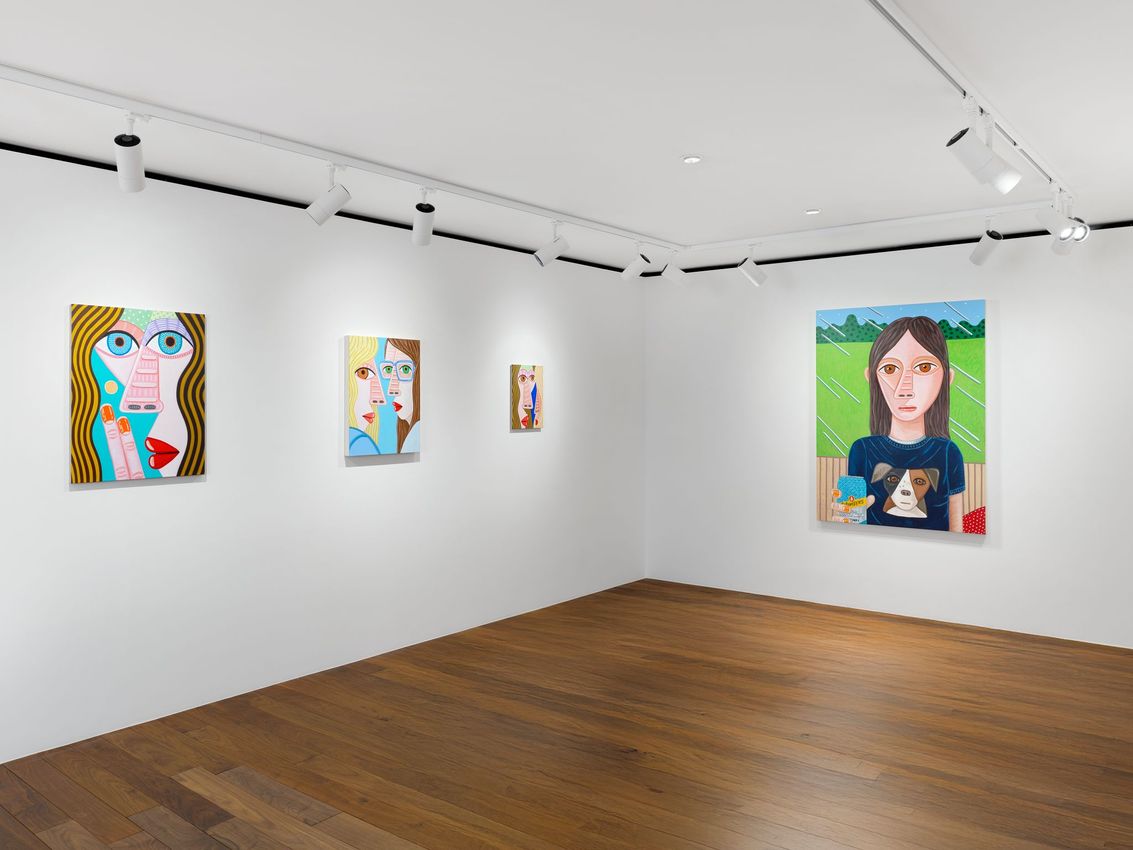
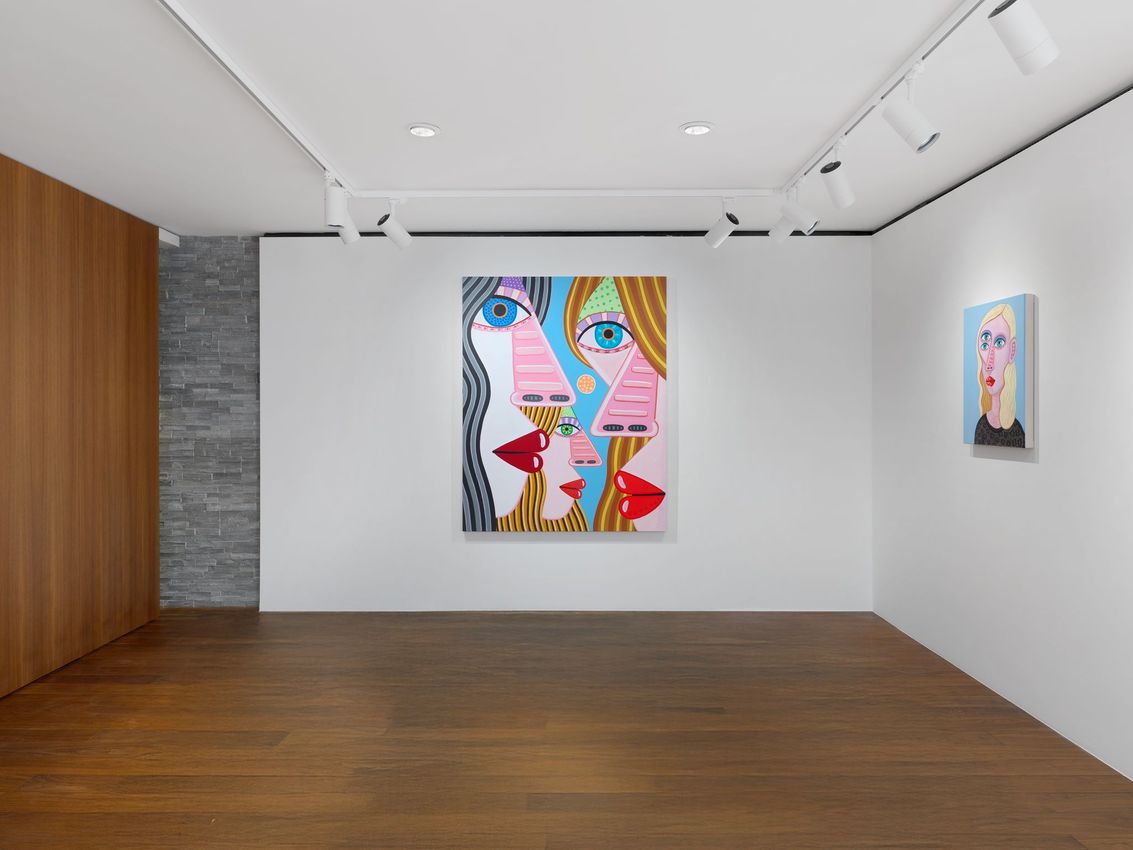
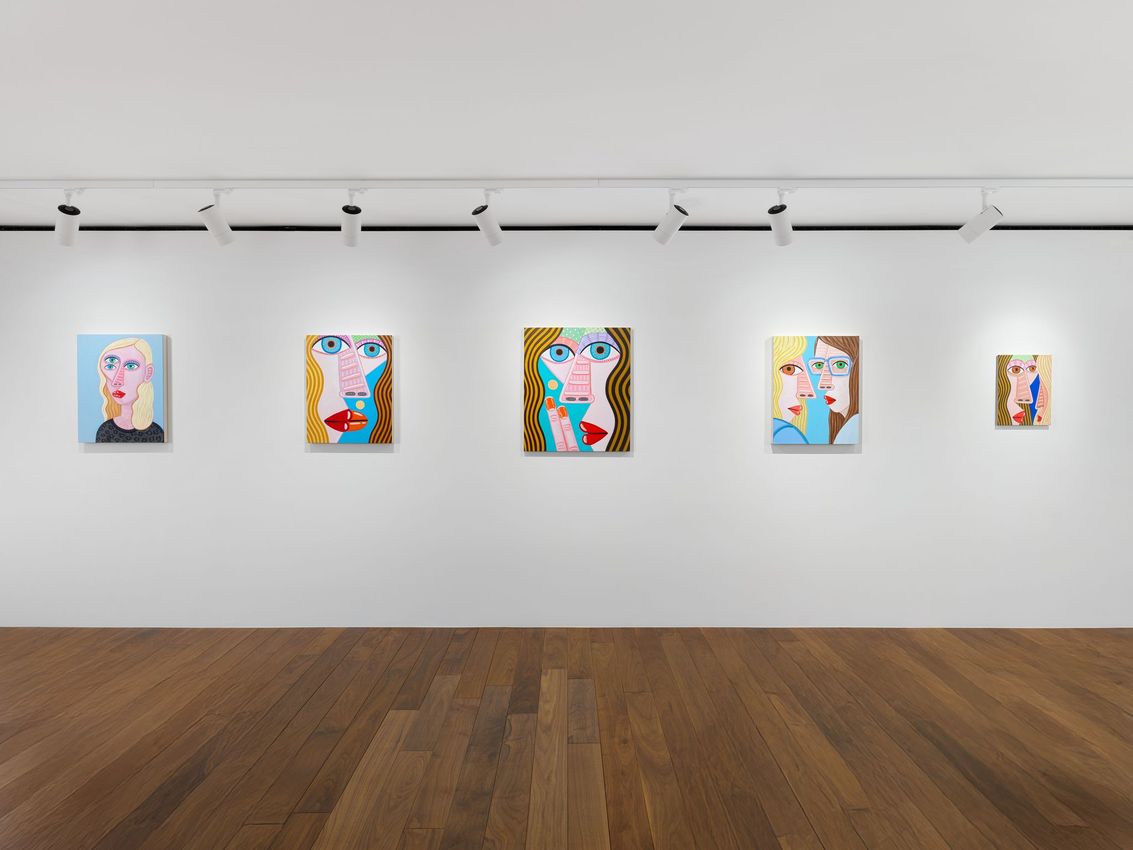
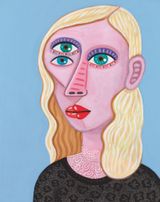
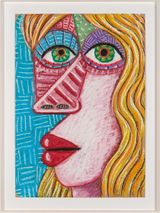
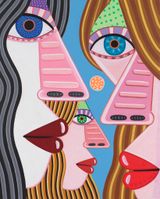
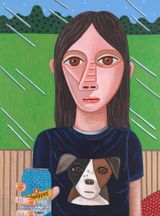
In the long list of writings about painting, there are few phrases as clever and catchy as the one coined by Maurice Denis in 189011. Nowadays, as we stand at the other end of the long and turbulent history of artistic modernity, it deserves to be slightly reformulated in order to align with our customs. But once this has been done, it turns out that it remains strikingly relevant to Brian Calvin’s painting. Before being representations of young socialite women, influencers attempting product placement, or generational emblems of an overconnected present, his paintings are first and foremost flat surfaces covered with colours assembled in a certain order. In these gatherings of well-groomed faces, cropped to varying degrees depending on the painting, we seem to recognise an analogy of digital communities. We seem to recognise a pop image from everyday life in a soda can, a T-shirt, or a pair of oversized glasses. But these are red herrings. Brian Calvin likes to emphasise the constructed dimension of images, breaking with the internal logic of painting. And that is the primary purpose of the soda cans, glasses, T-shirts, lipsticks (whose shade and brand we could probably identify), and all the images incorporated into the composition in the form of visual micro-events. Rather than relating the painting to the outside world (Western, industrialised, connected), they open a breach in representation. ‘When you work with images, that’s people’s starting point. It’s really hard to look at faces nowadays, especially when they’re cropped, and not think about image overload or social media. This interpretation is often applied to my work, and I don’t think it’s wrong. But it’s simply not my starting point; in fact, it’s the part of my work that puzzles me the most,’ explains the painter, who is more likely to cite the ‘icy quality’ of Piero della Francesca’s paintings as a source of inspiration than the great American pop tradition.

In John Berger’s chapter of Portraits devoted to the Italian master, he evokes Piero’s “patient and silent calculations.” Brian Calvin’s work also belongs to the realm of calculated painting. Not in the sense that he conceives of his paintings before he creates them, because he does the exact opposite: he never starts with an idea, he rarely does preparatory work, and he lets the paintings develop their own qualities. We might sum up this method by saying that he has learned to trust his working process completely. No disegno, then.If we can say that this painting has to do with “calculation,” it is because the effect produced by the paintings is primarily the result of an internal exploration of the medium. This is reflected in the creation of visual relationships between colours and shapes that determine the compositions (and in some respects, Brian Calvin works as if he were an abstract painter). In the changing balance between the archetypal dimension of faces, which, let us recall, belong to imaginary figures, and their very specific presence in space, when they seem to follow you with their gaze. The painter’s genre play is part of the same medium-specific reflection. In the tradition of synthetic cubism à la Picasso, which he has been revisiting for some years now, faces merge with their environment. Groups of heads transform into animated genre scenes. The landscape makes a discreet entrance in the form of a rain-swept forest horizon (unless these are reflections on a window?). A few paintings, oscillating between the scale of the body and that of the cosmos, reveal their background: here a clear sky, there a darker one. Are the coloured dots beauty spots, stars, planets?

The title of the exhibition, with its Baudelairean overtones, is also, in some respects, a red herring. Perhaps it refers to these painted figures that linger together. And perhaps visitors to art galleries in large urban centres are the new flâneurs, who would occupy a prominent place in an updated version of Tableaux Parisiens. But above all, the title has to do with the artist’s own experience in his confrontation with these faces. ‘I’ve spent half, or at least a good part of my life sitting here in my studio, wandering in the company of a painting,’ explains the painter, who tells stories of excitement when something happens on the canvas, but also of slowness and calm.

— Jill Gasparina, critic and curator

1. Maurice Denis, ‘Définition du Néo-traditionnisme’ in Art et critique, 1890, republished in Théories (1890-1910), Rouart et Watelin, Paris, 1920.“It is well to remember that a picture, before being a battle horse, a nude woman or some anecdote, is essentially a flat surface covered with colours assembled in a certain order”

Read More

Installation Views

About the Artist

Back in the 1990s, Brian Calvin began developing a figurative, non-narrative, pictorial style. Landscapes and portraits steeped in his Californian roots dominated this work. Close-up treatment of subjects, highly composed structures, as well as luminous colours laid flat endow these large-scale paintings with a strange temporality. In observing his technique of pictorial economy, one gradually comes to see a type of abstraction in his representation of certain details. They reveal, even greater still, the true finality of his work, reaffirming the primacy of a visual reflection on painting itself and its possibilities. ‘I prefer to experience abstraction through the creation and tending of images. Painting provides the medium.’

View Artist Profile

Also Exhibiting at Almine Rech

About the Gallery

— Sunday, from 11 :00 to 18:00

View Gallery Profile
Address
Chalet Wilibenz
Bahnhofstrasse 1, 3780
Gstaad
Switzerland
Opening Hours
Monday — Sunday
11am - 6pm
(1)
Gstaad Chalet Wilibenz, Bahnhofstrasse 1, 3780
Almine Rech
Chalet Wilibenz, Bahnhofstrasse 1, 3780, Gstaad, Switzerland

Opening hours
Monday — Sunday
11am - 6pm
The art world in focus