I always say [my work is] about life, but I don’t know, I suppose it does dwell on the dark side.
—Damien Hirst
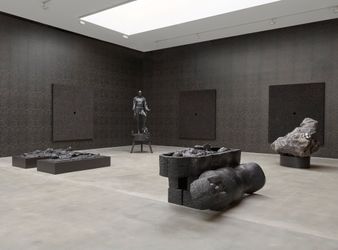
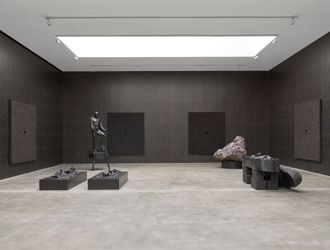
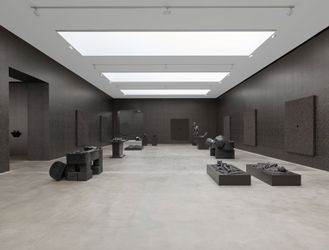
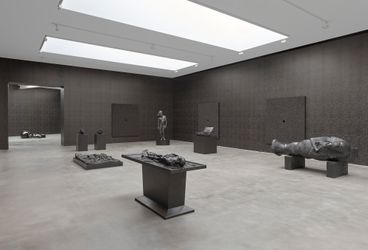
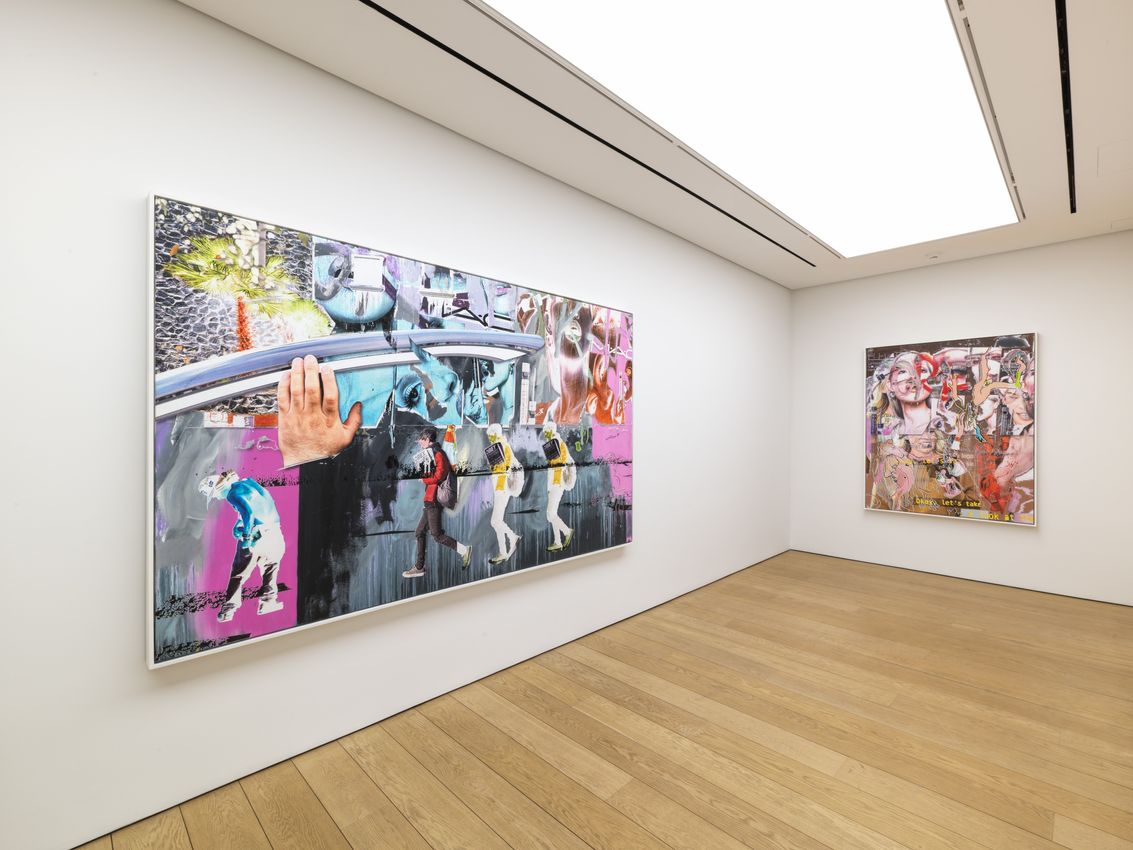
Gagosian is pleased to present Relics and Fly Paintings by Damien Hirst, the second phase of the artist’s yearlong takeover of the Britannia Street gallery, following the inaugural exhibition of Fact Paintings and Fact Sculptures.
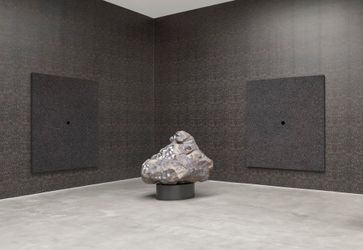
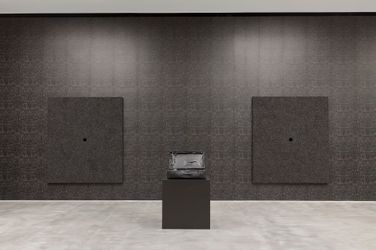
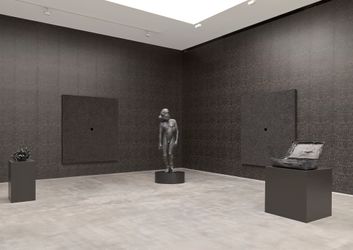
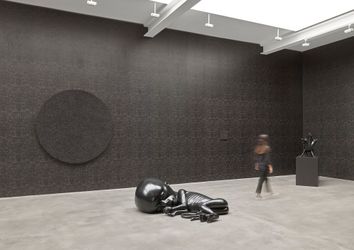
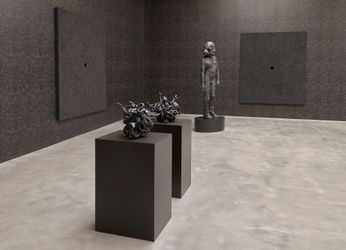
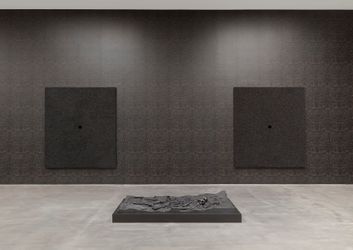
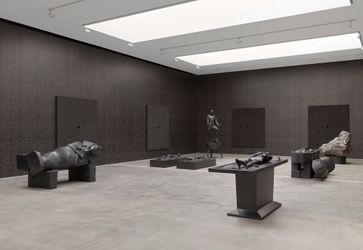
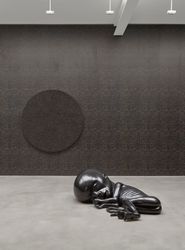
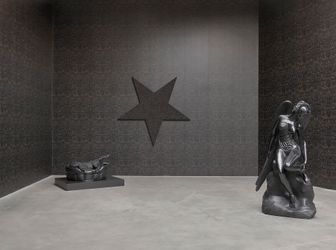
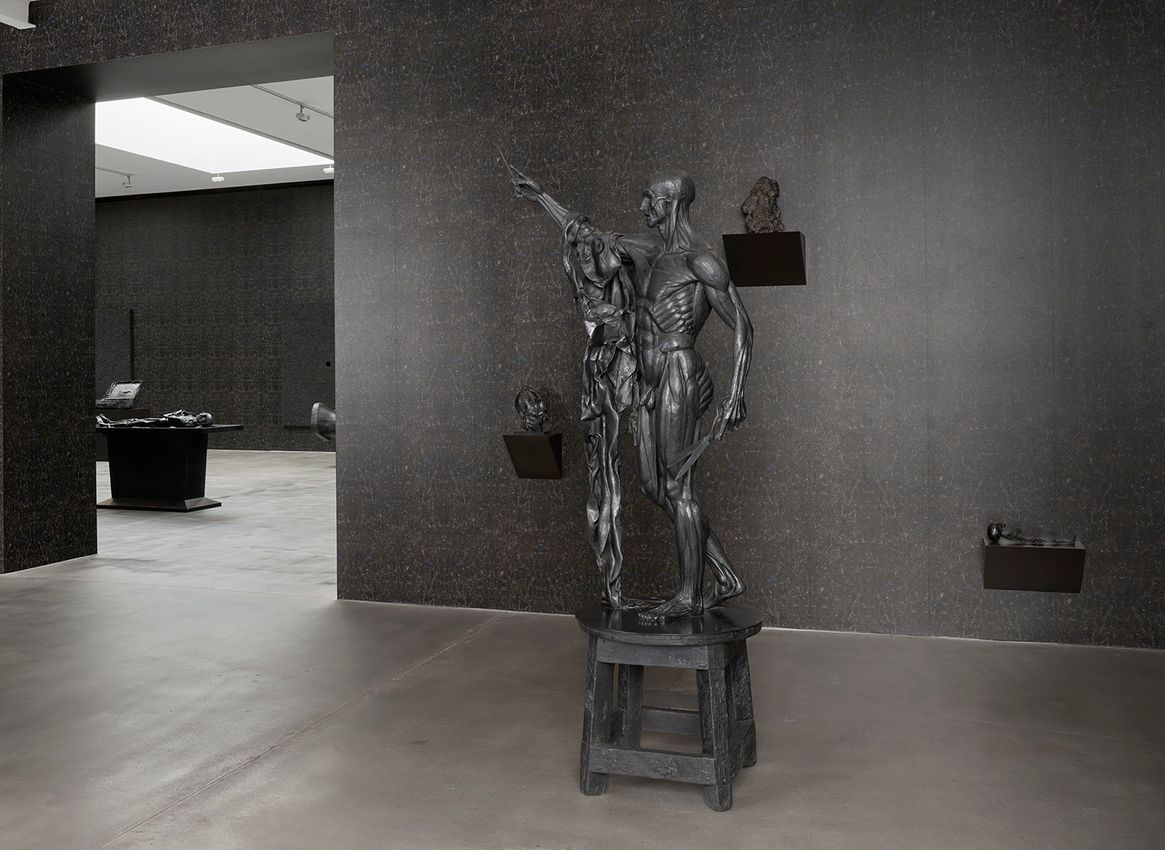
For this new iteration, the artist has clad the interior of the gallery in black butterfly-patterned wallpaper that reproduces the kaleidoscopic surface of his painting Valley of Death (2010). With its uniquely immersive atmosphere, the exhibition brings together a number of Hirst’s bodies of work, prompting reflections on themes of darkness and death, the past and the future.
Hirst’s ‘Relics’ are memento mori: cast in bronze, they depict corpses, skeletons, and mummies in meticulous detail. Juxtaposing morbid realism with fantastical sources of inspiration, these bodies frozen in time emphasize the artist’s deft combinations of art, science, history, and religion. A suite of metallic Meteorites of various sizes continues Hirst’s engagement with the concept of the simulacrum and plays into the long-standing human fascination with outer space. The monumental sculpture The Martyr – Saint Bartholomew (2019) follows the historical tradition of depicting its subject flayed alive as an écorché figure study, balancing biblical devotion with a similar reverence for the human body. While Hirst’s sculpture is a nod to this centuries-old artistic practice, the holy man’s solid stance and gleaming figure are also reminiscent of a robot or a modern anatomical model.
Hirst incorporated real insects into his ‘Fly Paintings’, mining their myriad symbolic associations with cycles of life and the fear of death. Like much of his oeuvre, these paintings revel in startling dichotomies while harking back to various formal precedents; subjecting organic matter to the strictures of geometry, they evoke Kazimir Malevich’s Black Square (1915) and Richard Serra’s black paintstick drawings, among many other references. The ‘Fly Paintings’ offer a hauntingly detached perspective on human existence that is at once microscopic and macrocosmic in its purview.


Damien Hirst first rose to public recognition in 1988 during his time studying at Goldsmiths College in London, when he conceived and curated Freeze, a group exhibition of his work and that of his contemporaries at Goldsmiths. In the near quarter century since that pivotal show, Hirst has become one of the most prominent artists of his generation. Through work that includes the iconic shark suspended in formeldahyde, The Physical Impossibility of Death in the Mind of Someone Living (1991), to the platinum cast of a human skull set with 8,601 flawless diamonds, For the Love of God (2007), Hirst takes a direct and challenging approach to ideas about existence. Of the latter, art historian Rudi Fuchs has said, ‘The skull is out of this world, celestial almost. At the same time, it represents death as something infinitely more relentless. Compared to the tearful sadness of a vanitas scene, the diamond skull is glory itself.’ His work calls into question our awareness and convictions about the boundaries that separate desire and fear, life and death, reason and faith, love and hate. Hirst uses the tools and iconography of science and religion, creating sculptures and paintings whose beauty and intensity offer the viewer insight into art that transcends our familiar understanding of those domains. ‘There [are] four important things in life: religion, love, art and science,’ the artist has said. ‘At their best, they’re all just tools to help you find a path through the darkness. None of them really work that well, but they help. Of them all, science seems to be the one right now. Like religion, it provides the glimmer of hope that maybe it will be all right in the end…’


A respected voice in contemporary art discourse.
Focusing on ambitious storytelling and insightful art-world commentary. Ocula Magazine publishes in-depth interviews, critical essays and timely analysis on the artists, exhibitions and ideas driving the global art world.
Learn more about Ocula Magazine
Showcasing the best of the art world.
Ocula partners with galleries from around the world to highlight their artists, artworks and exhibitions. Gallery membership is by application and invitation, with each member vetted by an independent panel.
Learn more about Ocula Membership

Specialises in the sale of major artworks.
Led by a team with deep ties to the world’s leading auction houses, galleries and collectors. Ocula’s advisory team offers bespoke services to high-net-worth clients from around the world who are looking to acquire the best of contemporary and modern art.
Learn more about our team and services