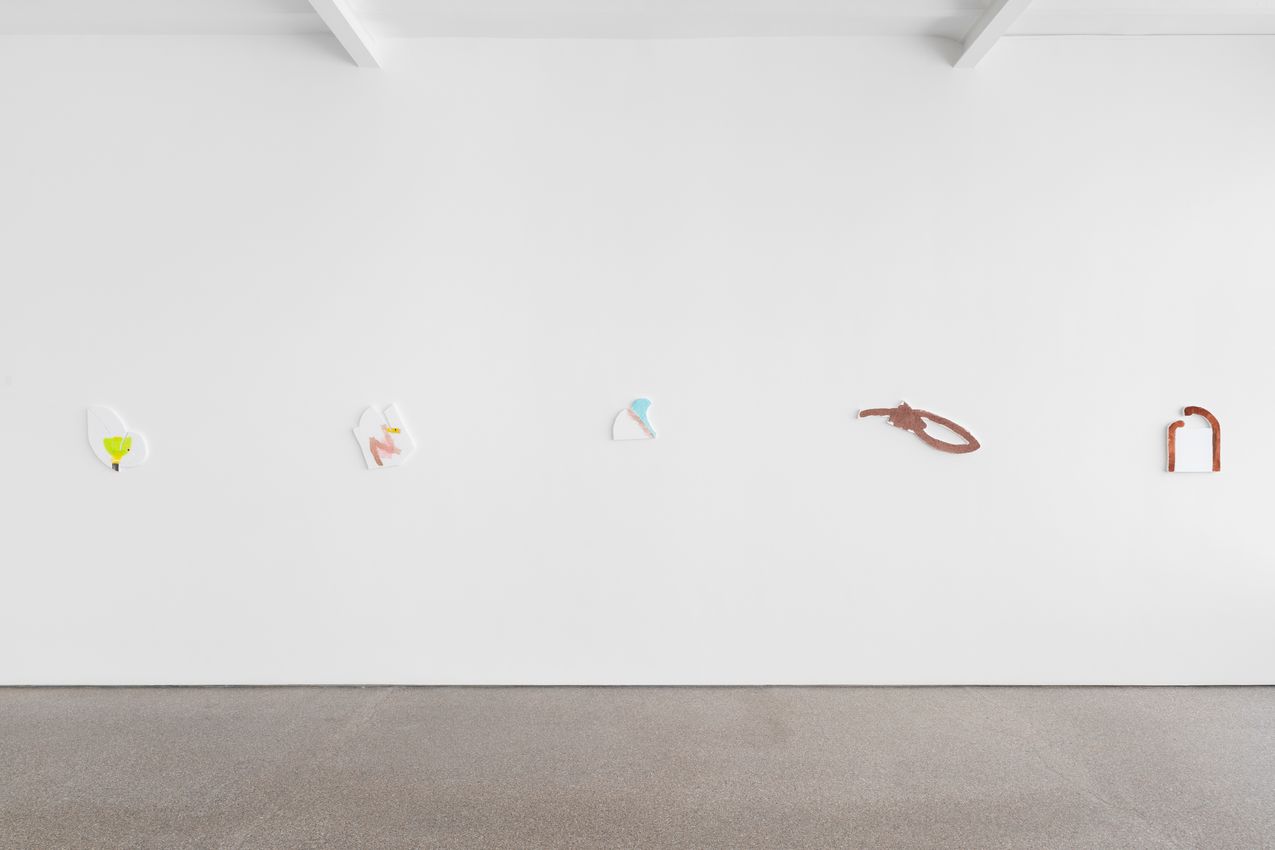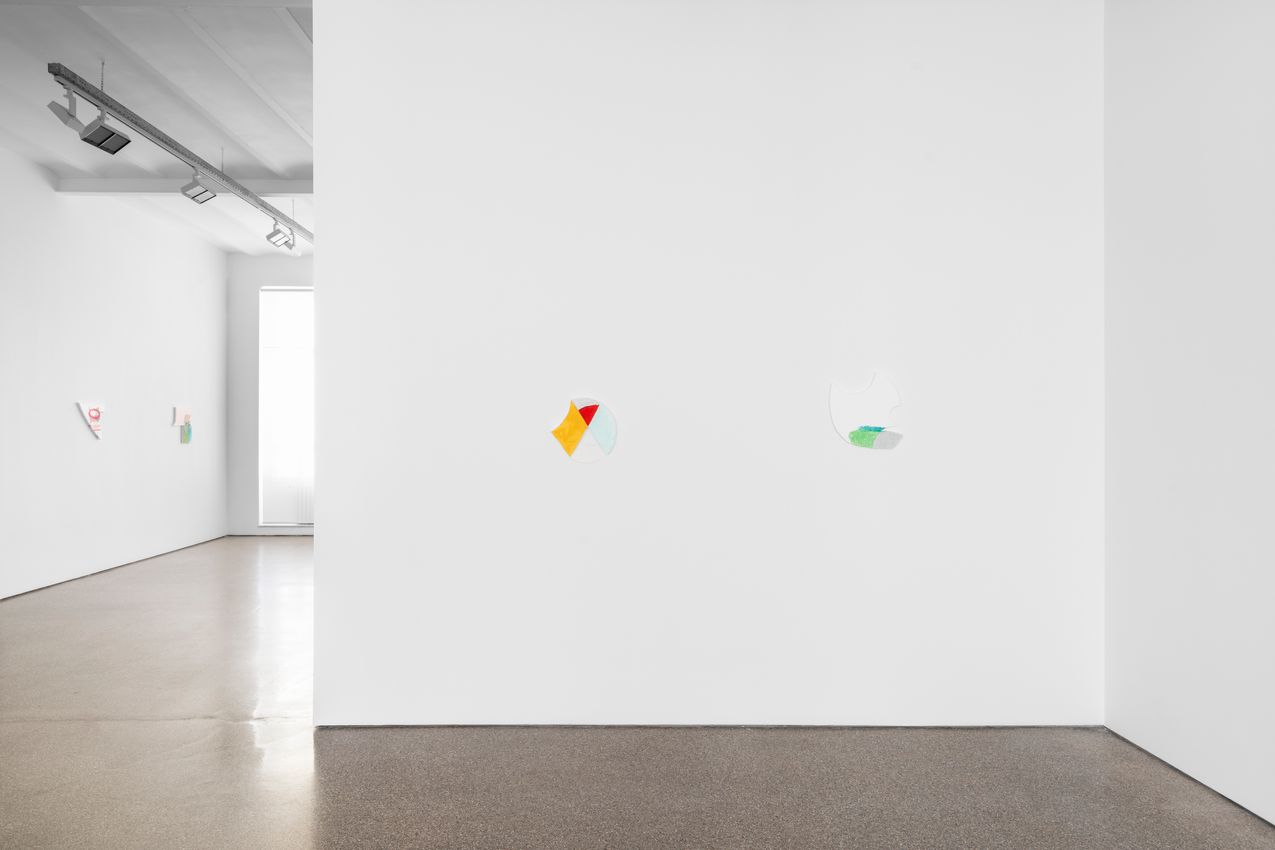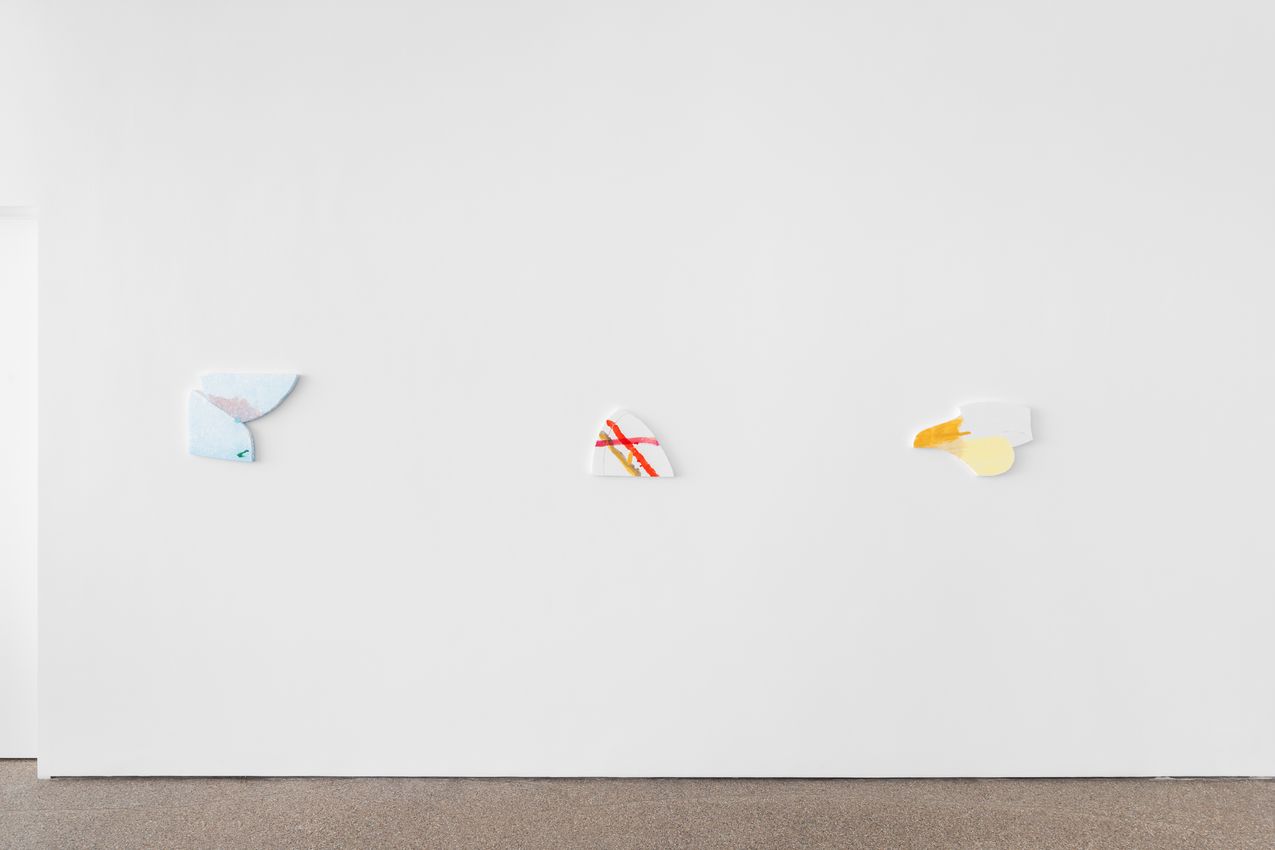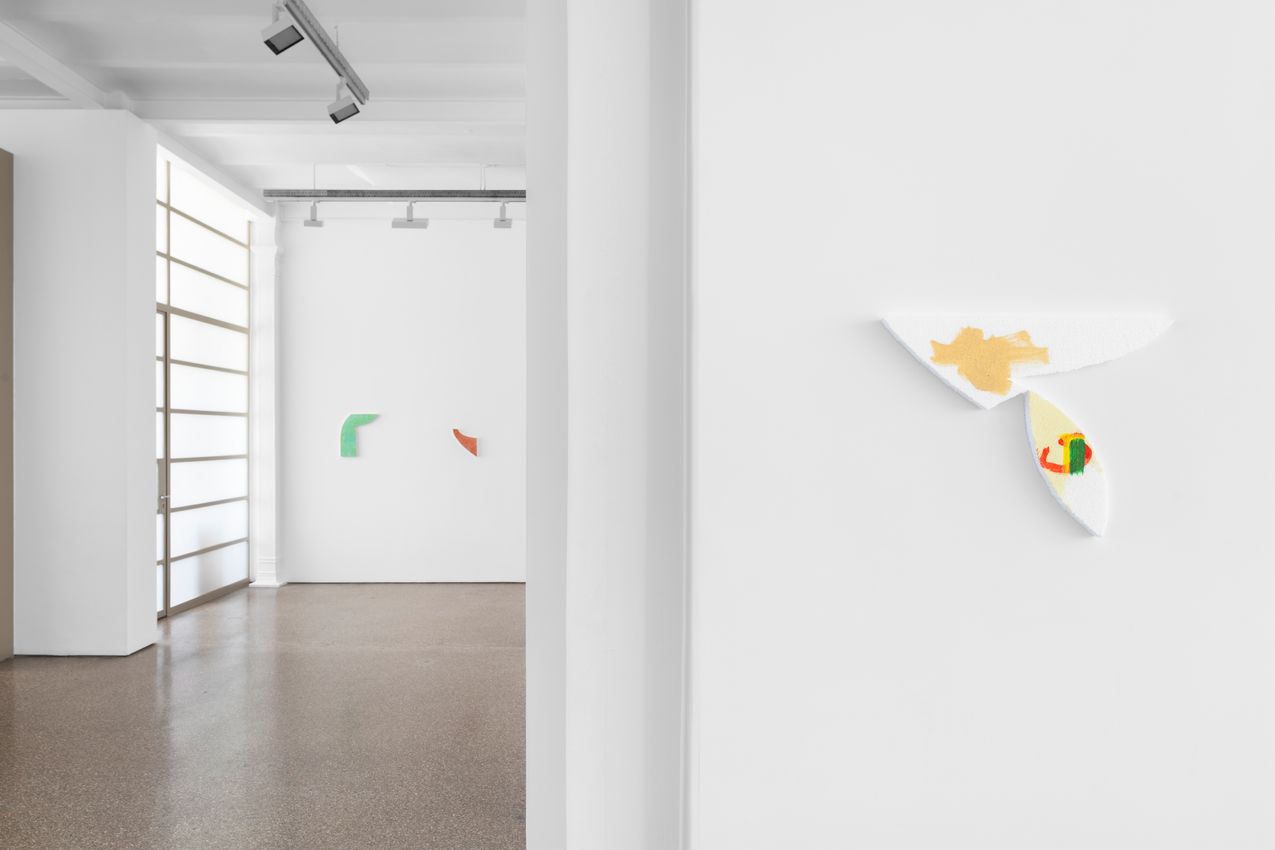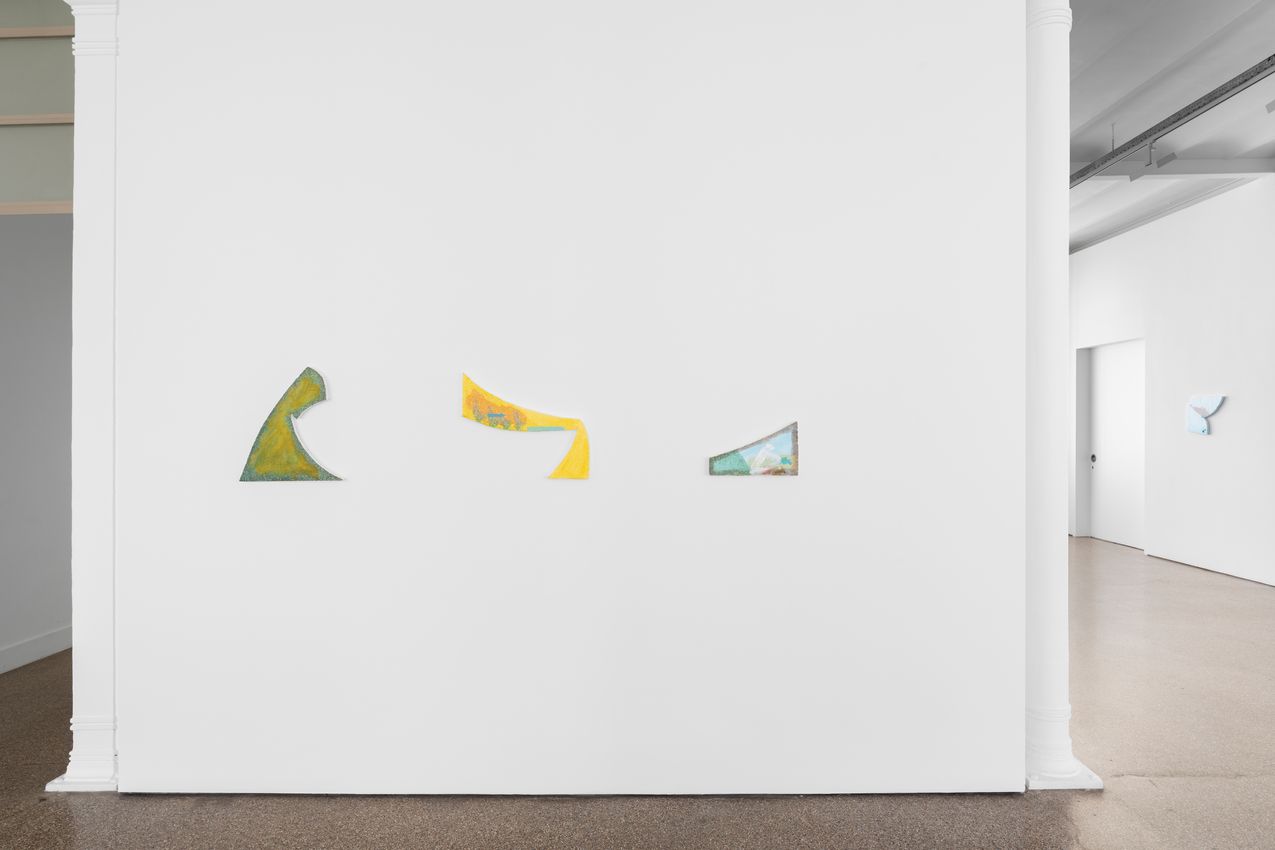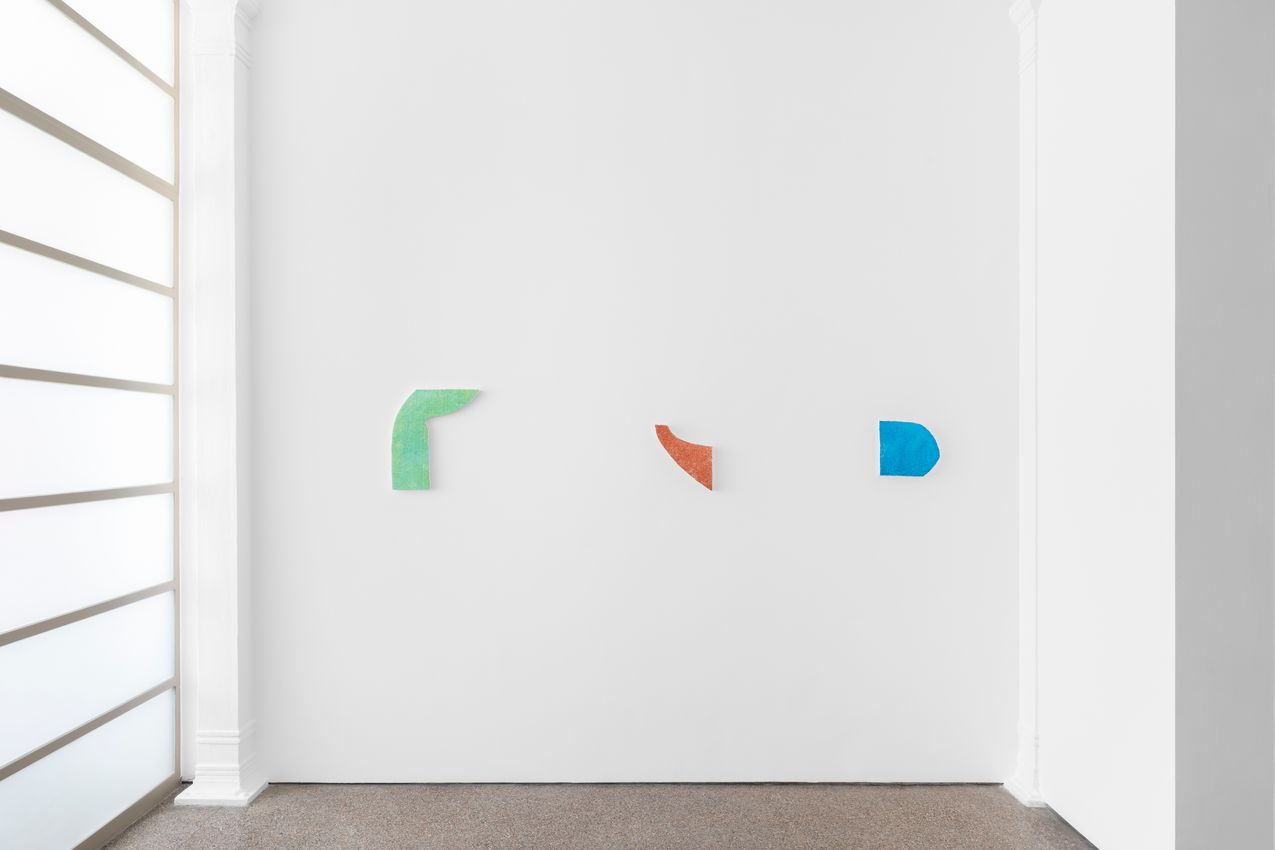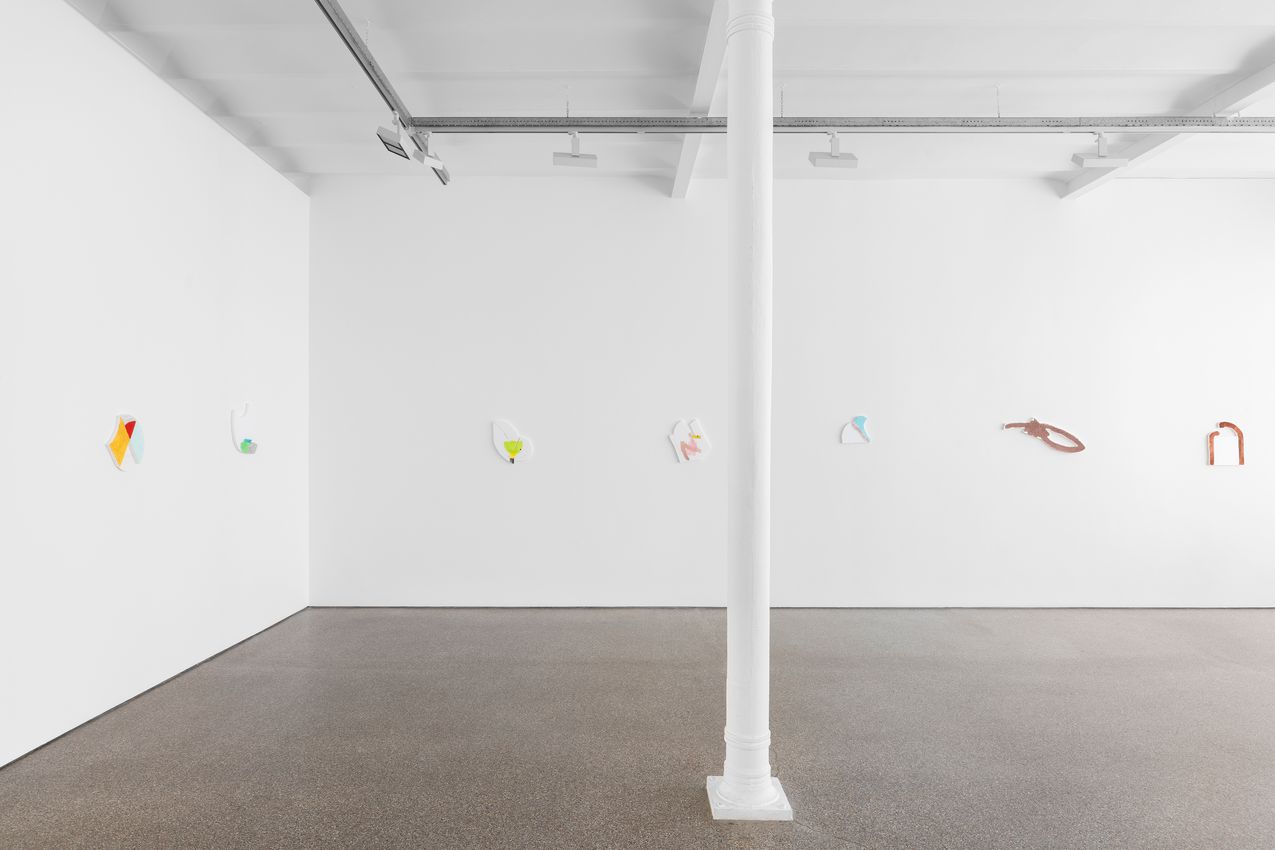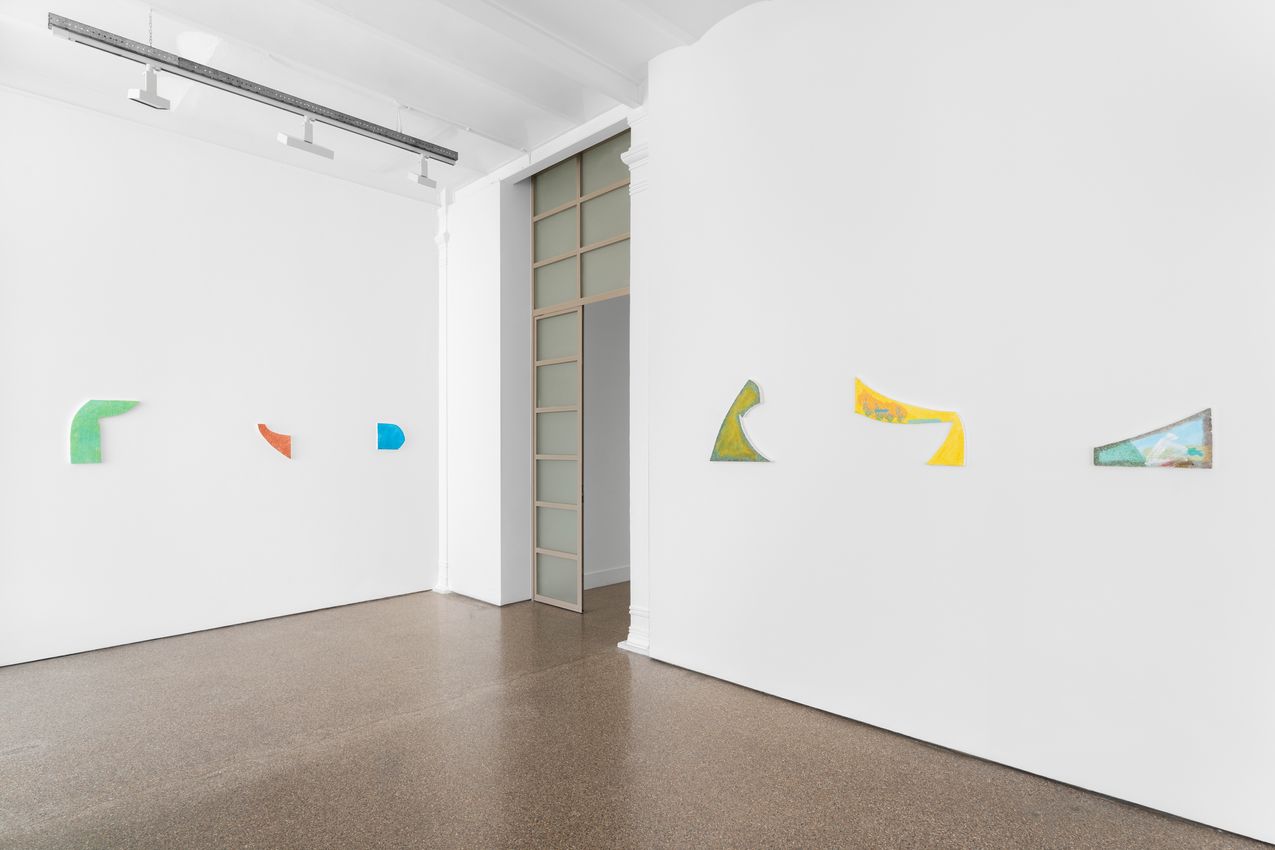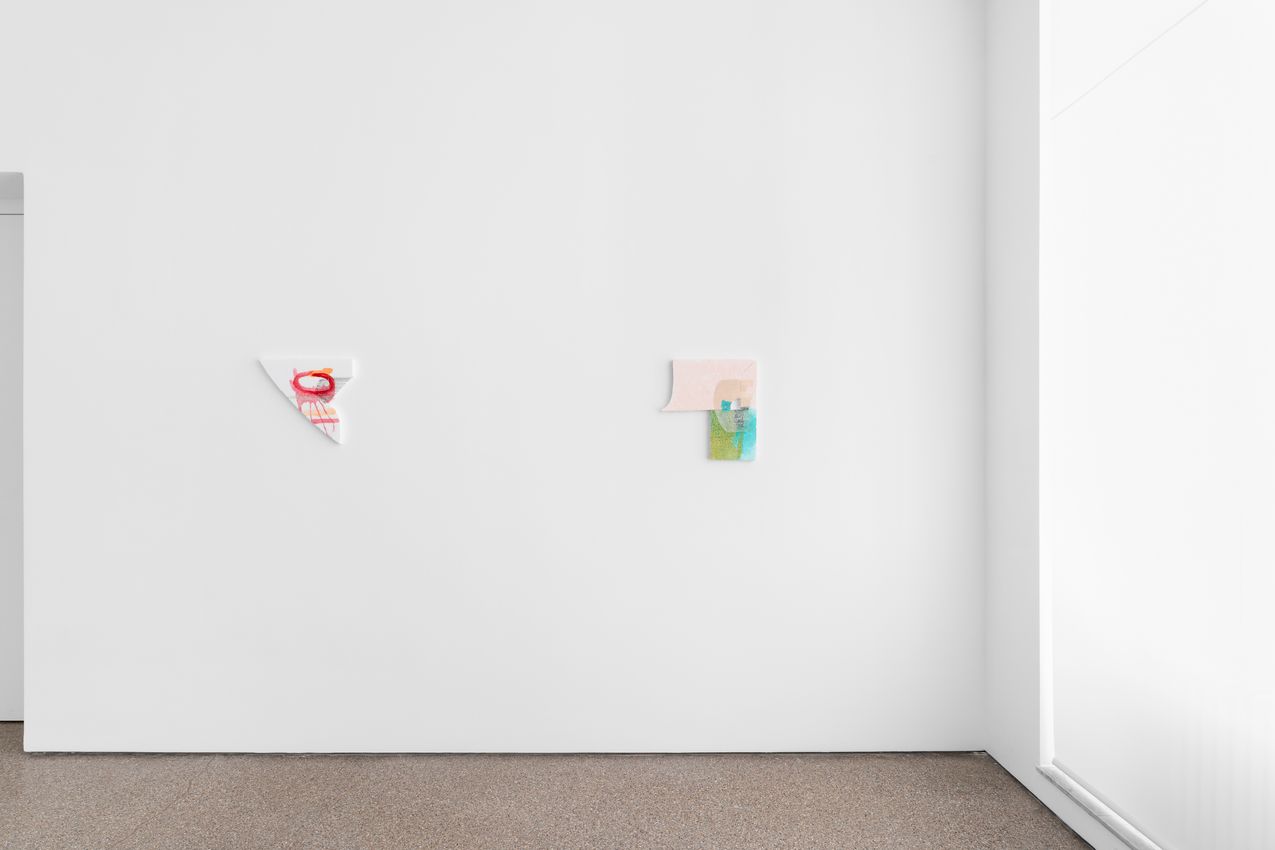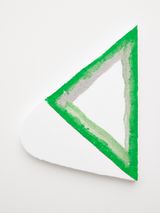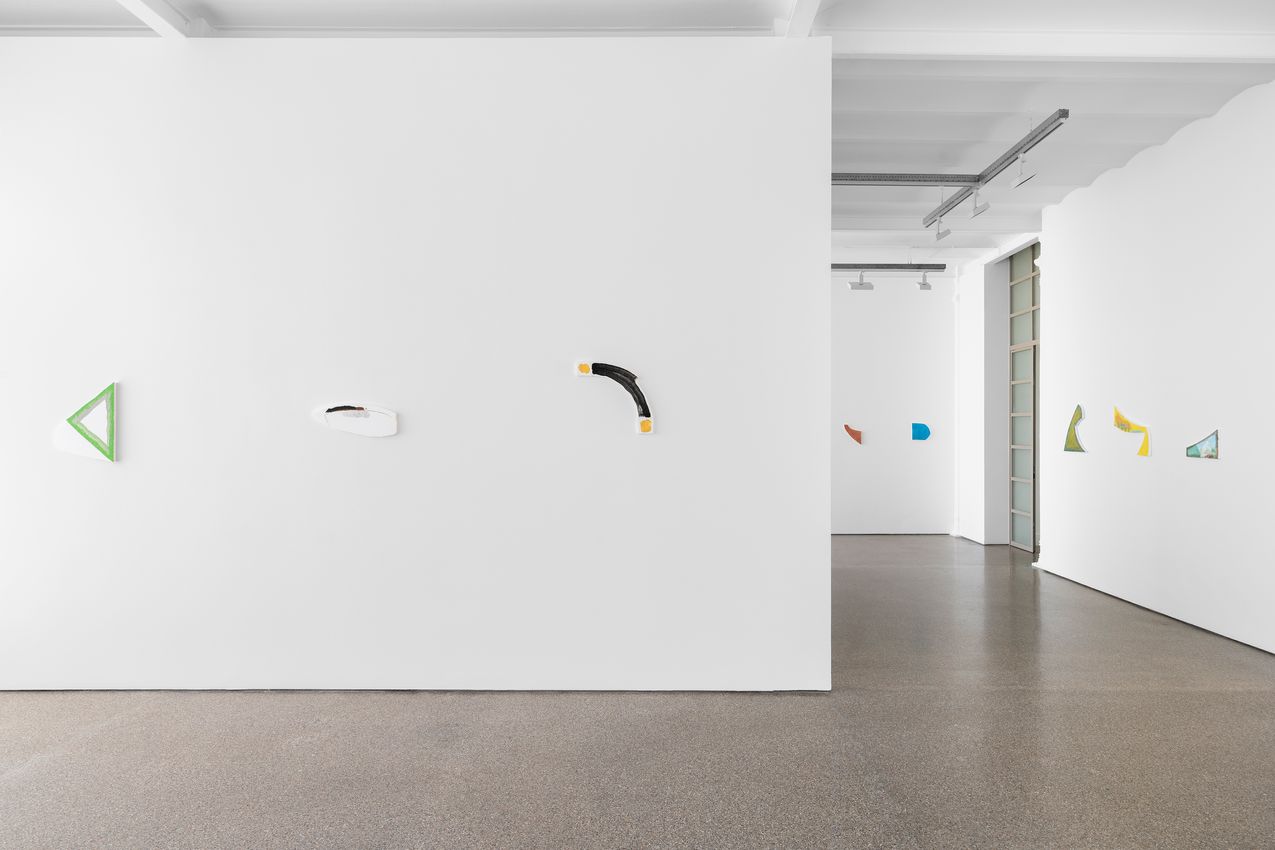
Galerie Greta Meert is pleased to present Richard Tuttle’s sixth solo exhibition with the gallery, 18x24, introducing a series of wall pieces created over the past years in his studio in New Mexico.
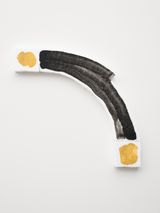
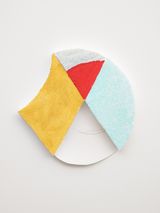
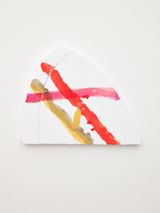
In this new body of work, Tuttle moulds sheets of foam board into delicate painterly surfaces, the everydayness of this material transcending into a mirage-like abstraction. The artist begins by drawing on an 18 x 24-inch sheet of paper and derives the forms of each piece from shapes, gestures, and written words. These drawings are the starting point for the three-dimensional forms carved into foam and hung on the wall directly above the original drawing, the graphic obscuring its content. The underlying calligraphy of the drawing is finally revealed in sculptural form, which Tuttle embellishes with lyrical gestures in rich, often monochromatic color.
The resulting work combines the lightness of materials and forms with the pleasure of language and words to create an energetic, almost therapeutic effect. Tuttle likens the process of intentionally hiding text elements to an ancient Mayan cylinder pot, in which original incised drawings were covered up with gesso and painted. Tuttle refers to this process as a ‘methodology’ through which he explores the connection or intersection between the linguistic and visual worlds
Intimate and idiosyncratic, Tuttle’s work is widely recognised for its ability to evoke poetry from ordinary, everyday materials and forms. Richard Tuttle’s approach to each new work is neither as a painting or a sculpture, but a synthesis of different media. His work has been characterised by the unconventional use of beauty as a fundamental means of influencing life itself. Over six decades, Tuttle has considered the myriad ways in which light, scale, color, and systems of meaning flow from his art into the world.
Richard Tuttle’s direct and apparently simple use of objects and gestures reflects his meticulous attention to material and experience. Rejecting the rationality and precision of Minimalism, Tuttle embraces a handcrafted quality in his invention of forms that emphasise line, shape, color, and space as central concerns. He has resisted medium-specific labeling of his work, using the term drawing to encompass what could otherwise be termed sculpture, painting, collage, installation, and assemblage. Overturning traditional constraints of material, medium, and method, Tuttle’s works sensitise viewers to their own perceptive faculties. His working process, where one series gives rise to the next, is united by a consistent search to create objects that are expressions of their own totality.
Richard Tuttle (b. 1941, Rahway, NJ, USA) lives and works in New York City; Abiquiú, New Mexico, and Mount Desert, Maine. Since his first exhibition at Betty Parsons gallery in 1965, his work has been the subject of over two hundred solo exhibitions internationally, and numerous monographic publications. In 2014, he realised a commission for the Turbine Hall at Tate Modern, which coincided with the retrospective solo exhibition I Don’t Know or The Weave of Textile Language at the Whitechapel Gallery in London. The comprehensive survey exhibition The Art of Richard Tuttle was organised by the San Francisco Museum of Modern Art in 2005 and travelled to the Whitney in New York, the Des Moines Art Center in Iowa, the Dallas Museum of Art, the Museum of Contemporary Art Chicago, and ended its journey at the MOCA, Los Angeles through 2007.
Other recent solo exhibitions include Introduction to Practice, M WOODS, Beijing, China (2019); Light and Colour, Mu.ZEE, Oostende, Belgium (2017); De Hallen, Haarlem, Netherlands (2017); Καλλίρροος kallirroos schön-fliessend, Kunstmuseum Winterthur, Switzerland (2016); al Cielo de Noche de Lima, Proyecto AMIL, Lima, and Museo de Arte de Lima (MALI), Peru (2016); Critical Edge, The Metropolitan Museum of Art, New York, USA (2016); Wire Pieces, Pulitzer Arts Foundation, St Louis, USA (2015); Slide, Bergen Kunsthall, Norway (2012).
American artist Richard Tuttle is recognised for his paintings and sculptures that explore the boundaries of art making. His multidisciplinary practice considers the possibilities of material, method, and medium.


Over the past 30 years, Galerie Greta Meert established itself as one of Brussels’ leading contemporary art galleries. Founded in 1988 as Galerie Meert Rihoux, it was subsequently renamed after its founding director Greta Meert in 2006. Located in the center of Brussels, the gallery occupies a five-story Art Nouveau building designed by Louis Bral and renovated for the gallery by renowned Belgian architects Hilde Daem and Paul Robbrecht. Since 2012 three floors of the building are dedicated to exhibitions, making it possible to maintain an expanded exhibition schedule.

A respected voice in contemporary art discourse.
Focusing on ambitious storytelling and insightful art-world commentary. Ocula Magazine publishes in-depth interviews, critical essays and timely analysis on the artists, exhibitions and ideas driving the global art world.
Learn more about Ocula Magazine
Showcasing the best of the art world.
Ocula partners with galleries from around the world to highlight their artists, artworks and exhibitions. Gallery membership is by application and invitation, with each member vetted by an independent panel.
Learn more about Ocula Membership

Specialises in the sale of major artworks.
Led by a team with deep ties to the world’s leading auction houses, galleries and collectors. Ocula’s advisory team offers bespoke services to high-net-worth clients from around the world who are looking to acquire the best of contemporary and modern art.
Learn more about our team and services