




DAWOUD BEY
b. 1953, United StatesDawoud Bey has used photography to present narratives from communities that are underrepresented (or even not represented at all) in familiar pictures of American life. Centring ideas of memory, visibility, race and place, his works have reframed stereotypical conventions of what it means to represent America through a camera lens.
Early Years
Dawoud Bey was born David Edward Smikle in Queens, New York City, in 1953. His parents moved to Jamaica in Queens to try to give their children the aspirational suburban lifestyle that was denied to many Black families in a segregated country. The house was full of books as Bey’s parents encouraged the family to learn. In grade school aged 11, Bey took photographs of his classmates using a Kodak Instamatic—perhaps a foretelling of his eventual artistic career. His godmother gave him an Argus C3 35mm Rangefinder camera in 1968, and he turned the family kitchen into a darkroom to process his images, taking a photography class at the YMCA and later at the MOT Photography Studio, run by Levey J Smith. Between 1976 and 1978 he studied at the School of Visual Arts in New York City.
Dawoud Bey: Artworks
Dawoud Bey’s work foregrounds the subtle gesture, asking the viewer to consider the significance of the history behind the scene as a way of understanding the moment he has captured. His work also centres the relationship between memory, landscape and particular narratives or locations.
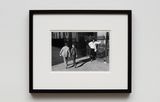
When Bey first began to take photographs of street life in New York City, he realised that he had to cultivate social skills as well as photographic skills in order to create the images he wanted to make. For example, when he shot A Man In A Bowler Hat in 1976, he had to interrupt a social situation in order to take the picture.
- Bey’s 1990 image A Couple in Prospect Park, Brooklyn, NY, 1990 demonstrates Bey’s ability to capture authentic emotion through his lens. The tenderness between the photograph’s two subjects is clear; the unforced intimacy creates a powerful picture of genuine togetherness.
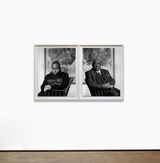
- In 2013, Dawoud Bey exhibited The Birmingham Project, a series of 16 diptychs marking the 1963 bombing of the 16th Street Baptist Church in Birmingham, Alabama, by the Ku Klux Klan. Each diptych paired a young person the same as one of the 1963 victims with an adult 50 years older (the age the victims would have reached in 2013). “I wanted to engage the idea of the passage of time, and the fact that those young people never had a chance to live out their lives,” Bey said in a 2013 interview.
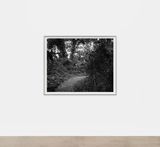
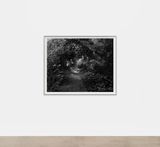
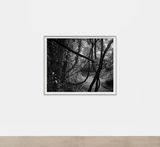
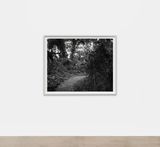
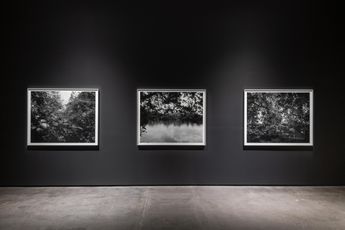
- Lines from Langston Hughes’ 1924 poem Dream Variation inspired the title of Bey’s series Night Coming Tenderly, Black series, which he began in 2017. Moving from portraiture and reportage to a landscape, he created a series of photographs focusing on North-eastern Ohio, the Underground Railroad that provided a means of escape for enslaved Black Americans and the idea that describing nighttime as “tender” can take the pain out of darkness being threatening or foreboding.
Dawoud Bey: Select Awards
- American Academy Berlin Prize Fellow (2026)
- American Academy of Arts and Letters Art Award (2025)
- Membership to the Academy of Arts and Sciences (2024)
- International Photography Hall of Fame Honouree, St Louis (2021)
- Lifetime Achievement Award, Rush Arts Foundation, Philadelphia (2020)
- MacArthur Fellowship Chicago (2017)
- Lifetime Achievement Award, Howard University (2017)
- United States Artists Fellowship, United States Artists National Academy, New York City (2015)
Dawoud Bey: Select Exhibitions
Select Solo Exhibitions
- Dawoud Bey: Material Histories, Living Landscapes, Art Gallery of Ontario (in partnership with the Toronto Biennial of Art) (2026)
- Dawoud Bey: Elegy, New Orleans Museum of Art (2025)
- Dawoud Bey: Syracuse ’85, Stephen Daiter Gallery, Chicago (2025)
- Evergreen, Orlando Museum of Art (2025)
- Dawoud Bey: Stony the Road, Sean Kelly, New York City (2025)
- Dawoud Bey: Street Portraits, Denver Art Museum (2024)
- Dawoud Bey: Pictures 1976–2019, Sean Kelly Gallery, Los Angeles (2023)
- An American Project, The Whitney Museum of American Art, New York City (2021)
- In This Here Place: Cabin and Palm Trees, Pérez Art Museum Miami (2019)
- 40 Years in Harlem, Christian-Green Gallery, University of Texas at Austin (2018)
- The Birmingham Project, Birmingham Museum of Art, Birmingham (2013) (and touring)
- Harlem, USA, Art Institute of Chicago (2012)
- Portraits Re/Examined: A Dawoud Bey Project, Walters Art Museum, Baltimore (2008)
- The Chicago Project, Smart Museum of Art, Chicago (2003)
- Dawoud Bey, Galerie Nordenhake, Stockholm (1998)
- Dawoud Bey: Portraits, 1975–1995, Walker Art Centre, Minneapolis (1995) (and touring)
- Polaroid Portraits, The Museum of Contemporary Photography, Chicago (1993)
- Brooklyn Street Portraits, BACA Downtown Centre for the Arts, Brooklyn, New York City (1988)
- Dawoud Bey: Recent Photographs, Cinque Gallery, New York City (1983)
- Harlem, USA, Studio Museum in Harlem, New York City (1979)
Select Group Exhibitions
- Photography and the Black Arts Movement, 1955–1985, Mississippi Museum of Art, Jackson (2026)
- Containing Multitudes, Minneapolis Institute of Art (2025)
- What Times Are These?, Philadelphia Museum of Art (2024)
- Dawoud Bey and Carrie Mae Weems: In Dialogue_, Getty Museum, Los Angeles (2023)
- Going Dark: The Contemporary Figure at the Edge of Visibility, Solomon R Guggenheim Museum, New York City (2023)
- Just Above Midtown: 1974 to Present, MoMA, New York City (2022)
- Black American Portraits, Los Angeles County Museum of Art (2021)
- Black Histories, Black Futures, Museum of Fine Arts, Boston (2020)
- How the Light Gets In, Johnson Museum of Art, Ithaca (2019)
- The Sweat of Their Face: Portraying American Workers, National Portrait Gallery, Washington DC (2017)
- Whitney Biennial, Whitney Museum of American Art, New York City (2014)
- Who, What, Wear, Studio Museum in Harlem, New York City (2012)
- Picturing New York: Photographs from the Museum of Modern Art, La Casa Encendida, Madrid (2009) (and touring)
- Portraiture Now, The National Portrait Gallery, Washington DC (2006)
- Only Skin Deep, The International Centre for Photography, New York City (2003)
- Visions from America: Photographs from the Whitney Museum of American Art, 1940–2000, Whitney Museum of American Art, New York City (2002)
- Ghosts in the Shell: Photography and the Human Soul, 1850–2000, Los Angeles County Museum of Art (1999)
- Portraits: Dawoud Bey and Wendy Ewald, Nerman Museum of Contemporary Art, Overland Park (1997)
- Selections 6, Photokina, Cologne (1992)
- US/UK Photography Exchange: Transatlantic Dialogues, Jamaica Arts Centre, Jamaica, New York City (1989) (and touring)
- The Lower East Side: A Portrait in Photographs, City Gallery, New York City (1984)
- Harlem: The Last Ten Years_, The International Centre of Photography, New York City (1979)
Further Reading
- Dawoud Bey’s Instagram
- 2020 interview from the New York Times
- In conversation with Boaz Levin, Foam(2026)
Was Dawoud Bey a mature student?
Yes, Dawoud Bey earned his BFA in 1990 from Empire State College and did not apply to graduate school until he was in his late thirties, after more than a decade as a working artist—in 1991, he became one of the first African American students to attend Yale’s MFA photography course. While he was at Yale, he began to work in the studio, making a change from the street photography for which he had become known.
What is Dawoud Bey’s connection with Harlem?
The New York City neighbourhood of Harlem is a thread that runs through much of Dawoud Bey’s photographic work. When he was 15, Harlem on My Mind: Cultural Capital of Black America, 1900–1968 opened at MoMA—the exhibition was controversial because it didn’t include painting or sculpture and was protested by Black artists. The day Bey went to see the protests, there were none, so he went to the exhibition instead. Struck by the Black subjects of the photos on display, he also realised that museums seemed designed to exclude Black people and that this needed to be challenged.
Bey began photographing everyday life in Harlem, leading to his debut institutional exhibition, Harlem USA, at the Studio Museum in 1979. He returned to the neighbourhood for Harlem Redux (2014), highlighting how rising rents and development had displaced Black communities. The Redux project moved away from portraiture, instead highlighting empty buildings and the absence of Black figures.
Who are Dawoud Bey’s influences?
James Van Der Zee’s photographs of Harlem residents in Harlem on My Mind: Cultural Capital of Black America, 1900–1968 were an early influence on Dawoud Bey’s practice. “I wanted to make photographs that affirmed the lives of ordinary black people in the community that my mother and father had previously lived in,” he has said. He was also influenced by Gordon Parks, Walker Evans and Roy DeCarava, as well as his family’s own photo albums.
Ocula

View Dawoud Bey's Artworks




















Explore and Follow Artists Shaping Contemporary Art
A respected voice in contemporary art discourse.
Focusing on ambitious storytelling and insightful art-world commentary. Ocula Magazine publishes in-depth interviews, critical essays and timely analysis on the artists, exhibitions and ideas driving the global art world.
Learn more about Ocula Magazine
Showcasing the best of the art world.
Ocula partners with galleries from around the world to highlight their artists, artworks and exhibitions. Gallery membership is by application and invitation, with each member vetted by an independent panel.
Learn more about Ocula Membership
Specialises in the sale of major artworks.
Led by a team with deep ties to the world’s leading auction houses, galleries and collectors. Ocula’s advisory team offers bespoke services to high-net-worth clients from around the world who are looking to acquire the best of contemporary and modern art.
Learn more about our team and services