



NOBUYOSHI ARAKI
b. 1940, JapanJapanese artist Nobuyoshi Araki is one of the most celebrated figures of photography. His irreverant and sexually explicit images have frequently ignited controversy both in Japan, and abroad.
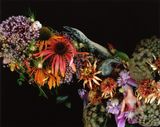
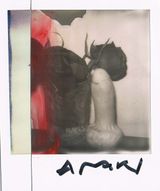
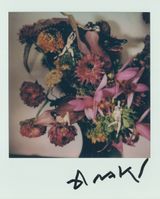
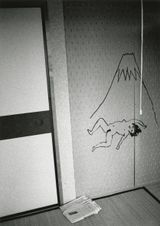
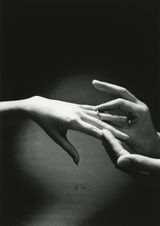
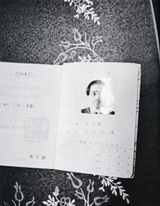
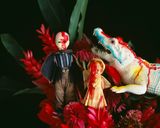
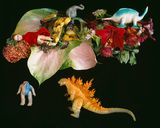
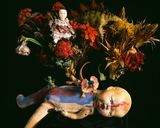
Araki’s provocative photographs depict both banal and deeply erotic subjects ranging from flowers and Tokyo street scenes to female bondage and his own biographical accounts.
Early Years
Araki was born in Tokyo in 1940 and graduated from Chiba University in 1963 with a major in photography and film. He entered the field as a commercial photographer for the advertising firm Dentsu, pursuing his own artistic interests in his spare time.
Araki grew increasingly dissatisfied with the limitations of his job and began interacting with the artistic proponents of Provoke magazine, including photographer Daido Moriyama. The artist identified with the movement’s rebellious spirit although he objected to its self-serious nature.
In the late 1960’s, two pivotal events occurred that would deeply influence his later artworks: the death of his father in 1967 and his meeting with his future wife, Yoko Aoki, in 1968. The dual themes of death and love remain central to the photographer’s works.
Nobuyoshi Araki Artworks
Nobuyoshi Araki’s photography with its unwavering vision and obsession with portraying his own experiences, both sexual and otherwise, ran counter to the prevailing documentary impulse of post-war Japan. Araki developed an autobiographical, deeply personal narrative mode of image-making which he termed ‘I-photography’ (shi-shashin), a direct response to the ‘I-novel’ (shi-shōsetsu), a confessional genre which dominated Japanese literature in the twentieth century.
Photobooks
In 1971, Araki began documenting his honeymoon with Yoko, capturing both its mundane and erotic moments. The result was Sentimental Journey (1971), regarded as one of the most important Japanese photobooks of the twentieth century.
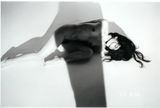
His Pseudo-Reportage photobook (1980) which paired black and white images of female boxers and sex club scenes with dates related to the atomic bombings of WWII pointed to the highly subjective nature of photography. His eroticised nudes, for which he is most well-known, violated Japanese prohibitions against the depiction of pubic hair, yet also contributed to the loosening of censorship laws upon photographers.
Araki movingly photographed his wife’s battle with ovarian cancer and eventual death in 1990. In 2008, he drew parallels with photography’s decline and his own diagnosis with cancer. In 2014, he staged Love on the Left Eye which erased the right side of his photographs reflecting the blindness in his right eye. Araki has published over 500 photobooks.
Awards and Accolades
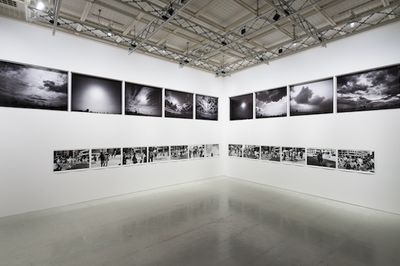
During his early career, Araki began photographing local children in the Shitamachi neighbourhood of Tokyo, a run-down area that had largely escaped the urban reinvigoration of the city in the lead up to the 1964 Olympics. Araki was awarded the inaugural Taiyo Award for this early series, ‘Satchin’ (1964), depicting the boisterous antics of children playing against the backdrop of pre-war apartment blocks.
Araki is also a recipient of the Shashin-no-kai Prize from the Photographic Society of Japan (1990); the 7th Higashikawa Prize (1991); the Japan Inter-Design Forum Grand Prix (1994); the Austrian Decoration of Honor for Science and Arts (2008); the 6th ANGO Awards (2012) and the 54th Mainichi Art Award (2012).
Exhibitions
Nobuyoshi Araki has been the subject of numerous important institutional and commercial solo and group exhibitions.
Solo Exhibitions include Effetto Araki, Santa Maria Della Scala, Siena (2019); I, Photography, Marugame Genichiro-Inokuma Museum of Contemporary Art, Kagawa (2017); ARAKI. TOKYO, Pinakothek der Moderne, Sammlung Moderne Kunst, Munich (2017); Araki, Musée National des Arts Asiatiques Guimet, Paris (2016); Ōjō Shashū: Photography for the Afterlife — Faces, Skyscapes, Roads, Toyota Municipal Museum of Art (2014); Nobuyoshi Araki Photobook Exhibition: Arākī, IZU PHOTO MUSEUM, Shizuoka (2012); NOBUYOSHI ARAKI: Self, Life, Death, The Barbican Art Gallery, London (2005); and Hana- Jinsei, Tokyo Metropolitan Museum of Photography (2003).
Amy Weng | Ocula | 2021

View Nobuyoshi Araki's Artworks


















Explore Nobuyoshi Araki's Exhibitions







Explore and Follow Artists Shaping Contemporary Art
A respected voice in contemporary art discourse.
Focusing on ambitious storytelling and insightful art-world commentary. Ocula Magazine publishes in-depth interviews, critical essays and timely analysis on the artists, exhibitions and ideas driving the global art world.
Learn more about Ocula Magazine
Showcasing the best of the art world.
Ocula partners with galleries from around the world to highlight their artists, artworks and exhibitions. Gallery membership is by application and invitation, with each member vetted by an independent panel.
Learn more about Ocula Membership
Specialises in the sale of major artworks.
Led by a team with deep ties to the world’s leading auction houses, galleries and collectors. Ocula’s advisory team offers bespoke services to high-net-worth clients from around the world who are looking to acquire the best of contemporary and modern art.
Learn more about our team and services