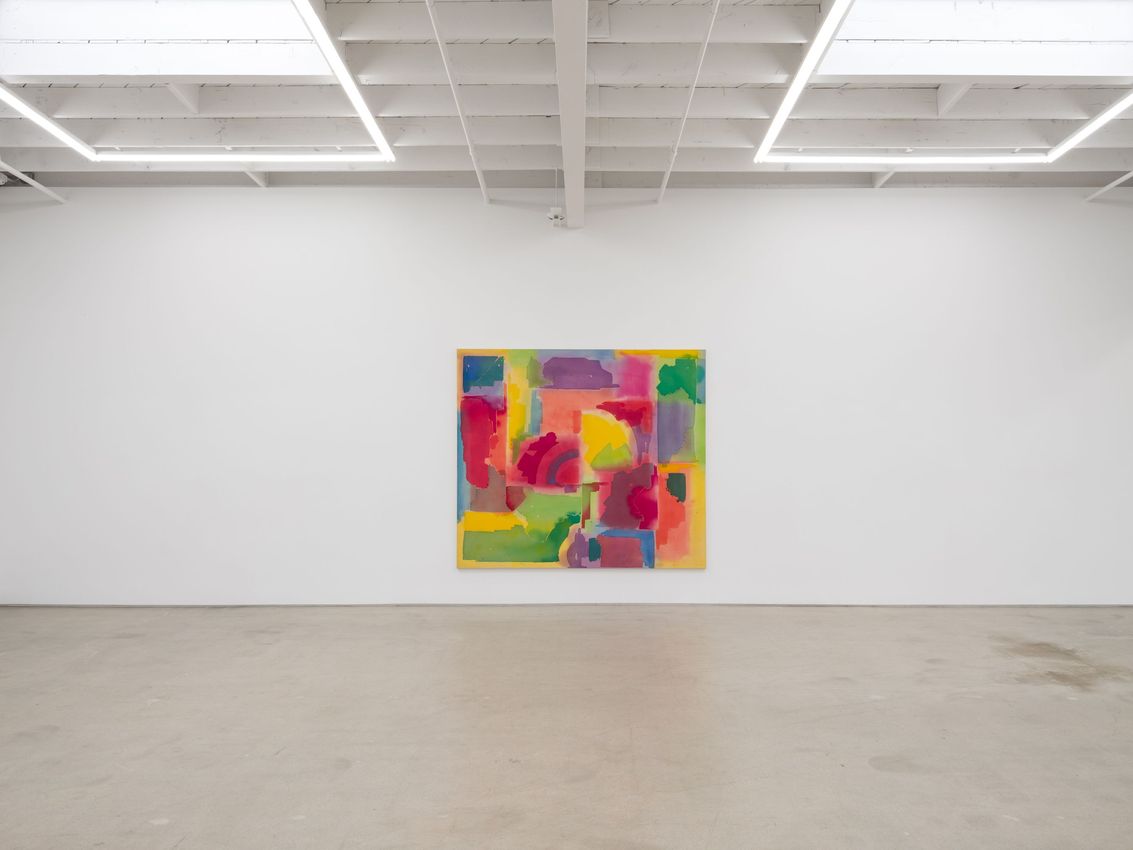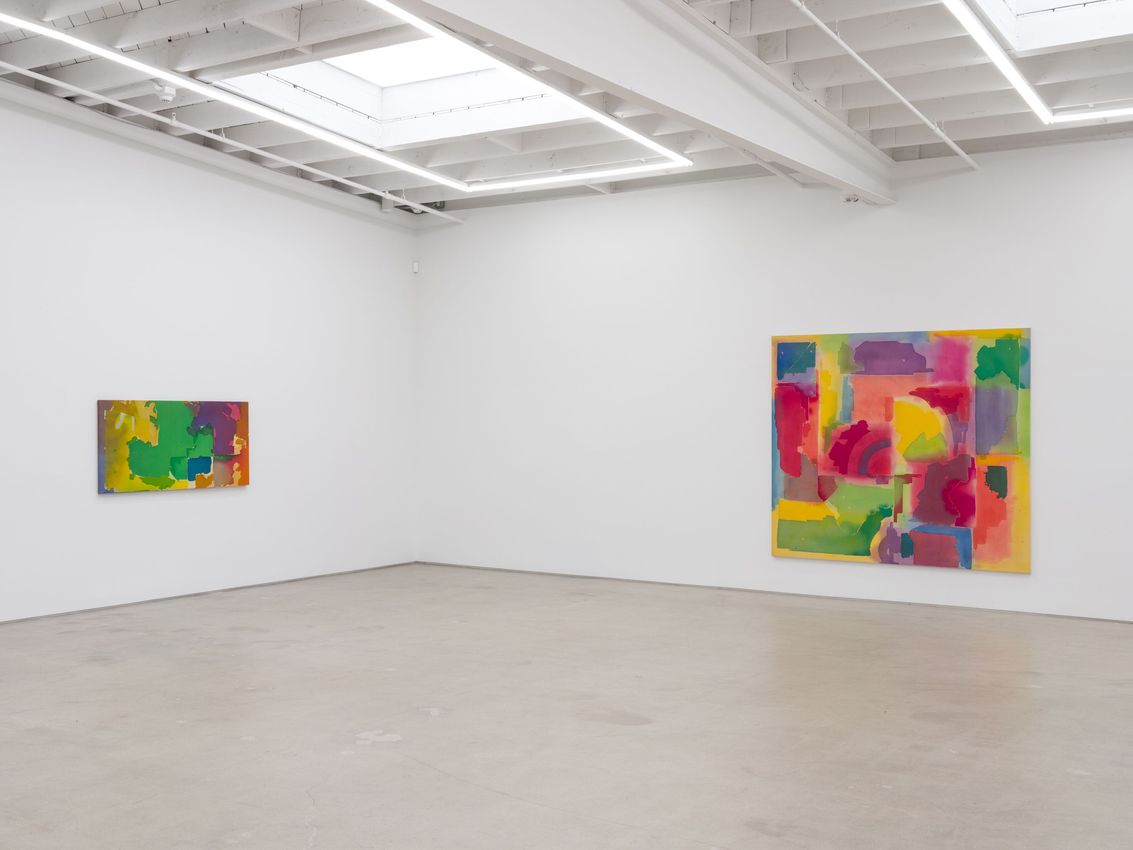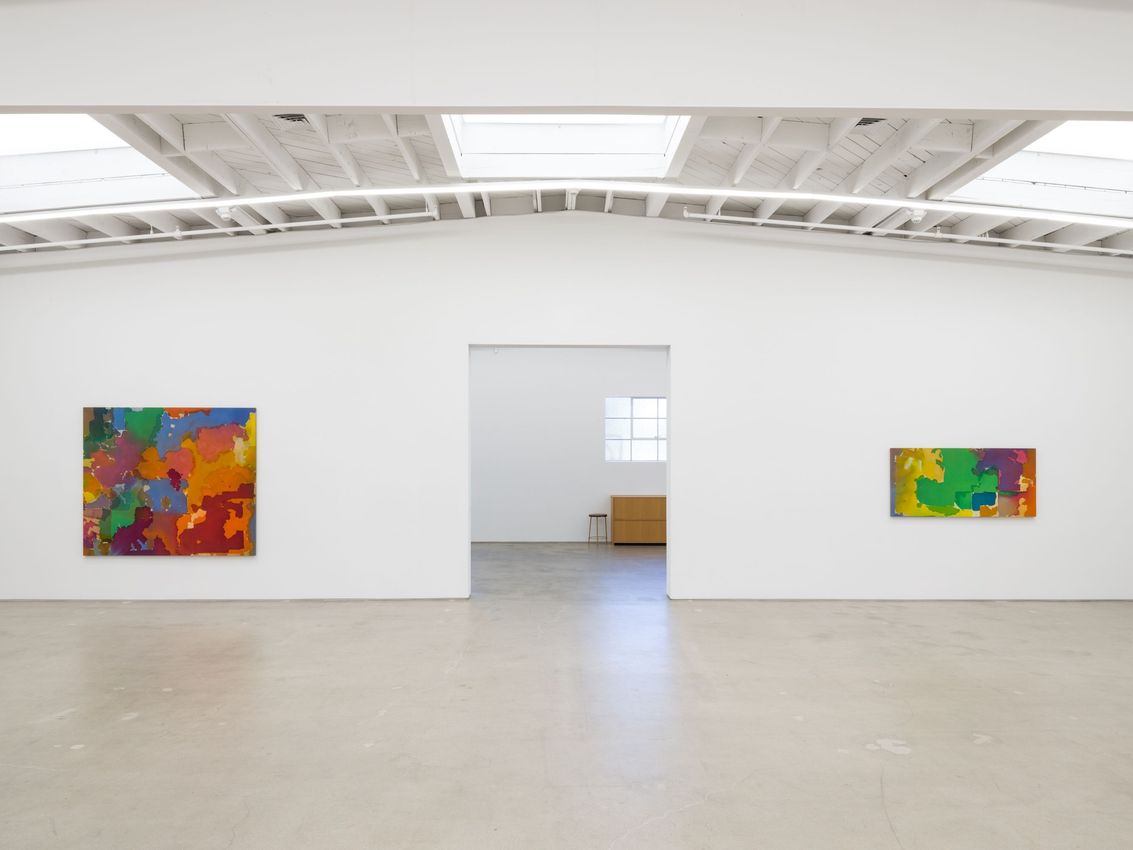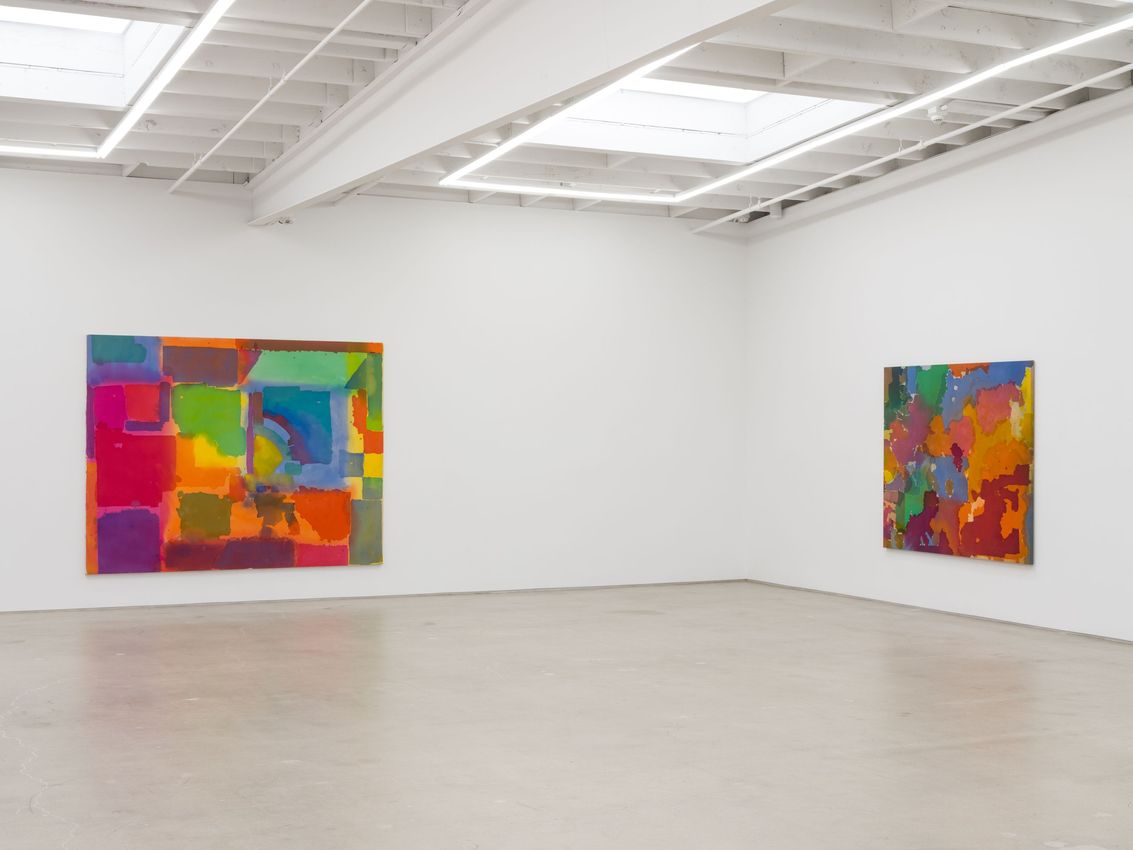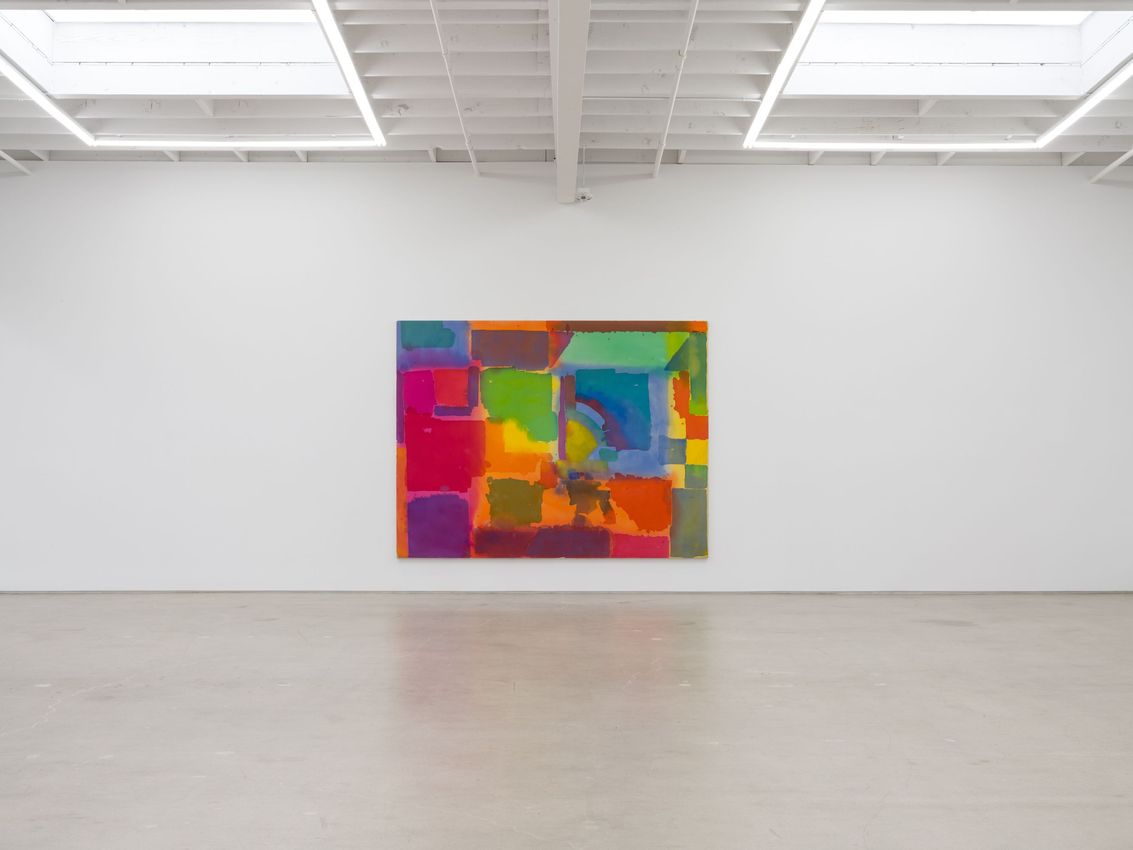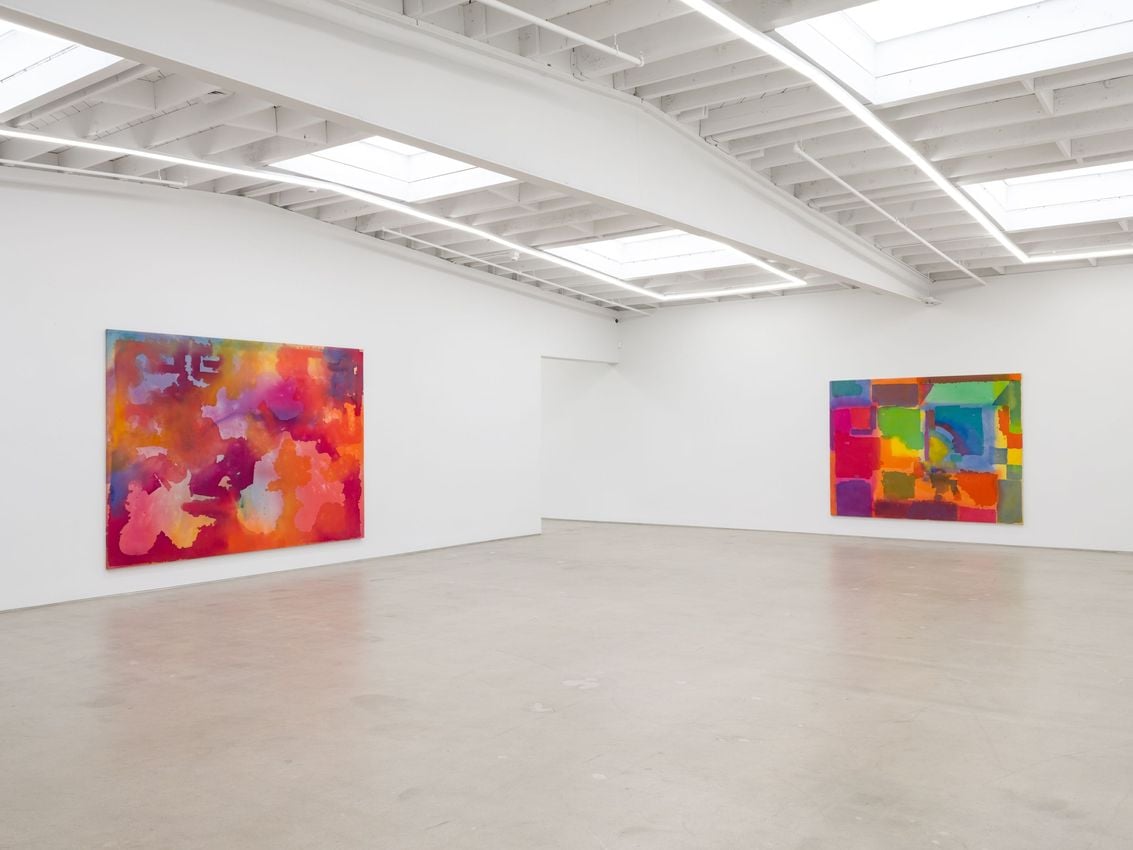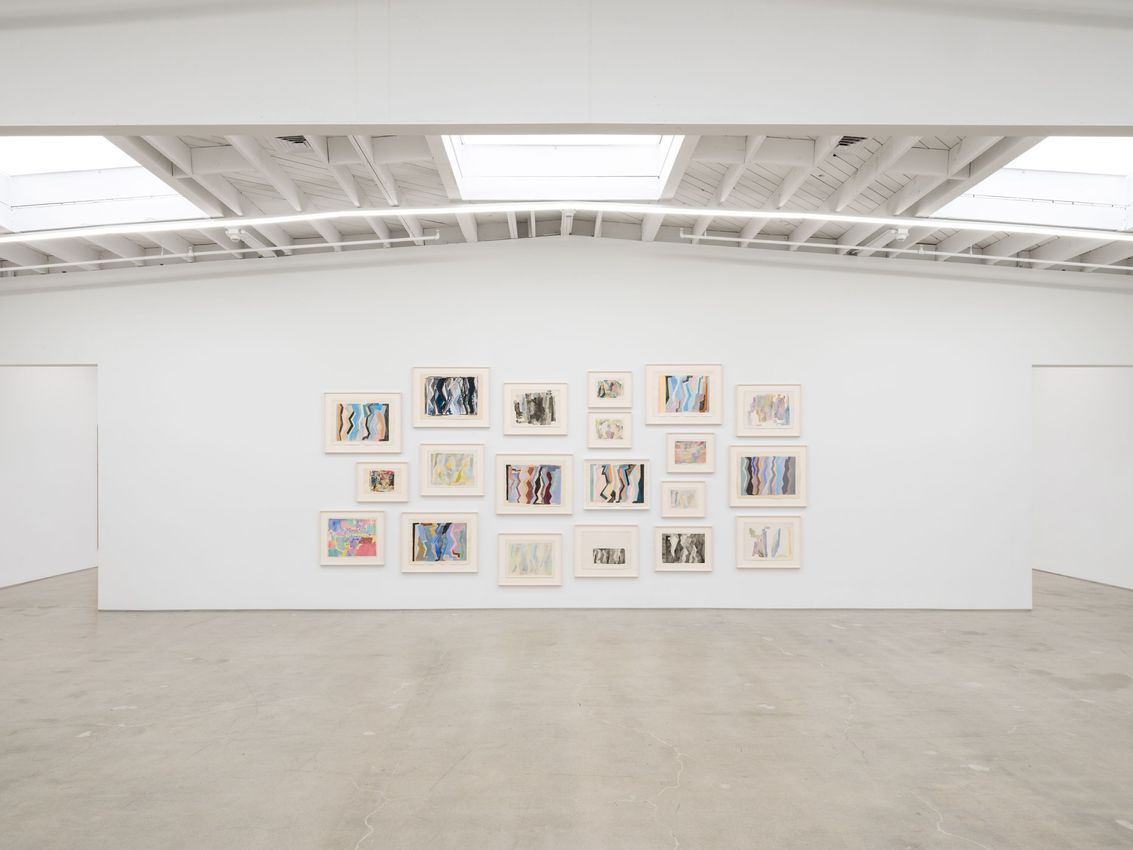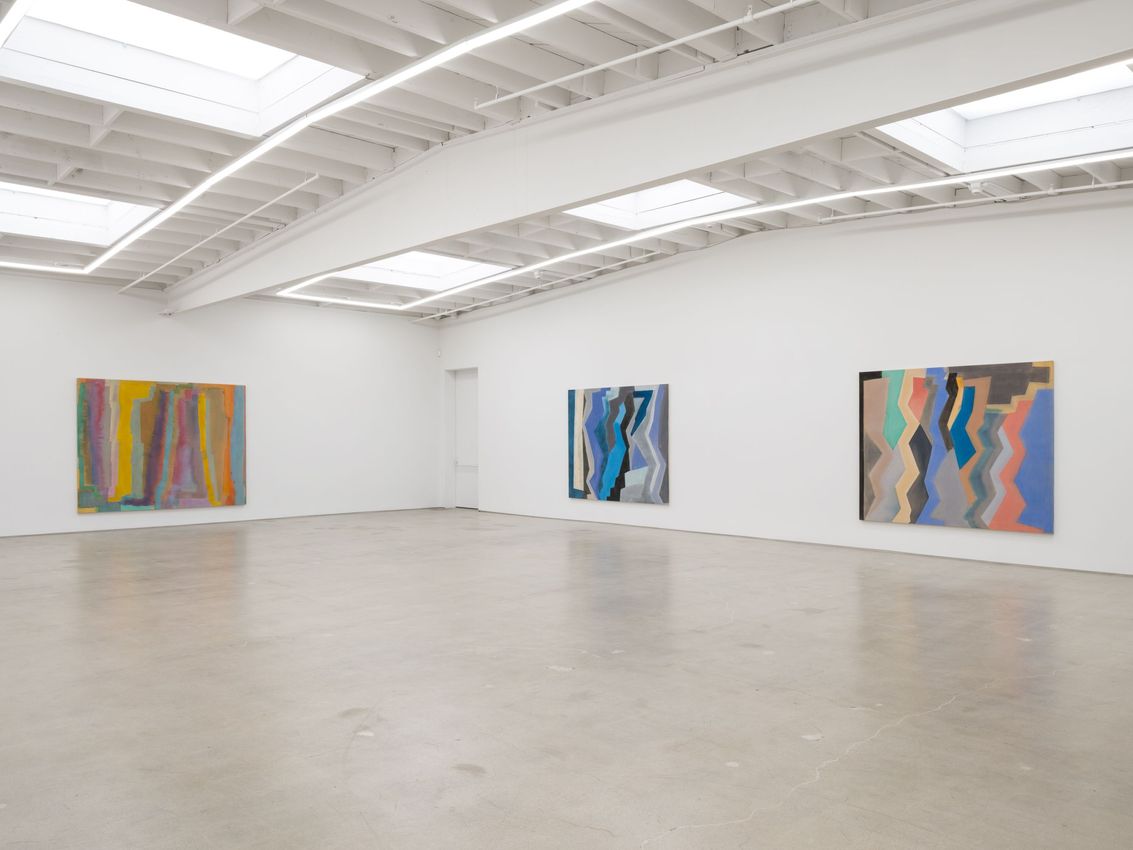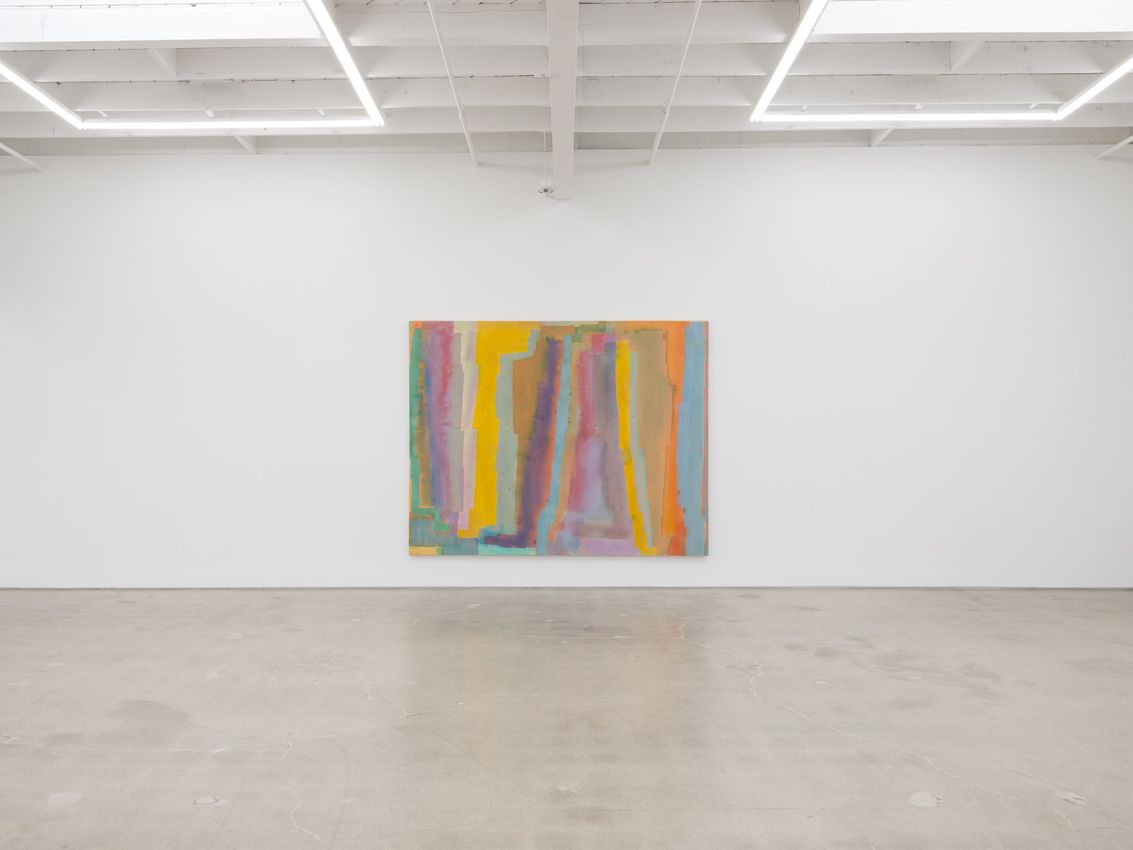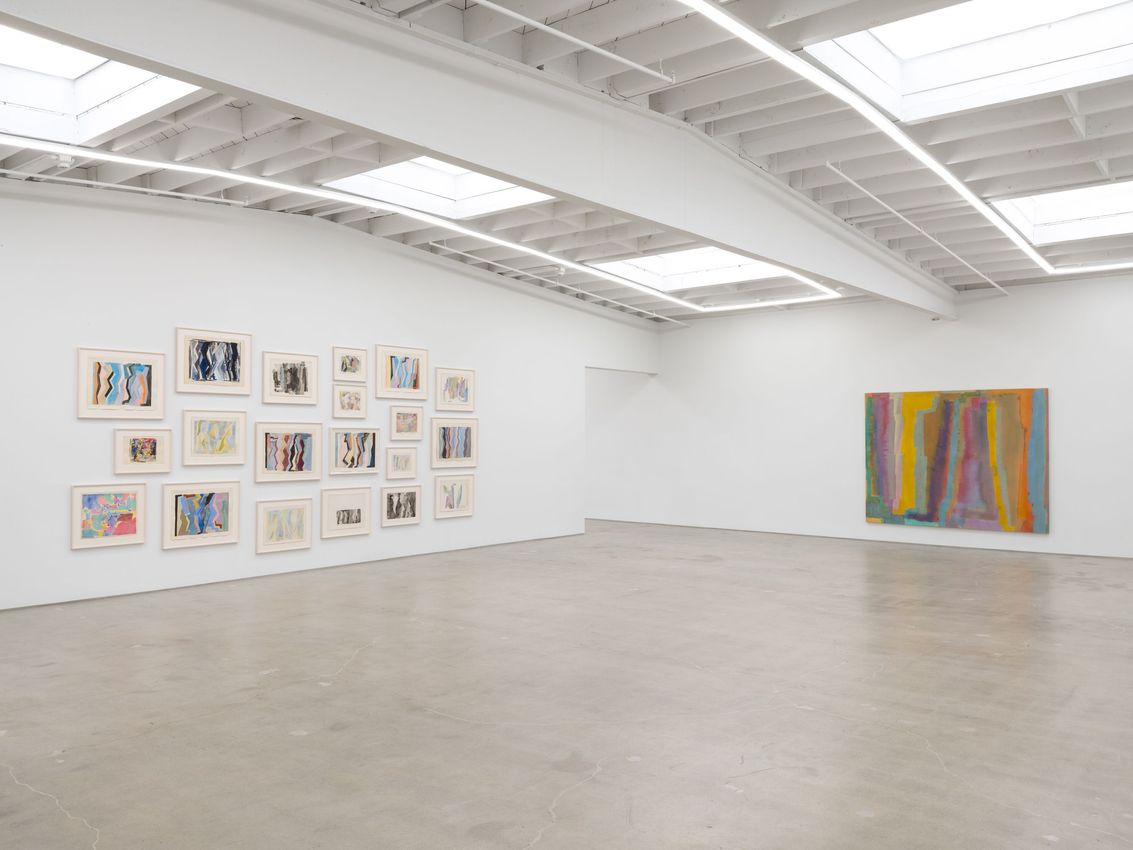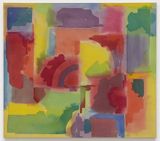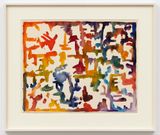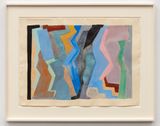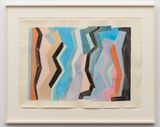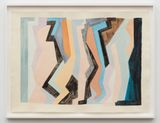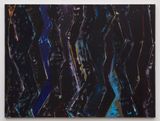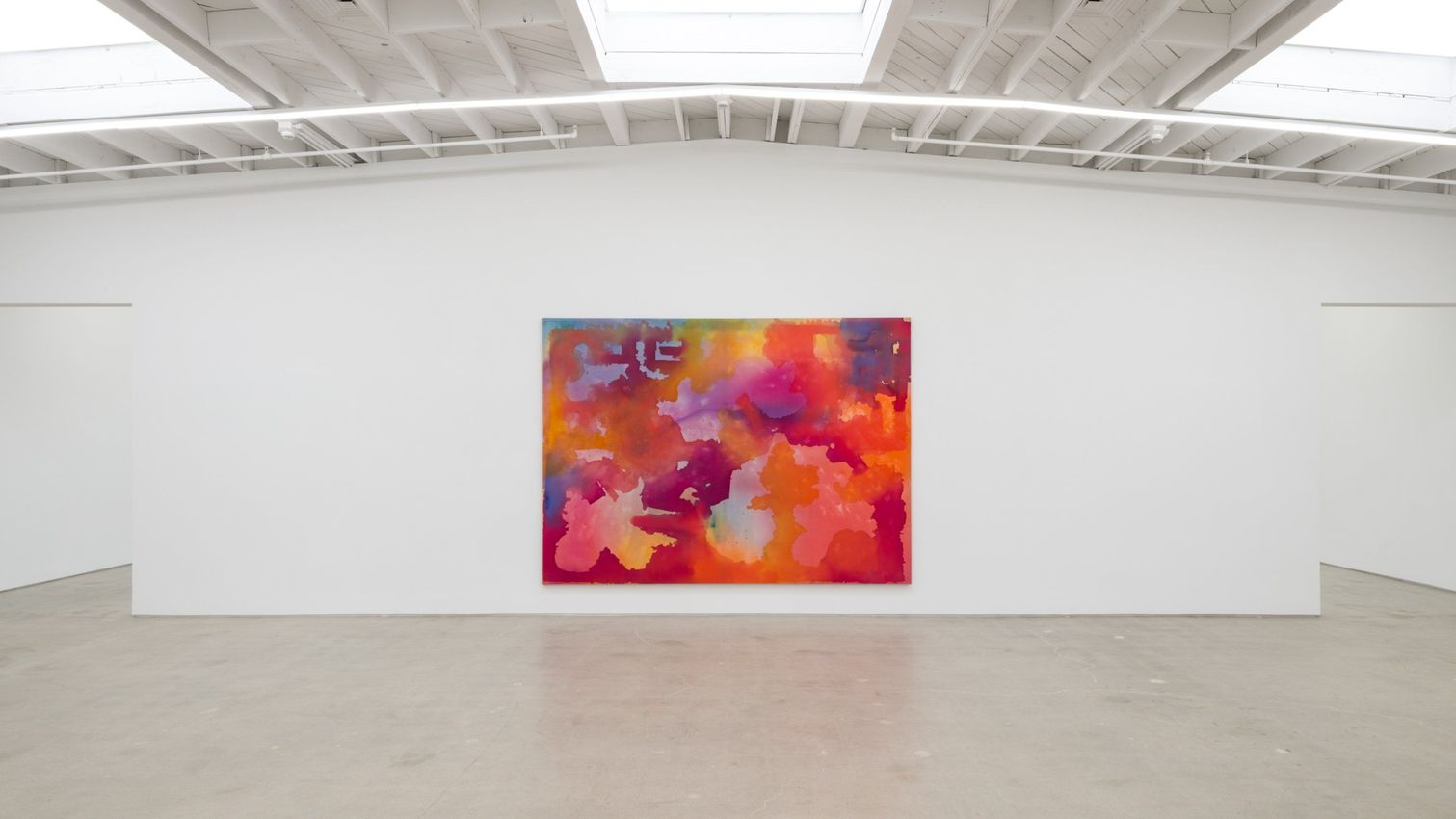
Robert Duran arrived at painting through Minimalist sculpture, creating enigmatic abstract works that bucked the hard-edged trend then dominating the 1960s New York scene of which he was a part. In the following decade, the contours of his colorful glyphs softened and stretched, eventually reaching vertically from top to bottom of his unprimed canvases. 1970–1977 is the first presentation of the artist’s watercolors and acrylic paintings in California, where he was born in 1938.
In 1970, Duran was working at his most vibrant, embracing the high-key colors and subtle translucency offered by then recently-available Liquitex acrylic paint. Circling canvases that he spread on the floor of his studio on Broome Street, Duran manipulated acrylic to create blooming, aqueous forms that Martin Herbert describes as “recently dissolved geometry, like watching clouds break apart in the sky.” Color morphs, melts, and bleeds, and yet the specificity of his forms’ contours speak nevertheless to Duran’s control over his medium. Works from 1972, like Duran’s contribution to the following year’s Whitney Biennial, are structured around discretely colored shapes that nearly touch but are kept apart by thin slices of negative space. By 1974, the year of his sixth exhibition at Bykert Gallery, whose director Klaus Kertess championed other young artists like Lynda Benglis, Paul Mogensen, David Novros, and Richard Van Buren, Duran’s forms had begun to elongate and occupy more and more of the canvas as if growing to fit their containers.
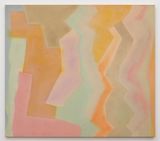
With DESPLAIN (1974), Duran inaugurated the improvisatory composition system that would fascinate him for the rest of the decade: starting from one side of the canvas, he would apply a sliver of a single hue, roughly reaching from the top to the bottom of the piece though never completely regular in its arrangement. The next form would follow from the contour described by the first, and so on. These paintings are consequently explorations of both verticality and the horizontality—topographical by design. They suggest the strictures of rule-based paintings like Frank Stella’s Concentric Squares of the 1960s and ‘70s but subvert such determinism, edging toward the entropic flow of Morris Louis’s Veils, begun in 1954.
In an Untitled acrylic from 1975, the year Bykert closed and Duran had one of two solo shows at Susan Caldwell Inc., his colors soften and fade as his forms sharpen, fitting together like puzzle pieces; watercolors from the same year are similarly understated, rendered in black (from thickly saturated to washy gray hazes) or in subtle pastels. Finally, around 1976, blue became his central preoccupation, as if referencing the importance of water to both his painting process and his life, first in the coastal California town of Salinas, where he was born, and later in Manhattan, where rivers always flow on two parallel sides. Aqua (1976) makes this oceanic connection explicit, its jagged forms lapping like waves. Watercolors from 1977, the year of his final solo exhibition during his lifetime, continue to iterate on DESPLAIN’s structure, drawing out its endless possibilities.


Robert Duran (b. 1938, Salinas, CA; d. 2005, NJ) found his way from San Francisco to New York City in the mid-1960s, where he became associated with a Minimalist cohort that included Brice Marden, David Novros, and Paul Mogensen. Although he took up the visual conventions of Minimalism, Duran’s monumental paintings were defiantly experimental and trend-resistant. His entropic patterns were bold, intuitive, and spontaneous, resembling the mythical diagrams and textile designs of the Far East, where Duran had extensively traveled. As Carter Ratcliff wrote in 1973, Duran’s paintings show “extraordinary power in the deployment of their color-shapes—extraordinary because it is not in the least logical, and yet it finds a coherence with the authority of logic.” Until his first solo show with Karma in 2019, Duran had not exhibited in New York City since 1977. In the time intervening before his death in 2005, Duran continued his rigorous practice. He had presented six solo exhibitions with Klaus Kertess’s Bykert Gallery, and was included in the 1966 Park Place Gallery Invitational, the 1969 Whitney Museum Annual Exhibition, and the Wellspring 1973 Whitney Biennial, among others.


A respected voice in contemporary art discourse.
Focusing on ambitious storytelling and insightful art-world commentary. Ocula Magazine publishes in-depth interviews, critical essays and timely analysis on the artists, exhibitions and ideas driving the global art world.
Learn more about Ocula Magazine
Showcasing the best of the art world.
Ocula partners with galleries from around the world to highlight their artists, artworks and exhibitions. Gallery membership is by application and invitation, with each member vetted by an independent panel.
Learn more about Ocula Membership

Specialises in the sale of major artworks.
Led by a team with deep ties to the world’s leading auction houses, galleries and collectors. Ocula’s advisory team offers bespoke services to high-net-worth clients from around the world who are looking to acquire the best of contemporary and modern art.
Learn more about our team and services