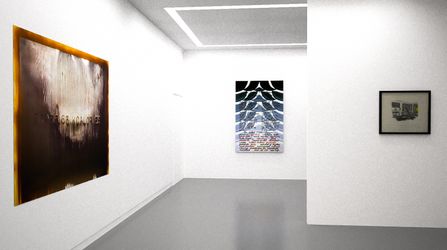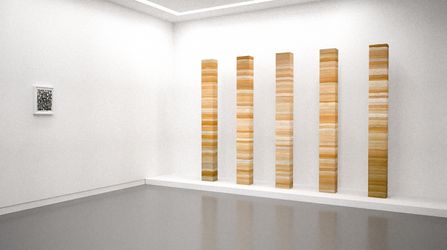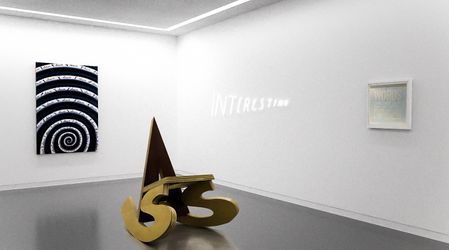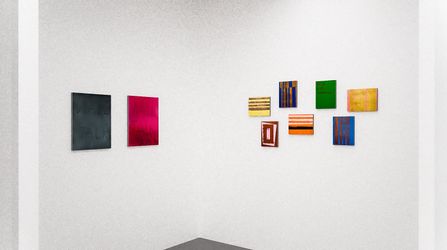
Kavi Gupta presents The Written Word, an online exhibition examining the visual value of the verbal.
What is the value of a picture? Just open your eyes to receive one, or close your eyes to remember one. Offer an artist a thousand words for a picture and you’ll learn what proverbs are worth. Yet, if utterances are fleeting and any story can be told with images, why would a visual artist ever need to rely on words? Each artist featured in The Written Word has their own reasons for making art you have to read in order to really see.
Vito Acconci’s Name Calling Chair (1990) strives beyond beauty and utility towards a comic truth, while Glen Ligon’s Study for Negro Sunshine II, #31 reveals the anesthetizing effect of repetition on even the most confounding utterance.
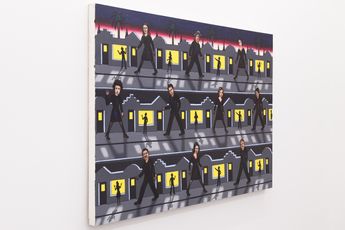
Roger Brown’s The Writing in the Sky revels in the circular logic of a picture undermining the power of words that establish the value of pictures; meanwhile, a single proposal from Allen Ruppersberg’s iconic Honey, I rearranged the collection series suggests language’s limitless, if sometimes senseless, potential for codification.
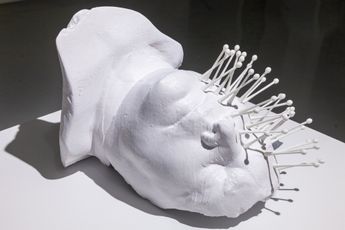
Manish Nai’s book sculptures mobilize words as raw material for compacted objects, with the aesthetic inquiry: what is a book that cannot be read, or a sculpture that can’t fully be seen?
Young-Il Ahn’s Self-Reflection I uses script to bridge antiquity and modernity, writing and then erasing traditional Hangul text until the written word communicates purely as an image.
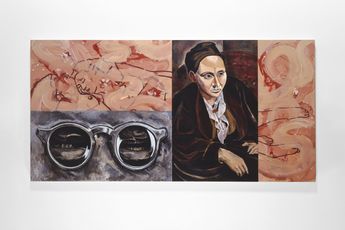
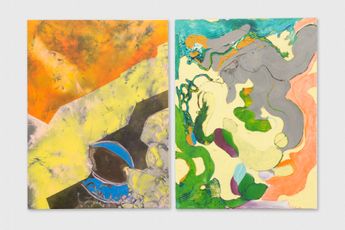
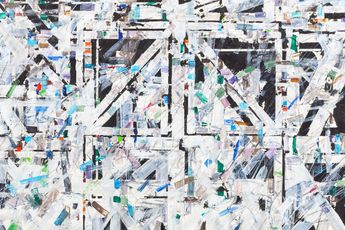
Deborah Kass deploys words to communicate brief, authoritative messages, infusing meaning into the cultural conversation, while in Patrick Chamberlain’s text paintings, words become abstract elements in formal space, same as color, shape, texture, and line.
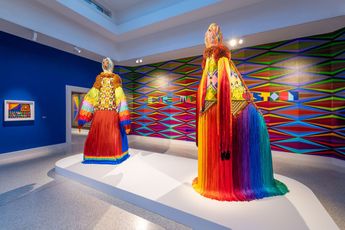
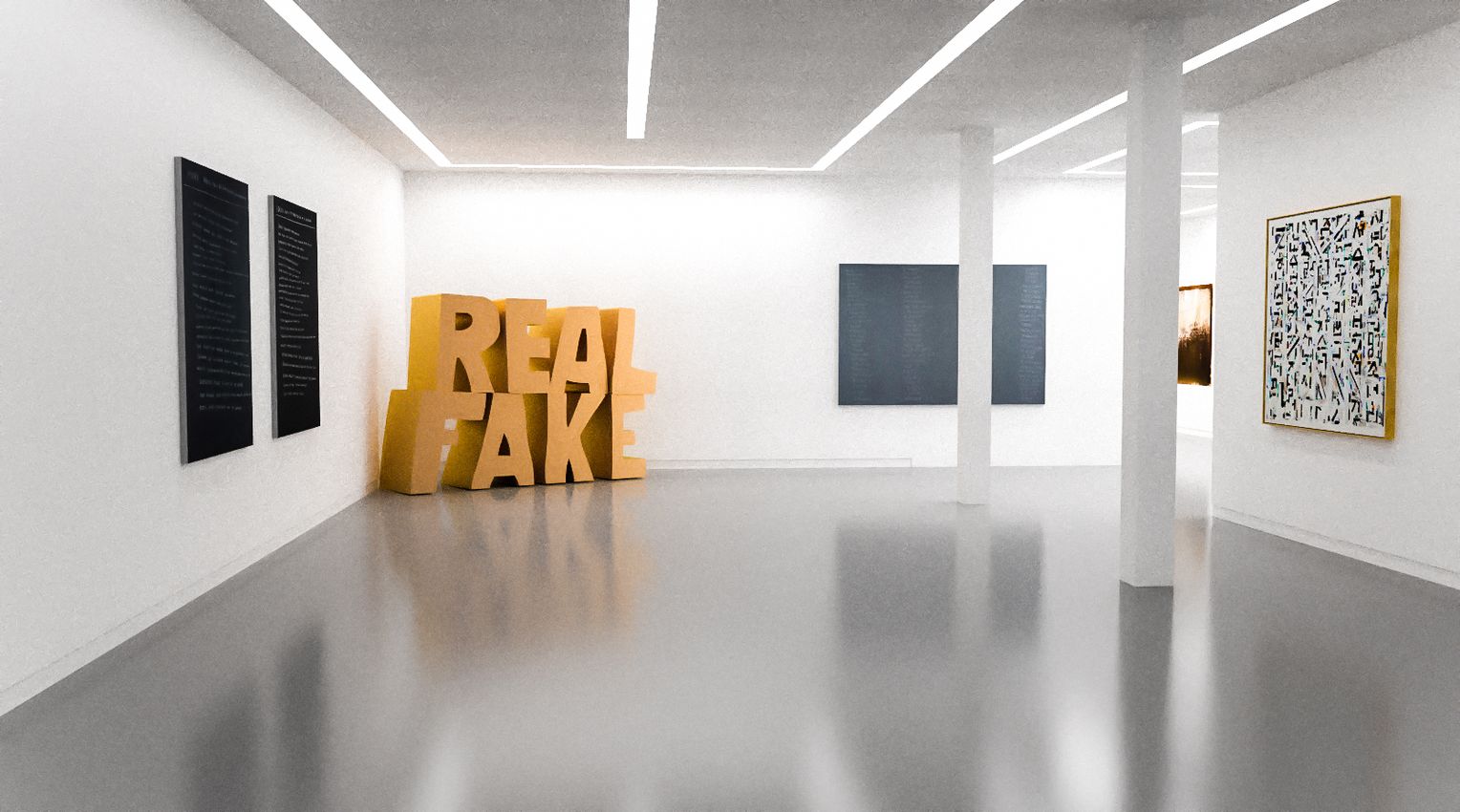
For Jeffrey Gibson, words form intertextual reminders, lifelines to memories of music, feelings, and communities bound by history, whereas in Scott Reeder’s paintings and neon sculptures, the written word is exactly what it appears to be: a conveyance of thought, unencumbered by conceptual abstraction. Or is it?
Though text is essential for every work in The Written Word, their mutability proves that like the world, the word is not always what it seems.
Press release courtesy Kavi Gupta.


Kavi Gupta is a leading contemporary art gallery specialising in the representation of international emerging and mid-career artists. The gallery amplifies voices of diverse and underrepresented artists to expand the canon of art history. Through innovative and ambitious exhibitions, multimedia programming, and rigorous publications, Kavi Gupta fosters an evolving conversation among international communities about art and ideas.

A respected voice in contemporary art discourse.
Focusing on ambitious storytelling and insightful art-world commentary. Ocula Magazine publishes in-depth interviews, critical essays and timely analysis on the artists, exhibitions and ideas driving the global art world.
Learn more about Ocula Magazine
Showcasing the best of the art world.
Ocula partners with galleries from around the world to highlight their artists, artworks and exhibitions. Gallery membership is by application and invitation, with each member vetted by an independent panel.
Learn more about Ocula Membership

Specialises in the sale of major artworks.
Led by a team with deep ties to the world’s leading auction houses, galleries and collectors. Ocula’s advisory team offers bespoke services to high-net-worth clients from around the world who are looking to acquire the best of contemporary and modern art.
Learn more about our team and services