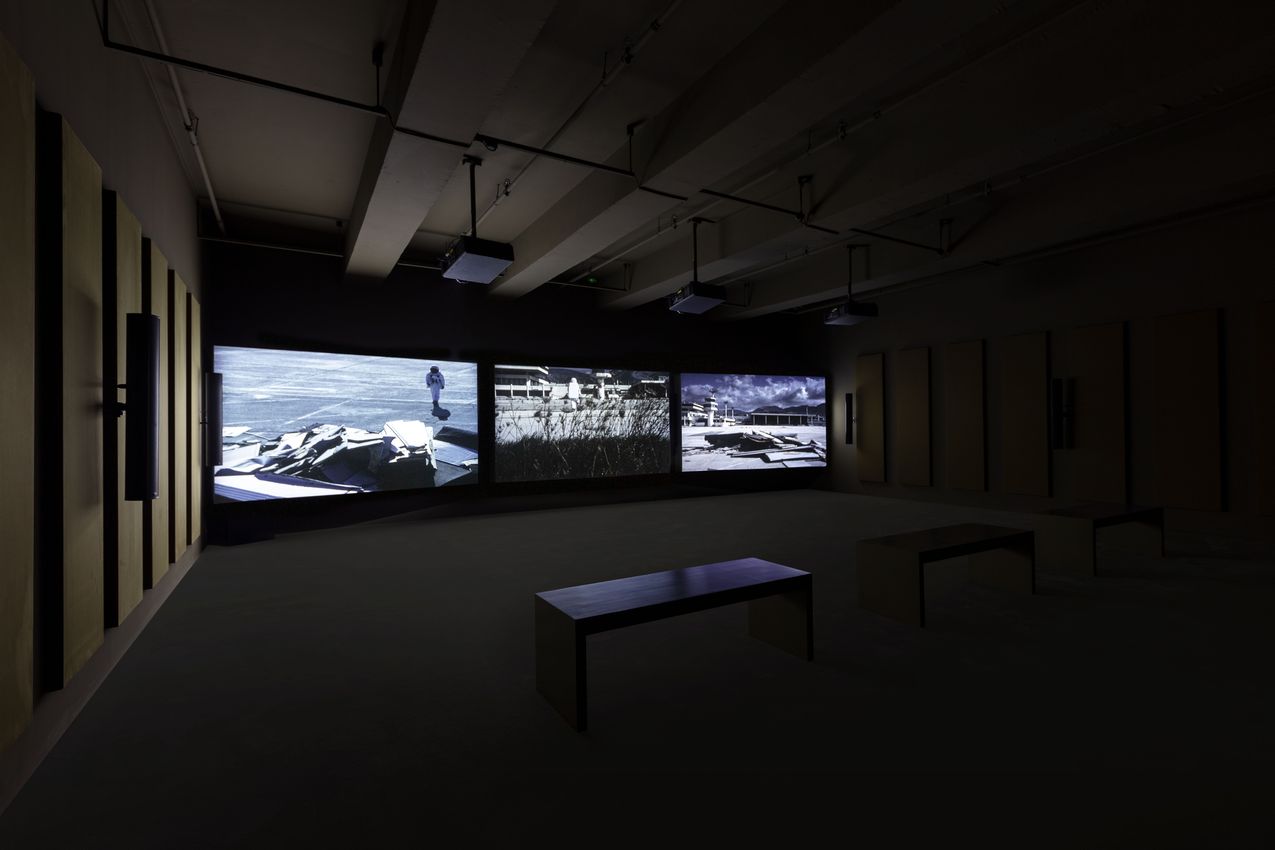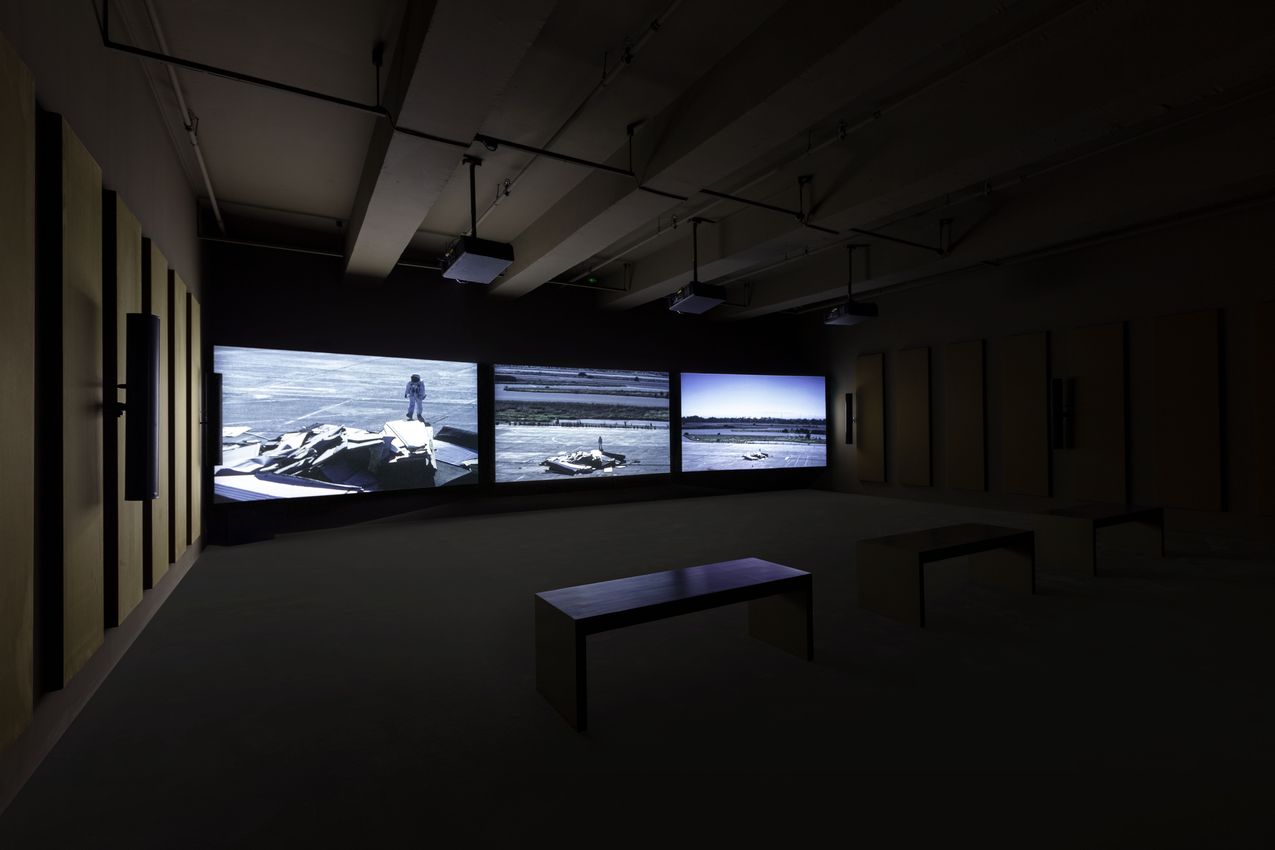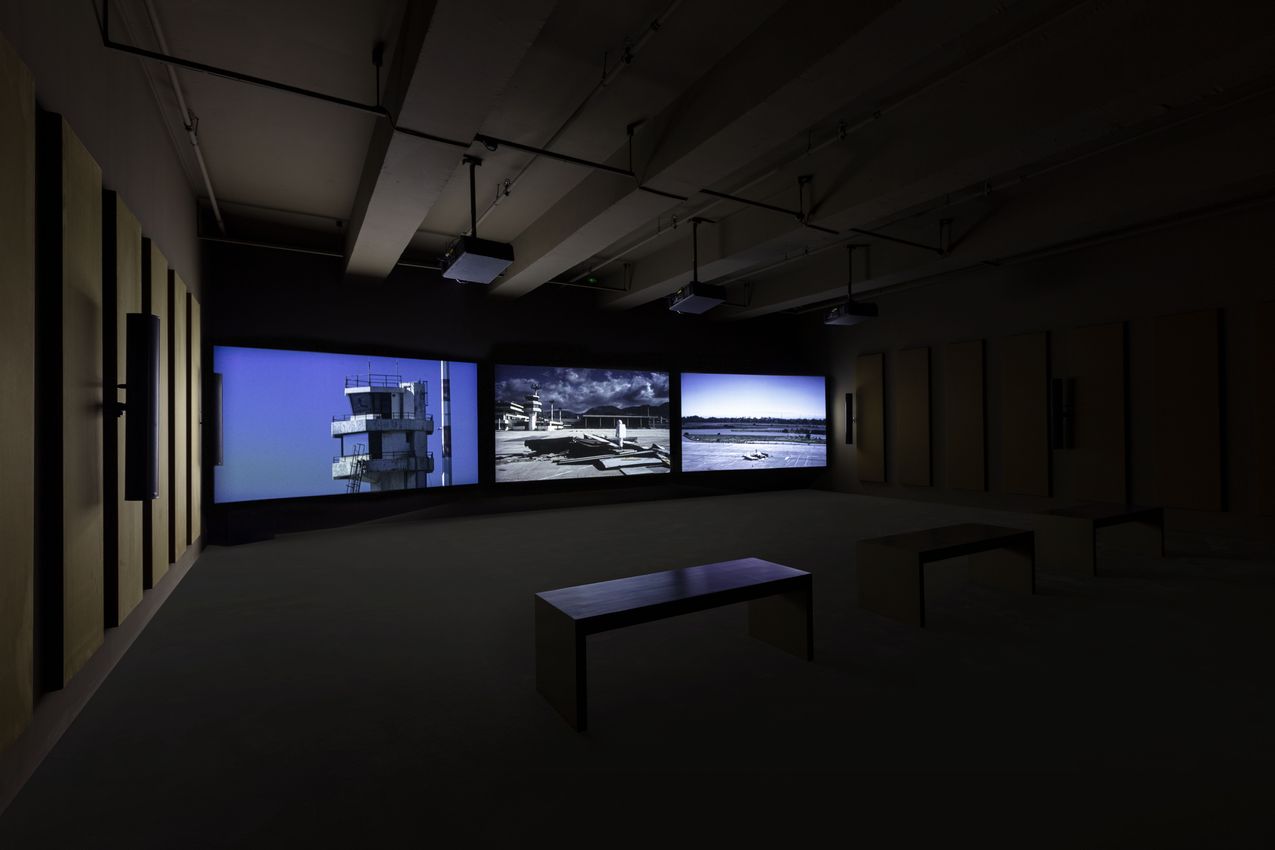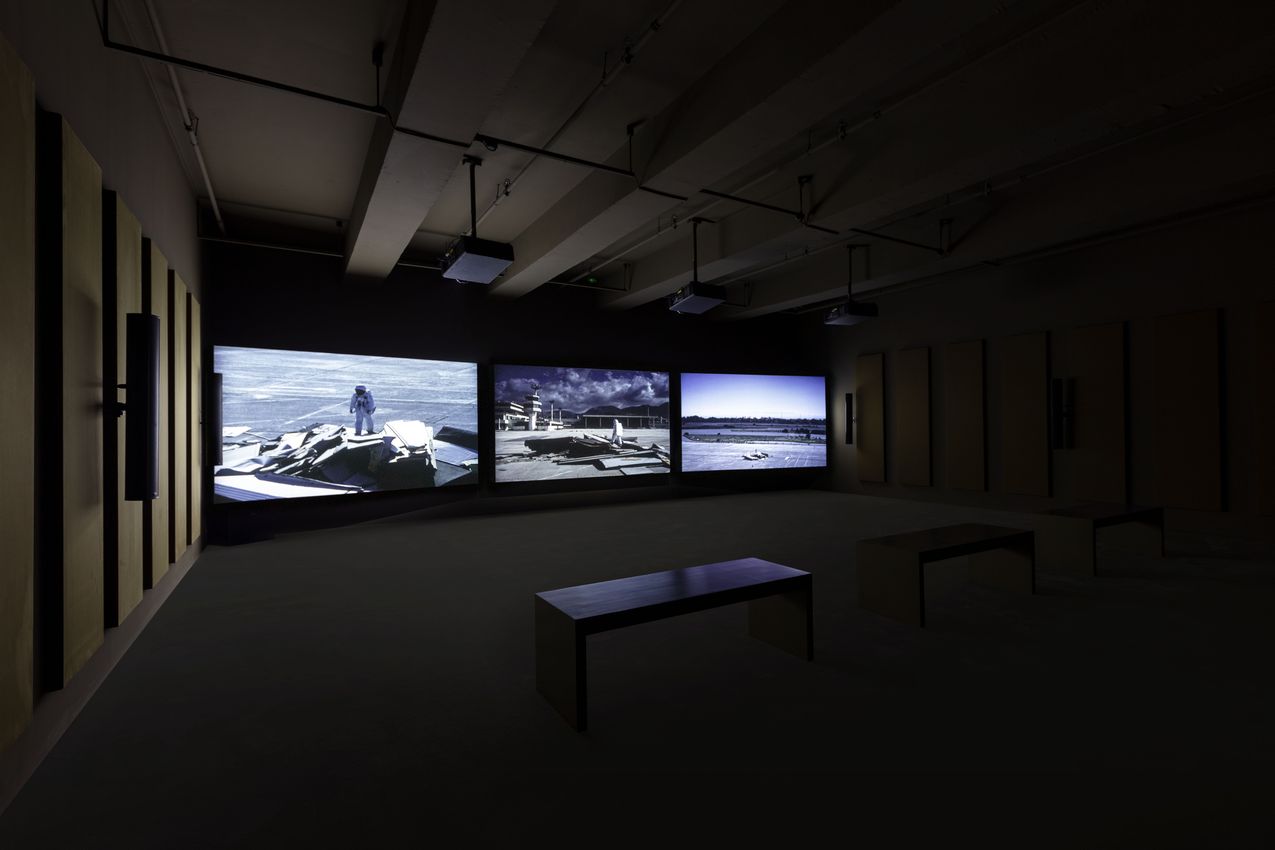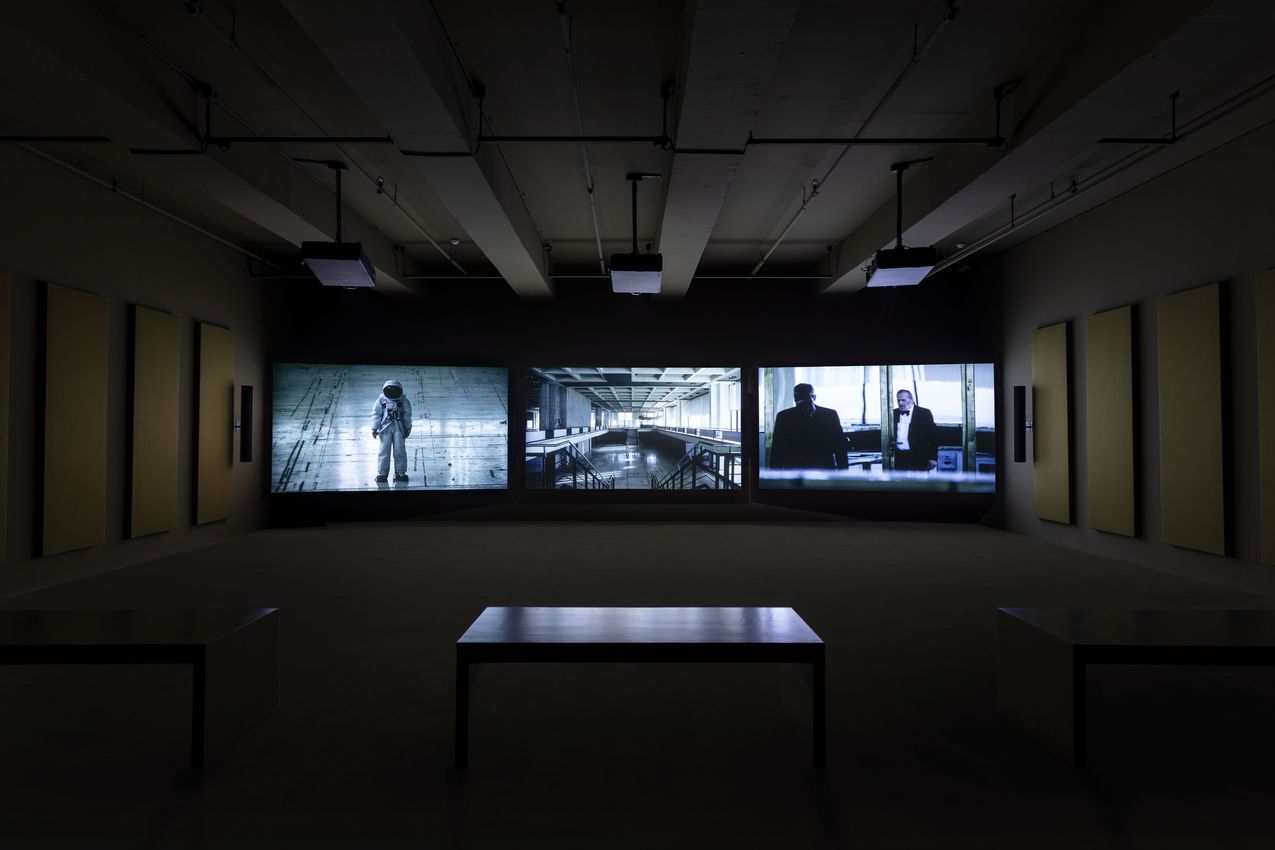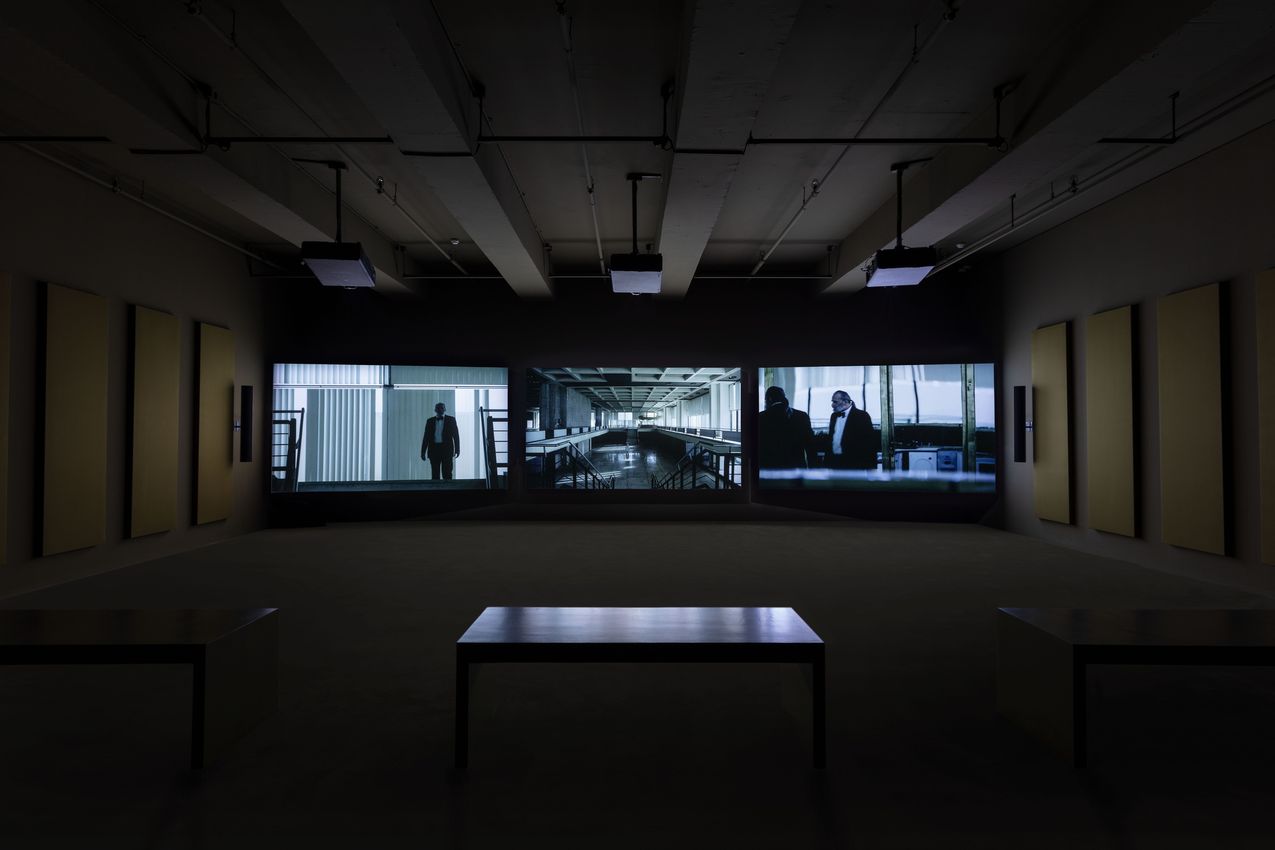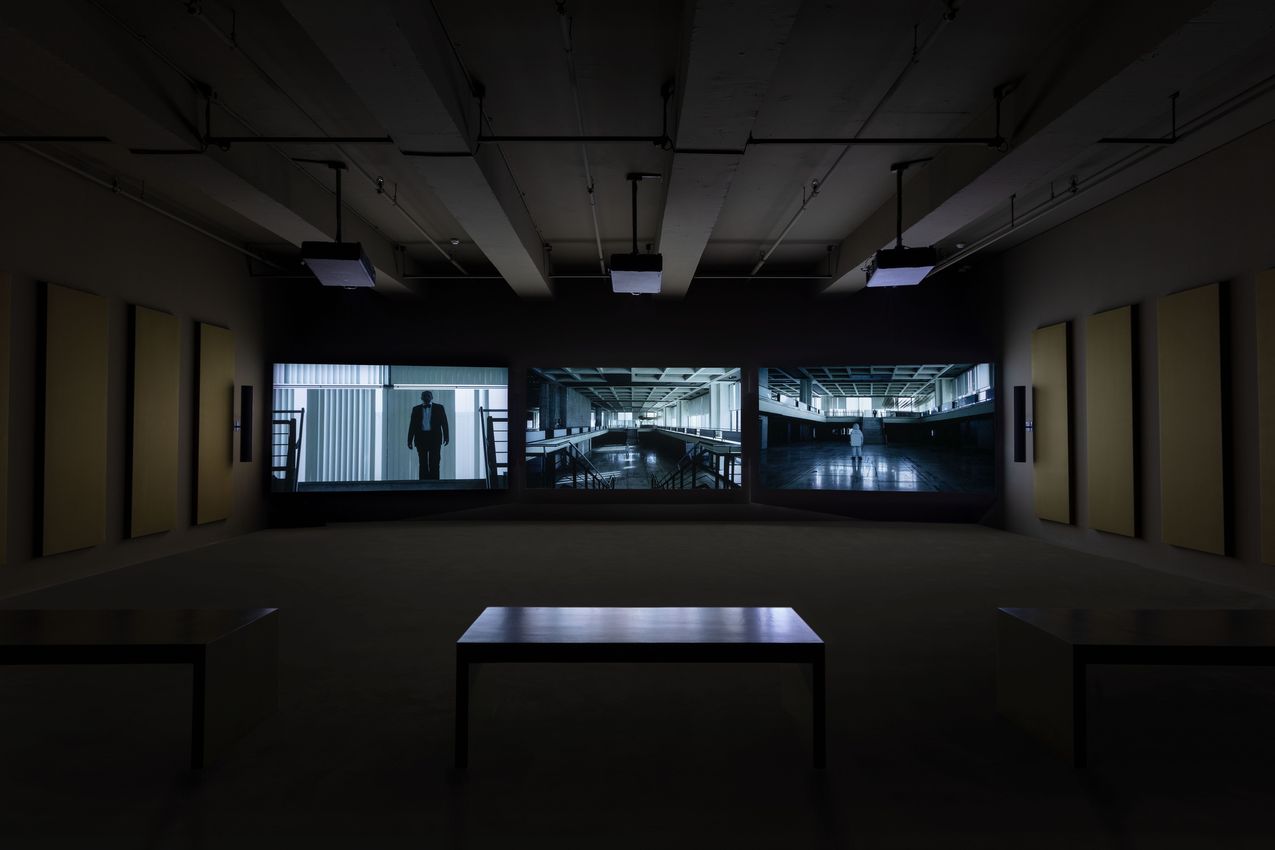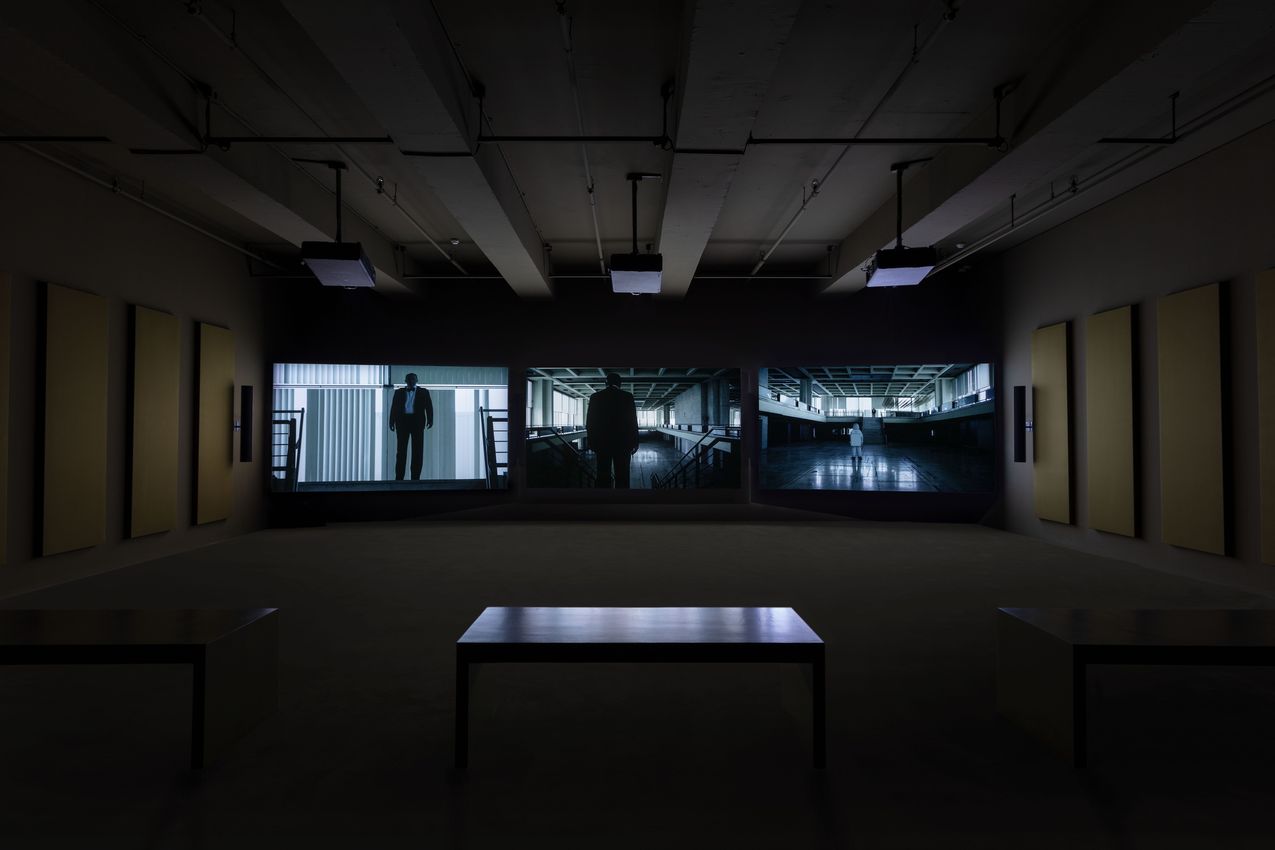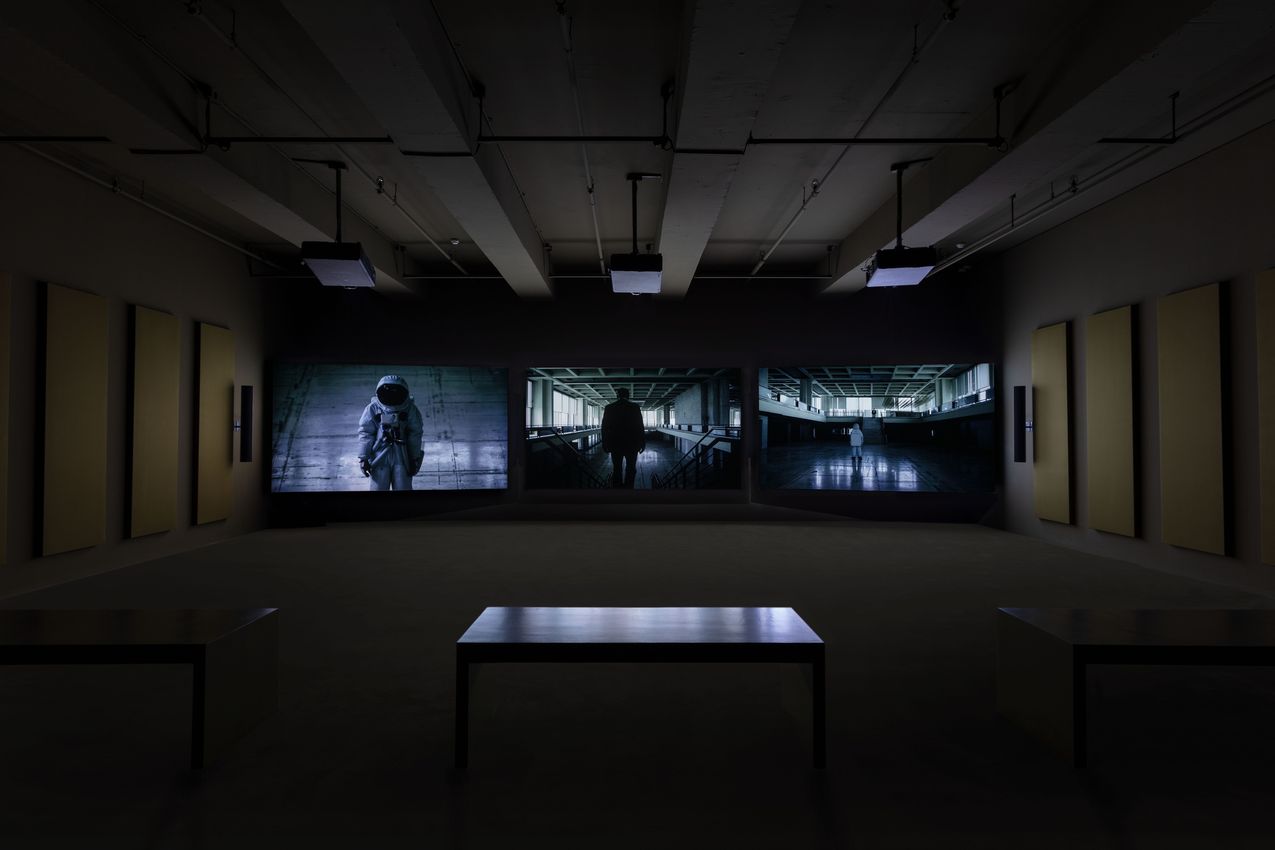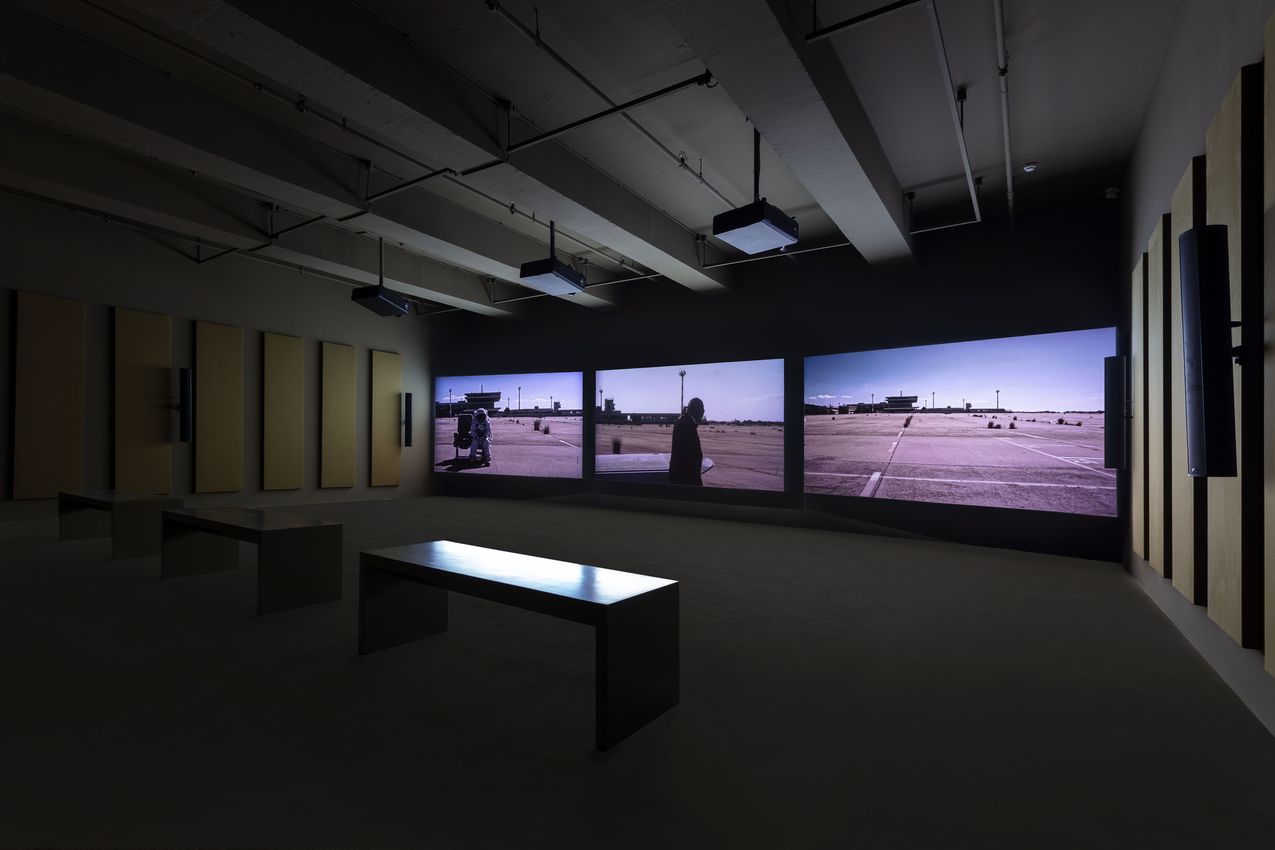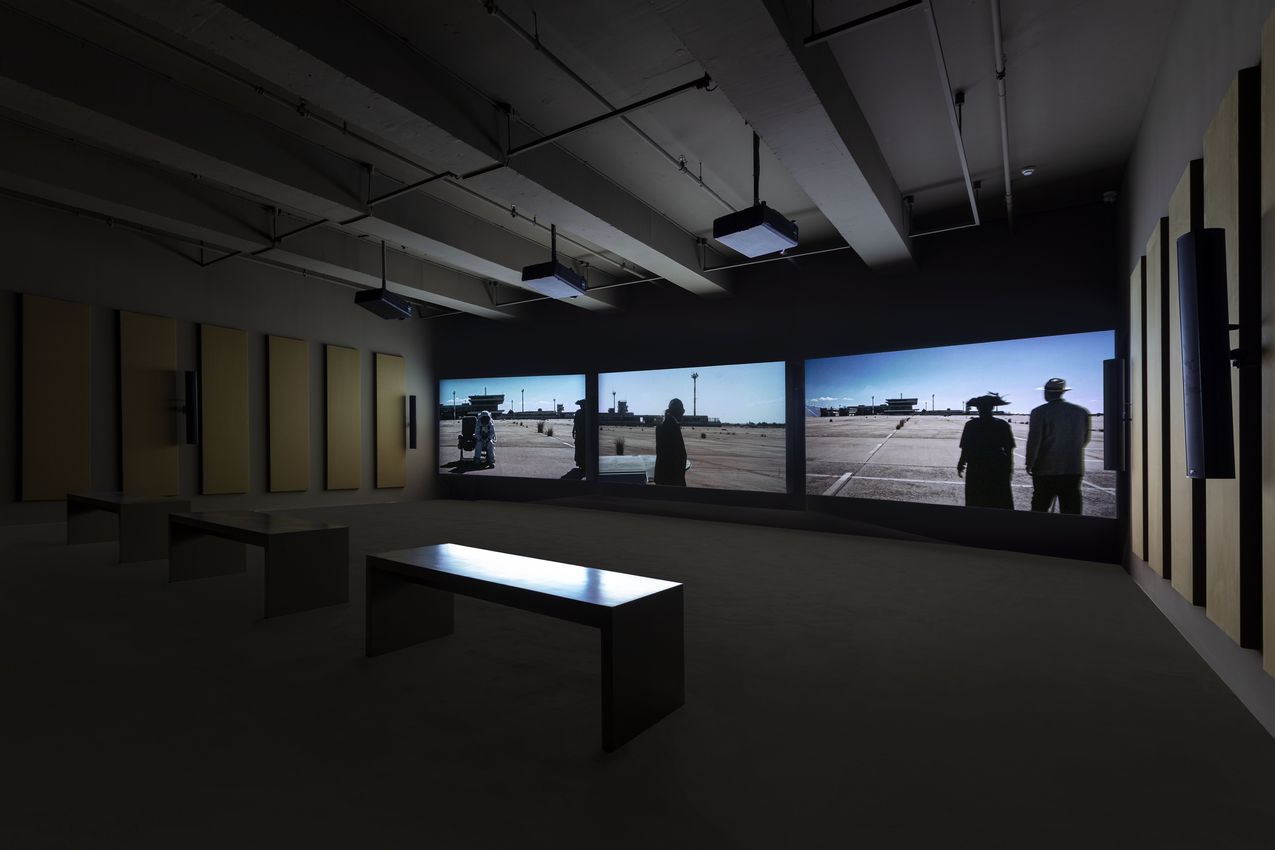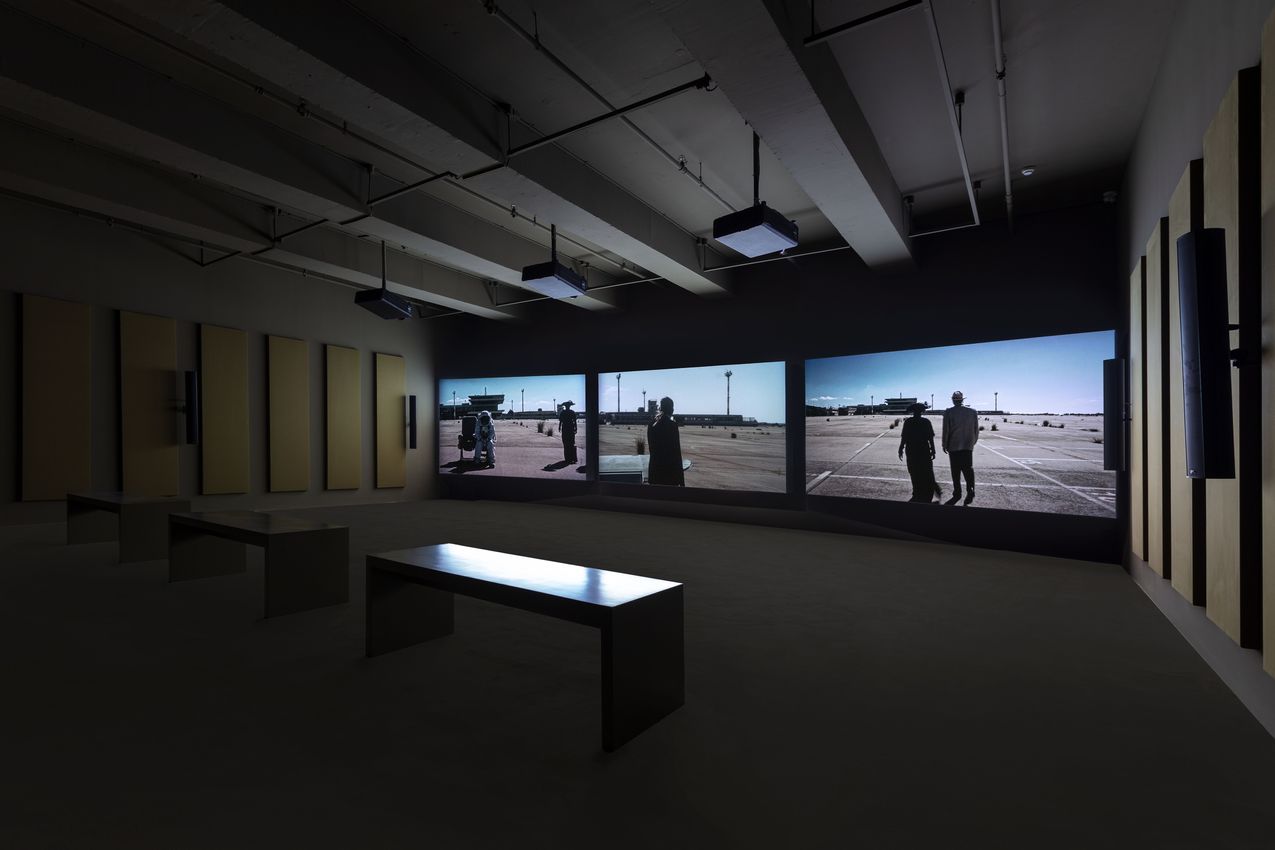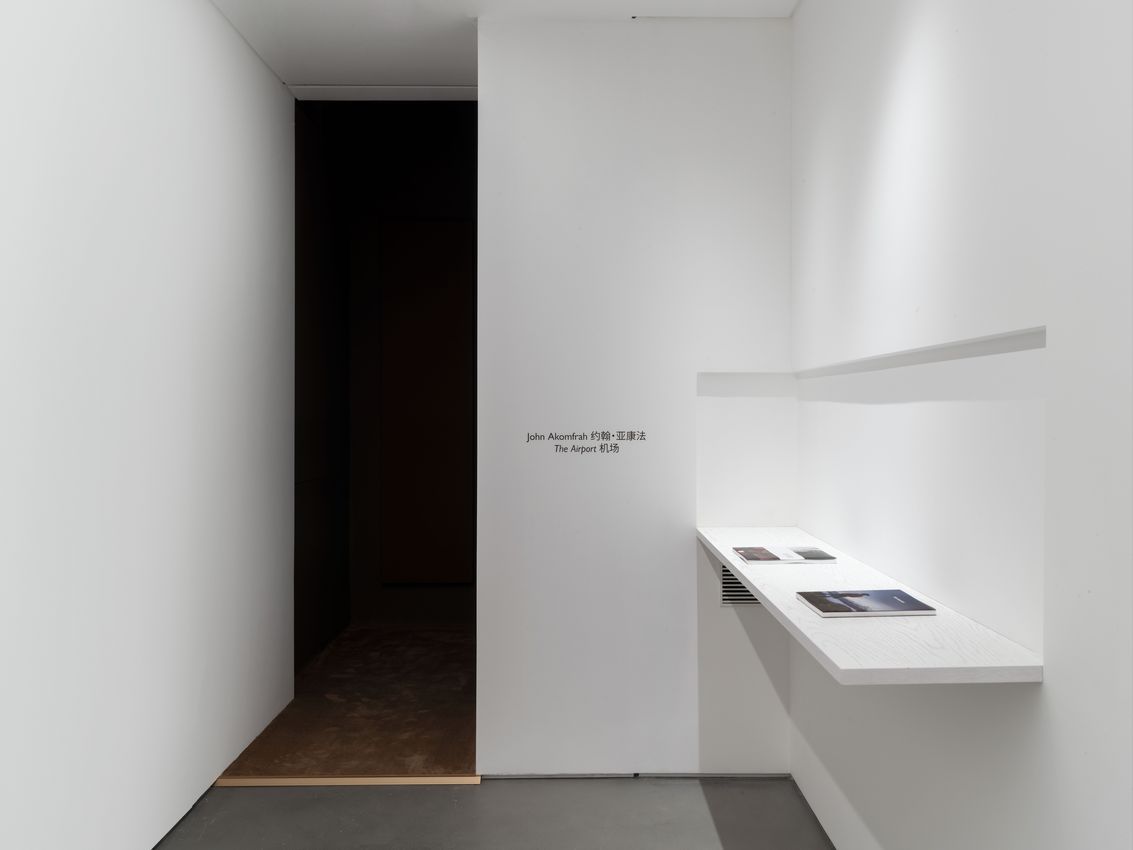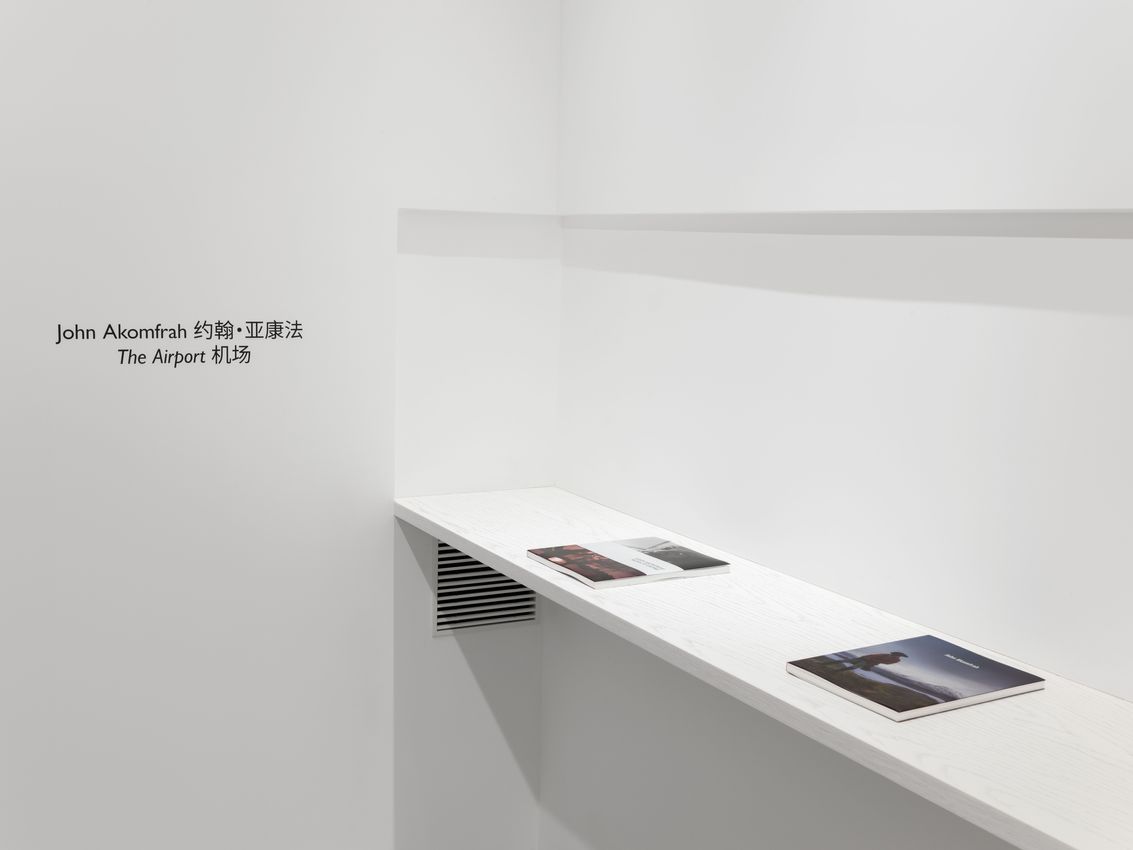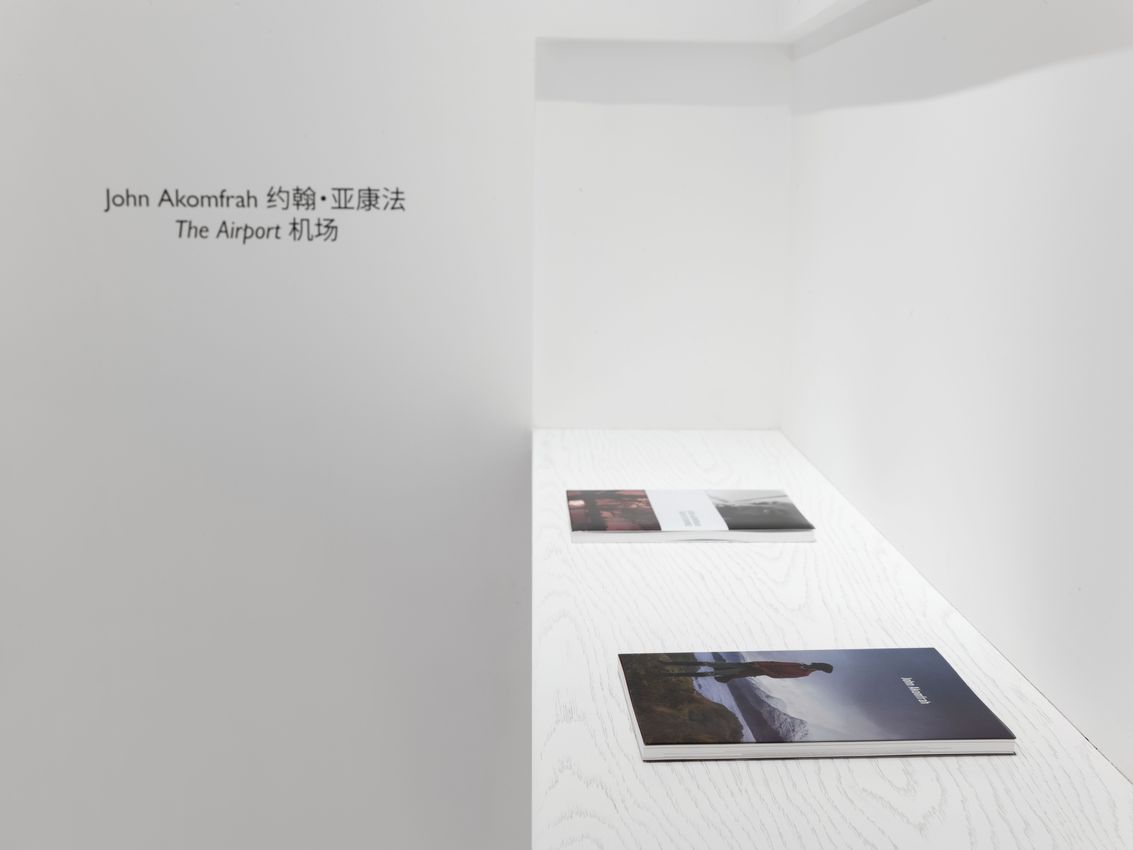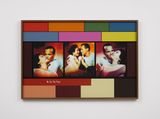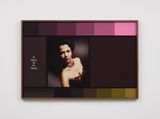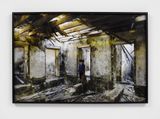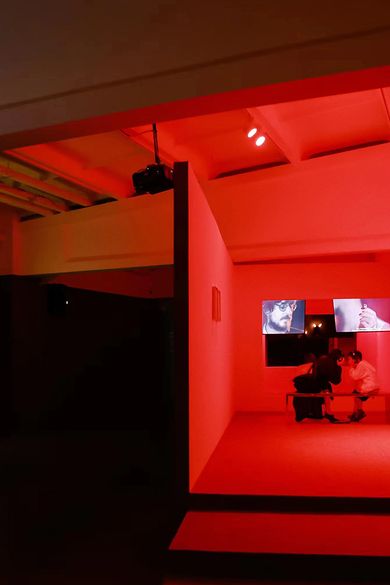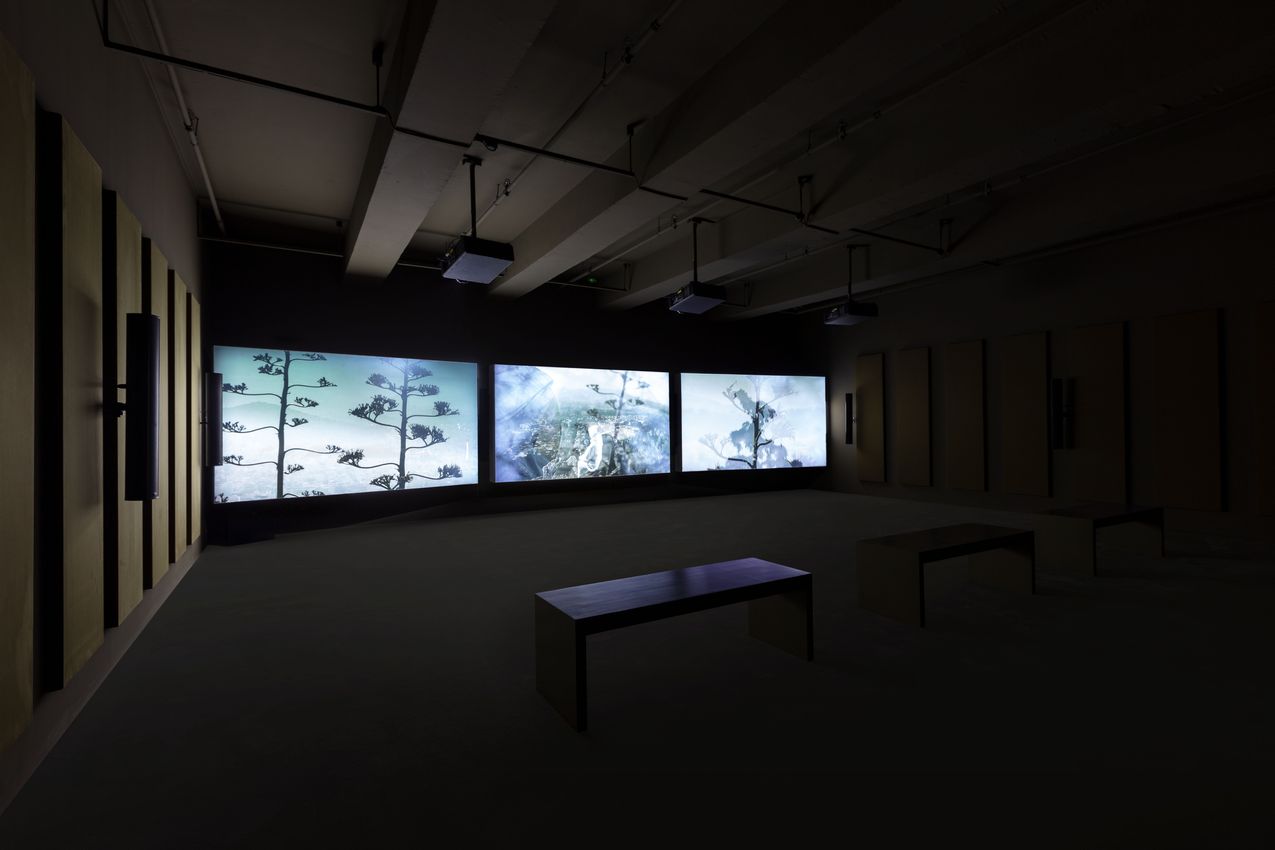
Artist and filmmaker, John Akomfrah presents his first solo exhibition in China at Lisson Gallery Beijing, with the artist’s three-channel film installation, The Airport (2016), a three-screen film installation conceived as a meditation on the history of Greece, the financial crisis of 2007-2008 and its aftermath. The exhibition follows the premiere of two major new commissions for Sharjah Biennial in February 2023, and the announcement that Akomfrah will represent Great Britain at the 2024 Venice Biennale – following his participation in the inaugural, critically acclaimed Ghana Pavilion at the 2019 Venice Biennale. Earlier this year, Akomfrah was awarded a knighthood in the King’s New Year UK Honours List, after receiving a CBE in 2017.
The Airport (2016) is an elliptical, immersive, 53-minute film installation that follows a spaceman who lands in Southern Greece and adopts an abandoned airfield near Athens as his base. The film is populated by displaced and enigmatic characters, including an elderly man in a tuxedo suit who re-lives moments from his past and his future, a wandering astronaut, a marauding gorilla, and forlorn travelers. Taking its cue from the Greek director Theo Angelopoulos and his long sweeping shots, Akomfrah uses tracking shots of the landscape of Athens and Southern Greece. Through these dreamscapes the film contemplates the significance of empires and the ghosts which linger in our collective consciousness, both physically through architecture and the psychological traces from previous generations.
Accompanied by a mesmerizing soundtrack, the film’s narrative weaves together cinematic, literary, philosophical, and artistic traditions, where spaces of human ruin and natural beauty abound. In particular, Akomfrah recalls the work of two filmmaking greats: Stanley Kubrick (1928–1999) and Theo Angelopoulos (1935–2012). The film’s elastic sense of time references Kubrick’s 2001: A Space Odyssey (1968), while Angelopoulos’s technique of constant movement between camera, characters, and locations is also employed to a poetic effect.
The Airport followed other hugely influential films by Akomfrah, who came to prominence in the 1980s as a founding member of the Black Audio Film Collective. For the past 40 years, Akomfrah has used film to challenge conventional histories and confront topics from post-colonialism, Black identity and the diasporic experience, to migration and our destruction of the planet. Known for his use of montage and bricolage techniques, Akomfrah’s films are characterised by a multi-layered approach that fuses archival film footage, newsreel and still photography with newly shot materials. Blending imagery across time and place, Akomfrah embraces the philosophy of dialectics and constructs complex cinematic experiences that invite us to reflect on historical narratives with a critical lens.

John Akomfrah is a hugely respected artist and filmmaker, whose works are characterised by their investigations into memory, post-colonialism, temporality and aesthetics and often explores the experiences of migrant diasporas globally. Akomfrah was a founding member of the influential Black Audio Film Collective, which started in London in 1982 alongside the artists David Lawson and Lina Gopaul, who he still collaborates with today. Their first film, Handsworth Songs (1986), explored the events surrounding the 1985 riots in Birmingham and London through a charged combination of archive footage, still photos and newsreel. The film won several international prizes and established a multi-layered visual style that has become a recognisable motif of Akomfrah’s practice. Recent works include the three-screen installation The Unfinished Conversation (2012), a moving portrait of the cultural theorist Stuart Hall’s life and work; Peripeteia (2012), an imagined drama visualising the lives of individuals included in two 16th century portraits by Albrecht Dürer and Mnemosyne (2010), which exposes the experience of migrants in the UK, questioning the notion of Britain as a promised land by revealing the realities of economic hardship and casual racism. In 2015, Akomfrah premiered his three-screen film installation Vertigo Sea (2015), that explores what Ralph Waldo Emerson calls ‘the sublime seas’. Fusing archival material, readings from classical sources and newly shot footage, Akomfrah’s piece focuses on the disorder and cruelty of the whaling industry and juxtaposes it with scenes of many generations of migrants making epic crossings of the ocean for a better life. Vertigo Sea has as its narrative spine two remarkable books: Herman Melville’s Moby-Dick (1851), and Heathcote Williams’ epic poem Whale Nation (1988), a harrowing and inspiring work which charts the history, intelligence and majesty of the largest mammal on earth.


A respected voice in contemporary art discourse.
Focusing on ambitious storytelling and insightful art-world commentary. Ocula Magazine publishes in-depth interviews, critical essays and timely analysis on the artists, exhibitions and ideas driving the global art world.
Learn more about Ocula Magazine
Showcasing the best of the art world.
Ocula partners with galleries from around the world to highlight their artists, artworks and exhibitions. Gallery membership is by application and invitation, with each member vetted by an independent panel.
Learn more about Ocula Membership

Specialises in the sale of major artworks.
Led by a team with deep ties to the world’s leading auction houses, galleries and collectors. Ocula’s advisory team offers bespoke services to high-net-worth clients from around the world who are looking to acquire the best of contemporary and modern art.
Learn more about our team and services