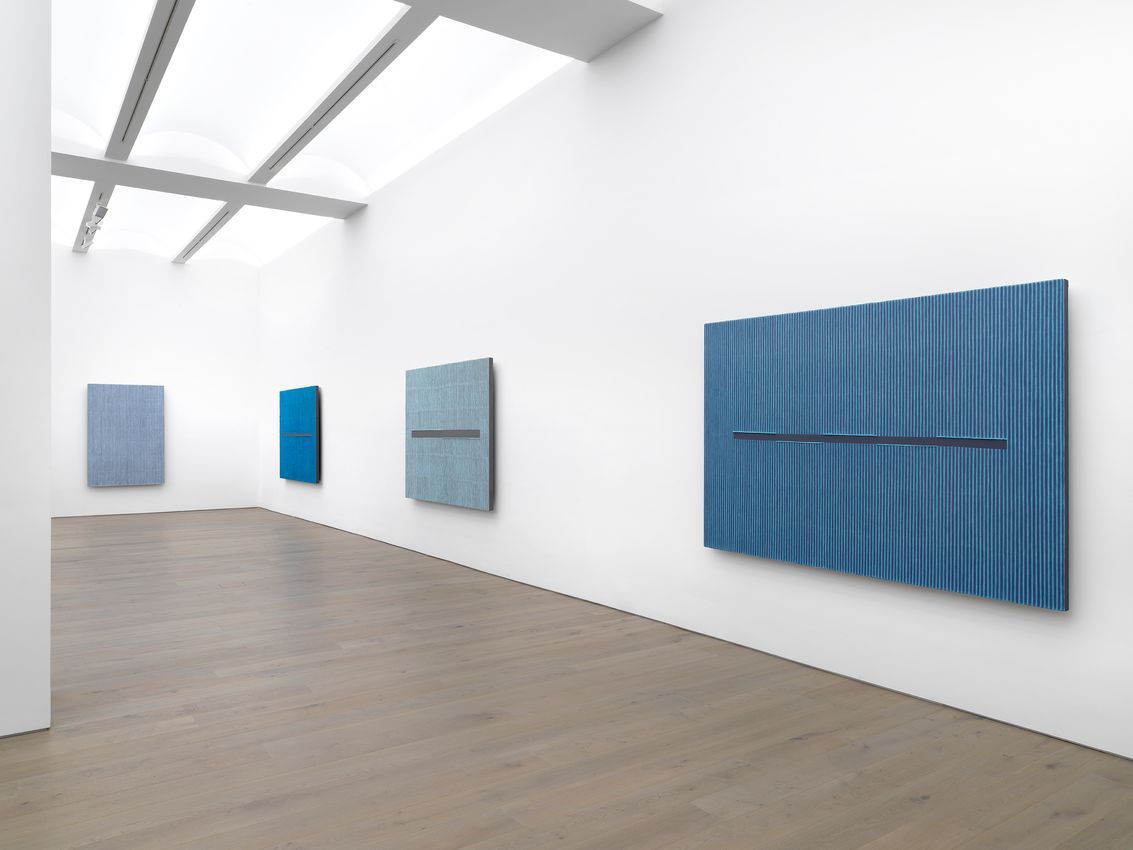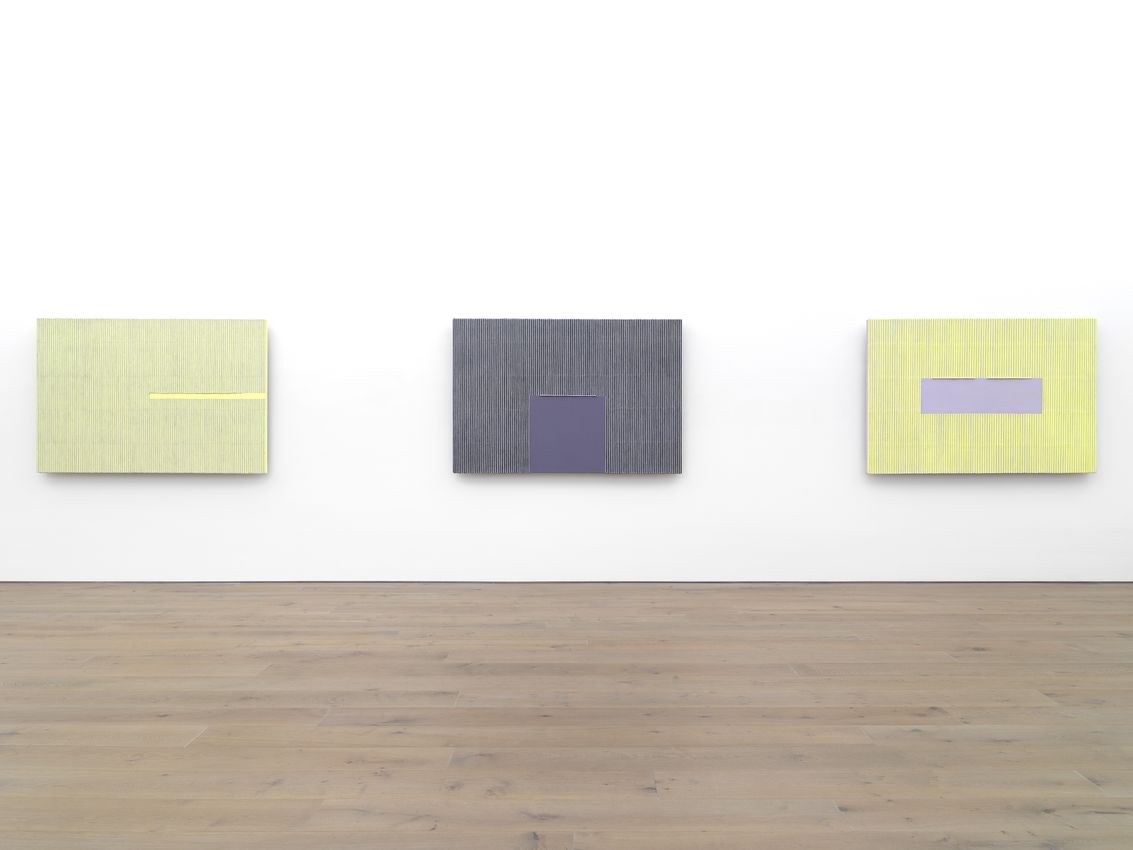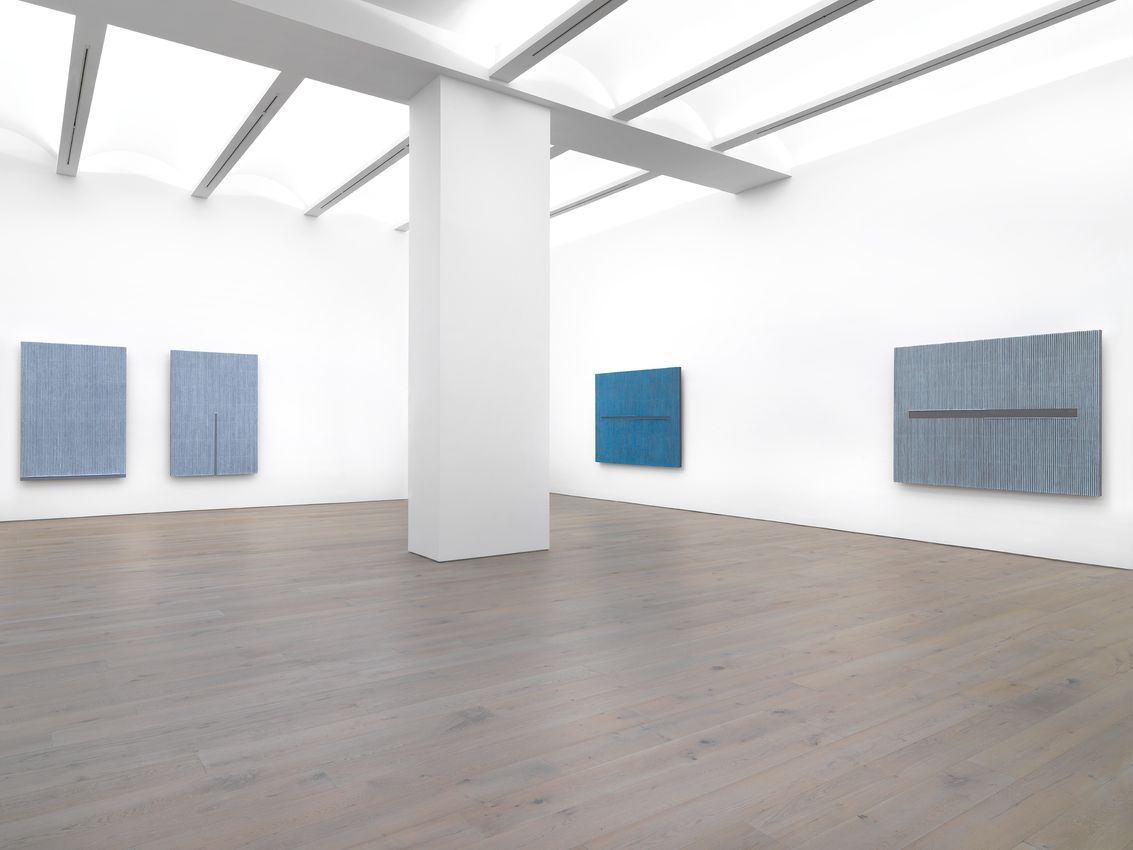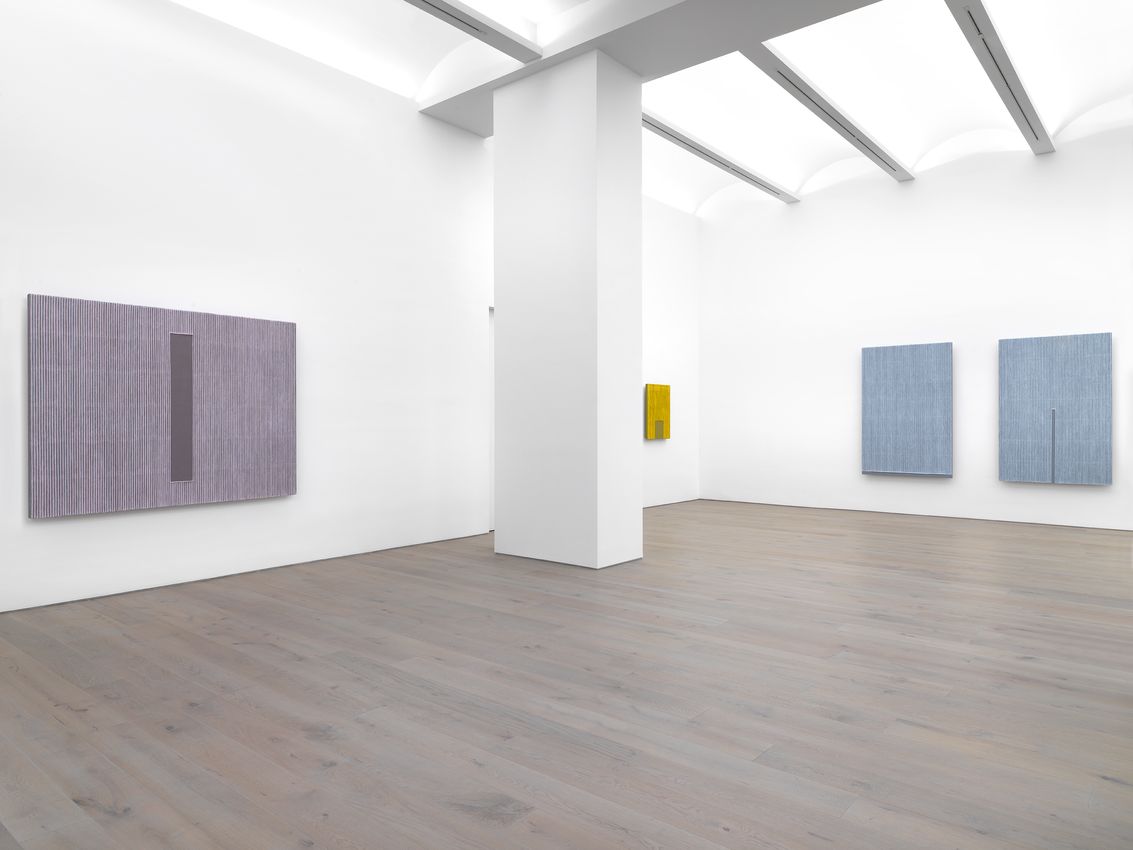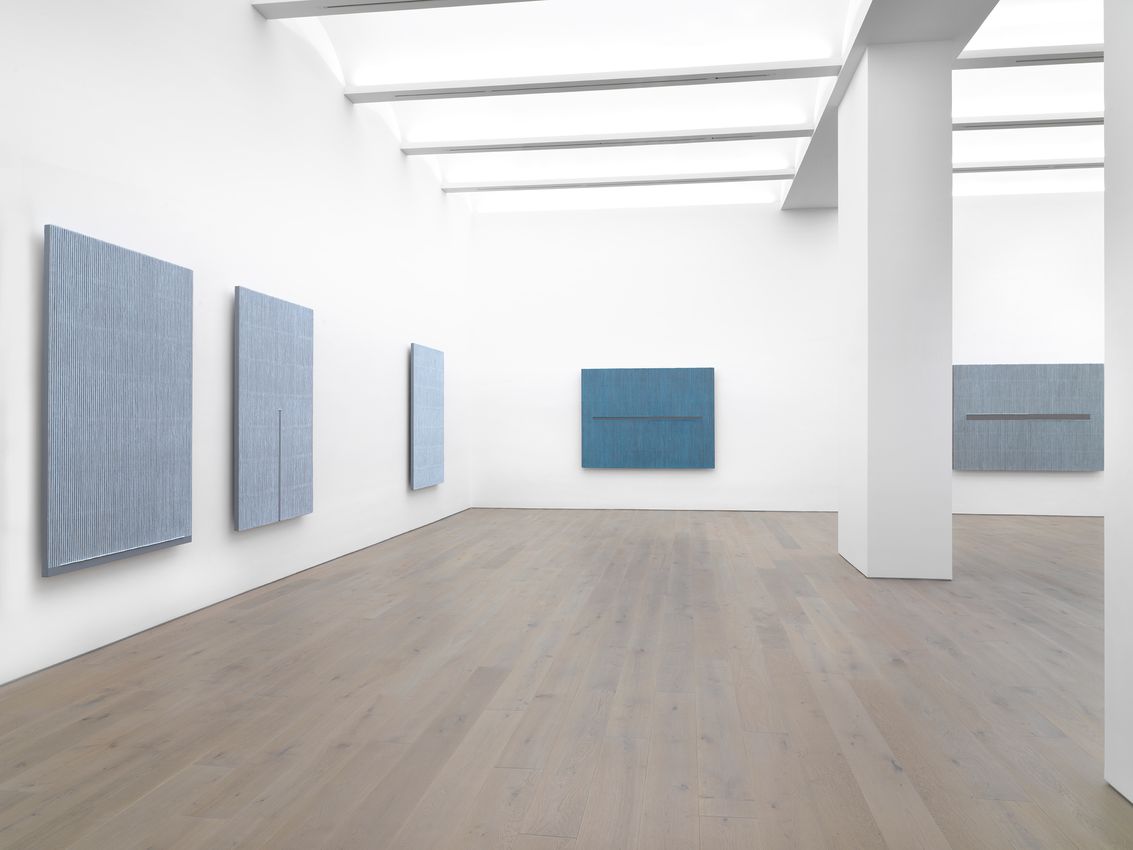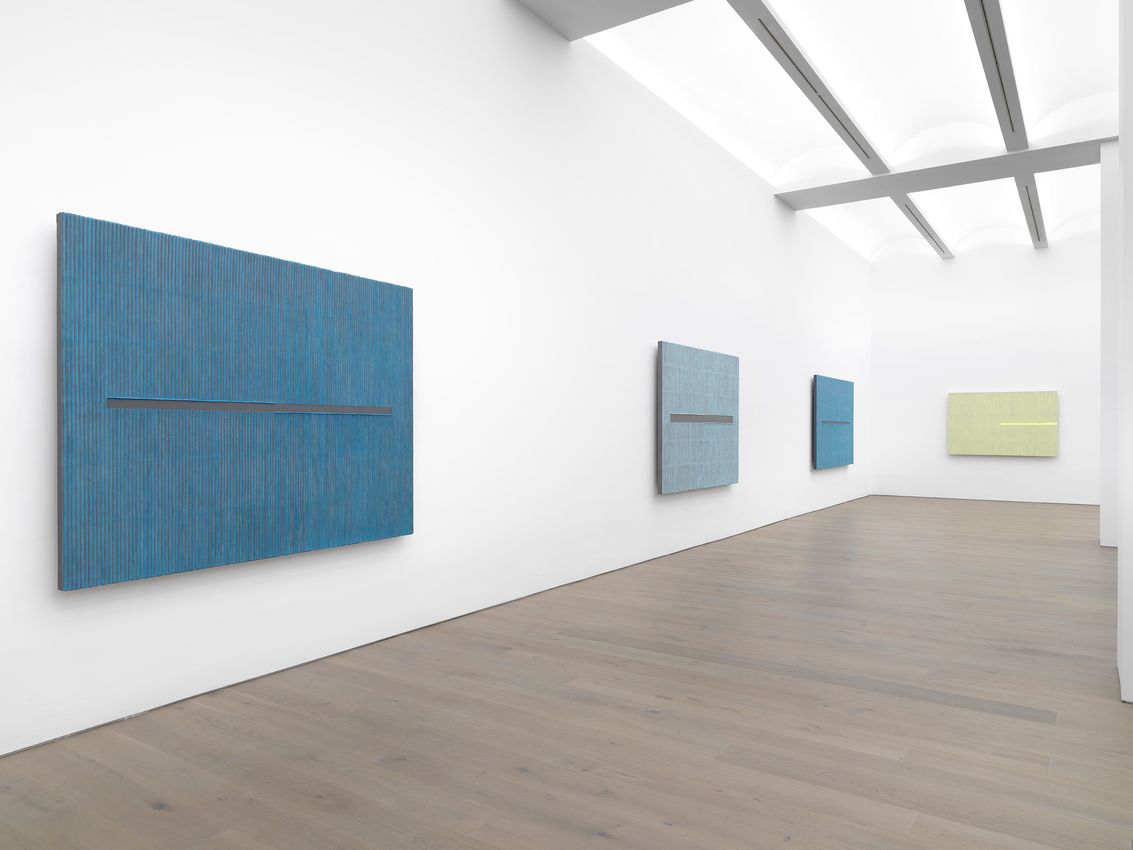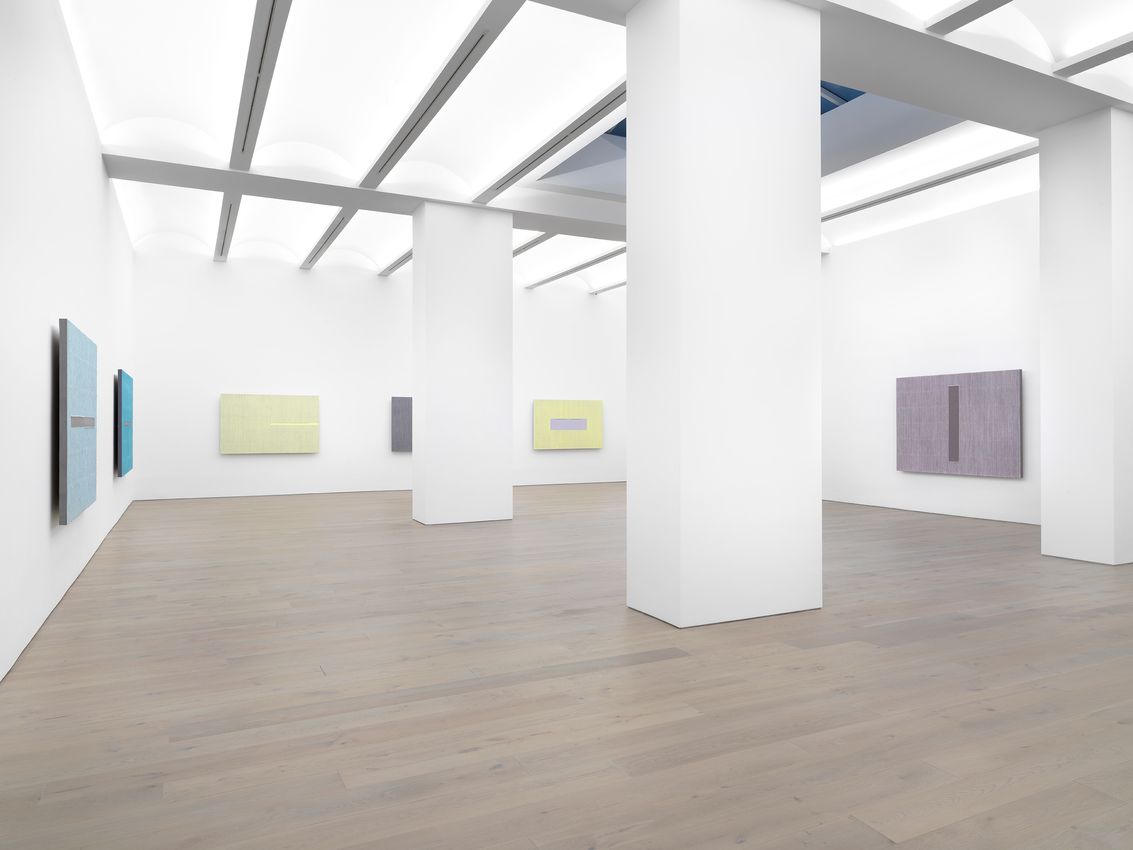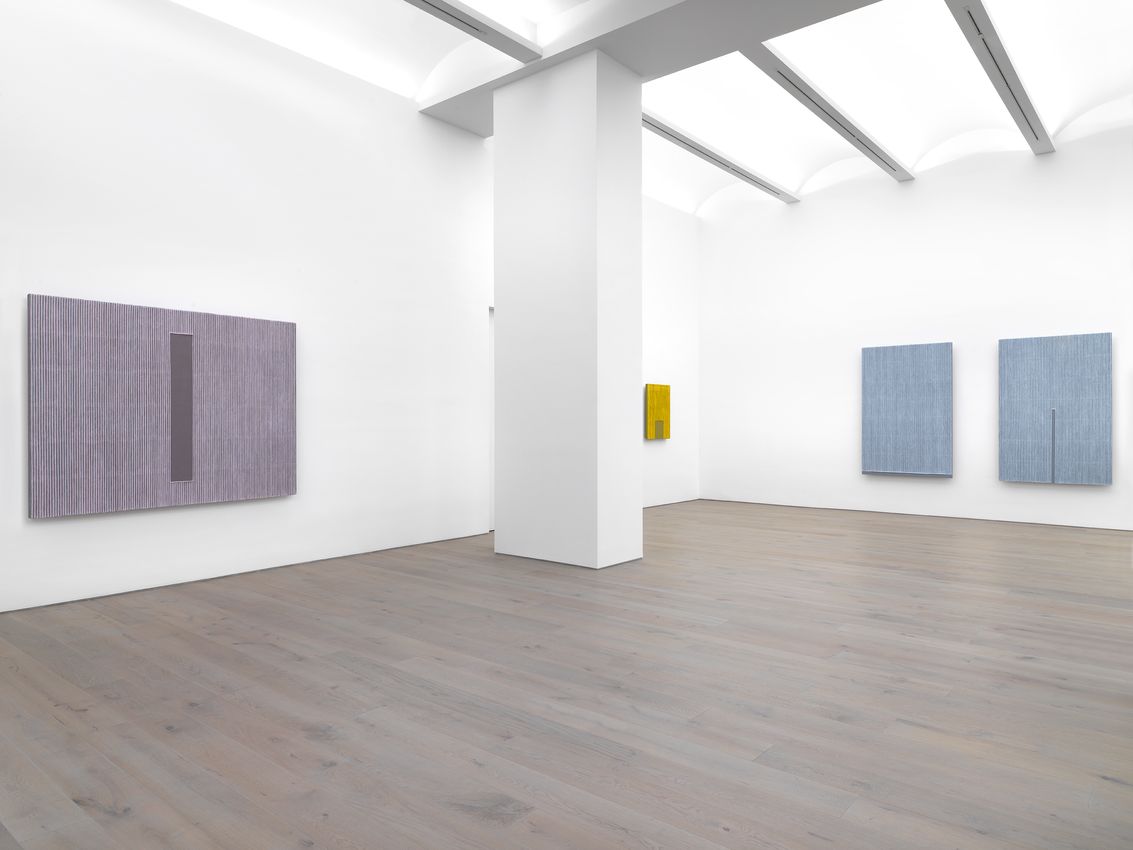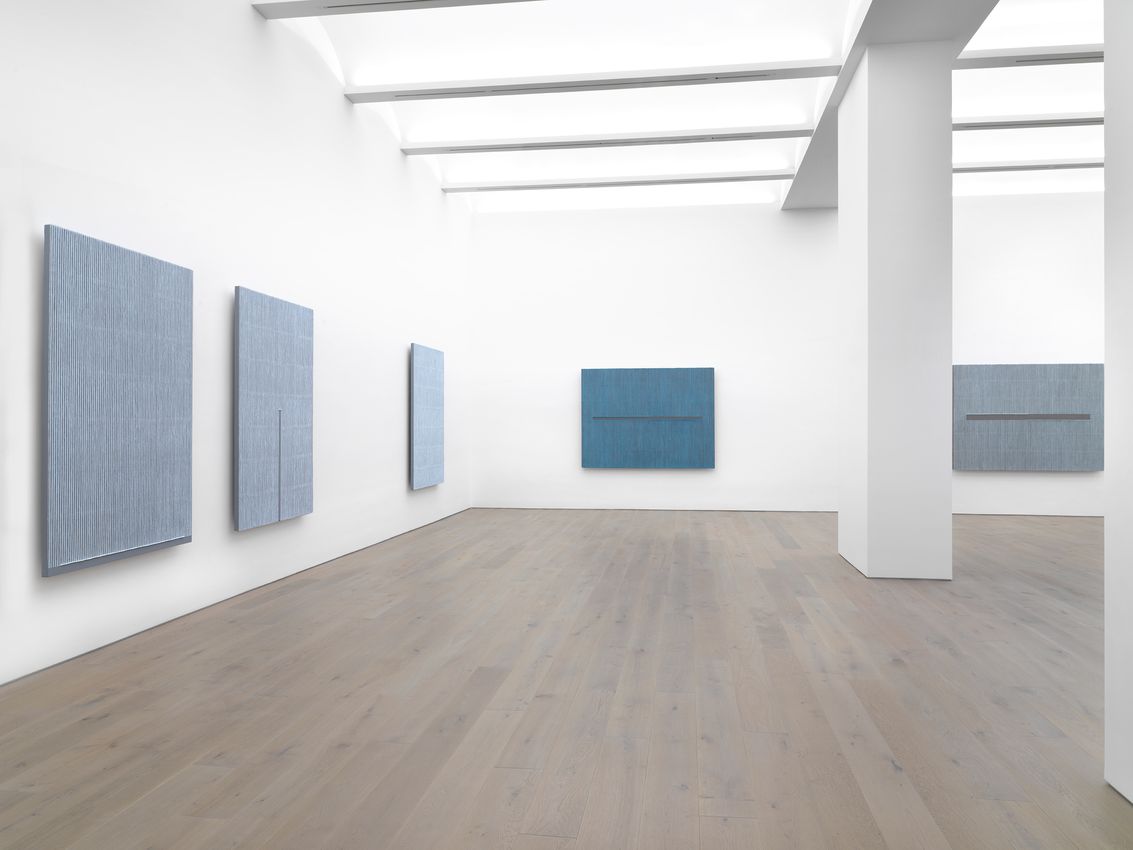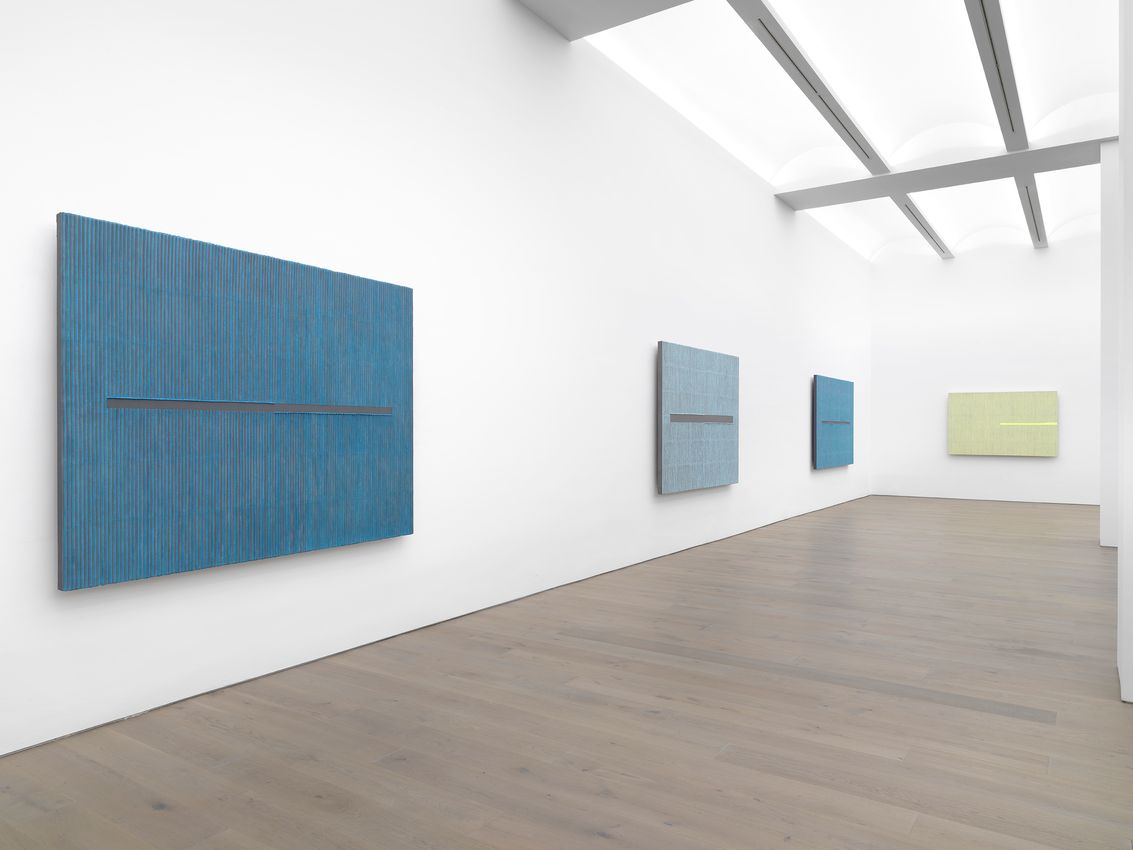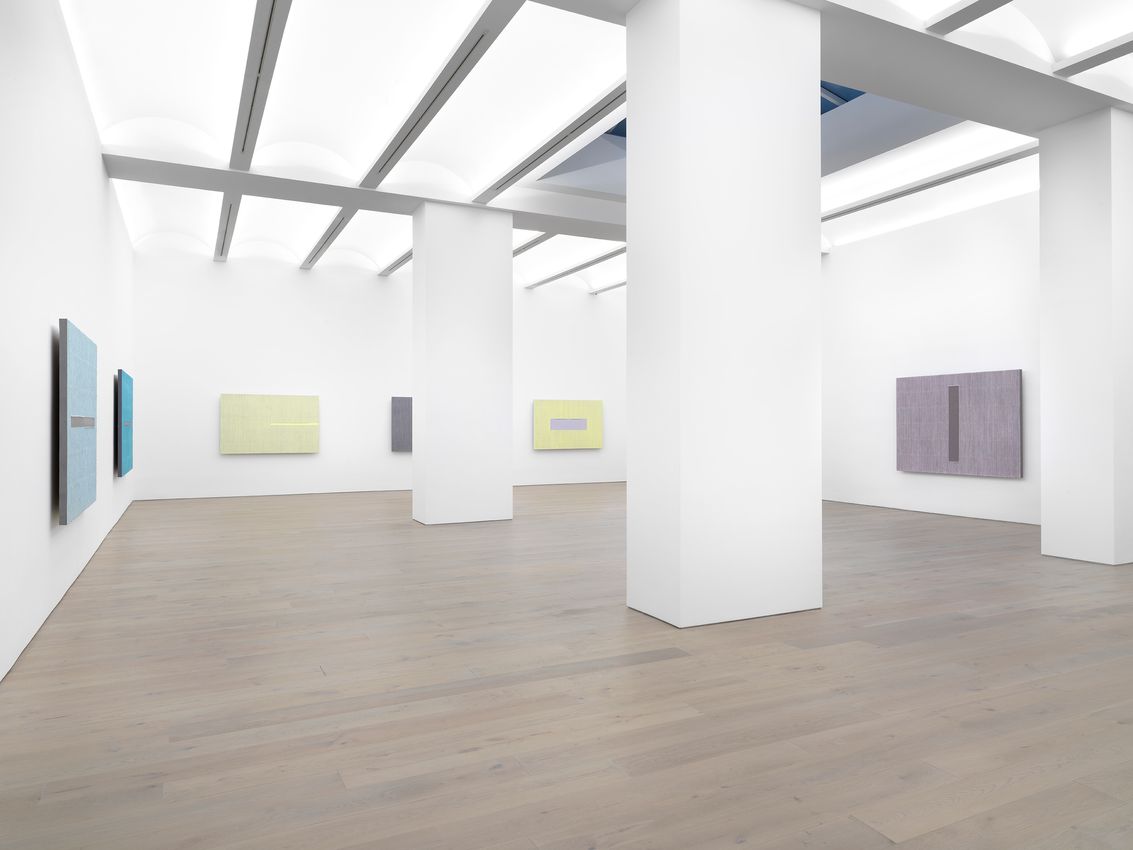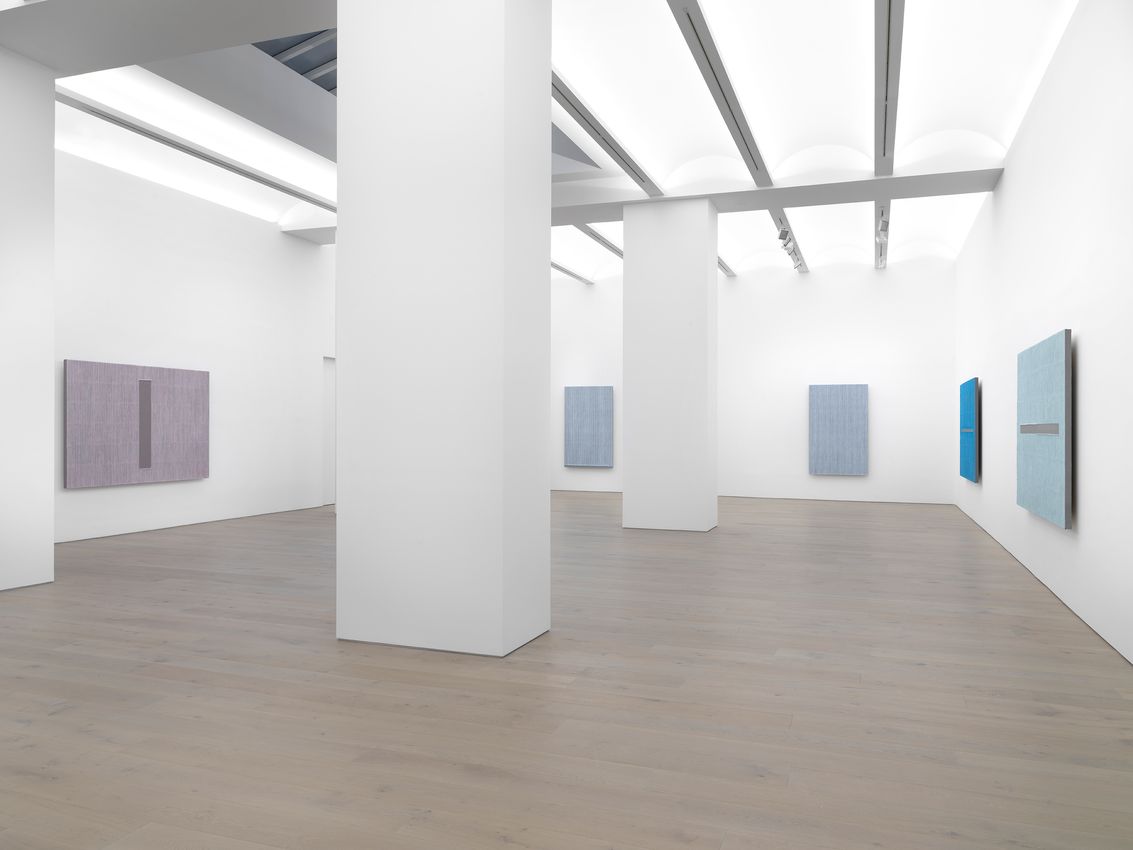
South Korean artist Park Seo-Bo is credited with creating Korean modernism by embodying East Asian views of nature and art in his monochrome paintings. He delves into questions of what painting is, such as ‘Why paint?’ and ‘How to paint?’ in connection with contemporary society, often modifying his technique and presenting a new model of Korean painting. In his Écriture series, French for ‘writing’ or ‘inscribing,’ he takes up a way of painting that is akin to the exercise of writing.
Over the course of his long career, Park has experimented with different materials and techniques. While the initial works from the Écriture series in the early 1970s largely featured lines drawn repeatedly in pencil on a painted surface, those presented in this exhibition maintain the formal elements that appear in his works since the 1980s, when he began using hanji, the traditional handmade paper from Korea.
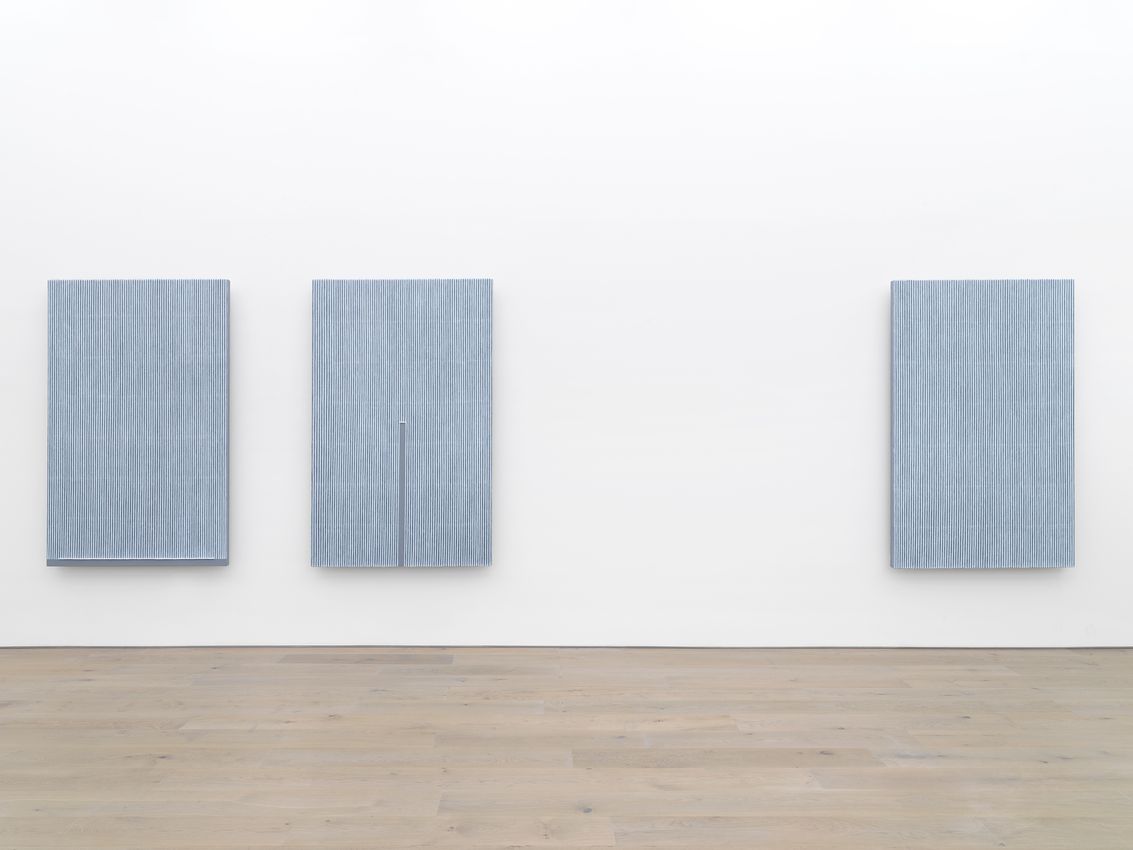
This recent body of work recalls the linear hanji works from the Écriture series, but here, he layers wet hanji onto the canvas, repeatedly pushing a stick along the paper so that parallel lines are arranged over the canvas in a strict order. Unlike the previous pencil Écriture works completed by improvisational drawings or the earlier hanji works whose compositions were constructed by pushing out the paper in a zig-zag pattern, now the canvas is executed in a precisely planned way.
By hand-making the work’s base layer of hanji through repetitive motions, the artist turns it into both a support and a surface, a field where his actions and the materiality of paper become one. It reveals the trajectory of the artist’s activities, the process of working, and the accumulation of time. This endless repetition, free from all ideas and thoughts, leads to the self-discipline and solitude which reflect the Korean view that one can only receive nature fully by emptying the self.
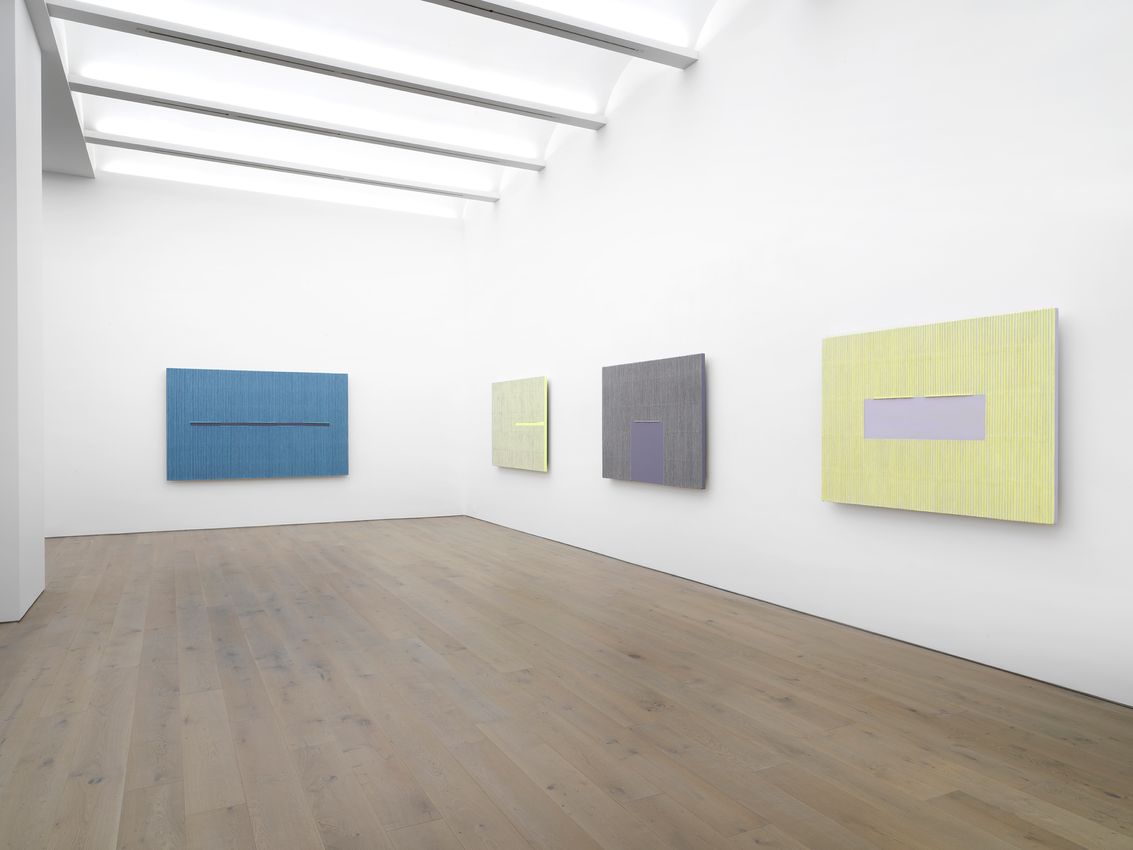
In previous periods, Park used colour to interpolate specific subjects into his works: the wounded souls from the post-war era were represented by the dominant use of black in his informal-style Primodial series; to represent the national or people’s culture, he used obangsaek, or the traditional Korean colour spectrum in his Hereditarius series; or simply to not give much weight to colour, he chose a white in his pencil for the Écriture period. In other instances, as a way of coming closer to nature, the artist used water-soluble pigments, as in the early hanji Écriture works. This means that for Park, colour is a vehicle to show the sign of the times, a thesis for modernising tradition and a symbol to show a unique identity. Through their use of colour, these works are closely connected to the social and cultural contexts in which they emerged. However, since the 2000s, the artist began to focus on the beauty of the painting itself and more moderate colours, more than in any other period.
The paintings shown in this exhibition, works from the 2000s, are characterised by bright, vivid colours. These compositions with complementary colours in their vertical furrows have different effects according to different points of view as in Op Art. However, unlike Op art, whose optical illusions are highly calculated, Park’s paintings look natural rather than mechanical, soft rather than sharp. This is why viewers often find themselves spending long periods of time in front of Park’s works, captivated by their restraint and refinement. As we contemplate the paintings in this exhibition and become immersed in them, let us reflect on Park’s wish that a painting will be able to give comfort and rest to the wounded, modern human in this digitalizsed world. They also offer new answers to the questions ‘Why paint?’ and ‘How to paint?, answers he has searched for throughout his life.
Park Seo-Bo (b. 1931, Yecheon, Korea) is an eminent figure in contemporary Korean art. He has exhibited internationally at the Leeum, Samsung Museum of Art, Seoul; Busan Museum of Art, South Korea; Tate Liverpool, UK and the Brooklyn Museum, New York, among other leading institutions. His works are in several important collections, including the DIA Art Foundation in the United States; the Guggenheim Museums in New York and Dubai; The Museum of Modern Art, New York; The Art Institute of Chicago; and the Hirshhorn Museum and Sculpture Garden, Washington, DC. Park will have a solo show at the National Museum of Modern and Contemporary Art, Seoul in May 2019.
KI, Hey-kyung June 2018. Press release courtesy Perrotin.
Park Seo-Bo is a seminal figure in Korean contemporary art and one of the founding members of the Dansaekhwa monochrome movement, a synthesis between traditional Korean spirit and Western abstraction, which emerged in the early 1970s in post-war Korea and has gained international recognition since. Although the Korean monochrome movement has never been defined with a manifesto, the artists affiliated with Dansaekhwa, including Chung Chang-Sup and Lee Ufan, are commonly known for their use of a neutral palette (namely white, beige and black), their material emphasis of the pictorial components and fabrics, and their gestural and systematical engagement within the artworks in the making. As a matter of fact, in Park Seo-Bo’s paintings, process and discipline prevail, whereas the French Art Informel scene originally inspired the artist’s early aesthetics. Indeed, back in 1961, Park Seo-Bo earned a UNESCO scholarship to study and ended up spending a whole year in Paris, where he furthered his knowledge of Art Informel, which arose in Europe parallel to the American Abstract Expressionism during World War II and became prevalent throughout the 1950s. As soon as 1957, Park Seo-Bo had already helped establish in Seoul the Hyun-Dae Artists Association around the principles of Art Informel, the gestural and abstract techniques of which, like those of Action Painting and Colour Field in the United States, would enable young Korean artists to express their anguish in the immediate aftermath of the Korean War. The influence of Art Informel in the early works of Park Seo-Bo can be seen in his series ‘Primordialis’ from the early 1960s, which is characterised by aggressive brushstrokes, dark hues and amorphous forms. Yet by the mid-1960s, the artist had already rejected the occidental manners that he had primarily adopted and started devoting his time to learning about oriental philosophy.

A respected voice in contemporary art discourse.
Focusing on ambitious storytelling and insightful art-world commentary. Ocula Magazine publishes in-depth interviews, critical essays and timely analysis on the artists, exhibitions and ideas driving the global art world.
Learn more about Ocula Magazine
Showcasing the best of the art world.
Ocula partners with galleries from around the world to highlight their artists, artworks and exhibitions. Gallery membership is by application and invitation, with each member vetted by an independent panel.
Learn more about Ocula Membership

Specialises in the sale of major artworks.
Led by a team with deep ties to the world’s leading auction houses, galleries and collectors. Ocula’s advisory team offers bespoke services to high-net-worth clients from around the world who are looking to acquire the best of contemporary and modern art.
Learn more about our team and services