Press Release

Tang Contemporary Art is proud to announce the opening of Yang Zhenzhong’s solo exhibition Surveillance and Panorama on 1 September 2018, in the first space of Beijing. Curated by Lu Mingjun, this exhibition focuses on the dissemination of visual images and channels of visual perception, and has created a political theatre rooted, like the control mechanisms of power, in the surveillance structure.

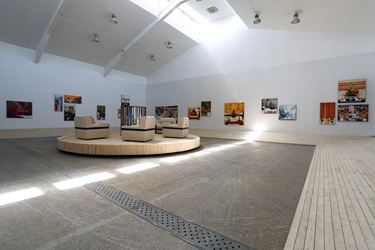
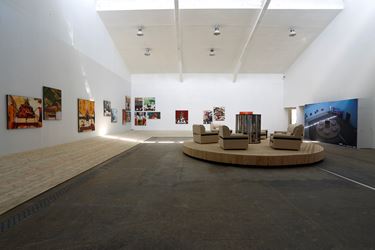
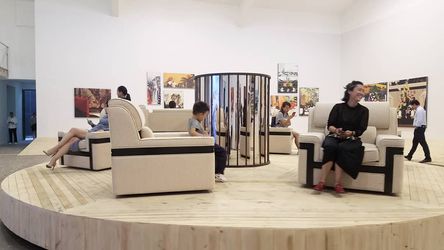
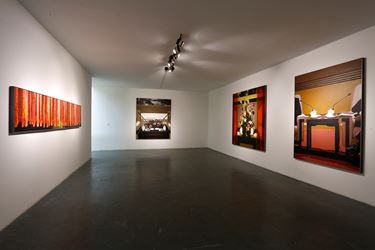
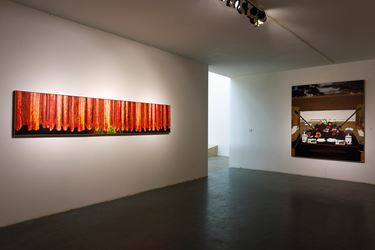
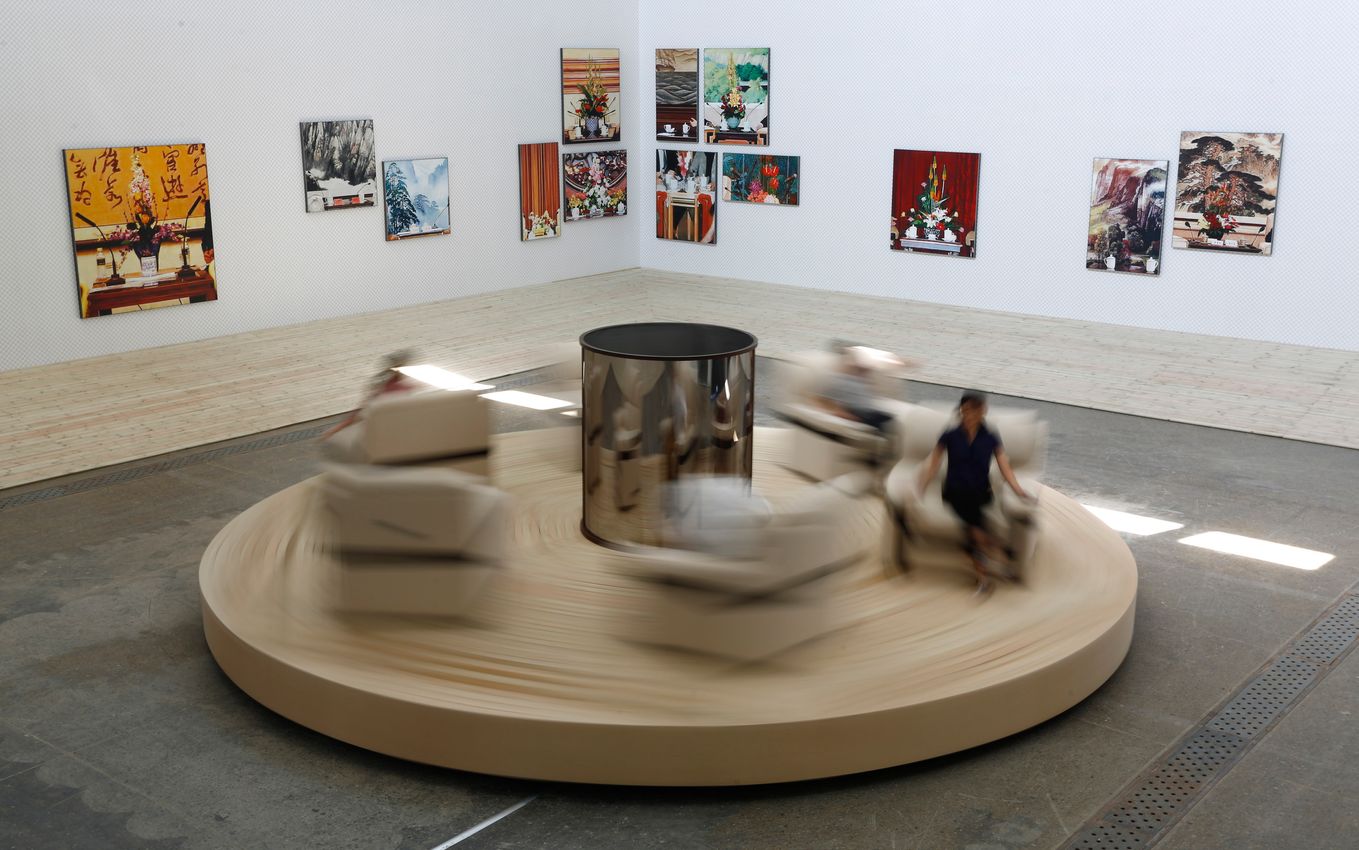
The exhibition comprises three parts. The first part is a looped, revolving installation at the centre of the exhibition space, at the centre of which is a mirrored pillar with wire fencing, surrounded by six couches made to official international conference standards. Viewers are free to sit down and take in the paintings and video works on the surrounding walls as the couches slowly rotate. The fenced mirror pillar reflects everything that happens around it.

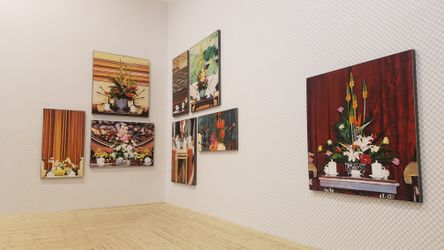
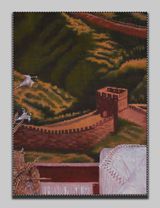
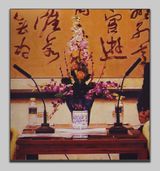
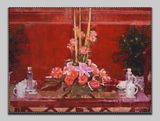
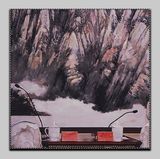
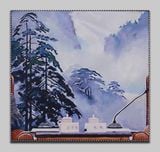
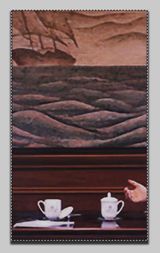
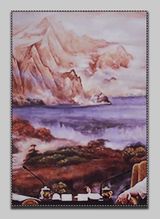
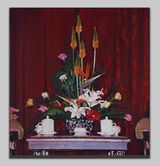
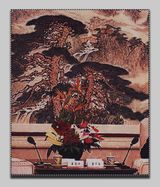
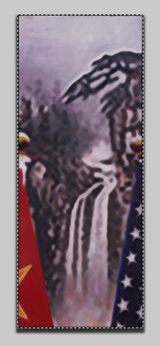
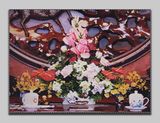
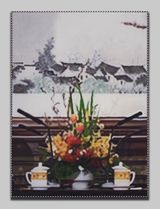
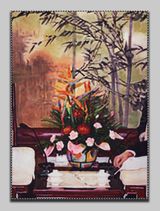
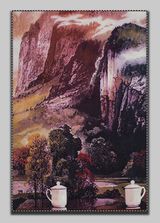
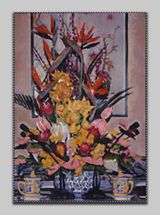
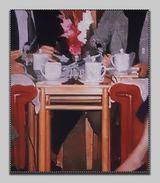
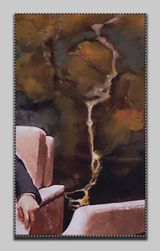
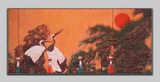
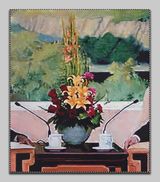
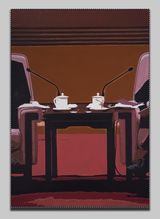
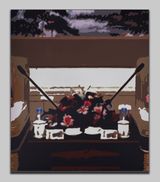
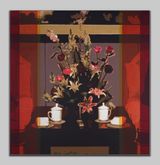
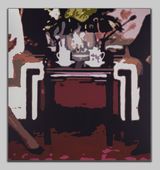
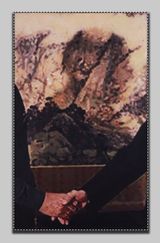
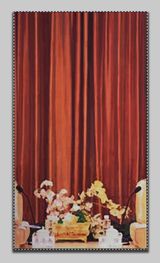
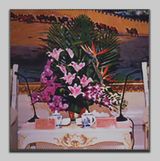
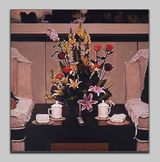
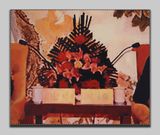
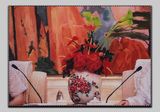
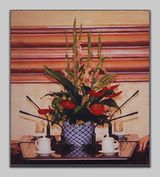
The second part of the exhibition is a corresponding series of paintings hanging on three of the walls in the same space. The paintings are derived from official news downloaded from the internet, from which he extracted images of indoor scenes, many of them of meeting halls, conference rooms or other spaces made to official standards. Due to the absence of people, or his intentional removal of them, these scenes look more like still life paintings. Yang Zhenzhong has preserved the low resolution of the images from when they were downloaded, and in the process of magnifying them as paintings, highlighted their granulation and texture. Meanwhile, from the design of the frames and the background, these images appear to be in the process of being Photoshopped.

For the third part of the exhibition, Yang Zhenzhong installed four wireless cameras in two hidden corners of the exhibition space and behind two of the couches. Live feeds from the cameras automatically alternate between each other on an LED screen mounted on a separate wall in the space.

As for why choosing Still Life and Landscape as the exhibition title, it is because of the sense of the mundane and the ‘soft universality’ of still life and landscape painting, and even touches on the historical origins of the still life and the landscape. Still lifes are often up-close views, while landscapes are distant views. At first, however, they were both liberated from religion, gaining subjectivity from the repression of power. This logic corresponds with Yang Zhenzhong’s concepts and discourse. We can see that still life and landscape painting both underwent a progression from the divine light to the ‘light’ of nature and life. As Yang Zhenzhong sees it, the ideology that permeates everyday experience is itself a massive discursive space and confluence of energy, and for that reason, he hopes to use perceptual intersections and dialectic hybrids of vision (image) and politics to release more dimensions of power and momentum of life.

Read More

Installation Views

Selected Works

Loading...
About the Artist

The desire to challenge normative notions of social behavior informs the practices of Yang Zhenzhong’s work. He is preoccupied with China’s intrinsic disharmony and extreme discrepancies and often touches upon taboos such as death and out-dated social norms. His approach is metaphorical rather than narrative. His videos often start from witty ideas, employing image repetition and rhythmic coordination of sound, language and image. Yang Zhenzhong became famous in 2000 with his video (I Know) I Will Die that features short sequences in which a series of different people speak the phrase “I will die” to the camera. It is a disconcerting, soberly presented film that confronts viewers with existential questions. Yang Zhenzhong recognizes that individual participation is the starting point for a transformation of perception. The video 922 Grains of Rice plays with the interaction of the image of a cock and a chicken pecking grains of rice and the sound of a male and a female voice counting the number of pecked grains. It is a humorous representation of the battle of sexes as well a comment on today’s competitive behavior.

View Artist Profile

Also Exhibiting at Tang Contemporary Art

About the Gallery

Tang Contemporary Art was established in 1997 in Bangkok, later establishing galleries in Beijing and most recently Hong Kong. Tang Contemporary Art is fully committed to producing critical projects and exhibitions to promote Contemporary Chinese art regionally and worldwide and encourage a dynamic exchange between Chinese artists and those abroad.

View Gallery Profile
Address
D06, 798 Art District
No.2 Jiuxianqiao Road
Chaoyang District
Beijing
China
Opening Hours
November – April
Tuesday – Sunday
11am – 5:30pm

May – October
Tuesday – Sunday
11am – 6:30pm
(1)
Beijing D06, 798 Art District, No.2 Jiuxianqiao Road
Tang Contemporary Art
D06, 798 Art District, No.2 Jiuxianqiao Road, Chaoyang District, Beijing, China

Opening hours
November – April
Tuesday – Sunday
11am – 5:30pm

May – October
Tuesday – Sunday
11am – 6:30pm
The art world in focus