




ELIZABETH PEYTON
b. 1965, United StatesElizabeth Peyton is an American painter and printmaker known for intimate, stylised portraits of friends, historical figures, and contemporary icons that helped reassert figurative painting within the context of 1990s and 2000s contemporary art.
Early Life and Career
Elizabeth Joy Peyton was born in 1965 in Danbury, Connecticut, and studied at the School of Visual Arts in New York, receiving her BFA in 1987. She remained based in New York, where immersion in downtown culture and music, fashion, and nightlife shaped the sensibility of her early portraits, which often depicted musicians and other figures circulating in mass media.
Her breakthrough came with an unconventional exhibition organised with dealer Gavin Brown in a room at the Chelsea Hotel in 1993, where she installed small portraits of historical figures such as Napoleon Bonaparte, Marie Antoinette, and King Ludwig II of Bavaria. Accessible around the clock via a key collected at the hotel reception, the show signalled a new, diaristic form of portraiture at odds with the dominant currents of 1990s conceptual and installation-based art, and marked Peyton as a central figure in the resurgence of figurative painting.
Artistic Practice
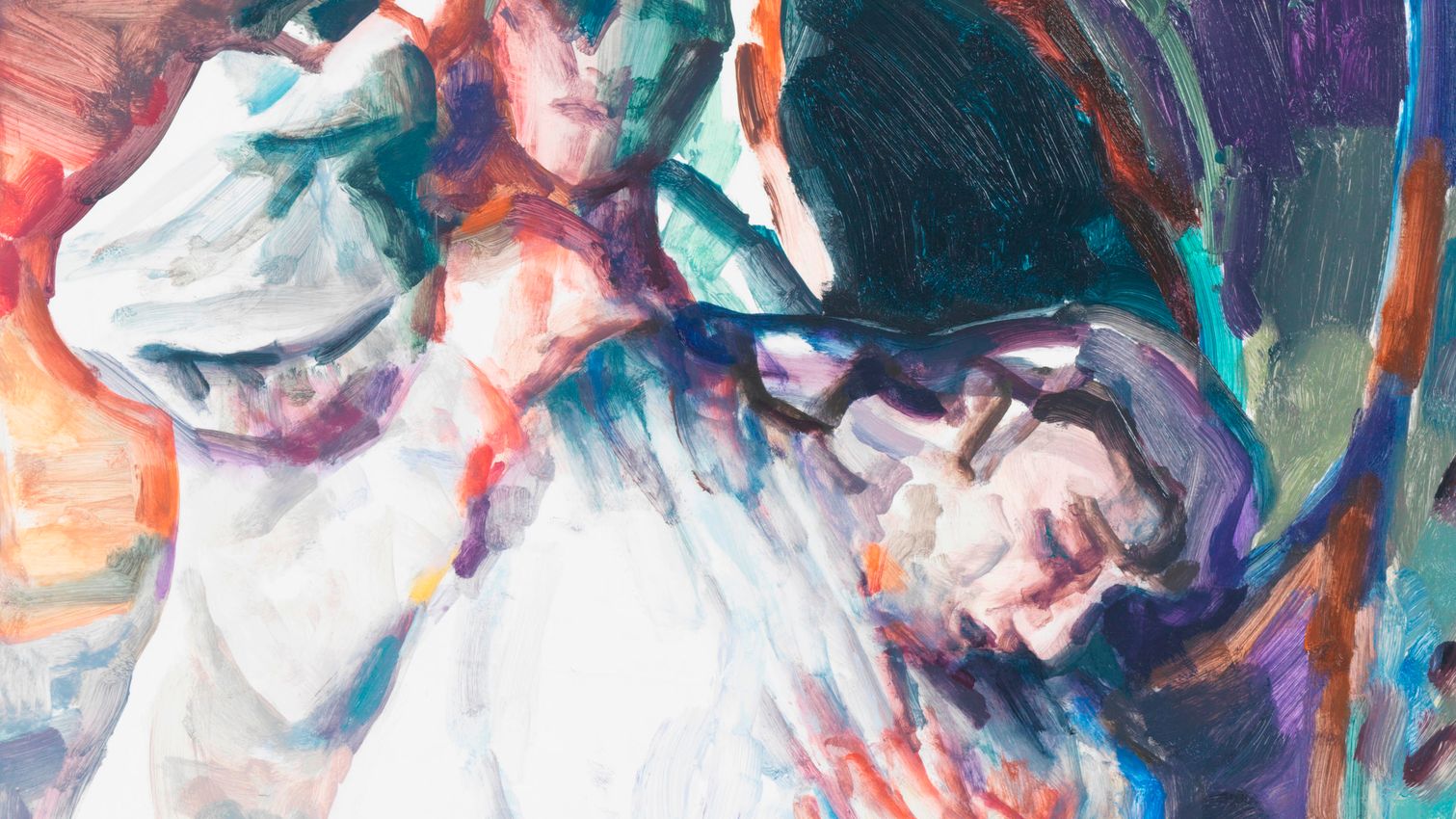
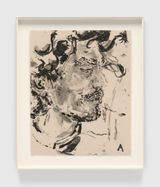
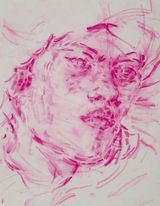
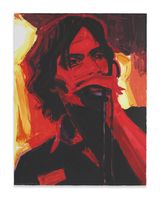
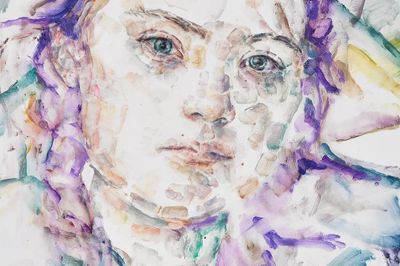
Peyton’s practice centres on intimate portraits in oil, watercolour, ink, and pencil, depicting friends, lovers, musicians, writers, and historical figures in elongated forms with luminous skin tones and saturated colour. Often sourced from magazines, books, and later her own photographs and sittings, these works place their subjects against compressed, decorative backgrounds that heighten emotional intensity, while her sustained engagement with printmaking since a 1998 Parkett commission has extended her language into lithographs, monotypes, and woodcuts on varied papers.
Her portraits have been described as reinventing portraiture for a media-saturated era, treating likeness as a vehicle for desire, admiration, and emotional identification rather than status, and framing figures such as Kurt Cobain or David Bowie alongside artist friends as emblems of youth, vulnerability, and glamour. Positioned within the late-20th-century revival of figurative painting yet distinct from photographic realism, Peyton draws on art history, music culture, and literature, and in recent exhibitions such as ”Angel” and “La pesanteur et la grâce” has folded allegorical and mythological subjects into her work, reflecting on mortality, conflict, and the persistence of classical narratives in contemporary life.
Exhibitions, Collections and Recognition
Peyton’s work has been the subject of several significant institutional exhibitions, notably the travelling survey Live Forever: Elizabeth Peyton, which opened at the New Museum in New York in 2008 and contributed to consolidating her international reputation. She has also been included in major group exhibitions such as the Whitney Biennial (Whitney Museum of American Art, 2004), which affirmed the prominence of her contribution to contemporary portraiture.
Peyton’s work is held in major public collections, including the Solomon R. Guggenheim Museum. Over the past three decades, she has received honours such as the Larry Aldrich Award (2006), amfAR’s Award of Excellence for Artistic Contributions to the Fight Against AIDS (2007), and a Lifetime Achievement Award in Visual Arts from Guild Hall (2011), alongside recognition from the New Museum in 2018.
Elizabeth Peyton FAQs
What is Elizabeth Peyton best known for?
Elizabeth Peyton is best known for small, luminous portraits of friends, historical figures, and contemporary cultural icons, painted in an intimate, stylised manner that emphasises emotion and presence. Her work helped renew interest in figurative painting in the 1990s, bringing portraiture into dialogue with music, fashion, and celebrity culture.
How did Elizabeth Peyton’s career begin?
Elizabeth Peyton’s career gained critical attention with her 1993 exhibition in a Chelsea Hotel room in New York, organised with Gavin Brown, which presented portraits of historical figures such as Napoleon and Ludwig II. The show’s unusual setting and focus on highly personal images marked a distinct alternative to dominant conceptual and installation practices of the period.
What themes does Elizabeth Peyton explore in her work?
Elizabeth Peyton’s work explores themes of desire, admiration, and the construction of identity through images, focusing on how individuals become icons in both private and public imagination. She also considers time and mortality, returning to sitters over many years and, in recent mythologically inflected works, reflecting on historical narratives of love, loss, and conflict.
Where can I see Elizabeth Peyton’s work?
Elizabeth Peyton’s artworks are held in major public collections such as the Guggenheim Museum, and she exhibits regularly with David Zwirner in New York, London, and Paris. Recent solo exhibitions include mountains in my heart (the death of Sarpedon) in New York in 2026.
How has Elizabeth Peyton influenced contemporary portraiture?
Elizabeth Peyton has been credited with modernising portraiture by combining the language of historical painting with imagery sourced from magazines, photography, and contemporary culture, foregrounding intimacy over official likeness. Her work opened space for younger artists to treat portraiture as a site for exploring fandom, friendship, and affect within a broader resurgence of figurative painting.
Ocula | 2026






Explore Elizabeth Peyton's Exhibitions



Elizabeth Peyton in Ocula Magazine











Explore and Follow Artists Shaping Contemporary Art
A respected voice in contemporary art discourse.
Focusing on ambitious storytelling and insightful art-world commentary. Ocula Magazine publishes in-depth interviews, critical essays and timely analysis on the artists, exhibitions and ideas driving the global art world.
Learn more about Ocula Magazine
Showcasing the best of the art world.
Ocula partners with galleries from around the world to highlight their artists, artworks and exhibitions. Gallery membership is by application and invitation, with each member vetted by an independent panel.
Learn more about Ocula Membership
Specialises in the sale of major artworks.
Led by a team with deep ties to the world’s leading auction houses, galleries and collectors. Ocula’s advisory team offers bespoke services to high-net-worth clients from around the world who are looking to acquire the best of contemporary and modern art.
Learn more about our team and services