


Press Release

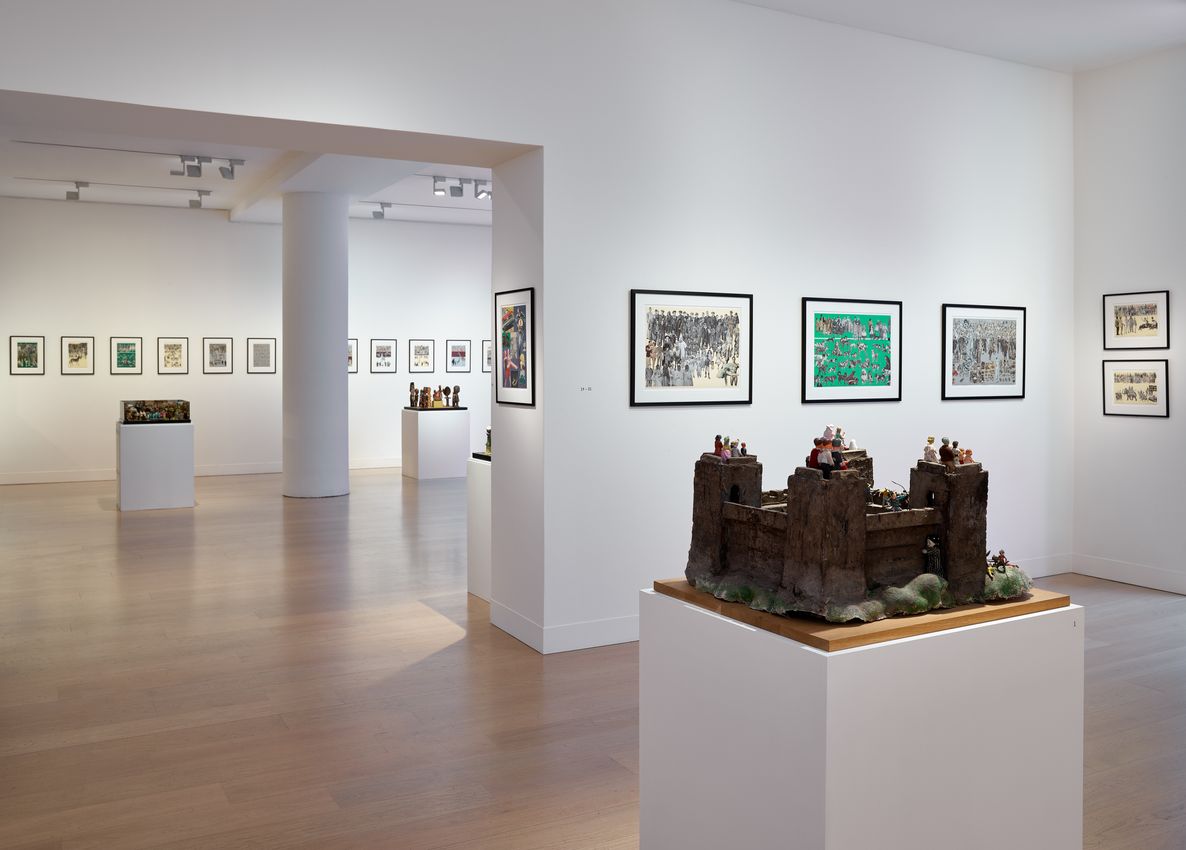
Peter Blake: Sculpture and Other Matters, the first exhibition in twenty years to be dedicated to Peter Blake’s sculpture, reveals a less familiar aspect to the work of one of the best loved and most iconic British artists, spotlighting sculptures that are by turns quirky, endearing or engaged with conceptual concerns. These works function not only as art objects, but offer starting points for imagined narratives, each with a glimmer of Blake’s typically gentle, English sense of humour.

Blake’s work in three dimensions has remained remarkably consistent over six decades of his career. An early engagement with found objects and themes of fandom begins with the seminal ‘Locker’ (1959). This sculpture, an old RAF locker covered in glamorous pin-up images, was first shown at the Institute of Contemporary Arts, London in 1960 and is one of the earliest expressions of British ‘Pop’ culture. Painted wooden constructions from the early 1960s nod to Blake’s earlier years studying at Gravesend, where he was taught woodwork, while ‘Tarzan Box – Big Iron Bird, She Come’ (c.1965) demonstrates an early, decisive move toward assemblage and features some of the storybook characters which would recur in Blake’s work in the forthcoming decades.

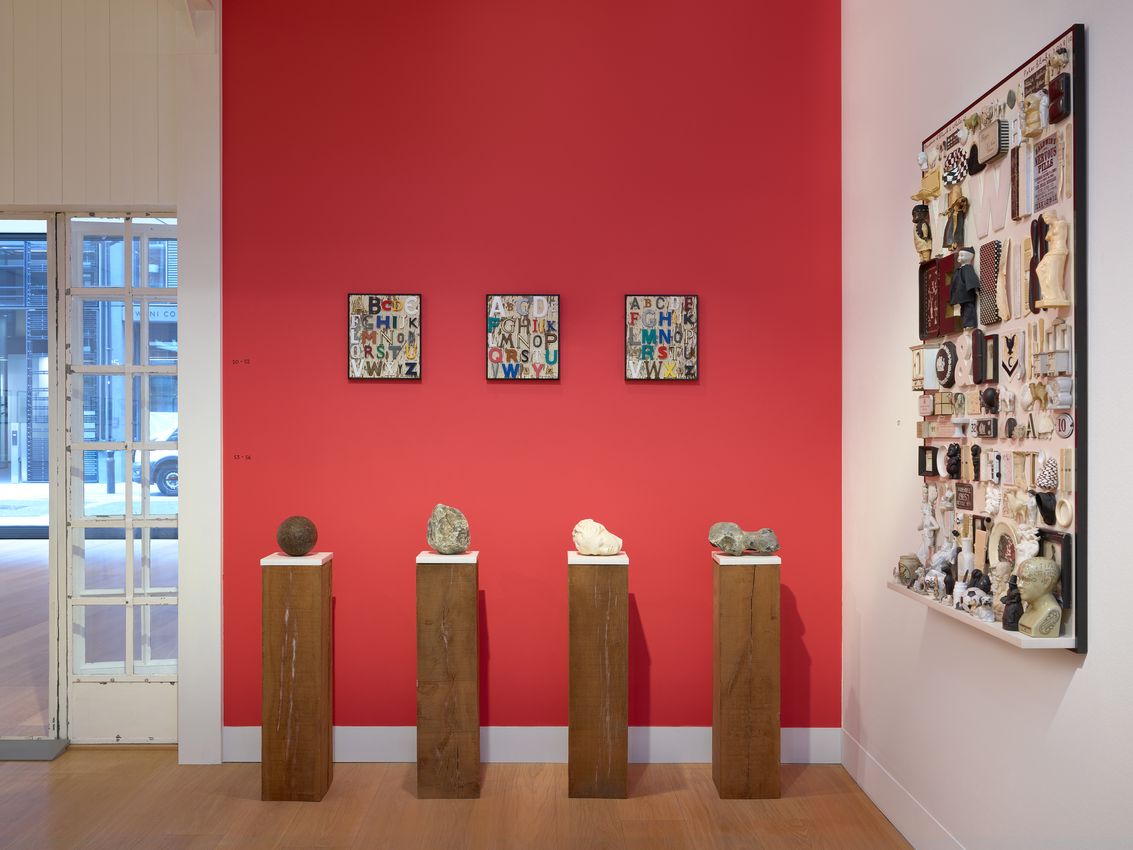
For those who are well acquainted with Blake’s painting and graphic work, the artist’s ‘Found Sculpture’ series of 2012 will be most surprising. In these conceptual works, pebbles, rocks and other found objects are elevated to fine art status, each placed securely on its dedicated plinth of oak and marble. By elevating the mundane into the realm of art, Blake’s sculptures invite viewers to reconsider the significance of everyday objects, challenging conventional notions of artistic materials and prompting a reevaluation of the artistic process. Blake asks us to suspend our disbelief; in the same manner as a child at play, who might imagine a broomstick to become a wizard’s staff or a pop star’s microphone, we are required to think about the imaginative potential of the objects presented to us.

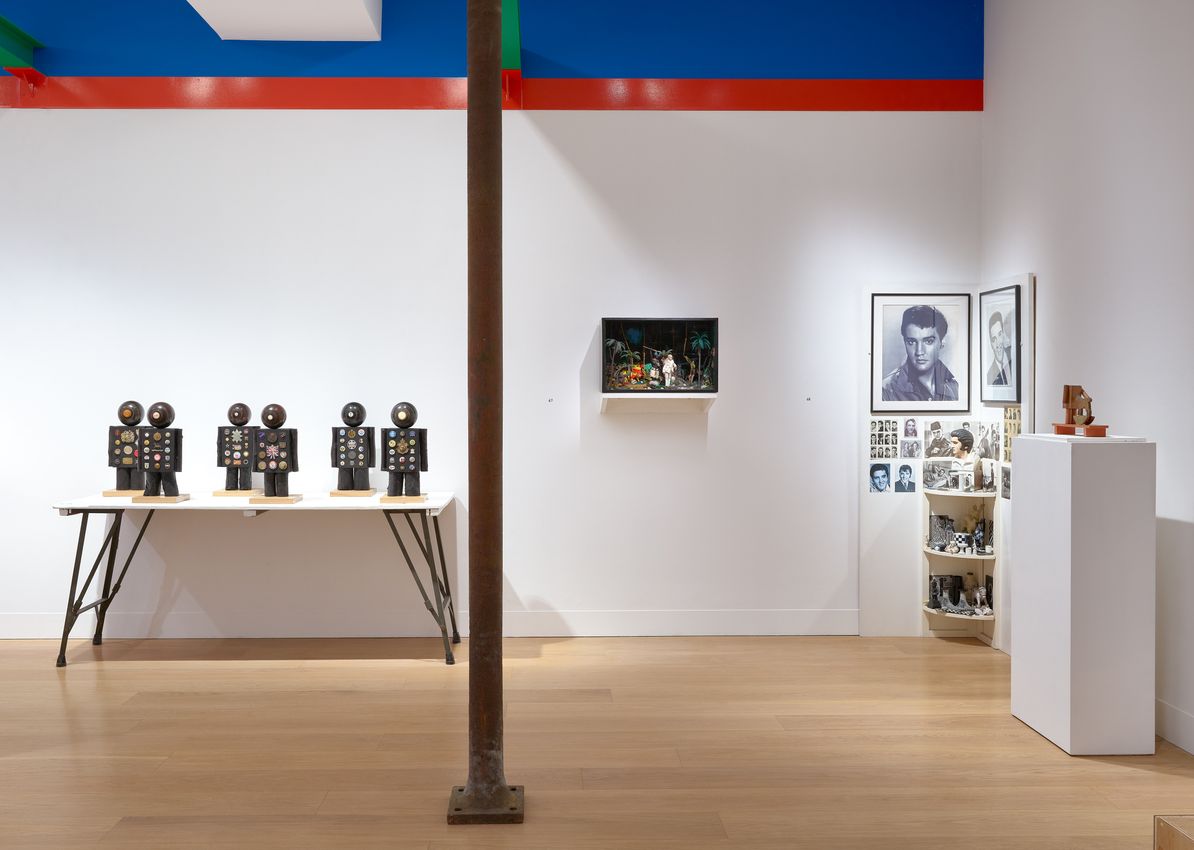
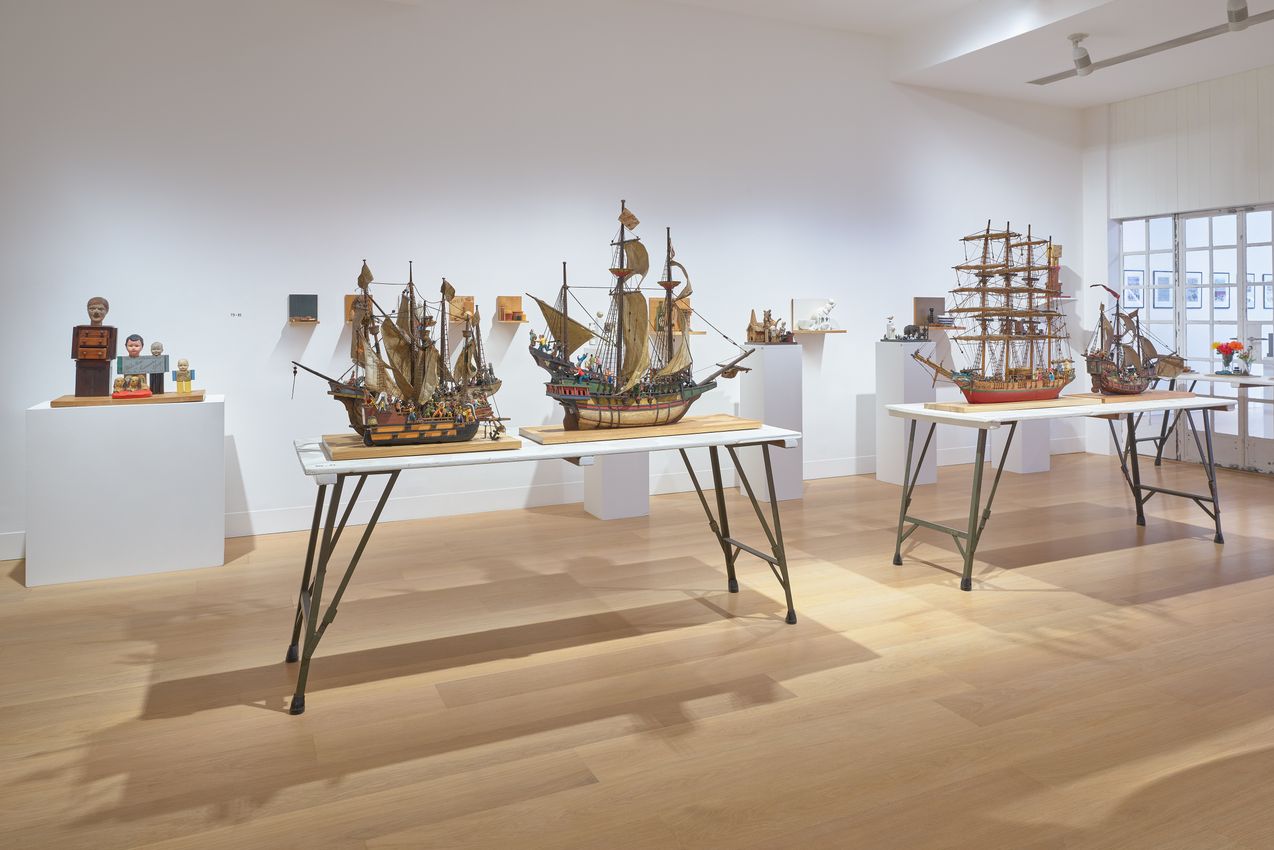
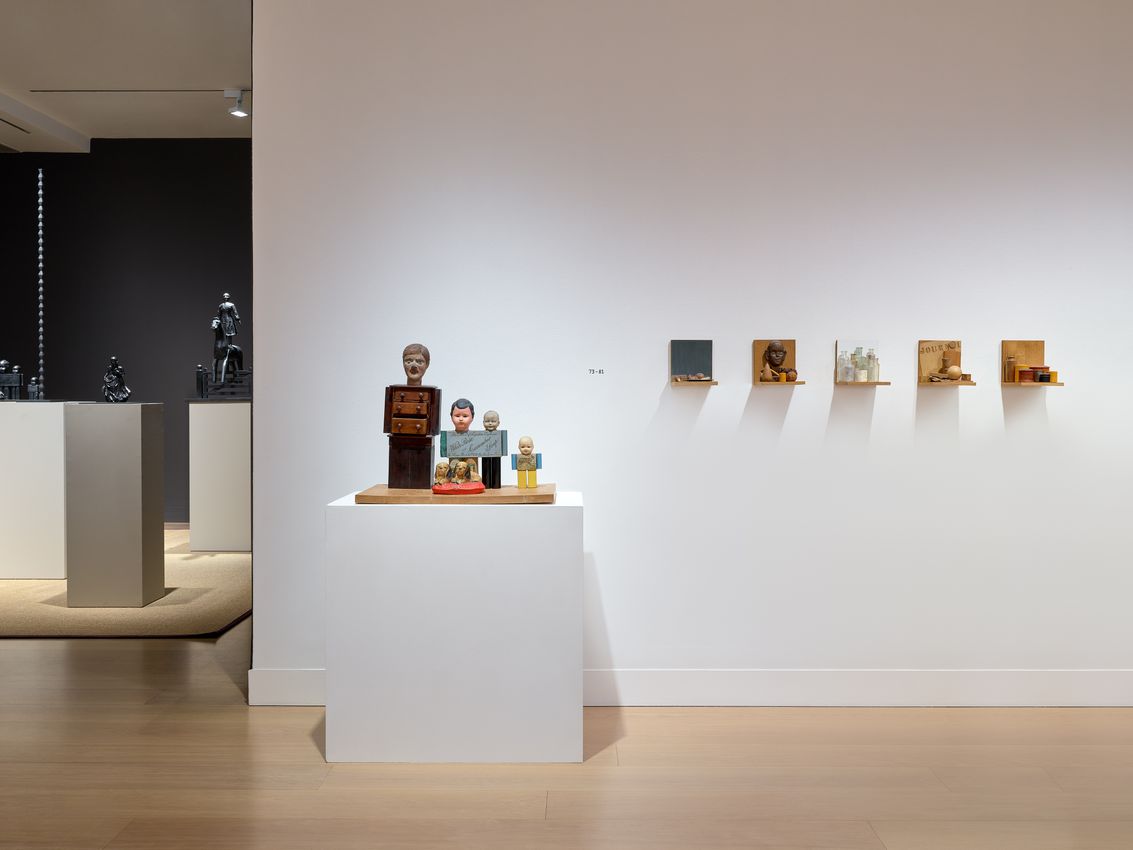
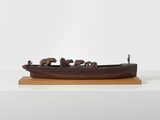
Imagination and storytelling are central to Blake’s sculpture. His assemblages of found objects evoke particular atmospheres, allowing the viewer to piece together a narrative suggested by the components of the tableaux. In the ‘Still Life’ series of 2003, homages are made to fellow artists including Claude Monet, Giorgio Morandi and Joseph Cornell, who take the place of pop icons and movie stars as the subjects of Blake’s fandom. Little jokes nudge the viewer along: ‘In the Cubist’s Kitchen’ (2003) features a tobacco pipe, while ‘Then & Now, For Damien’ (2003) gathers miniature bottles along a shelf, a reference both to Damien Hirst’s (now lapsed) heavy drinking and to Leonardo’s ‘Last Supper’ of 1495–1498. In a later series dedicated to artist and cartoonist Saul Steinberg, Blake assembles found items in compositions which directly reference the other artist’s sculptures of the 1970s and 1980s, in which he whittled and painted similar objects in wood. Through his ‘Generals’ series (2012), figures of dark-painted wood pinned with medals and each with a bowling ball for a head, Blake reveals the potential of objects to conjure characters with their own personality traits, while his homage to H.C. Westermann’s sculpture mimics the other artist’s narrative quality and symbolism with seaworthy battle ships peppered with plastic figurines.

Throughout the exhibition, Blake dances across a rich variety of cultural and artistic references, and with typically childish enjoyment, he invites the audience to participate actively in the construction of meaning, fostering a sense of playfulness and discovery. On the occasion of Peter Blake: Sculpture and Other Matters Waddington Custot will transform the gallery into an interactive, theatrical space which reflects the imaginative potential of the sculpture on show.

Read More

Installation Views

About the Artist

Sir Peter Blake (b. 1932, Dartford, Kent) is a British painter, sculptor, draughtsman and printmaker. He is known as one of the leading figures of British Pop art. Peter Blake studied at Gravesend School of Art before being accepted into the Royal College of Art, London, where he studied alongside other key British Pop artists, David Hockney, R.B. Kitaj, Joe Tilson, Allen Jones, Peter Phillips and Derek Boshier. After graduating from the Royal College of Art in 1956, Blake began to appropriate pop culture icons and advertising imagery to create homages to the likes of Marilyn Monroe, Brigitte Bardot, Elvis Presley and professional wrestlers. His iconic 1961 Self-portrait with Badges, in the Tate Collection, shows Blake holding an Elvis album, dressed in American jeans, Converse trainers, and baseball badges; here is the artist as a genuine fan. In other works, he composes assemblages of found objects with humorous allusions to art history and childhood fantasies. In 1967 he designed the iconic album cover for The Beatles’ Sgt. Pepper’s Lonely Hearts Club Band in his distinctive style of collage. Blake continues to be associated with the music world by designing album covers. In 1975 Blake co-founded the Brotherhood of Ruralists, a group of artists who moved to Somerset to paint nature.

View Artist Profile

Also Exhibiting

About the Gallery

Waddington Custot was formed through the partnership of French art dealer Stephane Custot and long-time London art dealer Leslie Waddington, in 2010. Located in Cork Street since 1958, formerly as Waddington Galleries, the gallery has a rich heritage and an international reputation for quality and expertise in works by modern and contemporary masters, with a particular focus on monumental sculpture.

View Gallery Profile
Address
11 Cork Street
London
United Kingdom
Opening Hours
Monday – Friday
10am – 6pm
Saturday
11am – 6pm
(1)
London 11 Cork Street
Waddington Custot
11 Cork Street, London, United Kingdom

Opening hours
Monday – Friday
10am – 6pm
Saturday
11am – 6pm
The art world in focus