Press Release

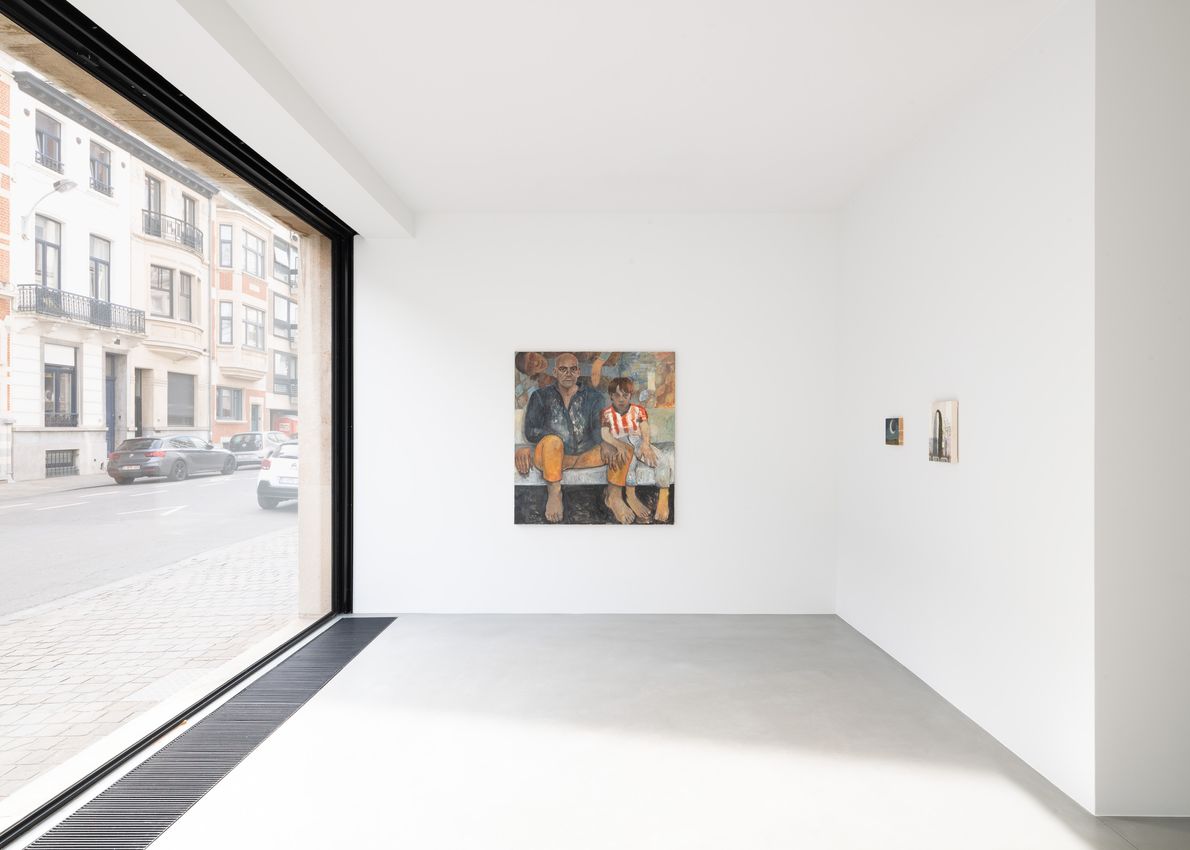
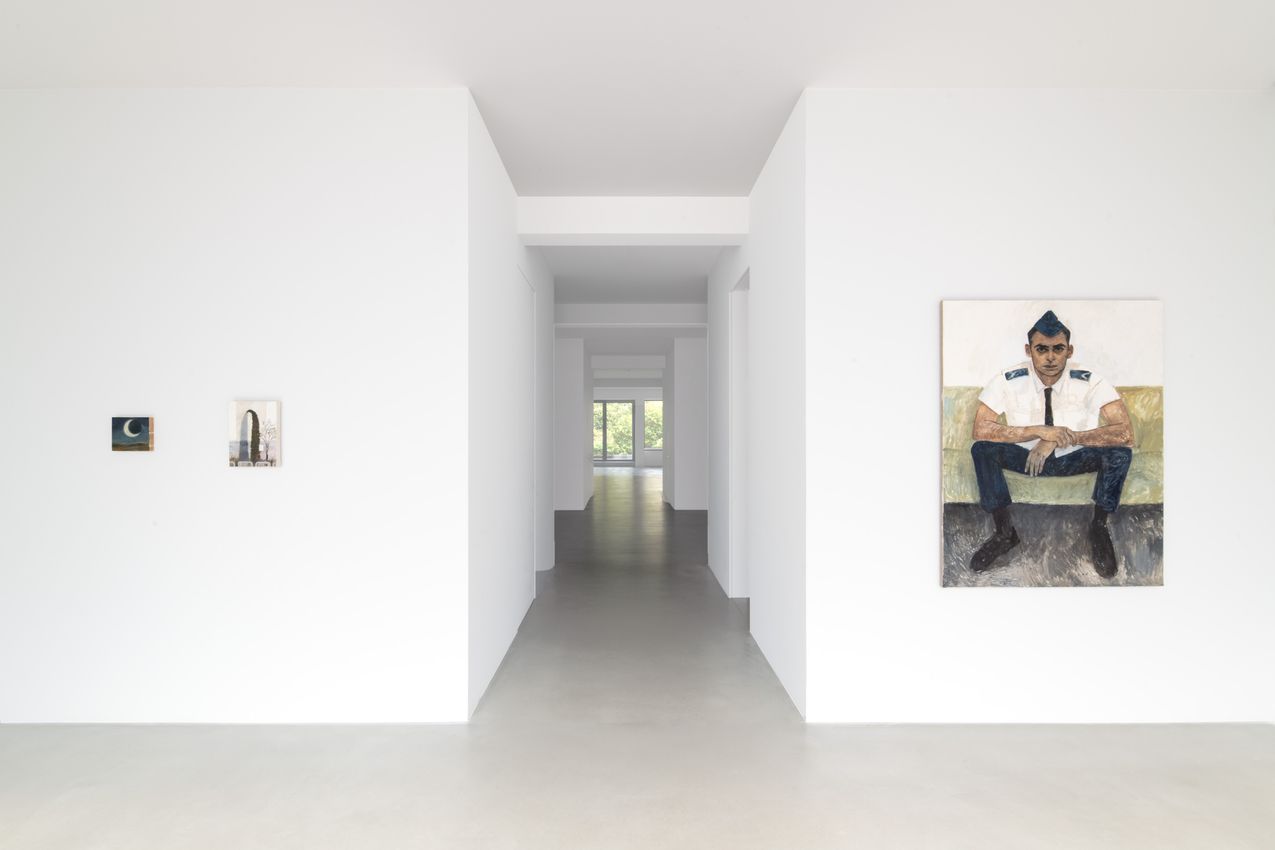
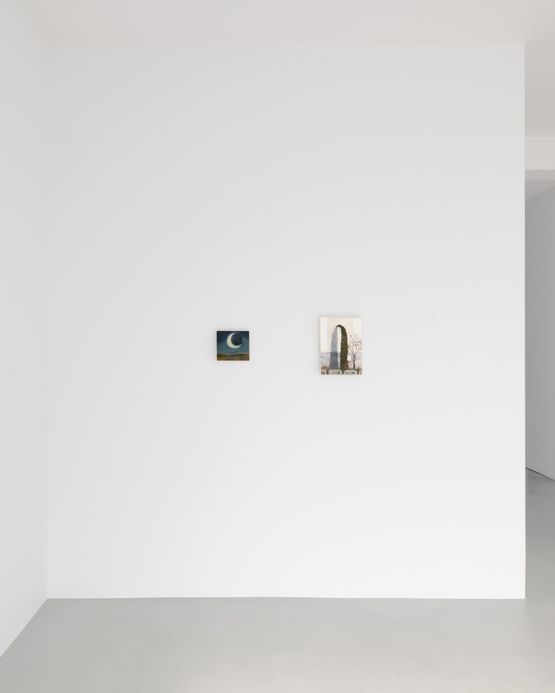
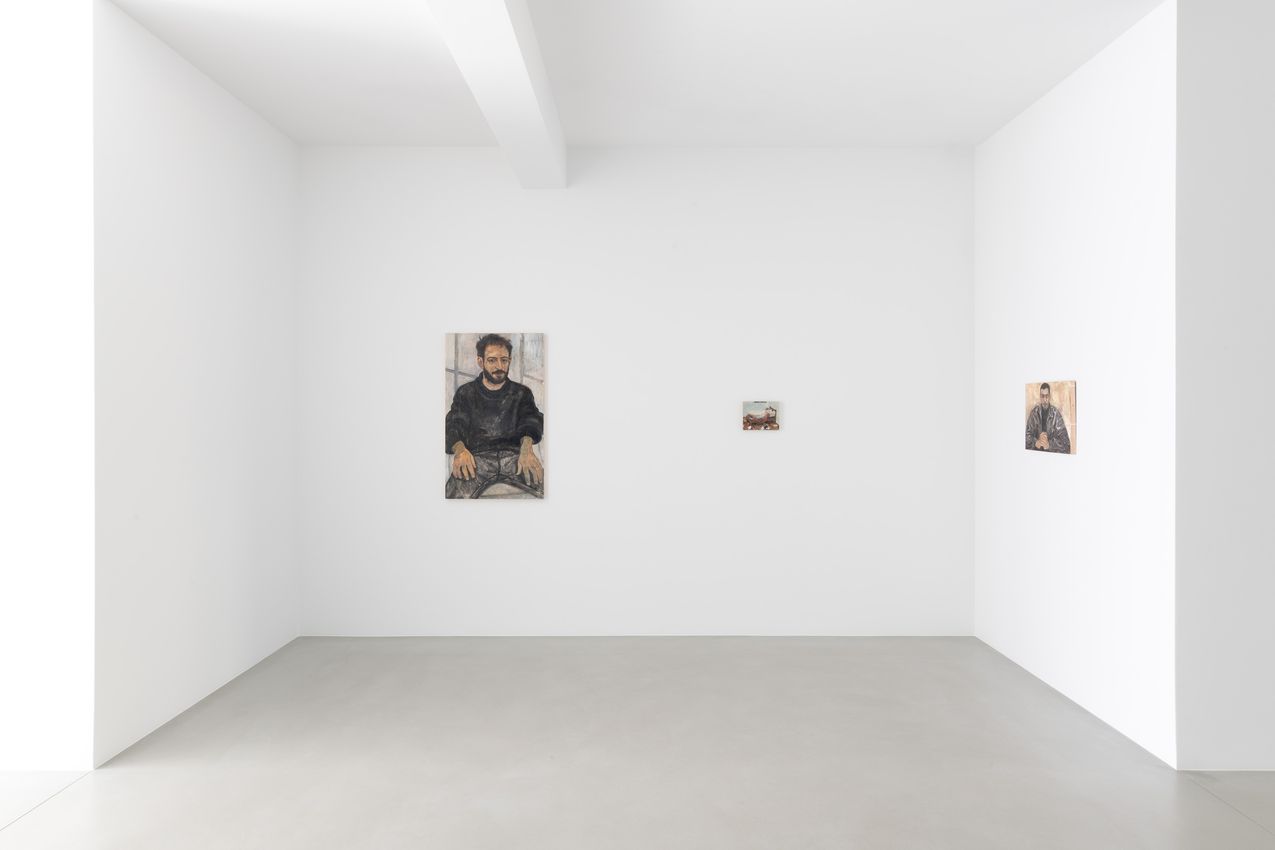
Nathanaëlle Herbelin’s second exhibition at the gallery presents a new series of portraits and interiors that navigate the fragile balance between immediate, everyday experience and the weight of an unsettled world. At once intimate and expansive, these paintings reflect a desire to hold on to moments of connection―small yet significant interactions with friends, neighbours, and family―amidst an undercurrent of grief, uncertainty, and shifting realities.

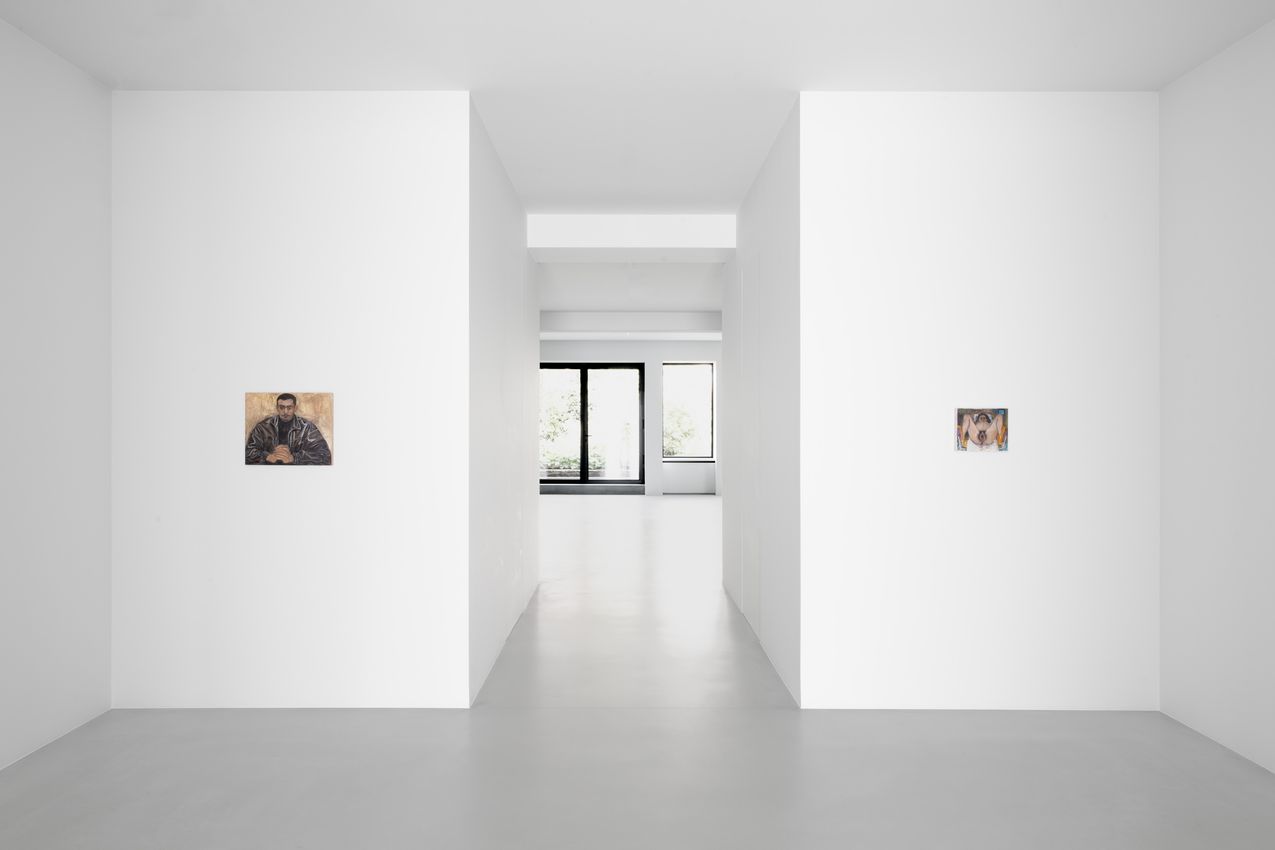
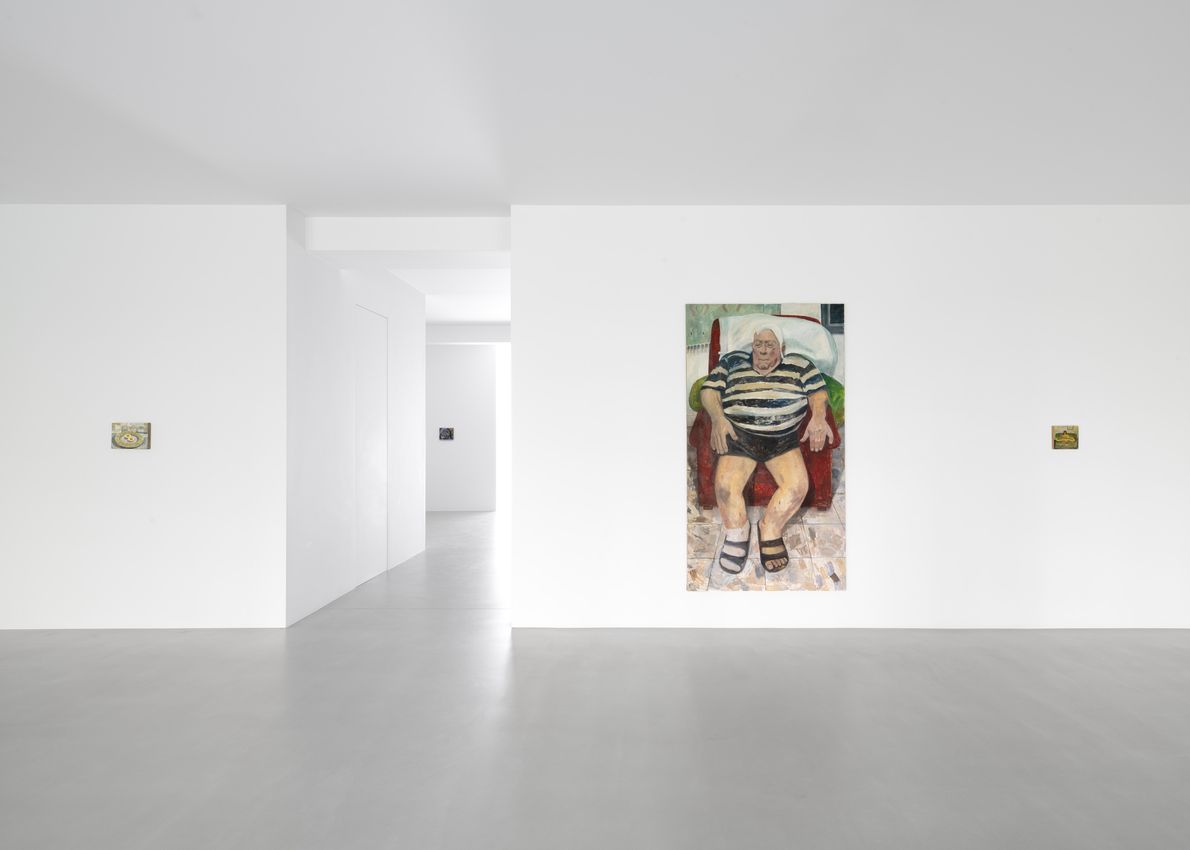
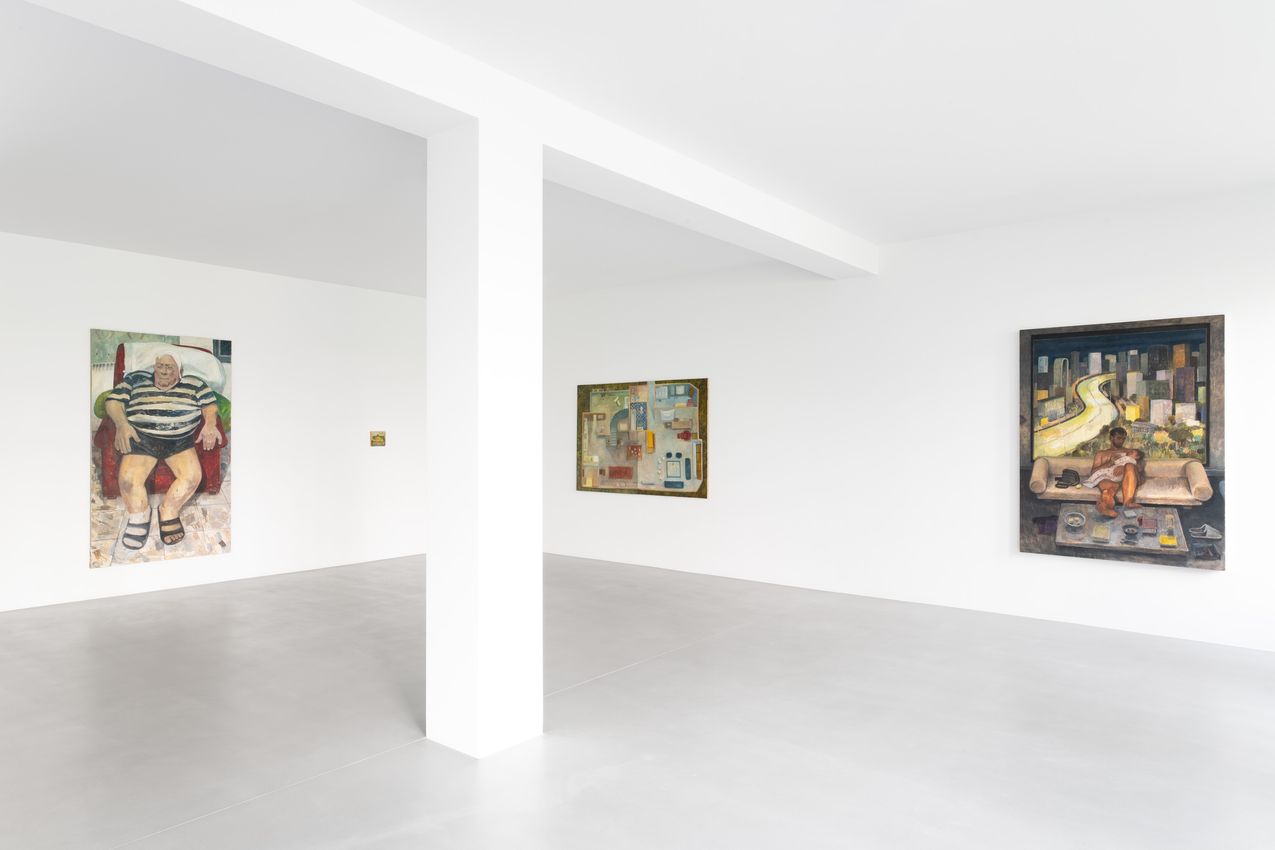
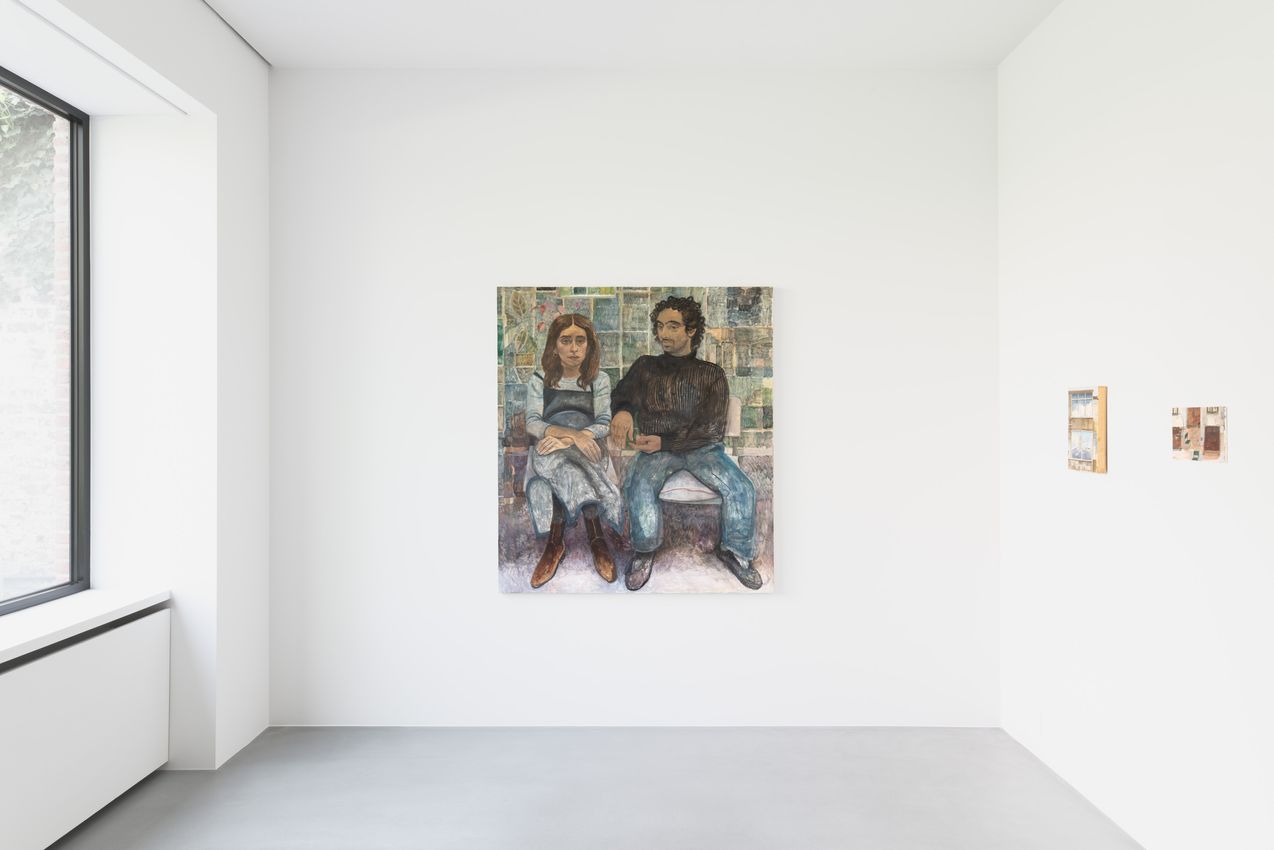
Herbelin’s approach is neither sentimental nor detached; rather, she paints with an acute awareness of how personal and collective histories intertwine. The act of painting becomes a way to ground herself, to acknowledge absence, and to bear witness to both quiet rituals and emotional thresholds. Visually, this tension manifests in the evolving treatment of space and composition. While past works were marked by vibrant colours and defined settings, the paintings in this exhibition embrace ambiguity. Figures emerge from undefined or weighty backgrounds, emphasising presence over place, memory over setting. Linking Herbelin’s subjects across time and space are Margot and Arie. Margot is the artist’s neighbour in Paris, a teenage girl living with disabilities who communicates with the world mostly through her eyes. “One must take the time to look at her and listen to her,” Herbelin notes. Arie, on the other hand, is the artist’s late grandfather from Israel, who was painted posthumously from photographs. Though vastly different in age and setting, both figures share a deep emotional resonance. Their presence in paint resists conventional hierarchies of representation―people who might not typically be immortalised on canvas are given quiet but resolute visibility. Herbelin’s gaze is at once gentle and unflinchingly truthful, stripping away embellishment to reveal the raw intimacy of her subjects.

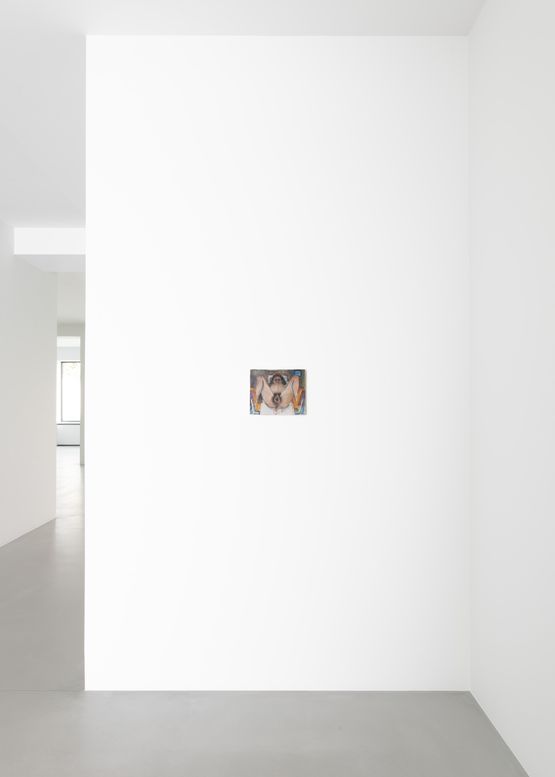
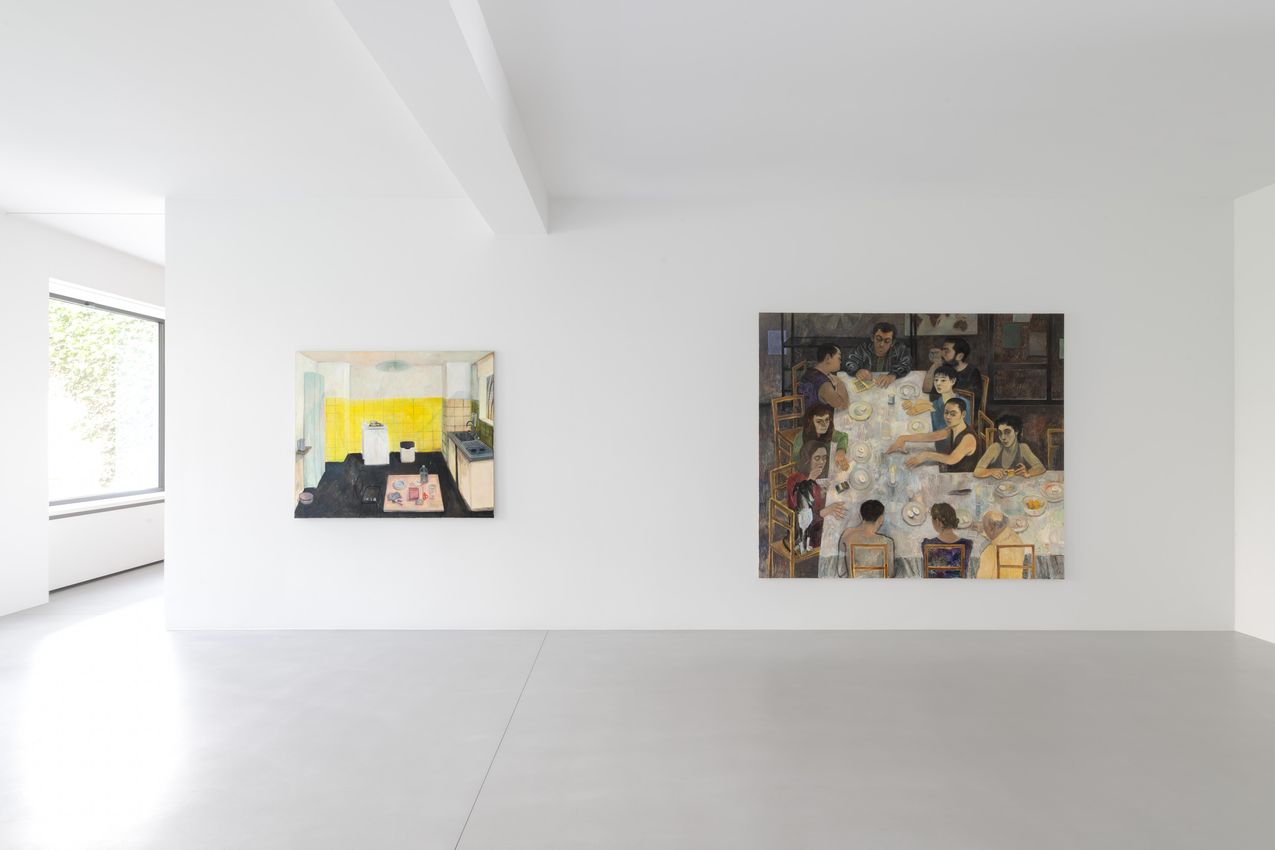
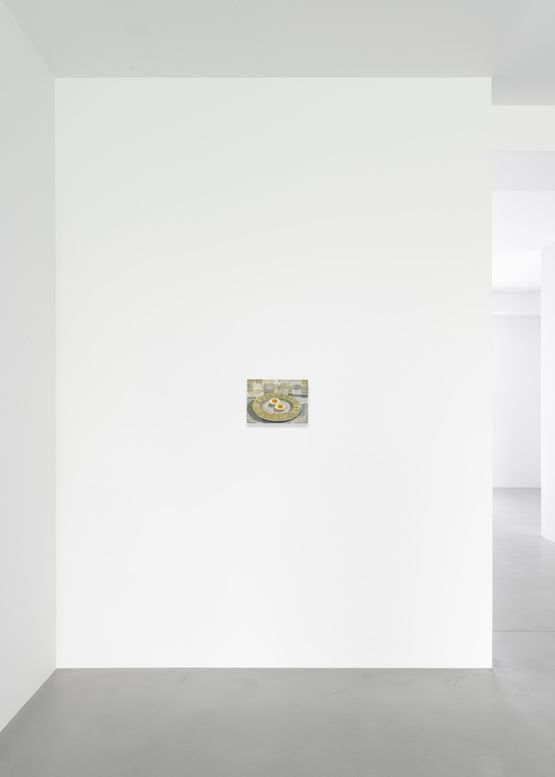
This evolution is also evident in Raphael et Anne-Sophie, an artist couple expecting a child, and Theodora, which depicts a fellow artist―all living in the same arrondissement. In this latter work, a pair of eyes can be discerned in the upper right corner, an unmistakable nod to the Egyptian Fayum portraits that remain a touchstone for Herbelin. This work also incorporates a detail―a hand―from another painting in the exhibition, Mathieu et Melvil. Here, a detached hand rests on the sofa as an ex-voto, symbolising a personal sacrifice he made in his life. This is akin to the expression ‘giving one’s right arm’, which underscores the lengths one would go to for love, devotion or necessity. Herbelin’s late grandfather, Arie is also an absent presence in two of Herbelin’s works depicting Jewish mourning rituals. In Shiva, Herbelin reconstructs, from memory, a bird’s-eye view of her grandfather’s home during shiva, the seven-day mourning period following a funeral. The painting reflects the charged atmosphere of this ritual, in which the bereaved remain at home, marking their loss through time-honoured rituals: sitting on low chairs, covering mirrors, and lighting a candle in remembrance. The second, larger work on this theme, Dîner aux œufs durs [Dinner with Hard-Boiled Eggs], interprets the Se’udat Havra’ah, the meal of condolence that follows a burial. Hard-boiled eggs―along with bagels, lentils and other round foods―are central to this meal, symbolising the cycle of life and renewal. The composition of the painting takes inspiration from Egon Schiele’s Die Freunde (Tafelrunde), groß [The Friends (Round Table), Large, 1918]. Just as Schiele painted his own circle of friends gathered around the table, Herbelin populates Dîner aux œufs durs with her own acquaintances as well as imagined figures.

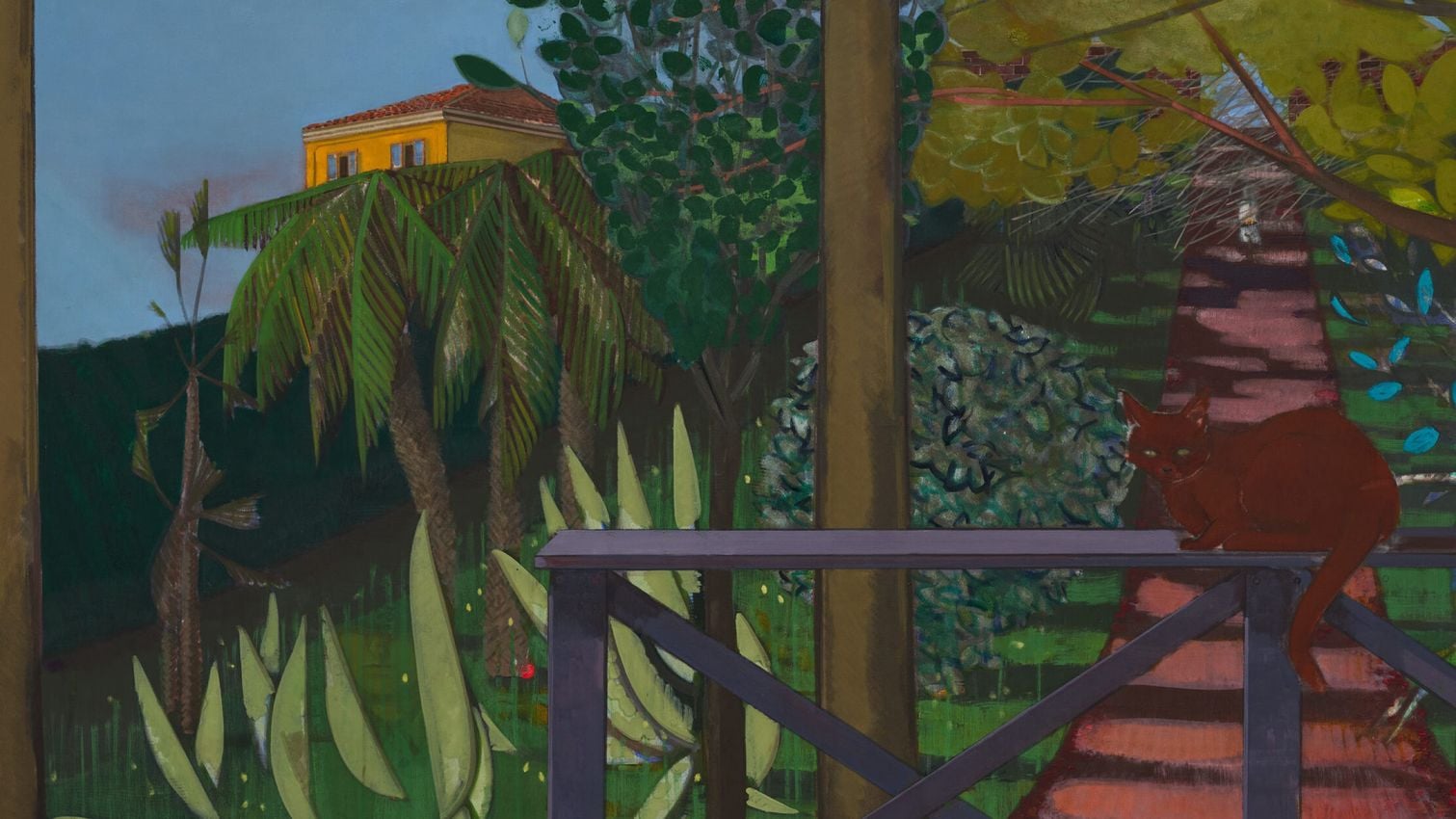
Among her recurring subjects is Merlin, a young boy who used to live near the artist’ previous studio. In this full-length painting, he is depicted amidst flowers, set against an abstract background that seems to distance him from immediate reality. This treatment heightens his vulnerability while marking a shift in Herbelin’s practice―where previous works featured defined environments and vivid colours, these new paintings lean into atmospheric ambiguity. The ornamentation of her earlier work has given way to restrained yet expressive backgrounds, rendered in subtle, evocative tones―making way for new art historical references, such as the early work of Max Beckmann or Christian Schad.

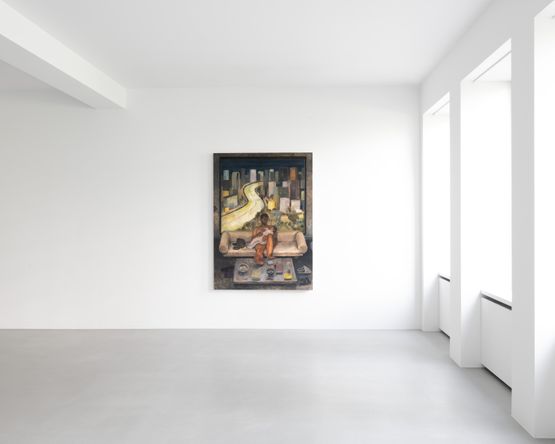
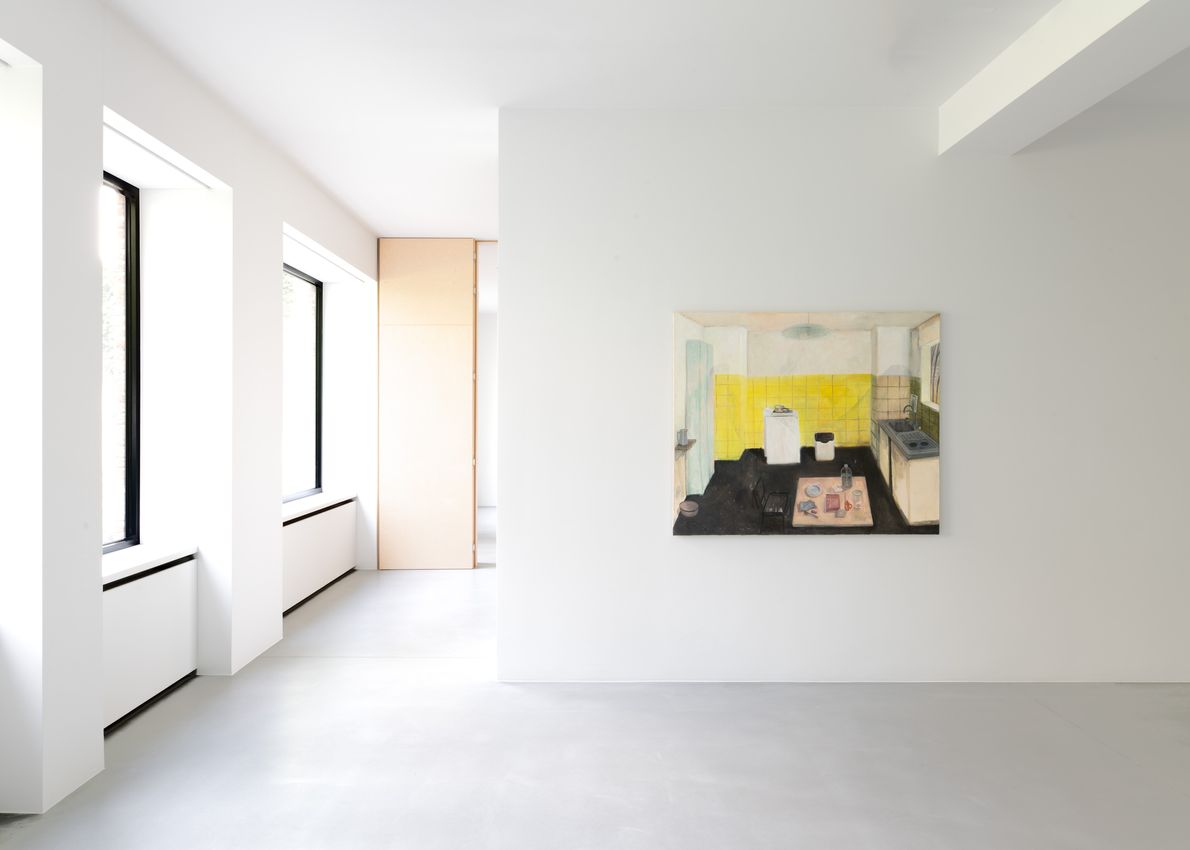
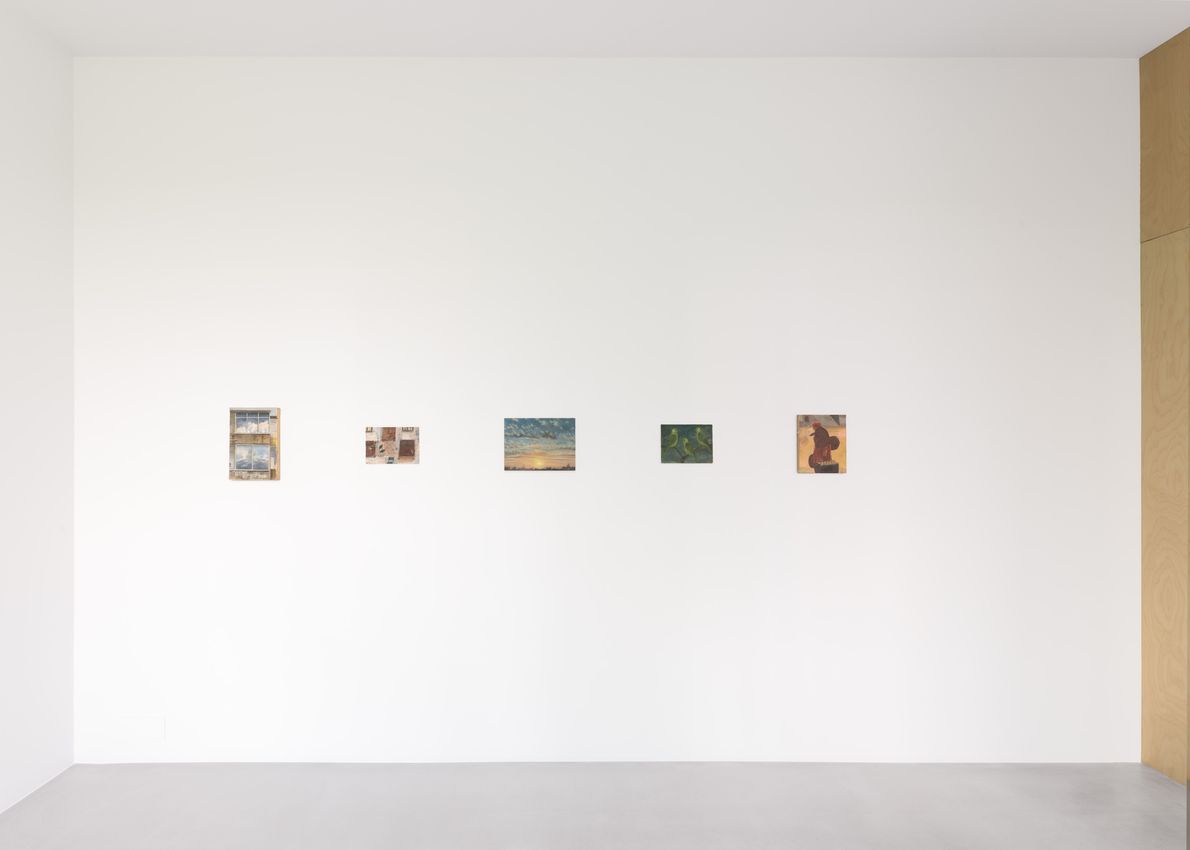
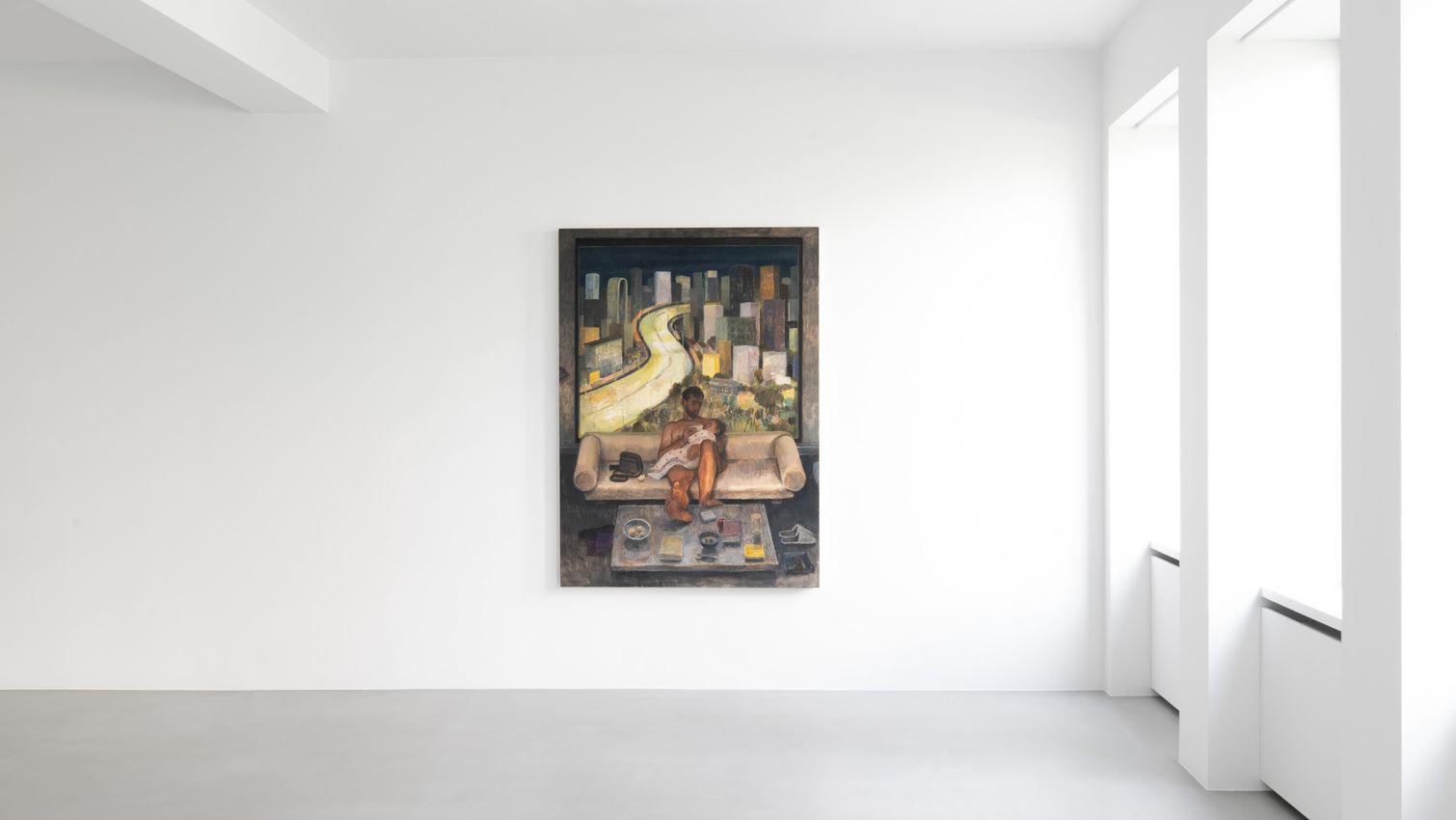
While portraits remain central to Herbelin’s practice, her nuanced depictions of interior spaces are equally poignant in conveying mood and atmosphere, revealing the psychological depths of her subjects. Two interior scenes, in particular, evoke contrasting realities and psychological spaces: one depicting a desolate kitchen, Ustensiles, and the other, Jérémie qui donne le biberon, portraying the artist’s partner, Jérémie, feeding their baby in a hotel room in China where the artist recently completed a residency. The panoramic view framed by the window in the latter painting contrasts starkly with the small, barely visible window in the kitchen, a subtle indicator of confinement and diminished hope. Similarly, the personal possessions on the hotel table stand in contrast to their near-total absence in the kitchen, despite other clues suggesting a recent human presence. The latter painting holds the quiet act of care in tension with the busy, impersonal cityscape beyond, reflecting the contrast between private tenderness and the vastness of the outside world.

The interplay between interior and exterior spaces―both literal and psychological―in this new body of work mirrors the artist’s negotiation of past and present, presence and absence. Whether reconstructing her grandfather’s apartment from memory, capturing the transient intimacy of a shared meal, or painting figures from her neighbourhood, Herbelin’s works resist easy narratives. Instead, her paintings offer a space where the everyday and the existential coexist, where the act of looking itself becomes an act of recognition.

Nathanaëlle Herbelin (b. 1989, Tel Aviv, Israel) obtained a Master of Fine Arts degree from the École Nationale Supérieure des Beaux-Arts de Paris in 2016, during which time she was invited to participate in an exchange programme at The Cooper Union, New York. Herbelin’s first solo exhibition in Asia, Feel the pulse, opens at the He Art Museum in Shunde, China (8 March to 8 June 2025). It will showcase the works made during her residency at the museum in 2024. Recent solo include Être ici est une splendeur, Musée d’Orsay, Paris (2024); À la surface, le fond de l’oeil, French Institute of Tel Aviv (2022); Et peut-être que ces choses n’ont jamais eu lieu, Umm Al Fahem Palestinian Art Center (2021), Devenire Peinture, Yishu 8 prize, George V Art Centre, Beijing (2021); and group exhibitions such as the FRAC Champagne-Ardenne (2021); Passerelle Art Center, Brest (2020); the museums of the Abbaye Sainte-Croix (Sables d’Olonnes, 2019); Bétonsalon, Paris (2019); the Beaux-Arts Museum of Rennes (2018), Collection Lambert, Avignon (2017) and Fondation d’Entreprise Ricard, Paris (2017).

Read More

Installation Views

About the Artist

Born in Israel in 1989 to a French father and an Israeli mother, Nathanaëlle Herbelin has always been drawn to make work that reflects her position within and between the two cultures. Her works contain subtle hints—both in subject matter and form—as windows into a world imbued with a quiet melancholy. Herbelin encourages the viewer to slow down, as a way of embracing the intimacy involved in viewing art.

View Artist Profile

Also Exhibiting at Xavier Hufkens

About the Gallery
Xavier Hufkens is one of Europe’s leading galleries for contemporary art. Located in Brussels, the gallery maintains a diverse exhibition programme with solo exhibitions of the gallery artists as well as group exhibitions and special projects. The gallery deals in a distinctive combination of painting, drawing, sculpture, photography, video and installation-based work.

The origins of the gallery date back to 1987, when Xavier Hufkens opened a gallery space in an un-refurbished warehouse in the neighbourhood of the South Station (Midi) in Brussels. During the early years, the focus of the gallery was upon mid-career and emerging artists and the gallery is known for having introduced some of the most influential contemporary artists to Brussels at a time when they were still relatively unknown. British sculptor Antony Gormley, who is still affiliated with the gallery, Felix Gonzalez-Torres and Rosemarie Trockel all showed in Belgium for the first time with Xavier Hufkens (Gormley in 1987; Gonzalez-Torres in 1991 and Trockel in 1993).

In 1992, the gallery moved to a 19th-century townhouse at 6 rue Saint-Georges, close to the Avenue Louise. Completely renovated by Belgian architects Paul Robbrecht, Hilde Daem and Marie-José Van Hee, the house quickly gained a reputation for being not just one of the most beautiful contemporary art spaces in the Belgian capital, but also one of the most interesting. The expanded exhibition programme coincided with the additional representation of a number of established artists from Belgium and abroad, including Richard Artschwager, Thierry De Cordier and Jan Vercruysse. In 1997, Hufkens expanded the gallery further by annexing the adjacent building and a number of new artists joined the gallery, including Louise Bourgeois, Roni Horn and Thomas Houseago.

A second space in the same street, at 107 rue Saint-Georges, opened in spring 2013. Located in the Galerie Rivoli, a mixed-use commercial development from the 1970s, the new gallery space was designed by Swiss architect Harry Gugger, who was previously in partnership with Herzog and De Meuron. Slegten & Toegemann, Brussels, managed the project.

An eclectic but very clear vision underpins all of the gallery’s activities: ‘The definition of the gallery was established from the start. The common thread, then and now, is quality over and above everything else, which I find more intellectually challenging than a forced definition. From the early days I juxtaposed established artists such as Michelangelo Pistoletto with someone like Felix Gonzalez-Torres when he was totally unknown. Today I still mix my work: I have no problem showing Malcolm Morley … alongside Robert Ryman, or Willem de Kooning.’ [Xavier Hufkens in The Art Newspaper, Issue 220, January 2011, published online: 20 January 2011]

Xavier Hufkens represents some thirty artists from different generations. He was part of the six-member selection committee for Art Basel during seven years and also participates in up to five international Arts Fairs annually. The gallery has partnerships with the estates of Louise Bourgeois, Willem de Kooning, Robert Mapplethorpe and Alice Neel.
View Gallery Profile
Address
44 rue Van Eyck
Van Eyckstraat
Brussels
Belgium
Opening Hours
Tuesday – Saturday
11am – 6pm
(1)
Brussels 44 rue Van Eyck, Van Eyckstraat
Xavier Hufkens
44 rue Van Eyck, Van Eyckstraat, Brussels, Belgium

Opening hours
Tuesday – Saturday
11am – 6pm
The art world in focus