Press Release

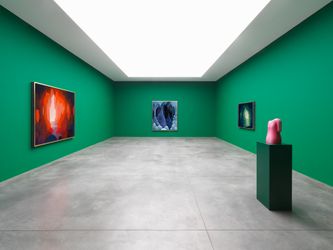
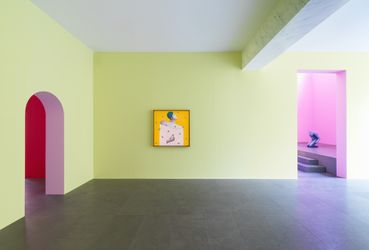
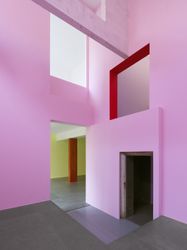
Xavier Hufkens is delighted to announce the opening of a new exhibition by Nicolas Party (b. 1980). Following the large-scale presentation of his work at the Magritte Museum in 2018, Party returns to Brussels with a series of pastels and sculptures that revitalise art historical themes in surprising and innovative ways.

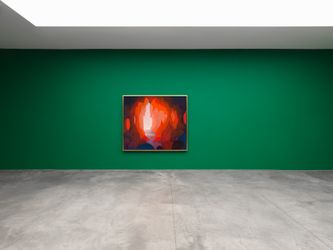
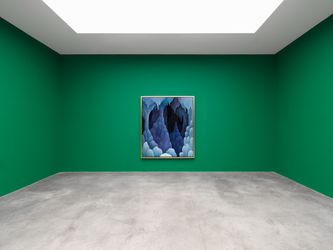
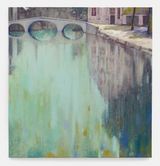
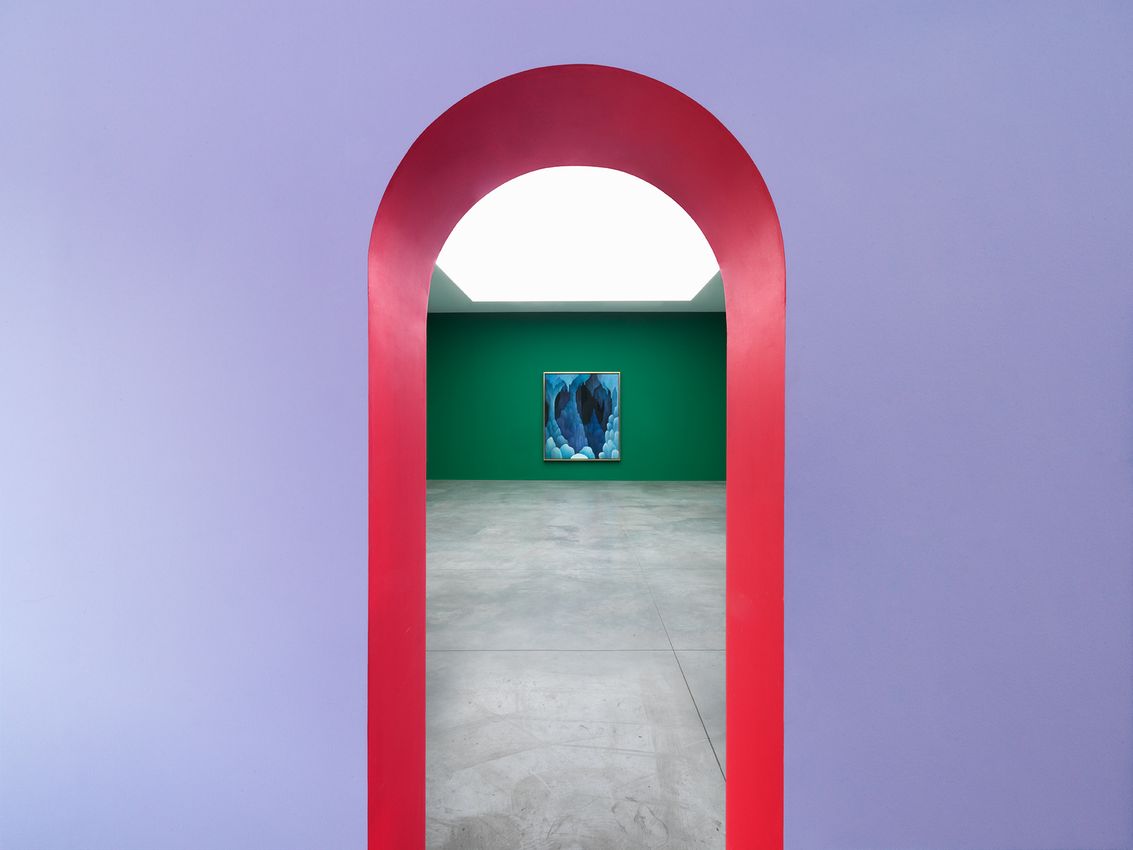
The exhibition’s title, Grotto, alludes to three large-format pastels depicting caves. From Renaissance paintings of hermits through to Courbet’s The Source of the Loue and, more specifically, The Grotto of Manacor (c. 1901) by the Belgian painter William Degouve de Nuncques, depictions of underground caverns conjure up a wealth of historical and philosophical connotations. Inspired by this imagery, Party has created a trio of contemporary monochromes in scintillating shades of red, green and blue. While the blue cave depicted in Grotto forges a direct link with Degouve de Nuncques’ work, the three pastels also combine to form the red-green-blue colour palette (the RGB colour model that allows for the sensing, representation and display of images in digital systems).

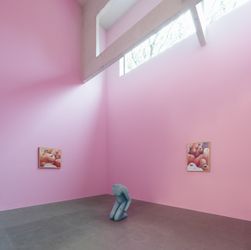
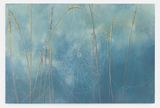
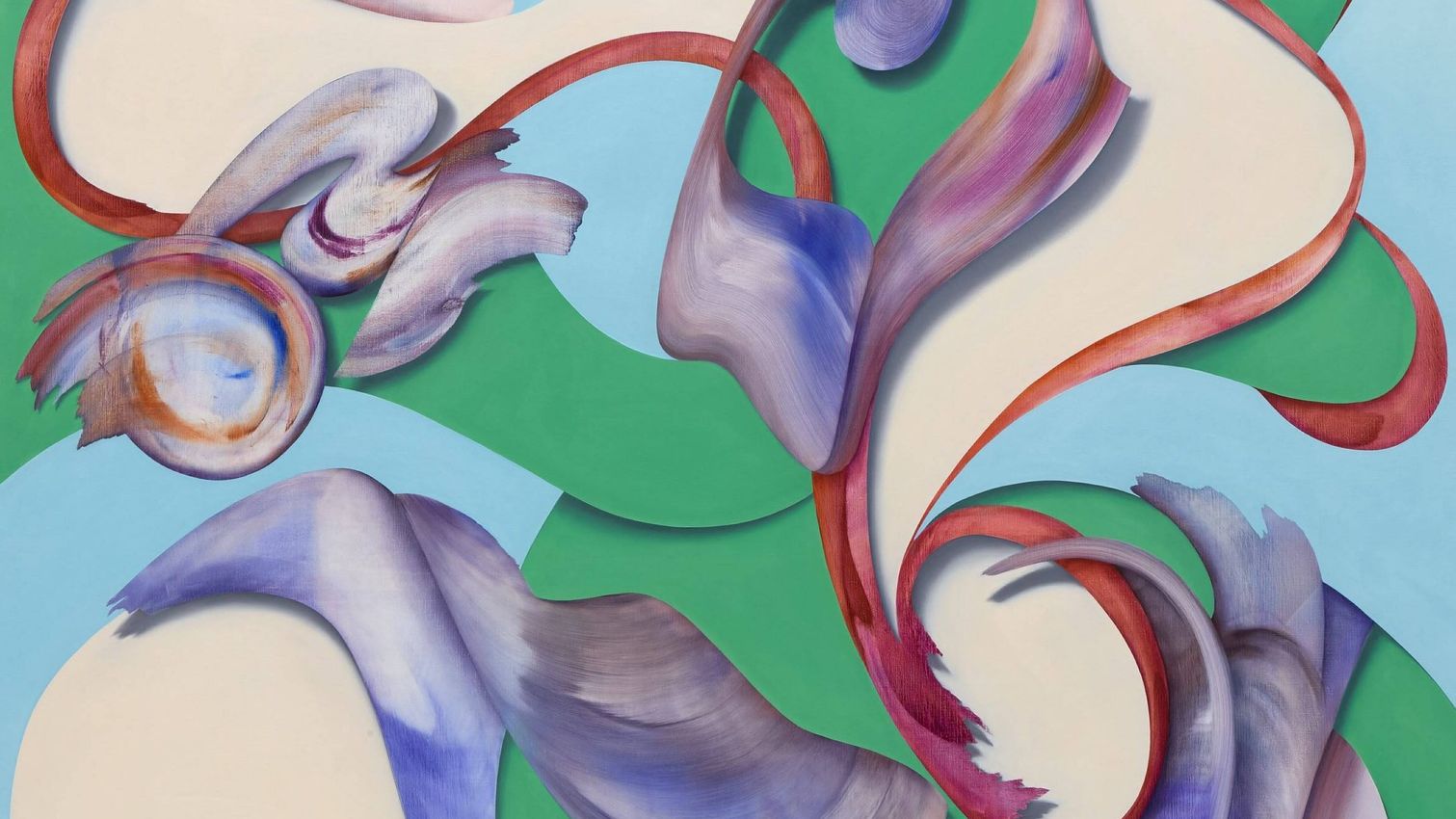
Alongside these works, Nicolas Party presents two ethereal pastels that recall the minutely detailed nature studies of Jan van Kessel the Elder (Antwerp, 1626-1679), who specialised in trompe l’oeil compositions of beetles, insects, caterpillars and butterflies. Within Insects, the artist borrows from Van Kessel’s repertoire and unleashes a swarm of similar creatures across undulating landscapes of fleshy, biomorphic forms. These, in turn, have undercurrents of their own, calling to mind the voluptuous contours of certain Surrealist and mid twentieth-century sculptures. In merging these unusual references, Party creates tableaux that are as mesmerising as they are unsettling. While the meticulous detail, luminous colours and sumptuous textures evoke a sense of wonder, the indeterminate forms and insects tap into darker fears related to death, decay and human transience. Here, Party uses his distinctive and highly stylised visual aesthetic to transform widely divergent themes into works that defy easy categorisation.

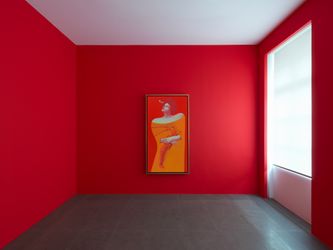
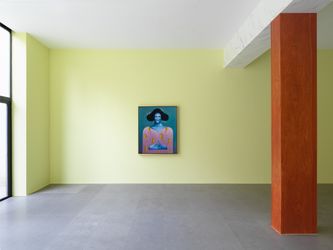
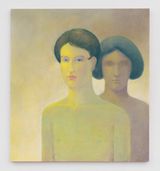
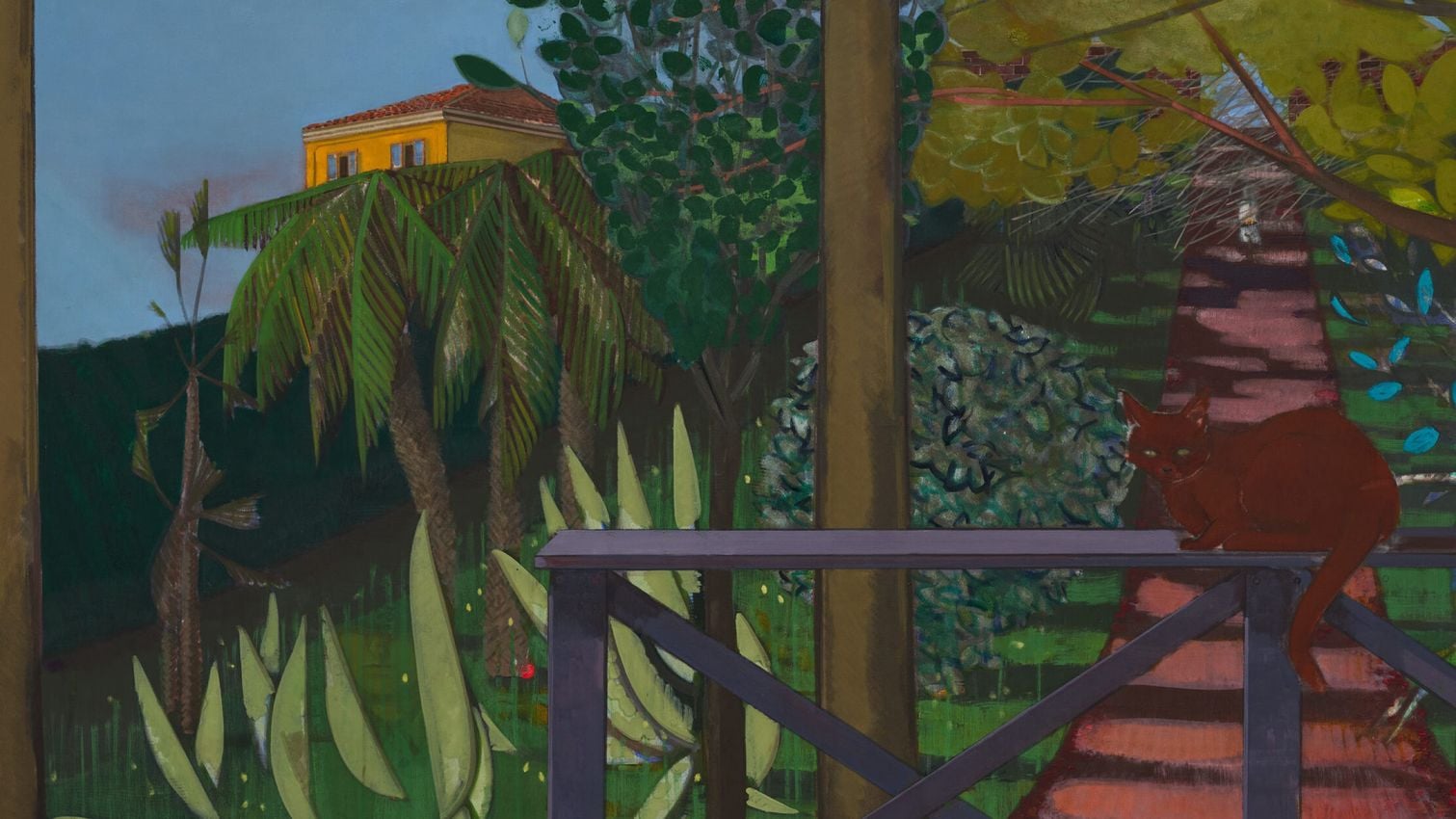
The natural world also looms large in three figurative pastels that contain dragonflies, a langoustine, seahorses and scarabs: beautifully aesthetic creatures that have long been associated with transformation, colour, metamorphosis, magic and the mutability of life. In these illusory pastels, Party plays with colour and perspective to create a series of visual paradoxes that defy conventional logic. With immense dexterity, he disrupts the relationships of the key pictorial elements—background, figure and creature/s—to create a series of unfathomable images: what do we really see? Like Surrealist collages or Symbolist paintings, these enigmatic depictions elicit subconscious and poetic associations. The eerie atmosphere is further enhanced by the androgynous nature of the figures and the dazzling use of dissonant colours.

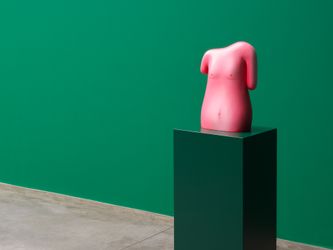
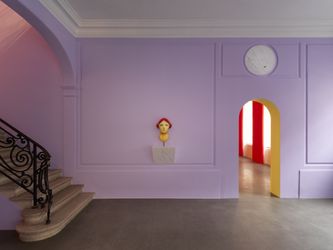
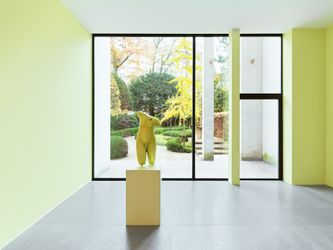
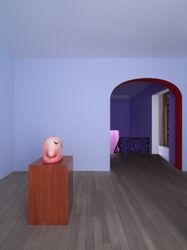
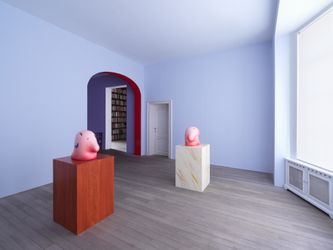
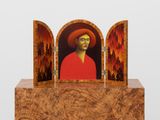
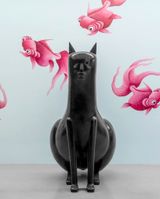
A new series of brightly-painted sculptures on equally vibrant plinths act as counterpoints to the works in pastel. Taking the form of busts and torsos, they clearly refer to the world of antique sculpture. But here too, nothing is quite what it seems. Party’s three-dimensional works both emulate and deviate from the classical norms. Subtle manipulations have an alienating effect: the fractured limbs are strangely polished while torsos are smooth and featureless. Executed in coruscating, high-gloss hues, their seductive yet uncanny appearance is also informed by Party’s long-standing interest in polychromy (the ancient technique of painting sculptures). His work is a reminder that appearances can be deceptive: most classical sculptures were once brightly coloured. Other works, such as the bust and biomorphic mass, directly echo the pastels. Party uses state-of-the-art 3D rendering processes and CNC milling techniques to create the basic sculptural forms. He subsequently paints the works using more traditional techniques, thereby creating lustrous surfaces that are as sleek and impenetrable as the pastels are soft and vulnerable.

Nicolas Party (b. 1980, Lausanne; lives and works in New York). Selected solo exhibitions include: Pastel, FLAG Art Foundation, New York, NY, USA (2019); Nicolas Party at Marble House, Marble House, Newport, RI, USA (2019); Arches, M WOODS, Beijing (2018-2019); Magritte Parti, Magritte Museum, Brussels (2018); Nicolas Party: Speakers, Modern Art, Oxford (2017); Sunrise, Sunset, Hirshhorn Museum and Sculpture Garden, Washington DC (2017); Nicolas Party in the Garden Room, Palazzo Antinori, Florence (2016); Hammer Projects: Nicolas Party, Hammer Museum, Los Angeles (2016); Pathway, Dallas Museum of Art, Dallas (2016); Cimaise, CAN: Centre d’art Neuchâtel, Neuchâtel (2016); Boys and Pastel, Inverleith House, Edinburgh (2015).

Read More

Installation Views

About the Artist

Swiss-born artist Nicolas Party works across a wide range of different media. Primarily known for his colour-saturated paintings and murals, he also makes painted sculptures, pastels, installations, prints and drawings, and works as a curator. Party often paints portraits and still lifes of everyday objects, which he strips of all extraneous detail. Rather than creating faithful depictions from nature, he uses these seemingly innocuous subjects as springboards for an exploration into the art of painting itself. His concerns lie, therefore, less in the accurate depiction of nature, and more in its translation and transformation through colour, materials and composition. The challenge is to capture the essence of these subjects in new and revelatory ways, and in so doing to heighten their physical and emotional resonance. Clear forms, painterly precision, a vibrant colour palette and a keen eye for composition coalesce into works that are accessible and seductive but, at the same time, continue a long standing art-historical dialogue between representation and abstraction, and observation and the imagination. Party is also interested in the power of paint to alter our perception of the built environment and, within a gallery context, how we experience art. To this end, he regularly paints murals, either as stand-alone works or as carefully orchestrated settings for his paintings.

View Artist Profile

Also Exhibiting at Xavier Hufkens

About the Gallery
Xavier Hufkens is one of Europe’s leading galleries for contemporary art. Located in Brussels, the gallery maintains a diverse exhibition programme with solo exhibitions of the gallery artists as well as group exhibitions and special projects. The gallery deals in a distinctive combination of painting, drawing, sculpture, photography, video and installation-based work.

The origins of the gallery date back to 1987, when Xavier Hufkens opened a gallery space in an un-refurbished warehouse in the neighbourhood of the South Station (Midi) in Brussels. During the early years, the focus of the gallery was upon mid-career and emerging artists and the gallery is known for having introduced some of the most influential contemporary artists to Brussels at a time when they were still relatively unknown. British sculptor Antony Gormley, who is still affiliated with the gallery, Felix Gonzalez-Torres and Rosemarie Trockel all showed in Belgium for the first time with Xavier Hufkens (Gormley in 1987; Gonzalez-Torres in 1991 and Trockel in 1993).

In 1992, the gallery moved to a 19th-century townhouse at 6 rue Saint-Georges, close to the Avenue Louise. Completely renovated by Belgian architects Paul Robbrecht, Hilde Daem and Marie-José Van Hee, the house quickly gained a reputation for being not just one of the most beautiful contemporary art spaces in the Belgian capital, but also one of the most interesting. The expanded exhibition programme coincided with the additional representation of a number of established artists from Belgium and abroad, including Richard Artschwager, Thierry De Cordier and Jan Vercruysse. In 1997, Hufkens expanded the gallery further by annexing the adjacent building and a number of new artists joined the gallery, including Louise Bourgeois, Roni Horn and Thomas Houseago.

A second space in the same street, at 107 rue Saint-Georges, opened in spring 2013. Located in the Galerie Rivoli, a mixed-use commercial development from the 1970s, the new gallery space was designed by Swiss architect Harry Gugger, who was previously in partnership with Herzog and De Meuron. Slegten & Toegemann, Brussels, managed the project. A third space opened in spring 2020, located at 44 Rue Van Eyck, designed by architect Bernard Dubois.

An eclectic but very clear vision underpins all of the gallery’s activities: ‘The definition of the gallery was established from the start. The common thread, then and now, is quality over and above everything else, which I find more intellectually challenging than a forced definition. From the early days I juxtaposed established artists such as Michelangelo Pistoletto with someone like Felix Gonzalez-Torres when he was totally unknown. Today I still mix my work: I have no problem showing Malcolm Morley … alongside Robert Ryman, or Willem de Kooning.’ [Xavier Hufkens in The Art Newspaper, Issue 220, January 2011, published online: 20 January 2011]

Xavier Hufkens represents some thirty artists from different generations. He was part of the six-member selection committee for Art Basel during seven years and also participates in up to five international Arts Fairs annually. The gallery has partnerships with the estates of Louise Bourgeois, Willem de Kooning, Robert Mapplethorpe and Alice Neel.
View Gallery Profile
Address
6 rue St-Georges
St-Jorisstraat
Brussels
Belgium
Opening Hours
Tuesday – Saturday
11am – 6pm
(1)
Brussels 6 rue St-Georges
Xavier Hufkens
6 rue St-Georges, St-Jorisstraat, Brussels, Belgium

Opening hours
Tuesday – Saturday
11am – 6pm
The art world in focus