Zilberman Istanbul is pleased to present Başak Bugay‘s solo exhibition Fugue, which is also her first solo show at Zilberman. You can visit the exhibition from December 16, 2021 to February 12, 2022 in the main gallery space on the third floor of the Mısır Apartment.
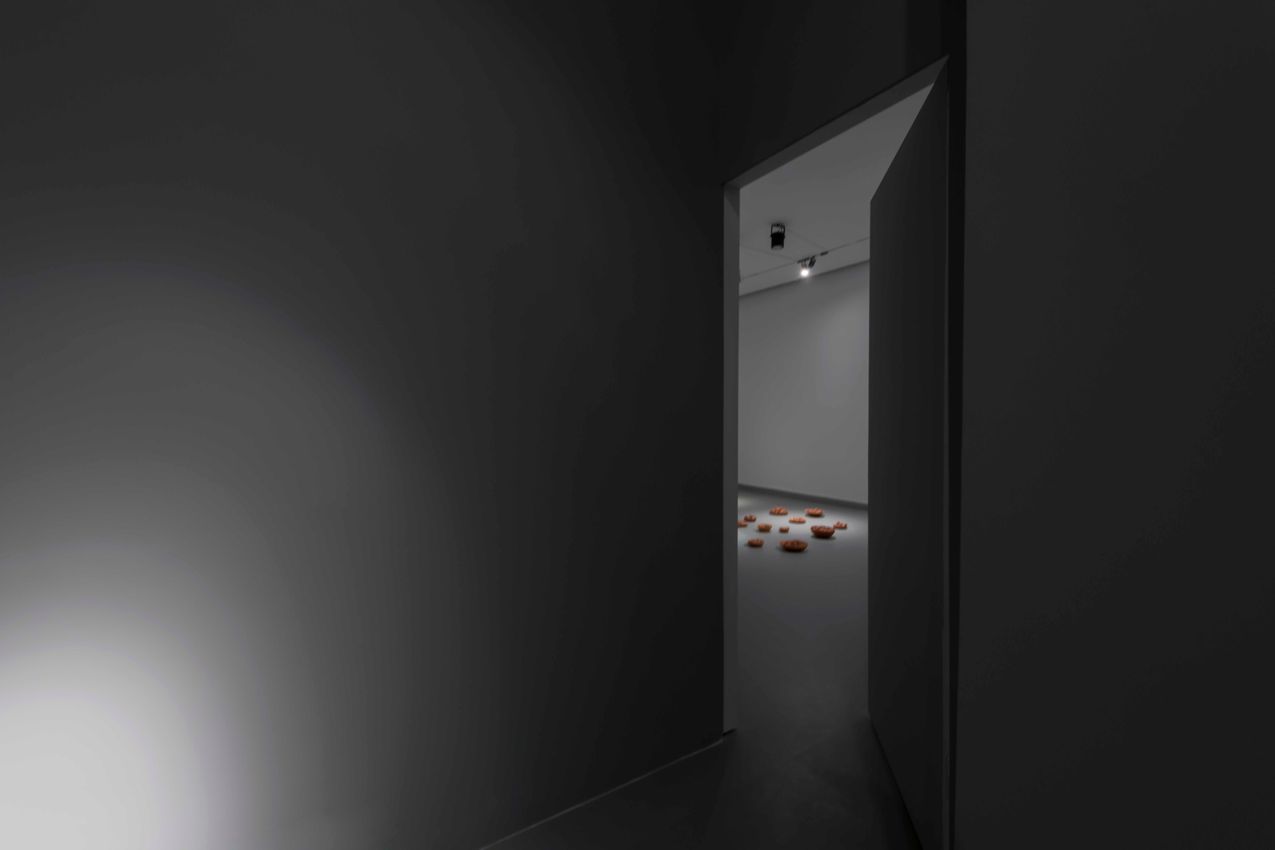
‘Fugue’ takes its name from the psychological counterpart of ‘fuga,’ which derives from the Latin ‘fuga,’ meaning ‘to fly.’ The phenomenon of ‘dissociative fugue,’ from which Başak Bugay gains inspiration, carries the traces of amnesia, a type of memory loss, and indicates the separation, or fleeing from one’s identity. The mixed-media sculptures and ink drawings in the exhibition put on the stage figures suspended in their inner worlds, as in purgatory, as in dreams that are thought to be real. The gallery creates a timeless and subconscious space for visitors, leading to an illusion of happening in between dream and reality, whilst protecting the inside from the outside.
One of the main fields that feeds Başak Bugay’s artistic practice is psychology, and the concept of fugue that she focuses on in this exhibition holds critical importance for the artist to understand the violent and bullying tendencies in the individual and society. The phenomenon at the center of the exhibition expresses the escape from one’s self as well as from reality when triggered by a despair that might have similarities to one experienced in the past. The artist makes visible such moments of ‘flight from reality”‘via self-isolating sculptures. She characterizes the act of creating mental space for oneself not only as a personal, but also as a social pathology.
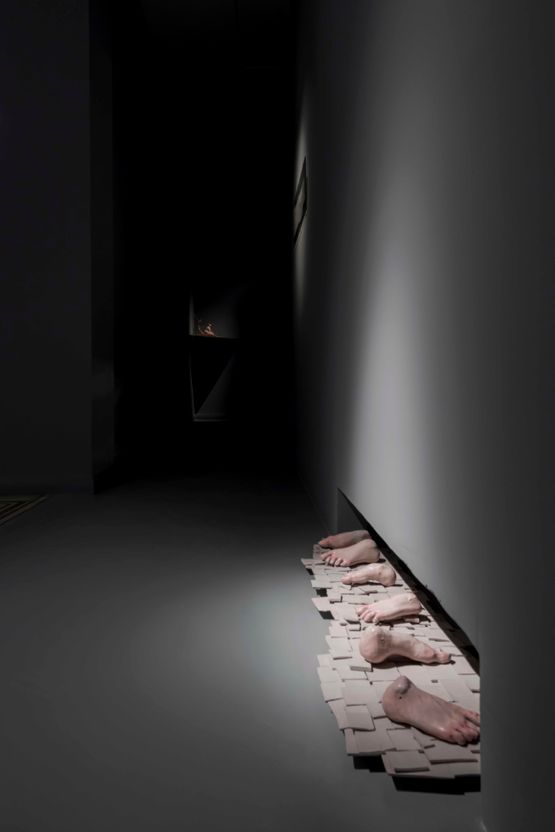
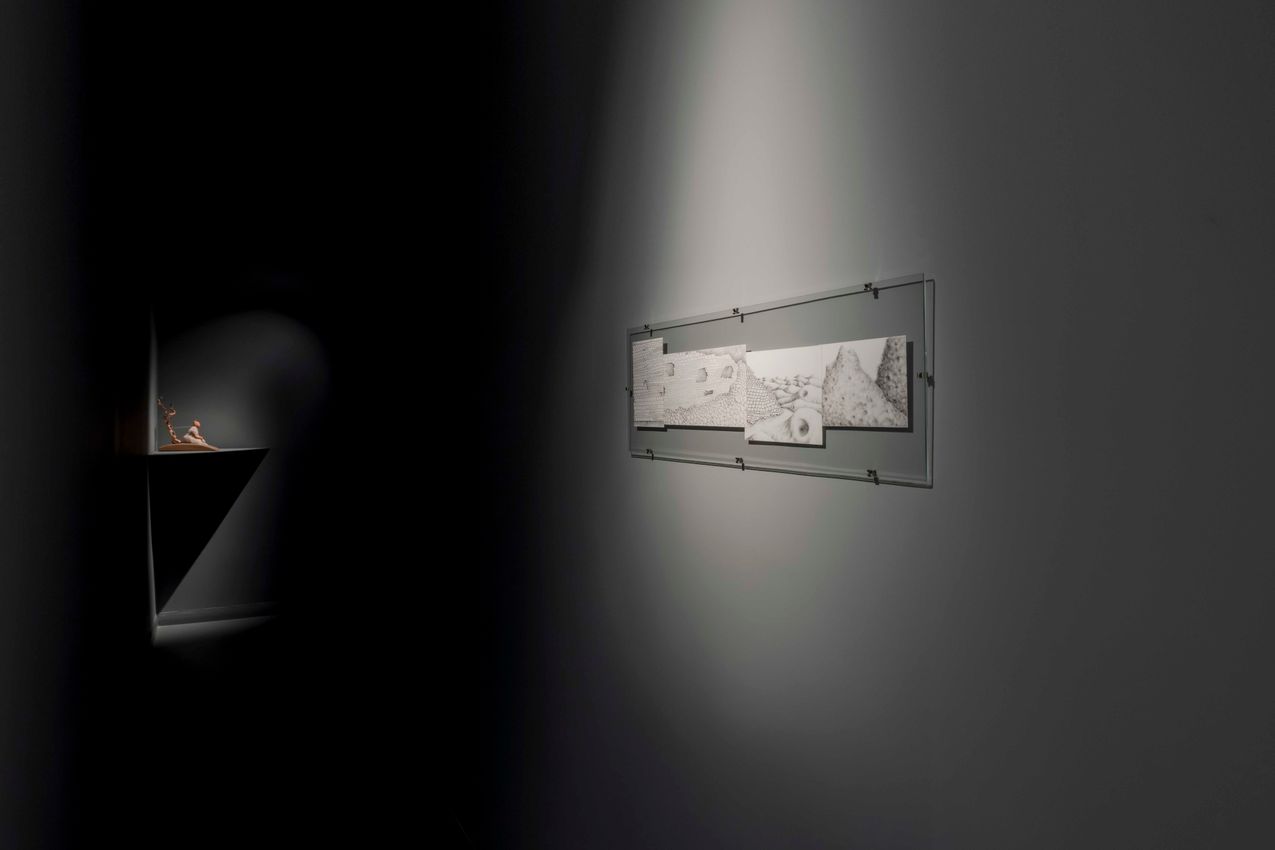
Composed of fabric, terracotta, and ceramics, Slope/Yokuş displays a figure whose feet do not touch the ground despite the sloping ground they are on and the load on their back. The individual who falters in the sloping structure of the ground they are on is disconnected from reality with their burdens, thus hanging in the air. The sculpture named Blackout/Karartma qualifies as a document of escape. The feet are on the stage which are the carriers of the body that hides away in order to protect from the invisible enemy. Twenty o’clock/Saat Yirmi refers to the television announcement for the evening news. The person, crushed under the stratified tensions in the society that they are a part of, isolates themselves from the dinner table, spiritually drifting apart. The Flying Balloon/Uçan Balon allows the mind to float away like a balloon in an effort to capture and cure unmanageable problems, as a coping mechanism and a relaxation technique. The work named Afenphophobia/Afenfosfobi, which means the fear of getting touched, refers to the image of a woman holding the patriarchy upright like a tree with invisible strings. The artist criticizes that this feminine figure, which has been transformed into an immune monument, is neutralized and torn from its vitality. Why the Laugh?/Ne Gülüyorsun?, a statue that does not alter its posture even though it fails to hold on to the floor, manifests the fragility of confronting victimization. I Haven’t Died Yet/Ben Henüz Ölmedim, stubborn and proud, stands ready for action as a mobile sculpture in the exhibition space. The Old City/Eski Şehir posits Anatolia’s geographical structure, memory, traumas, and ‘level with the ground’ landscape in a form reminiscent of pits. The series of works entitled The Chain, The Clock, and Comes when it’s over/ Zincir, Saat ve Bitince Gelecek, finely inked drawings on paper, depicts a topographic surface and/or a society that constantly seeks to relate, but fails to integrate because of disconnection.
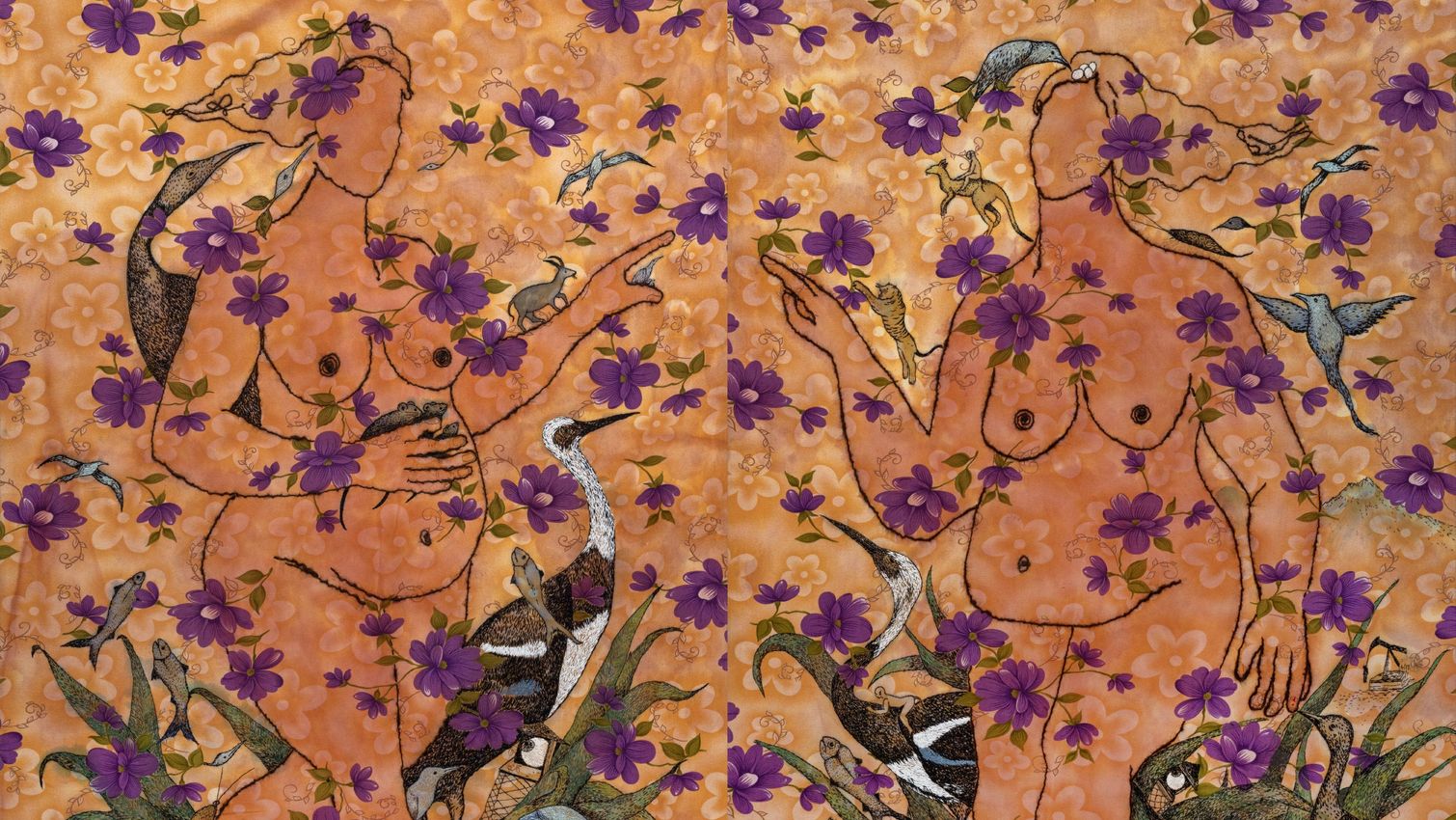
Başak Bugay looks for ways to represent the relationship between psychic structures of the subject and the collective unconscious in her works. Combining a wide range of material with an ironic mode of expression, she dwells upon topics such as childhood traumas, denial and defense mechanisms, sleep and death in her works. Understanding her creations as ‘games’ that develop organically with materials and within processes, Bugay works with materials such as fabric, fiber, plaster and terracotta. Although closed to the outside world, isolated, and imprisoned with no direct contact with the audience, dwelling in their own privacy, her figures are peaceful and familiar on one hand, looking stern and lacking identity on the other. Bugay lets the audience discover hidden items trapped in spaces of privacy, violate the privacy of the figures and complete uncanny and hidden stories as they like. The spaces and figures in her works are both safe and warm, as well as involving the possibility of attack.
Başak Bugay (1979, Istanbul, Turkey) is based in Istanbul. Having graduated from Mimar Sinan Fine Arts University Painting Department in 2002, Bugay completed her M.A. studies in 2006, and Proficiency in Art program in 2019 at the Social Sciences Institute of the same university. Among her recent solo exhibitions are Fugue (Zilberman Istanbul, Turkey, 2021), It’s a Pleasure to Hide, (Milli Reasürans Art Gallery, Istanbul, Turkey, 2018), Bebe (Studio exhibition, Istanbul, Turkey, 2015). Among the group exhibitions she participated in are Karşı Pencere/Opposite Window (Curator: Melike Bayık, KOLI Art Space, Istanbul, Turkey, 2021), Dancing Into One, (Yuvakimyon Greek Girls High School, Istanbul, Turkey, 2019), The Big Picture (DEPO, Istanbul, Turkey, 2018); A Day at the Hotel (Zilberman Gallery, Istanbul, Turkey, 2018), Animal (Tophane-i Amire Culture and Art Center, Istanbul, Turkey, 2012); Figurative (Alan Istanbul, Istanbul, Turkey, 2010) and Where is Diyarbakir Prison (Karşı Sanat, Istanbul, Turkey, 2011).
In her works, Başak Bugay explores ways to represent the relationship between the psychic constructions of the subject and the collective unconscious. Using a wide range of material and an ironic discourse, she puts forth themes like childhood traumas, denial and defense mechanisms, and sleep/death. Taking her relationship with material and process as organic, Bugay’s production process is shaped through the use of materials of fabric, fibre, plaster, and terracotta. Cut off from the outside world, isolated, confined to their own space the figures in their privacy do not directly interact with the audience. These figures are tough and distant and at once peaceful and familiar. Bugay lets the audience to figure out the hidden elements trapped in these spaces of privacy, breach into their secrecy and complete their uncanny and hidden stories. Although seeming safe and warm, in the environments and figures in her works is contained the possibility of an attack.


Zilberman, founded in Istanbul in 2008, stages 10–12 exhibitions every year in its gallery spaces in Istanbul and Berlin. The gallery occupies two separate floors of Mısır Apartment, one of the most famous examples of art nouveau architecture in Istanbul.
A respected voice in contemporary art discourse.
Focusing on ambitious storytelling and insightful art-world commentary. Ocula Magazine publishes in-depth interviews, critical essays and timely analysis on the artists, exhibitions and ideas driving the global art world.
Learn more about Ocula Magazine
Showcasing the best of the art world.
Ocula partners with galleries from around the world to highlight their artists, artworks and exhibitions. Gallery membership is by application and invitation, with each member vetted by an independent panel.
Learn more about Ocula Membership

Specialises in the sale of major artworks.
Led by a team with deep ties to the world’s leading auction houses, galleries and collectors. Ocula’s advisory team offers bespoke services to high-net-worth clients from around the world who are looking to acquire the best of contemporary and modern art.
Learn more about our team and services