




ANISH KAPOOR
b. 1954, IndiaAnish Kapoor’s adventurous artistic practice explores the metaphysical. His paintings, mirrors and inventive sculptural forms—including enormous, site-specific pieces—consider ideas of absence and presence, the contained and the container, inviting the viewer into a disorienting, compelling world.
Early Years
Anish Kapoor was born in Mumbai in 1954. His father was an admiral in the Indian navy and culturally Hindu. His mother’s family was well known in the Iraqi-Jewish diaspora in India. When he was 16, he and his brother went to live on a kibbutz in Israel, which he remembers as being “disorientating and complicated”. In 1973, Kapoor arrived in London to study at Hornsey College of Art (1973–1977) and then at Chelsea School of Art and Design (1977–1978).
Anish Kapoor: Artworks
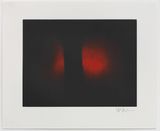
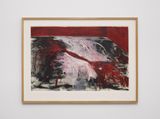
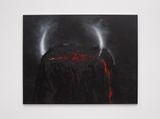
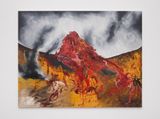
Anish Kapoor’s sculptural practice spans the intimate and the monumental—his works ask viewers to consider how they inhabit space, how objects are reflected and when they disappear. Often, he presents apparently infinite depths, adding a psychological dimension to a physical object. In his painting practice, Kapoor frequently uses a particular shade of red: Alizarin Crimson. As well as applying it straight on to canvas, he also mixes it with silicone, seemingly giving the colour the properties of bodily fluids.
- Kapoor was initially associated with the New British Sculpture movement—his 1981 piece As if to Celebrate, I Discovered a Mountain Blooming with Red Flowers was shown as part of Whitechapel Gallery’s sculpture survey that year. A red three-peaked mountain and painted red shapes shared space with a small yellow boat-like piece, suggesting birth, blood and female anatomy.
- Kapoor represented Britain at the 1990 Venice Biennale with Void Field, in which large sandstone blocks had holes carved into their surfaces, which were filled with black pigment, sparking questions about infinity and the unknown.
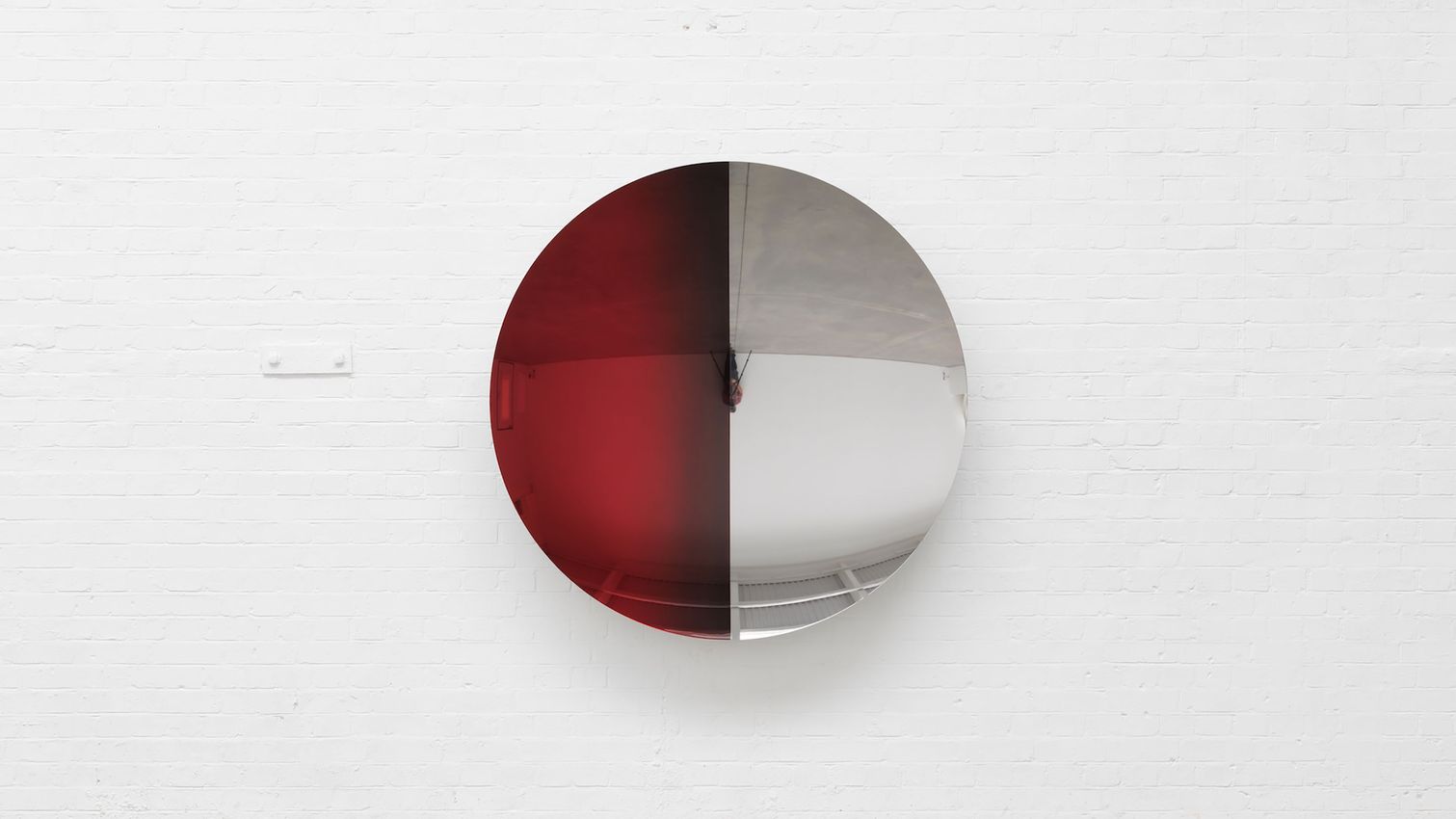
- The Sky Mirror series (2001–) began with an installation outside Nottingham Playhouse. A highly polished reflective stainless steel body offers viewers the chance to consider what might be in the void the mirror creates. Other versions of Sky Mirror have been installed at the Rockefeller Centre, New York City, the Serralves Museum in Porto and the Casino de Monte Carlo in Monaco.
Anish Kapoor: Select Awards
- Premio Duemila, 44th Venice Biennale (1990)
- Turner Prize, London (1991)
- Royal Academician, Royal Academy of Arts, London (1999)
- Commander of the Order of the British Empire (2003)
- Ordre des Arts et des Lettres, Paris (2011)
- Praemium Imperiale, Tokyo (2011)
- Knighthood, London (2013)
Anish Kapoor: Select Exhibitions
Select Solo Exhibitions
- Anish Kapoor, Lisson Gallery, New York City (2026)
- Anish Kapoor: Earth Sky on Red Ground, SCAD Museum of Art, Savannah (2026)
- Anish Kapoor, Hayward Gallery, London (2026)
- Anish Kapoor: Early Works, Jewish Museum, New York City (2025)
- Anish Kapoor, Drawings, Lisson Gallery, Shanghai (2024)
- Monadic Singularity, Liverpool Cathedral (2024)
- Anish Kapoor, Museum of Contemporary Art and Urban Planning, Shenzhen (2021)
- Anish Kapoor, Serralves Museum, Porto (2018)
- Anish Kapoor chez Le Corbusier, Couvent de La Tourette, Eveux (2015)
- Flashback, Manchester Art Gallery (2011) (and touring)
- Past, Present, Future, ICA Boston (2008)
- Ascension, Centro Cultural Banco do Brasil (2006) (and touring)
- Marsyas, Turbine Hall, Tate Modern, London (2002)
- Anish Kapoor, Hayward Gallery, London (1998)
- Anish Kapoor, Nishimura Gallery, Tokyo (1995)
- Anish Kapoor Drawings, Tate Gallery, London (1990)
- Anish Kapoor, Gladstone Gallery, New York City (1986)
- Anish Kapoor, Lisson Gallery, London (1982)
- Anish Kapoor, Patrice Alexandre, Paris (1980)
Select Group Exhibitions
- It Must Be Seen. The Autonomy of Colour in Abstract Art, Fundación Juan March, Madrid (2025)
- Illusion, Hamburger Kunsthalle (2024)
- In the House of the Trembling Eye: an exhibition staged by Allison Katz, Aspen Art Museum (2024)
- Van Gogh and the Stars, Fondation Vincent Van Gogh, Arles (2024)
- De Renav’, International Contemporary Art Biennale, Bonifacio (2022)
- Super Fusion, Chengdu Biennale, Chengdu Museum of Contemporary Art (2021)
- Escape Routes, Bangkok Art Biennale, Wat Phra Chetuphon (Wat Pho), Bangkok (2020)
- Minimalism: Space, Light, Object, National Gallery Singapore and ArtScience Museum, Singapore (2018)
- The Art of Our Time: Masterpieces from the Guggenheim Collections, Guggenheim Bilbao (2014)
- Sexuality and Transcendence, Pinchuk Art Centre, Kyiv (2010)
- Counterpoint III, Musée du Louvre, Paris (2007)
- Blast to Freeze: British Art in the 20th Century, Kunstmuseum Wolfsburg (2002) (and touring)
- Wounds: Between Democracy and Redemption in Contemporary Art, Moderna Museet, Stockholm (1998)
- 23rd Sao Pãulo Biennial (1996)
- 44th Venice Biennale (1990)
- Anish Kapoor, Wolfgang Laib, Richard Long, Galerie le Gall Peyroulet, Paris (1989)
- British Sculpture in the 20th Century: Part 1, Symbol and Imagination 1951–1980, Whitechapel Art Gallery, London (1981)
Further Reading
Anish Kapoor’s website Anish Kapoor’s Instagram 2026 interview in the Financial Times 2026 interview in the Guardian Artist profile page at Lisson Gallery
Anish Kapoor FAQs
What was the Vantablack scandal?
In 2012, a UK company called Surrey NanoSystems created Vantablack, the world’s darkest material, made from carbon nanotubes and able to absorb more than 99 percent of light. In 2016, Anish Kapoor obtained an exclusive licence to use the spray paint version, Vantablack S-VIS—he revealed a series of Vantablack sculptures at the 2022 Venice Biennale. Kapoor’s exclusivity angered fellow artist Stuart Semple, who created “Pinkest Pink” and banned Kapoor from using it. (Kapoor got hold of some and posted a photo showing his middle finger dipped in it.)
What did Anish Kapoor make for the Turbine Hall at Tate Modern?
Anish Kapoor installed Marsyas in the Turbine Hall in 2002: 150 metres of blood-red PVC membrane stretched across the space via three steel rings (two vertical, at either end of the hall, and one suspended in parallel with the bridge), creating a sculpture that seemed to shift its orientation from vertical to horizontal. It was also impossible to see the whole sculpture at once. (The title came from Greek Mythology: Marsyas was a satyr flayed alive by Apollo.)
Did Anish Kapoor design the slide at the Olympic Park in London?
In a sense—Kapoor designed the Orbit sculpture, created with the engineer Cecil Balmond for the 2012 Olympics. The looping steel structure contained 1,500 tonnes of steel, 35,000 bolts and offered visitors panoramic views over the London skyline. Speaking in 2014, when Orbit reopened after the Olympic Park was repurposed following the Games, Kapoor said: “It’s a view of London you never get, looking west-wards. You’re looking out over the city rather than from it. And you’re in a telescope with two big concave mirrors that turn you upside down [and] change the perspective of what you’re looking at.” The slide element of the sculpture is called Helix—it is attached to Orbit and was a collaboration between Kapoor and conceptual artist Carsten Höller. It opened in 2016.
What was Dirty Corner?
In summer 2015, Anish Kapoor installed six works at the Château de Versailles. The most controversial was Dirty Corner, a monumental sculpture featuring a gaping orifice surrounded by rocks, placed on the wide pathway leading up to the château. In July 2015 Dirty Corner was vandalised following an interview in which Kapoor was said to have referred to the piece as the queen’s womb. This became “queen’s vagina” in the popular press, and Kapoor later said he wasn’t responsible for that phrase.
Ocula

Explore Anish Kapoor's Exhibitions On Now
















Anish Kapoor in Ocula Magazine









Explore and Follow Artists Shaping Contemporary Art
A respected voice in contemporary art discourse.
Focusing on ambitious storytelling and insightful art-world commentary. Ocula Magazine publishes in-depth interviews, critical essays and timely analysis on the artists, exhibitions and ideas driving the global art world.
Learn more about Ocula Magazine
Showcasing the best of the art world.
Ocula partners with galleries from around the world to highlight their artists, artworks and exhibitions. Gallery membership is by application and invitation, with each member vetted by an independent panel.
Learn more about Ocula Membership
Specialises in the sale of major artworks.
Led by a team with deep ties to the world’s leading auction houses, galleries and collectors. Ocula’s advisory team offers bespoke services to high-net-worth clients from around the world who are looking to acquire the best of contemporary and modern art.
Learn more about our team and services