





DAMIEN HIRST
b. 1965, United KingdomSharks in formaldehyde, dead flies, diamond-encrusted skulls, pills, dots, and cherry trees are some of the most iconic and memorable motifs in contemporary art (market) history. One of the most notorious figures on the art scene, Damien Hirst works across a broad range of media to examine the complexities of art, religion, science, commerce, and human life.
Education and YBAs
Damien Hirst graduated with a BA from Goldsmiths College, London, in 1989. He quickly rose to prominence for his innovative and even controversial artworks, winning the Turner Prize in 1995. The centerpiece of his Turner Prize exhibition was Mother and Child (1993), in which bisected bodies of a cow and calf appeared preserved in formaldehyde solution.
Hirst is also one of the Young British Artists, a loose group of rebellious young artists who began exhibiting together in 1998. Titled Freeze, the inaugural YBA exhibition was led by Hirst and presented in an empty building in London. Many of the YBAs, among them Tracey Emin, Sarah Lucas, Gary Hume, Chris Ofili, and Gillian Wearing, are now internationally-recognised artists.
Death as Theme
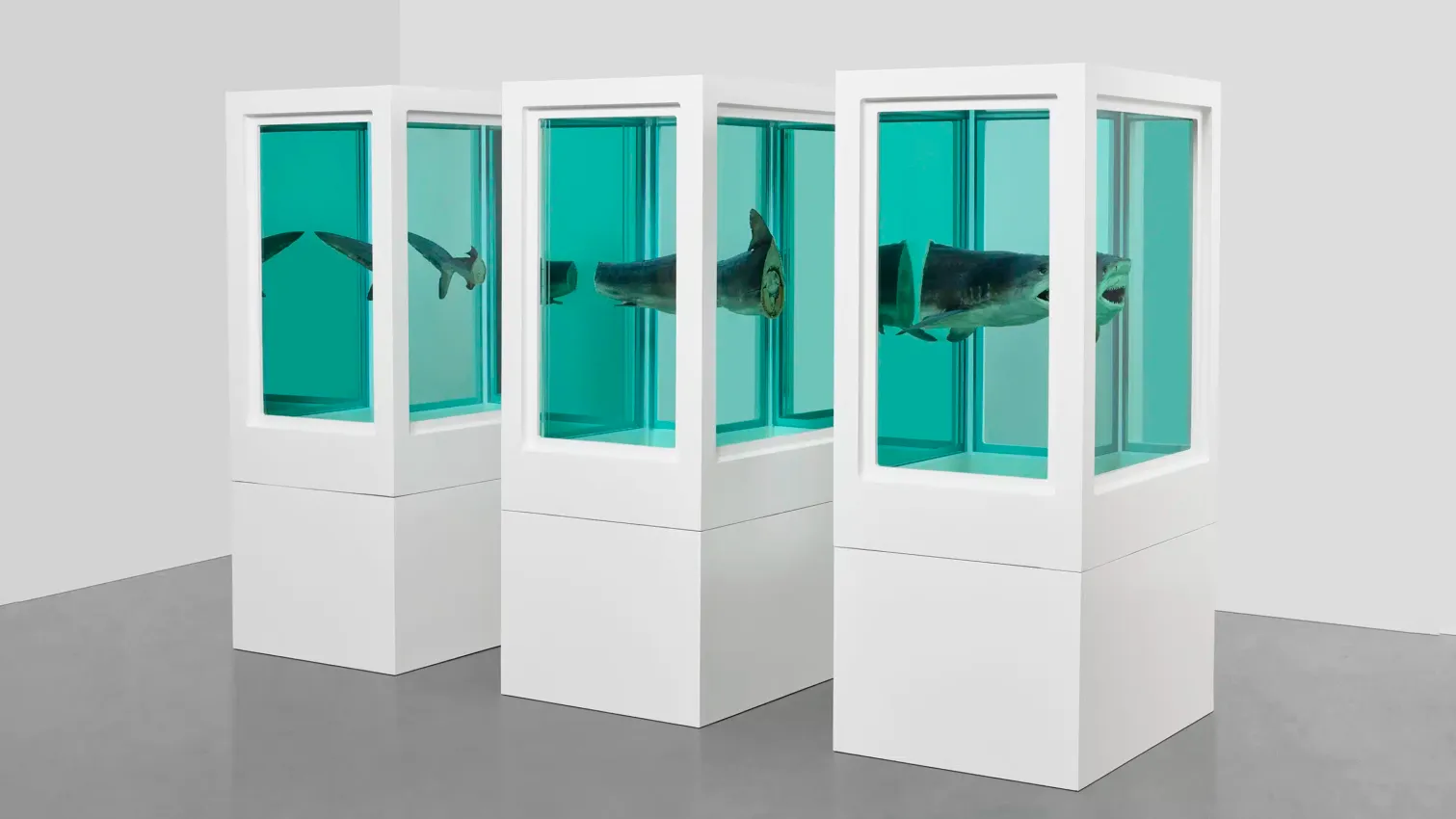
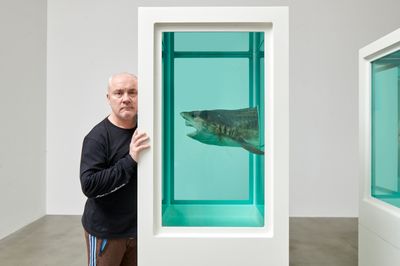
Many of Hirst’s works revolve around the central theme of death, compelling the viewer to confront their own fears of mortality. Among his most notable works are The Physical Impossibility of Death in the Mind of Someone Living (1991), a shark suspended in a vitrine filled with formaldehyde in, and For the Love of God (2007), a human skull completely encrusted in diamonds.
‘Spot paintings’ and Pharmaceuticals
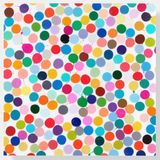
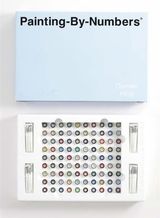
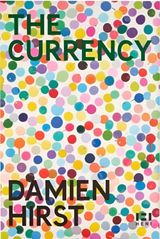
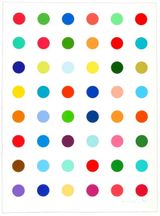
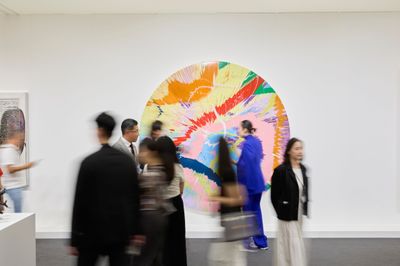
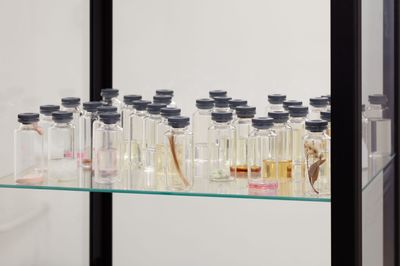
Hirst often works in series, producing multiple versions of a work sharing a process or repeated motif. Hirst’s ‘Spot Paintings’, also known as the ‘Pharmaceutical’ or ‘Dot Paintings’, form one of the artist’s most extensive and systematically produced series. Initiated in 1986, the works consist of rows of coloured circles painted with uniform precision. The spot paintings can be seen as a development of his pharmaceutical works featuring rows of pills such as Prototype for Lies (1998), or Pharmacy (1992). Many of the early spot paintings were titled after chemical compounds such as Methoxyverapamil (1991).
Disrupting the Art World
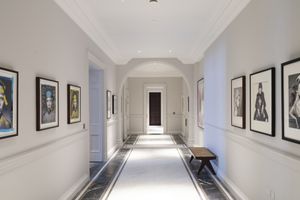
Hirst is also recognised as a disruptive player in the art world. This has involved consigning his own works to an auction house for a one-vendor sale and co-founding the art-based publishing company Other Criteria, which sells his own editions and multiples. In 2015, Hirst opened his own art gallery, Newport Street Gallery, in London.
Exhibitions
The first retrospective of Hirst’s work, The Agony and the Ecstasy, took place at the Museo Archeologico Nazionale, Naples, in 2004. A later retrospective at the Tate Modern in 2012 recognized Hirst’s contributions to British art over the last three decades.
Selected solo exhibitions include:
- Damien Hirst, The Light That Shines, Château La Coste (2 March–23 June 2024)
- Damien Hirst, The Weight of Things, Museum of Urban and Contemporary Art, Munich (26 Oct 2023–24 November 2024)
- Mental Escapology, St Moritz (23 Janurary–28 February 2021)
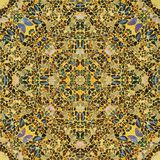
- Mandalas, White Cube Mason’s Yard (2019)
- Damien Hirst: The Last Supper, National Gallery of Art, Washington, D.C. (13 August–27 November 2016)
- Damien Hirst, The Complete Spot Paintings 1986–2011, Gagosian, New York, London, Paris, Los Angeles, Rome, Athens, Geneva, and Hong Kong (12 January–18 February 2012)
Selected group exhibitions include
- Icons: Worship and Adoration, Kunsthalle Bremen (2019);
- Objects of Wonder: From Pedestal to Interaction, ARoS Aarhus Kunstmuseum (2019);
- Book of Beasts: The Bestiary in the Medieval World, The J. Paul Getty Museum, Los Angeles (2019);
- Sculpture on the Move 1946—2016, Kunstmuseum Basel, Switzerland (2016);
- All You Need is LOVE: From Chagall to Kusama and Hatsune Miku, Mori Art Museum, Tokyo (2013);
- Regarding Warhol: Sixty Artists, Fifty Years, The Metropolitan Museum of Art, New York (2012).
Who is Damien Hirst?
Damien Hirst is a British contemporary artist best known for his conceptual works that interrogate mortality, belief, and the value of art itself. He rose to prominence in the 1990s as a leading figure among the Young British Artists (YBAs), and won the Turner Prize in 1995.
What is Damien Hirst’s most famous work?
One of Hirst’s most recognisable works is The Physical Impossibility of Death in the Mind of Someone Living (1991), featuring a tiger shark suspended in formaldehyde. Other significant works include For the Love of God (2007), a platinum cast of a human skull encrusted with diamonds, and the series ‘Natural History’, which showcases preserved animals in tanks.
What influenced Damien Hirst’s art?
Hirst’s work is informed by medical science, Catholic iconography, and the legacy of conceptual art. His early exposure to anatomical imagery and his time working in a mortuary during college deeply influenced his exploration of death and preservation.
Where can I see Damien Hirst’s art?
Hirst’s artworks are held in major museum collections including Tate, the Museum of Modern Art (MoMA), and the Hirshhorn Museum. His exhibitions have also been staged at venues such as Gagosian, White Cube, and Fondation Cartier. His Newport Street Gallery in London exhibits works from his own collection.
How has Damien Hisrst’s work featured in the art market?
Damien Hirst is one of the most commercially successful artists of his generation. His 2008 auction Beautiful Inside My Head Forever at Sotheby’s London set records by bypassing the traditional gallery system, generating over £111 million in sales.
Ocula | 2025

Explore Damien Hirst's Exhibitions On Now


View Damien Hirst's Artworks








48 x 43 cm
Baldwin Contemporary GBP 10,000 - 20,000 Check Availability















Damien Hirst in Ocula Magazine








Explore and Follow Artists Shaping Contemporary Art
A respected voice in contemporary art discourse.
Focusing on ambitious storytelling and insightful art-world commentary. Ocula Magazine publishes in-depth interviews, critical essays and timely analysis on the artists, exhibitions and ideas driving the global art world.
Learn more about Ocula Magazine
Showcasing the best of the art world.
Ocula partners with galleries from around the world to highlight their artists, artworks and exhibitions. Gallery membership is by application and invitation, with each member vetted by an independent panel.
Learn more about Ocula Membership
Specialises in the sale of major artworks.
Led by a team with deep ties to the world’s leading auction houses, galleries and collectors. Ocula’s advisory team offers bespoke services to high-net-worth clients from around the world who are looking to acquire the best of contemporary and modern art.
Learn more about our team and services