





EMMA REYES
1919-2003, ColombiaEmma Reyes was a self-taught Colombian artist, writer and intellectual whose visionary paintings and drawings, infused with animism, vibrant colour, pulsating line and inspired by pre-Columbian traditions, have only recently gained overdue global recognition. In 2023, her work was the subject of a major retrospective at MAMCO Geneva, and in 2024 she was included in Adriano Pedrosa‘s landmark Venice Biennale, marking her as a pivotal figure in global art, and specifically Latin American contemporary art.
Her extraordinary life—marked by poverty, abandonment, and resilience—is chronicled in her memoir Memoria por correspondencia.
Early Years
Born in Bogotá in 1919, Emma Reyes endured a childhood of extreme hardship, including abandonment by her mother and years spent in a convent, experiences that would profoundly shape her worldview and art. Illiterate until adulthood, Reyes escaped the convent at 19 and began a journey that took her across Latin America and Europe. She began her artistic career in Buenos Aires in 1945, studied in Paris under André Lhote, and collaborated with Diego Rivera in Mexico.
She lived in cities including Montevideo, Jerusalem, Washington, Rome, and ultimately settled in France, where she became part of the European intellectual and artistic circles, befriending figures such as Jean-Paul Sartre and Pier Paolo Pasolini.
Emma Reyes Artworks
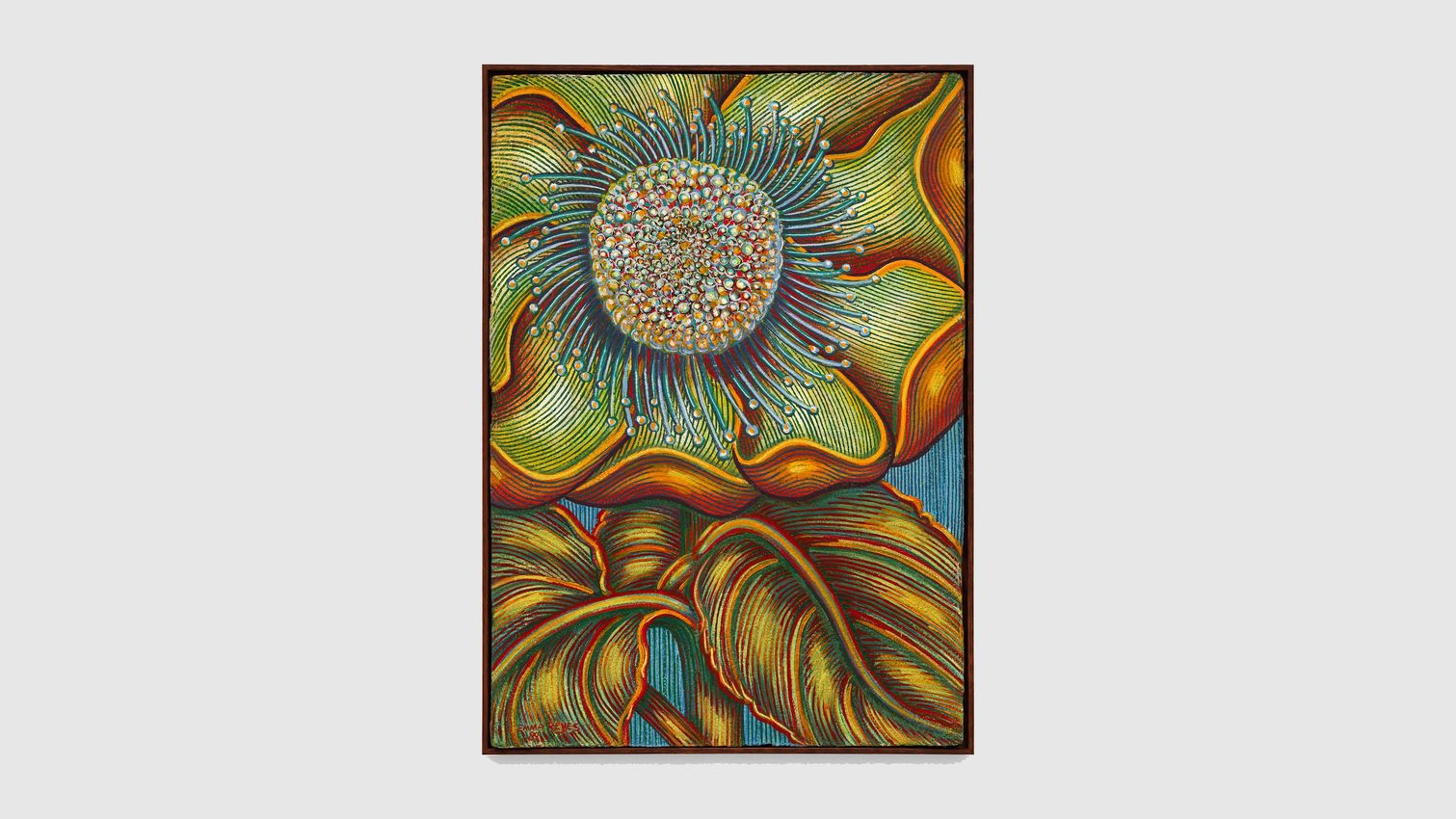
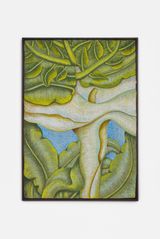
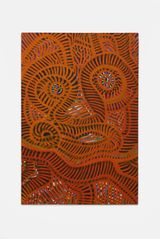
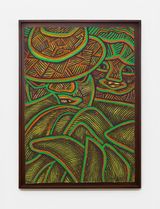
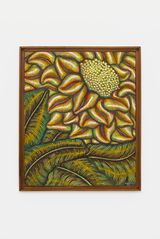
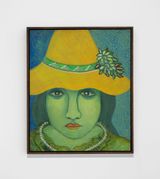
Emma Reyes’s contemporary art practice moved between figuration and abstraction, drawing on a visual lexicon rooted in her personal history and Latin American heritage. Her works are known for their vibrant colours and rigorous tightly framed compositions, often depicting hybrid forms that unite human, plant, and animal worlds.
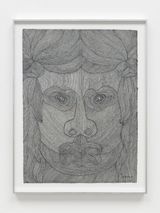
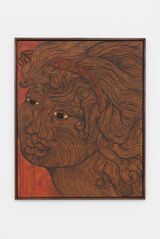
A hallmark of her style is the use of continuous, spidery lines that construct labyrinthine forms, evoking weavings, webs, and organic movement.
Influences
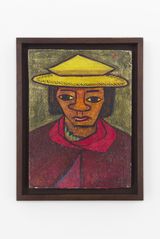
Reyes’s early paintings and drawings reflect the hardships of her youth, often depicting scenes of rural life, peasants, and indigenous people with a sense of both hardness and humanity. Her style was shaped by trends in naïve art, Mexican muralism, and indigenism, as well as by her encounters with post-Cubism, abstract expressionism, new realism, and kinetic art during her time in Europe.
Animism and Hybrid Beings
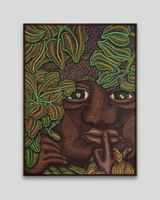
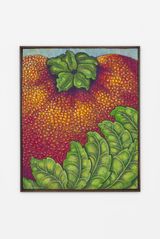
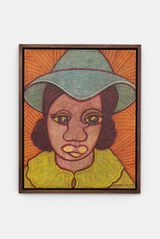
Curators have discussed her work in the context of the term ‘magic realism’, which describes a trend in late 20th-century Latin American fiction, could equally be applied to Reyes’ body of work. From the mid-1950s, Reyes developed a distinctive animistic approach, creating Monsters—part-human, part-animal hybrids—alongside close-up portraits of fruits, vegetables, and flowers. Her compositions brim with formal invention, where hair becomes petals, foliage turns into hats, and mouths transform into fruit, evoking pre-Columbian traditions and a deep connection to nature.
Major Series and Later Work
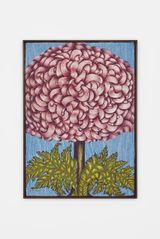
In the 1980s and 1990s, Reyes’s work became more flamboyant, drawing on memories of her travels and her South American identity. Her ‘Imaginary Portraits’ and ‘Flowers, Fruits, and Vegetables’ series are celebrated for their bold lines, vibrant colours, and tightly framed compositions that invite viewers to reconsider their relationship with the natural world. Reyes’s later paintings, often created in her adopted home of Périgueux, France, are marked by a sense of organic energy and a rejection of anthropocentrism.
Select Awards and Accolades
- Knight of the Order of Arts and Letters, France (2003)
- Scholarship to study in Paris (1947)
Exhibitions
Emma Reyes is increasing receiving attention in solo and group exhibitions. Below is a selection.
- Emma Reyes: A Revelatory Retrospective, MAMCO, Geneva (2023)
- Emma Reyes: The Many Faces of Emma Reyes, Galería La Cometa, Bogotá (2024)
- CAPC–Musée d’Art Contemporain, Bordeaux (2025, forthcoming)
- Biennale Arte 2024, Venice Biennale, Italy (2024)
- Latin American Art from the Essex Collection, various venues, UK
- Permanent Collection, Musée d’Art et d’Archéologie du Périgord, Périgueux
Emma Reyes FAQs
Where can I see Emma Reyes’s art?
Emma Reyes’s works are held in the Essex Collection of Art from Latin America, the Musée d’Art et d’Archéologie du Périgord in Périgueux, and have been exhibited at MAMCO Geneva, CAPC Bordeaux, and the Venice Biennale. Her work was shown in 2025 at TEFAF in New York and at Basel by gallery Crèvecœur. Colombo’s Banco de la República has around a hundred artworks by artist Emma Reyes and 23 of her handwritten letters.
What is Emma Reyes best known for?
She is best known for her animistic paintings and drawings that blend plants, animals, and humans, as well as for her memoir Memoria por correspondencia, which recounts her extraordinary life story.
What styles and movements influenced Emma Reyes’s art?
Her work is influenced by naïve art, Mexican muralism, indigenism, post-Cubism, abstract expressionism, new realism, and kinetic art, as well as pre-Columbian traditions.
Did Emma Reyes receive any major awards?
Yes, she was named a Knight of the Order of Arts and Letters by the French government in 2003 and received a scholarship to study in Paris in 1947.
Are there any interesting facts about Emma Reyes?
Reyes was illiterate until adulthood, escaped a convent at 19, and became friends with Frida Kahlo, Diego Rivera, Jean-Paul Sartre, and Pier Paolo Pasolini.
How is Emma Reyes’s name pronounced?
Emma Reyes name is pronounced ‘EH-mah RAY-yes’.
Ocula | 2025


View Emma Reyes' Artworks




















Explore and Follow Artists Shaping Contemporary Art
A respected voice in contemporary art discourse.
Focusing on ambitious storytelling and insightful art-world commentary. Ocula Magazine publishes in-depth interviews, critical essays and timely analysis on the artists, exhibitions and ideas driving the global art world.
Learn more about Ocula Magazine
Showcasing the best of the art world.
Ocula partners with galleries from around the world to highlight their artists, artworks and exhibitions. Gallery membership is by application and invitation, with each member vetted by an independent panel.
Learn more about Ocula Membership
Specialises in the sale of major artworks.
Led by a team with deep ties to the world’s leading auction houses, galleries and collectors. Ocula’s advisory team offers bespoke services to high-net-worth clients from around the world who are looking to acquire the best of contemporary and modern art.
Learn more about our team and services