





HENRIK OLESEN
b. 1967, DenmarkWorking through collage, found-object sculptures, posters, fliers, text and spatial interventions, Danish artist Henrik Olesen predominantly investigates identity, gender politics and the inscription of the homosexual body in history.
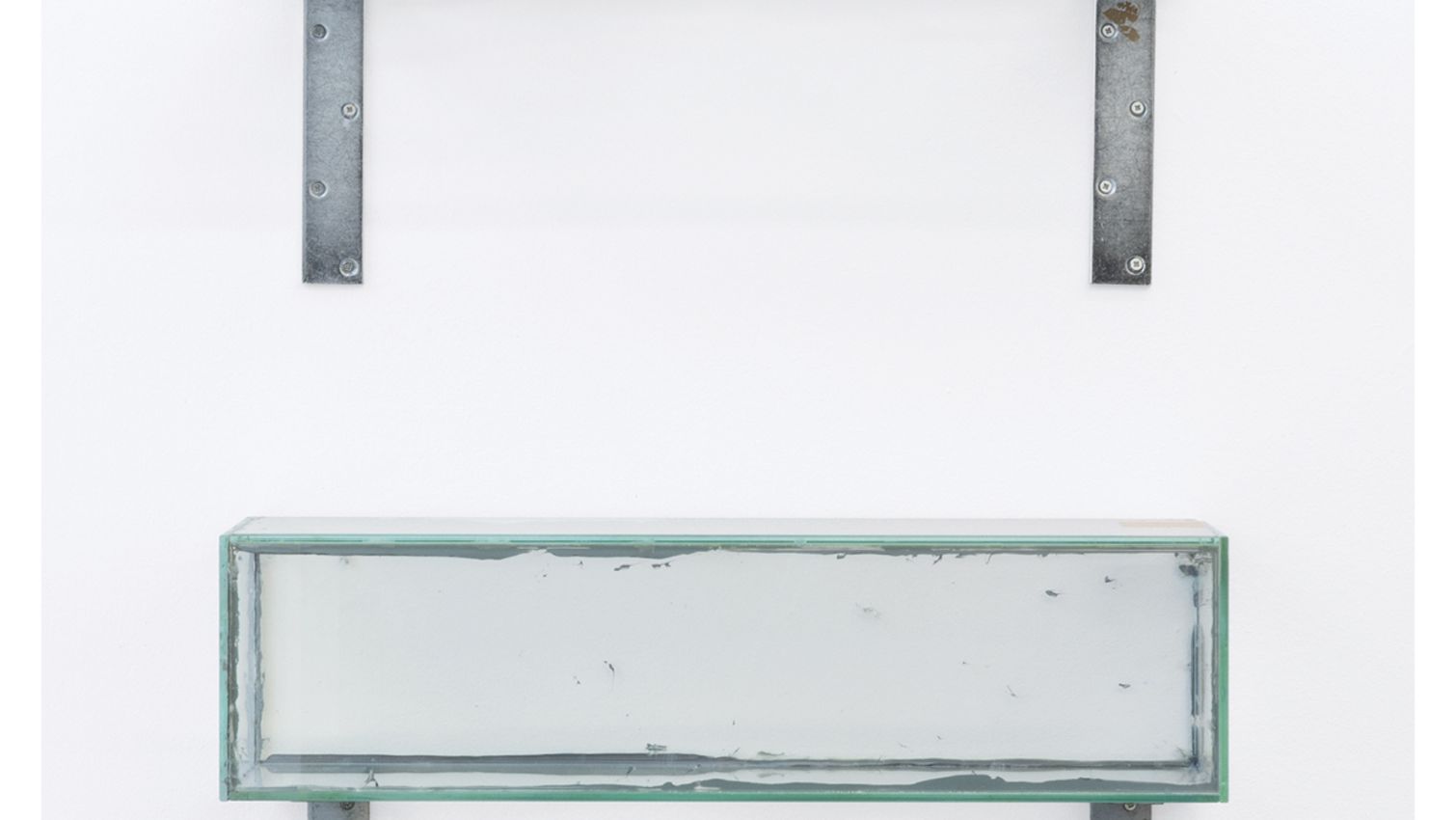
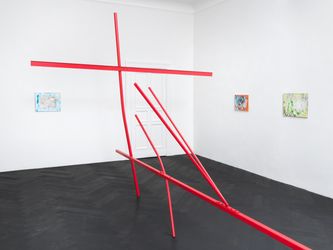
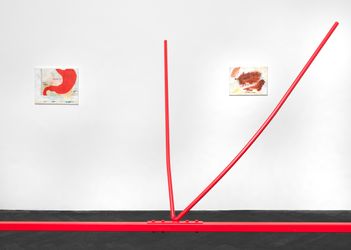
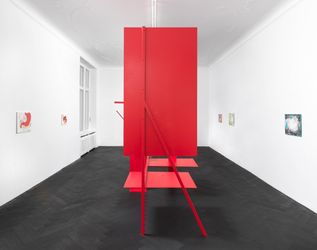
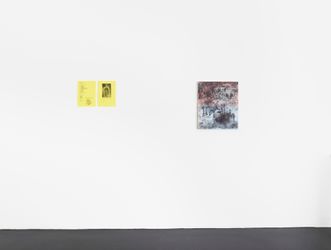
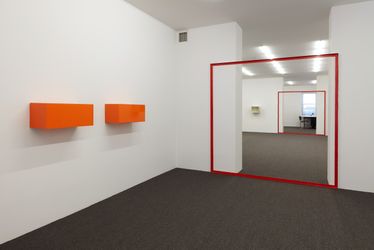
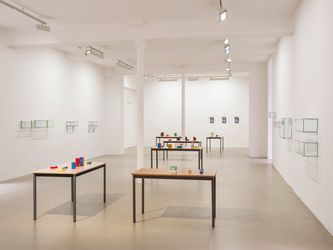
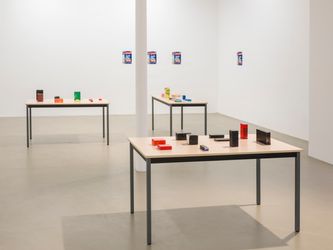
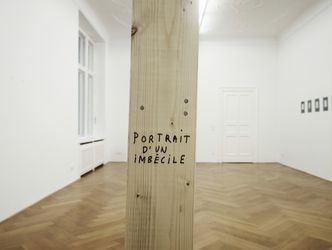
Emerging from in-depth research and minimal gestures, Olesen’s highly conceptual and multifarious artworks can seem puzzle-like and oblique. His refusal to illustrate clear narratives between objects in his exhibitions means they often resist straightforward interpretation. He moves fluidly between a messy aesthetic of deconstruction—as seen in his 2013 exhibition Hysterical Men at Galerie Buchholz, where the artist deliberately left nail holes and screw plugs in the gallery walls—and ‘high-brow’ modernism—as seen in his sleek, Judd-like glass sculptures from the series ‘As yet untitled’ (2018), on view in the 2018 exhibition 6 or 7 new works at Galerie Chantal Crousel in Paris.
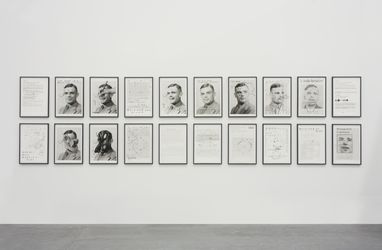
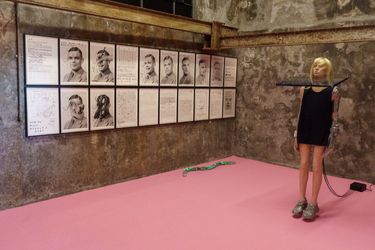
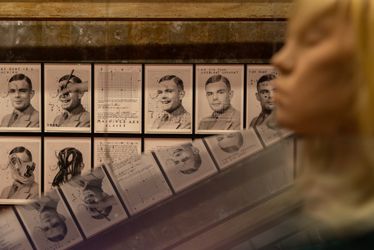
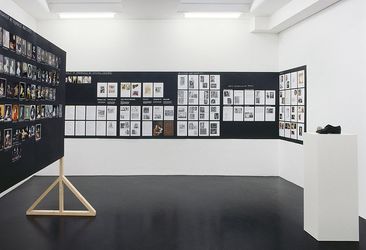
In addition to natural sciences, the distribution of capital and alternative narratives in everyday objects, Olesen most notably considers the (in)visibility of same-sex desire in history. His well-known work Some Faggy Gestures (2007), taking the form of a type of lesson plan, is a set of bulletin board-style collages that charts the poses of male figures throughout the history of Western painting and sculpture. For his 2006–7 exhibition at Projektraum von Yasmine Gauster und Alexander Schröder, Olesen exhibited reproductions of classical paintings of bathing male bodies alongside photographs of Walt Whitman, who never publicly addressed his sexuality but was believed to be gay. Similarly, his 2008 exhibition, How do I make myself a body, at Galerie Buccholz, is drawn from the life of British mathematician Alan Turing—considered the father of modern computer science—whose sexual orientation was considered a national security risk in the early years of the Cold War and was forced by his government to undergo synthetic hormone treatment to ‘treat’ his sexuality.
In his first US solo museum show, Projects 94, at The Museum of Modern Art in 2011, Olesen explored the historical criminalisation of homosexuality through a series of digital prints, found objects and texts. One project in the show, titled Pre-Post: Speaking Backwards, took the form of a free newspaper that compiled collected stories of ‘sodomy laws’, examining the legal codes, power structures, and social and political normalisation that have oppressed homosexuality. The paper also celebrated artists whom Olesen considers ‘revolutionaries’ for championing gay creativity. Indeed, Olesen is known for such co-opting of mainstream print systems in his work; for Manipulating Media (2002), he inserted stories of homosexual sub-cultures into the right-wing Daily Mail and the Daily Express, while for Anthology of Sublime Love (2003), he spliced images of sadomasochistic gay sex into Max Ernst’s ‘collage-novel’ The Woman with 100 Heads (1929).
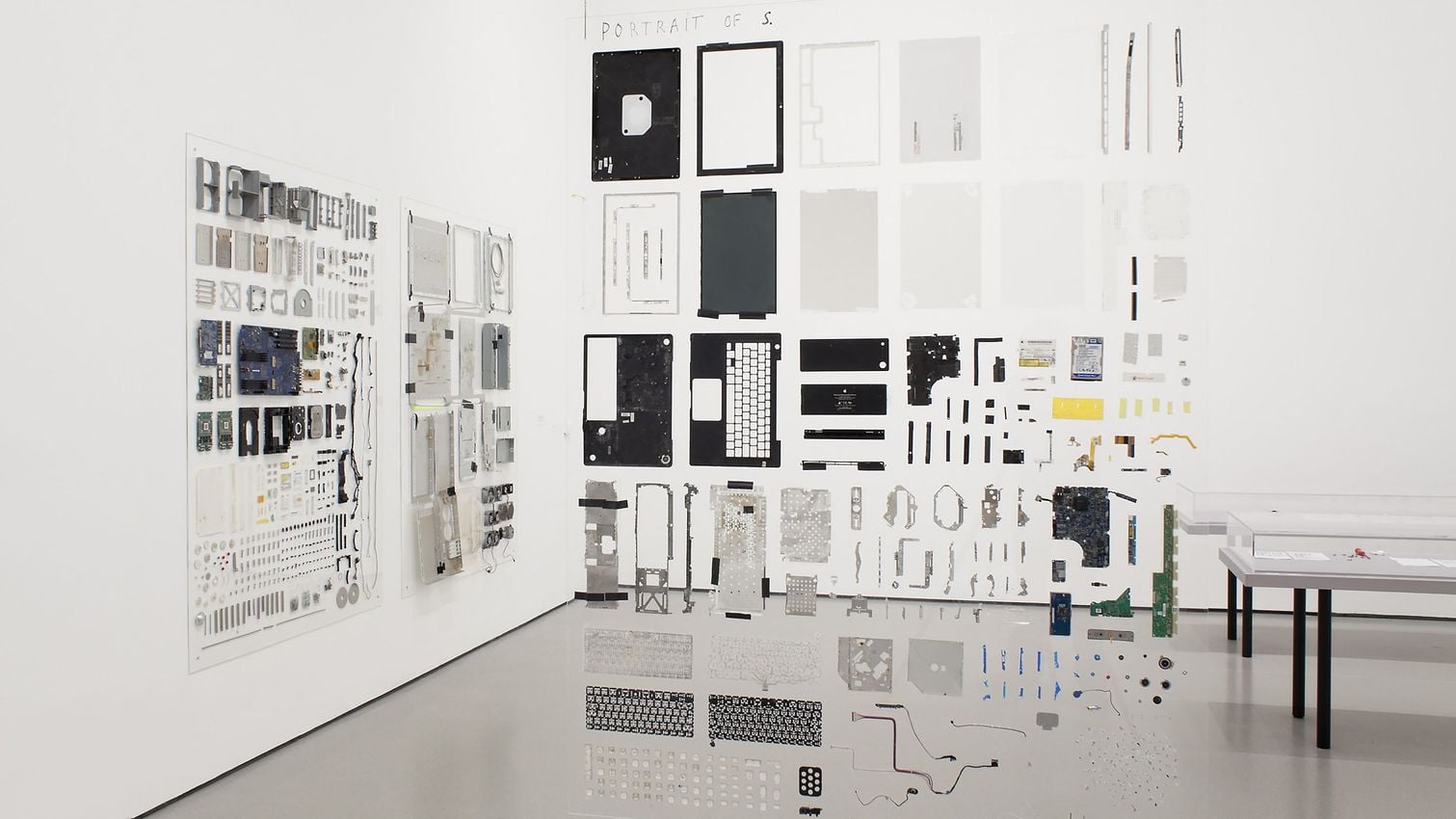
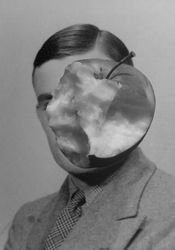
In 2011, the Museum für Gegenwartskunst Basel presented an extensive survey of Henrik Olesen’s artworks made over the past 15 years, showing the artist’s wide diversity of materials and strategies. The exhibition included minimal sculptures (_Portrait of My Father Sleeping [After Matt Mullican_] [2010]), crudely wrapped found objects (_Apple Ghost _[2008]) and three-dimensional collages of mechanical objects (_I do not go to work today. I don’t think I go tomorrow [2010]). For the 32nd Bienal de São Paulo, Olesen created a commissioned series of deconstructed representations of hell, ranging from Dante’s The Divine Comedy_ to more contemporary ideas of darkness and the underworld.
Other solo exhibitions were held at The Wattis Institute, San Francisco; Museum Ludwig, Cologne (Wolfgang Hahn Prize); The Museum of Modern Art, New York; Museum für Gegenwartskunst, Basel; Migros Museum für Gegenwartskunst, Zurich; Portikus, Frankfurt/Main (with Judith Hopf); Secession, Vienna; and the Sprengel Museum Hannover. He has participated in international exhibitions at important institutions such as the Stedelijk Museum Amsterdam; SMK National Gallery of Denmark, Copenhagen (as curator with Daniel Buchholz and Christopher Müller); Pinault Foundation, Venice; Carré d’Art, Nîmes; New Museum, New York; Pinakothek der Moderne, Munich, among others, and has been invited to the Istanbul Biennial, Manifesta, Venice Biennale, Gwangju Biennale and Berlin Biennale. In 2019, the Museo Reina Sofía, Madrid, will host a survey exhibition of his work. Olesen currently lives and works in Berlin.
Elliat Albrecht | Ocula | 2018


Representative Artworks
View story
View story
View story
View exhibition



Explore and Follow Artists Shaping Contemporary Art
A respected voice in contemporary art discourse.
Focusing on ambitious storytelling and insightful art-world commentary. Ocula Magazine publishes in-depth interviews, critical essays and timely analysis on the artists, exhibitions and ideas driving the global art world.
Learn more about Ocula Magazine
Showcasing the best of the art world.
Ocula partners with galleries from around the world to highlight their artists, artworks and exhibitions. Gallery membership is by application and invitation, with each member vetted by an independent panel.
Learn more about Ocula Membership
Specialises in the sale of major artworks.
Led by a team with deep ties to the world’s leading auction houses, galleries and collectors. Ocula’s advisory team offers bespoke services to high-net-worth clients from around the world who are looking to acquire the best of contemporary and modern art.
Learn more about our team and services