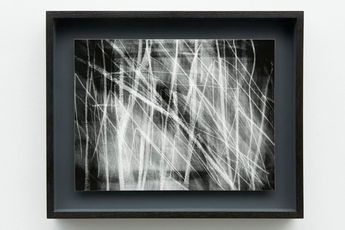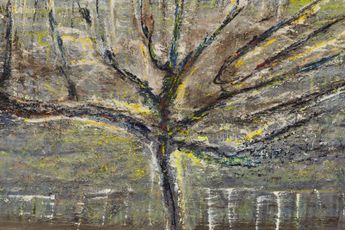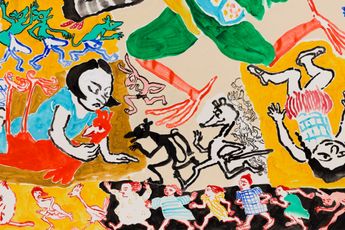
Charcoal is elemental. Born from fire, charcoal is made from wood (especially twigs of willow or vine) that has been heated to a high temperature in a low-oxygen environment (a process called pyrolysis). Its history as a medium is as old as human mark-making itself: the earliest artists, crouched in caves, dragged charred sticks across stone to summon animals and ancestors from the walls.
Artists have always prized charcoal for its ability to create soft, dark, velvety marks and subtle shading. Its crumbly nature makes it easily smudged but also easily erased. Drawing with charcoal also involves selectively removing it, creating highlights that allow the white paper to show through. This interplay between light and dark is one of the medium’s most distinctive features, known as chiaroscuro, an Italian word meaning literally ‘light-dark.’
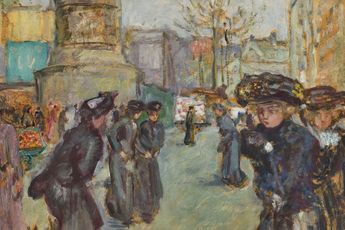
The charcoal drawings presented in this exhibition date from the last 100 years and range from preparatory sketches to fully realised, monumental works. Among the earliest in date is Pierre Bonnard’s Femme dans un Interieur, that despite its ostensibly quotidian nature, was likely drawn from memory. Bonnard drew everywhere, on every surface, especially on small pieces of paper such as this which would have fitted easily into the pocket. Working quickly, using a variety of charcoal marks, he captured not only the composition he wanted, but indicated how to break up the surface into areas of light and dark and even colour.
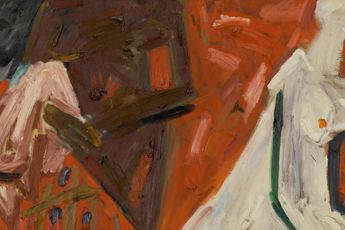
By contrast, David Bomberg’s bold use of charcoal conveys the sublime drama and topography of the Andalusian landscape in The City, Ronda, Spain (1935). Always working directly from life, using a rough, scabrous piece of charcoal, Bomberg’s visits to Spain in 1929, 1934 and 1935 unleashed a new brilliance in the way he worked with the medium. The powerful contrasts of light and dark intensify the depth and drama of the rugged, vertiginous terrain and demonstrate the medium’s power to evoke mood and texture.
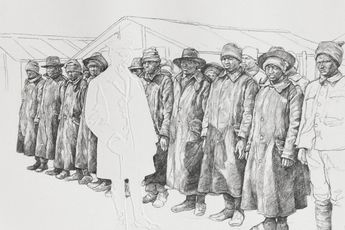
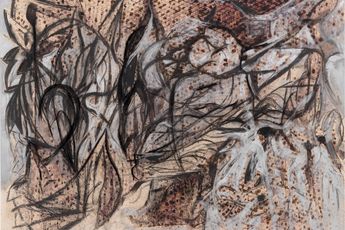
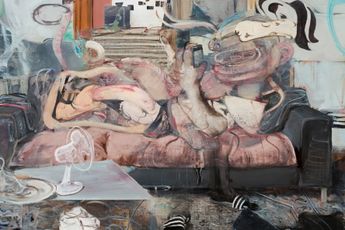
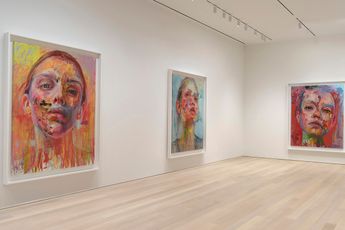
Leon Kossoff (whose training included classes with David Bomberg)manipulated charcoal to a similarly intense tonal effect when depicting the human figure in Young Man Seated (1961). The density and smudging of the charcoal evoke both the solidity and vulnerability of the man’s presence. Indeed, the inherent fragility and mutability of the charcoal medium is exploited by many of the artists in this exhibition, for psychological effect, particularly in the figurative works. Celia Paul’s Jane (1999) captures this ephemerality beautifully, presenting a portrait that feels intimate and fleeting, as though drawn from a memory that might disappear. Similarly, Jenny Saville’s Thread (2017–18) transforms the human figure into something monumental yet impermanent. Saville’s rapid, gestural charcoal strokes conjure the sensations of a body in constant motion. Limbs and forms are overlayed one over another, erased and then overlaid again, as though to suggest the multiplicity of the self and eventual dissolution of the body. In the work of one of the youngest artists presented, Jake Grewal’s Me Outside of Myself (2024), figures emerge from the blackness behind, a tender vision that explodes beyond the picture frame, but perhaps only for a moment.
Contemporary artists have continued to value the immediacy and versatility of charcoal as well as pushing the boundaries of its expressive potential. Often, to ensure the adhesion of the charcoal particles to the surface, artists will employ more textured supports. Working with Japanese papers, María Berrío’s bold and confident use of charcoal captures a moment of stillness in her two endearing portraits of young dancers, Untitled 11 and 12 (2024). Berrío creates an impression of human presence in charcoal that is every bit as strong as her painted portraits.
There is astonishing technical skill in Alexandre Zhu’s large-scale work, Hadal (16) (2024), the title referring to parts of the ocean that are beneath 6000m in depth. Zhu wields charcoal to create a hyper-realistic image of the ocean as it rolls and swells, dark and impenetrable, yet flecked with sunlight on its surface. The ‘hadal zone’ is named after Hades, god of the underworld in Greek mythology, and Zhu’s compelling image prompts us to contemplate what lies beneath the ocean’s surface, both physically and psychologically.
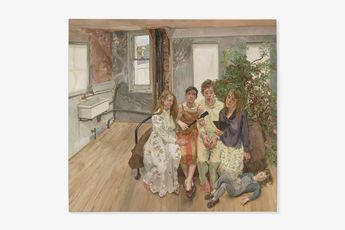
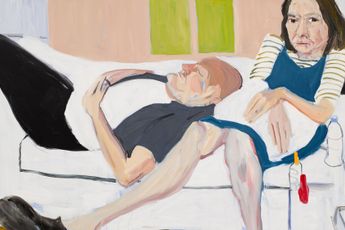
Further highlights include a previously unseen study by Paula Rego for her 1987 painting Snare, as well as figurative works by Chantal Joffe, Lucian Freud, R.B. Kitaj andWillem de Kooning. The exhibition also includes new works made especially for this exhibition by Sara Anstis, Ali Banisadr, María Berrío, Jake Grewal, Idris Khan, Konstantina Krikzoni, Shahzia Sikander, Olly Williamson andAlexandre Zhu.
Emblematic of humanity’s first forays into creativity, charcoal is a medium that bridges past and present. The 43 drawings presented here encourage us to re-appreciate the medium, its diversity of uses, its versatility and its expressive power.
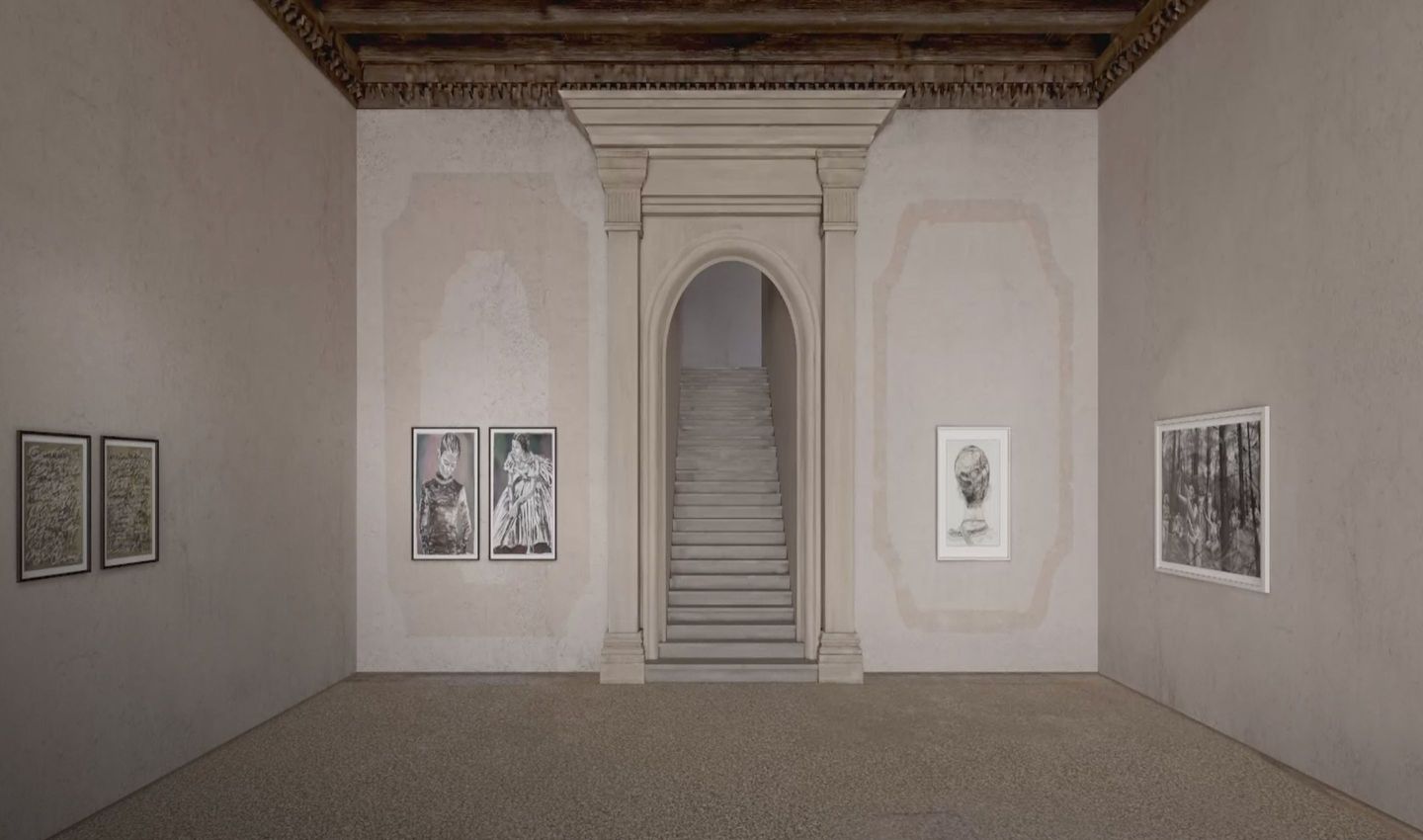
The exhibition is available to view on Vortic.art with selected works at Victoria Miro, London and Venice.

A respected voice in contemporary art discourse.
Focusing on ambitious storytelling and insightful art-world commentary. Ocula Magazine publishes in-depth interviews, critical essays and timely analysis on the artists, exhibitions and ideas driving the global art world.
Learn more about Ocula Magazine
Showcasing the best of the art world.
Ocula partners with galleries from around the world to highlight their artists, artworks and exhibitions. Gallery membership is by application and invitation, with each member vetted by an independent panel.
Learn more about Ocula Membership

Specialises in the sale of major artworks.
Led by a team with deep ties to the world’s leading auction houses, galleries and collectors. Ocula’s advisory team offers bespoke services to high-net-worth clients from around the world who are looking to acquire the best of contemporary and modern art.
Learn more about our team and services