





LAWRENCE WEINER
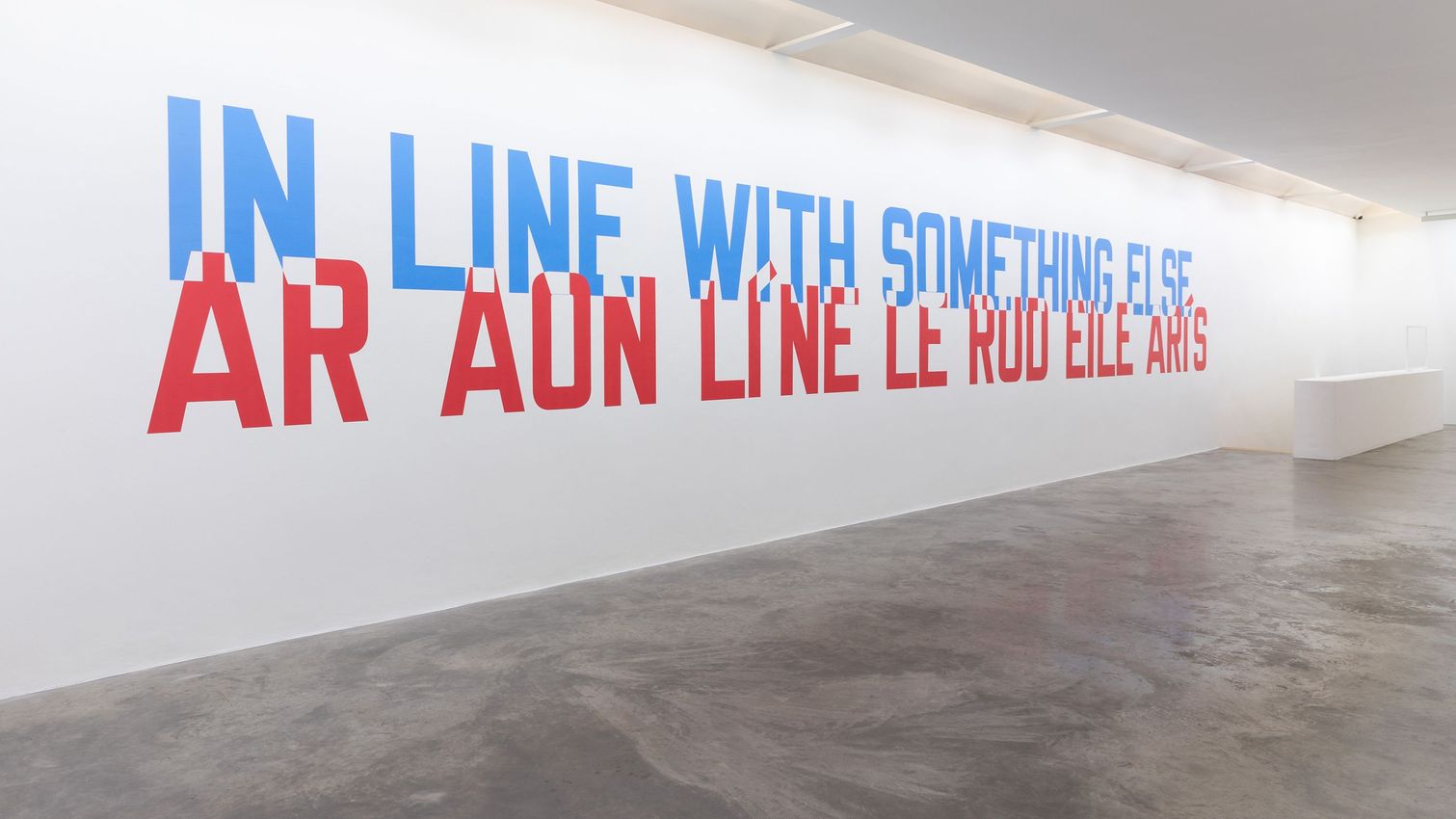
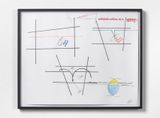
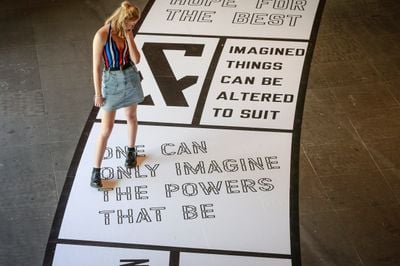
1942-2021, United StatesLawrence Weiner’s texts have appeared in all sorts of places over the last five decades and although he sees himself as a sculptor rather than a conceptualist, he is among the trailblazers of the 1960s to present art as language. He defines his sculptural medium simply as ‘language + the material referred to’, in the sense that language is a material for construction. Accordingly, his first book _Statements, _1968, contains 24 typewritten descriptions of works, where only a few had actually been made, suggesting that a work’s existence requires a readership rather than a physical presence. Weiner’s _Statement of Intent, _1969, even more clearly identifies ‘universal availability’ as a guiding principle:
- The artist may construct the piece.
- The piece may be fabricated.
- The piece need not be built.
Each being equal and consistent with the intent of the artist, the decision as to condition rests with the receiver upon the occasion of receivership.
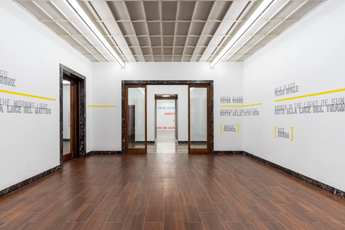
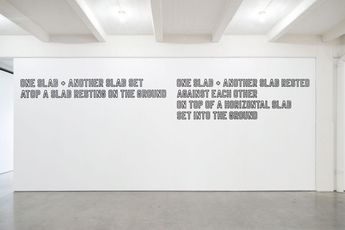
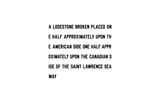
Self-taught as an artist, his urgency to make art broadly available and engaging stems, he says, from his childhood in the South Bronx: “I didn’t have the advantage of a middle-class perspective. Art was something else; art was the notations on the wall, or the messages left by other people. I grew up in a city where I had read the walls; I still read the walls. I love to put work of mine out on the walls and let people read it. Some will remember it and then somebody else comes along and puts something else over it. It becomes archaeology rather than history.” (2013) While his works exist only as language and can be displayed in any form, he is closely involved in manifestations, detailing the size of the font, the surface texture and placement of the paint or vinyl letters and indeed often inventing new fonts. Texts appear on walls and windows of galleries and public spaces, as spoken word in audio recordings and video, printed books and posters, cast or carved objects, tattoos, graffiti, lyrics, online, ad infinitum.
Lawrence Weiner was born in New York in 1942 and lives and works in New York. Solo exhibitions include Kunsthaus Bregenz, Bregenz, Austria, 2016, Regen Projects, Los Angeles, USA, 2016, Blenheim Palace, Oxfordshire, UK, 2015, Stedelijk Museum, Amsterdam, 2014, Museu d’Art Contemporani de Barcelona, Spain, 2013, Haus der Kunst, Munich, Germany, 2007, Whitney Museum of American Art, New York, NY, USA, 2007; Museo Tamayo Arte Contemporaneo, Mexico City, Mexico, 2004, Kunstmuseum Wolfsburg, Germany, 2000, Walker Art Center, Minneapolis, USA, 1994, and Hirshhorn Museum and Sculpture Garden, Washington DC, USA, 1990. He participated in documenta 5, 6, 7, and 13 (1972, 1977, 1982, 2012), the 36th, 41st, 50th and 55th Venice Biennales, Italy (1972, 1984, 2003, 2013) and the 27th Biennale de Sao Paulo, Brazil (2006). Among many honours he was awarded fellowships from the National Endowment for the Arts (1976, 1983), a Guggenheim Fellowship (1994), the Wolfgang Hahn Prize, Museum Ludwig, Cologne (1995), a Skowhegan Medal for Painting/Conceptual Art (1999) and an Honorary Doctorate of Humane Letters from the Graduate Center, City University of New York (2013).
Courtesy Lisson Gallery

Recently Exhibited


Exhibiting Elsewhere



Works Elsewhere





















Explore and Follow Artists Shaping Contemporary Art
A respected voice in contemporary art discourse.
Focusing on ambitious storytelling and insightful art-world commentary. Ocula Magazine publishes in-depth interviews, critical essays and timely analysis on the artists, exhibitions and ideas driving the global art world.
Learn more about Ocula Magazine
Showcasing the best of the art world.
Ocula partners with galleries from around the world to highlight their artists, artworks and exhibitions. Gallery membership is by application and invitation, with each member vetted by an independent panel.
Learn more about Ocula Membership
Specialises in the sale of major artworks.
Led by a team with deep ties to the world’s leading auction houses, galleries and collectors. Ocula’s advisory team offers bespoke services to high-net-worth clients from around the world who are looking to acquire the best of contemporary and modern art.
Learn more about our team and services