





NIKI DE SAINT PHALLE
1930-2002, FranceNiki de Saint Phalle was a visionary Franco-American artist whose exuberant sculptures, radical performances, and monumental public artworks made her a defining figure in 20th-century contemporary art. Her practice, celebrated for its bold engagement with feminist and social themes, has been the subject of major retrospectives at institutions such as MoMA PS1, the Menil Collection, and the Centre Pompidou.
Early Years
Born Catherine Marie-Agnès Fal de Saint Phalle in Neuilly-sur-Seine in 1930, she spent her early years in France before her family relocated to New York during the Great Depression. Saint Phalle attended schools in both France and the United States, including the Brearley School in Manhattan. After working as a fashion model, she married writer Harry Mathews in 1948. A period of mental health crisis in the early 1950s led her to art-making as a form of self-healing, shaping her unconventional, self-taught approach to contemporary art.
Niki de Saint Phalle Artworks
Saint Phalle’s contemporary art practice is renowned for its fearless use of colour, unconventional materials, and commitment to challenging the representation of women and social issues in art. Her work spans assemblage, sculpture, performance, printmaking, and installation.
The ‘Tirs’ (Shooting Paintings), Early 1960s
Saint Phalle first gained international recognition with her ‘Tirs’ (‘Shooting Paintings’, 1961–63), in which she and invited participants— artists such as Robert Rauschenberg and Jasper Johns—shot at assemblages containing paint-filled bags behind plaster or canvas. The resulting explosions of colour critiqued violence and patriarchal structures, aligning her with the Nouveau Réalisme movement.
The ‘Nanas’, Mid-1960s Onwards
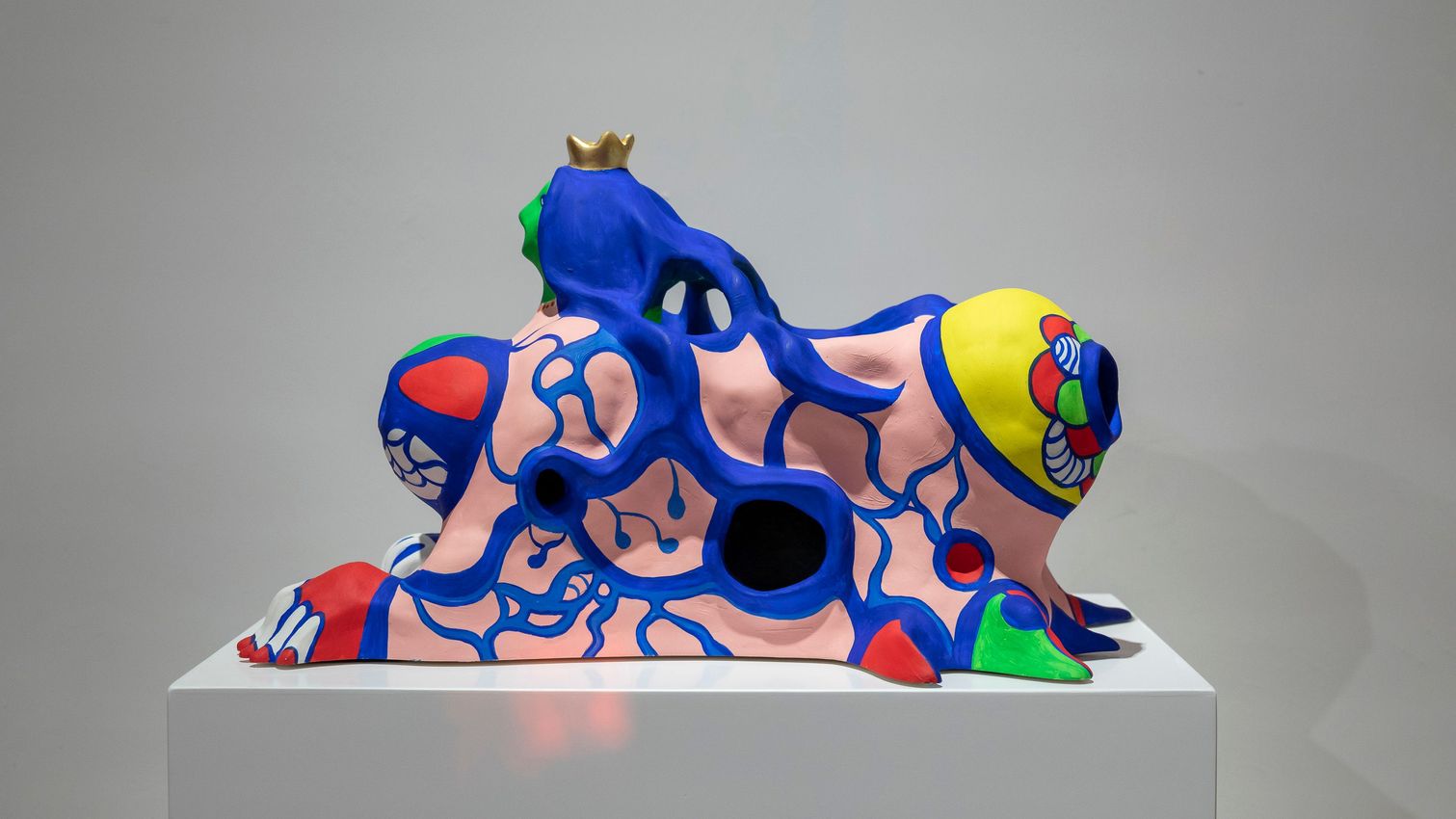
In the mid-1960s, Saint Phalle began her iconic ‘Nanas’—joyful, monumental sculptures of voluptuous female figures in dynamic poses. These contemporary artworks, crafted from materials such as polyester, wire, and papier-mâché, celebrate femininity and empowerment, directly confronting patriarchal norms. The most ambitious was Hon – en katedral (1966), a 23-metre-long reclining figure created with Jean Tinguely and Per-Olof Ultvedt for Moderna Museet, Stockholm, which visitors could enter through an opening between the figure’s legs.
Activism and Later Work
Saint Phalle’s practice reflected her support for social justice, as seen in her large Black ‘Nanas’ such as Black Venus (1965–67) and Black Nana (1967–69). In the 1980s, she addressed the HIV/AIDS crisis through projects like the illustrated book AIDS: You Can’t Catch It Holding Hands (1987). Her work also extended into printmaking, jewellery, clothing, and even perfume, with proceeds supporting her ambitious public projects.
The Tarot Garden
Her most ambitious project, Tarot Garden (1979–2002) in Garavicchio, Tuscany, features 22 monumental sculptures inspired by the tarot’s major arcana, blending architecture, sculpture, and mosaic in a fantastical environment.
Public Commissions
- Stravinsky Fountain, Centre Pompidou, Paris (with Jean Tinguely)
- The Golem, Kiryat Hayovel, Jerusalem
- Sun God, University of California, San Diego
- Tarot Garden (Il Giardino dei Tarocchi), Garavicchio, Tuscany
- Queen Califia’s Magical Circle, Escondido, California
- Le Cyclop, Milly-la-Forêt, France (with Jean Tinguely)
Awards and Accolades
- Praemium Imperiale for Sculpture, Japan Art Association (2000)
- Prix Caran d’Ache for postage stamp design (1994)
Exhibitions
Niki de Saint Phalle has been the subject of both solo and group exhibitions at important institutions. A selection of important exhibitions is provided below.
Solo Exhibitions
- Niki de Saint Phalle: The 1980s and 1990s: Art Unleashed, Musée national des beaux-arts du Québec, Canada (2025)
- Niki de Saint Phalle. Le bestiaire magique, Hôtel de Caumont, Aix-en-Provence, France (2025)
- Niki de Saint Phalle in Print, National Museum of Women in the Arts, Washington D.C. (2025)
- Niki de Saint Phalle & Jean Tinguely: Myths & Machines, Hauser & Wirth Somerset, UK (2025–2026)
- Niki de Saint Phalle at Waterfront Park, San Diego, California (2015–2027)
- Niki de Saint Phalle: Rebellion and Joy, Nelson-Atkins Museum of Art, Kansas City (2024)
- Niki de Saint Phalle, Schirn Kunsthalle Frankfurt (2023)
- Niki de Saint Phalle: Structures for Life, MoMA PS1, New York (2021)
- Niki de Saint Phalle – The Big Shots, Sprengel Museum, Hanover (2016)
Group Exhibitions
- Niki. Kusama. Takashi. Love you for infinity, Sprengel Museum, Hannover (2025–2026)
- Jean Tinguely. 100 Ans de Cinétique Mécanique, Musée Rath, Geneva (2025)
- Niki de Saint Phalle, Jean Tinguely, Pontus Hultén, Grand Palais, Paris (2025–2026)
- Deborah Roberts & Niki de Saint Phalle: The Conversation Continues, Galerie Mitterrand, Paris (2023)
- Writing Beyond, Axel Vervoordt Gallery, Antwerp (2021)
- Arcimboldo Face to Face, Centre Pompidou-Metz, France (2021)
- New Realisms, Museo Nacional Centro de Arte Reina Sofía, Madrid (2018)
Website and Instagram
Niki de Saint Phalle’s website can be found here.
Niki De Saint Phalle FAQs
Where can I see Niki de Saint Phalle’s artworks?
Her public art can be experienced at the Stravinsky Fountain (Centre Pompidou, Paris), The Golem (Kiryat Hayovel, Jerusalem), Sun God (University of California, San Diego), Queen Califia’s Magical Circle (Escondido, California), and throughout the Tarot Garden in Garavicchio, Tuscany. Her works are also held in the Museum of Modern Art (New York), Walker Art Center (Minneapolis), Musée d’Art Moderne et d’Art Contemporain (Nice), Nelson-Atkins Museum of Art (Kansas City), and the National Museum of Women in the Arts (Washington D.C.).
What materials did Niki de Saint Phalle use in her artworks?
Saint Phalle worked with a variety of materials, including plaster, polyester, wire, papier mâché, mosaic, and found objects, often combining them in innovative ways. Her practice also included printmaking, jewellery, clothing, and experimental films.
How did her personal life influence her art?
Saint Phalle’s traumatic childhood and experiences of gendered violence informed her exploration of femininity, power, and healing in her contemporary art practice.
What is the significance of the ‘Nanas’?
The ‘Nanas’ are vibrant, monumental sculptures representing liberated, joyful women, challenging patriarchal representations and celebrating female empowerment.
What is Queen Califia’s Magical Circle?
Queen Califia’s Magical Circle is Niki de Saint Phalle’s only American sculpture garden, located in Escondido, California. It features large-scale mosaic sculptures and is open to the public.
How can I verify or appraise a Niki de Saint Phalle artwork?
The Niki Charitable Art Foundation manages authentication and can be contacted for catalogue raisonné information or verification requests.
Sherry Paik | Ocula | 2025



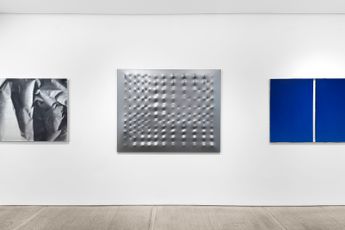
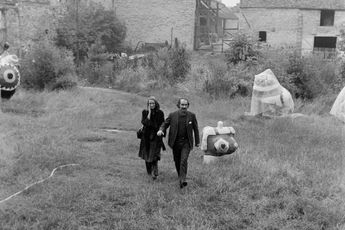
Explore Niki De Saint Phalle's Exhibitions








Explore and Follow Artists Shaping Contemporary Art
A respected voice in contemporary art discourse.
Focusing on ambitious storytelling and insightful art-world commentary. Ocula Magazine publishes in-depth interviews, critical essays and timely analysis on the artists, exhibitions and ideas driving the global art world.
Learn more about Ocula Magazine
Showcasing the best of the art world.
Ocula partners with galleries from around the world to highlight their artists, artworks and exhibitions. Gallery membership is by application and invitation, with each member vetted by an independent panel.
Learn more about Ocula Membership
Specialises in the sale of major artworks.
Led by a team with deep ties to the world’s leading auction houses, galleries and collectors. Ocula’s advisory team offers bespoke services to high-net-worth clients from around the world who are looking to acquire the best of contemporary and modern art.
Learn more about our team and services