





ROBERT ELFGEN
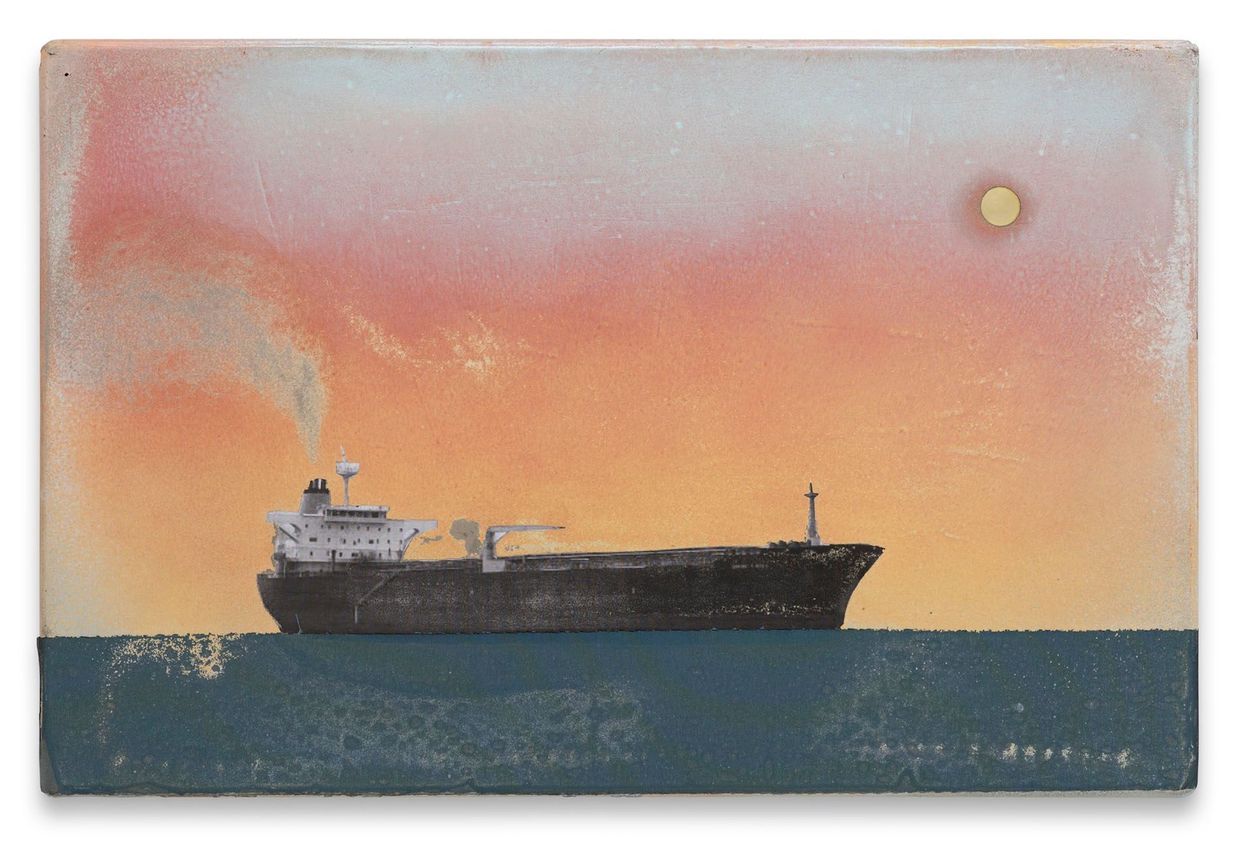
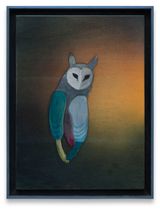
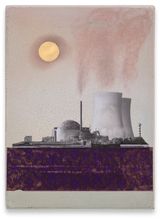
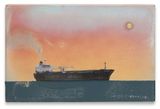
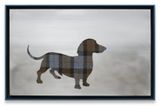
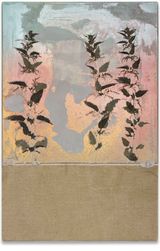
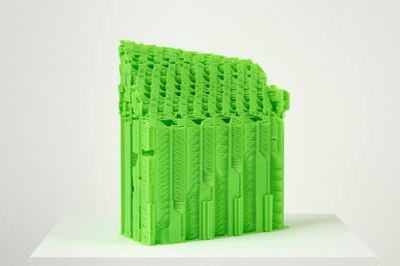
b. 1972, GermanyMimesis, the interpretive reproduction of nature, was long considered to be the most important duty of art. Theorists of all epochs, referring back to Aristotle, called upon artists to feel and understand the chaos and order of the natural world in such a way that meaning suddenly became visible there where none could be recognised before. Robert Elfgen’s artistic work also focuses in an unusually direct manner on this task which, with the advent of modernism, was pushed to the side and neglected. In recent years, Elfgen has created a unique œuvre in which he applies complex artisanal techniques to found pieces from nature and from his everyday life, and assembles them into an atmospherically charged, intensely personal form of bricolage. The realities of art and life come together in this position. Art becomes nature, nature becomes art.
Robert Elfgen’s technically innovative bricolage-art is of course not devoid of art-historical reference. His associative treatment of objets trouvés recalls Marcel Duchamp; his strict conceptual logic is reminiscent of Rosemarie Trockel, who taught his masterclass. And clear allusions to the Romantic pictorial language of painters such as William Turner or Caspar David Friedrich, along with traces of a laconicism coming from Surrealism and Pop Art can be identified in the works brought together for this exhibition. But with his artisanal investigations, Elfgen achieves something attained by only a few artists—the creation of an utterly personal, unique cosmos. A cosmos that opens up a series of spaces of biographical, phenomenological, and psychoanalytical interpretation. A cosmos in which nature and civilisation merge into each other, and which enables the viewer to see the world in a new and subtle manner.
Robert Elfgen (*1972, Wesseling, Germany) lives and works in Cologne and Berlin. Elfgen first studied with John Armleder at the Akademie der Künste Braunschweig before switching to the Kunstakademie Düsseldorf, Dusseldorf as a master pupil of Rosemarie Trockel. He was awarded the Atelierstipendium, Kölnischer Kunstverein, Cologne and Imhoff-Stiftung, Cologne (2004); the Förderpreis des Landes NRW für junge Künstlerinnen und Künstler (2007); and the Grafikpreis des Landes NRW (2009). Important solo exhibitions were Strandspaziergang, Leopold-Hoesch-Museum, Dueren (2016); Hören was zu sehen, Oldenburger Kunstverein (2015); des bien ich, Sprüth Magers Cologne (2008); expedition, westlondonprojects, London (2006); and 1+1=3 Elfgen-Technik, Bonner Kunstverein, Bonn (2005). Relevant group exhibitions were Berlin Edition, Museum of Now (2019), Spargelmatinee, Museum Villa Stuck, Munich (2017); Paperworlds., me Collectors Room Berlin (2014); Kunstmuseum Wolfsburg, Germany (2013—2014); Plaisirs du Jardin, Museum Morsbroich, Leverkusen, Germany (2012); and Paul Thek—Werkschau im Kontext zeitgenössischer Kunst, ZKM Karlsruhe and Sammlung Falckenberg, Hamburg (2007‒-2008).
Courtesy Sprüth Magers

Works at Sprüth Magers








Recently Exhibited





Explore and Follow Artists Shaping Contemporary Art
A respected voice in contemporary art discourse.
Focusing on ambitious storytelling and insightful art-world commentary. Ocula Magazine publishes in-depth interviews, critical essays and timely analysis on the artists, exhibitions and ideas driving the global art world.
Learn more about Ocula Magazine
Showcasing the best of the art world.
Ocula partners with galleries from around the world to highlight their artists, artworks and exhibitions. Gallery membership is by application and invitation, with each member vetted by an independent panel.
Learn more about Ocula Membership
Specialises in the sale of major artworks.
Led by a team with deep ties to the world’s leading auction houses, galleries and collectors. Ocula’s advisory team offers bespoke services to high-net-worth clients from around the world who are looking to acquire the best of contemporary and modern art.
Learn more about our team and services