





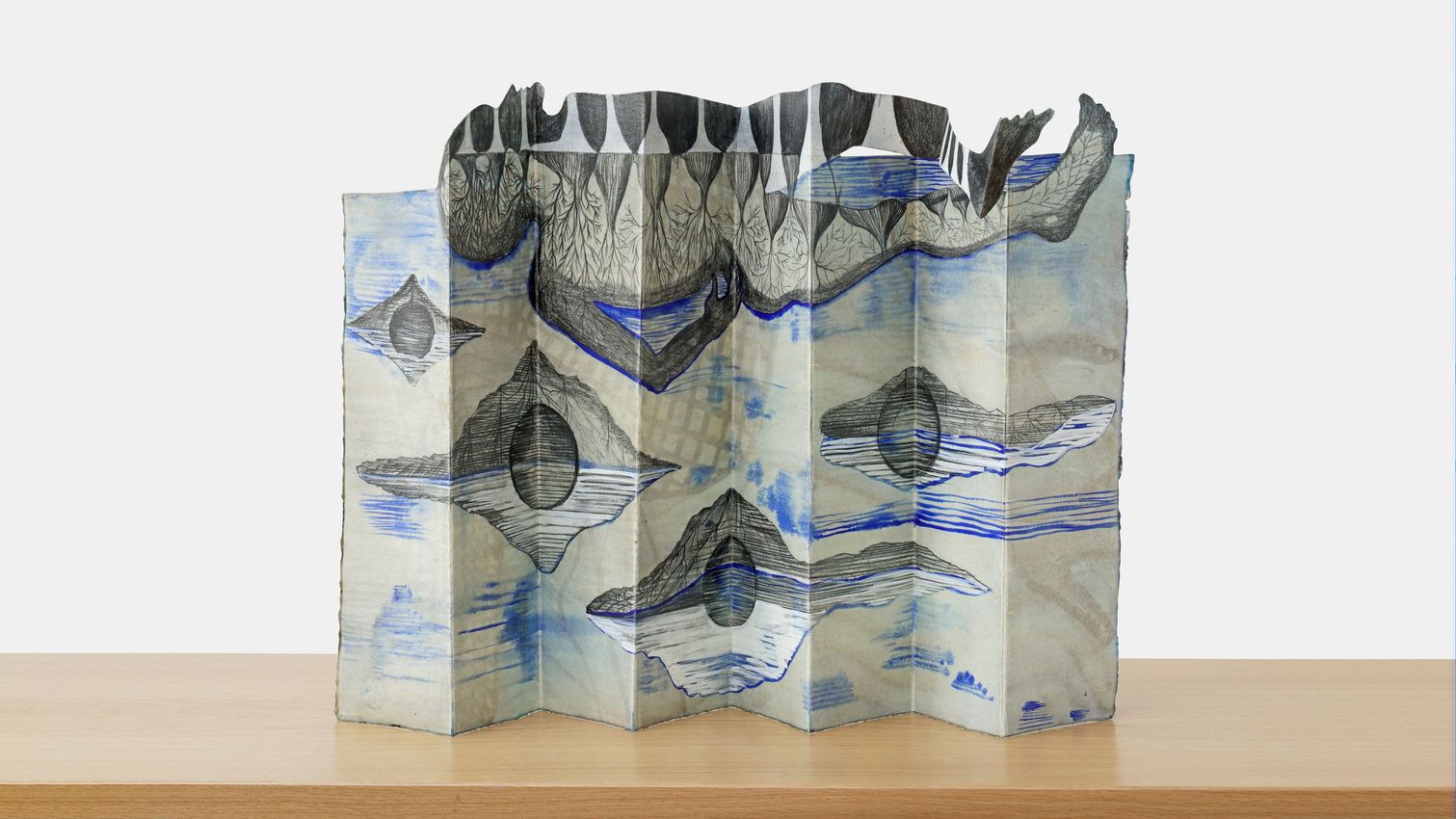
SANDRA VÁSQUEZ DE LA HORRA
b. 1967, ChileSandra Vásquez de la Horra is a Chilean contemporary artist known for wax-dipped drawings and sculptural works that weave together Catholic imagery, myth, sexuality, and the spectres of life under dictatorship. Working primarily on paper, she creates intensely psychological, often surreal tableaux that draw on Latin American magical realism, anthropology, and literature. Born in Viña del Mar in 1967, she lives and works in Berlin, with her works held in major museum collections in Europe and the United States.
Early life and Education of Sandra Vásquez de la Horra
Sandra Vásquez de la Horra was born in 1967 in Viña del Mar, Chile, and grew up in a conservative Catholic family during Augusto Pinochet’s authoritarian regime. These formative years, marked by religious ritual and political repression, underpin her sustained interest in fear, violence, belief systems, and the fragile boundaries between public and private life.
She studied visual communications and graphic design at the University for Design in Viña del Mar between 1989 and 1994. In 1995 she emigrated with her family to Germany, studying at the Kunstakademie Düsseldorf under Jannis Kounellis and Rosemarie Trockel before completing postgraduate studies at the Academy of Media Arts (Kunsthochschule für Medien) in Cologne. She is now based in Berlin, a context that situates her work within European contemporary art while maintaining strong connections to South American histories and cosmologies.
Sandra Vásquez de la Horra Artworks and Style
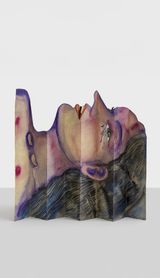
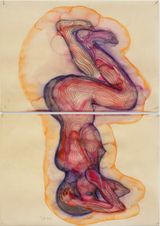
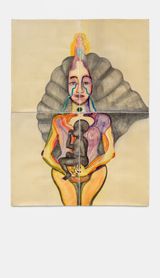
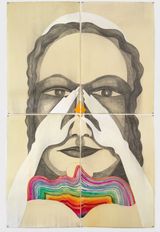
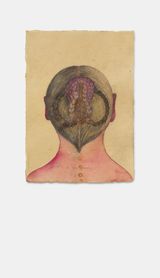
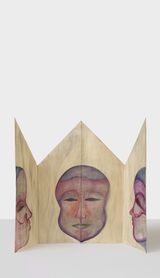
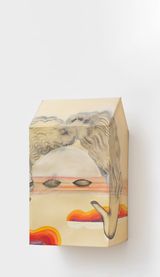
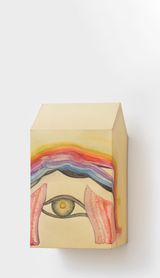
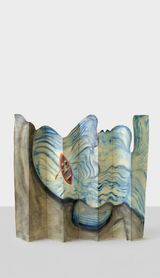
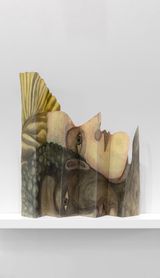
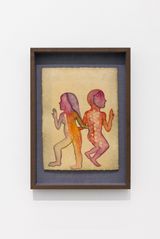
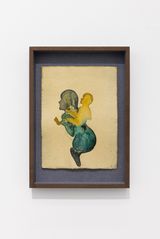
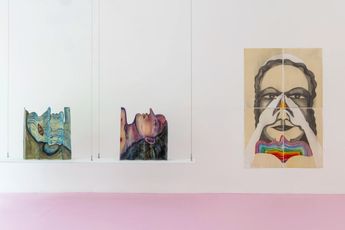
Sandra Vásquez de la Horra’s artworks are best known for their wax-dipped pencil drawings, which combine fragile paper supports with an embalmed, skin-like surface that suggests preservation, memory, and ritual. Her imagery often merges human, animal, and mythological figures with handwritten text, producing a dense symbolic language that touches on the uncanny, the erotic, and the everyday. Drawing remains her core medium, but she also expands works into leporello books, house-like paper structures, and three-dimensional installations.
Thematically, Vásquez de la Horra addresses Chile’s political history, the lingering trauma of dictatorship, and structures of violence and persecution, alongside personal narratives of femininity, sexuality, and belief. Her work is steeped in Latin American magical realism and influenced by writers such as Nicanor Parra, whose antipoetry resonates with her dark humour, irony, and anti-lyrical tone. Religion, mythology, superstition, anthropology, and popular culture intertwine in compositions that feel at once intimate and archetypal, evoking ghosts, demons, and dreamlike scenes that hover between the living and the dead.
Early works and developments
From the late 1990s, Vásquez de la Horra began immersing her pencil drawings in molten wax, a technique she has used since 1997 to seal the paper and give it a translucent patina. Early works draw heavily on Chilean folk tales, Catholic iconography, and autobiographical memories, registering the psychic atmosphere of post-dictatorship Chile and the experience of migration to Germany. Influences from graphic design and visual communication are visible in her use of typography, with titles and phrases often occupying large parts of the sheet.
Mature practice and key series
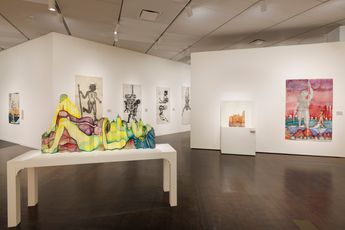
As her practice matured, Vásquez de la Horra developed increasingly complex narrative constellations, often presenting drawings in clustered wall installations or architectural displays that create open-ended storylines. Her radically figurative images are deliberately rough and ‘un-beautiful’, juxtaposing tender, vulnerable figures with motifs of execution, bondage, and metamorphosis. Works from the 2000s and 2010s extend her engagement with myth and popular beliefs, frequently referencing Latin American spiritual traditions and syncretic religions.
Recent projects and Ongoing themes
In recent years, Vásquez de la Horra has continued to experiment with format, producing boxed drawings, accordion-folded sequences, and sculptural paper houses that invite viewers to physically navigate her imagery. She has described a decisive shift in her practice following her encounter with Santería, framing this as a before-and-after moment that deepened her focus on nature-based rituals and the permeability between earthly and spiritual realms. Ongoing themes include archetypal figures, cosmic cosmologies, and the persistence of myth in contemporary life, often filtered through a distinctly feminist lens.
In 2026, two major institutional showings consolidate Vásquez de la Horra’s position as a key voice in contemporary drawing and feminist, transnational image-making. At Haus der Kunst, Munich, the exhibition Soy Energía opened as an expansive survey, presenting works from across four decades that trace how bodies, landscapes, and mirrored selves are entangled through biology, memory, and belief. The show emphasises her ecofeminist sensibility and her articulation of a ‘living cosmos’, foregrounding the porous boundaries between the human figure, vegetal forms, and cosmic forces.
Running concurrently, The Awake Volcanoes at ICA LA marks her first solo museum exhibition in the United States, focusing on the elasticity of drawing as she pushes the medium into etching, painting, and accordion-like paper sculptures that immerse viewers in narratives of trauma, ritual, and healing. Across these 2026 presentations, curatorial emphasis falls on the way her work negotiates histories of dictatorship and displacement while proposing alternative cosmologies in which spirituality, sexuality, and the more-than-human world are understood as interdependent.
Awards and honours of Sandra Vásquez de la Horra
- 2023 — Käthe Kollwitz Prize, Akademie der Künste, Berlin, Germany.
- 2023 — Acquisition Award, SOLO Collection at ARCOmadrid, for La liberación del mito (The Liberation of the Myth).
- 2021 — Hans Theo Richter Prize.
- 2019 — Daniel & Florence Guerlain Drawing Prize (Prix de dessin Daniel & Florence Guerlain), Paris, France.
- 1996 — Art Prize, Design Biennale, Museo Nacional de Bellas Artes, Santiago, Chile.
Exhibitions of Sandra Vásquez de la Horra
Sandra Vásquez de la Horra has exhibited widely in Europe, the Americas, and beyond, with institutional solo shows and major biennial participations that have consolidated her international profile.
Select solo exhibitions
- 2026 — Soy Energía, Haus der Kunst, Munich, Germany (survey exhibition).
- 2025—2026 — Los volcanes despiertos / The Awake Volcanoes, Instituto de Arte Contemporáneo de Los Ángeles (ICA LA), Los Angeles, United States, first solo museum exhibition in the US.
- 2025 — Los volcanes despiertos, MALBA — Museo de Arte Latinoamericano de Buenos Aires, Buenos Aires, Argentina, major retrospective focusing on drawing, sculpture, and installation.
- 2024 — Solo exhibition, Denver Art Museum, Denver, Colorado, United States.
- 2022 — Solo exhibition, Sprovieri, London, United Kingdom.
- 2021 — Solo exhibition, Sächsische Akademie der Künste, Dresden, Germany.
- 2019 — Aguas Profundas, Museo Novecento, Florence, Italy.
- 2012 — Participation in São Paulo Biennial, curated by Luis Pérez-Oramas, São Paulo, Brazil (extended solo project).
- 2011 — Solo presentation, Musée d’Art Moderne, Saint-Étienne, France.
- 2010 — Solo exhibition, Bonnefantenmuseum, Maastricht, Netherlands.
- 2008 — Solo exhibition, Museum Kunstpalast, Düsseldorf, Germany.
Select group exhibitions
- 2024 — Murmor of Cosmos, Akademie der Künste, Berlin, Germany.
- 2022 — 59th International Art Exhibition of La Biennale di Venezia, The Milk of Dreams, curated by Cecilia Alemani, Venice, Italy.
- 2021 — Exhibitions at Kupferstich-Kabinett, Dresden, Germany.
- 2019 — Drawing Biennial, London, United Kingdom.
- 2017 — Exhibition at The Parkview Museum, Singapore.
- 2016 — Museum für moderne Kunst, Bremen, Germany.
- 2015 — S.M.A.K., Ghent, Belgium; Albertina, Vienna, Austria.
- 2009—2017 — Multiple presentations at Centre Georges Pompidou, Paris, France.
About this profile
This profile on Sandra Vásquez de la Horra was prepared using verified sources including the artist’s official website, and websites of leading contemporary art galleries and museums. It is written in Ocula‘s editorial voice for an art-interested audience and is intended to support search, discovery, and contextual understanding of her work.
Sandra Vásquez De La Horra FAQs
Who is Sandra Vásquez de la Horra?
Sandra Vásquez de la Horra is a Chilean contemporary artist, born in Viña del Mar in 1967, known for her wax-dipped drawings that explore mythology, religion, sexuality, and the legacy of political violence. Her work connects Latin American magical realism with European visual culture and is held in major museums worldwide.
What type of art does Sandra Vásquez de la Horra make?
Sandra Vásquez de la Horra makes figurative drawings and mixed-media works on paper, often dipped in wax, that fuse text and image to address fear, desire, spirituality, and collective memory. She also produces leporello books and sculptural paper forms that expand drawing into three-dimensional space.
Where does Sandra Vásquez de la Horra live and work?
Sandra Vásquez de la Horra lives and works in Berlin, Germany, after relocating from Chile to Germany in the mid-1990s for further study. Her practice remains grounded in Chilean history and myth while engaging closely with European institutions and audiences.
What themes does Sandra Vásquez de la Horra explore in her art?
Sandra Vásquez de la Horra’s art explores themes of violence, persecution, sexuality, religion, mythology, and the unconscious, often tied to Chile’s Pinochet era and broader structures of power. She frequently stages hybrid human—animal figures and ghostly presences that evoke dreams, rituals, and archetypal narratives.
How does Sandra Vásquez de la Horra make her wax-dipped drawings?
Sandra Vásquez de la Horra draws in pencil on paper and then immerses the sheets in molten wax, a process she has used since 1997 to create a translucent, aged surface. The wax seals the paper, deepens the pencil line, and imbues the works with a bodily, archival quality.
Which museums hold works by Sandra Vásquez de la Horra?
Works by Sandra Vásquez de la Horra are held in collections including the Centre Pompidou in Paris, the Pinakothek der Moderne in Munich, Museum Kunstpalast in Düsseldorf, and the Philadelphia Museum of Art. Her work has also entered the Tate collection via the acquisition of Despierta Te Espero through the Frieze Tate Fund.
What awards has Sandra Vásquez de la Horra received?
Sandra Vásquez de la Horra has received major honours such as the Käthe Kollwitz Prize (2023), the Daniel & Florence Guerlain Drawing Prize (2019), the Hans Theo Richter Prize (2021), and the SOLO Collection Acquisition Award at ARCOmadrid (2023). Earlier in her career, she was recognised with an Art Prize at the Design Biennale in Santiago in 1996.
Where can I see work by Sandra Vásquez de la Horra?
You can see work by Sandra Vásquez de la Horra in international museum collections, at contemporary art galleries representing her in Europe and the Americas, and in ongoing exhibitions listed on her website. Online, her artworks and exhibition history can be explored through Ocula, Artsy, and gallery platforms.
Ocula | 2026


















Explore Sandra Vásquez De La Horra's Exhibitions




Explore and Follow Artists Shaping Contemporary Art
A respected voice in contemporary art discourse.
Focusing on ambitious storytelling and insightful art-world commentary. Ocula Magazine publishes in-depth interviews, critical essays and timely analysis on the artists, exhibitions and ideas driving the global art world.
Learn more about Ocula Magazine
Showcasing the best of the art world.
Ocula partners with galleries from around the world to highlight their artists, artworks and exhibitions. Gallery membership is by application and invitation, with each member vetted by an independent panel.
Learn more about Ocula Membership
Specialises in the sale of major artworks.
Led by a team with deep ties to the world’s leading auction houses, galleries and collectors. Ocula’s advisory team offers bespoke services to high-net-worth clients from around the world who are looking to acquire the best of contemporary and modern art.
Learn more about our team and services