Press Release

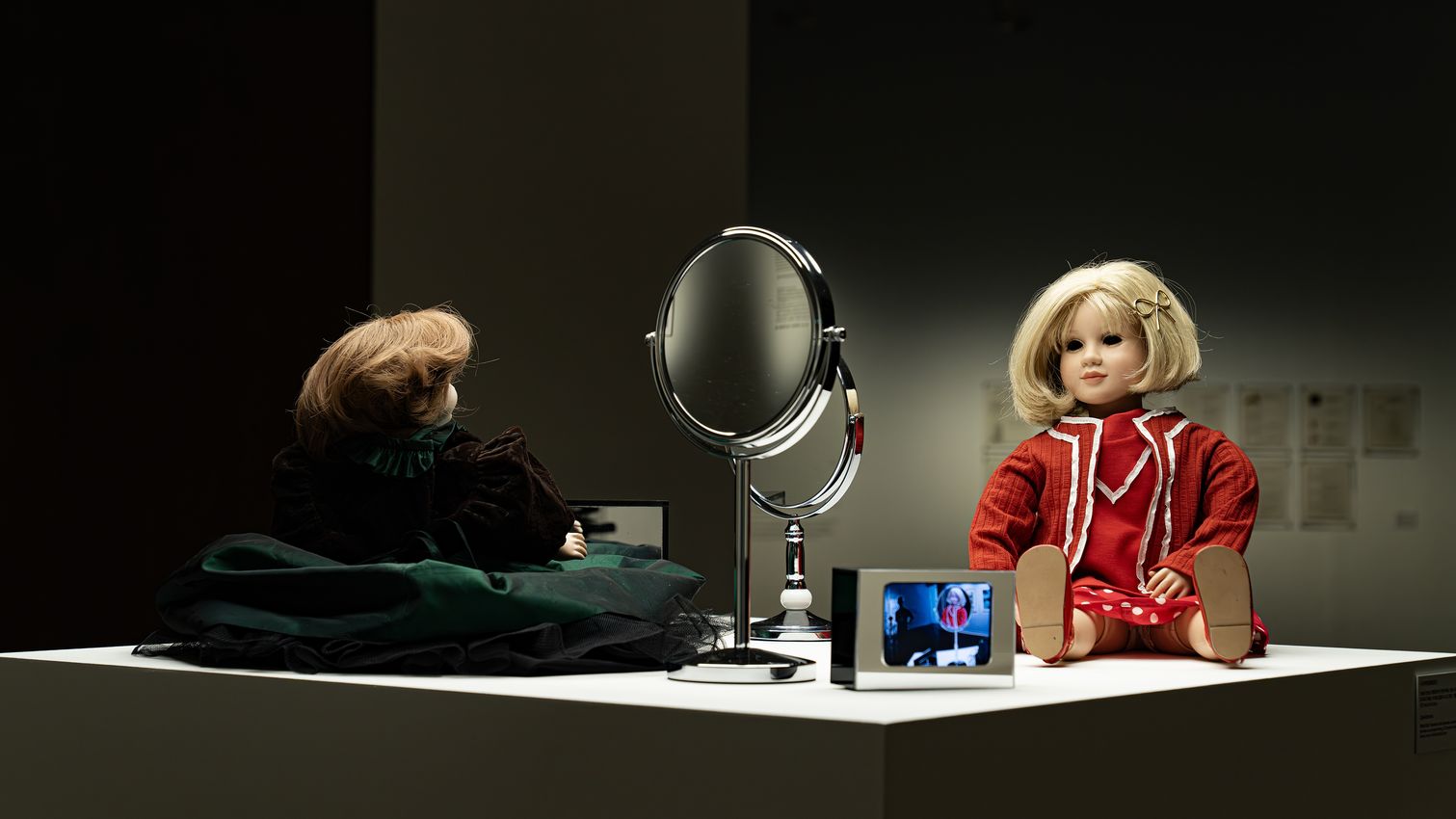
The Seoul Museum of Art (SeMA) is pleased to present YOMO JOMO Seulgi Lee, on view on the first floor of the Seosomun Main Branch from November 26, 2026, to February 28, 2027. It marks the first solo exhibition at a public art museum in Korea by Seulgi Lee (b. 1972), who has been based in Paris since 1992. The exhibition, which spans sculpture, installation, sound, and video, brings together more than 70 works—including serial projects dating back to the late 1990s and newly created works.

This exhibition is part of a series of solo presentations of Lee’s work taking place across Europe. Earlier this year, HEUMUL HEUMUL was presented at Kunsthalle Marcel Duchamp in Cully, Switzerland, while GORU GORU is currently on view at Frac Nouvelle-Aquitaine MÉCA in Bordeaux, France. The series will continue in 2027 with DURU DURU at Le Crédac in Ivry-sur-Seine, France. Several new works establish connections between these exhibition venues. The quilt U: In the Blink of an Eye (2026) translates the Korean idiom for “in the blink of an eye” into the visual form of an eye. A version with an open eye is on view in Bordeaux, while the Seoul version shows the eye closed. GARONNE (2026) and LAKE LEMAN (2026) each contain water collected from the Garonne River in Bordeaux and Lake Léman in front of Kunsthalle Marcel Duchamp, respectively, sealed within glass spheres. Brought together in Seoul, the two works connect waters gathered at different times and places.

For more than three decades, Lee has been based in Paris while traveling and working across Korea, Morocco, Mexico, Burkina Faso, and Japan. Her practice draws on the experience of encountering objects whose meanings shift according to their cultural contexts. From an anthropological perspective, she playfully explores the relationships between everyday objects, language, and sensory experience. Collaboration with artisans across diverse fields is another defining aspect of her practice, bringing traditional knowledge and techniques into new contexts within contemporary art. Lee received the Korea Artist Prize 2020, presented by the National Museum of Modern and Contemporary Art, Korea, and held a solo exhibition at Ikon Gallery in Birmingham, UK, in 2025. Her works are held in the collections of the Centre National des Arts Plastiques (CNAP) in France and the National Gallery of Victoria (NGV) in Australia, among other institutions.

The exhibition title, YOMO JOMO, refers to a Korean expression meaning “the various aspects and appearances of things,” reflecting Lee’s interest in exploring objects from multiple perspectives. She regards objects as entities capable of engaging in equal dialogue with people, further examining the layers of human presence, time, and memory embedded within them. Rather than being divided into distinct sections, the exhibition unfolds as a continuous flow, reflecting the way Lee observes and engages with objects. Much like her works, in which seemingly disparate elements come together to generate new meanings, the works on view enter into dialogue with one another throughout an undivided space. Visitors are invited to experience an “open spatiotemporal field” in which different interpretations emerge as they move through the exhibition and shift their perspectives.

One of Lee’s signature bodies of work, Blanket Project: U (2014–), is an ongoing series developed in collaboration with Sungyoun Cho, a master artisan of nubi (traditional Korean quilting) based in Tongyeong. The series translates Korean proverbs and idiomatic expressions into the direction and arrangement of quilted lines. Eleven works from the series are presented in this exhibition, including the newly created U: In the Blink of an Eye (2026). In U: A Rat Pretending to Be Dead. = To Stay Really Calm (2020), horizontally aligned quilted lines form the shape of a mouse lying flat on the ground.

Lee describes artisans as “people who know certain objects better than I do.” This collaborative approach reaches its largest scale at the center of the gallery. Created in collaboration with artisans specializing in traditional Korean wooden latticework and dancheong (decorative painting on wooden architecture), SLOW WATER (2021) measures 11 meters in diameter. The work expands the traditional jeong (井)-shaped wooden lattice into a large circular grid, finished in dancheong colors and suspended from the ceiling. As visitors walk beneath it, overlapping lines of color appear and disappear, evoking the sensation of looking up from underwater at light shimmering on the water’s surface. On an adjacent wall, a team of successors to Yong-ho Yang, a Seoul Intangible Cultural Heritage holder of dancheong, has created the newly commissioned mural FLYING BUTTON (2026). Traditionally used to decorate and protect wooden architecture, dancheong is reinterpreted here as a mural that will disappear at the end of the exhibition. Another new mural, LELELE (2026), extends approximately 150 meters along the exhibition walls, unfolding as a series of thick, winding lines.

Lee’s collaborative practice also extends across geographical and linguistic boundaries, engaging with the languages and songs of different communities. Basket Project: W (2018), created with Xula, a women’s basket-weaving community in Oaxaca, Mexico, assigns each basket a name in Ixcatec, an endangered language. Her sound works THE WOMAN’S ISLAND (2019) and NANANI GONG-AL (2021) weave together folk songs from France, Korea, and Japan, transforming the experiences of women’s labor and humor into new melodies.

Other works in the exhibition playfully subvert the conventional functions of everyday objects. STARLINK (2021–2024) explores the paradoxes of connectivity through its reference to the satellite internet service of the same name. IDO (2009) is an intervention in which a city bus was covered in long fur and driven through the streets of Bordeaux. The newly created fountain À LA CLAIRE FONTAINE (2026), developed in collaboration with architects Seungjae Han and Jang Seokyung, takes its title from a traditional French children’s song, which translates as “By the Clear Fountain.” Visitors can follow the paths formed by the flowing water, walking at a leisurely pace, pausing to rest, or engaging in conversation. Reflecting on the wars and conflicts taking place around the world, Lee envisions the fountain as a place where anyone can pause for a moment and make a wish.

From the handcraft of artisans and endangered languages to traditional folk songs and contemporary satellite networks, YOMO JOMO Seulgi Lee brings together objects, practices, and stories from different times and places. Through the pleasure of looking at things from every angle, visitors are invited to discover the lives and stories embedded in everyday objects and to imagine new ways of living alongside them.

Choi Eunju, General Director of the Seoul Museum of Art, remarked, “This exhibition highlights the creative possibilities of contemporary art in embracing diverse cultures and reinterpreting the knowledge and skills of artisans. Through Seulgi Lee’s distinctive perspective, we hope visitors will have an opportunity to rediscover the value of our own existence and the objects that surround us.”

Read More

Installation Views

Also Exhibiting at Seoul Museum of Art | SeMA

Address
61, Deoksugung-gil
Jung-Gu
Seoul
South Korea
Opening Hours
Tuesday – Friday
10am – 8pm

Weekends and National Holidays
March – October
10am – 7pm

November – February
10am – 6pm

Last admission 1 hour before closing.
Closed on Monday and New Year's Day. Open if Monday is a national holiday.
(1)
Seoul 61, Deoksugung-gil, Jung-Gu
Seoul Museum of Art | SeMA
61, Deoksugung-gil, Jung-Gu, Seoul, South Korea
+82 2 2124 8800
http://sema.seoul.go.kr

Opening hours
Tuesday – Friday
10am – 8pm

Weekends and National Holidays
March – October
10am – 7pm

November – February
10am – 6pm

Last admission 1 hour before closing.
Closed on Monday and New Year's Day. Open if Monday is a national holiday.
The art world in focus