





Art Basel 2025 Receipts: A Market in Deliberate Transition
Worldwide pressures saw sellers unfurling a range of strategies at this year’s edition of Art Basel to attract attention from a new crop of art collectors. Save to My Ocula

As dealers packed up and headed home from Art Basel, little consensus had been reached on which artistic practices or market segments are setting the tone for collector interest right now. Daniel Cassady, a reporter for the New York publication ARTnews, said: ‘There was no discernible theme throughout the breadth of galleries—apart from the fact that no one seems to know what collectors want. It’s a matter of casting the widest net.’
But wide nets aside, it was clear that many dealers were offering more defined inventories and pricing strategies built upon institutional validation and curatorial significance.
The fair showed a market in the process of rebalancing itself after years of exuberance that survived even the unpredictable shock of the pandemic. With more cautious buying, modest price adjustments, and longer decision-making cycles at the fair, we have an art world that, while still high on price, might now be prioritising stability and long-term value.
Here are some key reflections on Basel from Ocula at this moment of market inflection.
Is Art Now a Buyer’s Market?
Art Basel 2025 unfolded amid what many are calling a buyer’s market. The Art Newspaper reported that across multiple sectors, galleries were offering price reductions—often 20–30% below asking—for works under $1 million (all dollar figures USD), with collectors requesting greater flexibility and transparency during negotiations. In comments to Kabir Jhala, dealers such as Tim Blum acknowledged that ‘collectors have more negotiating power right now’.
And while blue-chip galleries remained more insulated—negotiating privately rather than reducing listed prices—many gallerists reported that collectors were conducting due diligence over days and with more flexible terms. The long-standing assumption that the art world is naturally a seller’s market appears increasingly challenged.
‘We are definitely suffering at the moment because of economic uncertainties,’ gallerist Thaddaeus Ropac told Ocula. ‘I think this is the main reason why collectors are now being more conservative, being more careful, taking more time and waiting.’
Meanwhile, co-founder of New York gallery Lehmann Maupin Rachel Lehmann said the art market was ‘by no means immune to challenging circumstances around the world, but it is resilient’.
The Sanctuary of Institutional Alignment
Galleries made their presence felt with curated presentations that emphasised scholarly framing. With speculative buying in decline, collector appetite for works by artists with robust institutional credibility was strong. In their communications, dealers in turn were careful to highlight connections to recent museum shows, biennials, or retrospective reappraisals. The New York-based Tina Kim Gallery, for example, sold work by Mire Lee, who gained significant attention for her recent Turbine Hall installation at Tate Modern in London.
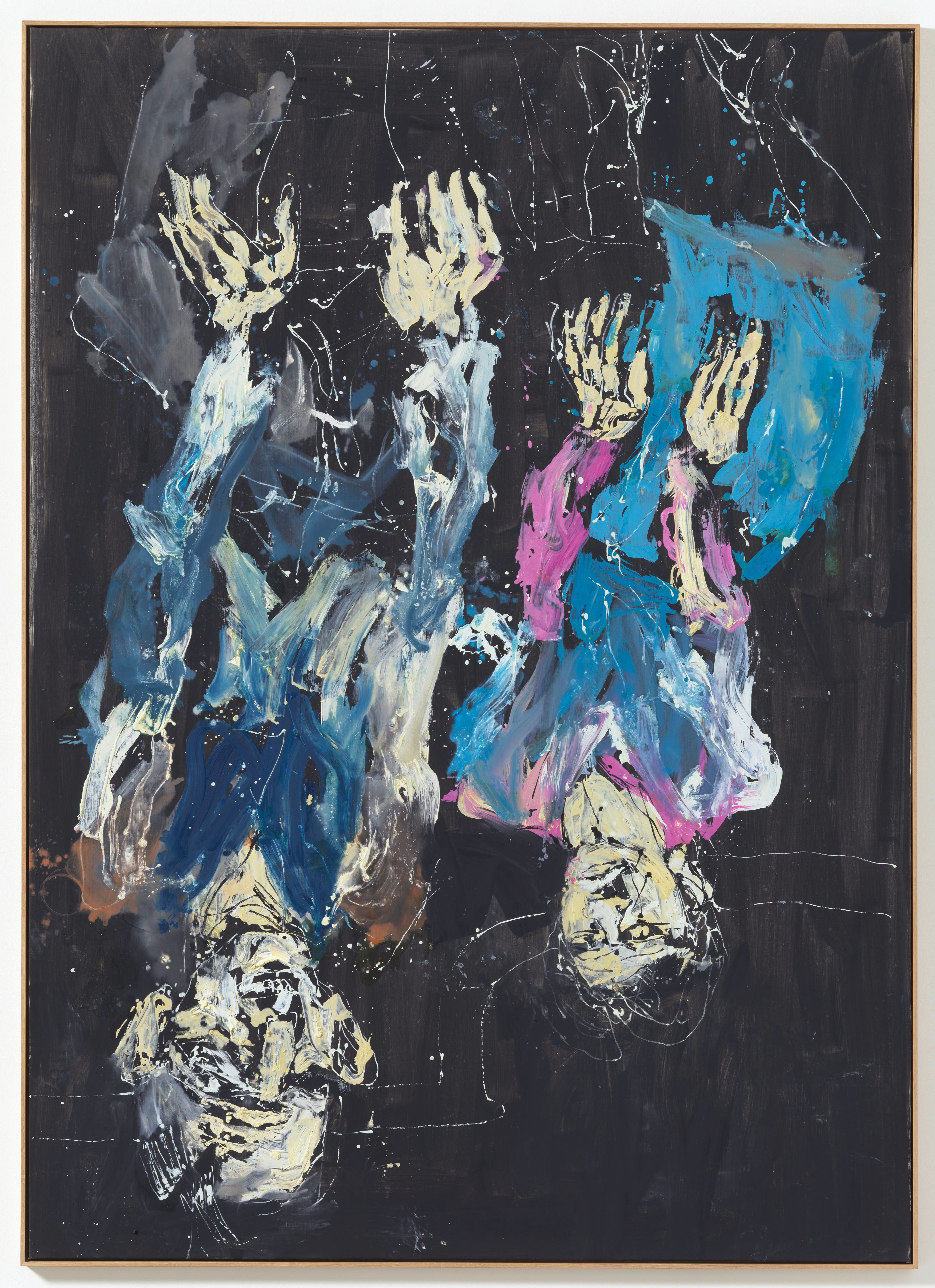
Lehmann Maupin sold an installation by Do Ho Suh, who currently has a retrospective at the same institution, while Thaddaeus Ropac sold three works by Georg Baselitz including Hier jetzt hell, dort dunkel dunkel (2012) for $2.07 million all up. Baselitz, who will be shown at Ropac’s new Milan gallery when it opens in September, had a major survey show of more than 80 works at the MUNCH museum in Oslo, on show until just last month.
Speculation on the Slide
In the fair’s Statements and Feature sectors, sales of works by emerging artists, while steady, were less dominant than in prior editions. Yet the speculative rush around ultra-contemporary art seems to have clearly abated, with gallery staff focusing their pitch on contextualising artists’ practices rather than referencing auction benchmarks.
Some gallerists welcomed this. ‘Collectors who have concentrated on younger artists—I think they were sometimes horrified by the speculation which we saw in the last couple of years,’ said Ropac. ‘Now this population of speculative collectors has really been reduced, which is a good thing. This is one of the better parts of this downturn. When we could not really control the speculation, we were always nervous or worried that it might hurt the long-term career of an artist. I think it does. So the downturn has cleaned and cleared out the market a bit.’
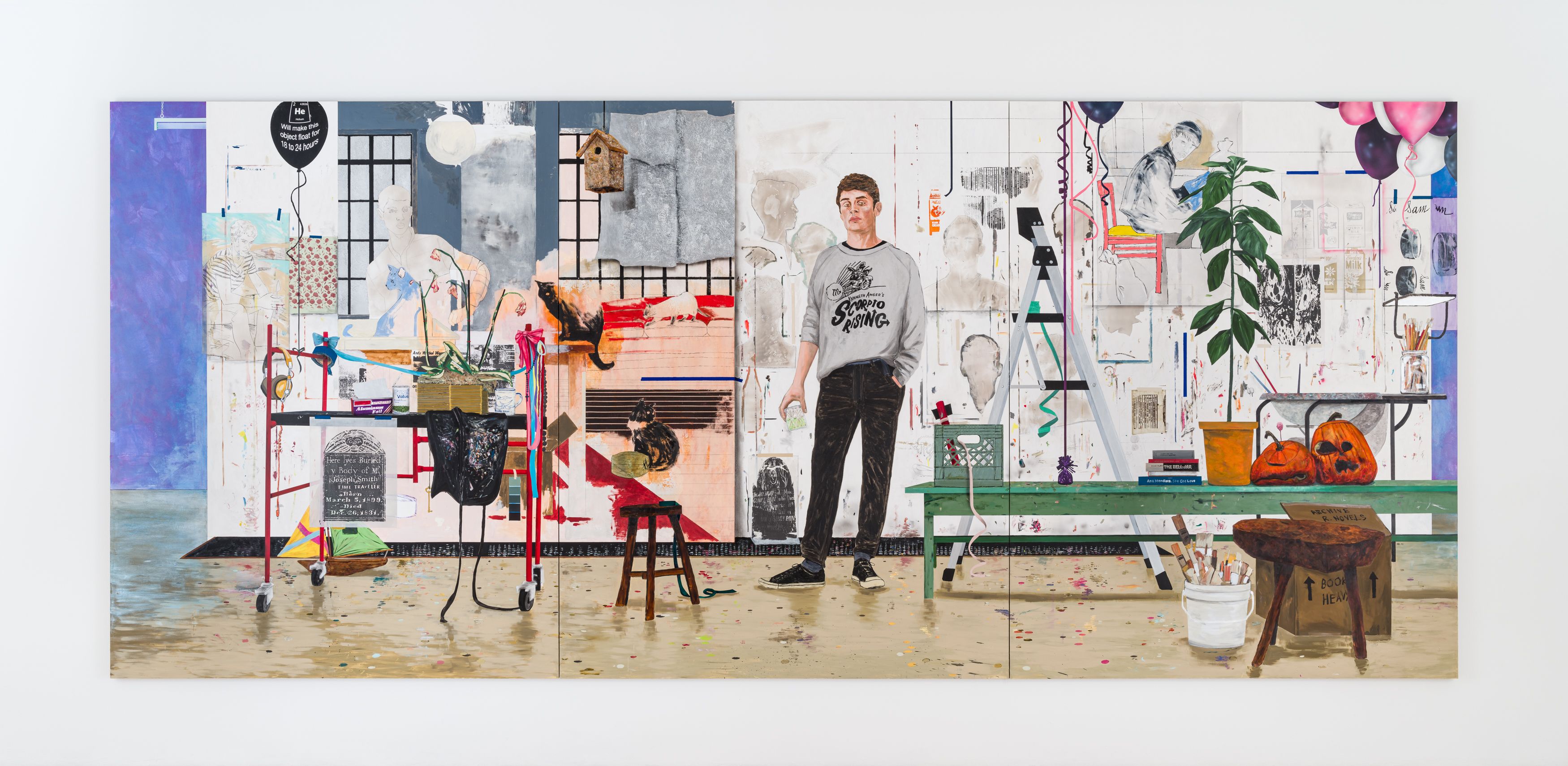
It is perhaps notable that the well-regarded London contemporary art gallery Edel Assanti chose to mark their Basel debut with a booth in the Premiere section featuring sculptures, paintings, and assemblages by Lonnie Holley ranging from $15,000 to $200,000. Holley, 75, is an American artist with a long institutional pedigree, including a significant show at Camden Art Centre in London in the summer of 2024. The offering ‘needs to be incredibly specialised by making irrefutable arguments that demonstrate a lasting cultural impact,’ said co-founder Jeremy Epstein, in an interview with the Financial Times.
Weakened Dollar Dampens U.S. Presence
This year’s fair took place against the backdrop of broader economic instability—especially for American collectors. Notably, the U.S. dollar traded significantly lower against the Swiss franc—around $1.21 to CHF 1—eroding the longstanding currency parity that once benefitted American buyers. The dollar has slid by around 3% against the Euro since May, currently trading at around $1.15 to the Euro, while Morgan Stanley predicts the dollar could decline another 9% by mid-2026.
At mid-tier price points, even such small currency shifts appeared to trigger hesitation.
The fair also took place just a week after the military was deployed on the streets of Los Angeles—a city well known for its collector base—and shortly after the East Coast art world was rocked by news that Kim Sajet, the veteran director of the National Portrait Gallery in Washington, D.C., had decided to leave her role amid political pressure from the Trump administration. Basel’s top hotels still had vacancies during art fair week—unheard of in years past. American gallerists, speaking to the New York Times, actively blamed such political instability and tariff uncertainty as responsible for the perceived reduction in U.S. collector turnout. Almine Rech, the French art dealer who has represented Jeff Koons for approaching 30 years, commented to Ocula: ‘Yes, we did hear such things.’
Phil Grauer, founder of CANADA New York gallery, sold a series of contemporary paintings by Katherine Bradford and Hasani Sahlehe in Basel. ‘I did notice fewer American buyers,’ he told Ocula. ‘It could be politics. I think the warmer climate keeps people at home in their air-conditioned bunkers, waiting around for the next war.’
Ropac, meanwhile, said the behaviour of the U.S. President had made it unexpectedly difficult for gallerists to work with American collectors: ‘It isn’t just the tariffs, it’s the way he acts. He’s unreliable, and it creates huge uncertainty.’
Private Sales Outpacing Public Auctions
Ongoing auction volatility has corresponded with a marked rise in private sales. Collectors now seem to favour the privacy, flexibility, and discretion these deals offer.
At Basel, this translated into pre-arranged deals and closed-door conversations. High-value transactions increasingly take place outside public view, using the fair as a physical showcase rather than a point of sale. Pace Gallery’s booth, for example, featured a rare Picasso painting priced at more than $30 million. It marked the centrepiece of the gallery’s communications, but was sold to an unnamed buyer before the fair officially opened. Pace also reported the private sale of Agnes Martin’s Untitled #5 (2002) for over $4 million. The painting did not even go on view at the booth. Two of the three editions of Danh Vo’s In God We Trust (2020), sold by White Cube, were private transactions that were completed before the fair opened.
Strengthening Competition for Collectors
Art Basel faces growing competition from its own network of fairs and emerging competitor events. The launch of Art Basel Paris has drawn significant interest—especially from U.S. collectors—while a new fair in Qatar, scheduled for February, fragments things further. With additional editions in Hong Kong and Miami Beach, collectors are increasingly selective about where they travel and what they prioritise. Will the storied Swiss fair be able to retain its lustre for new generations?
Some gallerists believe that the allure of the Swiss city isn’t what it once was, when collectors can also acquire works in Paris, Miami or soon, Qatar. ‘The American presence is not as strong as it once was,’ Ropac said.
‘But I think this has less to do with the economic climate than with the fact that some of them are just preferring to go to other cities like Paris. They get the same quality of art in Paris, but might prefer the infrastructure of the city.’

Young Collectors Step In
‘Younger collectors are creating a new dynamic, but not only in Basel,’ said Almine Rech.
Art Basel has long attracted ultra-wealthy collectors year after year. The noted Belgian collector Alain Servais, for example, said that this Art Basel was his 28th consecutive year. Yet a growing cohort of younger collectors, some in their 30s, are reshaping its dynamics. Their approach is deliberate and values-driven, and they often spend months researching and developing relationships before committing to purchases under $50,000, in a trend known as ‘purpose-led collecting’. Many galleries are now prioritising these connections as a foundation for their business. One example is Ayo Shonibare, 30, a fintech entrepreneur and first-generation collector based in London who attended Basel for the fourth time with his partner.
‘We don’t buy in a rush,’ Shonibare told Artnet. ‘We take our relationships with galleries seriously and buy from those we have built trust with.’
While CANADA’s Grauer told Ocula: ‘Boomers have contributed a lot to this machine, but I think they are slowing down … Someone has to step in and buy what else is out there.’
Unlimited Section Sets the Tone
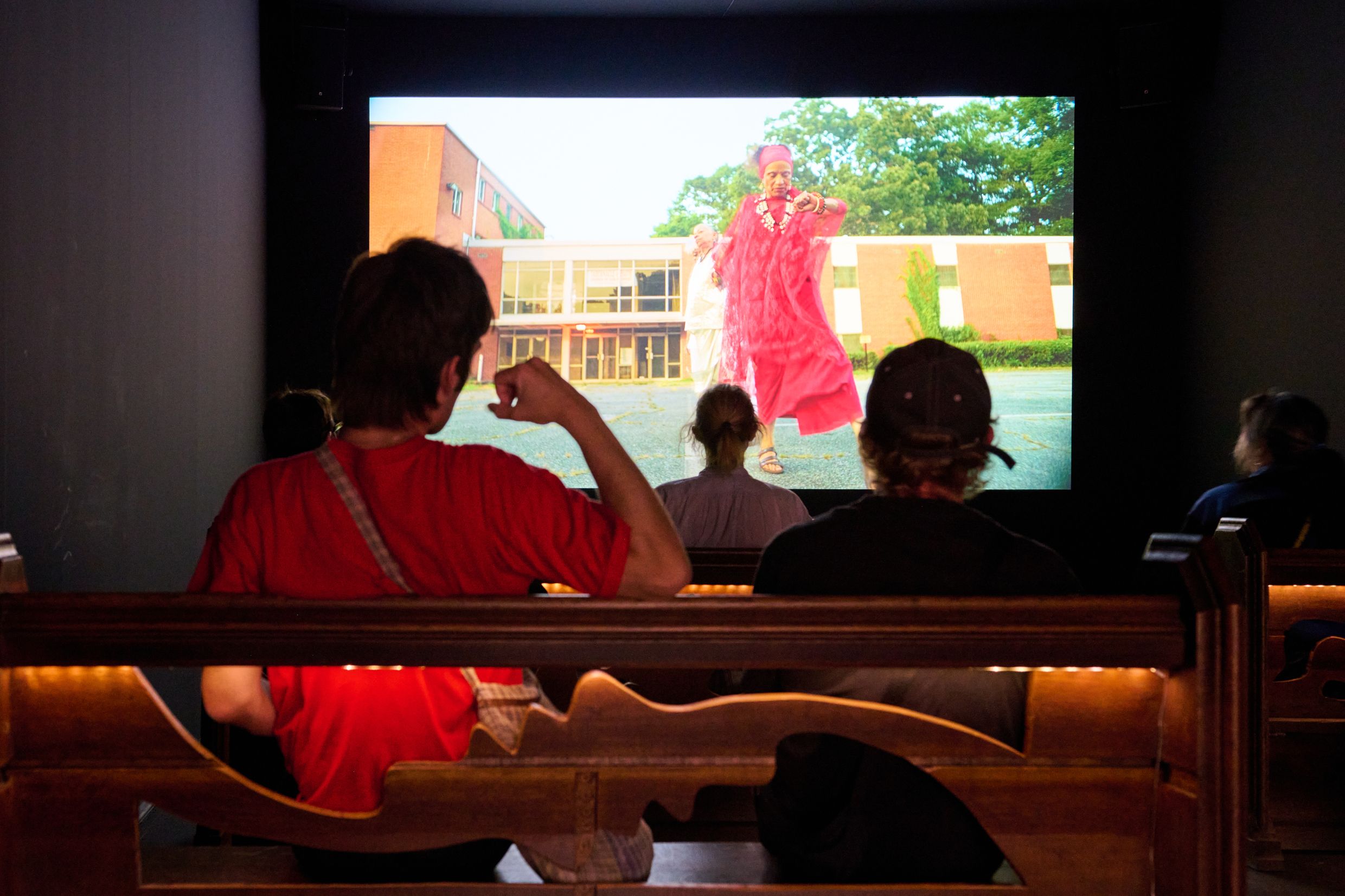
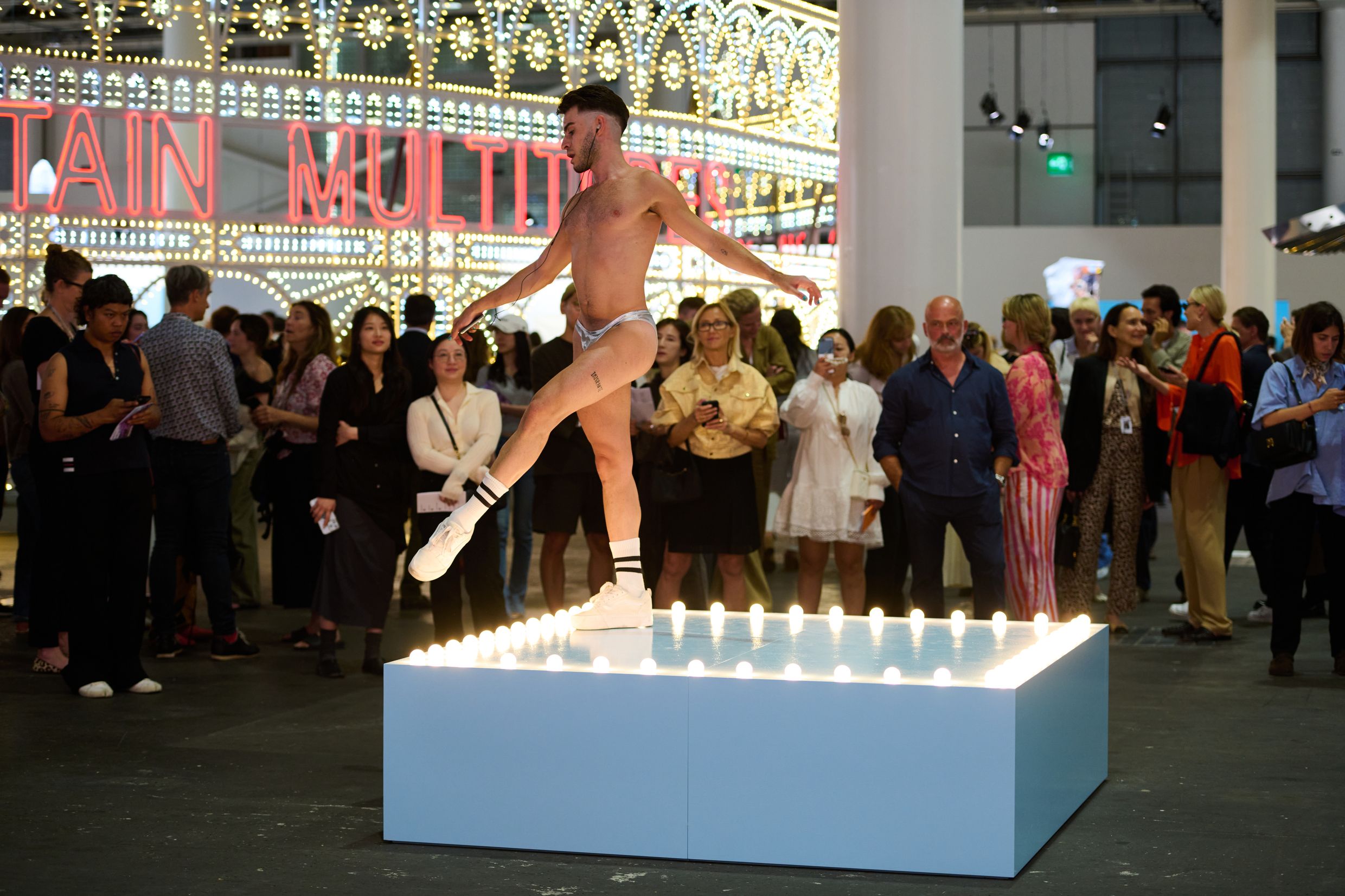
The Unlimited section, which opens before the main fair, again created viral moments for its platforming of large-scale and conceptually ambitious works. A highlight was Hauser & Wirth’s presentation of Felix Gonzalez-Torres’ Untitled (Go-Go Dancing Platform) (1991)—a mirrored stage intermittently activated by a dancer wearing headphones.
The work appeared on the Instagram feeds of countless visitors, illustrating how performance and conceptual practice can assert meaning at such commercial events. Though not for sale, it catalysed wider interest in Gonzalez-Torres’ market and underscored Unlimited’s growing reputation as the tone-setter at Art Basel. —[O]
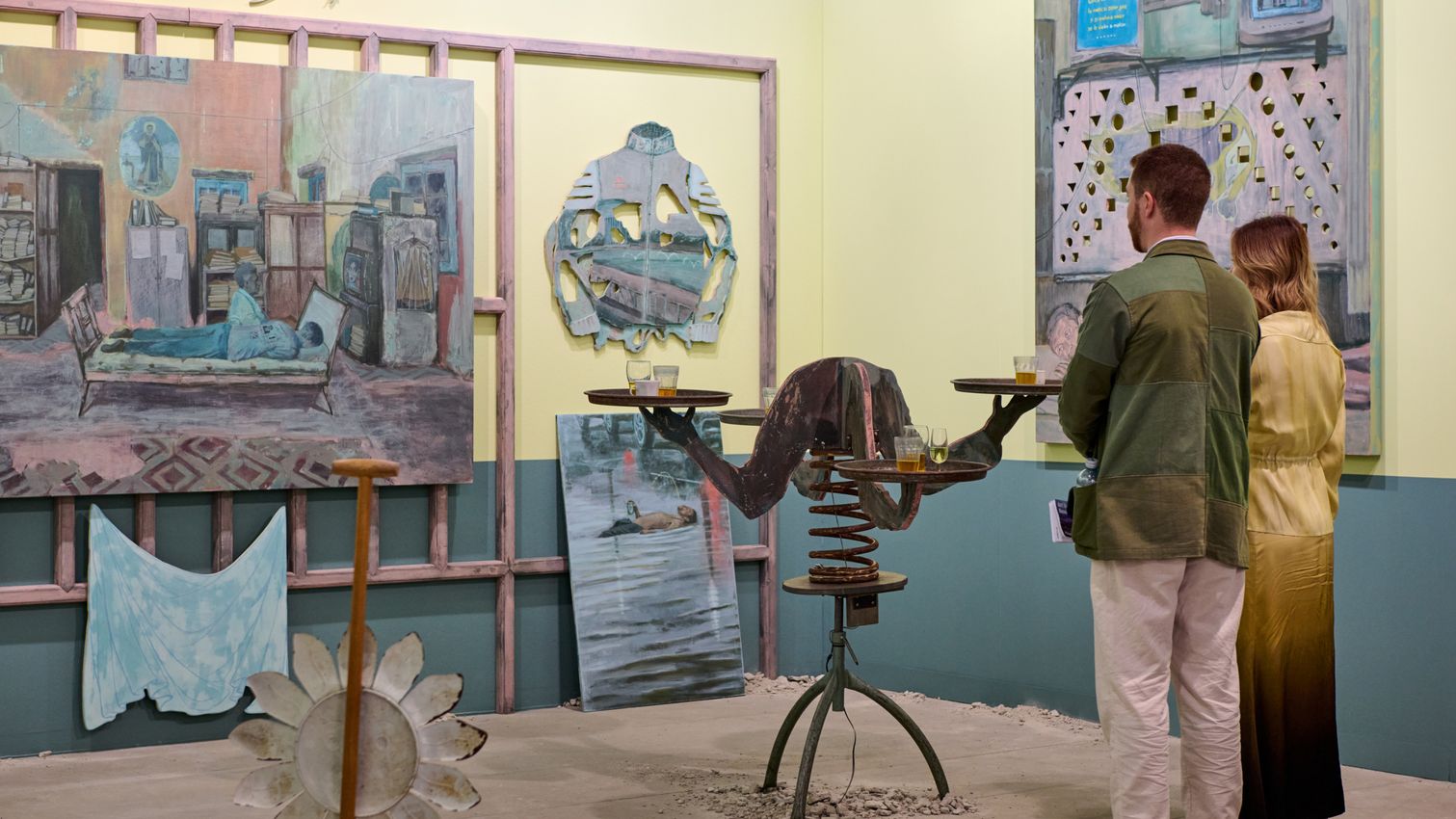
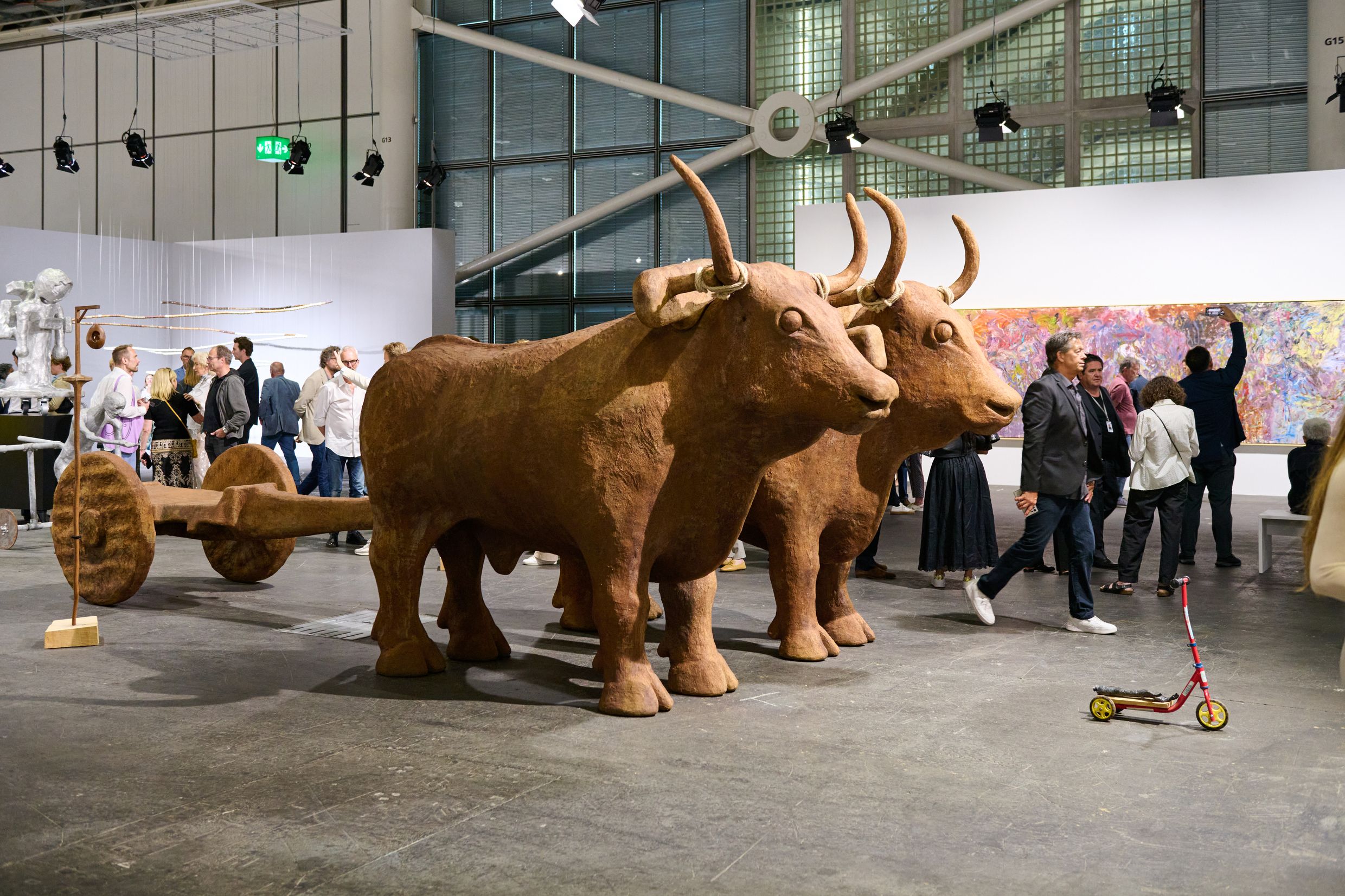
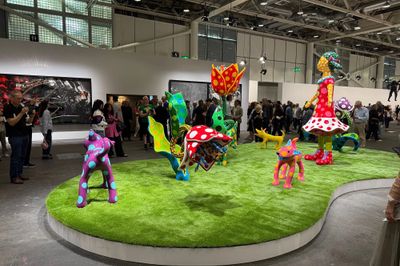
Main image: Arturo Kameya, Grimm, Art Basel (19–22 June 2025). Courtesy Art Basel.




A respected voice in contemporary art discourse.
Focusing on ambitious storytelling and insightful art-world commentary. Ocula Magazine publishes in-depth interviews, critical essays and timely analysis on the artists, exhibitions and ideas driving the global art world.
Learn more about Ocula Magazine
Showcasing the best of the art world.
Ocula partners with galleries from around the world to highlight their artists, artworks and exhibitions. Gallery membership is by application and invitation, with each member vetted by an independent panel.
Learn more about Ocula Membership
Specialises in the sale of major artworks.
Led by a team with deep ties to the world’s leading auction houses, galleries and collectors. Ocula’s advisory team offers bespoke services to high-net-worth clients from around the world who are looking to acquire the best of contemporary and modern art.
Learn more about our team and services