





Marian Goodman Gallery Opens Stunning New TriBeCa Flagship
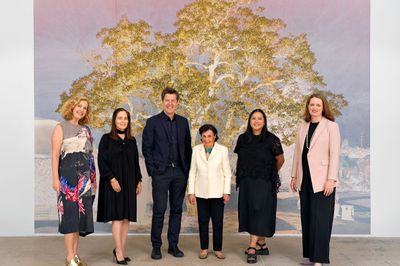
Marian Goodman Gallery Partnership from left to right: Rose Lord, Leslie Nolen, Philipp Kaiser, Marian Goodman, Junette Teng, and Emily-Jane Kirwan. Background image: Tacita Dean, Purgatory (4th Cornice) (2021). Photo: Alex Yudzon.

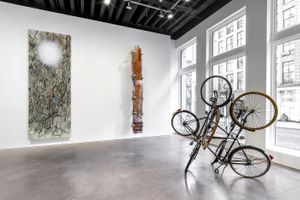
‘How does one create a meaningful exhibition that doesn’t look like an art fair booth?’ asked Phillip Kaiser, President and Partner of Marian Goodman Gallery, during his opening remarks at the unveiling of the gallery’s new headquarters and flagship space in TriBeCa.
With regards to their inaugural show, Your Patience is Appreciated, featuring around 50 artists and estates from their program and approximately 75 works, the challenge is clear. But considering the strength of Goodman’s artists—committed to creating conceptual works that encourage pause and deeper engagement—and the beautifully refurbished new building, it seems like a worthwhile pursuit.
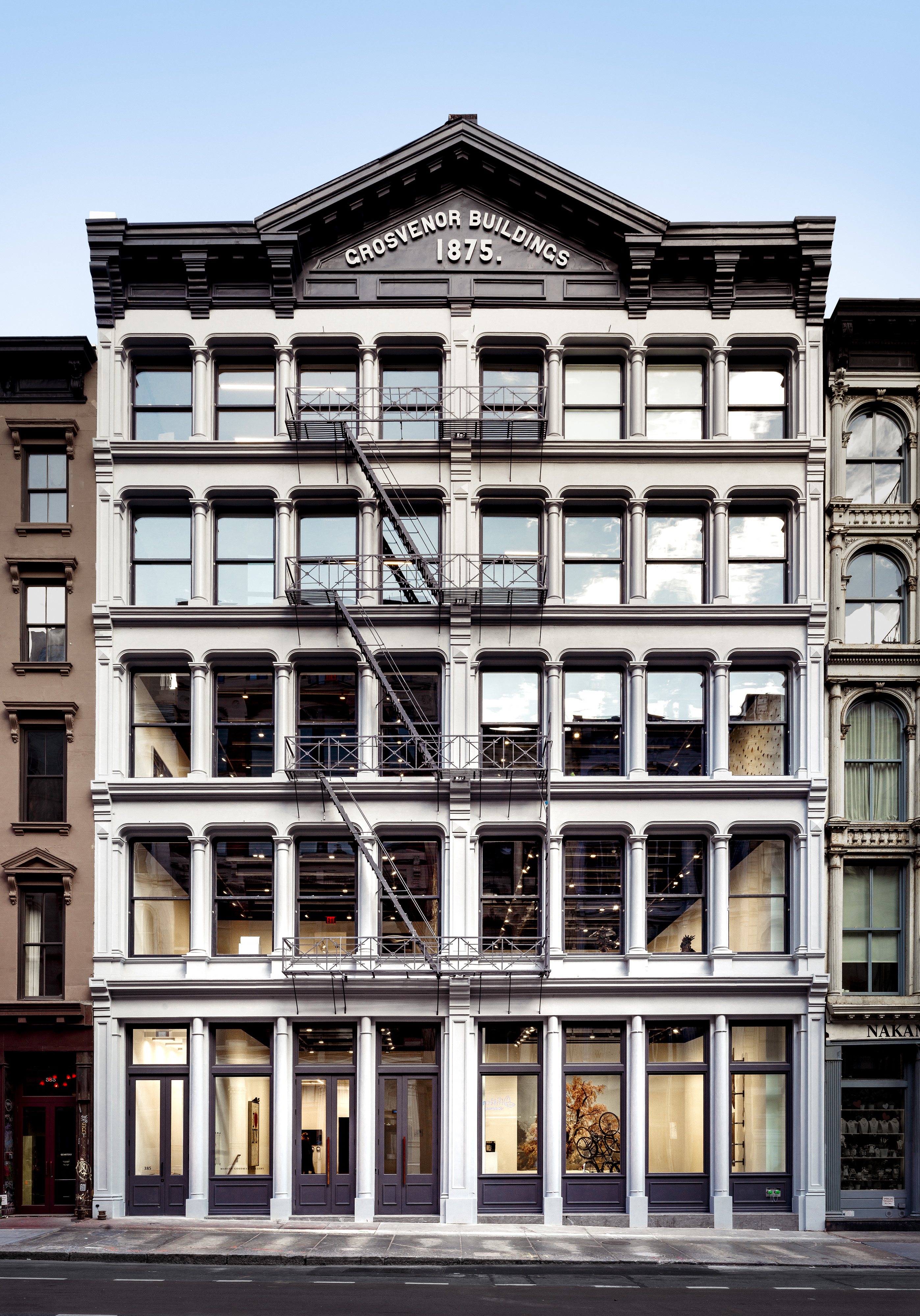
Andrea Fraser‘s A Visit to the Sistine Chapel (2005) offers a cheeky welcome to visitors as they explore the gallery’s impressive five floors that span around 30,000 square feet—nearly double the size of their former headquarters at 24 West 57th Street space.
The spectacular cast-iron facade building, now home to the gallery, was recently refurbished by studioMDA. The redesign emphasises the building’s original industrial character, with exposed brick walls on the upper floors, while skillfully incorporating modern elements to create a seamless blend of past and present. The result is two floors of sunlit galleries, featuring elegant interior archways, an upcoming library and archive, and smaller viewing rooms scattered through the building.
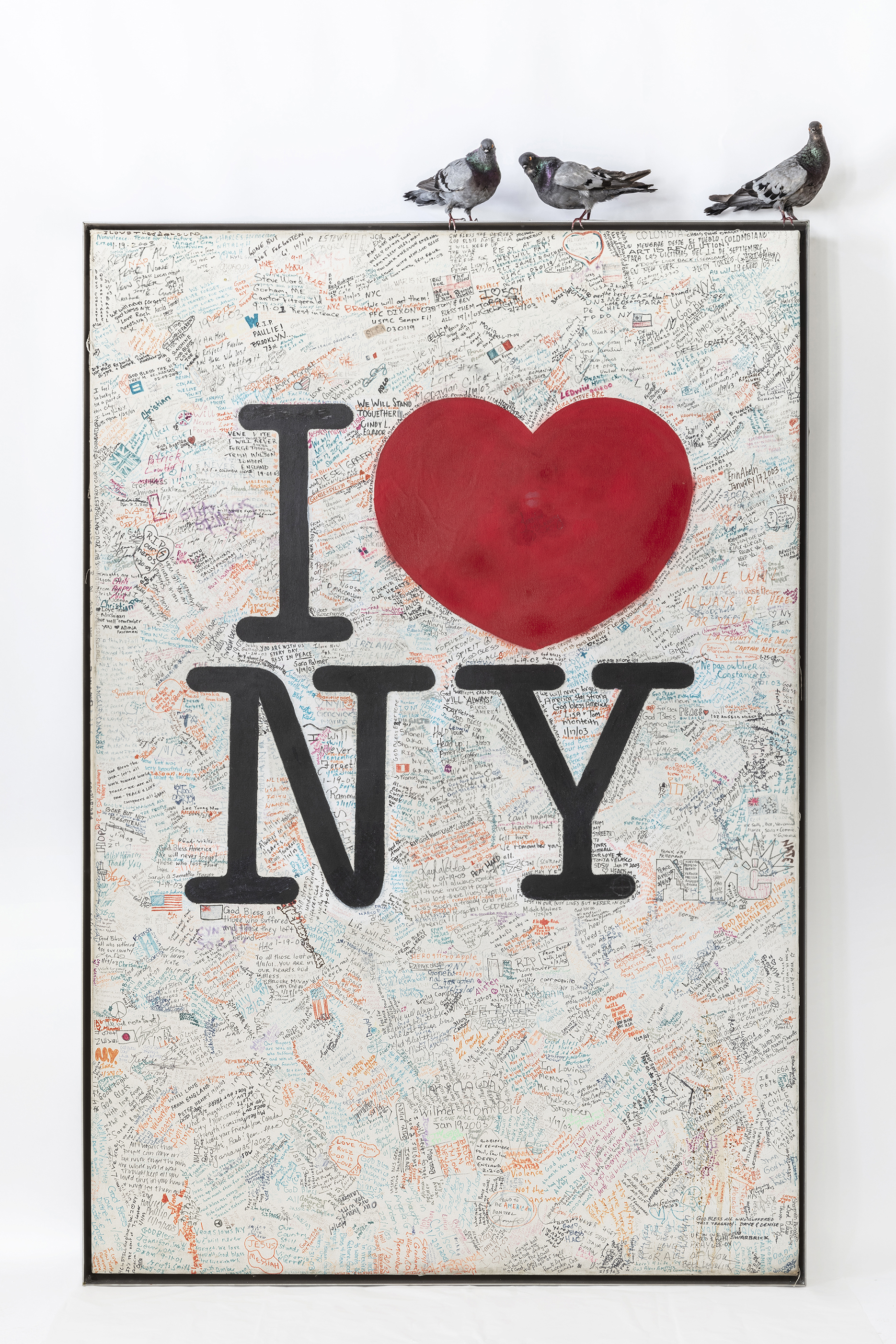
Fraser’s work is positioned diagonally across from Maurizio Cattelan‘s Ghosts (2021), a piece that features a found graffiti board printed with ‘I Love New York’ and taxidermy pigeons. Together, these works set the tone for the exhibition: a series of playful, multifaceted conversations, none too serious but undeniably delightful to experience.
Kaiser expressed a desire to create dynamic, ‘tectonic’ conversations across the three floors in which the current exhibition takes place, aiming to address the rupture caused by the divide between the north and south galleries in their previous space. This approach was intended to create more meaningful connections throughout the exhibition, enabling the works to engage with one another across the gallery’s expansive new layout.
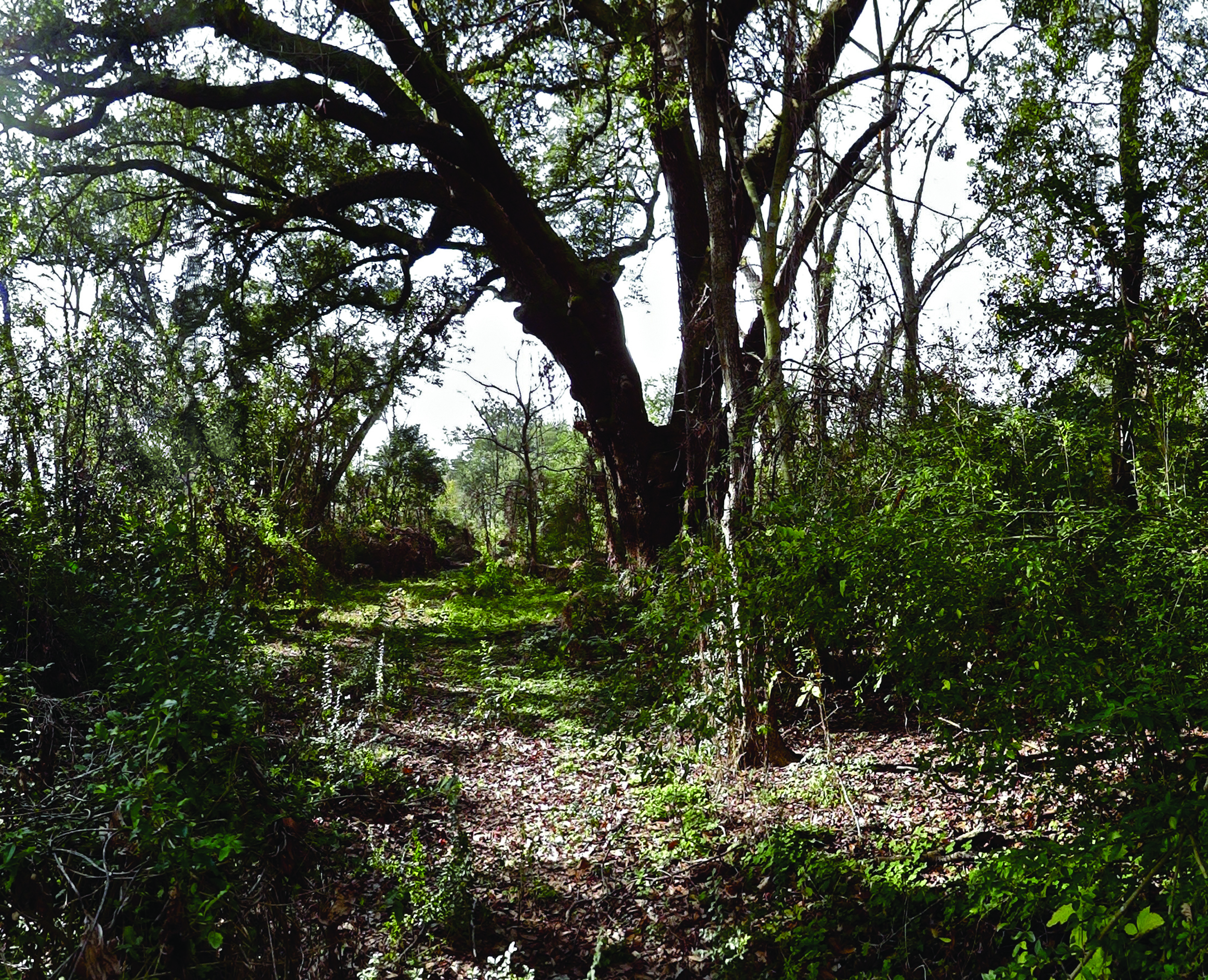
This is executed to perfection, and striking visual dialogues unfold throughout the space. For instance, just above Steve McQueen‘s Lynching Tree—a colour photograph mounted in a light box depicting an ancient oak with sprawling branches from a former plantation near New Orleans, where many racialised lynchings occurred—Eija-Liisa Ahtila‘s moving image work On Breathing is displayed. This visceral piece breathes life into an image of a tree, animating its presence and putting it in motion.
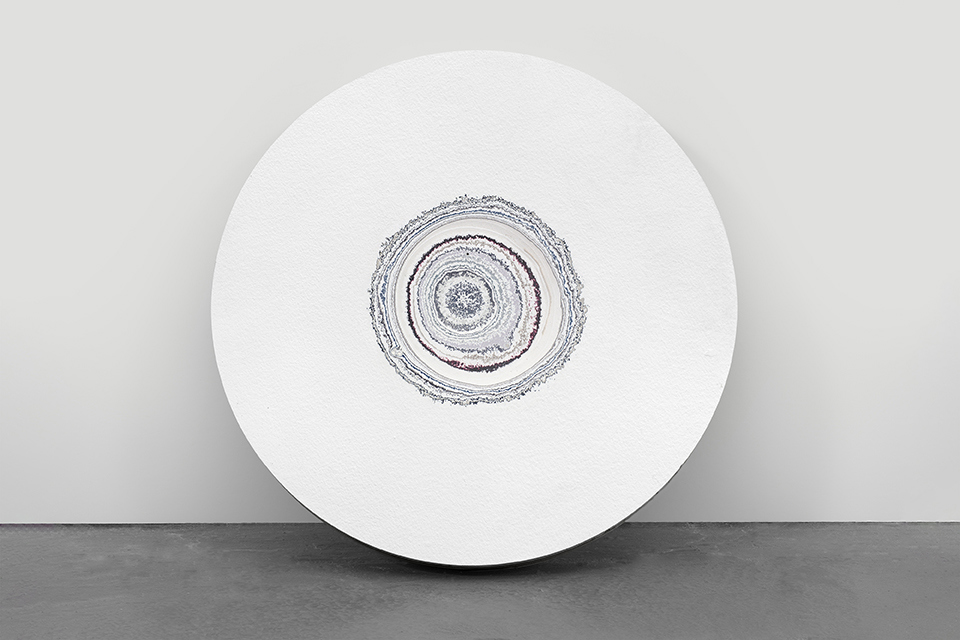
Also featured are Pierre Huyghe‘s subtle circular disks made of plasterboard, discreetly placed on the floors of the ground and third levels, just barely peeking into view. The concentric circles on these disks resemble the growth rings of a tree, a theme visually expanded in Giuseppe Penone‘s Propagazione. In this work, the rings are stunningly rendered on the gallery’s wall, with each concentric line mirroring the intricate patterns of fingertip skin found at the centre, evoking the passage of time.
Another compelling moment arrives in Gallery 4, where Louise Lawler‘s photograph It Spins (corner piece) curves against the wall, engaging in a dialogue with Marcel Broodthaers, an artist she has often cited as a lasting influence. In the room was also Cerith Wyn Evans’ Apres Stéphane Mallarmé (2008), possibly signalling both Broodthaer and Evans’ interest in Mallarme’s exploration of the spatial arrangement of poetry, but stripping away any verbal aspect of the poem, leaving only the visual.
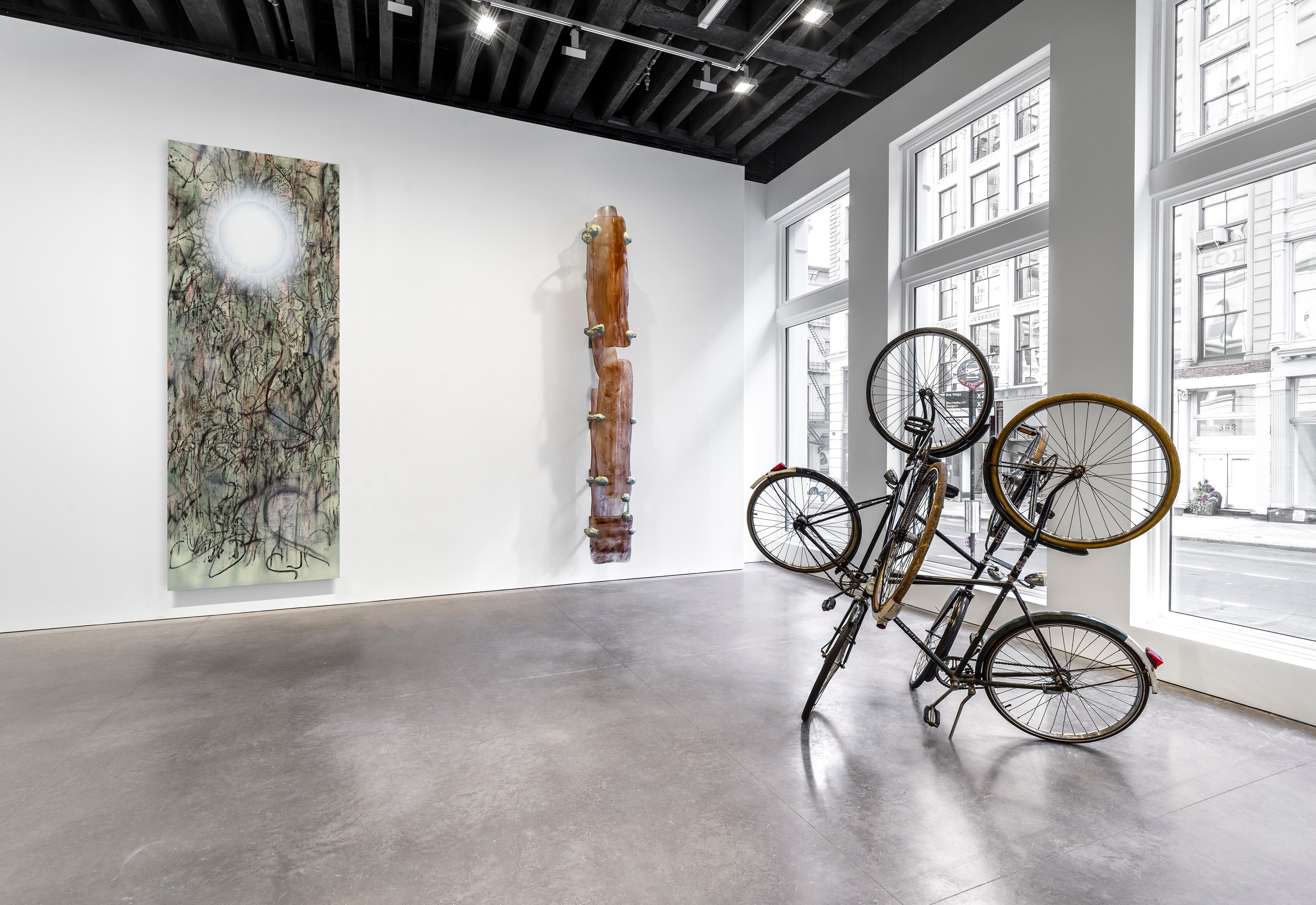
Several other notable artists from the gallery roster occupy space through the exhibition—Julie Mehretu, An-My Lê, Thomas Struth, Anri Sala, Tony Cragg—and even a performance by Tino Sehgal executed by one of the gallery’s representatives.
The exhibition was intentionally designed to offer such moments of pause and reflection, echoing Kaiser’s opening remarks on how the show took shape. He posed a central question: How does a gallery reflect on its past while shaping its future? It’s a space for both looking back and moving forward.

From the gallery’s opening in Manhattan in 1977—when European movements were largely overlooked due to post-fascist associations—to the eclectic programming of the 1980s, and the global trans-Atlantic dialogues that gained prominence in the 1990s, Marian Goodman has continually pushed boundaries in the kinds of artists they’ve shown.
Now, in the past couple of decades of commitment to time-based, ephemeral, and radical works of art, the new location offers a cross fertilisation of artistic conversations—just around the corner is from the gallery is David Zwirner‘s 52 Walker and Pace’s project space 125 Newbury, and right opposite are PPOW, Alexander Gray Associates, among a bunch of other galleries that are relocating to TriBeCa. —[O]
Main image: Marian Goodman Gallery Partnership from left to right: Rose Lord, Leslie Nolen, Philipp Kaiser, Marian Goodman, Junette Teng, and Emily-Jane Kirwan. Background image: Tacita Dean, Purgatory (4th Cornice) (2021). Photo: Alex Yudzon.




A respected voice in contemporary art discourse.
Focusing on ambitious storytelling and insightful art-world commentary. Ocula Magazine publishes in-depth interviews, critical essays and timely analysis on the artists, exhibitions and ideas driving the global art world.
Learn more about Ocula Magazine
Showcasing the best of the art world.
Ocula partners with galleries from around the world to highlight their artists, artworks and exhibitions. Gallery membership is by application and invitation, with each member vetted by an independent panel.
Learn more about Ocula Membership
Specialises in the sale of major artworks.
Led by a team with deep ties to the world’s leading auction houses, galleries and collectors. Ocula’s advisory team offers bespoke services to high-net-worth clients from around the world who are looking to acquire the best of contemporary and modern art.
Learn more about our team and services