






Lay of the Land: Takako Yamaguchi on Her Synthesised Scenes
Ocula sat down with painter Takako Yamaguchi in her Santa Monica studio to discuss her first solo museum show at MOCA in Los Angeles, the city she’s called home since 1987. Save to My Ocula
There is a story attributed to the late art critic John Berger that goes as follows: ‘A man walks along a stony beach. As he goes, he turns a single stone upright. He leaves it, standing there, on its end.’
Another story might go something like this: a 73-year-old artist, Takako Yamaguchi, walks through the hallowed halls of art history. As she goes, she turns a single landscape painting vertically. She leaves it, standing there, on its end; continuing on her way, she collects images and motifs from the High Renaissance masters, the Japanese Nihonga artists, the Art Deco designers, the 20th-century abstract painters, and, thinking better of it, returns to the landscape and assembles everything together within the upturned frame.
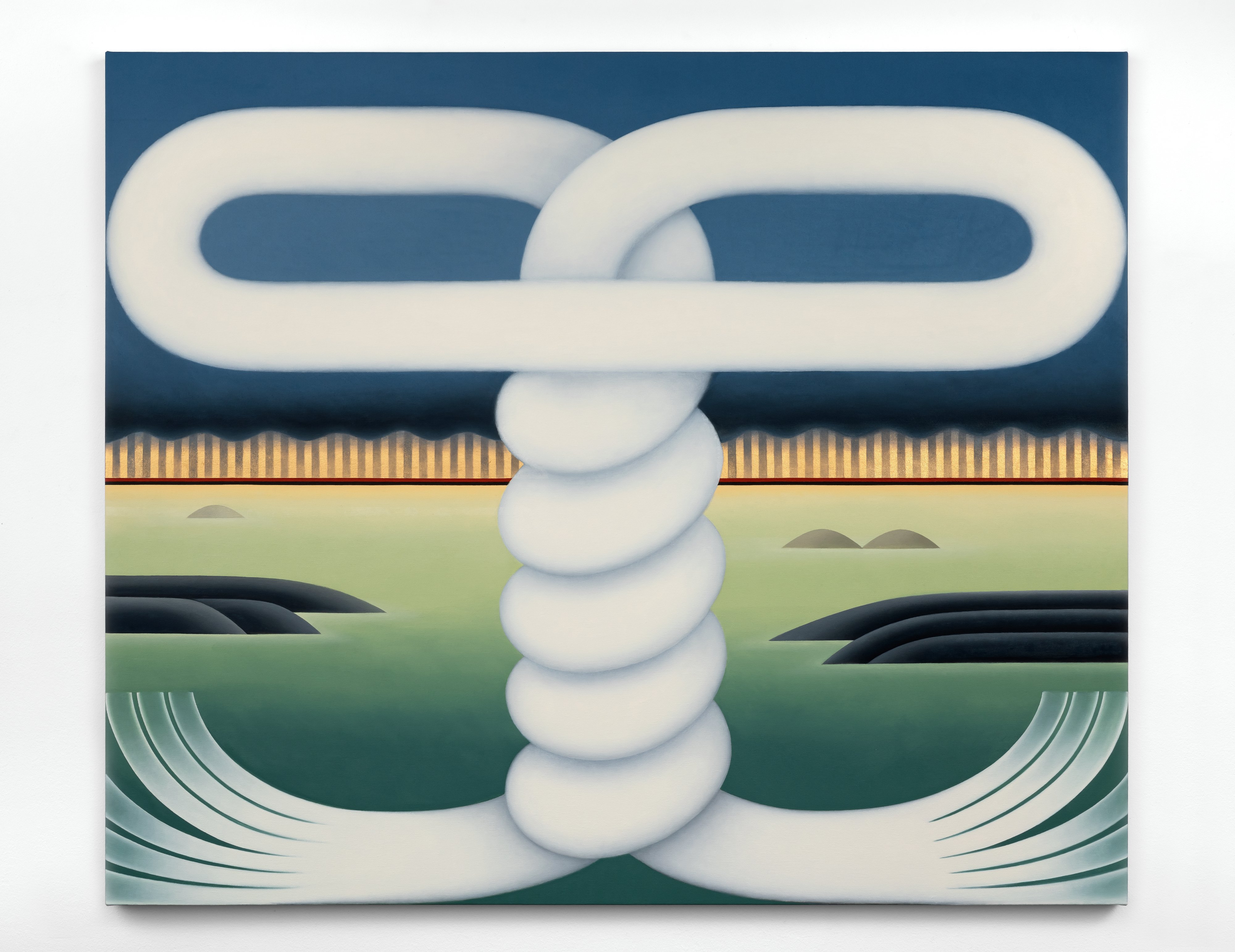
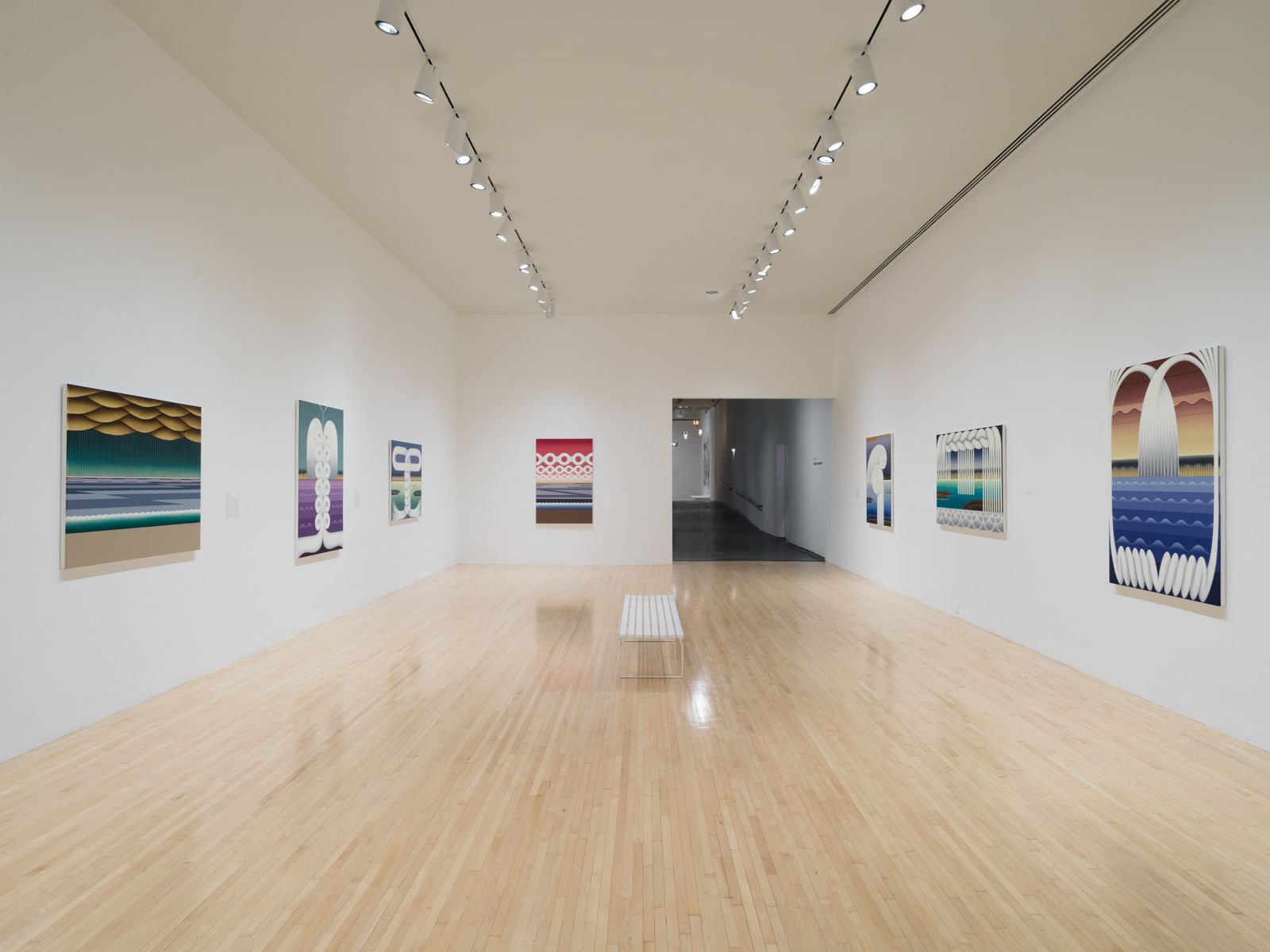
While the vertical seascapes and syncretic compositions in Yamaguchi’s inaugural exhibition at MOCA represent her most recent body of work—what she calls ‘reverse abstractions’—the Los Angeles-based artist has been defiantly challenging art-world conventions, freely appropriating from traditions and cultures across time and geography, since the 1970s.
Born in Okayama, Japan, in 1952, Yamaguchi moved to L.A. at the age of 26 and has since worked steadily, with relatively little recognition until fairly recently: her work was featured in the 2024 Whitney Biennial, and the previous year achieved record-breaking sales at auction. While gender and ethnicity certainly play a part in Yamaguchi’s long-standing anonymity, this is also the result of her artistic project: reprising art forms and aesthetics that have been excluded from the mainstream—or, as she puts it, relegated to the ‘trash heap’ of abandoned ideals. By integrating fashion, design, and decoration with elements from canonical movements, Yamaguchi restores their place in the tradition of fine art.
I visited the artist in her sunny Santa Monica studio, adjacent to the apartment she shares with her husband, Tom Jimmerson, the director of the L.A. gallery as-is. The ever-buoyant self-described contrarian Yamaguchi and I spoke about the unexpected challenges of permission, ‘irresponsible’ appropriation, and the function of art in our contemporary moment.
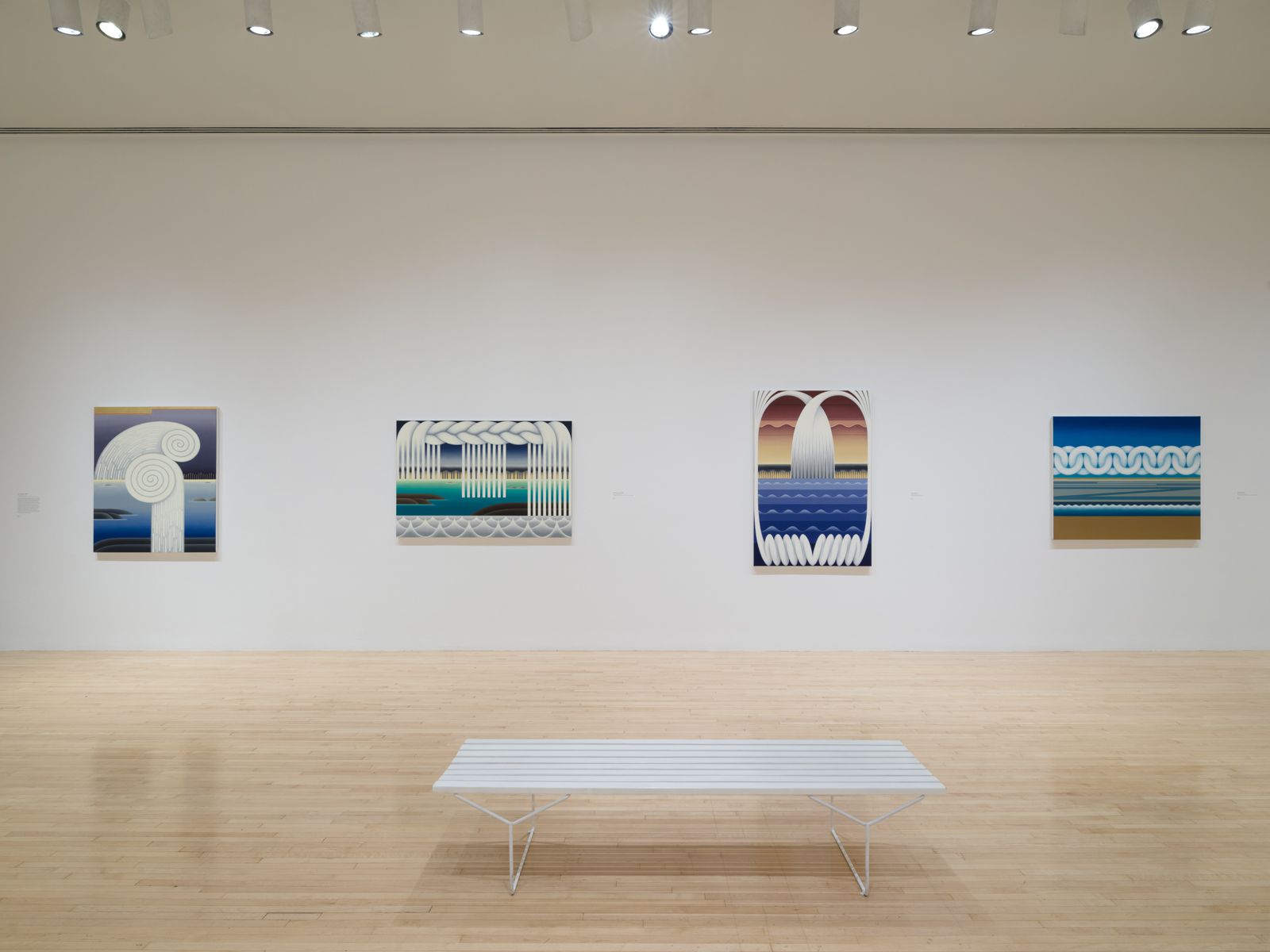
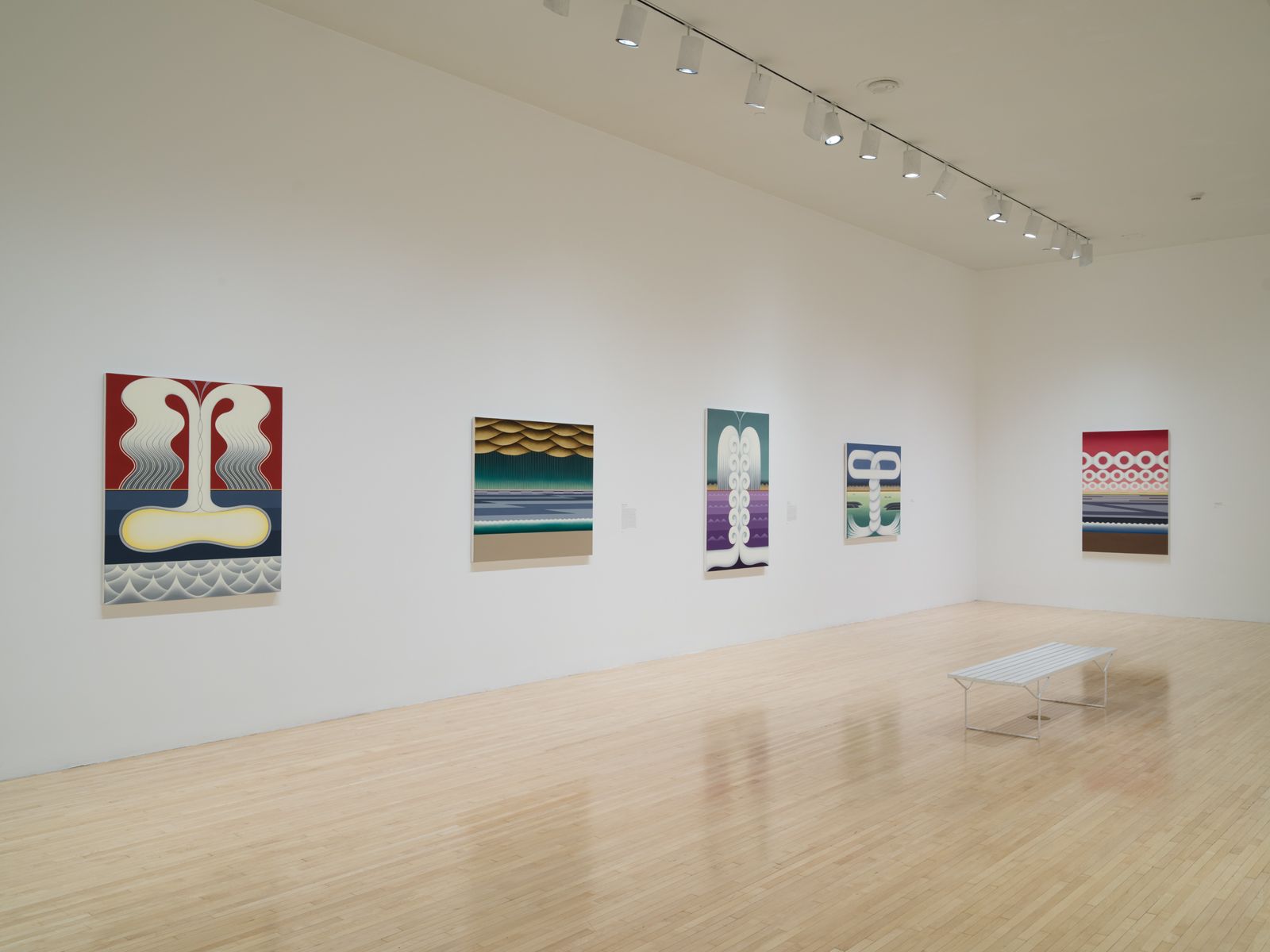
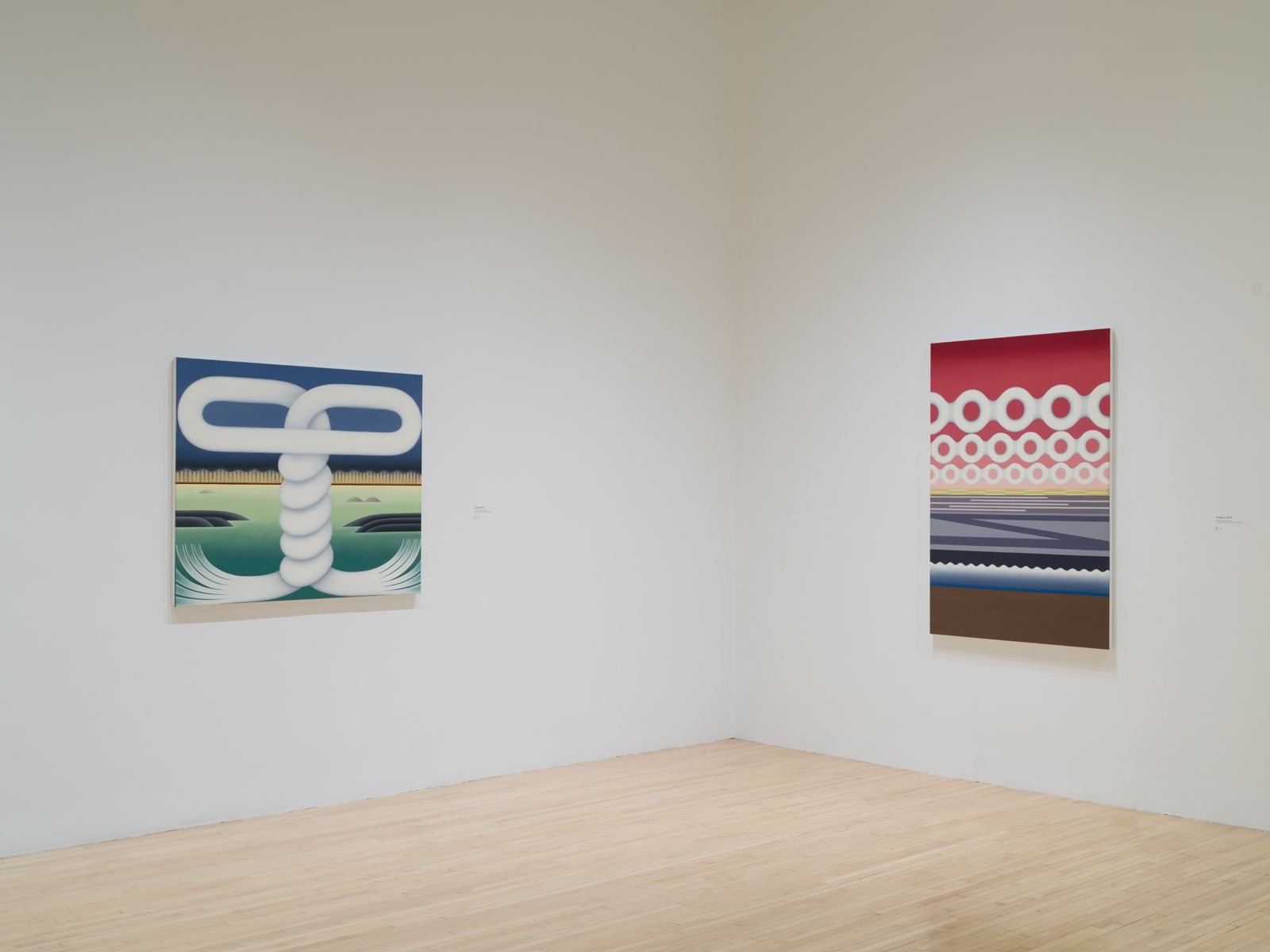
TAD: You’ve gone through so many different phases in your art-making career, ranging from your ornately decorated collage-like paintings to your frenetic landscapes on paper. You’ve explored photorealism in both nude portraits and your garment paintings, and now you’re working on these monochromatic white-on-white abstractions. How do the seascapes at MOCA continue your previous work, and in what ways do they diverge?
TY: In general, two things have continued throughout my career. First, I work very, very slowly: my process for all my paintings, no matter the subject, is very laborious. I like romantic paintings, but I’m not a romantic. Even if I tried, I don’t think I could do loose, brushy, expressive strokes. I’m much more comfortable being meticulous.
TAD: So you find freedom in constraint?
TY: Exactly. This deliberate slowness is also my way of challenging consumer culture and the heightened demands for efficiency. It’s the same in the art world as it is in the broader economy; it’s still the production and distribution of goods. The second is my contrarian streak and my resistance to the mainstream.
TAD: I’ve heard you refer to this contrarian impulse as your ‘poetics of resistance.’ Can you tell me more about that?
TY: I started my career in the 1970s, right when painting was declared dead. So, of course, I decided to be a painter. And it was the time of Minimalism, so the Pattern and Decoration movement was being completely dismissed as mindless busy work for women. It was the same for crafts like weaving and fashion. No one was interested in beauty or anything excessive, so I decided to embrace abundance, even incorporating gold leaf and bronze into my canvases.
It was much easier back then to have something to rebel against. There were these big things that were considered mainstream, like Minimalism, for example. Now it’s all pluralism and permissiveness. It’s very difficult to call yourself an outsider or a contrarian in this kind of environment.
“I like romantic paintings, but I’m not a romantic.”
TAD: You call these seascapes ‘reverse abstractions’, which also seems to be a form of refusal. In a previous interview, you mentioned that the idea came from the poet Wallace Stevens.
TY: Yes. I was simplifying my paper series—these very dramatic landscapes that combine lots of different elements to consider the dialectic of order and chaos—and my husband and I were reading a lot of Wallace Stevens. In his notebooks, there’s a quote about all of our ideas coming from nature, like umbrellas are equivalent to trees. This is a widely held belief, but it struck me at the time, and I decided I wanted to reverse that order. I wanted to start with umbrellas and work back to trees, so to speak. I started using sophisticated motifs from abstract paintings and geometric shapes from graphic design to address nature, specifically the sea, water, the horizon line.
TAD: That reminds me of something the historian Simon Schama said about the concept of landscapes being culture before nature.
TY: That’s a very similar idea. All the painters who came before me used their culture to see and portray nature. That’s what I mean when I say I’m not a naturalist. I’m really looking at how different artists from all over have represented nature in their work.
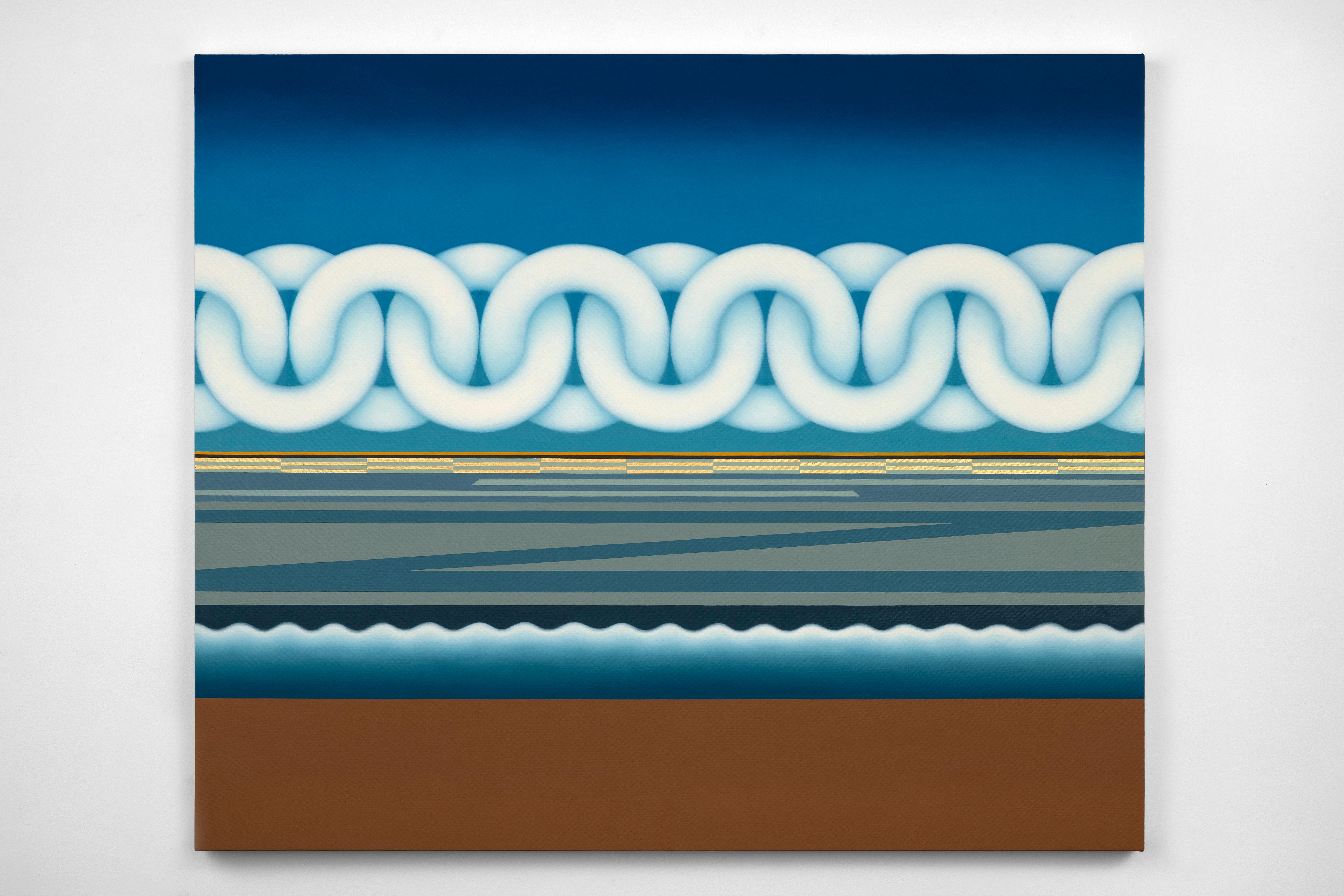
TAD: Thinking about your diverse references, can you tell me a little about the various influences that can be found in the seascape series?
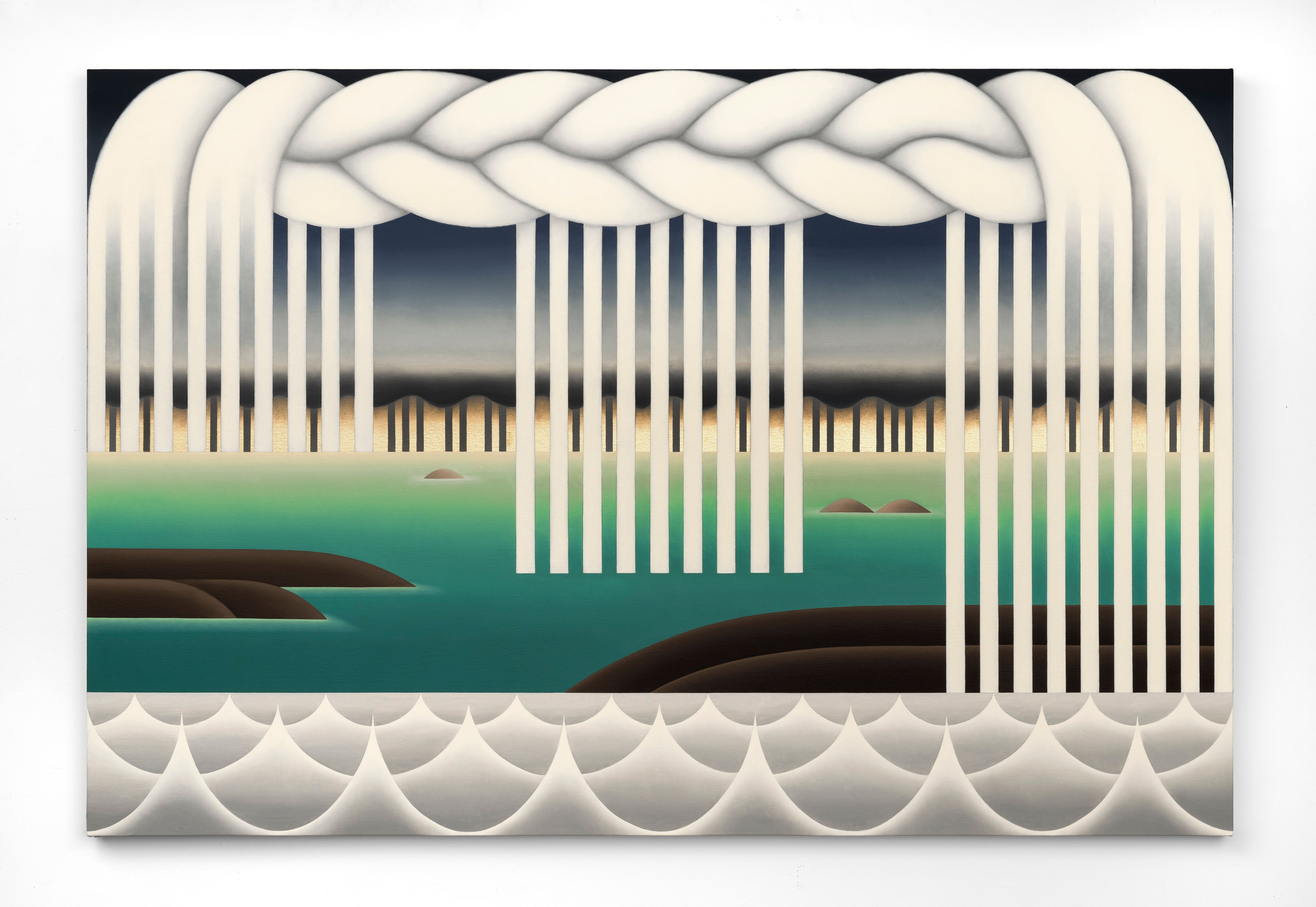
TY: Most of the elements in these works came from earlier works: waves, braids, clouds. They may look different, but the changes from one series to the next are incremental. For the most part, I borrow very irresponsibly. For example, a friend in Paris gave me this beautiful black-and-white book of all these female nudes by Lucas Cranach the Elder—some of them biblical, others from traditions I didn’t recognise—and I found them very interesting, so I decided to incorporate them into my work.
I say ‘irresponsible’ because if the book my friend gave me had been about something other than Lucas Cranach, I might have worked with that other subject instead. It’s not something I looked for; it just sort of happened. But once I decide to work with a subject, whatever it is, I become obsessed with it. Then the project becomes how to fit it in with all the other elements.
TAD: Were you thinking about appropriation and representation when you first started borrowing and recombining?
TY: No, not really. Until recently, as an artist, you had a sort of permission to poke around and borrow from different places (aesthetics, movements, and cultures). Sometimes I think that was a blessing for me because there was a freedom to be irresponsible and to choose things just because they felt right—it was very instinctual.
For example, around the time when everyone was calling my work ‘East meets West’, I discovered Diego Rivera’s murals, and I was really attracted to his kind of naturalism. So I would have a Lucas Cranach figure in this Diego Rivera-inspired landscape, and there would be Anni Albers-looking weavings and maybe some Art Nouveau-style ornamentation. It’s sort of like a primitive person trying to record everything in the world on a cave wall.
TAD: That’s another thing I find distinctive about your work: your willingness to allow dissonance as opposed to resolving or synthesising differences. Can you talk to me about that?
TY: I think it comes from kimono design, where there will be an incredible abstract pattern juxtaposed with a very naturalistic landscape. There’s no logic to it. Why would you have this realistic representation of an island right next to a geometric band? So I started composing images that way. Then I transitioned to connecting the different elements so there was a fluidity to the surface, where one image might become the source of another.
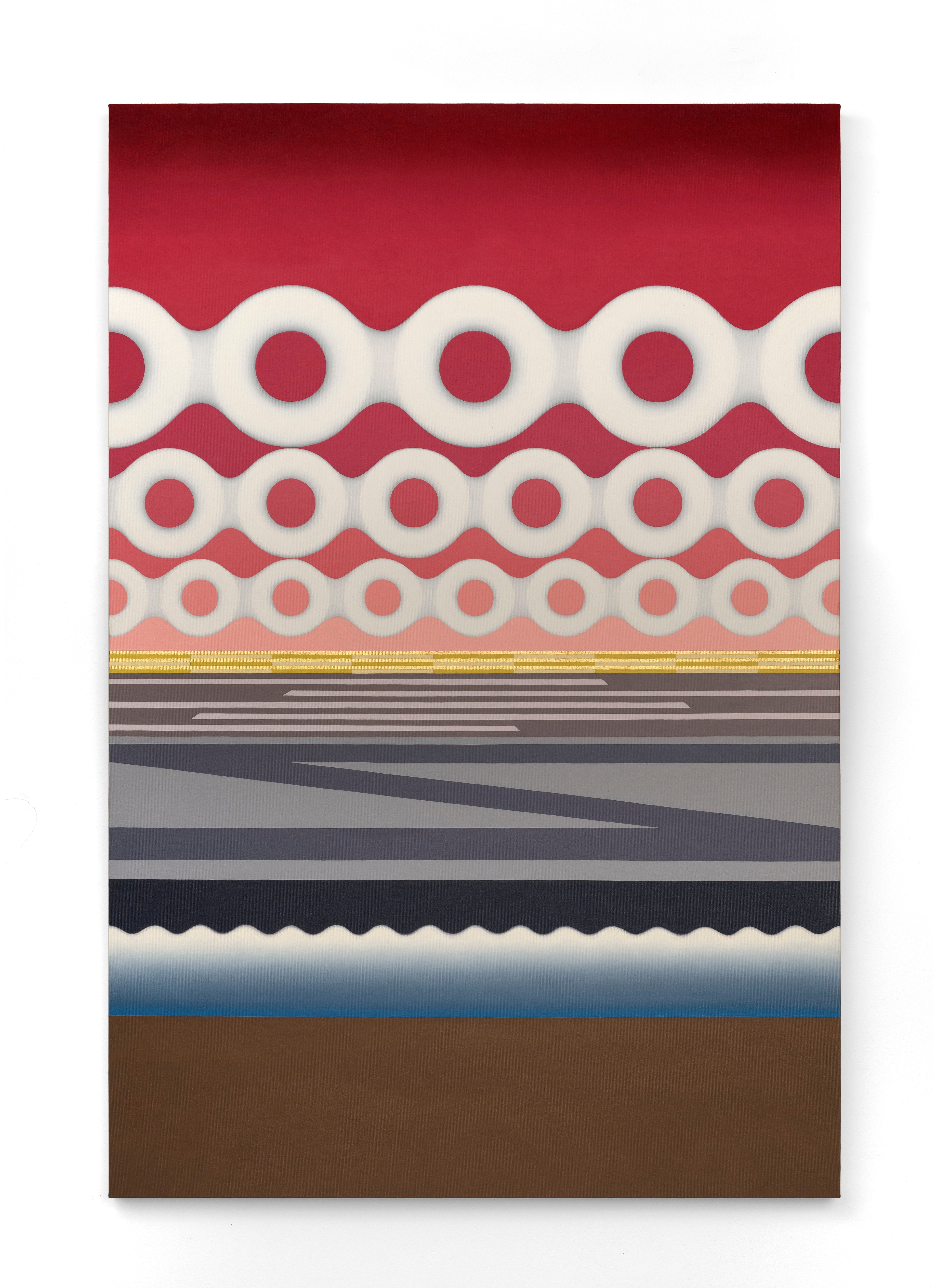
TAD: The works in this show feel like a natural progression from that idea, seeing as all the different aspects come together to form these singular landscapes that transcend their many parts. With this being your first solo museum show, I wanted to ask how you’re feeling about the recent recognition of your work.
TY: Yes, my work is getting a little more attention. I’d say I’m very happy not to have to worry about being homeless. It’s wonderful to be able to just concentrate on the work, especially considering my age—I do feel a sense of urgency. It’s funny, everyone keeps asking my husband and me if we’re planning to take some big trips now, and we’re just not interested. It’s incredibly fun to work and to have a show.
TAD: As someone who’s committed their life to making art, what do you think art is good for in this day and age? What can art do?
TY: It’s hard to say. But I do think we need poetry in our lives. If everything had to be monetary, life, I think, would become quite hollow, emptied. People who are saving lives, like doctors or those offering services to people and volunteering, are amazing; they’re doing God’s work. I don’t know how to help the world in that way, so I do it how I can: I paint. —[O]
MOCA Focus: Takako Yamaguchi is on view at MOCA Grand Avenue, Los Angeles, from 29 June 2025 to 4 January 2026.
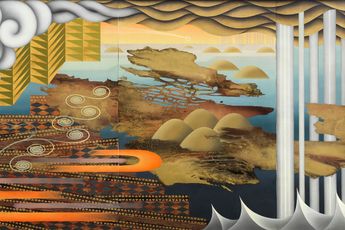
Main image: Takako Yamaguchi, Stitch (2023) (detail). Oil and metal leaf on canvas. 106.7 × 127 cm. Courtesy the artist; Ortuzar, New York; and as-is.la, Los Angeles. Photo: Gene Ogami.




A respected voice in contemporary art discourse.
Focusing on ambitious storytelling and insightful art-world commentary. Ocula Magazine publishes in-depth interviews, critical essays and timely analysis on the artists, exhibitions and ideas driving the global art world.
Learn more about Ocula Magazine
Showcasing the best of the art world.
Ocula partners with galleries from around the world to highlight their artists, artworks and exhibitions. Gallery membership is by application and invitation, with each member vetted by an independent panel.
Learn more about Ocula Membership
Specialises in the sale of major artworks.
Led by a team with deep ties to the world’s leading auction houses, galleries and collectors. Ocula’s advisory team offers bespoke services to high-net-worth clients from around the world who are looking to acquire the best of contemporary and modern art.
Learn more about our team and services