





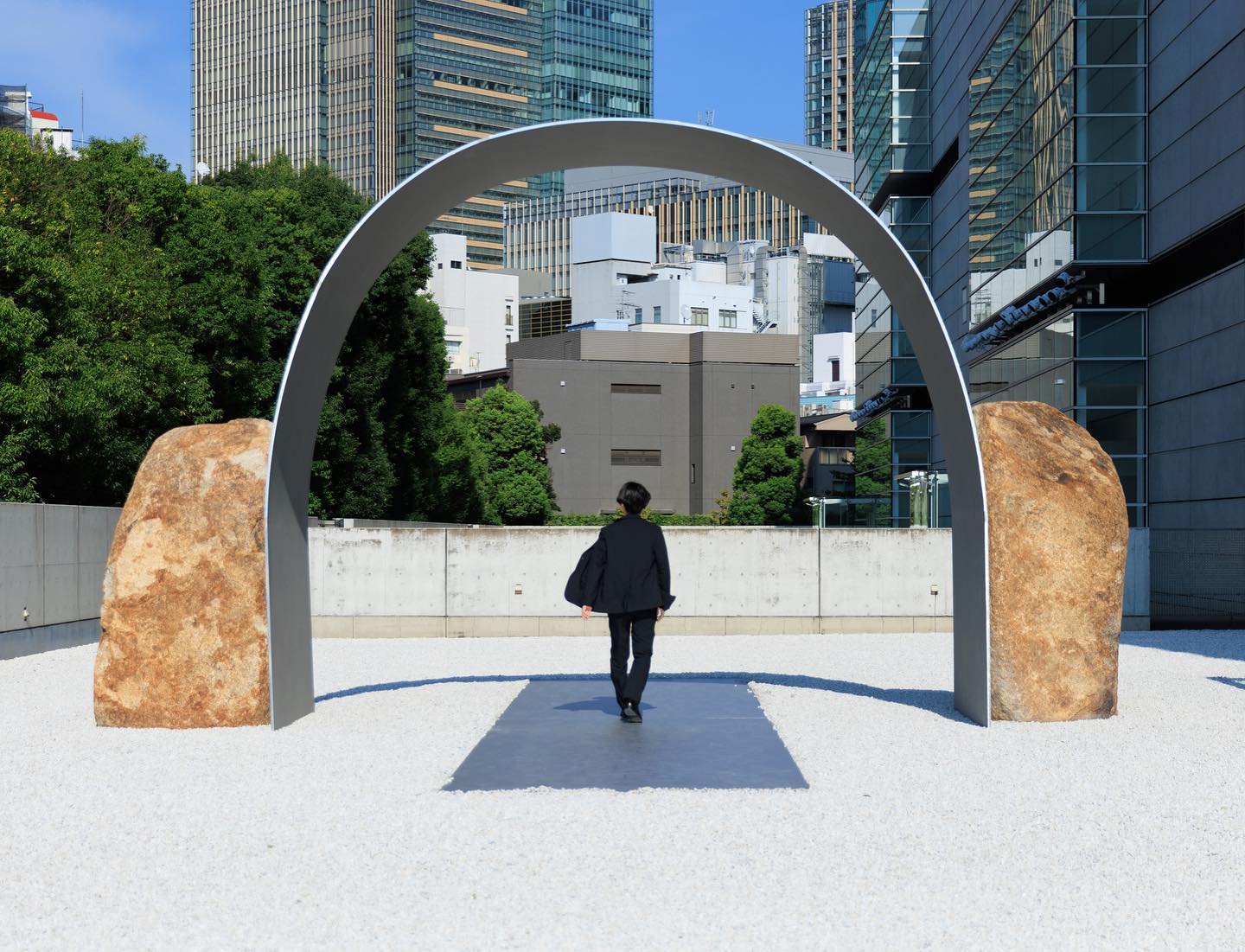
Exhibition view: Lee Ufan: 15th Anniversary of the National Art Center, Tokyo, The National Art Center, Tokyo (10 August–7 November 2022). Courtesy National Art Center, Tokyo.

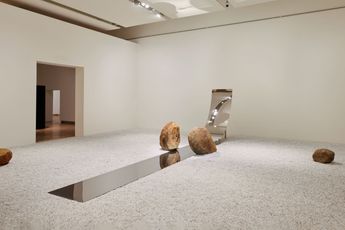
Exhibition view: Lee Ufan: 15th Anniversary of the National Art Center, Tokyo, The National Art Center, Tokyo (10 August–7 November 2022). Courtesy National Art Center, Tokyo.

Exhibition view: Lee Ufan: 15th Anniversary of the National Art Center, Tokyo, The National Art Center, Tokyo (10 August–7 November 2022). Courtesy National Art Center, Tokyo.
Now on view at the The National Art Center, Tokyo, a major retrospective of work by Lee Ufan includes the artist’s pre-Mono-ha pieces alongside more recent sculptures.
Translated to ‘School of Things’, Mono-ha was an artist group that originated in the 1960s with an anti-Modernist stance. Using natural and industrial materials, Mono-ha, which was founded by Lee Ufan alongside Nobuo Sekine, embraced the ephemeral, and many of their site-specific works were destroyed.
Lee Ufan later became associated with the Dansaekhwa movement, forming his minimalist paintings defined by serene, repetitive gestures, as a means of registering the body’s movement and the passage of time.
As Stephanie Bailey reflects in an article in Ocula Magazine chronicling Dansaekhwa’s legacy, the movement offered ‘a more mediated study into the tensions and possibilities from negotiating pure colour, form and material on canvas.’




A respected voice in contemporary art discourse.
Focusing on ambitious storytelling and insightful art-world commentary. Ocula Magazine publishes in-depth interviews, critical essays and timely analysis on the artists, exhibitions and ideas driving the global art world.
Learn more about Ocula Magazine
Showcasing the best of the art world.
Ocula partners with galleries from around the world to highlight their artists, artworks and exhibitions. Gallery membership is by application and invitation, with each member vetted by an independent panel.
Learn more about Ocula Membership
Specialises in the sale of major artworks.
Led by a team with deep ties to the world’s leading auction houses, galleries and collectors. Ocula’s advisory team offers bespoke services to high-net-worth clients from around the world who are looking to acquire the best of contemporary and modern art.
Learn more about our team and services