






Jeju Island’s PODO Museum Exhibition Reflects on Sharing Life on the Pale Blue Dot
Works by 13 international artists, including Mona Hatoum, Jenny Holzer, and Sarah Sze, have been arranged across three themed galleries in a meditation on violence and healing. Save to My OculaThe latest exhibition at PODO Museum on Korea’s Jeju Island draws inspiration from a famous photograph of our home taken from afar—that’s ‘Pale Blue Dot’, the photograph taken by Voyager 1 in 1990, which reveals our home planet as a tiny fleck in the cosmos.
In a spacious presentation spanning three galleries, two thematic spaces, and an outdoor sculpture, We, Such Fragile Beings (9 August 2025–8 August 2026) echoes that image with its central question: ‘Why do we, such insignificant beings in the vast universe, persist in endless conflict with one another?’
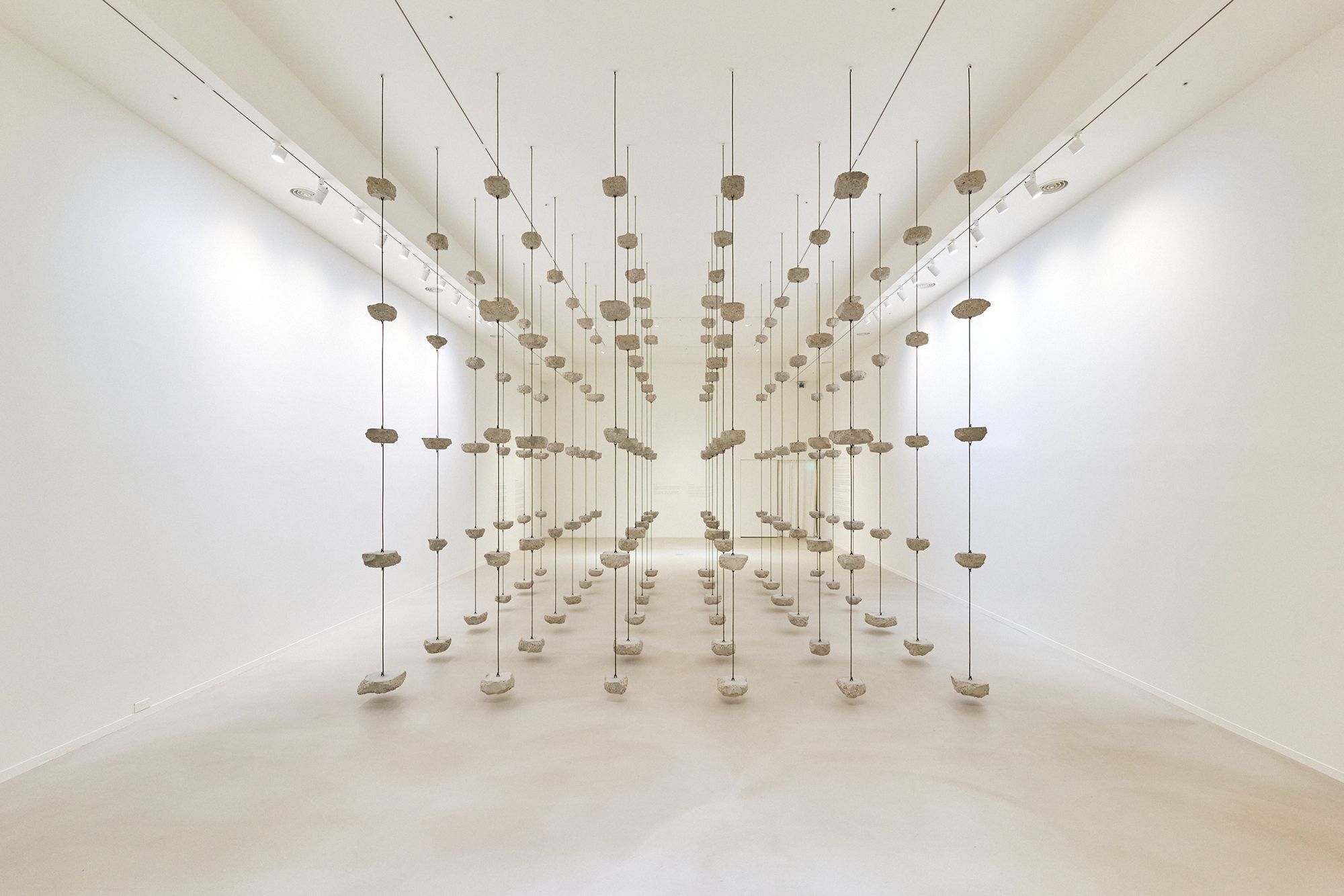
The first gallery, titled ‘Temple of Oblivion’, considers the human tendency to forget past acts of violence. Mona Hatoum’s Remains to be Seen (2019) opens the exhibition with an installation of steel reinforcement bars hanging concrete pieces in a neat gridwork. Suspended from the ceiling, the rebars hover a few centimetres above the floor, maintaining a tension that stretches across the fixtures.
Nearby, Jenny Holzer’s Cursed (2022) consists of 296 lead and copper tablets covered in aggressive, polarising texts from social media, including posts on X by U.S. President Donald Trump. The plates are scattered on the floor or across the wall, like newly uncovered artefacts from a bygone time.
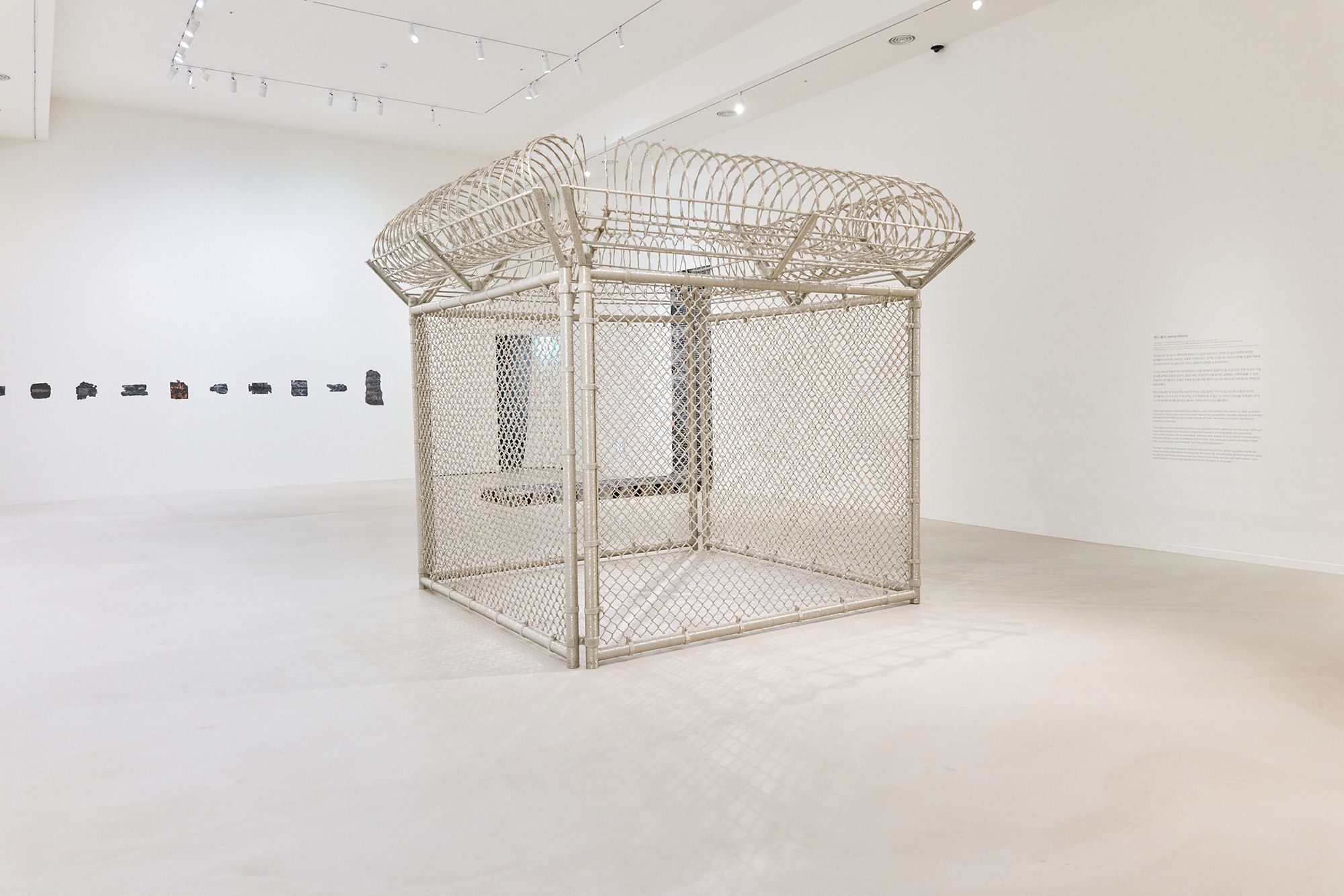
Liza Lou responds to violence with tenderness and care in Security Fence (2005), which saw the artist work with twenty Zulu women from South Africa to painstakingly cover a steel structure with barbed wire fencing—deployed by White South Africans during the apartheid to stop Black South Africans from leaving their townships—in millions of glass beads. Annabel Daou’s WHEN IN THE COURSE OF HUMAN EVENTS (2019–2020) similarly humanises history with mundane acts, weaving the opening line of the American Declaration of Independence (1776) with everyday conversations and lines from artists, poets, writers, and activists in white correction fluid on a six-metre-long microfibre scroll.
In the second gallery, named ‘Portrait of Time’, artists explore the relativity of time. Clocks implicate the uneven distribution of time and labour in society driven by capitalism in Maarten Baas’ Real Time Conveyor Belt Clock, depicting workers who assemble clock hands, and Lee Wan’s Proper Time, in which each of the 560 clocks records time differently according to an individual’s working hours (both 2025).
Sumi Kanazawa’s Drawings on newspaper (2017–present) at first glance appears to be dark curtains, with explosions of white that evoke the Milky Way. Up close, they are revealed to be lines drawn repetitively and persistently on newspapers.
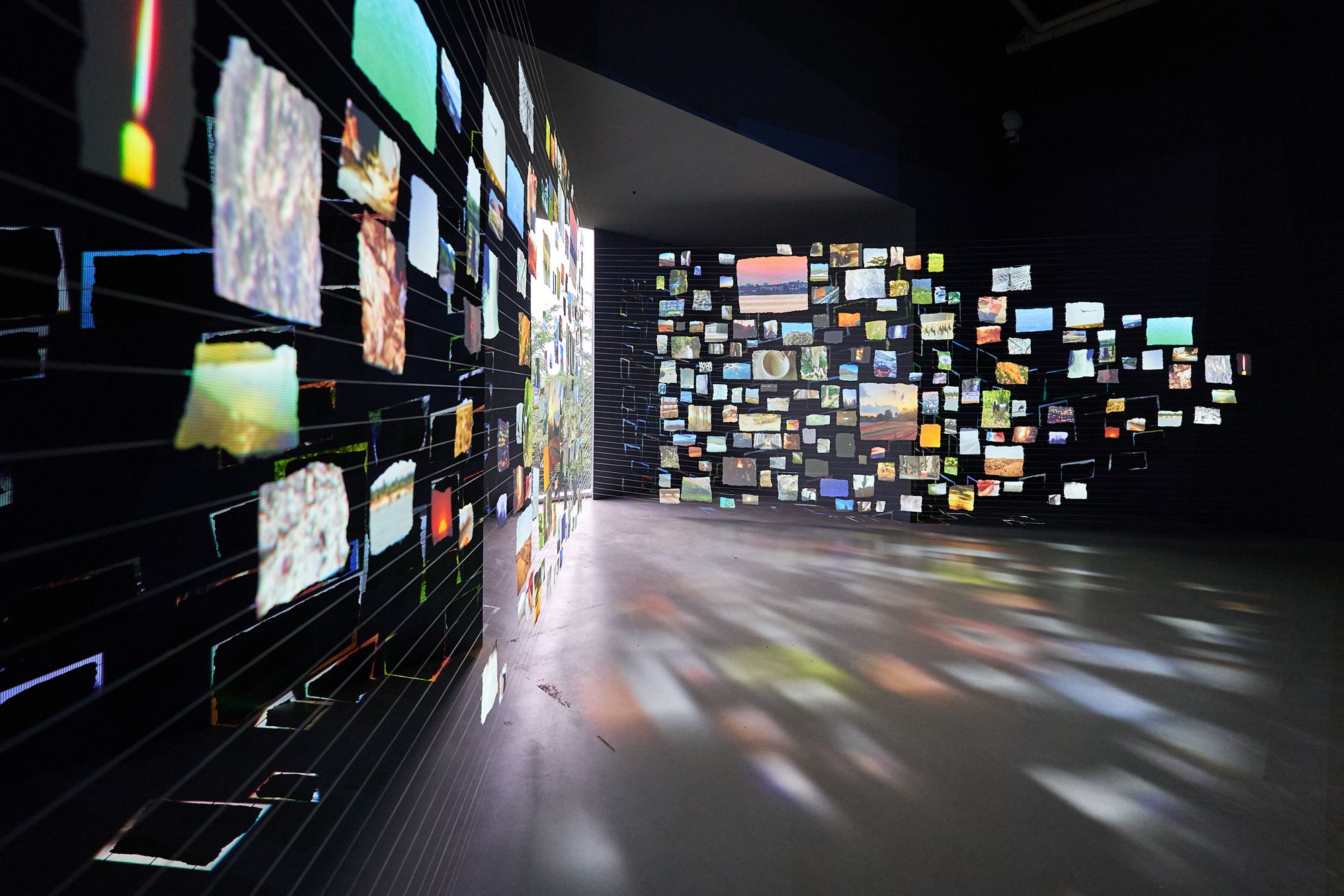
Meanwhile, Sarah Sze’s video installation Sleepers (2024) provides a visual parallel to Kanazawa’s hand-drawn night sky with video projections of various snippets of life—sleeping faces, landscapes, urban lights—onto pieces of paper woven together by thread. The resulting work creates the illusion of screens floating in the air, always in motion and different from one another, yet connected through the transience of the everyday.
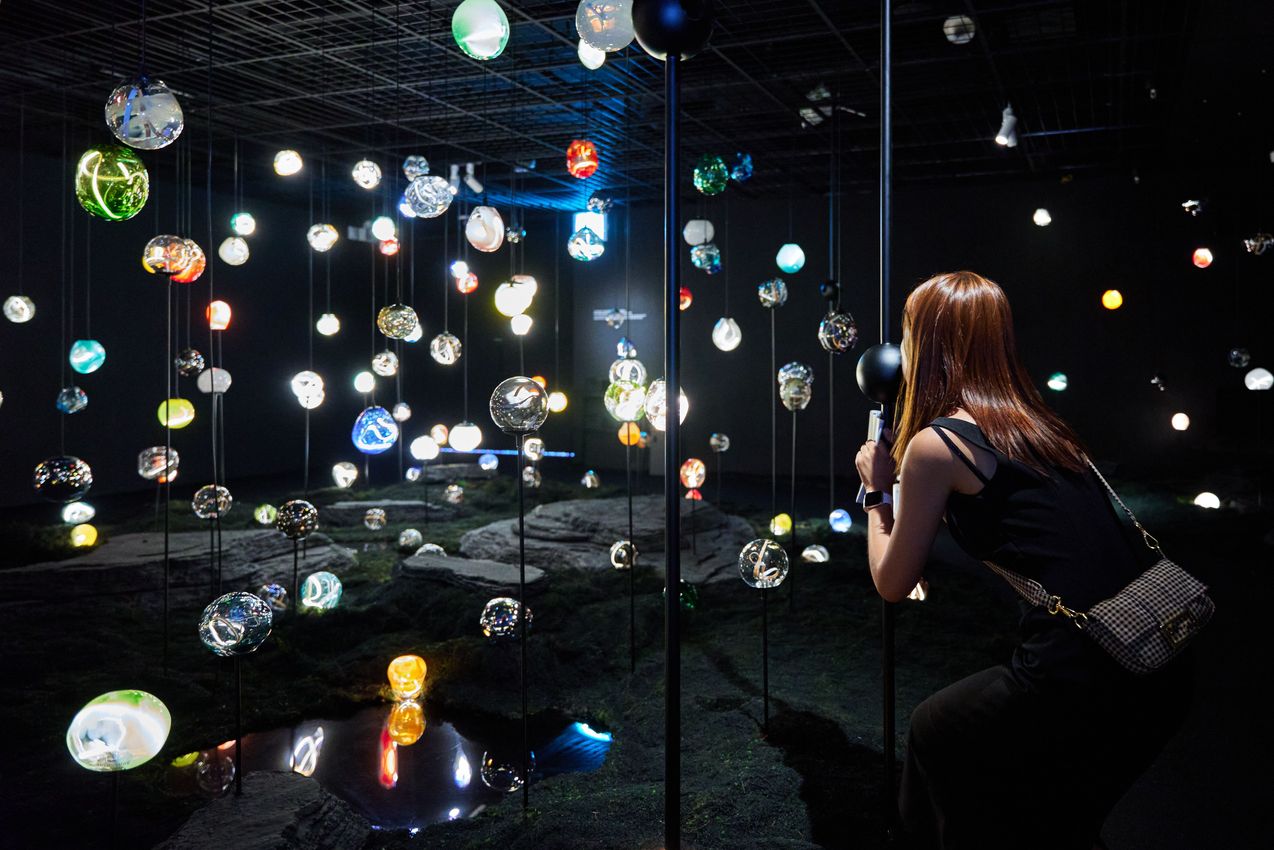
Between the second and third galleries are Thematic Spaces, a special feature PODO Museum has produced to accompany exhibitions since their opening in 2021. Glass Cosmos invites visitors to turn on lightbulbs by breathing onto glass objects that were created by survivors of violence in an act of collective healing. In the immersive installation We are made of star stuff, audio from the Voyager Golden Record plays greetings in 55 languages as visitors encounter shifting reflections of their images in the mirrors.
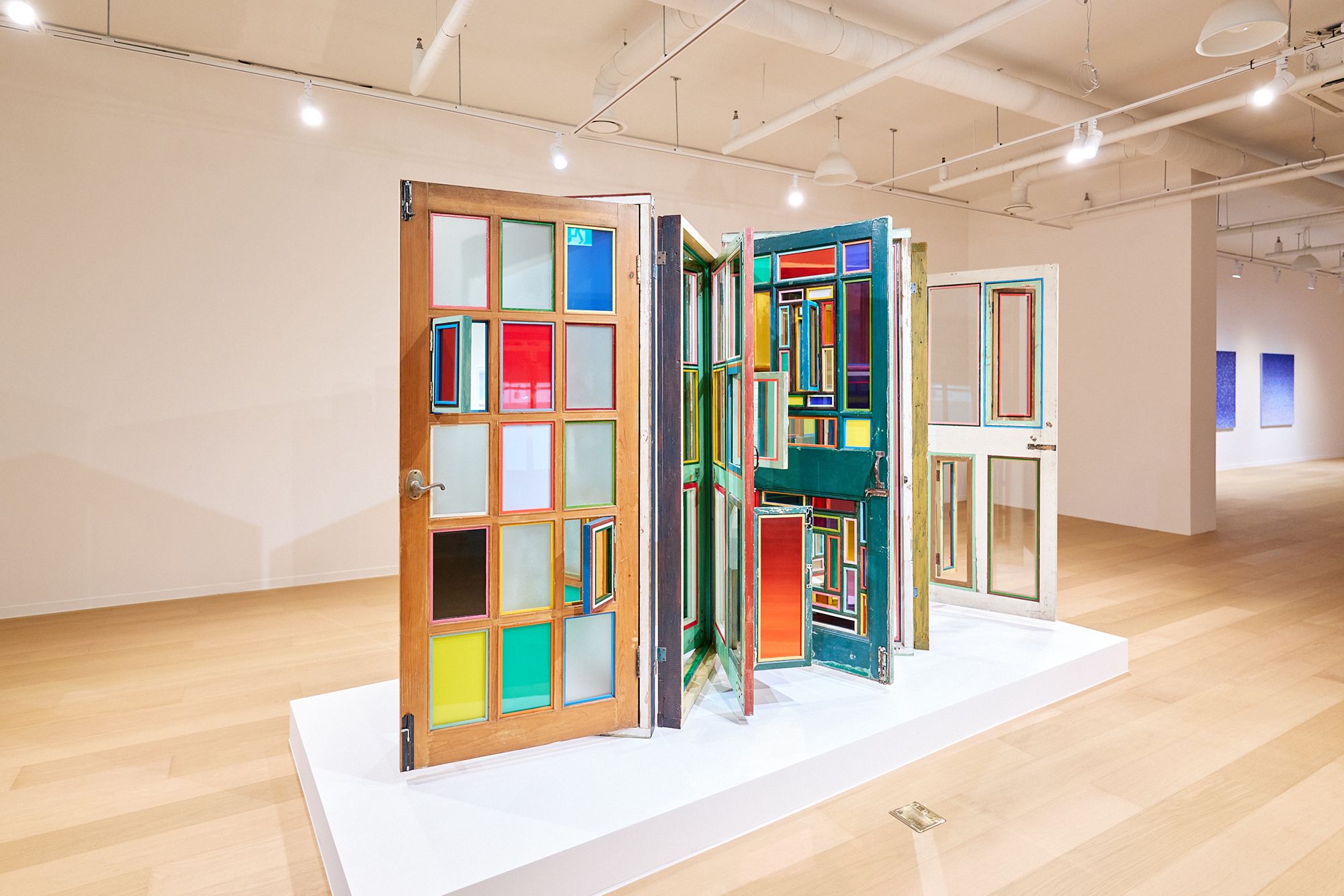
The third gallery, titled ‘Mirror of Memory’, contemplates the quiet endurance of the everyday. Song Dong draws attention to the unexpected harmony of colours and forms in old, battered doors in Door Screen – Four Screens No. 2 (2018–2019), while Sho Shibuya paints gentle sunrises over newspaper headlines in his ‘Sunrise from a small window and Events series’ (2020–present).
In recent works from 2025, Kim Han Young distills the passage of time through repetitive gestures in paintings such as HL202504 and HL202503, and Jeju-born artist Boo Jihyun continues her work with childhood memories of the sea in Solid Sea, made with discarded squid fishing lamps and a small beach of salt on the floor.
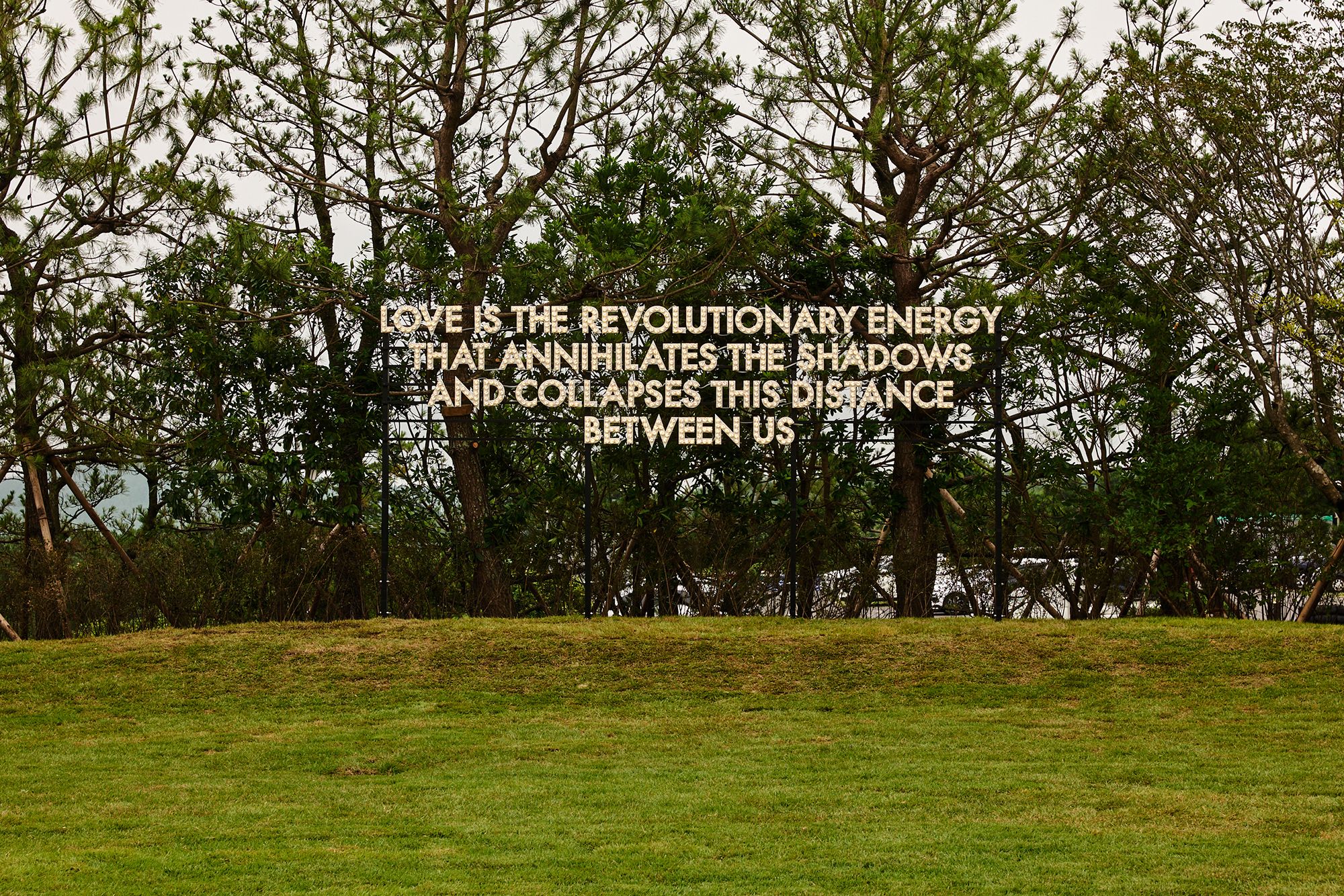
Finally, the exhibition features an outdoor sculpture by Robert Montgomery from the museum’s collection, titled Love is The Revolutionary Energy (2025). The LED sculpture reads: ‘Love is the revolutionary energy that annihilates the shadows and collapses this distance between us.’
PODO Museum executive director Chloe H. Kim said while the exhibition begins with heavy and provocative themes, she hopes ‘visitors will discover beauty and hopeful messages through the artists’ eyes and experience the transformative journey from violence to healing.’
The exhibition will be running until August of next year. —[O]

A respected voice in contemporary art discourse.
Focusing on ambitious storytelling and insightful art-world commentary. Ocula Magazine publishes in-depth interviews, critical essays and timely analysis on the artists, exhibitions and ideas driving the global art world.
Learn more about Ocula Magazine
Showcasing the best of the art world.
Ocula partners with galleries from around the world to highlight their artists, artworks and exhibitions. Gallery membership is by application and invitation, with each member vetted by an independent panel.
Learn more about Ocula Membership
Specialises in the sale of major artworks.
Led by a team with deep ties to the world’s leading auction houses, galleries and collectors. Ocula’s advisory team offers bespoke services to high-net-worth clients from around the world who are looking to acquire the best of contemporary and modern art.
Learn more about our team and services