The art world in focus
Subscribe to our newsletter for news and insights on artists, galleries and exhibitions.

‘When I left Guyana, I was only young,’ Frank Bowling recalls. ‘I dreamed of being a great detective or, failing that, a writer or poet. I wasn’t yet thinking about painting.’
It was 1953, and a 19-year-old Bowling was bound for London. A month earlier, British Guiana—then a British colony on the northern coast of South America—had seen its Progressive Party win the country’s first democratic election, with independence from Britain seemingly on the horizon. The optimism was short-lived: later that year, Britain suspended the constitution, removing the elected government and imposing direct rule. Like many of his generation, Bowling left in search of opportunity abroad. He crossed the Atlantic by boat, travelling from British Guiana via Trinidad and arriving in Southampton, before taking the train to London. ‘The memory that still sticks from that time is trying to go up the escalator the wrong way,’ he says. ‘I don’t know if you’ve done that yourself—it’s the kind of thing kids do. I remember it vividly.’
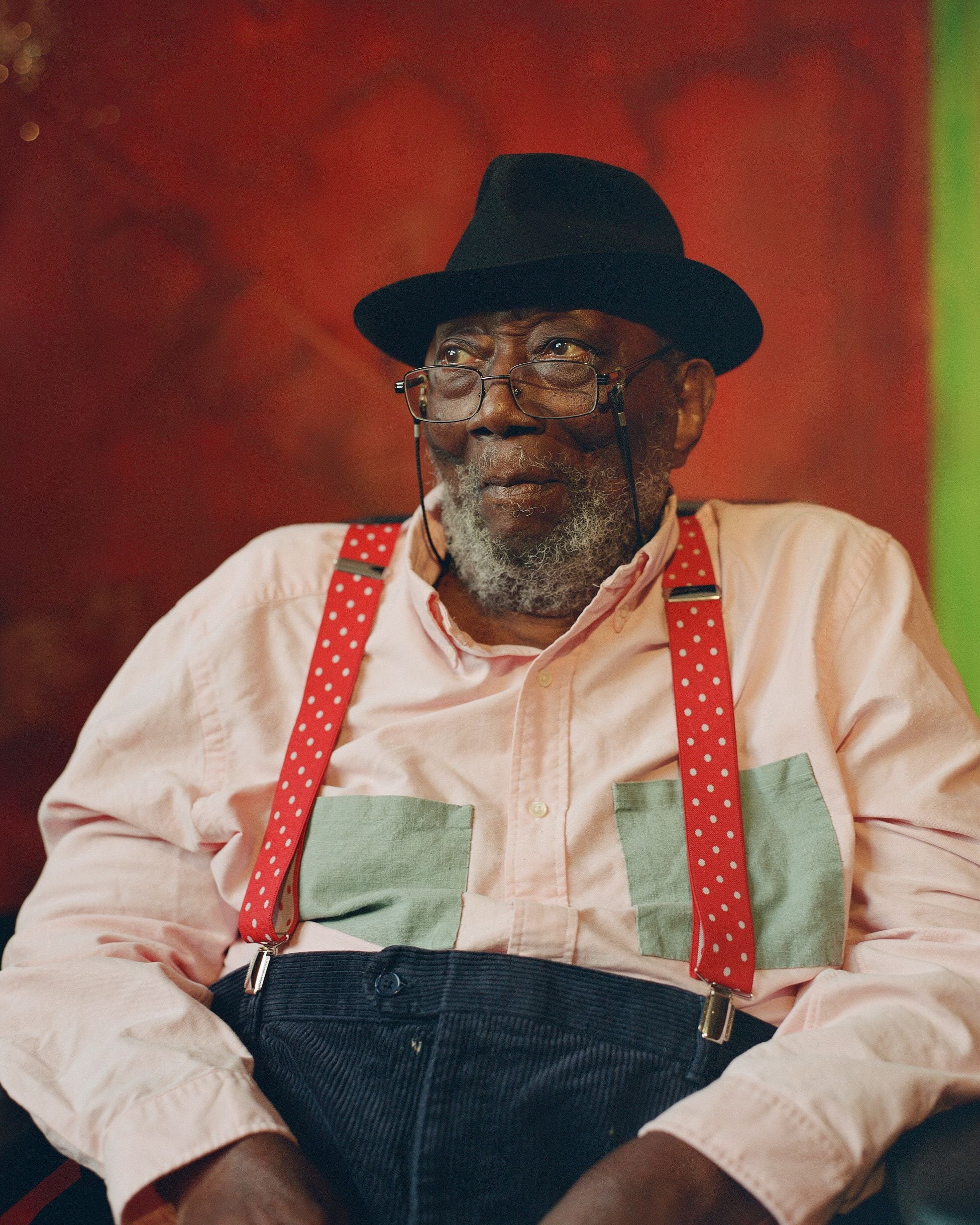
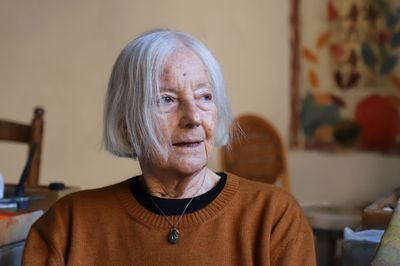
At 91, Frank Bowling is today recognised as one of the foremost British artists of his generation. That transatlantic journey was just the beginning of a remarkable six-decade career—launched at the Royal College of Art, where David Hockney was a coursemate and Francis Bacon a mentor. New York followed, a move that introduced him to Clement Greenberg, to abstraction, and to his first major exhibitions. Figurative and semi-autobiographical works gave way to vast, vividly coloured abstractions, culminating in his celebrated ‘Map Paintings’, shown in a landmark 1971 solo show at the Whitney Museum of American Art. The U.K. was slower on the uptake, but soon made up for it, recognising Bowling with his election as a Royal Academician in 2005, a major retrospective at Tate Britain in 2019, and a knighthood in 2020.
And it’s here, in his Kennington studio in south London, that we meet as he prepares for his next endeavour: a long-awaited return to South America, where he will for the first time show his work on the continent he left more than 70 years ago. Twenty-five paintings, spanning 50 years, will make the trip for his participation in the 36th Bienal de São Paulo, the second oldest biennial in the world after Venice. Titled Not All Travellers Walk Roads—Of Humanity as Practice (6 September 2025–11 January 2026), the Biennial takes its curatorial cue from bird migration patterns, exploring how people—like birds—carry memories, experiences, and languages across borders.
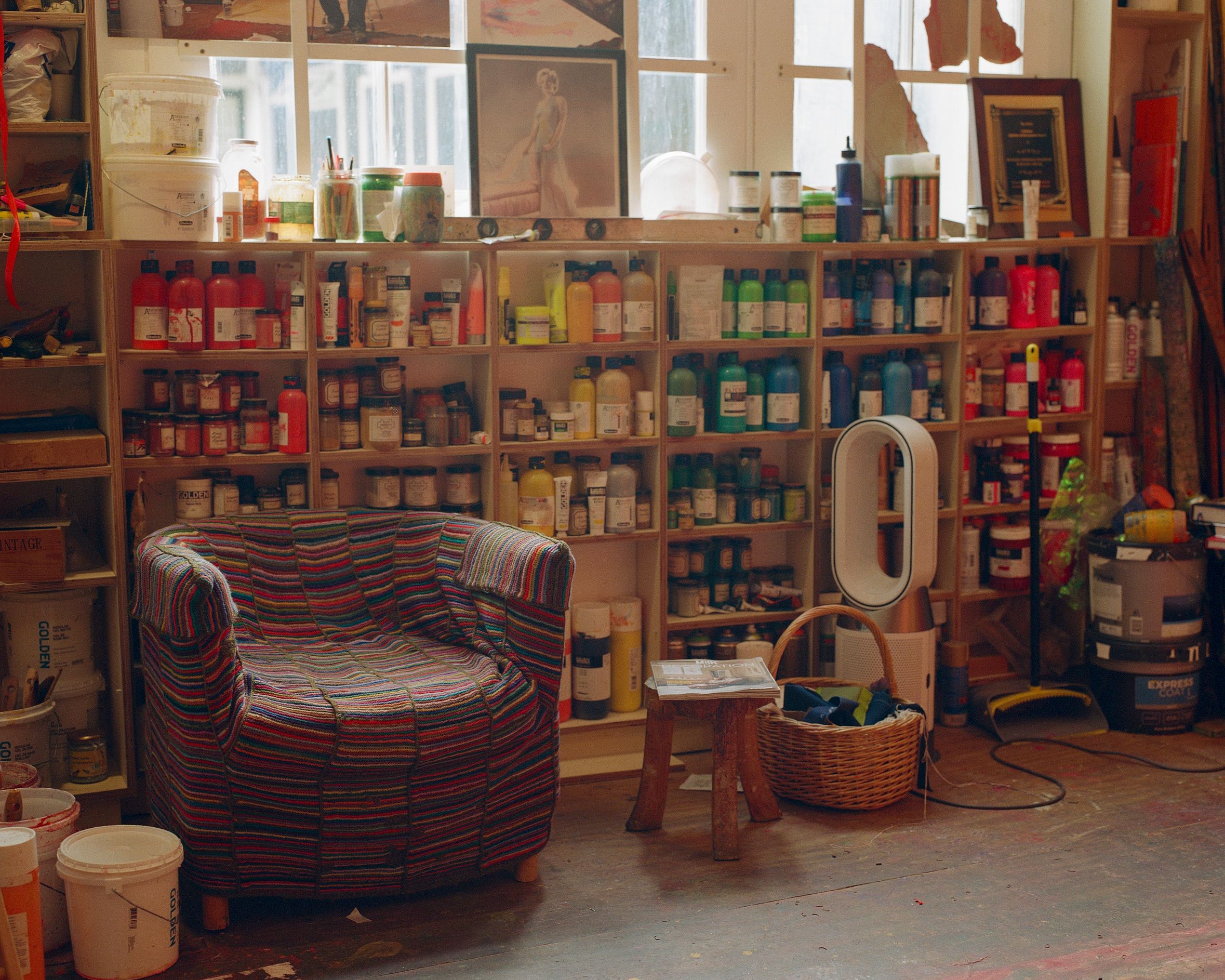
‘I’ve always felt British, but also Guyanese,’ Bowling tells me. ‘Someone said to me the other day that I must be a global citizen, and so maybe that’s what I am … In some ways the work that I’m doing now is part of a journey that’s taking me back to South America.’ The Biennial’s migrational theme has prompted Bowling to think about the many journeys that have shaped his own life. ‘It makes me think about travelling when I’m working,’ Bowling explains, recalling trips between South America, London, and New York.
‘I remember going from New York to London with [the artist] Larry Rivers and some of his friends back in the sixties—that was on a French ship,’ Bowling recalls. (The final leg from Southampton to London was by limousine, he told Mel Gooding in a 2001 interview.) ‘And there was a time when my wife, Rachel, and I took the QE2 to New York. I tried to work on some paintings in the cabin during that journey. The travelling is inspiring.’
Bowling first visited New York in 1961 on a travelling scholarship while at the Royal College of Art, moving there permanently in 1966. Living at the Hotel Chelsea, Bowling would lay canvases across the floor, following the path of sunlight as it entered the room, letting shadows fall across the surface before pouring paint to see what forms emerged. ‘I was letting the paint flow,’ he explains, ‘and I noticed a shape that kept forming from the shadow. It looked like South America. That’s literally where [the ‘Map Paintings’] started—on the floor of the Hotel Chelsea!”
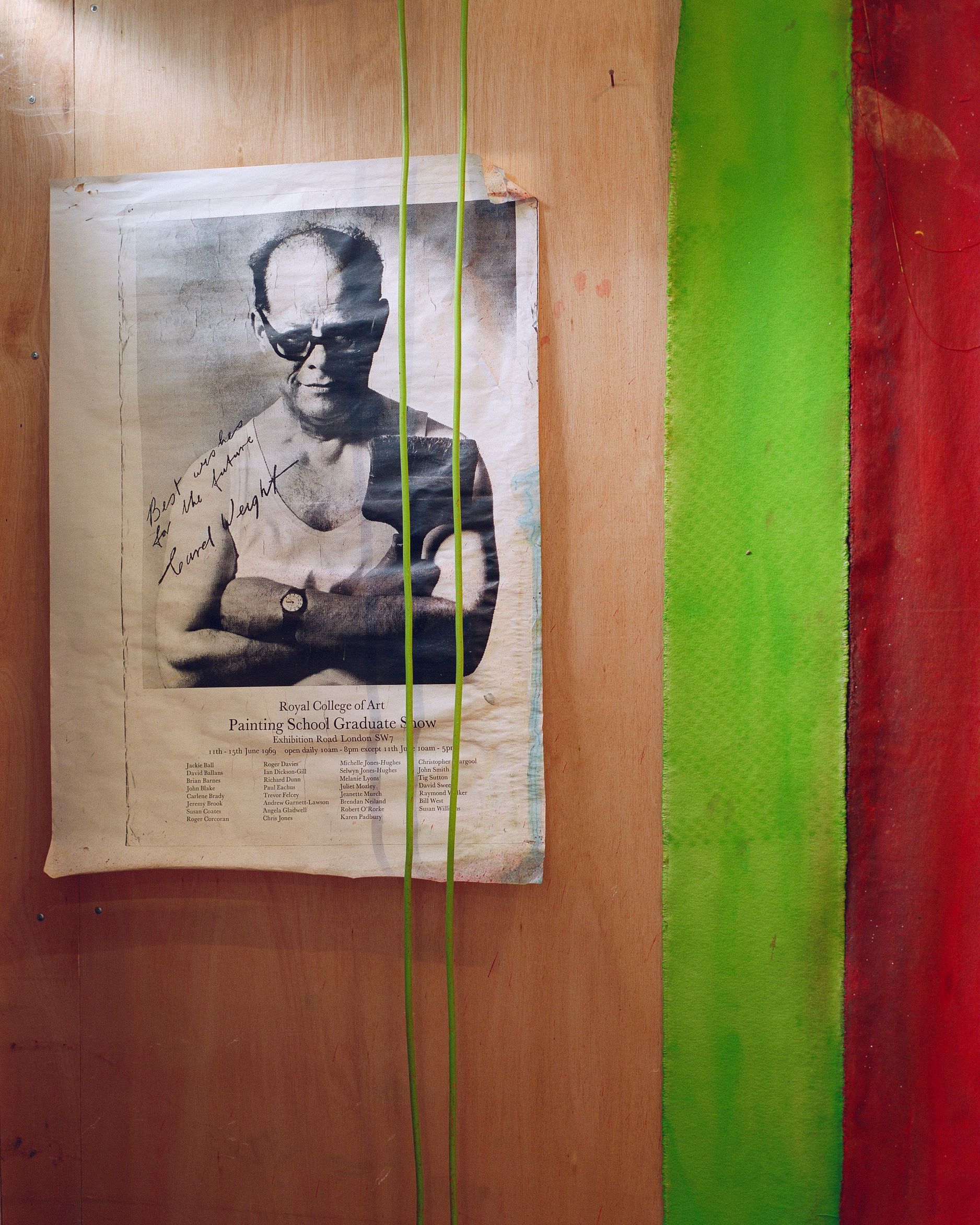
The stencilled versions came soon after, with help from Rivers. Bowling had already been experimenting with tourist maps of South America, working with Camberwell College of Art’s textiles department to create screenprints. Then, one night in 1967 at Rivers’ New York apartment—while the two stayed up to watch coverage of the Six-Day War—Rivers showed him how to use an epidiascope to trace images, and the first stencilled ‘Map Paintings’ were born. It’s a technique Bowling has returned to throughout his career, and one he has revisited for the Biennial, collaborating again with Camberwell to produce silk-screened outlines of South America on canvas. One bears the words ‘São Paulo’. ‘I still don’t know why,’ he says. ‘I think maybe São Paulo was just a sort of magical place that I had always dreamed of visiting.’
‘Then there’s the experience of growing up in South America—Guyana specifically,’ Bowling says, returning to the Biennial’s theme. ‘Memories of suddenly being stopped in my tracks by bush and mud under my feet. I was always running away, running off into the bush, deep into the rainforest, exploring the rivers and creeks. My escapades terrorised my mother and infuriated my father.’

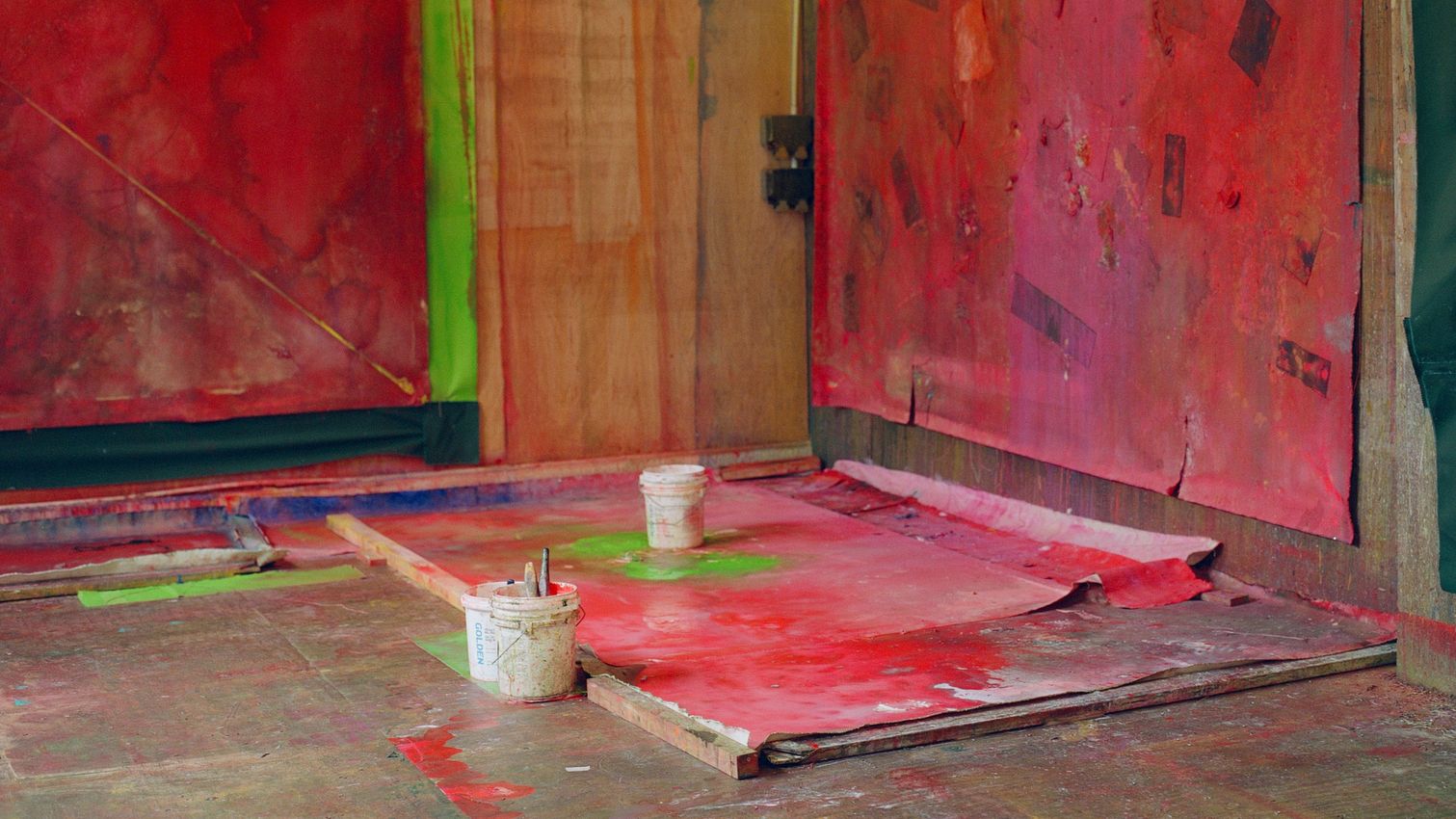
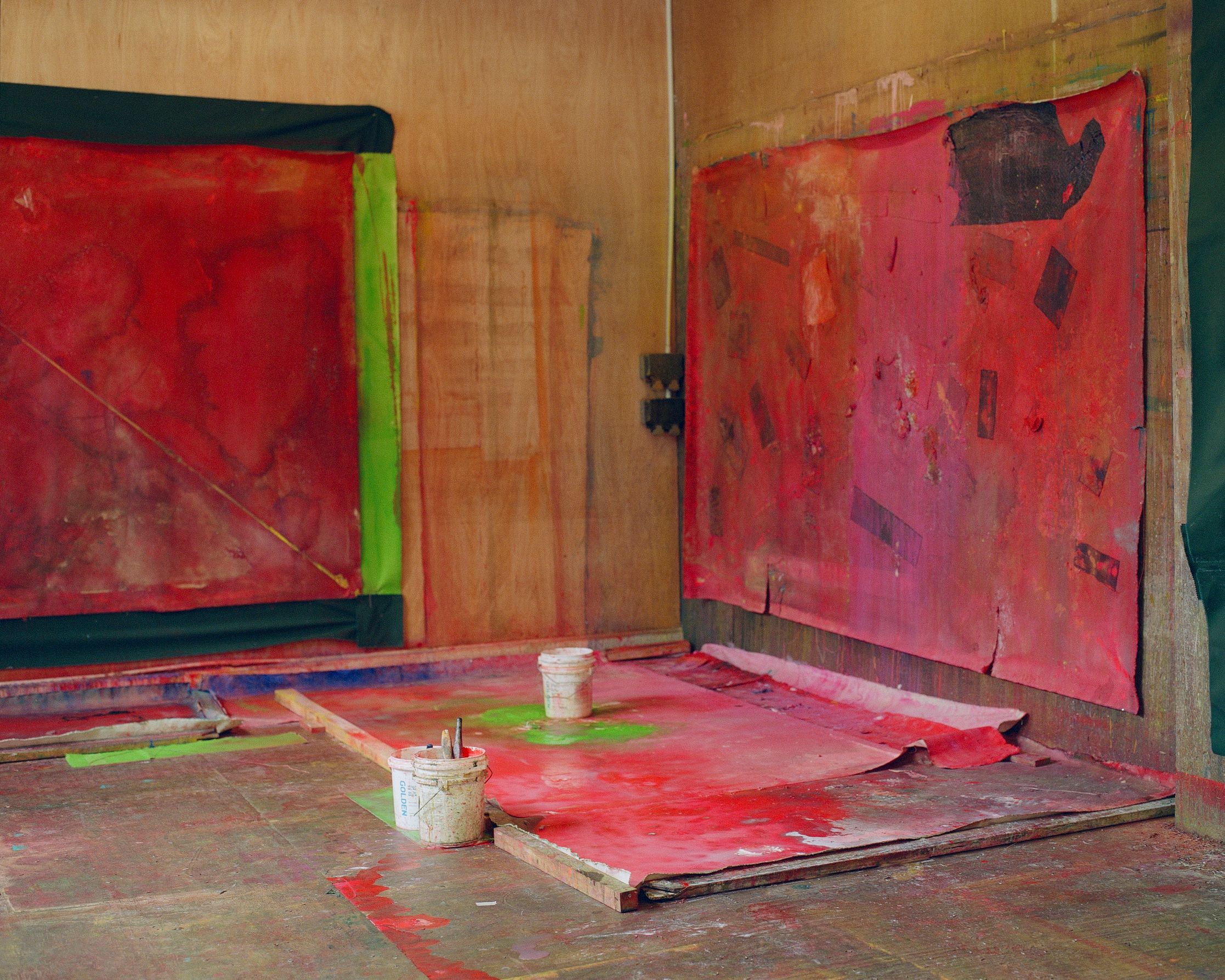
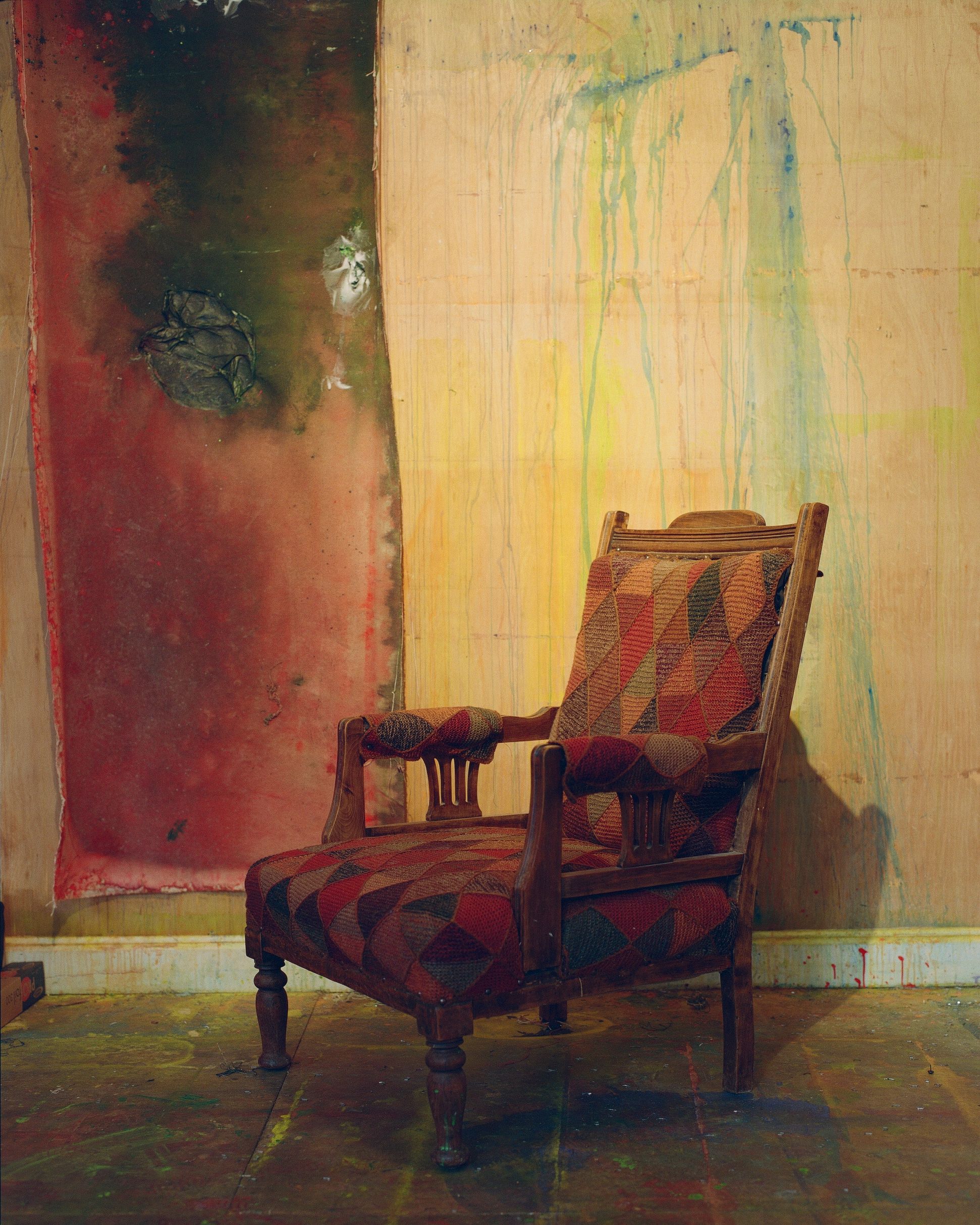
Bowling’s studio floor unfolds like a technicolour recollection of those lands he used to run. Wooden planks, laid out on the floor in a square formation, act as riverbanks, channelling and containing estuaries of crimson, acid green, and magenta paint as they marble and meander across the canvas plain. The shuttle of driftwood and grasses swept along in the current of the Berbice River are here replaced by thread, staples, glitter, and strands of hair caught in the slipstream of a studio day. And where a boot tread might have sunk into a waterlogged creek, there’s now the print of a Nike Air Max, an assistant’s errant step now happily part of the painting. ‘My work is all about that kind of muddy terrain,’ he says.
For a time, Bowling resisted having his work viewed through the lens of Guyana, partly because of painful childhood memories, but also out of a reluctance to be labelled ‘exotic’. As a student, he had looked to Turner and Gainsborough, more concerned to identify with the English landscape tradition than to draw from the Tropics: ‘I felt the road for me was to escape all that,’ he told Gooding in 2001. It was Spencer Richards—a Guyana-born writer and photographer he met in New York, who later became his studio manager—who helped Bowling acknowledge the hold his homeland had on his imagination. By comparing photographs of Bowling’s paintings with images of the Guyanese landscape, Richards showed him he hadn’t turned his back on his hometown of New Amsterdam at all—he had, in fact, been looking at it all along.
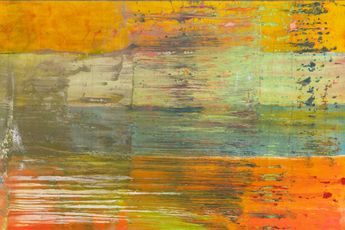
Titles, for Bowling, have become symbolic acts of this acknowledgement. Among the works heading to São Paulo are Leaving Berbice (2022) and Near Abary (2022), two curdling blue acrylic on paper works whose surfaces settle into a painterly confluence of rivers. Their titles reference two Guyanese communities; the former is the region where New Amsterdam sits. As for the selection of ‘Poured Paintings’—a series Bowling began in 1973 by pouring paint down canvas from a height—you’ll see works like Masacouraman III (2009), named after a mythical, human-like river creature of Guyanese folklore, and Mazaruni Spread (1976), titled after a tributary of the Essequibo River. In the latter, flowing candy-cane pigments crash in a foaming white cloud of paint. A waterfall? Maybe, maybe not—but Guyana certainly isn’t short of them.
Each day as he heads to his studio, Bowling crosses the River Thames from the home near Tate Britain that he shares with his wife, the artist Rachel Scott Bowling. His son jokes he’d be there on Saturdays and Sundays, given the chance. These days, he’s taken on the role of conductor—with every mark on the canvas made under his watchful direction. ‘My main preoccupation,’ he explains, ‘is with what is going on with the paint—to see it spread and bleed, to see what comes out of the paint on the carrier surface.’ In his studio, unstretched canvases are first paint-soaked and worked across the floor before being pinned to the wall for additional mark-making and adjustments. Frank dislikes waste: in an effort to remove the stubborn clag of paint from yesterday’s brush, we watched one studio assistant—a personal trainer by trade—thrash the brush back and forth across the canvas at such arm-breaking speed, you could hardly blame Bowling for wanting to take a back seat.
One lucky assistant—Agnes, who had only been on the job a week—found herself in the right place at the right time when Bowling was searching for a title for his latest work. Agnes (2025)—a two-panelled ‘Map Painting’ of South America—is one of two works produced this year that are bound for São Paulo. The other, September (2025), was created especially for the Biennial: a stencilled image of South America in orange, edged with a narrow blue outline and set within a sea of red—the colour he most associates with the continent’s muddy land.
For Bowling, the Biennial is both a return and a continuation. He is careful not to frame it as a neat ending. ‘Showing in São Paulo is circling back,’ he tells me. ‘And of course, there is also some disconnection as well as connection. I’ve been reflecting on this strongly but I’m also not quite there yet—I’m waiting for it to happen and see how it feels. The constant transformation is like painting. It changes over time. I’m always inventing, always experimenting, and making it new.’ —[O]
A respected voice in contemporary art discourse.
Focusing on ambitious storytelling and insightful art-world commentary. Ocula Magazine publishes in-depth interviews, critical essays and timely analysis on the artists, exhibitions and ideas driving the global art world.
Learn more about Ocula Magazine
Showcasing the best of the art world.
Ocula partners with galleries from around the world to highlight their artists, artworks and exhibitions. Gallery membership is by application and invitation, with each member vetted by an independent panel.
Learn more about Ocula Membership
Specialises in the sale of major artworks.
Led by a team with deep ties to the world’s leading auction houses, galleries and collectors. Ocula’s advisory team offers bespoke services to high-net-worth clients from around the world who are looking to acquire the best of contemporary and modern art.
Learn more about our team and services